The Lumberjack


Students Serving The Cal Poly Humboldt Campus and Community Since 1929

Tag: Indigenous Peoples

  • Gutswurrak official naming ceremony

    Gutswurrak official naming ceremony

    by Ione Dellos

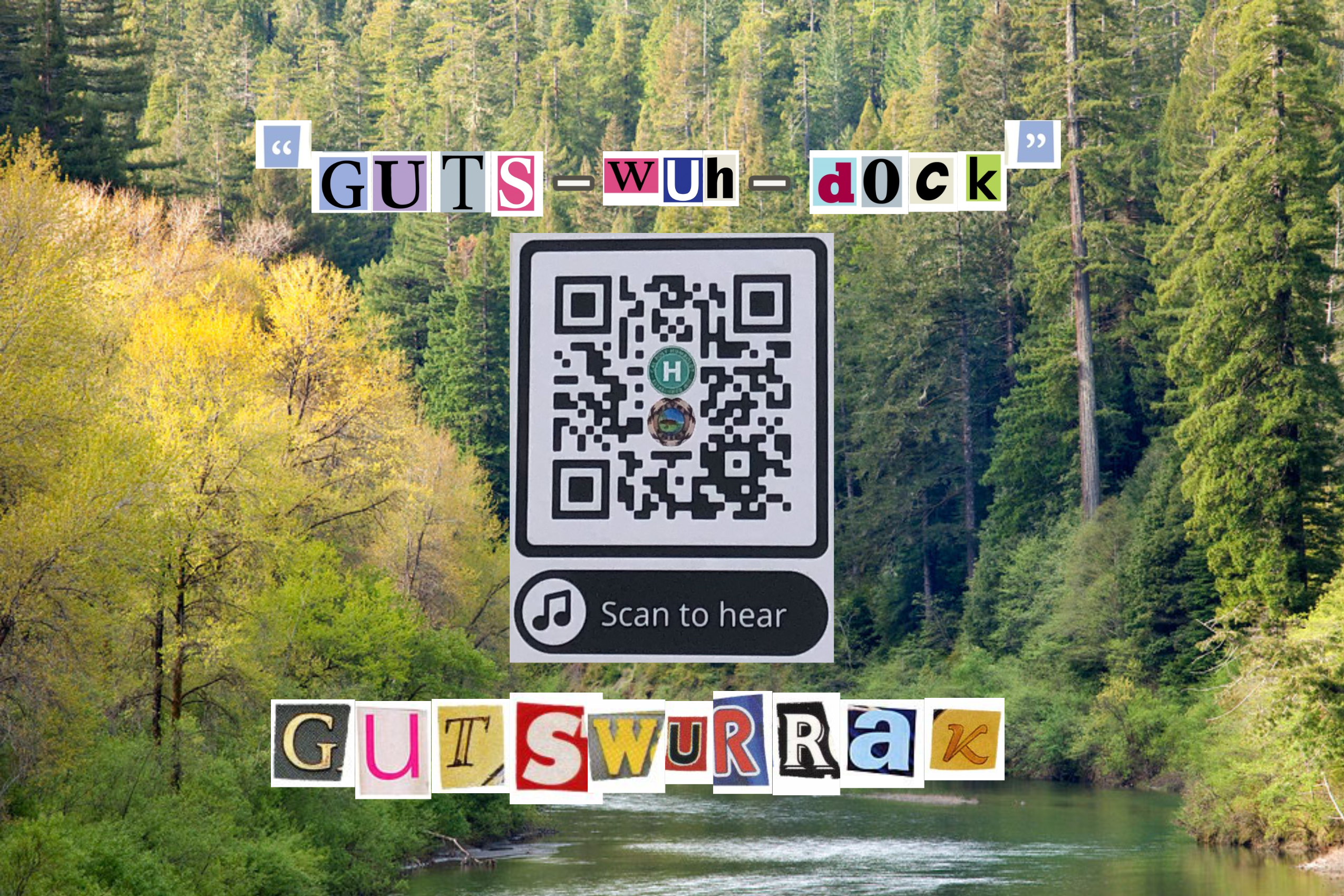
    On Wednesday, April 20th, the University officially renamed the Student Activities Center to the Gutswurrak Student Activities Center in a ceremony at the building located by the UC quad. Pronounced “guts-wuh-dock”, it is the Wiyot word for “many people gather”. The name for the student union was originally suggested by the Wiyot Tribe, led by Wiyot Tribal Chair Ted Hernandez. He was also a guest speaker at the event, and he expressed his gratitude to the University and to the students, who pushed the renaming effort.

    The event started right at noon, with opening remarks from Wendy Sotomayor, director of the SAC, and Micheal Moore Jr., associate director of the SAC, and the two read Humboldt’s new formal land acknowledgment. Working with the College of the Redwoods, Humboldt has developed the following land acknowledgment:

    “We acknowledge that the land on which Cal Poly Humboldt is located in the unceded territory of the Wiyot people who continue to live and thrive today. It is surrounded by the traditional, ancestral, and present homelands of several indigenous nations including the Hupa, Karuk, Mattole, Tolowa, Wailaki, and Yurok that make up Humboldt County.”

    Following the land acknowledgment, Vice President Jason Meriwether spoke about coming together with the local Native tribes, and on the importance of a name.

    Ted Hernandez gave his remarks after Meriwether’s speech and welcomed students and staff members alike into his home. He offered his blessings to the building, not just to the students who came to the ceremony, but for all students in the future.

    Adrianne Colegrove-Raymond, special assistant to President Jackson, unveiled a new special feature of the building, which is a QR code on the wall that links to a recording of Wiyot youth and adults pronouncing “gutswurrak”. Anyone who visits the SAC can now scan the QR code with their phone and hear the recording of the Wiyot word.

    It was a relatively small ceremony, although, despite the small size of attendees in the SAC, the speakers definitely filled the room with their presence. The event was originally set to be held in the SAC quad, which might have increased the number of students that attended, but was moved indoors to the SAC West Lounge due to the rain. The ceremony only ran until about 12:30, as the speakers were done giving their presentations at that time. Students filtered through the small crowd like minnows, darting from space to space to grab a complimentary t-shirt and a handful of free food on their way out.

    The renaming effort is part of Humboldt’s effort to bring Native histories to the forefront of the University, which has not been the case in the past. The University is attempting to build new bridges and improve their relationship with Native communities through community activities like the SAC renaming.

  • Indigenous Foods Festival highlights the importance of food sovereignty

    Indigenous Foods Festival highlights the importance of food sovereignty

    by Krisanne Keiser

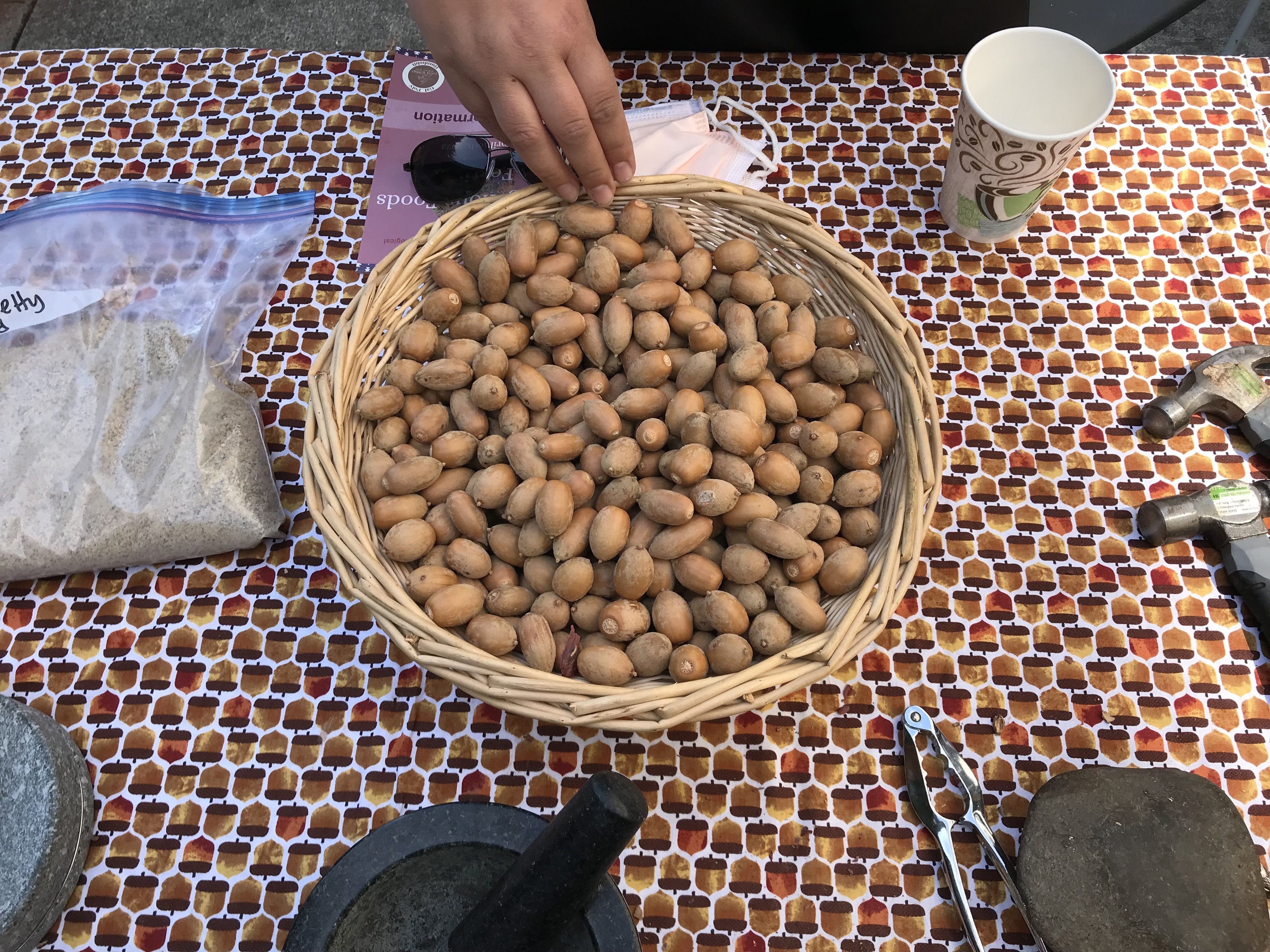
    On a bright sunny Saturday morning, students, faculty, and local tribal peoples came together to celebrate the Rou Dalagurr Food Sovereignty Lab & Cultural Workspace at the Indigenous Foods Festival. The event was held on the Cal Poly Humboldt campus on April 16 and was part of a month-long Food Summit that is focused on educating students, staff, and the public about food sovereignty. The event featured special featured films, keynote speaker presentations, and numerous outdoor volunteer opportunities working with plants and learning thoughtful ways to gather that respects Indigenous self-determination of land.

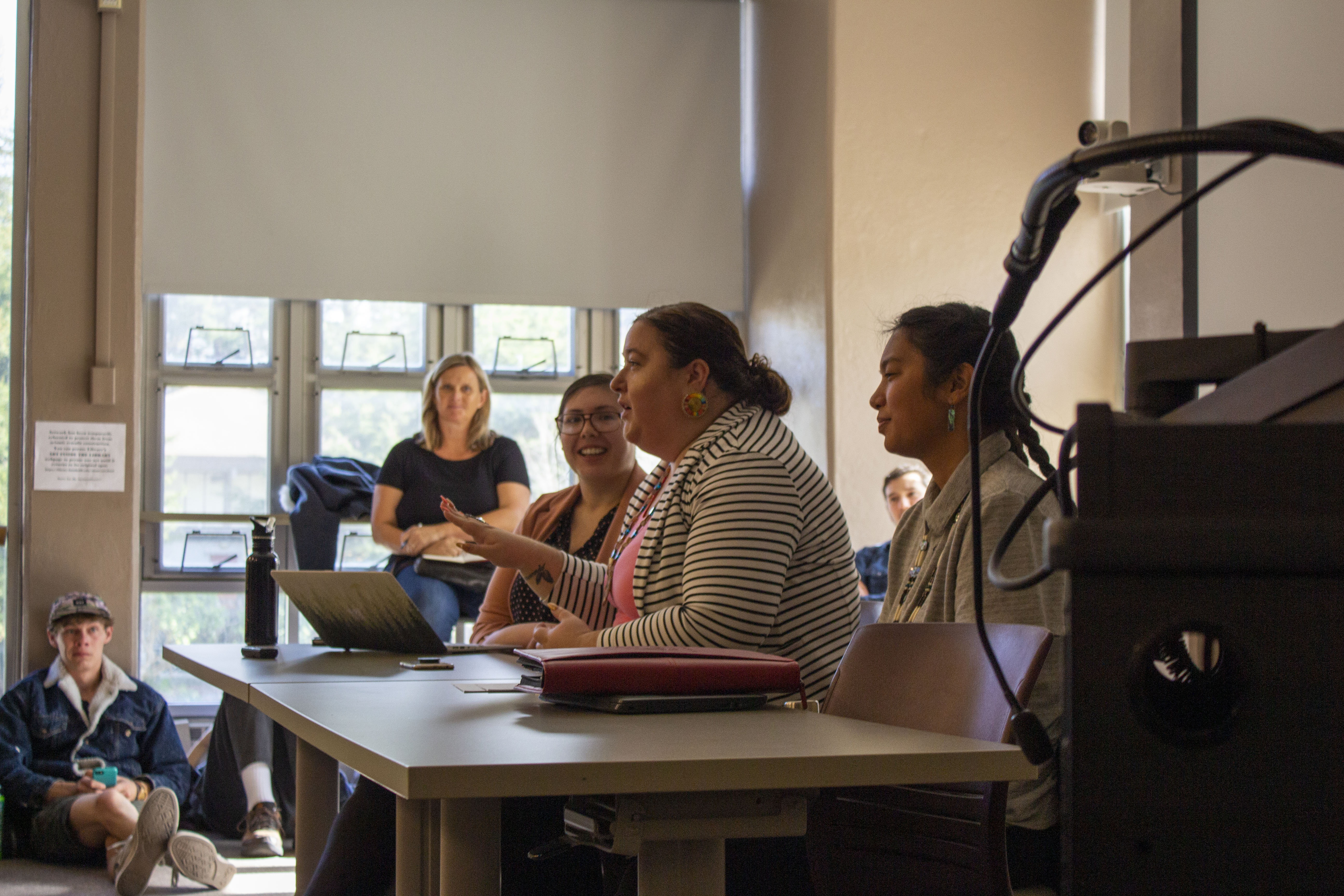
    Several speakers presented in the Native American Forum, each giving information about their respective organizations and how they are practicing food sovereignty. One event hosted by the California Indian Museum & Cultural Center was incredibly informative. Executive Director Nicole Myers-Lim led the presentation and discussed the projects their native youth are working on as part of the museum’s Tribal Youth Ambassadors program. One of those projects was creating acorn bites, which was an idea that came from one of the youths, and was being sold during the event. I must add that they were extremely delicious!

    During the presentation, Myers-Lim reminded the audience that in order to practice food sovereignty, there are several elements to consider such as land access, settler laws and regulations within park systems, as well as handling public harassment and racism when gathering on public lands. Additionally, the monetization and over-harvesting of natural foods such as abalone have prevented their tribe— the Pomo Tribe— from utilizing this natural resource, which is a large part of their culture.

    “Our Pomo food that we love is abalone…we can’t eat abalone right now but when abalone was harvested, it was overharvested,” said Myers-Lim. “We’re really trying to educate non-native communities that this is our cultural resource; we need it for the continuity of our culture. It doesn’t have to be sold for $70 dollars on a plate at Oma’s in San Francisco.”

    Another aspect that Myers-Lim highlighted was how native youth had gradually lost interest in gathering natural foods and resources due to being subjected to harassment by the public. At one point the racism and harassment became so severe that the youth feared practicing their traditional gathering activities at local parks on local trails. To help mitigate this issue, the Native Youth Program created an educational card pamphlet called the ‘Culture Card: Tribal Member Educational Handout’ to give to park visitors who questioned, disturbed, and accused them of harming the environment while they were gathering. The culture cards discuss the cultural significance of traditional harvesting and gathering as well as explaining how and why gathering is a healthy activity. It also highlights gathering and harvesting permits.

    “We’re out there praying and giving gratitude to the plants that are sustaining us and so to be accused of abuse is ironic,” said Myers-Lim. “After hundreds of years of the abuse that’s happened through the Gold Rush, the wildfires and the dams and everything else.”

    If that wasn’t harmful enough, the program also has to obtain special 24-hour permits before gathering which is just another hoop to jump through.

    “We have to work with them to have ancestral gathering rights that are recognized throughout the state,” said Myers-Lim. “As tribes we need to advocate for that through our consultation policies and try to change that on those levels.”

    Past Cal Poly Humboldt chemistry major, Sunny Rojas (Yurok/Karuk/Apache) stated that his people were not equipped to consume processed foods, and doing so has caused much damage to the health of his community.

    “It has a devastating effect on Americans and my people…we never ate like that in the past and our bodies are not quite equipped to deal with a lot of things that are surprisingly allowed in our food,” said Rojas.

    He expressed that one of his goals as a chemistry major was to learn more about the components of the earth, people, and the contents of America’s food.

    “I wanted to try and find some way to help this poisoned food system we have in America right now,” said Rojas.

  • Cal Poly Humboldt campus hosts Food Summit

    Cal Poly Humboldt campus hosts Food Summit

    by Angel Barker

    A three-week-long Food Summit is on campus, and you’re invited. On-campus organizations El Centro, HEIF, Umoja Center, the Food Sovereignty Lab, Oh Snap!, WRAPP, and La Comida Nos Une all collaborated to make this event happen.

    Liszet Burgueno, Developmental Manager for the Humboldt Energy Independence Fund (HEIF) and environmental resource engineering major, talked about the nature of the event.

    “The Food Summit is a collaborative event where multiple campus organizations came together to start conversations about food justice, food sovereignty, and to give people food,” Burgueno said.

    The first week was about the general topics to introduce people to the issues of food sustainability and justice. This week is about jobs and exploration in the food industry, and next week is about environmental justice and social justice.

    HEIF is funding the Food Summit according to Katie Koscielak, Cal Poly Humboldt’s sustainability analyst and advisor for the event.

    “The campus has done other food summits, but not in several years, and this is the first one funded by HEIF,” Koscielak said.

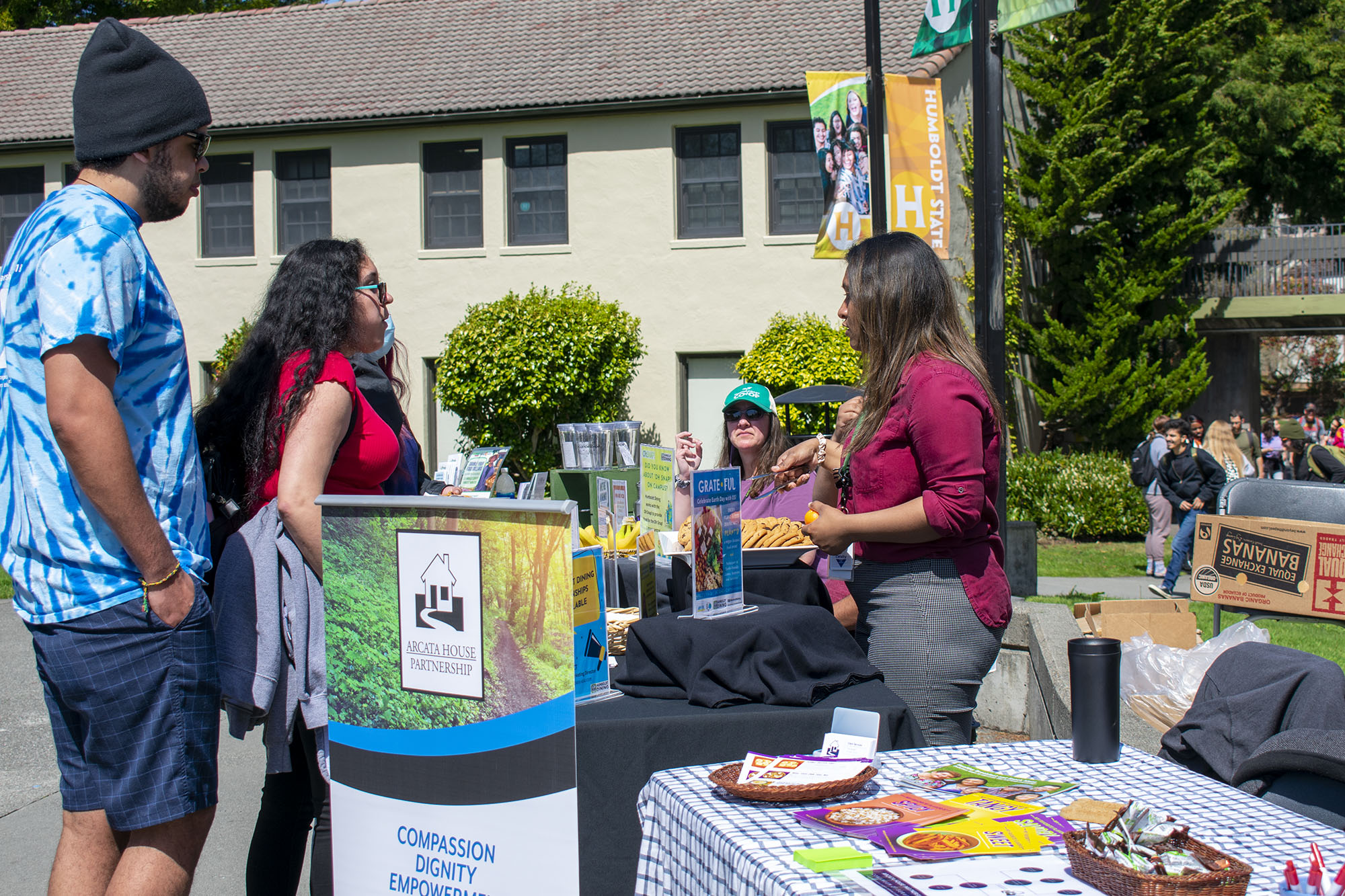
    Photo by Angel Barker | Katie Koscielak, sustainability analyst for the campus, and Liset Burgueno, development manager for HEIF and environmental resource engineering major at the table for HEIF at the food summit on April 6.

    HEIF funds sustainability projects on campus through instructionally related activities fees that students pay for each semester. Past projects have included water refilling stations, compost bins, lots of lighting upgrades throughout campus, hand dryers, and many more. These projects take effect when students submit proposals to the organization.

    “Last semester, El Centro came to HEIF and submitted an idea paper, where they wanted to get reusable utensils,” Burgueno said.

    Darin Torres, criminology and journalism major, pitched the idea this semester for a food summit. Torres spearheaded the ideas and planning, and after months of collaborating with many campus groups and local organizations, the event planning has been successful.

    “I am really proud of what we’ve done so far,” Torres said. “Education is power.”

    This event is not only to educate, but to get students involved with interactive events to help make the planet a better place. This event is really important to Torres, as food insecurity is a huge part of the greater Humboldt community.

    “We have issues with indigenous cultures’ food not being respected,” Torres said. “Food is a major insecurity in Humboldt County, we have students who face hunger and homelessness so much. So we just wanted to incorporate it all into the food summit.”

    “We have regenerated, and hopefully it will continue,” said Fernando Paz, coordinator for El Centro.

    According to Paz, the event itself is, a way to really reflect on our carbon impact in terms of food that we use.

    This Thursday, April 14, there will be a film screening of Gather hosted on Zoom, and on Friday there is a plant tour on campus and an opportunity to volunteer at Bayside Farm. Many more events are also scheduled throughout the week. To find the whole event schedule, go to https://lcae.humboldt.edu/food-summit.

    “This event is made for you in mind, it was made for students, by students,” Torres said.

  • Food sovereignty lab hosts indigenous film series

    by Krisanne Keiser

    In 2019, Cal Poly Humboldt students envisioned a project that would re-indigenize the campus by creating the Rou Dalagurr Food Sovereignty Lab & Cultural Workspace.

    According to the summer 2021 FSL Progress Report, this new indigenized space is “dedicated to the research, practice, and preservation of food sovereignty and traditional ecological knowledge. The purpose of the FSL is to provide an opportunity to work directly with the surrounding communities, tribal nations, and national and international scholars and community leaders to center, learn, and engage with Indigenous science, environmental management, and preservation practices.”

    The Food Sovereignty Lab serves to “unify our students, faculty, local tribes, and communities; to center and support tribal sovereignty, natural resource management, and preservation practices; and to provide students with culturally appropriate education in Indigenous natural resource management that respects Indigenous sovereignty and self-determination and serves our community.”

    To help the public and Cal Poly Humboldt students understand the practice of food sovereignty, there will be an online film series via zoom that highlights the importance of revitalizing traditional food sources in March and April.

    The first film, “Inhabitant: Indigenous Perspectives on Restoring Our World,” will be presented by the Social Justice Summit on Thursday, March 3 at 7 p.m. PST.

    The second film, “Voices From the Barrens: Native People, Blueberries & Sovereignty,” will be shown Thursday, March 24 at 7 p.m. PST.

    “Gather” will be shown on Thursday, April 14 at 7 p.m. PST.

    The third part will be a double feature. “El Cacao: The Challenge of Fair Trade,” and “No Place to Grow,” featuring a discussion with filmmaker Michelle Aguilar, will be shown on Thursday, April 24 at 7 p.m. PST.

    Interested parties can register online at https://forms.gle/UtD35UCCF89LJqY27

  • Indigenous Food Sovereignty

    Indigenous Food Sovereignty

    Local food management practices of the Tolowa Dee-ni, Yurok and other indigenous peoples.

    *Editor’s note: A source in this story, Cynthia Ford, is the aunt of the Lumberjack writer of this story, Walker B. True*

    When colonizers landed on the North American continent, they were greeted with a land of plenty where deer roamed huge open pastures and wild fruits and vegetables grew in plenty. Colonizers viewed this landscape as a wild, untamed, underutilized and untouched landscape of economic opportunity.

    In fact, ecosystems across North America were meticulously managed by Indigenous peoples across the continent. Their traditional resource management practices have come to be known as a stewardship model.

    As defined by the Oglala Sioux Tribe of South Dakota, the Lakota Ecology Stewardship model states that “All beings, both living and nonliving, were related in that all shared and depended on Mother Earth for survival. The Lakota believe that humans were the newest nation on Earth, and as such were instructed to learn from the older nations: the rocks, animals, and plants. Thus, natural laws and relationships were carefully observed and emulated.”

    Locally, the Tolowa Dee-ni nation as well as the Yurok tribe made use of practices like prescribed burning to treat pests and to create better habitats for deer and elk to graze on.

    This form of management was used throughout the continent and began to die out as the land upon which they were practiced was colonized. These colonized lands were stripped of their resources and left in the hands of private landowners or The US government who had little to no understanding or care over the complexity of the ecological systems at play.

    The stewardship model and the food practices of Indigenous people have been limited by land acquisition programs and environmental devastation since the colonizers first set foot in America. Through the fight for their food sovereignty, Indigenous people are also fighting for tribal sovereignty.

    Cynthia Boshell is a program specialist working with the Rights of Mother Earth initiative through the Northern California Tribal Court Coalition. Since 2015, she is continuing to do work advocating for tribal food sovereignty.

    “When we are talking about food sovereignty what we are really doing is saying we are reclaiming our relationship to the foods,” Boshell said. “Not just the foods but if you are going to reclaim your relationship to the food you also have to reclaim your relationship to the land.”

    In the past the The Rights of Mother Earth initiative has helped enact ordinances and other regulations in order to protect the natural resources of the tribes a part of the NCTCC (Yurok Tribe, Hoopa Valley Tribe, Karuk Tribe, Tolowa Dee-ni’ Nation, Trinidad Rancheria and the Bear River Band of the Rohnerville Rancheria).

    Recently, the NCTCC received a grant from the Native American Agricultural Fund to do an assessment of tribal food systems under the stress of COVID-19 and fires. The project will be performed by the Rights of Mother Earth initiative spending the next year surveying tribal communities and their food system in order to understand how tribal food producers can be better supported.

    Boshell sees food sovereignty as a vehicle and process of bringing Indigenous communities where they want to be in regards to their food systems. Whether that be entirely reliant on local Indigenous food systems, or only partially, each tribe should have the agency to choose that for themselves.

    “Food sovereignty is not really a native concept,” Boshell said. “It’s more of a description of how we are reacting to a colonial system.”

    Cynthia Ford is a Habitat and Wildlife Manager for the Tolowa Dee-ni’ Nation in Del Norte County. Ford is responsible for educating community members and advocating for tribal food sovereignty.

    “We work with agencies and partners locally, like the forest service and the parks and local landowners to help come up with strategies to protect and perpetuate our resources.” Ford said.

    Alongside her vocational responsibilities to the tribe, she is also the wife of a Tolowa tribe member and the mother of three Tolowa children. She supports traditional, locally harvested foods like acorns in the fall, berries in the spring, a variety of seafoods like smelt, seaweed and salmon, as well as deer and elk.

    “The Tolowa people were rich, very food rich,” Ford said. “There was a large variety and great diversity of foods year round to eat from.”

    For Ford, food sovereignty means having the ability to access her own healthy, and sustainable foods.

    “That food security is really important for the tribe because that’s the basis for making us a healthy community,” Ford said.

    Without the ability to access these local food sources that, historically speaking, have always been available to them, tribe members are left without access to any healthy foods.

    “Our ancestral territory goes well into Oregon and covers a vast coastal area and into the Applegate watershed,” Ford said. “But here right now in Smith River where our modern day reservation lies, we have the Dollar General and a Fuel Mart, we don’t even have a grocery store.”

    Alongside poor access to healthy foods from local stores, traditional food practices like fishing have been impacted by commercial farming practices that threaten the Smith river’s estuaries with pollution from pesticides.

    According to the California Water Board, “the Regional Water Board’s water quality monitoring documented the presence of several pesticides used in lily bulb cultivation in some of the coastal tributaries of the Smith river during storm events.”

    Ford ends by speaking to the interconnected nature of land and how dependent people have to be one another in order to live in harmonious comfort and success.

    “’You got your 10 acres and your mule and you’re gonna harvest your land right?’” Ford said. “But it doesn’t work that way because what you do on your land affects what I do on my land”
  • Sovereign Bodies Brings Awareness

    Sovereign Bodies Brings Awareness

    Activist creates new database to track violence against Indigenous women

    Accounts of violence and murder toward Indigenous people are lost in history or left unrecorded. This became an even bigger problem for Indigenous women in places occupied by white men, such as mining or gold rush communities.

    The Sovereign Bodies Institute was founded about a year ago by Annita Lucchesi, a Native American and activist. Lucchesi realized the need for a database of violence and murder against Indigenous women after needing one, and it not existing.

    “It really bothered me because at that time in my life, I had just escaped a really abusive relationship that almost killed me,” Lucchesi said. “I also was being trafficked through that relationship, so I had a number of experiences where I almost was one of these missing and murdered Native women, so for me it was really personal and it really bothered me that if that had happened to me there was no guarantee that my story would be used to make sure that doesn’t happen to other women or girls.”

    Four years ago, Lucchesi created her own database for missing and murdered Indigenous women, which eventually became the kickstarter idea for the Sovereign Bodies Institute.

    “Humboldt County is amongst one of the highest counties of missing and murdered Indigenous peoples.”

    Chelsea Miraflor Trillo

    Sovereign Bodies Institute’s website says SBI is a home for generating knowledge of how Indigenous communities are impacted by gender and sexual violence and looking into how they can continue to heal and find freedom from such violence.

    Lucchesi has acquired around 4,000 missing and murdered Indigenous women cases in her database. Lucchesi founded SBI with the help of the Seventh Generation fund, an international organization for Indigenous peoples.

    Chelsea Miraflor Trillo, an Indigenous woman and participant of SBI, received her masters from Humboldt State. Trillo continues to work with SBI and families of missing and murdered Indigenous women to advocate awareness towards these issues.

    “Humboldt County is amongst one of the highest counties of missing and murdered Indigenous peoples,” Trillo said. “Students are usually in the area where community awareness and political action happen.”

    According to Lucchesi, Humboldt and Del Norte County hold a third of missing and murdered Indigenous women in California. Lucchesi said the justice system contributes to missing and murdered Indigenous women and the lack of action taken. Lucchesi said Indigenous women are considered non-human, and the justice system refuses to hold non-Native perpetrators responsible.

    Tammy Carpenter is a member of the SBI organization and an HSU alumna. Carpenter was subjected to the mistreatment of Indigenous people personally.

    “I, myself, am a mother of a victim that was murdered,” Carpenter said. “It’s still unsolved as of today, so I like to support the organization for the awareness for all women. Not just Indigenous women. All women.”

  • Culture Connects with Nature and Wellbeing

    Culture Connects with Nature and Wellbeing

    United Indian Health Services provides health and wellness services for Native Americans throughout Del Norte and Humboldt County

    When you’re sick with cold sweats, a cough and a runny nose, being home with someone who loves and cares for you is the ideal situation. Those feelings of comfort, security and warmth are at the core of the United Indian Health Services and their mission of healing the mind, body and spirit.

    Elizabeth Lara-O’Rourke, the community health and wellness division director for the Potawot Health Village in Arcata, talks about the different realms of wellness UIHS strives for when treating their clients.

    “Being able to meet the many needs of our clients is really important for overall wellness,” Lara-O’Rourke said. “It’s not just physical wellness, but also spiritual wellness and we really try to include a strong cultural component in the services that we provide.”

    UIHS is a collaborative program between various local tribes within the Humboldt and Del Norte counties that provide medical services along with community and wellness outreach specifically for Native Americans, whether they are local tribe members or not.

    “We work to heal mind, body and spirit. Culture is a part of that. Art can support the healing process.”

    Andre Cramblit

    There are seven clinics – Xaa-wan’-k’wvt Clinic in Smith River, Taa-’at-dvn in Crescent City, Elk Valley Office in Crescent City, Hop’-ew Puel in Klamath, Weitchpec Libby Nix Community Health Center, Potawot in Arcata and Tish-non in Fortuna that collectively serve 1,200 active clients. However, Tish-non is closing down its Fortuna location on Oct. 25 and relocating to Eureka where they will reopen their clinic on Dec. 2.

    “The environment here is about bringing people home, making people feel comfortable and offering an environment that offers a family atmosphere,” Lara-O’ Rourke said. “So we really try to have that not just with our clients but also with our staff.”

    Twenty-three-year-old Winona Vigil is a front office assistant for Potawot. She graduated from Humboldt State in 2018 with a bachelors degree in psychology and a minor in kinesiology. She works as the receptionist and is the first face and voice that clients meet and greet upon entrance. Vigil says she likes the work and also appreciates helping out clients that come through the doors or those who call seeking aid.

    “All my coworkers and everyone who works here is super supportive,” Vigil said. “And working with the clients, they are all usually friendly. They’ve got life stories and it’s interesting getting to hear them.”

    UIHS offers basic medical, dental, vision, behavioral health and pharmacy services. The availability of health services differs from each clinic and programs such as Title IV Elder Nutrition help deliver food to American Indian elders.

    Andre Cramblit, traditional resources specialist for the Potawot Health Village, says that by including cultural components, whether it’s through art, displaying traditional items or hosting cultural events, like the Harvest Party and youth summer camps, there are opportunities for Native Americans to connect with their heritage.

    “We work to heal mind, body and spirit,” Cramblit said. “Culture is a part of that. Art can support the healing process.”

    “People need to make decisions that are right for them. Not necessarily what the provider thinks is right, but what that client feels is the right decision for them because in healthcare sometimes there isn’t a right answer.

    Elizabeth Lara-O’Rourke

    Other traditional resources include various methods of recovery such as inviting traditional healers, sweats and supporting language classes.

    Lara-O’ Rourke says that another theme of UIHS is that health of the environment equals the health of the people. The organization highly values and honors the connection that Natives have with the earth, water, plants and animals.

    Whereas other health facilities or healthcare providers might separate mind, body and spirit, Lara-O’ Rourke said that for UIHS it’s interconnected and that knowledge is important for their clients to make the best decisions.

    “People need to make decisions that are right for them,” Lara-O’Rourke said. “Not necessarily what the provider thinks is right, but what that client feels is the right decision for them because in healthcare sometimes there isn’t a right answer. It is what is best for that person, and only that person can decide that.”

  • Coming Home: Sacred Land Returned to Wiyot Tribe

    Coming Home: Sacred Land Returned to Wiyot Tribe

    After nearly 160 years in the hands of Eureka, Tuluwat, briefly known as Indian Island, returns to its rightful owners

    Wiyot Tribal members and Eureka community members were joyful, yet solemn, at the Eureka City Council meeting to officially return Tuluwat Island to the Wiyot people.

    Wiyot tribal elder Cheryl A. Seidner blessed the room in a prayer of welcome. In the prayer, Seidner welcomed people from the East and from all directions as she turned in a circle, speaking in her native language. The crowd was silent and respectful, and tribal members let out emotional “ho’s.” Seidner thanked everybody in the audience and asked them to rise.

    Wiyot tribal elder Cheryl A. Seidner speaks during the public comment section of the city meeting to return Tuluwat Island to the Wiyot Tribe while she is surrounded by supporters and tribe members at the Adorni Center in Eureka on Oct. 21. | Photo by Thomas Lal

    “This is something I’ve always wanted since I was a kid,” Seidner said. “I thought the island was always ours, not anybody else’s. So we came together and said, ‘Let’s do this, let’s make it ours.’ So I decided to be bold and ask the new mayor to give us the island they owned.”

    In 2004, 40 acres of Tuluwat were returned to the Wiyot Tribe. Oct. 21 marked the return of the remaining 202 acres. The tribe has been working with the City of Eureka for the last five years to make this happen, and this action marks the first step to repairing the damage caused to the tribe that began 100 years ago.

    Cutcha Risling Baldy, Ph.D, the Native American Studies department chair at Humboldt State University, delivered one of many moving speeches to the hundreds of assembled community members. Baldy talked about the future of the Wiyot people and how she knew, one day, they would come back.

    “I realized that native people were always making plans for our future and that we never gave up on our land or where we came from,” Baldy said. “That is the story I want people to know. I know that the story of Tuluwat, which people often refer to as Indian Island, has been one of a massacre for most people, but for me it has only been a place for world renewal.”

    Baldy once read a book about stories gathered from people about Tuluwat. One particular story was about a woman who was stuck in the mud after the violence on the island. While it may be a story of sadness, Baldy said it was a moment of strength and hope. The woman sang a mourning song because she knew she had to send her tribe off properly. Her strength showed she knew her kin would one day return to Tuluwat.

    HSU anthropology professor Gordon Ulmer acknowledged the significance of the day. Ulmer said the day should be a celebration of time immemorial, and that it displayed the vibrancy of the Wiyot tribe, despite the dark history.

    “What we see here is a very vibrant thriving community that lives in the shadow of genocide,” Ulmer said. “People remember the genocide, but what is rarely acknowledged -or at least to a much lesser extent- is that people are still here, the Wiyot are thriving. There’s a lot to celebrate here.”

    Eureka Mayor Susan Seaman began official proceedings by declaring the day as a moment in time that should forge strong bonds going into the future to create a long sought-after vision. Seaman prepared to take a vote from the council people while tension in the air grew as the crowd waited.

    “I move to authorize the transfer of Tuluwat Island to the Wiyot Tribe and I authorize the vote,” Seaman said.

    The Eureka City Council spoke on behalf of the motion, each member contributing a unique perspective to the magnanimity of the event. HSU Lecturer and Eureka City Council Member Natalie Arroyo wasn’t physically present, but she FaceTimed in and a representative shared a letter penned by her about Tuluwat.

    “This is the first known transfer of land from a city to a tribe of this kind,” Arroyo said. “We are all responsible to do what we can to actively participate in healing. I will be so bold to say under current conditions Eureka owns the land, but it was never truly ours.”

    The tension began to ease as Seaman’s voice fell over the crowd.

    “The vote to return the Tuluwat island to the Wiyot Tribe was unanimous and the motion passed,” Seaman said.

    Applause erupted from the audience. The crowd stood on their feet to clap and shout in joy.

    Seidner invited her family to the front of the auditorium to sing a song to the people gathered in the room. Seidner welcomed everyone in the audience and invited them to sing the song “Coming Home.”

    “I know that our ancestors knew this day would come,” Baldy said. “I think that we need to consider it an opportunity to think about our next steps in the future. People stand up and ask me, ‘What can I do?’ And I have one answer for them: you can start by giving all the land back. And now we know it’s possible.”

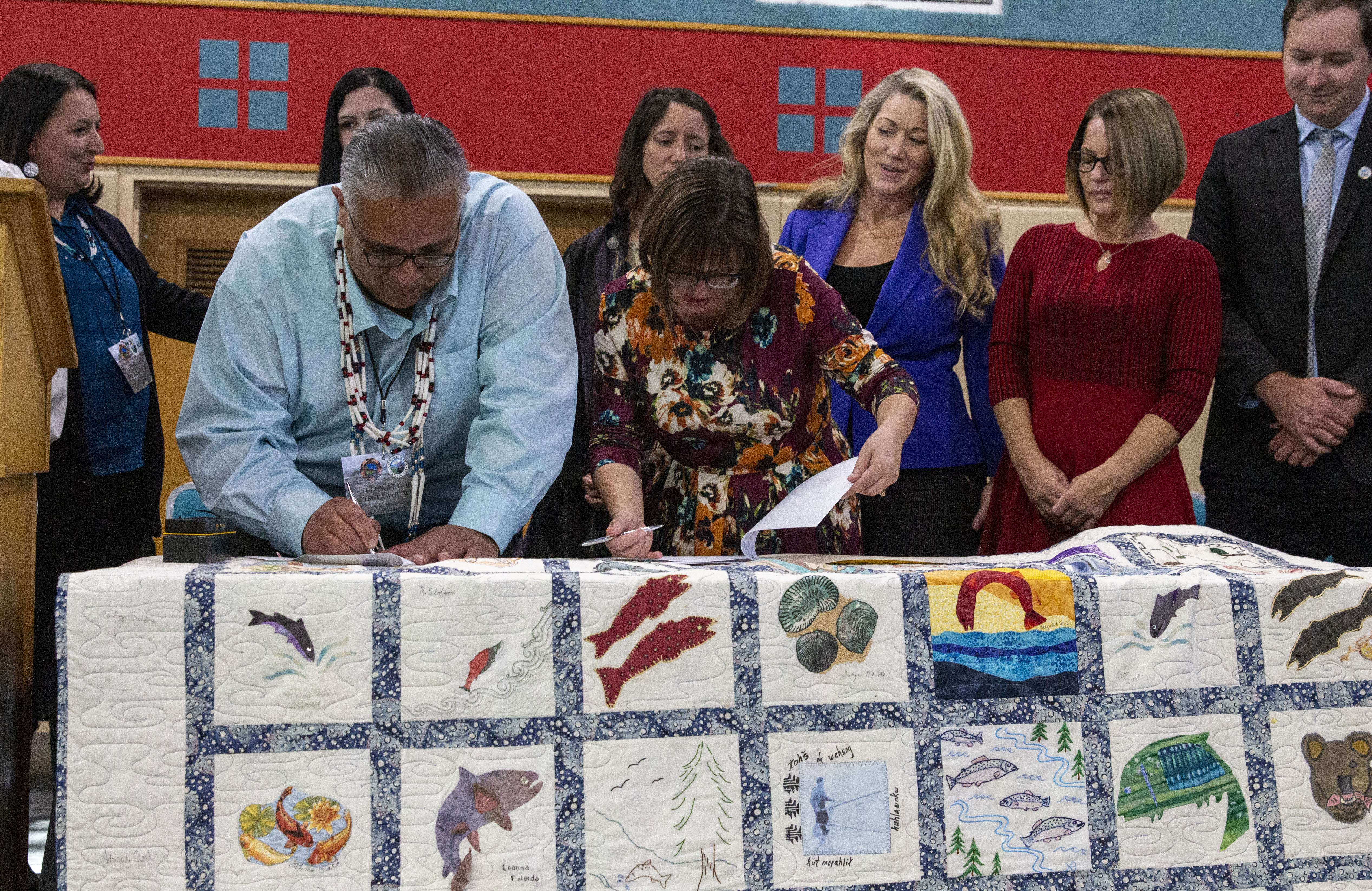
    The signing of the deed marked the end of the meeting. Seidner placed a quilt representing all who could not be present on the table, and the council people huddled around to officially return Tuluwat to its ancient owners.

    Wiyot Tribal Chairman Ted Hernandez and Eureka Mayor Susan Seaman embrace after signing the papers to officially return Tuluwat Island to the Wiyot Tribe at the Adorni Center on Oct. 21. | Photo by Thomas Lal

    Baldy concluded her address with honest praise. With the Wiyot land reparation, the people in the room could now envision a radical future.

    “A future with no dams, a future with salmon that are healthy, a future with our children that are singing, a future where we are dancing all the time,” Baldy said. “I know we’ve seen it and I know we’ve felt it, and I look forward to how amazing that is going to be. And I know that we can do it, and I look forward to how everyone in this room is going to make that happen.”

  • Film Screening Displays Indigenous Resistance and Heroism

    Film Screening Displays Indigenous Resistance and Heroism

    ‘From Wounded Knee to Standing Rock’ offers insight into 71-day rebellion

    As Indigenous Peoples’ Week came to an end, one of the last events was an airing of the documentary, “From Wounded Knee To Standing Rock: A Reporter’s Journey” at the Eureka Theatre.

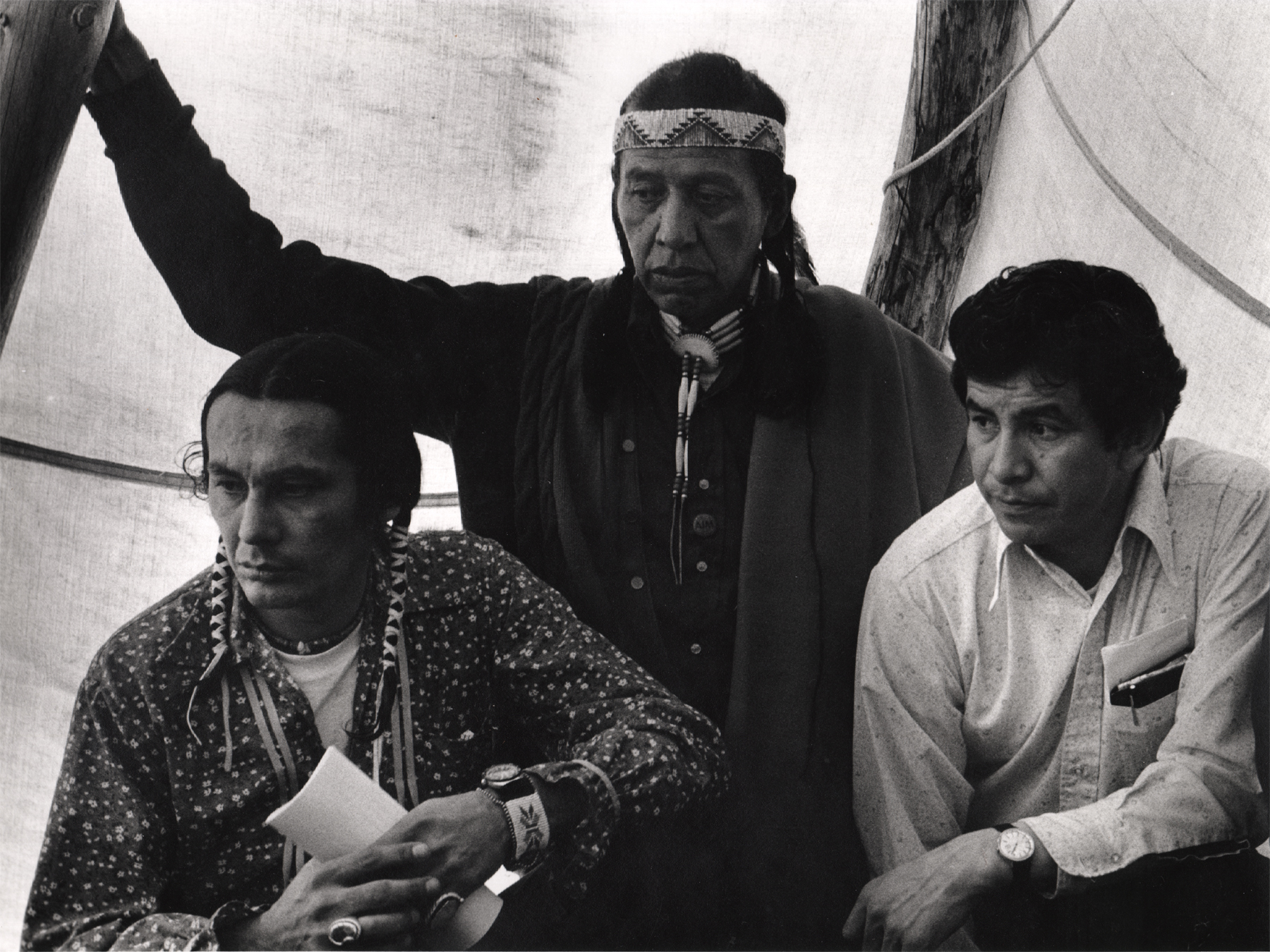
    This story followed rookie reporter Kevin McKiernan and his experiences recording the events of the 71-day seizure and occupation of the town of Wounded Knee, South Dakota on the Pine Ridge Indian Reservation from Feb. 27 to May 8, 1973.

    Richard A. “Dick” Wilson was chairman of the Oglala Lakota Sioux of the Pine Ridge Indian Reservation. Protests started in response to failures of impeachment. Wilson had accusations ranging from giving jobs to friends and family, to suppressing his political opponents with his private militia, the Guardians of the Oglala Nation.

    In addition, there were protests of the United States Government’s failure to uphold treaties with Native Americans. This was concerning since there was a history of abuse and neglect from American police and government. Cases such as State v. Bad Heart Bull served as a catalyst for the occupation.

    As a result of the GOON squads’ weaponized militia, the American Indian Movement was brought in to assist the protesters. Wilson also received help from the American Government in the forms of U.S. Marshals Service and the FBI.

    Photo courtesy Kevin McKiernan

    AIM started as a grassroots movement in Minneapolis, Minnesota, to address police brutality towards Native Americans; and grew to represent all indigenous tribes and help them with the issues they have faced since European colonialism, as well as helping people reconnect with their heritage. Many people lost their history once Americans forced native youth assimilate into Euro-American society.

    Acclimation to the colonizers’ lifestyles included forcibly removing Native people from their families, as well as preventing them from practicing their traditional customs. By accepting the different values as their own, such as Christianity, private property and material wealth, people became disconnected from their roots. AIM was a way for people to reconnect to their ancestors’ ways of life.

    During the time of this occupation, the U.S. Government prevented media personal from entering the reservation or recording any discussions between them and the rebel leaders, such as Dennis Banks and Russell Means. They also implemented roadblocks to prevent aid for the natives.

    McKiernan snuck in with the help of some rebels and slept on the floors of a church. While inside he recorded conversations with multiple members of the rebellion, shootouts with the FBI and USMS, took pictures of the aftermath of the altercations and recorded meetings with U.S. officials. Conflict escalated to the point of the USMS and FBI using helicopters, armored vehicles, snipers and automatic weapons.

    Photo courtesy Kevin McKiernan

    U.S. Marshal Lloyd Grimm was shot in the conflict and suffered paralysis from the waist down and Cherokee activist Frank Clearwater was shot in the head April 17, within 24 hours of his arrival, during a fire fight with federal forces.

    Shootings were just one reason for keeping the media in the dark, by preventing coverage of the measures that the government took against the AIM and Sioux. At one point during the winter, Department of Justice appointee Kent Frizell, to manage the government’s response, cut off water, electricity and food supplies to Wounded Knee in an attempt to starve them out. They also made attempts to stir up distrust in the local factions, which lead to some activists being killed by their own allies, for fear they were government plants.

    The final blow came in late April, when Lawrence “Buddy” Lamont, a local Oglala Lakota, was shot by a government sniper and killed. Soon after, both sides would come to an agreement to disarm. This led to the eventual end of the 71-day standoff between the Wounded Knee activists and AIM, and the United States assisted tribalists, serving as but one example of the Native American’s struggles since European Colonization.

  • Working to Correct History

    Working to Correct History

    Home Away From Home potluck kicks off Indigenous Peoples’ Week

    Arcata is home to the Wiyot Tribe and Humboldt State University sits on Wiyot land. The Home Away From Home Potluck is one example of the community’s attempt to welcome all members to interact and is a fun, inclusive way to start Indigenous Peoples’ Week.

    The second Monday of October has become an opportunity to counter-protest Columbus Day. Along with a celebration of Native Americans, their history on this land and their culture, Indigenous Peoples’ Week highlights the customs of indigenous peoples and acknowledges the years suffering.

    Arcata Mayor Brett Watson spoke on some of the actions the city has taken in order to support local Native Americans. Watson spoke of a proclamation from 2016 where Arcata officially recognized Indigenous Peoples’ Day.

    “The university is our lifeblood and we see the diversity of the student body as a positive. We welcome students of all backgrounds.”

    Wesley Chesbro

    “Just on October 2, we did a resolution affirming our support for a United Nations resolution,” Watson said. “Acknowledging the rights of Indigenous people around the world.”

    The inclusion and acceptance of Native Americans’ history is one way that the community is attempting to reach out to students of all ethnicities. Wesley Chesbro, local volunteer and HSU alumnus, believes the potluck is inviting and feels like home for students.

    “What we hope happens is students will sit down with community members and develop relationships,” Chesbro said. “The university is our lifeblood and we see the diversity of the student body as a positive. We welcome students of all backgrounds.”

    The Home Away from Home potluck is more than it’s food, it’s about a sense of welcome. The goal, according to Equitable Arcata’s Communications Chair Cati Gallardo, is racial equity.

    “The Home Away From Home potluck started as a way to let students know they’re loved by the community,” Gallardo said. “We love our students and some of the feedback we received stated how we need to make a change in Arcata. Folks were feeling it wasn’t a racially equitable community and we wanted to change that.”

    Skits from based off the 1490s were performed by a Native American comedy group. The potluck consists of community members coming together to donate food and local businesses offer gifts for raffle prizes as well as warm winter clothing donated by locals for students who may need them.

    Other events for Indigenous Peoples’ Week include highlights of HSU’s Native American programs. The Native Forum provided guests with a geographical exposure to local tribes on Monday. Professor Rain Archambeau-Marshall is hosting a showing of Dodging Bullets followed by a post-film discussion on Wed., Oct. 16. The Native American Center will also hold an open house Friday, Oct. 18, where they will play Cards for Decolonization. To find out more information go to humboldt.edu or itepp.humboldt.edu.

  • Standing Rock Reflection

    Standing Rock Reflection

    By | Phil Santos

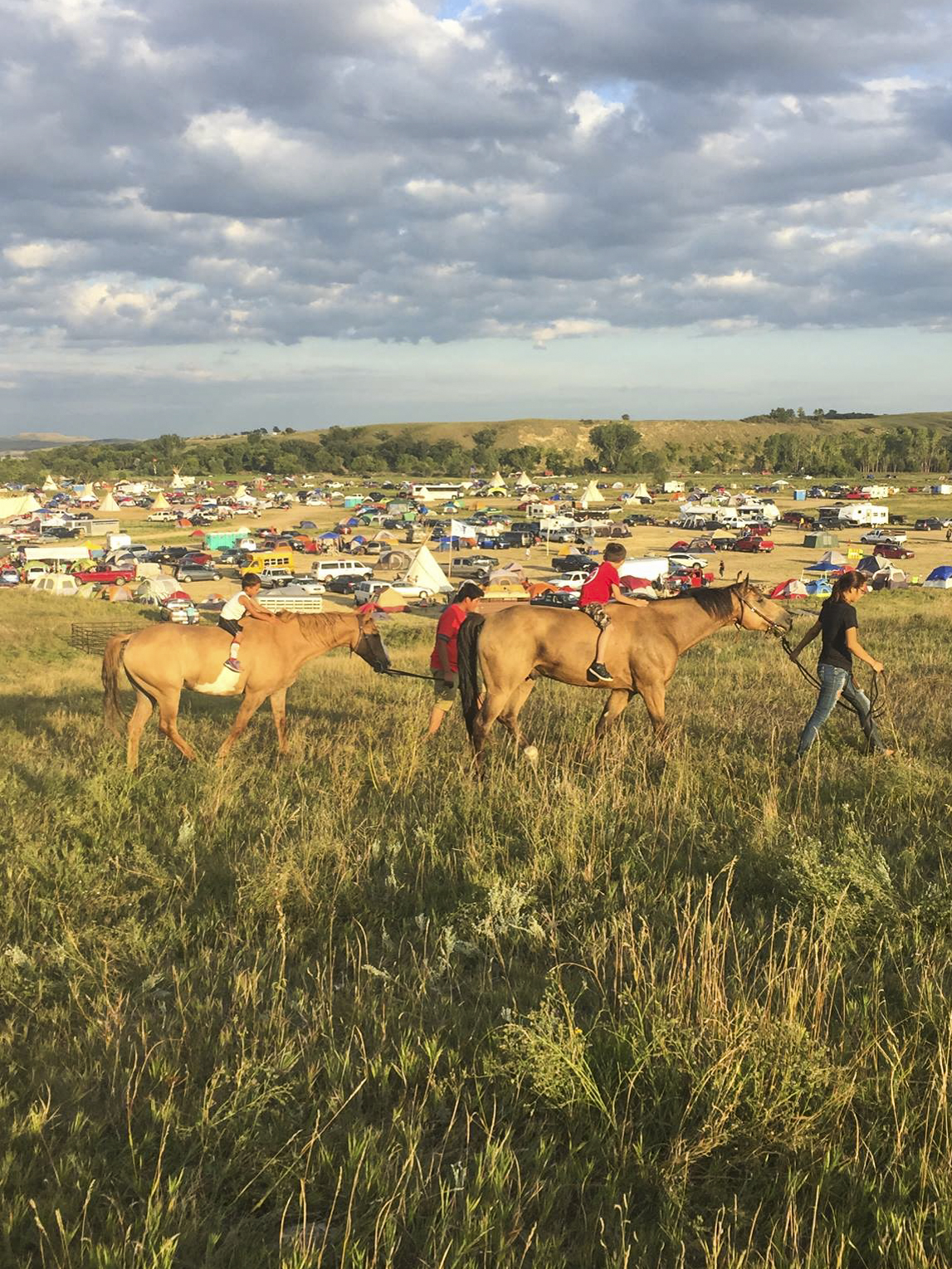
    We brought prayers to a gunfight, and we won. I’m talking about the water protectors who stood against military, police and mercenary forces last year at Standing Rock. We were there to protect the water, to preserve the future and to stand against those who would see our precious earth destroyed for a dollar. We were there to stop the construction of the Dakota Access Pipeline.

    It was around this time last year that I had been released from jail. I was one of about 150 water protectors arrested on Oct. 27, 2016 during the invasion of Standing Rock. It’s 2017, and the pipeline has been built. So, how did we succeed?

    While I cannot speak for everyone, here is my individual take.

    Standing Rock demonstrates the active presence of a powerful Indigenous community. Historic and contemporary narratives often portray Indigenous culture as a part of the past. I’ve met people who didn’t know Indigenous Peoples still existed. I think Standing Rock has made this much less likely. Thousands of Indigenous protectors from hundreds of Indigenous nations from all over the world came together at Standing Rock. The media coverage of Standing rock sent a loud and clear message that Indigenous nations are not passive and that they are here and now.

    Standing Rock created alliances that might have otherwise never have been forged. The Sacred Fire of the Seven Councils was lit, something that hadn’t happened since the 1800s. Indigenous nations from all parts of the world came to show their solidarity. Groups from every race united under Indigenous leadership. I saw Indigenous and non-Indigenous alike all acting for one cause. This is an image that captures true power. I met like minds from across the world. I found lifelong friendships in a matter of hours. Although I’ve returned from Standing Rock, the reason I went carries forth.

    Standing Rock brought attention to Indigenous issues. Over 300 cities in the U.S. joined in to slow the construction of the pipeline. Newscasters across the world cast light on the continued violation of Indigenous rights, of Treaty rights and of the continued history of violence against Indigenous nations. The issue of environmental racism was explicitly raised and people were engaged. Footage showing the willingness for state and federal governments to utilize violence for the benefit of private companies broadcasted across the world. The U.N. sent human rights investigators. All of these events contributed to raise awareness of Indigenous issues which are typically marginalized.

    Sure, the pipeline was built – so one could say the movement at Standing Rock was actually a failure. But the protectors at Standing Rock who aren’t still in jail continue to forward the call, which brought them there in the first place. Thousands of protectors have been changed forever. You don’t forget something that has made you who you are, and Standing Rock is now a part of who I am. Standing Rock was not a defeat. It was empowering and gave me the courage to challenge the structures around me. I’m not the only one, and that is why I think we won.