The Lumberjack


Students Serving The Cal Poly Humboldt Campus and Community Since 1929

Tag: internet

  • Memes Communicate Modern Messages

    Memes Communicate Modern Messages

    How memes provide comedic relief in times of conflict

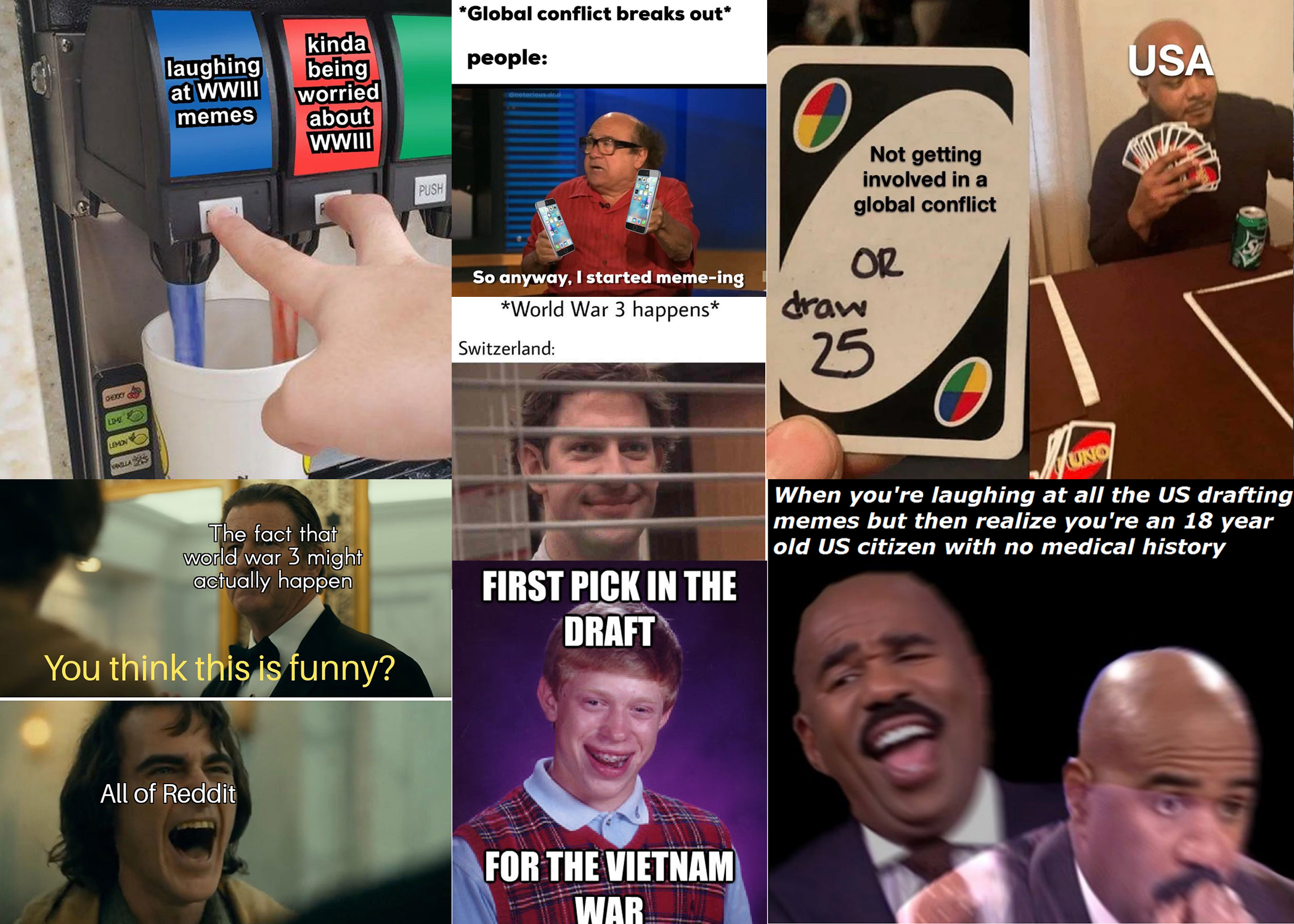
    When a war with Iran suddenly seemed imminent in early January, the people of the Internet reacted the only way they knew how—they made memes. The memes, whatever you think of them, helped people approach a difficult discussion through humor.

    President Donald Trump ordered the assassination of Iranian General Qasem Soleimani on Jan. 3. When Iran retaliated by attacking United States Army bases in Iraq with missiles, talk of World War III went on the rise.

    Many of the resultant memes revolved around the idea of men between the ages of 18-26 getting drafted to go to war.

    If the United States did go to war, there is a possibility that a draft could take place. In World War II, about 20% of men were drafted.

    While serving in the United States military has been voluntarily since 1973, an act of Congress could call for a draft. Male U.S. citizens between the ages of 18-26 and immigrants who are living in the U.S. still must register for the Selective Service System.

    Of course, no one wants to think about a draft. Instead, people address the issue through jokes. This might not be ideal, but at least people are talking about it.

    Should we joke about the hundreds of thousands of people who might die going to war? No, but we should be talking about it and this is a start.

    Using humor and memes to talk about what’s going on in the world isn’t a bad thing. Choosing to only laugh and failing to educate yourself on the issue you’re laughing at is where people go wrong.

    The memes could even be deemed as parody news. From what I learned in a parody news class last semester, people use humor to talk about serious topics without making them sound as serious, so that people can digest what’s going on. Parody news is often described as taking real subjects and making a joke out of them to get people laughing and thinking.

    The draft memes ranged from how women were going to try to get out of the war by being a housewife, to men offing themselves before they got drafted, to how to distract Iranian soldiers so your friends can get away. There were even meta memes about these memes that went something like, “Me laughing at war memes even though it’s probably going to happen.”

    Memes are as prevalent as ever. There seems to be a meme regarding every aspect of this possible war, and for almost every bit of modern life. If it makes news, the memes will follow. Everyday on social media you see memes regarding the upcoming presidential election, climate change, health care and more.

    Often times, I see memes about current events before I even see news coverage. I found myself laughing at the memes about WWIII before I even knew what was actually going on. When I saw the memes, I decided to research why people were saying we were going to war. The memes were my first point of contact on the events with Iran—they informed me.

    Using humor and memes to talk about what’s going on in the world isn’t a bad thing. Choosing to only laugh and failing to educate yourself on the issue you’re laughing at is where people go wrong. The problem isn’t on the people making the memes. It’s on the audience failing to educate themselves and do more with a meme than laugh.
  • Internet killed the rock star

    Internet killed the rock star

    Rock music has had an identity crisis since the turn of the century, and the internet has much to do with it. A good place to start is Napster, a revolutionary online music-sharing site that had its day between 1999 and 2002. This was a time when downloading songs online was frowned upon in the music industry, which is fascinating now since downloading MP3s and streaming music is the norm these days. That era was also the high point of CD sales, which has lost its popularity not only to digital music, but the resurgence of vinyl records.

    The late ’90s brimmed with awful grunge rock spinoffs and rap metal, which spun in heavy rotation on the air. Throughout the ’90s, mainstream music was more subject to quantity in sales than distributing quality music, as controlled by a conglomerate of major record companies like Sony and EMI.

    To a large extent, the public embraced the ability to share music online for free, following the successful launch of Napster. However, the music industry, as well as major label artists like Metallica and Dr. Dre, weren’t having it. Courts ruling against Napster in copyright infringement lawsuits facilitated the swift decline of the peer-to-peer file sharing service. But with every ending comes a new beginning.

    Shortly after Napster ceased operations in 2002, corporations like Apple embraced downloading music and capitalized on it at full tilt. What’s also important to note is that audio recording equipment became affordable and obscure sounds of the past became more accessible, thanks to the rise of internet in the 2000s. Combine these elements with the convenient ability to upload music online and anyone can be an artist. In other words, the audience became the producer.

    Before diving further into the digital music revolution, let’s discuss the origins of rock ’n’ rolI.

    Prior to rock pioneers like Chuck Berry or Elvis Presley in the ’50s, there was blues, country and folk music. Overlooked musicians such as Charley Patton, Robert Johnson and Big Mama Thornton planted the seeds to rock ’n’ roll that ultimately produced the classic ’50s rock sound we all know now.

    The ’60s ushered in the hippie era, including evolutionary sounds of The Beatles, Jimi Hendrix and Grateful Dead. The ’70s largely consisted of glam (T. Rex, David Bowie), punk (Sex Pistols, Patti Smith) and space rock (Pink Floyd, Hawkwind). The ’80s popularized hair metal (Mötley Crüe, Van Halen) and new wave (Talking Heads, Depeche Mode).

    The ’80s also launched an era of music videos to accompany hit singles, which replaced radio as a means to support artists. The invention of CDs during this time changed the game in terms of how people listened to music as well. Finally, the ’90s incorporated grunge (Nirvana, Pearl Jam) and rap metal (Limp Bizkit, Korn). Following Y2K, rock ’n’ roll embarked on a renaissance period that extends to this day.

    These days, a vast majority of rock bands are reminiscent of the sounds of the past, no matter how much they attempt to fuse other genres into their music. Whether or not this is a drag is in the ears of the beholder, but it’s worth pointing out that there are some outstanding rock songs being shared now.

    Gone are the days of rock icons like Led Zeppelin or Queen. Gifted musicians are drowned out by the mass quantity of music posted on the internet, leaving so many of the good ones to plateau. Just as the “Video Killed the Radio Star” in the ’80s and ’90s, the internet killed the rock star by offering too many choices.

    Lastly, younger millennials have embraced the sounds and styles of the ’90s. Since the 2000s were a time of revival, what’s the next formative generation of rock fans going to embrace?

  • EDITORIAL: FCC aims to impose internet road blocks

    EDITORIAL: FCC aims to impose internet road blocks

    Why you need to pay attention to net neutrality regulations.

    Since its introduction to the general public in 1990, the internet became a powerful tool by placing the world at the fingertips of the average American. Information to almost anything is now a click, a Google search and a Wi-Fi connection away.

    Now, the internet is a colossal asset in the everyday life of the consumer. However, the Federal Communications Commission wants to repeal previous regulations that allow the internet to remain free and open. This will make your internet access slower, limited and expensive. Understanding net neutrality and fighting back is vital to keep the internet a free and open method of exchanging of ideas.

    What’s going on?

    When we open up our browsers on our desktops, laptops and mobile devices, we expect quick and easy access to whatever website or information we seek, and maybe a Wi-Fi hotspot. With current net neutrality regulations from the Obama-era in place, we can rely on our internet service providers to not interrupt that flow of information or require us to pay more to access faster connection and specific streaming services or sites.

    On Dec. 14, 2017 the FCC, led by chairman Ajit Pai, voted to repeal the 2015 regulations on internet. Pai was appointed by President Donald Trump in 2017 and formerly worked as a Verizon lawyer. Pai is responsible for introducing the idea that by creating internet fast lanes, the internet will thrive.

    With current net neutrality rules in place, the internet is already able to thrive as a free market. The most prominent argument against repealing this level of neutrality is that the FCC would be infringing on free speech by putting a price on access.

    What does that mean?

    According to the Washington Post, internet providers such as Verizon, AT&T and Comcast will have the ability to charge for speed without regulations in place. Streaming companies like Netflix or Hulu will most likely be asked to pay for access to these fast lanes and in turn, end up increasing their prices.

    This means not only will we as consumers pay for internet packages that allow us minimal access, but now we will also have to pay for fast and reliable connection to only parts of the internet. This also creates a similar situation to when big businesses drown out small businesses. Websites and streaming services that can not afford to pay for these faster lanes of internet connection will be drowned out by companies that can afford it.

    Shady business

    According to the Pew Research Center, in a study on the feedback the FCC collected from the public reported that results of their surveying came “inaccuracies and duplicates.”

    The report also stated that many of the submissions recorded “seemed to include false or misleading personal information,” cotinated “clear evidence of organized campaigns to flood comments with repeated messages” and “often thousands of comments were submitted at the precisely the same time.”

    This was in addition to the email validation process set up by the FCC only working about three percent of the time. The report stated that even emails such as “example@example.com” made the cut for public comment on net neutrality.

    The FCC is not only making unconstitutional steps toward limiting the flow of information and placing the power of those limits in the hands of corporations, but they are playing dirty to do it.

    How you can fight back

    The states are just beginning to take action, but you can too. On March 5, Washington became the first state to fight back against the FCC on repealing net neutrality.

    According to the New York Times, Gov. Jay Inslee signed a bill preventing internet providers from “blocking and slowing down content online.”

    On a smaller level, as a citizen, you can voice your opposition by visiting websites that help you locate your House of Representatives and Senate representatives. Write to them and express your opposition to what the FCC is doing and encourage them to act against these changes. In turn, getting involved locally will encourage more states to join Washington in passing state legislatures that disagree with the limitations the FCC wishes to implement.

  • Surviving and thriving in a post-internet world

    Surviving and thriving in a post-internet world

    By|Ian Thompson

    In preparation for the worst case scenario that net neutrality is reversed and the internet simply becomes a massively censored shitpile of corporate mind control and political propaganda, I have made a list of how to survive and enjoy life in a post-internet world. Don’t worry, it will be like living in the 1980s.

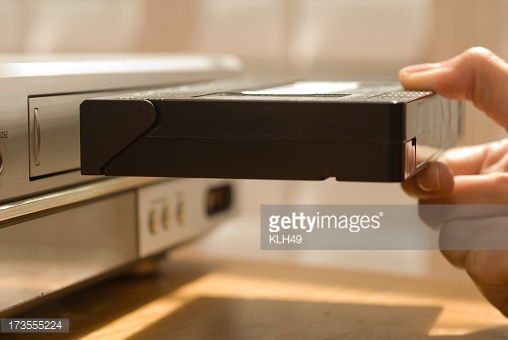
    1. Learn how to rent a movie at a video store. Now that you can’t binge watch hours of your favorite shows online, it’s time to brave the outside world and somehow get to the video store without using your GPS. You’re going to have to learn how to pick movies for yourself. You could ask the clerk to place a Certified Fresh label or Rotten Tomatoes ratings next to the the DVDs if it helps with the transition. You could also ask the clerk to yell a percentage at you when you pick up a movie, if that’s easier. But it’s best if you learn how to choose movies through trial and error. Yes, you will end up getting movies that suck, and you won’t be able to quit watching immediately and switch to a different movie.
    2. Invest in arcades. Your days of “pwning” 12-year-old South Korean kids on Call of Duty is over. Now that you can’t play online games, it’s time to go to your local arcade and challenge kids face to face in the arena. Arcades are awesome. You actually have to socialize with people when you’re there. You’re also standing up and walking around so you won’t be an immobile blob who never leaves the couch.
    3. Learn how to ask people out in person and go on awkward dates. Yes, you will have to learn how to meet people by actually going out and being part of society. You will have to learn how to get to know people beyond a snapshot they put on Tinder. You can’t rely on the algorithms of online dating sites or the superficiality of hookup sites. You’re going to have to learn how to ask someone out face to face. It won’t always be great. Sometimes you will be denied, other times you will realize that the person is too much like your annoying aunt or uncle. You may actually have to get to know the person by spending time with them before you decide if you like them or not. It’s okay, that is normal. Yes, you are more vulnerable than just scrolling through pics on an online dating site, but being vulnerable is a vital part of love. And sometimes it pays off.
    4. Cultivate your own opinions. Don’t be scared to try the Indian food place that people think is sketchy or the new taco truck that isn’t as good as the one that got a five-star rating on Yelp. Remember, you are living in a post-Yelp world. Like so much of life now, you will have to live through trial and error. Would it really kill you to try a new restaurant that you may not know has insanely good reviews? Just eat the food and figure it out for yourself! Not everyone has the same taste buds or tastes in food, music, art and fashion. There is no such thing as an objectively good restaurant, so eat whatever the fuck you want! Don’t be scared to honestly ask yourself how you feel about a certain cafe, movie or business. You will need to use critical thinking which may have been weakened by relying on online reviews and others’ opinions for too long.
    5. Say goodbye to fake Facebook friends and old high school acquaintances. This may be one of the best parts of living in a post-internet world. No, I don’t care that a girl I had a crush on in junior year of high school now has three kids and just got promoted to senior sales associate at Forever 21. I don’t care that one of my old drinking buddies is now an ultra evangelical Christian who married his pastor’s daughter. And that’s ok. Just because you don’t want to keep up with people who are no longer a part of your life doesn’t mean you’re a bad person or that you hate them. It means life is short and you should invest time in people who are in your lives now who you love and care about.
  • WTF is net neutrality?

    WTF is net neutrality?

    By|Phil Santos

    Most of us are probably asking, “what the hell is net neutrality anyway?” Here is a short breakdown of what it means and why it matters.

    The internet is made possible by ISPs (internet service providers) and content companies. Netflix and Hulu are content companies. In their case, the content is video. ISPs pave the road of the internet and content companies use them to truck their services across the web.

    Currently, ISPs treat all content providers equally. YouTube videos stream just as fast as Hulu videos. Every content provider is bound to the same speed limit. This speed limit is the foundation of net neutrality.

    Net neutrality demands that all content is bound by the same speed limit.

    Opposers of net neutrality believe that they should be given preferential treatment. They want the ISPs to make a private high speed toll road to deliver their content faster.

    The toll for these high-speed lanes will not be cheap and an increased cost at the top will result in an increased price at the bottom. This means that if net neutrality is abolished, you’ll be paying more for the same services you already receive. If net neutrality is removed, you pay the price.

    Aside from individuals, small businesses will suffer too. If a business can’t pay for a fast lane, it has to function at a slower speed. While Netflix is gliding down the fast lane, these small businesses will be choking in the gridlocked web traffic with everyone else who can’t afford to pay for preferential treatment. When Netflix streams a TV show twice as fast as Hulu, nobody is going to wait twice as long as they have to. This will create a mass exodus to the content providers using this fast lane.

    By restricting small businesses with this two-tiered system, we are putting our internet content in the hands of a select few.

    A world without net neutrality is a world where the natural democracy of the internet is up for purchase. Internet traffic will be concentrated into a handful of companies that can afford to do business in the fast lane. Imagine the implications if three companies dominated everything on the internet.

    The internet is a rarity in that it’s a decentralized technology. We all have relatively equal access to it and no one owns it, yet. For the freedom of the internet to be preserved, neutrality is a must.