“Ikyav, Pikyav” highlights efforts by native groups to reclaim power and sovereignty
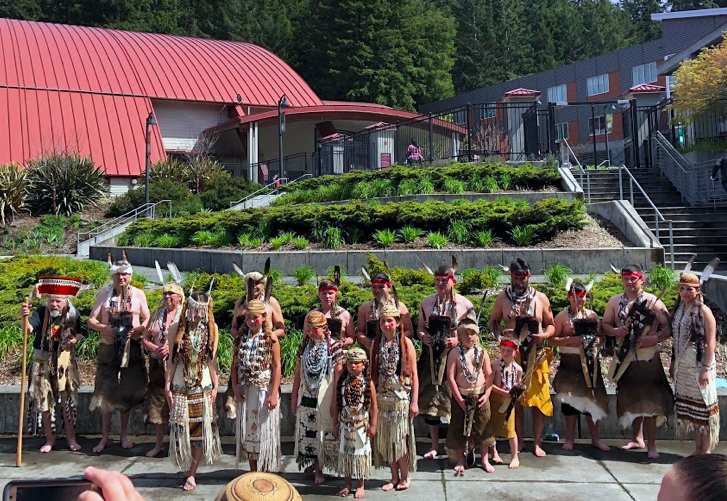
In the 70s and 80s, local Native American tribes fought to protect their sacred religious sites from western expansion in the form of a road between the towns of Gasquet and Orleans. This fight is immortalized alongside 50 years of the Indian Tribal & Educational Personnel Program’s history in a new exhibit open until May 18th in the Goudi’ni Native American Arts Gallery, located on the ground floor of the BSS.
The exhibit, named “Ikyav, Pikyav” (or Making, Re-Making), pays homage and celebrates some of the ways that indigenous peoples have reclaimed their sovereignty and power in the modern world.
Brittany Sheldon is the gallery director, she said the exhibit is important because it highlights the constant work that Native groups have done and are doing and also teaches people who were previously unaware of these efforts.
“A lot of the students here come from all over California, and I would guess that they don’t know much about this history,” Sheldon said. “We have a really powerful presence with the Native American Studies (NAS) department and ITEPP, and there’s a really important history of all the things that have gone on with Native American peoples.”

The first half of the exhibit celebrates ITEPP’s 50th anniversary as an organization. The group started as a grassroots organization focused on helping Native students who wished to become teachers, but slowly expanded to include students from a wide variety of interests.
Interactive photo murals are on display with a binder where former students and members can share memories about the photos. Several sashes decorated with traditional artwork and worn by graduating ITEPP members hang on stands, separating the two halves of the exhibit.
Alumni Kathleen Brewer thought that the show was important given that HSU is built on native Wiyot land.
“My favorite part was the ribbons, they were so intricate and beautiful,” Brewer said. “It’s great to see ITEPP get recognized.”
The second half of the show was a collaborative effort with the special collection at the HSU library and several NAS classes over the last year to make the G-O Road story more publicly available.
Audio interviews, old newspapers, pamphlets and journals from local activists and artists tell the story of the Karuk, Yurok and Tolowa tribes working together to protect their sacred lands.
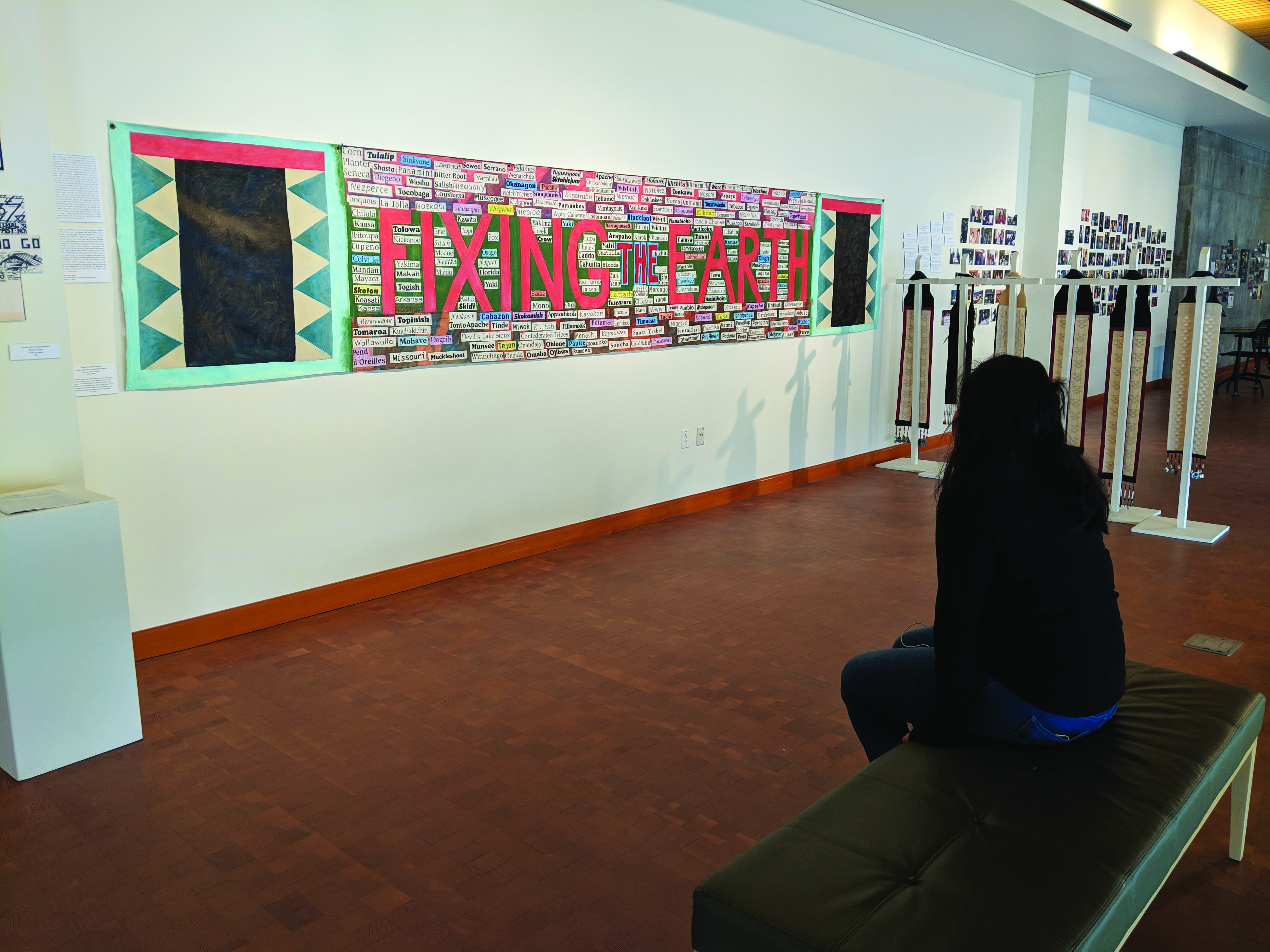
One standout visual piece from this part of the exhibit is a large banner created in the 1990s by local artist and activist Julien Lang. The banner says “Fixing the Earth” in bright red letters with the names of many native tribes collaged around the words. The banner was also used by local native groups in multiple protests and demonstrations.

In the end, the road was blocked by the 1984 California Wilderness Act. An earlier Supreme Court decision, however, set the precedent that native lands could not be considered religious grounds, making the victory bittersweet.
Maury Juarez spent an hour perusing the exhibit, and described the amount of detailed information available as overwhelming.
“I’m taking my first NAS class this semester, and I didn’t know much about the local indigenous struggles before that,” Juarez said. “My favorite part was Julien Lang’s talks on the land being alive.”
This exhibit is equal parts art show and educational experience centered around the efforts by native groups to reclaim their power and uplift those who seek an education at HSU.
“It’s not like we’re going to reach this point where everything is perfect and amazing. It’s not the idea of a utopia,” Sheldon said. “It’s the idea of the constant regular work involved in claiming and reclaiming spaces and sovereignty.”
“Ikyav, Pikyav” is open 12-5 p.m. Tuesday to Sunday and 12-7 p.m. Thursday and Friday.