The Lumberjack


Students Serving The Cal Poly Humboldt Campus and Community Since 1929

Tag: jen kelly

  • Schatz Lab researches local wind energy opportunities

    Schatz Lab researches local wind energy opportunities

    On a clear night someday in the future, you might look out across the ocean from Trinidad or Clam Beach and see small points of light way out in the distance. And the source for those points of light could be supplying all your electricity.

    The Schatz Energy Research Lab is an affiliate of HSU’s Environmental Resources Engineering program which seeks to study and educate the public about clean energy. They are in the process of investigating a possible offshore wind energy project.

    “We have the best wind resource in the United States,” said Maia Cheli, the communications and outreach manager for the Schatz Energy Research Lab.

    A possible wind energy project could have wide reaching ramifications for both Humboldt County and California as a whole.

    “There are so many reasons to support the development of clean, renewable energy: so that we can breathe healthy air, drink clean water, restore ecosystems, and slow climate change,” Cheli said. “But our critical energy questions don’t stop at how we generate energy – they also include who has access to electricity, how reliable that electricity is, how much it costs, and how well it supports communities. Bringing these outlooks together is the only way for us to build responsible, equitable energy systems.”

    The U.S. Bureau of Ocean Energy Management designated a region 20-30 miles off Humboldt Bay a possible site for an offshore wind farm. The farm would look like a number of floating wind turbines anchored with mooring lines. These turbines would convert wind energy to electrical energy.

    “You have the tower, you have the nacelle, and you have the blades, and so the wind blows on the blades and the blades are converting that in through the generator into electrical energy which then passes back down through the tower and connects in with some kind of a cabling system,” Cheli said.

    A possible project couldn’t just be a set of wind turbines, it would have to include upgrades to Humboldt’s current infrastructure, from our marine ports to current transmission capabilities.

    A wind farm that would produce enough energy to be cost effective would produce more energy than we could use, so it would have to be exported out of the area.

    “What we know of the system is that whether we develop medium or large-scale generation, it will require significant upgrades to the local transmission system,” said Marco Rios, the transmission system planning manager at PG&E. “And that really is because the current grid in this region was not designed to export generation outside of the area.”

    There are more variables like the possible environmental impact of the construction, regular function, and maintenance of the wind turbines.

    The data needed to predict environmental impacts of a wind farm doesn’t exist in full yet, and that’s what the Schatz Lab is working on.

    “There’s not a lot of people that far offshore sitting there and counting seabirds all the time, so we’re working on that right now with the seabird 3D study,” Cheli said.

    But those possible consequences have to be balanced with the consequences of a failure to reach emissions goals.

    Garry George, the clean energy director at the National Audubon Society, spoke about the possible impact on birds at the offshore wind energy webinar.

    “Our science team revealed in a study released last year that three degrees of warming will likely drive 389 species of North American birds to extinction because they’ll lose their wintering and breeding territories due to climate change,” George said. “So it is exciting to have a new resource, a new technology to add to our quiver of climate arrows here in California, like offshore wind, to get us to 100% clean and net zero emissions. This is critical for birds and it’s critical for people.”

    A large-scale project would also have larger social implications. Some of the possible new infrastructure may need to be built on Wiyot land.

    “In general, the Wiyot Tribe has long supported renewable energy development that is well sited, and are open minded and excited about the potential for offshore wind on the north coast,” Wiyot Natural Resource Specialist Adam Canter said at a public offshore wind energy webinar. “Especially the community-based approach and stakeholder involvement that this group of partners is taking early on during the planning process.”

    For now, the feasibility of an offshore wind farm is still being studied. Community input is still being gathered, and nothing is set in stone.

    “The Schatz Center is not committed to any trajectory. We are committed to providing good information so that good decisions can be made,” Cheli said. “I think the more that people can become informed about, you know, the impacts on the opportunities of any particular pursuit related to energy, the better decisions we can make for ourselves and for the planet as a whole.”

  • A quick rundown of a few COVID-19 vaccines

    A quick rundown of a few COVID-19 vaccines

    Pfizer–BioNTech and Moderna mRNA Vaccines

    Vaccines usually function by injecting a safe version of a virus into a patient’s body. Sometimes it’s a whole virus, parts of a virus, or a different virus that can still teach our immune system about the intended target virus. The vaccine essentially gives our immune cells a dummy to fight so they are prepared for the real thing.

    mRNA vaccines are different. Cells in your body contain DNA, a code for creating the proteins we’re made of. They function as a set of instructions for building our bodies. mRNA, or messenger RNA, plays a critical role in the process of interpreting your body’s instructions for making proteins.

    So, instead of injecting a virus, some COVID-19 vaccines inject pieces of mRNA. Using the dummy analogy, the injected mRNA are instructions for our cells to create their own dummies to learn from.

    Those dummies take the form of specific proteins like the ones found on the surface of infectious agents. Our cells build the dummy proteins, recognize that the proteins should not be in our bodies, then send our immune system to fight the dummy proteins. This builds our immunity, but the process takes time.

    The two COVID-19 vaccines currently approved for emergency use here in the United States are both mRNA vaccines. The dummy that the mRNA in the vaccine helps our body make is a harmless piece of a protein found in the spikes of the virus that cause COVID-19. The spikes are what give the virus access to our cells, so they are an effective and easy target.

    This mRNA process has been the target of widespread misinformation. Though you may hear otherwise on social media, the mRNA does not alter your DNA, it only uses the process of creating proteins to construct the dummies for our bodies to fight. The mRNA is destroyed in the process.

    Vector Vaccines

    These vaccines use a harmless virus to deliver DNA to your cells. Once injected, it then works in a similar way to the mRNA vaccines. The DNA delivered by the harmless virus acts as instructions for your cells to create dummy proteins for your immune system to fight.

    The harmless virus does not replicate itself. The DNA that it injects into your cells does not replicate or become a permanent part of you. Rather, it is destroyed when the immune system fights the dummy protein.

    Though many of the mechanisms are like the mRNA vaccine, vector vaccines are easier to transport. The DNA is not as fragile as the mRNA.

    No vector vaccines are approved in the United States as of publication, but there likely will be approved vector vaccines in the near future.

    The Oxford–AstraZeneca vaccine is a vector vaccine that may see approval in the United States. Russia’s Sputnik V vaccine, China’s Convidicea vaccine, and Ad26.COV2.S, also known as the Johnson and Johnson vaccine, are all vector vaccines.

    Inactivated Virus COVID-19 Vaccines

    These three vaccines are not approved in the United States as of publication but are approved in other parts of the world. They function like conventional vaccines with a safe version of the virus injected and used as a dummy by the body’s immune system.

    BBIBP-CorV was developed and approved in China. It has less storage and transportation requirements, making it easier to distribute. The developers claim it has a slightly lower effectiveness than the mRNA vaccines, but there is a lack of publicly available data and some conflicting numbers surrounding its use.

    CoronaVac was developed in China as well. Though approved in some countries, it has a much lower effectiveness than either the BBIBP-CorV vaccine or the mRNA vaccines.

    BBV152 was developed in India and is approved for monitored emergency use within the country. The effectiveness of the vaccine is not yet known.

  • A Guide to Exploring Humboldt’s Tide Pools

    A Guide to Exploring Humboldt’s Tide Pools

    As the tides of Humboldt County creep up and down our beaches, the ocean takes turns covering and uncovering a small area of coast. This region is called the intertidal zone. It spends some of its time underwater, but it’s exposed to us land-dwellers for exploration when the tides recede far enough. Pools trapped in between rocks stay put as the rest of the ocean leaves them behind. These pools offer a small look at what we’re usually missing beneath the waves.

    There’s some fascinating sea life to find if you know where to look. Classics of ocean exploration like anemones, barnacles, mussels, and sea stars cover the rocks. Sea slugs, scientifically termed ‘Nudibranches,’ are the graceful and colorful pop stars of the tide pools. They slowly dance through fronds of kelp. It can be difficult to suppress the urge to punt the odd football-like gumboot chiton across the tide pools. There are fish so well matched to the bottom of the pools that it often takes movement to spot one.

    The best part is that none of the wide variety of animals you’re likely to come across in the tide pools are capable of hurting you. A crab might give you a bit of a pinch if you pick it up. Sharp barnacles on rocks could scrape you up if you fall. The purple urchins that dot the lower intertidal are often blunt-spined and harmless to a shoed explorer. Watch your step, but more for their sake than for yours. Marine mammals like seals and otters sometimes hang out on rocks near tide pools. Approaching marine mammals or interacting with them is illegal, but more for their protection than yours. So long as you don’t eat any of the brightly colored nudibranchs, you’re safe from everything except poor decision making.

    Keeping three points of contact when climbing over slippery rocks will lessen the chance of dramatic falls into cold pools of water. Avoid rock climbing in favor of staying as low as possible to the ground. This prevents falls from being worse than they could be. Stepping on kelp is a one-way-ticket to slipping face-first onto a rock covered in sharp barnacles. Waterproof boots, warm clothing, and a camera that won’t be ruined if you drop it in a tide pool are all good equipment.

    So, with all that in mind, when and where can you go? Luffenholtz Beach and Palmer’s Point are two of the best locations near HSU. Both require climbing up and down stairs set into a cliff. Conditions should be just right for the ideal trip. Small waves, an early low tide, and a low chance of rain are your best bet.

    There are usually two low tides and two high tides in one day. You should go early enough for the tide pools to still be cold. The first low tide of the day is the best for seeing cool critters. The closer to dawn, the better. Low tides of 0.3 feet or lower are good bets. Any morning tides into the negatives are worth planning for. Plan your trip to center around the low tide. If you arrive 30 minutes before the low tide and leave 30 minutes after, you’ll get to appreciate all the lowest parts of the tide. You can download a local annual prediction tide table from the NOAA tides and currents website.

    But an early low tide with good weather does not necessarily guarantee a safe outing. Wave size and frequency are important too. The smaller the better, and waves above more than a few feet are enough of a reason to call the trip off. Exposed sites like Luffenholtz require greater caution with wave height. Ideal conditions being somewhere under three feet. Palmer’s point is a bit more sheltered, but waves over five feet are still dangerous. While you’re picking up the tide charts, NOAA also has marine weather forecasts so you can check conditions before you go.

    Now that you’re prepared for the tide pools, make sure the tide pools are ready for you. Each pool is like a little community of critters. Don’t be a Godzilla to the intertidal Tokyo. Never turn over rocks and try to keep your boots from treading too much into the ocean’s domain. Critters in the tide pools have evolved the best disguises to fool predators for eons. You never know what you’re stepping on.

    Instead of stepping in a tide pool, just sit down by one and stare at it. Keep an eye on the ocean and be mindful that the tides will move in eventually. What looks like an empty pool will soon reveal itself to be two nudibranchs, three juvenile rockfish, a kelp crab, and a gumboot chiton you’ll have to resist the urge to pick up and hail mary into the ocean.

    All photos taken at Palmer’s Point and courtesy of Julie and Mike Kelly.

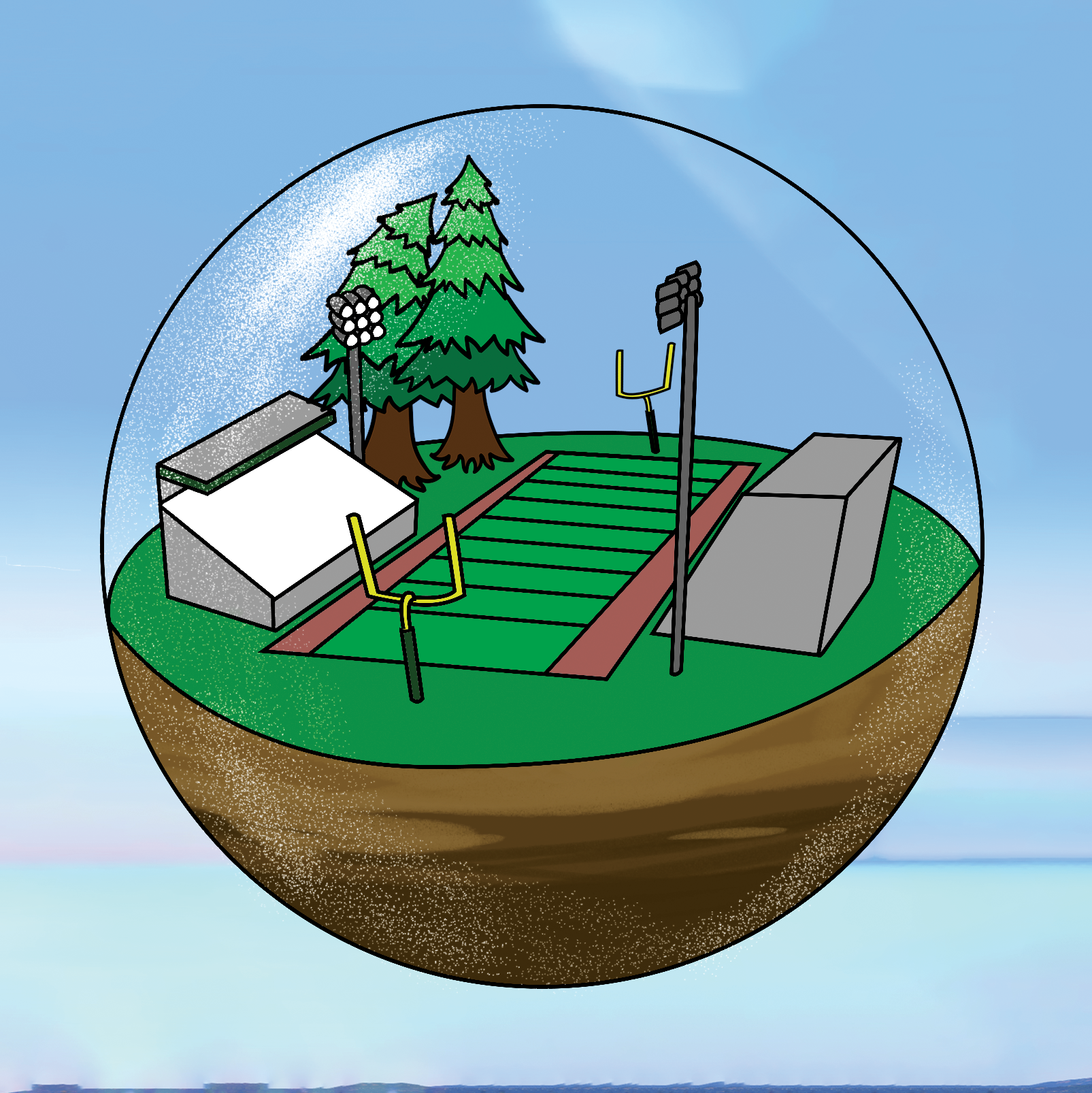
  • Sports Bubbling for controlling Coronavirus

    Sports Bubbling for controlling Coronavirus

    Science behind social bubbling casts doubt on the security behind implemented safety practices

    How many Superbowl parties have you been to? Drunk bodies stacked on top of each other. Frantic embraces. Hollering and crying. Sports, both play and spectation, is all about physical expression. And each one of those mass expression events carries the potential for an outbreak of COVID-19.

    According to the CDC, the virus is more likely to spread through close contact than through airborne transmission. Packing tightly into bars, gathering in stadiums, cheering and hugging are all likely to spread COVID-19. Early in the year, scientists linked a soccer game in Italy to a massive outbreak, with the true toll difficult to track.

    The danger doesn’t just come from the stadium, but also all the orbiting viewing locations. Simply social bubbling by quarantining the team, coaches, staff and media doesn’t cut it when major transmission events may happen as a result of independent viewings of sports broadcasts in addition to attendance of official events.

    Transmission through close contact may be more likely than airborne transmission. Contact sports may be more dangerous than sports with significant distance between players. Baseball has faced bumps in the road, with an outbreak in the Miami Marlins, but football requires more contact, and therefore more risk. The NFL recently suffered its first major outbreak in the Tennessee Titans, signaling a failure of their non-bubble model

    Realistically, models of disease spread must consider a wide range of variables. Changing numbers of susceptible individuals, changing likelihood that a susceptible person will encounter a sick person, increasing numbers of recovered individuals, the implementation of safety measures, and frequency of social gatherings like sporting events are all variables that matter when mapping disease transmission. But simple exponential growth is the basic reason why uncontrolled disease can overwhelm local healthcare at the beginning of an outbreak.

    One person has it, they give it to two people in a day. Those people give it to two more people each then next day. That’s four new people who can give it to two more people each. That’s eight new people and in a few weeks many more have it. It doesn’t realistically work that way on a large scale due to a wide range of important factors, but it’s a useful model for how outbreaks can begin in previously uninfected communities.

    Now say one person on a football the team contracts COVID-19. Then that one person gives it to 14 people through close physical contact. So, 15 people have it. They go out into the community and give it to 2 people each in a day. Our starting number is higher, so the growth is faster. Those 15 give it to 30 people, those 30 give it to 60, those 60 give it to 120, and so on.

    This clear danger is just one reason that hundreds of college teams have been cut due to the pandemic. These cuts impact athletes, athletic programs, schools and local economies. Specifically, Football often funds the rest of a school’s athletic program. If it goes, so might every other sport. Sports matter on a local level, not just as a national industry.

    That’s where the bubble solution comes in. The team and everyone who supports them cuts themselves off from the rest of a community. No one leaves, everyone gets tested constantly. It’s a bubble.

    In practice, it’s difficult. That’s hundreds of people quarantining together, with further levels of quarantine within the bubble. The people with the most contact, such as the players and coaches, must stay away from the other staff as much as possible, effectively forming bubbles within bubbles. Then the staff with the most contact to the players stays away from the staff undergoing the least risk.

    All of those bubbles on the edge of popping, delicate planning, and vigilant testing for only a chance to keep the team safe. There are severe consequences if all those measures fail. And none of those intense measures accounts for what happens outside. It can’t account for people huddling around their TV, packing into bars, or embracing when victory is declared.

  • The Complex Interface of Humans and Wildfires

    The Complex Interface of Humans and Wildfires

    How fire suppression is a mixed bag in Humboldt County

    Every fire season, blankets of smoke roll over Humboldt County. Here on the coast, that’s as close to wildfires as some of us get. But our practice of fire suppression is a relatively new state for our woodlands and the lack of fire is taking its toll on the county.

    “Humboldt county’s interesting. Most of the county really hasn’t experienced much fire over the last few decades,” said Jeffery Kane, associate professor of fire ecology and fuels management at Humboldt State University.

    High levels of rainfall and a more temperate climate contribute to a lower risk of fire, but that doesn’t mean fire isn’t a natural part of Humboldt’s environment.

    “When there are ignitions, and there are ignitions here from lightning and humans from time to time, they are usually fairly easy to put out,” Kane said. “That nice fog layer, that’s going to moderate fire behavior.”

    Inland Humboldt county is not as protected by our temperate, coastal environment. But Kane said that quick fire suppression may not be the safest or most environmentally friendly way to manage wildfire in the long term.

    “The thing that we know is most effective is to treat areas with a combination of thinning and burning,” Kane said.

    The suppression of small wildfires can make future fires more difficult to control. Dense canopies and the buildup of dry fuel makes fire more dangerous. By thinning the forest, the trees become less tightly packed. When the canopy has more gaps, fires spread slower. Then after the canopy is thinned, a prescribed burn can take care of the natural dry fuels and remaining debris created from thinning. Thinning and burning can make an area less vulnerable to uncontrolled wildfires.

    Although Humboldt is relatively protected, this area still would see wildfire activity every few years if not for the relatively recent introduction of American colonizers. Due to the danger of wildfire to settlers and property, wildfire is almost completely suppressed.

    Disturbance Ecology Professor Rosemary Sherriff studies the impact fire suppression has on local woodlands. She thinks there can be a balance between protecting settled areas and letting wildfires run their course.

    Lightning strikes and Indigenous burning would have introduced fire to local oak woodlands. These woodland areas suffer without the fire that shaped the ecosystem.

    “In the past few years we’ve had fires that have gone into more urban areas, a lot of it stemming from more wildland areas,” Sherriff said. “There’s been a substantial amount of urban-woodland interface and these are really extremely hazardous places to live.”

    In addition to providing more fuel to fires, the removal of wildfire has come at the cost of native biodiversity. Removing a natural phenomenon that was encouraged by local Indigenous tribes has consequently impacted our landscape. Local ecosystems are adapted to wildfire and removing fire allows fire sensitive species to grow without natural inhibitors.

    “Inland we have oak woodlands, for example, that historically would have had a lot of fire,” said Sherriff.

    Lightning strikes and Indigenous burning would have introduced fire to local oak woodlands. These woodland areas suffer without the fire that shaped the ecosystem.

    “What we’ve seen is a lot of encroachment of native douglas fir into these oak woodlands,” Sherriff said. “So there’s been a loss of the oak woodland open areas.”

    This loss of oak woodlands can be seen throughout Humboldt County. This destroys native biodiversity. But fire suppression is not the only consideration.

    “Fire suppression has certainly shaped the landscape,” Sherriff said. “We can’t disregard the fact that settlements and communities and ranches and homeownership and the cannabis that’s happening also shapes and reshapes the landscape and can contribute significantly to shifts in fire behavior.”

    The balance between human settlement and fire suppression is a difficult medium to reach.

    “It becomes extremely tricky when it’s someone’s livelihood,” Sherriff said. “It’s very easy to sit at the university and say ‘yeah, more fire on the landscape’ but it’s extremely hard to make it happen with all the structures and policies in place.”

    Lenya Quinn-Davidson is an advisor for the University of California Cooperative Extension. One of her projects is the Humboldt County Prescribed Burn Association. It’s a loose cooperative of land owners and community members that implement prescribed burns. While structures and policy is slow to change, they’ve proactively decided to put fire back into their land themselves.

    “A lot of people want to use prescribed fire,” Quinn-Davidson said. “By the time we’re actually there lighting the fire, there’s already been a ton of work making sure that it’s safe, effective and that it won’t get out of control. It’s not like we’re just going out and lighting things off.”

    Prescribed burning is a tool that landowners can use for fuels management, invasive species control and habitat restoration. The encroaching firs that Sherriff studies are a main target of controlled burn.

    “We’re losing our oaks at a pretty astonishing rate,” Quinn-Davidson said. “So a lot of the landowners that have oak woodlands really want to use prescribed fire to get in there while those firs are small and kill the firs. The oaks survive just fine because they’re very fire adapted.”

    Though douglas firs are native, there are some invasive species that landowners can keep back with prescribed burns. There are invasive species of grass like the medusa head that smother local grasslands. Ranchers want to make sure their cattle grazing lands are free of medusa head.

    “It creates this thick thatch that prevents other plants from growing, so it turns into this homogeneous field of grass that nothing can eat.” Quinn-Davidson said. 

    Fire is necessary for keeping our natural landscape healthy and biodiverse. Where forest and human settlements meet, controlled burning can help maintain a healthy habitat with less danger to human life. With those buffer zones established, wildfire can be allowed to burn in a controlled manner, establishing a careful balance between fire and safety. 

    Quinn-Davidson thinks getting to a meaningful scale of fire management will take a combination of state intervention and owners taking control of their land.

    “It’s a real community thing.” Quinn-Davidson said. “People just love it.”

  • A Brief Breakdown of COVID-19 Misconceptions

    A Brief Breakdown of COVID-19 Misconceptions

    Four things you or your relatives might misunderstand about COVID-19

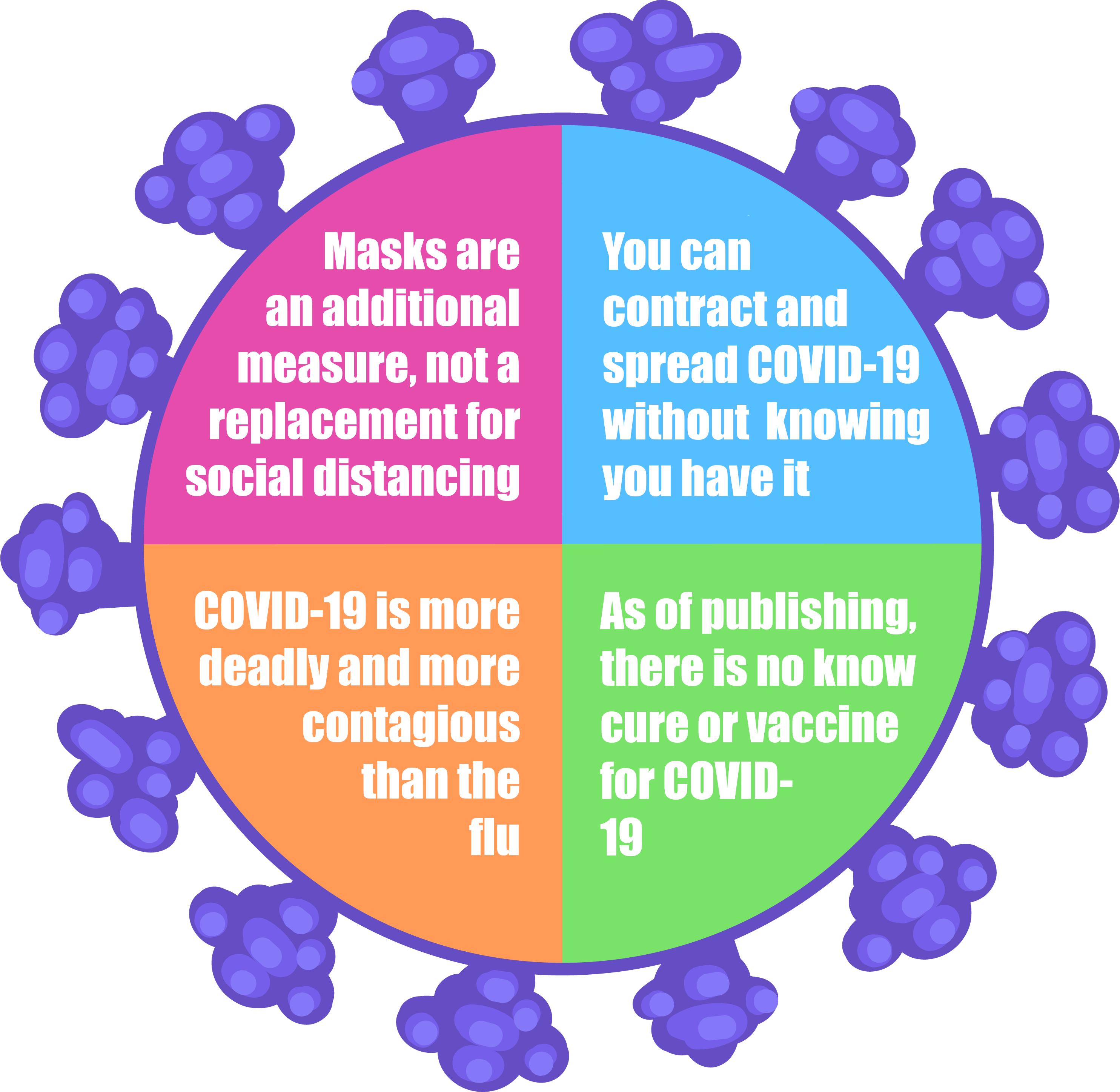
    Misconception: The fatality rate of COVID-19 is only 2-3%. That sounds low, so it isn’t worth worrying about.

    Reality: Any fatality rate estimate can be misleading. It’s possible that many more people contract COVID-19 than receive a test. Numbers from the World Health Organization put the fatality rate of confirmed cases globally at around 6%, but those numbers are only based on people who have been tested or had severe symptoms. That number can also be misleading because the fatality rate varies by region, age group and other risk factors.

    Though the actual fatality rate is unknown, it is much higher than past pandemics such as H1N1 (swine flu). Even if it was low, a small percentage of the total global population is still a staggering amount of people.

    Misconception: I don’t have symptoms like fever, cough or difficulty breathing, so I must not have it and I can’t spread it.

    Reality: In South Korea, COVID-19 testing was widespread and early testing results showed that many people in their 20s and 30s had the virus, but were completely unaware that they could be spreading it. Since it’s possible that many more people have COVID-19 than get a test, people who feel healthy and demonstrate no symptoms could spread it.

    Misconception: If I wear a mask, I don’t have to practice social distancing.

    Reality: Simple masks for people without symptoms and people not in high-risk groups are recommended by the Centers for Disease Control and Prevention more to protect others from you while in public. Since many cases are asymptomatic, it may help prevent people unaware of their own infection from spreading it. Masks are an additional measure, not a replacement measure. The CDC recommend social distancing along with a mask.

    Misconception: There is a cure for COVID-19.

    Reality: As of April 2020, there is no specific medicine or cure for COVID-19. Antibiotics are not effective against the viral illness, and there is no evidence of any effective home remedy. There are ongoing trials and possible vaccines being considered, so that may change soon.

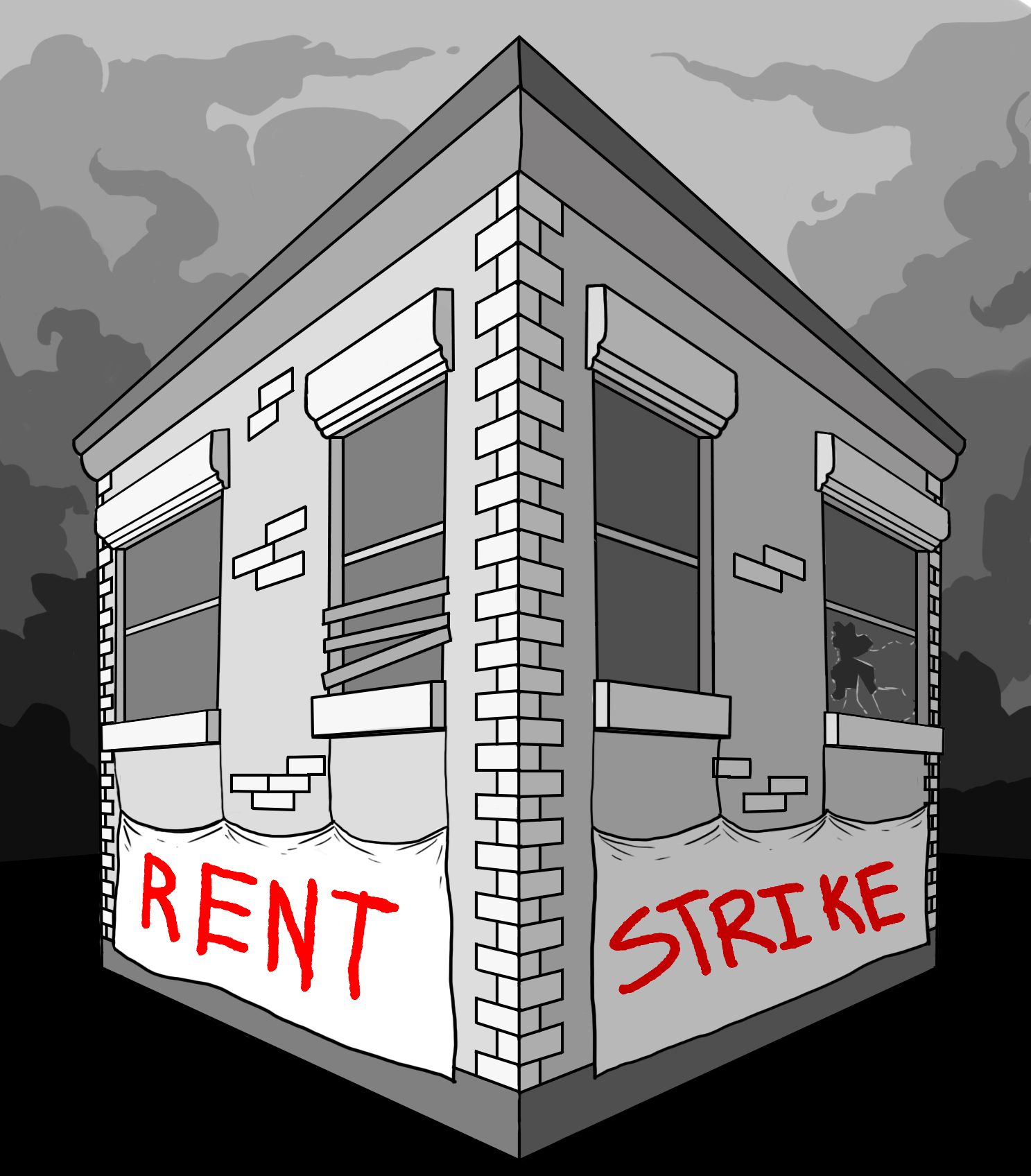
  • Rent Strikes are on the Rise

    Rent Strikes are on the Rise

    What are rent strikes and why are they building during a pandemic?

    Almost a third of Americans have not paid their rent for April, a significant increase from this time last year. In the weeks since the shelter-in-place order, many people have lost their jobs, either temporarily or permanently. Many are wondering how they’re going to pay their rent if they don’t have jobs, but some tenants are wondering why they should have to pay rent at all. You may have seen calls for a rent strike circulating online, but what does that entail?

    A rent strike involves a group of tenants organizing and withholding rent until a set of demands are met by their landlords or government. They can be an effective way of improving the conditions of living spaces, lowering rent or creating political change. They have a wide variety of potential benefits as well as risks.

    The goal of organizations like Rent Strike 2020 is to freeze rent nationally for the next few months. Although many local governments, including Arcata’s government, have taken measures against evictions due to the pandemic, renters still owe money. The goal of a rent strike would be to eliminate the need to pay while under a shelter-in-place order entirely.

    Rent strikes require neighborhood coordination and organization. If one or two tenants in a neighborhood decided to strike by themselves, they are still vulnerable to eviction after a lift on eviction freezes. For a rent strike to be effective, they need to be well organized.

    With almost 80% of Americans living paycheck to paycheck, a few months of sheltering in place may mean tenants cannot pay, strike or no strike.

  • HSU Health Center Remains Open

    HSU Health Center Remains Open

    Students on campus can still reach out to medical services

    The Humboldt State University campus is closed to the public, but the Student Health Center expects to remain open for the remainder of the semester to help any students remaining on campus. The health center is limiting face-to-face contact as much as possible, but is still helping students without physical appointments when possible.

    “We’re doing everything we can to help minimize the risk of exposure for students and Student Health and Counseling staff by limiting as much face-to-face contact as possible,” HSU Director of News and Information Aileen Yoo said. “For emotional support, for instance, students can talk to a CAPS counselor over the phone and, in most cases, if preferred, Zoom.”

    The Health Center is still offering other essential services like prescription refills and COVID-19 testing.

    “For those who are sick or suspect they have COVID-19, we have urged them to call before visiting the health center,” Yoo said. “When it comes to COVID-19, our main focus is assessing the student and collecting swab samples if we think that’s necessary.”

    “It is normal to have ebbs and flows with your mood and productivity levels but if you get “stuck” in a dark space for an uncomfortably long time, consider reaching out to get help such as from a counselor at CAPS.”

    Jennifer Sanford, director of Counseling and Psychological Services and associate director of student health and wellbeing

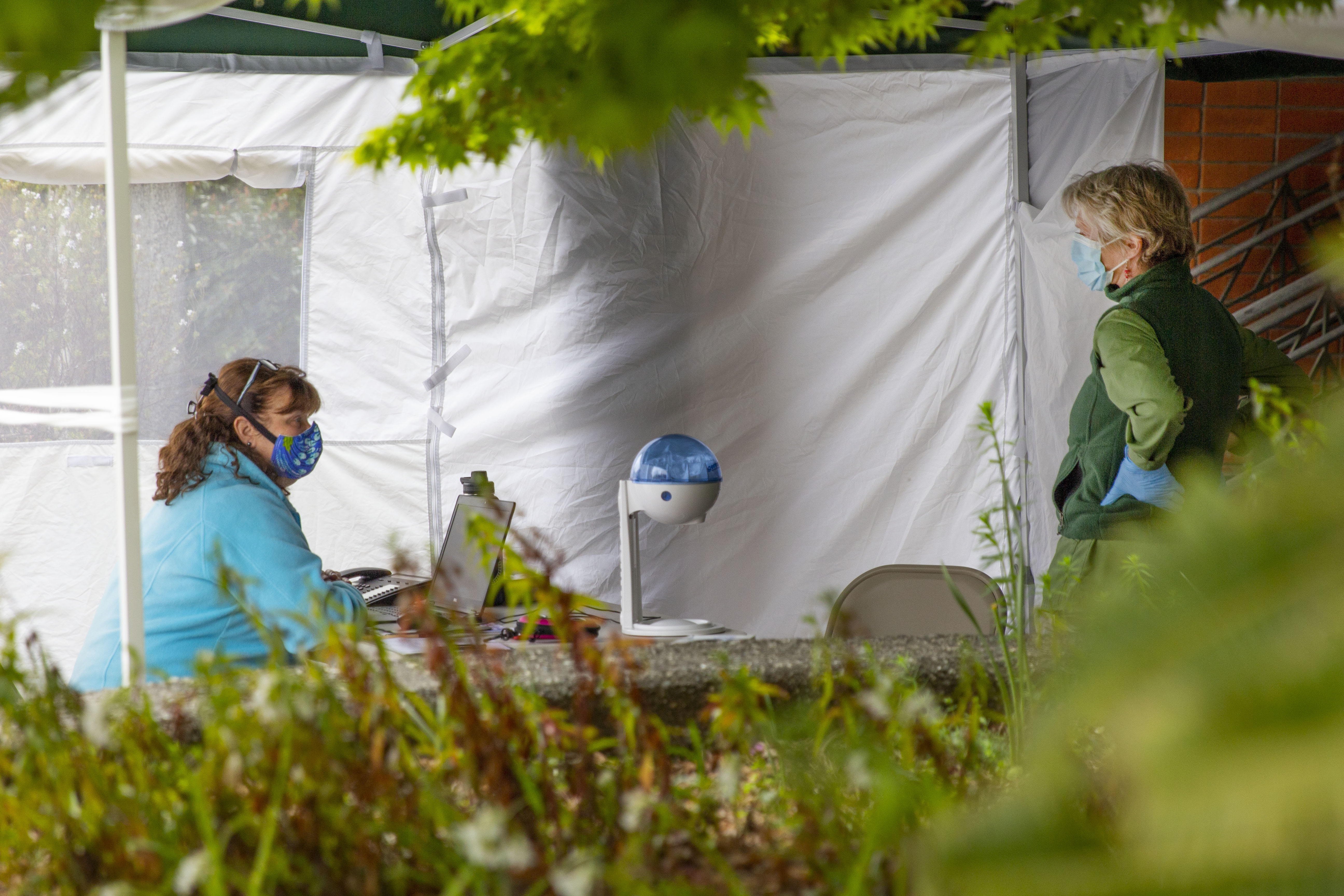
    The Health Center set up white triage tents in front of the building to help students check in and get assessed. If a student tests positive for COVID-19, the Health Center will work with county health services to make sure the student gets the treatment they need.

    During a pandemic, the disease itself isn’t the only medical problem facing students. The Center for Disease Control warns the stress of a pandemic can cause or worsen mental health problems, and recommends calling a health care provider if symptoms persist.

    The Director of Counseling and Psychological Services and Associate Director of Student Health and Wellbeing Jennifer Sanford asked students to consider reaching out to Counseling and Psychological Services if they feel their mental health is deteriorating.

    “Pay attention to how your thoughts and attitudes in any given moment are impacting your mood and overall wellbeing,” Sanford said. “Talk with others, connect. It is normal to have ebbs and flows with your mood and productivity levels but if you get “stuck” in a dark space for an uncomfortably long time, consider reaching out to get help such as from a counselor at CAPS.”

    Sanford said that this can be an uncertain time, but it’s important to see social distancing as community care.

    “The reality is that in our physical distancing, we are displaying compassion and care for our elderly and medically compromised,” Sanford said. “We are allowing our healthcare system to better manage the flow and care of patients, and we are caring for ourselves by lessening our own risk.”

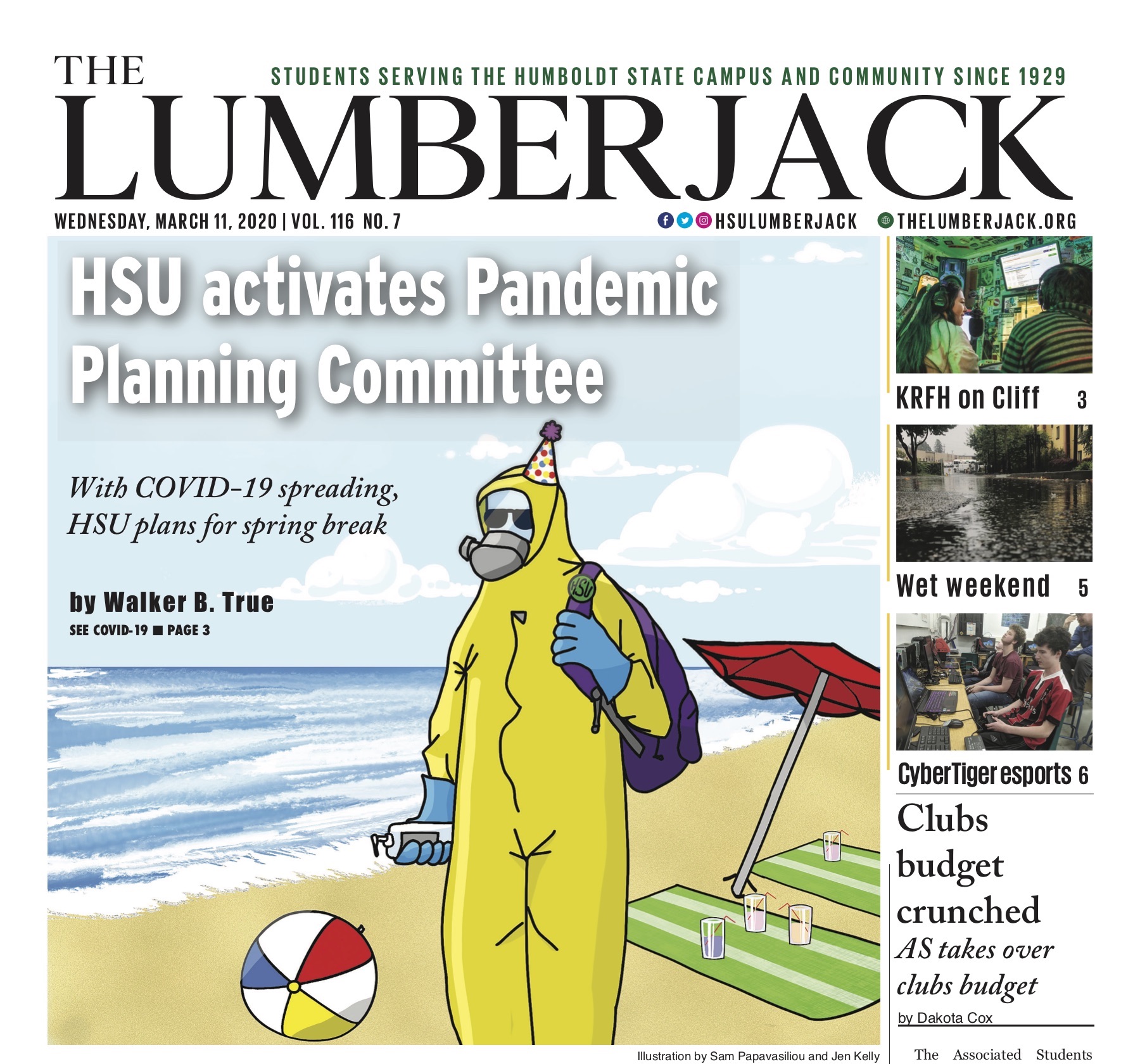
  • The Lumberjack in Print: March 11, 2020

    The Lumberjack in Print: March 11, 2020

    The seventh issue of The Lumberjack for the spring 2020 semester

  • The Light at the End of the Speeding Metal Death-Box

    The Light at the End of the Speeding Metal Death-Box

    The United States needs better regulations on rear car lights

    There is a frightening flaw in American car design clearly visible during every trip to the grocery store. United States auto regulation does not require brake lights to be a different color than turn signals. They should be.

    The colors and positions of rear lights may seem like a small detail, but it has deadly consequences. According to the U.S. Department of Transportation, 36,560 people died in motor vehicle crashes in the United States in 2018. Given this statistic, one would hope we are doing everything possible to ensure the safety of drivers and their passengers.

    Tight and statistically informed regulations on the auto manufacturing industry are important when making something so necessary but so dangerous for the modern worker’s everyday life.

    The lights on the rear of a car are designed to do a lot of jobs, the most important of which are to indicate when the driver is braking, when they’re turning and when they’re reversing. Seeing as communication between drivers is one of the most important requirements of safe driving, these signals must be as clear as possible. A simple system designed to effectively communicate these three actions already exists.

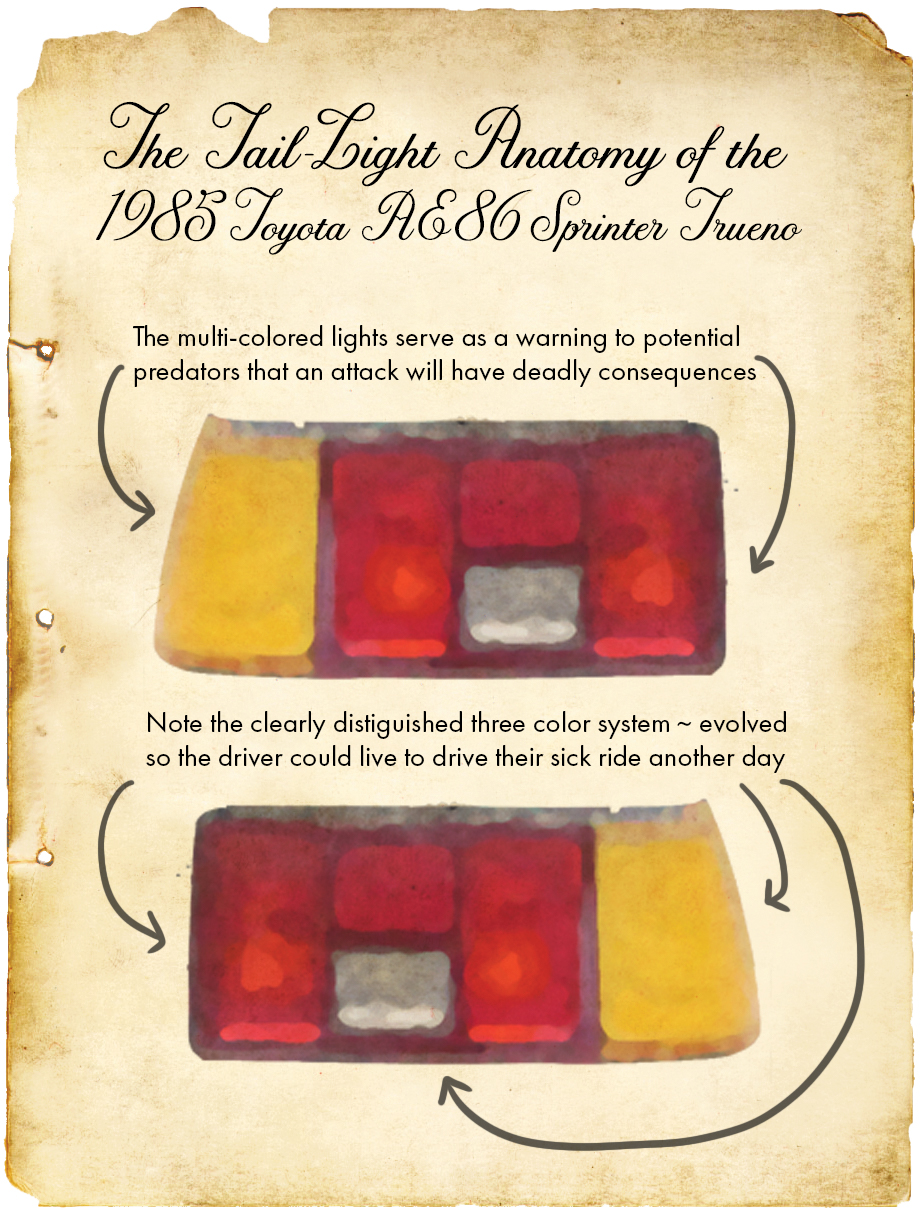
    A three-color system makes driver intent clear. Red brake lights indicate a driver is slowing, white back-up lights indicate a driver is reversing and amber turn signals indicate a driver will be mixing up their position a bit. This is where America stumbles. Back-up lights are required to be white and brake lights must be red, but turn signals can be either amber or red. Worse, they do not have to be separate from the brake lights.

    Turn signal color and separation may seem trivial, but the National Highway Traffic Safety Administration found in a 2008 study that cars with amber turn signals may be up to 28% less likely to be struck while maneuvering in a way that involves the turn signal.

    A 1995 study by the same agency found reaction time to brake signals decreases significantly when the braking driver possess amber turn signals. This remained true even when the braking driver wasn’t using their turn signals.

    Even using the most conservative estimates in safety increase, there is no doubt amber turn signals would save lives.

    We’ve known for at least 50 years red lights aren’t the best choice for communication. Red light can appear to be further in the distance than it really is. It is also difficult for the human eye to see differences in red light intensity. A blinking red light is less noticeable than a blinking amber light, which is something that should be taken into consideration when creating fast, metal death-boxes.

    There are more studies with similar results. The weight of the evidence for better turn signals is overwhelming. Most other countries require amber turn signals. Cars sold in the United States without amber turn signals have them in other countries. The United States and Canada stand virtually alone on this. The question is clear: why are American cars not required to have amber turn signals?

    Is it cost? It’s tempting to think this is yet another example of the auto industry cutting corners. In this case, it’s probably not. Amber turn signals are not significantly more or less expensive than red turn signals.

    Even using the most conservative estimates in safety increase, there is no doubt amber turn signals would save lives.

    It could also be aesthetics. Nothing says boring like safety. The fear of death is just part of what makes driving exciting, apparently. We want sleek, sexy cars. Our most expensive cars look angry and aggressive. They aren’t designed to pick up kids or run to the store. They are accessories or fashion statements, not tools.

    Maybe Americans just enjoy the freedom to refrain from changing simple things that would increase the quality of life for everyone around them. The rest of the world may do something in a way that’s objectively better and uses the same amount of effort, but we’re Americans and we’ll be damned if we let the United Nations tell us what to do.

    Maybe it doesn’t matter. Driving around Humboldt County, one wouldn’t know turn signals are mandated at all. If we do away with turn signals altogether, this isn’t an issue. American ingenuity triumphs again.

  • Students Test Out the Voting Waters

    Students Test Out the Voting Waters

    Mock election prepares HSU students for local issues on ballot

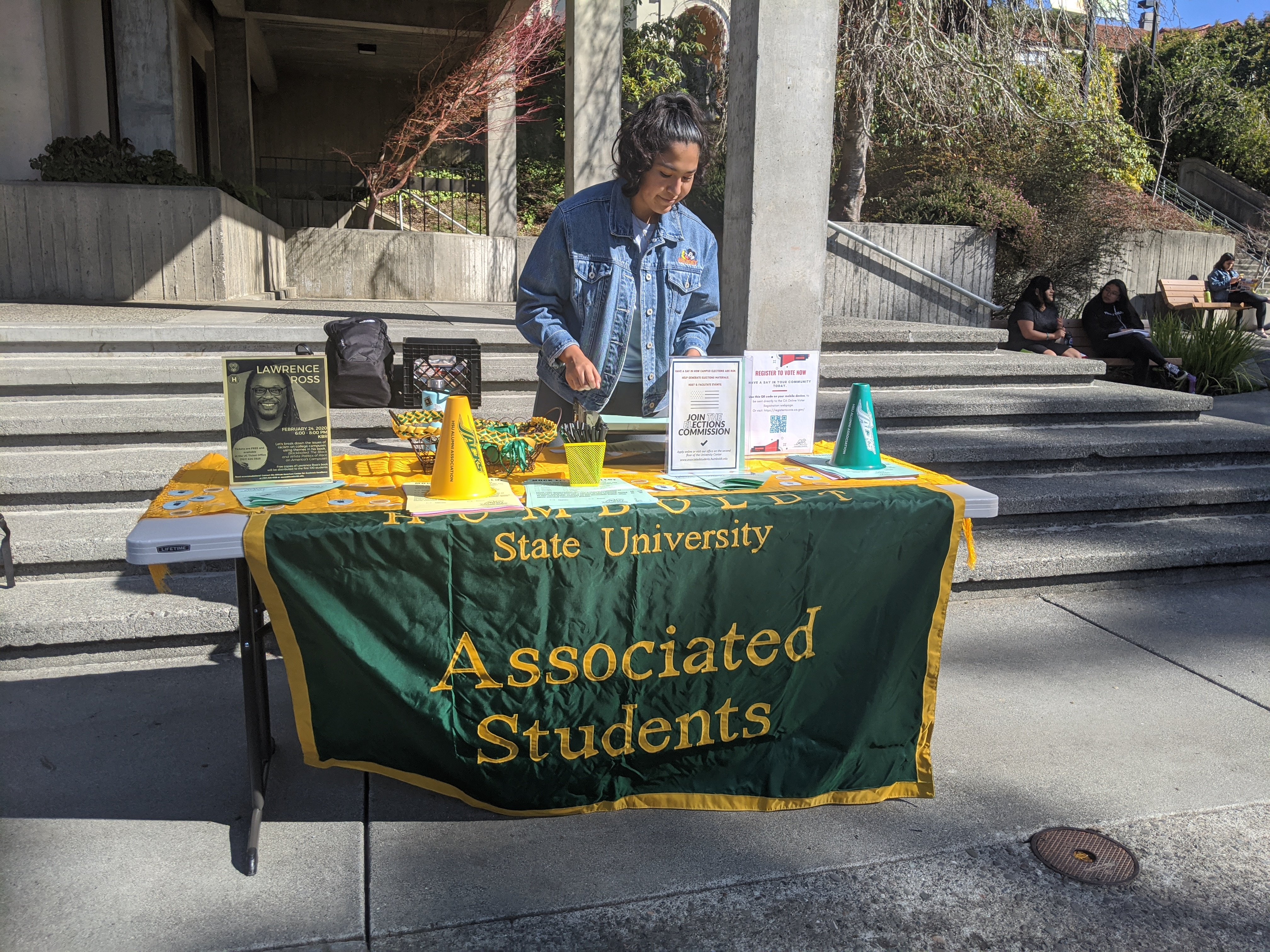
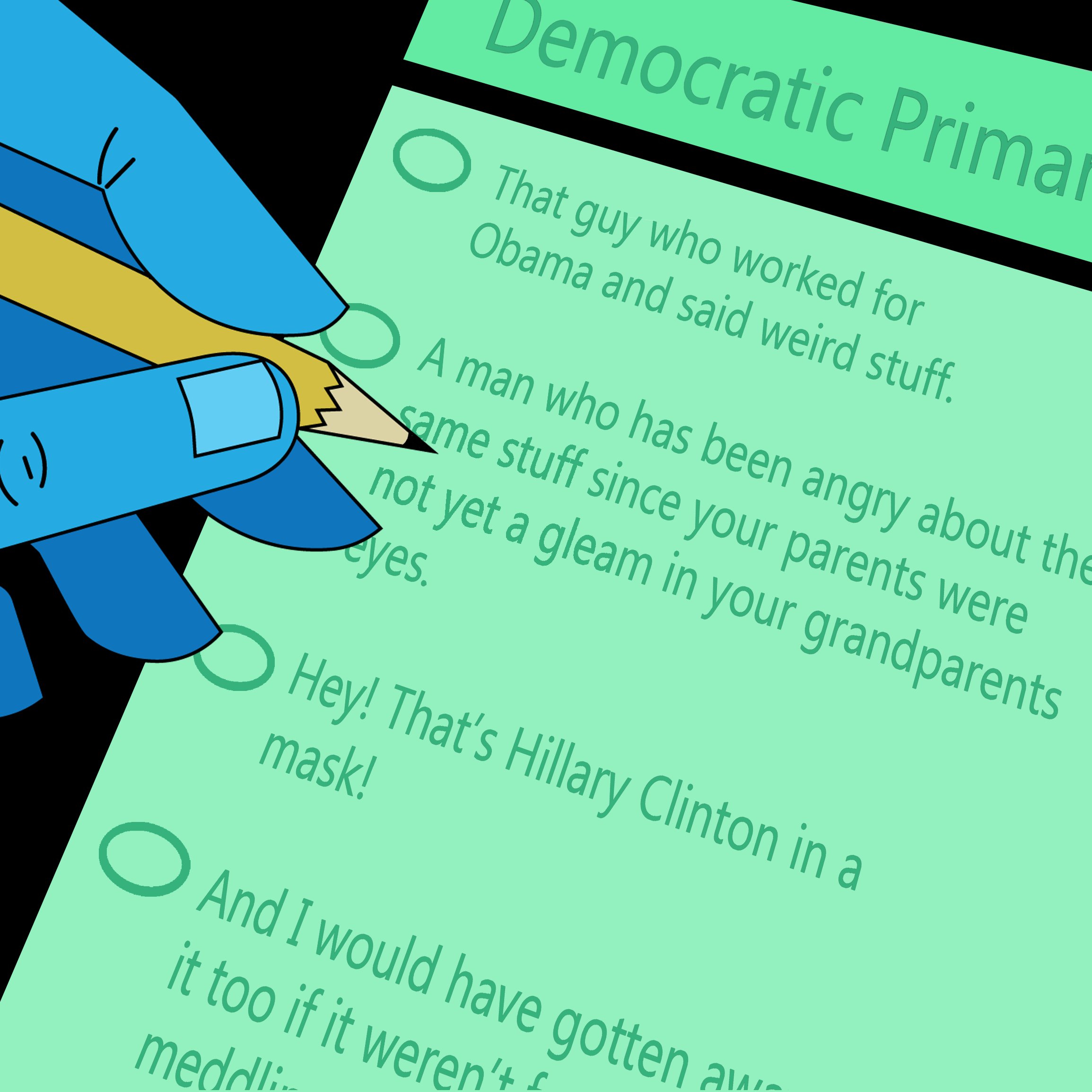
    Humboldt State University’s Associated Students held a mock election with the help of the Politics Club Feb. 24 in the University Center Quad. On the ballot were candidates for both the Democratic and Republican primaries, as well as local election measures.

    “We’re gathering data from the student population about what would happen if we held the election today,” Legislative Vice President of Associated Students Jeremiah Finley said.

    The mock election gave students the opportunity to take a closer look at which candidates were on the ballot. When the results are released, students can gain a new insight into the perspectives of other students.

    “Some of the measures that were posted—I was like, ‘What is this?’”

    Tashenea Young

    “We’re trying to make sure our students at HSU are more educated about the decisions that they’re making,” Finley said. “This will give the students the opportunity to go back in and really investigate.”

    Tashenea Young is a computer science and math education major who felt more informed about the upcoming election because she participated in the mock elections.

    “Some of the measures that were posted—I was like, ‘What is this?’” Young said.

    Young said mock elections like the one on Monday are a step in the right direction for helping to inform the student body, but events like the mock election need more publicity to reach more people.

    “It’s better than nothing,” Young said.

    Real measures weren’t the only questions on the ballot. It also included a mock referendum on fluoridated water.

    Paul Hilton, an HSU politics major and member of the Politics Club, helped organize the mock election. He was curious about how students would vote concerning fluoride. He said that although there wouldn’t be a referendum on fluoridated water on the ballot in March, it was close to being on the ballot in November.

    “It was a step away from Arcata putting it on the Arcata ballot,” Hilton said. “After a whole lot of community city hall meetings and discussions, it was a 3-2 vote to not put it on the ballot.”

    Hilton hoped the mock election would help professors as well as students.

    “One of the questions was, ‘What day of the week is worst for you when it comes to nighttime deadlines?’” Hilton said. “So, one of those actually has informative results that we’ll tally up that might be able to go to professors.”

    Although Hilton was glad for the mock election, he thought there was room for improvement. The ballots were printed on colored paper and didn’t resemble voting material. Hilton said this may have discouraged potential voters.

    “People are more likely to pick up a pamphlet,” Hilton said. “If I was just going by, I’d be like, ‘What’s this kid’s construction paper kind of stuff just hanging out? I’m not interested in this.’”

    California votes Tuesday, March 3. Associated Students are now more experienced for their real elections, and students can take more knowledge on local issues to the polls.

  • Syphilis Rates Spike in Humboldt

    Syphilis Rates Spike in Humboldt

    Though prevalent, there are many free treatment and prevention options

    Syphilis rates are spiking throughout California, and Humboldt County is no exception. If left untreated, syphilis can cause a brain condition that resembles dementia, heart problems, skin ulcers and blindness.

    Nurse Practitioner Andrea Shoup is taking an active role to better inform the community about risk factors, prevention and treatment of syphilis.

    “It’s totally treatable,” Shoup said. “People don’t really get tested. If they do, it’s not enough.”

    Syphilis can manifest, but then seem to disappear. If a person doesn’t get regularly tested, they may never know they have it and spread it without knowing. There are also risk factors that increase the likelihood of contracting syphilis. Men who have sex with other men are at a higher risk than men who only have sex with women.

    “It’s just the butthole,” Shoup said. “The anus tears more easily than the vagina.”

    Other risk factors include finding sexual partners using social media, which can create a false sense of trust between partners. Methamphetamine use is also linked to high rates of syphilis. People under the age of 26 are also more likely to contract syphilis than any other age group.

    “That just comes down to promiscuity,” Shoup said. “It’s true in my own life. I kind of doubled down at 20.”

    Dr. Teresa Frankovich, the health officer for Humboldt County, said she is not surprised about the local rate of syphilis.

    “I somewhat expect we would see the same trend as elsewhere,” Frankovich said. “There’s ultimately a large amount of people at-risk.”

    Though the actual number of cases are going up, Frankovich thinks there’s more to it.

    “Part of it is we’re doing a better job at screening individuals,” Frankovich said. “We’re catching more cases of it.”

    “Notifying your partner if you have a positive test is really important.”

    Dr. Teresa Frankovich

    There is a lot that can be done to limit the risk of exposure to syphilis. Frankovich suggested limiting partners. Abstinence and monogamous relationships are ideal for limiting exposure to STDs. Condoms are available at most medical treatment facilities, including the Student Health Center on campus. Condoms are also available by prescription.

    Shoup says condom prescriptions, though important for limiting STD rates, still cause controversy.

    “I had some Republican coworkers that were all, ‘I’m paying for people’s pleasure,’” Shoup said.

    Along with condom prescriptions, yearly screenings are recommended. Since syphilis and other STDs such as chlamydia can go unnoticed, there is no way of knowing the STD status of a partner without a test.

    “Notifying your partner if you have a positive test is really important,” Frankovich said.

    Frankovich acknowledged that communicating with past partners about syphilis can be a challenge for many, which is why the Public Health division of the Humboldt County Department of Health and Human Services provides a service called the Partner Services Program. Public health will assist in contacting partners and inform past partners in order to jump the hurdle of uncomfortable situations.

    The Student Health Center, the Open Door Clinics, Planned Parenthood and any general practitioner can help with preventative measures, testing and treatment.

    “Really it’s a lot of bad things that you don’t want,” Shoup said. “You don’t see the consequences until much later.”

  • No Parking, No Progress

    No Parking, No Progress

    Study reveals complex campus parking problem with solutions still far-off

    In 2017, Humboldt State University commissioned a parking market demand study which found exactly what commuters knew—there is a problem with parking on campus.

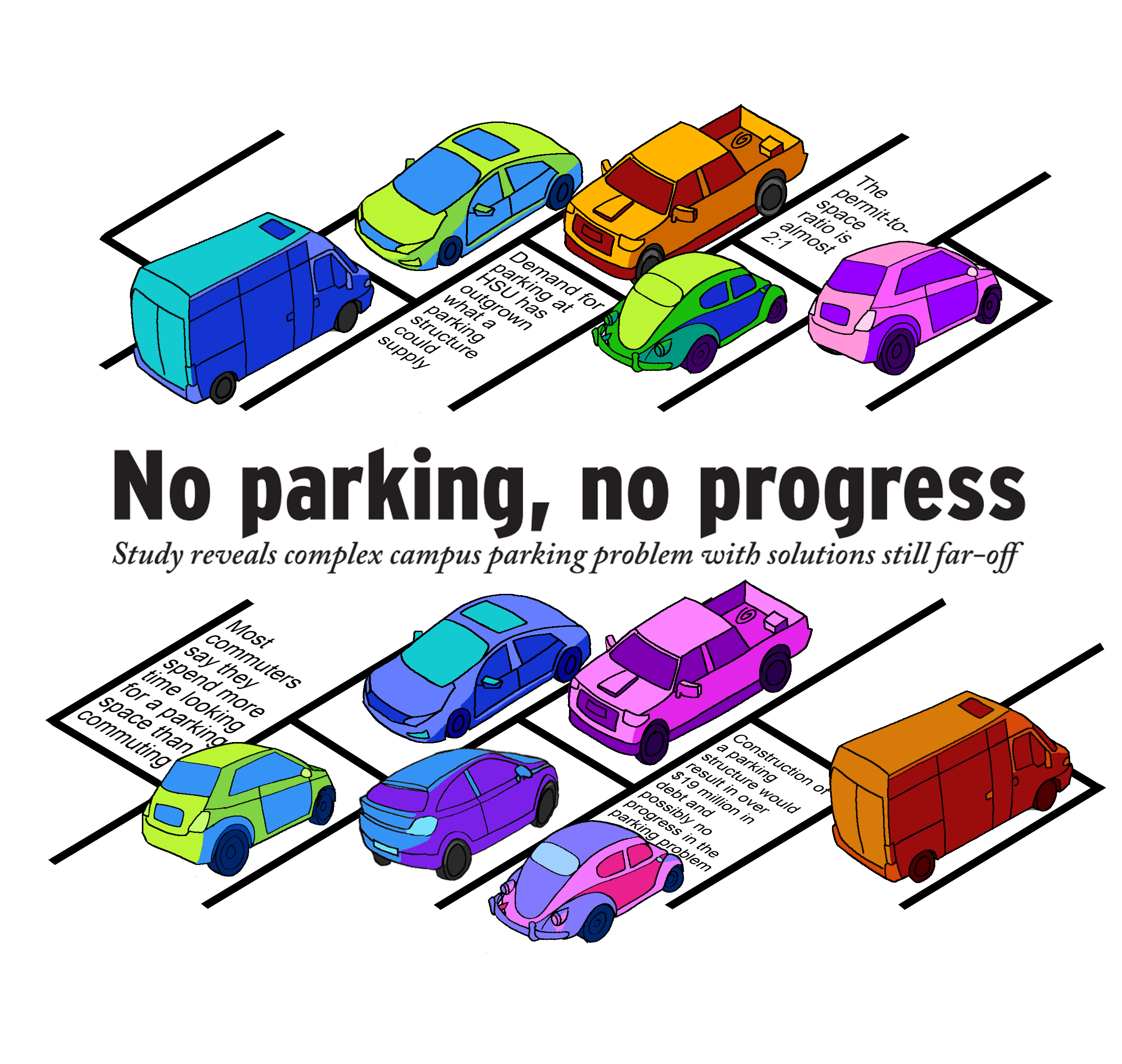
    HSU has a total of 2,162 spaces, about 1,000 of which are general parking. These spaces are shared among more than 9,000 students, staff, faculty, visitors and administrators. The study found solving the parking problem might be harder than adding more spaces. Terrain is challenging, space is limited and HSU has a finite budget.

    Film student Alice Peterson had a panic attack the first time she had to park on campus.

    “It was raining really hard, I was late to class, it was the second or third week, there were no spaces and there was a lot of over-stimulation,” Peterson said. “My fight or flight kind of kicked in and I left.”

    Peterson has needed to drive to class more and more ever since. A load of heavy, expensive film equipment makes walking every day impossible. During her time at HSU, she has racked up almost $500 in parking violations because she is forced to park illegally or in spaces meant for visitors.

    David Lieb is the national director of higher education mobility planning at Walker Consultants, the parking consultant firm that HSU contracted to conduct the market demand study. Lieb worked on the study personally and said that although universities are a group of people sharing a common parking problem, HSU faces some unique issues.

    “You have a challenging topography,” Lieb said. “Everybody wants to park in a space that’s convenient to where they go, but there’s a limit to the number of spaces.”

    There is barely any room on or near campus to add a significant amount of spaces, which is why many students are advocating for a parking structure. But Lieb did not recommend a structure.

    “The shortage at this point is such that we don’t believe it would solve the problem,” Lieb said. “The survey suggested that there was more demand out there, but people were saying, ‘Why would I buy a permit if I’m not going to get a space?’ So if you increased the number of spaces, the people who are currently saying, ‘I’m not going to buy one,’ are going to buy one.”

    This process means the parking situation would remain the same if a structure was built, but the parking prices would have to increase to pay for the construction.

    “By what we calculated, parking prices would at least double or possibly triple,” Lieb said. “Our company provides design services for parking structures. We would be delighted to design a parking structure for you, but we’re not going to recommend it if we don’t think it’s the right solution.”

    Alternative transportation and ride share programs are already available through HSU.

    Jeanne Rynne, the associate vice president of Facilities Management, and Krista Paddock, HSU’s Parking and Commuter Services program coordinator, are working together to alleviate parking demand. All plans are in preliminary stages of development, but the long-term goal is to limit the number of cars that are brought to campus instead of adding more parking spaces.

    “We are looking at potential park-and-ride lots in the area,” Paddock said.

    There are parking lots in Eureka and McKinleyville that stand nearly empty during HSU’s busiest times. Those lots could be used as off-campus parking. HSU could then provide buses to and from the designated lots to limit the number of cars coming to campus daily.

    “We’re always trying to promote ride share with the Zip Cars and the Zagster bikes and the Jack Pass program,” Rynne said.

    Alternative transportation and ride share programs are already available through HSU. Both Paddock and Rynne said there are no concrete solutions on the table yet. For the time being, they plan on heavily marketing the programs that already exist.

    “We’re always open to feedback,” Rynne said. “We have the Parking and Transportation Committee and there’s two student vacancies.”

    Rynne, Paddock and Lieb all agree that parking is an incredibly emotional issue. Finding a space can take a long time. The study noted many commuters take longer to find a space than to travel to and from HSU, and HSU’s lots fill to 100% capacity during peak hours.

    Parking is stressful in a special way. No one studying or working at HSU needs additional stress, but money and topography appear to be blocking all the solutions.

  • Ballot Burning for the Modern Meddler

    Ballot Burning for the Modern Meddler

    Why we need to stick with physical ballots

    In 1960, the Kennedys tried to steal the White House. A Kennedy ended up living in the White House, so they may have succeeded. Maybe they stole the election, maybe they didn’t. But because we have the physical ballots, no one can dispute that they tried. In the modern world of voting machines and election apps, we might never know who tries in the future.

    If you wanted to rig an election in 1960, you needed a plan, a large team, a smokey basement in Chicago and a lot of money. You needed someone to go to a graveyard and register corpses to vote. You needed to catalog abandoned houses and figure out how many dead or fake people you could put in each one. You needed to physically go out and beat up a few voters—possibly even commit a murder or 20. You needed a large operation full of trusted members willing to do all of this. And perhaps most importantly, you needed to be fine with everyone knowing that you just tried to rig an election.

    Stealing an election was incredibly difficult, dangerous, obvious and almost completely ineffective if one candidate had a significant lead. Voting with a paper ballot clearly isn’t a perfect system, but the attempted rigging of the 1960 election is almost common knowledge. We have the paper to prove it.

    We know what paper is. We hold it in our hands almost every day. Casting a ballot is an anonymous and easily-understandable physical action. It’s traceable at every step of the way, and we can tell if the ballots don’t make it to their destination.

    Conspiracy with physical ballots is possible, even probable, but not effective on a large scale. Certainly, physical ballots aren’t perfect, but they are hard to mess with in a way that will significantly affect an election. There are doubts that, even with all the tampering and violence, the attempted rigging of the 1960 election even changed the result.

    Electronic voting, on the other hand, is vulnerable in ways paper voting is not. When you stand in front of a voting machine, there are some questions you probably have.

    The most important part of getting people to vote is the trust that the vote goes somewhere. It’s counted. The vote is verifiable, and the process is easily understandable.

    Who made the voting machine? Who paid for it? When you press a virtual button on a screen, how do you know the machine tallies it, or gives it to the right candidate? How do you know it reaches a database where it will be counted? Do you know what the software being used is, how it works, if it’s secure, how to tell if it has been tampered with, if the machine is connected to the internet — as many inexplicably are— or if it has been calibrated properly?

    The odds are that you don’t. I don’t. Nobody does. Nobody besides the people who managed to remotely change a voting machine’s final tally. Nobody besides interested parties in our own system who might want the election to turn out a certain way. Voting machines are incredibly vulnerable. They are outdated upon release, not tested properly, easy to manipulate and often connected to the internet for some reason.

    You don’t have to call on the crime syndicates of the country anymore. You don’t have to organize a massive conspiracy. All you need to rig an election is to know how to hack a virtually-undefended voting machine.

    The most important part of getting people to vote is the trust that the vote goes somewhere. It’s counted. The vote is verifiable, and the process is easily understandable.

    Electronic voting doesn’t just open our system up to attacks from malicious parties. It erodes the trust between the voter and the system. This would be true even if everything was perfect—even if there was no one meddling. But there is someone meddling. We know there is. There always has been and there always will be. It wasn’t just 1960 and it wasn’t just Democrats. The question isn’t, “Who would rig an election?” It’s, “Who wouldn’t rig an election?”

    If someone’s going to attempt to rig the 2020 election in the same way as the 1960 election—and they possibly already have—I want them to have to work for it. I want them to have to go out to graveyards, get their hands dirty and threaten some grandmas. I was disappointed by the Iowa caucuses. These days it’s hard to tell the difference between epic, mind-blowing incompetence and election theft. If these elections are going to be a complete farce, ditch the apps and voting machines. If there’s going to be ballot burning, I want to see the flames.

  • Who Students are Supporting in the Upcoming Elections

    Who Students are Supporting in the Upcoming Elections

    What students think of the 2020 presidential candidates on offer

    The 2020 presidential campaign season has been in full swing for months. Candidates have risen and fallen. Media coverage of the race has been pervasive. Scandals, conspiracy theories and online warfare have all grabbed media attention. Headlines are filled with heart attacks, race-faking and corruption allegations. Voting begins in earnest this February with the Iowa caucuses. So, who will Humboldt State University students support going into election season?

    “I really have no idea what’s going on right now,” HSU student and competitive rower Travis Wills-Pendley said.

    The Lumberjack’s presidential poll from Oct. 2019.

    Wills-Pendley is one of the many students choosing to let the dust settle before making any decisions. Californians don’t vote until March 3, so students will have a chance to see how candidates perform in other states before voting.

    Although most students stayed away from the chaotic primary coverage, the majority said they would likely vote for the more left-wing candidates. Vermont Senator Bernie Sanders was frequently mentioned, along with Massachusetts Senator Elizabeth Warren and Hawaii Rep. Tulsi Gabbard.

    “I care a lot about education. I have a bunch of younger cousins and I really want to make sure they get a good education.”

    Elise Guerrero

    Elise Guerrero is a wildlife major who focuses on climate change policy and progressive advancement in education.

    “Currently I’m definitely voting for either Bernie Sanders or Elizabeth Warren,” Guerrero said. “I care a lot about education. I have a bunch of younger cousins and I really want to make sure they get a good education.”

    Meanwhile, biology major Nathan Johle thinks there is a lack of effective climate policy among the democratic candidates.

    “I care a lot about environmental policies,” Johle said.

    “This will be the first time I can vote in a presidential election, so I might as well use my right.”

    Nathan Johle

    Johle previously supported the climate action-focused campaign of Washington Gov. Jay Inslee. However, Inslee dropped out of the race in August 2019.

    “If I’m going to support a politician it’ll be Tulsi Gabbard,” Johle said. “This will be the first time I can vote in a presidential election, so I might as well use my right.”

    Johle doesn’t identify with a certain political party. Instead, he chooses candidates based on their individual positions.

    “I have beliefs,” Johle said. “I don’t like to put them between two labels.”

    He expressed concern that students vote for candidates without doing their research, a sentiment echoed by fellow student Kitty Quintrell.

    “I don’t like making a conclusion until I’ve got my own research,” Quintrell said. “That’s one of the main things I’m going to be doing before I submit my vote.”

    In the short time before California votes, some states will have already decided. The popularity of the candidates will be much clearer. Momentum will be gained by some and lost by others. Due to the shifting field of the democratic primary, students are resorting to a tried and true method—waiting until the last minute to cram.

  • 33 Months

    33 Months

    Living in a community full of love, fear and a growing void of justice

    Thirty-three months after a black HSU student was murdered in the city of Arcata, a circle of family, friends, students and community members huddled together, clasped hands and shouted his name.

    “Justice for David Josiah Lawson,” the group said loud and clear over and over from the steps of the Arcata City Hall. The sun had set hours ago, and a winter wind was biting at those gathered in attendance, but weather wouldn’t stop the crowd.

    “The vibe itself is very upbeat considering the weather,” said attendee Andre Ramos, who wore a heavy winter coat and a beanie pulled over his ears.

    Every month since the murder of David Josiah Lawson, a crowd has gathered around Charmaine Lawson, the mother of Josiah Lawson, and together they demand justice for Josiah. Lawson remains steadfast in her belief that justice will happen. She makes the journey all the way up to Humboldt from her home in Southern California to remind those in power that she will make it happen.

    “It will happen,” Lawson said. “I serve a mighty god. As long as I have breath in my body I will continue to be here.”

    “There are beautiful, amazing, wonderful, compassionate people here. There is love within this community, but there is evil and darkness here.”

    Charmaine Lawson

    To Lawson, this was an open and shut case. The original suspect, former Mckinleyville resident Kyle Christopher Zoellner, was apprehended the night of the murder. Lawson said the murder weapon was also found. She said DNA evidence should presumably solve this case.

    “Why we’re still here? Dumbfounded,” Lawson said.

    As the months go by, more and more students move to Humboldt to attend Humboldt State University. Yet Lawson is concerned these students don’t know the situation they’re moving into.

    HSU has a much higher population of people of color than the surrounding community. Most HSU students come from Los Angeles or the Bay Area and the small-town culture of Humboldt is different from what they’re used to. Lawson wants to ensure that all students who start the next step of their lives in Humboldt make it out again, but she feels that students of color simply aren’t welcome.

    “If you’re a student of color, be careful,” Lawson said. “There are beautiful, amazing, wonderful, compassionate people here. There is love within this community, but there is evil and darkness here.”

    Kwame Achebe, a San Diego native, agreed. Achebe has attended every vigil since the murder, but his voice still shook when talking about what happened. He chose his words carefully but spoke with a grim humor when recounting one of his first experiences in Humboldt.

    “What’s funny is in San Diego I’m pretty light skinned,” Achebe said with a laugh. “In San Diego I’d have to be convincing people I was black. I didn’t need to convince anybody here. My first day at Arcata High I was greeted as ‘the nigger,’ OK? I was greeted as ‘the nigger.’”

    Achebe said his experiences in Humboldt have told him that this isn’t an aberration.

    “For us not to have justice 33 months after the murder of a young black man? It’s not out of the norm at all,” Achebe said.

    Achebe said the elected leaders of Arcata don’t care about what happened to Josiah Lawson, so it’s up to the people.

    “I’ve been out here from the very beginning. I see the look on their faces when they’re addressing us. They have no souls in their eyes,” Achebe said. “They don’t care.”

    Part of the goal of the Justice for Josiah movement is justice in the form of political change, not just for Josiah Lawson, but for the whole system. Lawson vowed to keep working to elect people who she thinks will be able to uphold justice.

    “I will continue to call people in power out that are elected officials who are not doing their jobs and make sure we get people with integrity and love and compassion in seats,” Lawson said.

    Over the course of the almost three-year history of this case, it has faced numerous setbacks. The case against Zoellner was dismissed in 2017. In 2019, a criminal grand jury decided not to indict anyone for the murder of Josiah Lawson, and the California Attorney General declined to take the case.

    “Justice for me is having Kyle Christopher Zoellner arrested for the murder of my son David Josiah Lawson and held accountable for his actions,” Lawson said.

    The history of the case shows that a system that could bring about the justice that Lawson wants is not the one Humboldt has, but Lawson is convinced it will one day. Until then, Lawson is concerned for the students of color in the here and now.

    “Don’t go anywhere alone in this town,” Lawson said. “Stick together so someone can tell your story if you’re not able to.”