The Lumberjack


Students Serving The Cal Poly Humboldt Campus and Community Since 1929

Tag: Justice for Josiah

  • Power of protest in pursuit of peace

    Power of protest in pursuit of peace

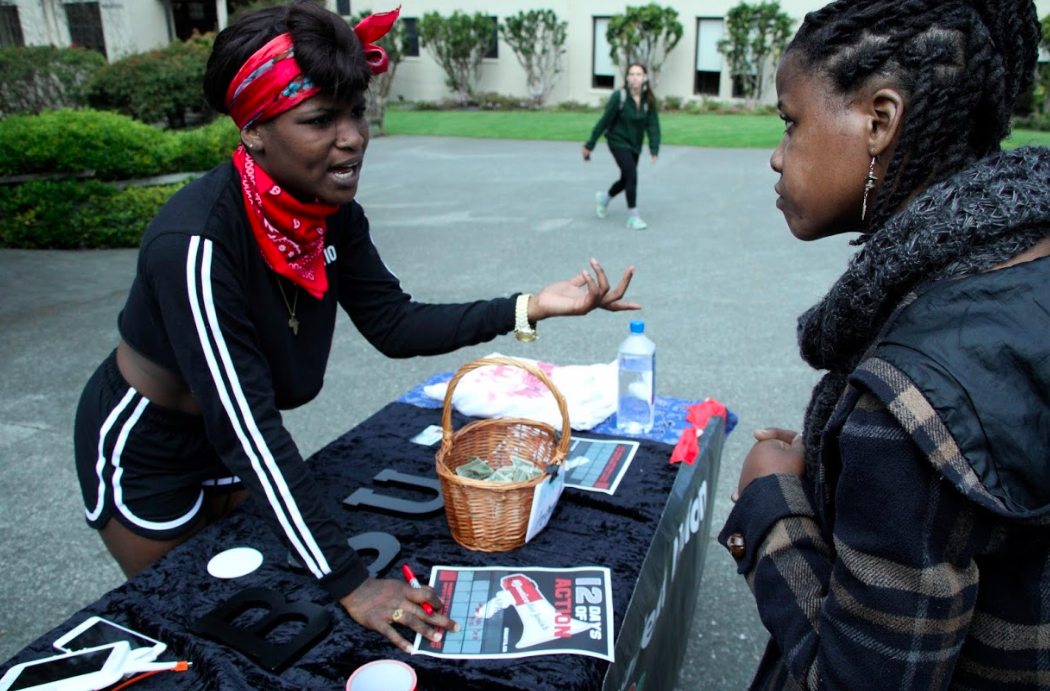
    With the song, “JUSTICE FOR JOSIAH (RIP)” by Oboy Flocka playing in the background, sophomore criminology student Barbara Singleton stood near the front of Siemens Hall with pamphlets, spreading awareness on the events planned for the following 12 Days of Action.

    “The university needs to commemorate the death of Josiah so we can get a mural or a plaque with his face,” Singleton said. “We’re asking the university to put up a legal fund to help out his mom.”

    Humboldt State University students are organizing a 12-day plan of action to gain national attention and investigative help to assist the process of bringing justice for the murder of 19-year-old, David Josiah Lawson.

    As the one-year anniversary of Lawson’s death approaches, students, family and friends continue to grieve over the lack of acknowledgment and support from surrounding members of the community, and most importantly the university.

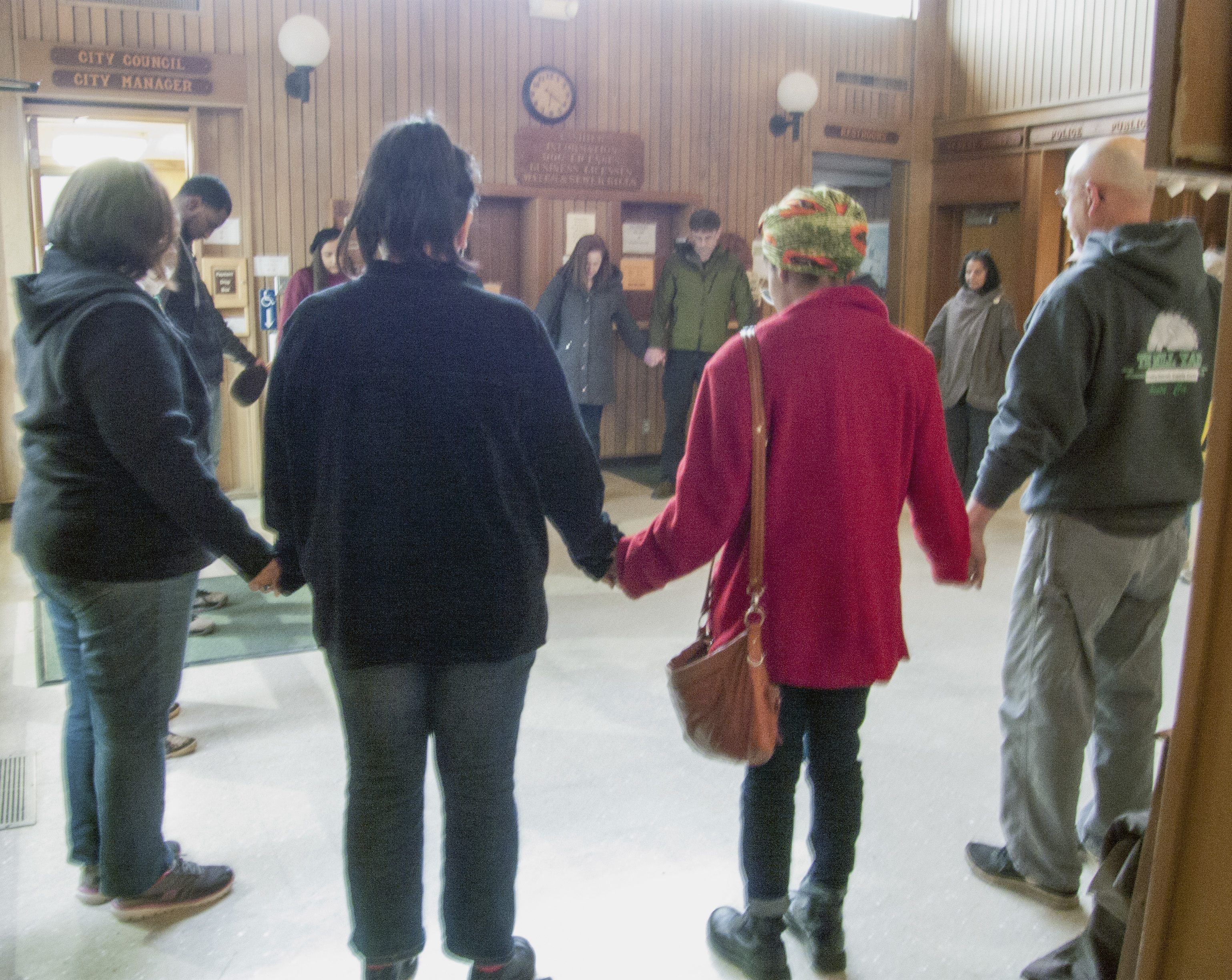
    Humboldt State students stand together to bring awareness to the case of David Josiah Lawson on April 4, 2018. 
    Video by Garrett Goodnight. 

    Do not confuse the university’s scripted statements with signs of actual progress.

    The lack of support and desirability to create change within the university’s setting reflects the mere comfort within the administration and presidential office. The lack of motivation to bring awareness to Lawson’s case demonstrates that the university may not actually support the students’ movement at all.

    Current race relations surrounding our campus environment is met with “optional” racial awareness training for students.

    By making this type of training optional, the campus is refusing to take responsibility for the perpetuation of racist behavior, and by refusing to mandate this training in every department.

    The ability to brush over racial tensions on and around our campus, staging it as an optional training, makes it easy for the university to trap new students of color in its institution, making them believe that our campus is a perfect, safe-haven for incoming freshmen and transfer students.

    Even though the campus may claim that the university is inclusive, they do not inform students about the murder of Lawson before recruiting them here.

    Freshman student, Marianna Baines, was frustrated with the university. She was not informed about the murder of Lawson before she transferred to HSU.

    “I wasn’t told the truth,” Baines said. “If I knew about this, it would have given me more clarity.”

    When it comes to voicing their opinions, students do not shy away from expressing their true feelings about the institution and what it is lacking.

    Student organizer, Vanessa Cota explained that protests are extremely powerful in the sense that they are inspirational movements.

    “It matters that people get their voice out there,” Cota said. “Protests can mobilize people, that’s where the power of protest is!”

  • Lumberjack editors meet with Rossbacher, part II

    Lumberjack editors meet with Rossbacher, part II

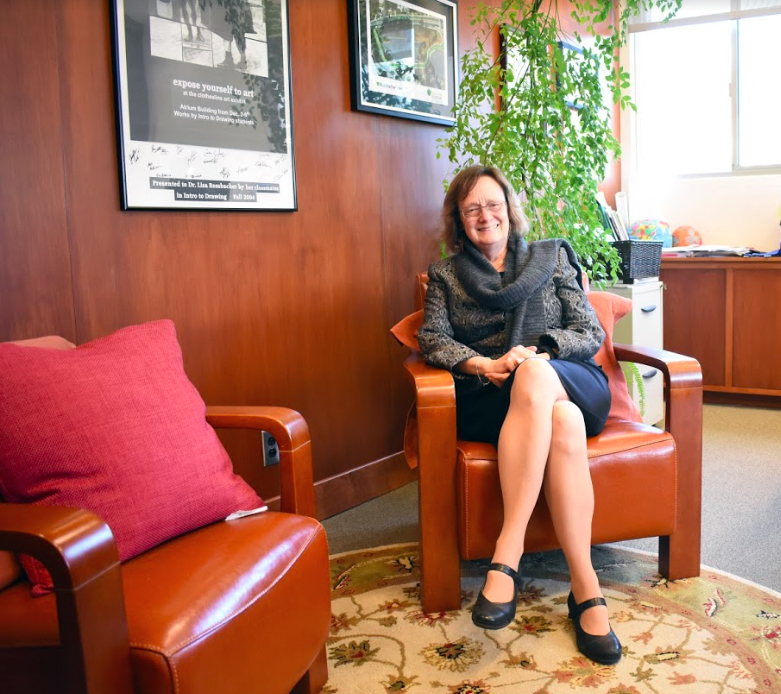
    The Lumberjack editors met with the president of Humboldt State University, Lisa Rossbacher, on March 23. The Q&A was largely centered around budget cuts and social issues that impact the local community, especially HSU students.

    This is part II of the meeting which mostly concerns social issues. Part I, which focuses on HSU budget cuts, can be found HERE.

    On social issues:

    Lora Neshovska (managing editor): “There are students facing homelessness and discrimination. How can we address social justice issues of students beyond our financial worries?”

    Rossbacher: “I think there are a number of things the university is doing to help with those basic needs that are really the underpinning to ensure student success. There’s a whole program happening here, many of them under the umbrella of Oh SNAP! Things like the food pantry that we have [or] students having access to EBT.

    We were one of the first campuses in the country to provide that kind of access. That started in late 2016 [and] over seven million tons of food have been redistributed on campus that would otherwise have gone to waste, so that helps. Some of the community meals that are being prepared – that I know Wayne Brumfield always cooks for – that sort of thing, being able to redirect J-points that are left over to help other people. Those are some examples in terms of food security. We just got some money from the chancellor’s office that will help us do more in terms of just food security on campus.

    In terms of housing, it’s a real issue because [of] where we’re located, the limited houses in stock that we have here. We’re doing some things with that, too. One of them is, I’m sure you know, Chante Catt has been hired as a homeless student advocate. She was involved in that organization of homeless student advocates, but she’s now officially working so that students who are in need of housing can contact her. I know right after she started doing that, immediately she placed four people. So that helps, too.

    We’re looking at the possibility of building new student housing. The university is looking at new residence halls off campus, and then there’s this outside developer who’s looking at The Village. Whatever it takes to get affordable, safe [and] not-too-far-away housing for students is a good thing.

    There’s also a program that we’re starting up in conjunction with some agencies within the area. I think it might be called the ‘nest program’ or ‘silver nest program,’ where there are seniors in the community who have a bedroom [and] extra space who would really like for company, for safety [and] a little bit of help around the house, who are willing to rent those spaces to students. That becomes a real collaboration with the larger community in a way that addresses multiple needs.

    I know it’s incredibly frustrating. I mean, I’m incredibly frustrated by seeing all the basic needs that we have here at Humboldt that are not being met. It’s sort of good news and bad news that we’re ahead of the curve of the system. We get pointed to as a place where we’re doing a really good job of trying to address those needs, which is good that we’re being proactive about it and making change. But if we’re among the leaders, we look at our frustration and the problems we still have, it makes you worry about other campuses.”

    Stella Stokes (life and arts editor): “I am an ITEPP student and my parents, who are HSU alumni, were also ITEPP students. There was an article about you in the Lost Coast Outpost on Feb. 7 that said ‘Rossbacher has been appointed to lead an initiative to increase the number of students from Tribal Nations who enroll and graduate from the California State University system.’ Why were you appointed over someone who is indigenous?”

    Rossbacher: “That roll is for president in the Cal State system. In fact, some people saw that and said, ‘Wait a minute, we thought Leo Canez was doing this, because he’s our new Native Recruiter.’ This is part of an initiative that was an across-the-sea issue, and it has representatives from more than half of the campuses. Adrienne Colegrove-Raymond has been a representative at HSU to this group. I convene the meetings, but I’m not responsible for this alone. It’s with a whole group of people.

    This statewide group will be meeting here on campus on April 4. The people can come to that. [People] from all over the state will be able to participate in the California Indian Conference, which is also here on campus [on April 5 and 6]. What we really hope is they stay until [April 7], which is when Big Time is. We actually have four days of Native American events happening.

    Back to your question of why I was appointed. Ultimately, when the chancellor asked me to do that, it came down to the two presidents at the campuses that have the largest Native [American] communities around them. It was Humboldt State and San Marcus. Humboldt State has the highest percentage of Native American students of any campus in the system. It’s not the largest absolute number, but we have the highest percentage. We have strong connections with the Native [American] community. It came down to the two of us who were presidents of those two campuses. We talked together and both us said to the other, ‘If you want to do, I’ll be happy to help you.’ We were trying not to step on each other’s toes. She said, ‘I’m really overcommitted right now. I will be glad to help you, but I’d appreciate it if you would do it.’ I said, ‘Of course.’

    Also, I didn’t know this before, but Rollin Richmond, who was the president before me, was in the same role for a number of years. So there’s a history of Humboldt State being in this role.”

    Ahmed Al-Sakkaf (news editor): “Rumor has it you live in Kansas. For the record, where do you live?”

    Rossbacher: “I live in McKinleyville.”

    Megan Bender (opinion editor): “Around 2016, you had issued a statement that was taken badly by the HSU community. You also issued an apology statement afterward. How can we address that to [David Josiah Lawson‘s] situation. People are frustrated by the inadequate support of the community, as well as HSU. What are you doing to create change in the right direction, as far as racism is concerned?”

    Rossbacher: “Let me back up just a minute to talk about when Josiah was killed. The university did everything we could to support his friends [and] his family. We worked closely with the police department to be sure that they were having access to witnesses or anyone who could help solve this murder. We’ve all been frustrated by what feels like a lack of progress.

    I ask, and I know I’m not the only one, the people in the city of Arcata about what’s going on, where are we and is there anything we can do to help? It’s a terrible tragedy. It’s something that affects so many of us, myself included every day. I think about wishing there was something we could do. I sat through every preliminary hearing.

    Ultimately, right now, it’s [on] law enforcement. It’s a criminal justice case. It’s something we can’t actually do anything about. It’s not in our hands. I asked as recently as last Friday, ‘When are we going to know something?’ It’s hung up in the process. You have as much information as I do. It’s highest priority for us. It’s not necessarily highest priority for the state to process the evidence, because there’s no one being held waiting for a trial. That’s what gives other cases a higher priority. We’re living with it every day. It’s just the way the process works.

    I want to make another point. I believe deeply in justice for Josiah. I think about it in two different ways. Actually, it’s two forms of the same way.

    One of them is resolving the case, figuring out what happened and just getting closure on that. Until that happens, it’s so hard for the community, for his family and for his friends. So there’s that aspect of justice. But I look at it from a bigger picture, too. I think what justice for Josiah should also mean to us is making sure that we have, as a larger community, a situation that is equitable, just and fair. [A situation that is] devoid of any discrimination – racial, ethnic, gender inequities or injustices. I think a piece of that, which is something I’ve been committed to involves some aspect of working with people on campus or in the city of Arcata. I see that as a long-term, systemic solution to the question of, ‘Where is the justice for Josiah?’

    If we could create a just, equitable [and] fair community in this region together, that would be a fitting tribute to Josiah and what he would’ve done with his life. I see justice for Josiah in a couple of dimensions, but I think there’s a big picture where the world will continue well beyond when the case is actually resolved.”

    Neshovska: “Do you think there’s racism in Humboldt County?”

    Rossbacher: “I think that in any environment where we have such different demographics, it’s inevitable. No, it’s not. I take that back. It’s not inevitable. Yes, and I have seen evidence of that myself. Demographics of the student population of Humboldt mirrors the state of California. The student population of Humboldt is similar to the demographics of this state. The demographics of Arcata and Humboldt County are very different.”

    Neshovska: “Isn’t there more than three percent of black people in California though? There’s only three percent here.”

    Rossbacher: “I know, yes.”

    Neshovska: “So it doesn’t exactly mirror the state of California.”

    Rossbacher: “Yes, I take your point.”

    Stokes: “One of the main problems about Josiah’s death is that students of color fear for their own lives or feel uncomfortable. They stop going to parties, some are just scared. How do you keep students of color safe?”

    Kyra Skylark (science editor): “To add on to that question, you said that affordable and safe housing is one of your main goals. I personally know friends who went to that party [where Josiah was murdered] and left the school afterward. People don’t feel safe, specifically students of color, which is why they fought for the Arcata council meetings to talk about why they don’t feel safe. What do you think we should be doing as Humboldt State to better address this issue? Why haven’t you gone to more of those meetings to hear students?”

    Matthew Hable (editor-in-chief): “The one-year vigil for Josiah is next month. Do you plan on attending?”

    Rossbacher: “Yes. There are two parts – there’s on campus and off campus. What I hear is that students are more likely to feel safe on campus than they do off campus.”

    Skylark: “Personally, as someone who has lived on campus during the last election, I got to hear ‘kill the fags’ and ‘reinstate Jim Crow.’ I did not feel safe on campus.”

    Rossbacher: “I understand. And yet, we’re a campus where we have to protect free speech. You all know that more than most. One of the aspects of creating safer spaces has to do with lighting. I know Wayne Brumfield has been doing walks around campus to identify places that need better lighting. We installed some of those over the winter break. There’s an interesting conversation with the City of Arcata about that, because they have ordinances about – it’s a dark city – as a way to not create light pollution. But the negative affect of that means we have less lighting, therefore areas that feel less safe. The city is working through that.

    There’s also an interesting set of conversations about surveillance cameras. There are a couple of dimensions to that. One of them is that if the police do it, particularly in Arcata, they have to maintain some of that tape for five years. And a lot of the businesses around the plaza, they particularly like to have surveillance cameras. The city sees real value in having the individual businesses, having their own cameras, because they can control them. They only have to keep them for a week or something. That’s enough time for the police to say, ‘We want to see what happened last night or even last week without having to keep the data for five years.’

    Meanwhile, the staff on this campus do not want security cameras, because they think – and this is the unions – they think the surveillance footage is going to be used to see if they’re actually doing their jobs, [as a way] to spy on them. [We have] all of these different dynamics working. That’s not the only solution, but it’s an example of the kind of complexities we get into. That doesn’t fully answer your question?”

    Skylark: “I don’t think that fully answers my question. There are issues on a social level that are making people feel unsafe. What is the school doing to make people feel safe on a social level? What are you doing to create change on an educational level?”

    Hable: “Are you saying there’s a lack of engagement right now?”

    Skylark: “Yeah.”

    Rossbacher: “We’ve had some events that addressed that. We had a day-long session last summer that really got into many of those issues.

    Skylark: “But no one is here during the summer. Those events are missed by the majority of the people.”

    Neshovska: “I think it’s also important to note that, not only as a president of our university, as a university as a whole, how do you make yourself available to these people who genuinely fear for their lives and want to be heard by somebody of power? They want somebody like you to hear them out and for you to say, ‘I’m here for you and I understand.”

    Rossbacher: “I seek out those stories. I listen to them carefully. I’ve been doing a lot of reading. I can share my recent readings with you, both books and articles on it.

    I made sure back in January, the leadership of the university went through micro-aggression workshops. It’s about awareness, how to counteract and keep that from happening. It started out [by] asking faculty and staff. I knew the way to bring credibility to that is to not only say that ‘I’ve done it,’ but that the senior leadership team, vice presidents and all the deans went through that. It was taught by Christine Mata and Roger Wang. It touched on micro-aggressions and white fragility. So I, as Lisa Rossbacher, also participate in the community dialogue on race. I learned a lot from those opportunities, too. I make it a point of going to sessions I know are going to make me feel uncomfortable. They say you should do it at least three times a week. You put yourself in uncomfortable situations.

    In a larger context, we are a place that’s about education. One of the things I value most about the opportunity to work in the university is the chance to learn. I’m around smart people who have a lot to teach me. There’s a lot I can learn. If I’m not putting myself in the kind of position that you as students, where you’re being asked to put stuff out there and being evaluated on it – that’s why I write as much as I do. You write, you’re putting it out there and people are going to criticize it. It’s just a reminder of what students do every day. I’m a student, too.”

    Bender: “Is there anything you think we missed that you would like to share with us?”

    Rossbacher: “We have spent literally years building up to the visit that we had this week.”

    Bender: “So that exit interview is a summary and they’ll be giving you another report later?”

    Rossbacher: “It was an oral summary. They said we’ve got some things we want to – [they provided] accommodations and recommendations. There are some things we’re doing really well and some things that we need to work on. Diversity was one of those [things we need to work on].

    Al-Sakkaf: “People were banging on the door at Siemens Hall during the WASC meeting. How did they feel about that?”

    Rossbacher: “They were a little worried. They are all experienced people, and they work on campuses where student feel strongly about issues as well. They said, ‘We were surprised, but we weren’t surprised.’ They took it in stride.”

    Bender: “Do you think some budget suggestions will come out of this report?”

    Rossbacher: “I think what they will say is the university needs to have a sustainable budget. We need to balance our budget and figure out how we’re going to move forward. I’m sure they’re going to say that.

    Neshovska: “How long can we go with this budget deficit? What happens if we don’t solve the budget?”

    Rossbacher: “We will solve it.”

    Gabe Rivera (sports editor): “Is there a person you normally contact to inquire about Josiah’s case? Who is that person?”

    Rossbacher: “I talk to lots of people. I talk to Tom Chapman, the chief of police of Arcata.”

    Neshovska: “In 20 years, is my degree going to be useless? What’s going to happen if the budgets cuts aren’t resolved?”

    Rossbacher: “We’re going to solve this problem. One of the things we haven’t talked about is the need to increase enrollment. That’s not going to solve all of our problems. It’s going to help with a lot of them. I want to assure you that this is not a limited growth. I’ve done an analysis that’s still being worked on, that’s still very much a draft. I want to know what the carrying capacity is for the campus for enrollment, taking a lot of different dimensions. In the big picture, what that tells us is 8,000 is probably about the right number, [which] is a little bit more than what we have now. Our goal is to grow back up that size, but not way beyond that. The goal is to have 15,000 students, and that is not the case.”

    Neshovska: “That sounds complex. We want to increase enrollment, but we don’t have student housing. We need more money to increase safe and affordable housing, but we need to increase enrollment to solve the budget crisis.”

    Rossbacher: “Increasing retention rate is probably the most important thing you can do for enrollment right now. Partly, it’s bringing in new students. Even more important is keeping the students who are here.”
  • 11 months and no justice for Josiah

    11 months and no justice for Josiah

    David Josiah Lawson was a victim of a hate crime and has become the poster child of the racism that exists in Humboldt County. Though the Arcata Police Department has been working through the investigation using physical evidence and witness statements, the trail remains cold in the pursuit to bring justice to Lawson.

    Lawson was a black 19-year-old criminal justice student at Humboldt State when he was stabbed to death at a house party in Arcata on April 15, 2017. The efforts of local authorities attempting to solve the case of his death fall short to this day. Those who spoke up after the incident hold little water in the eyes of the law due to conflicting reports of hearsay and lack of evidence. So much is against Lawson under these unfortunate circumstances.

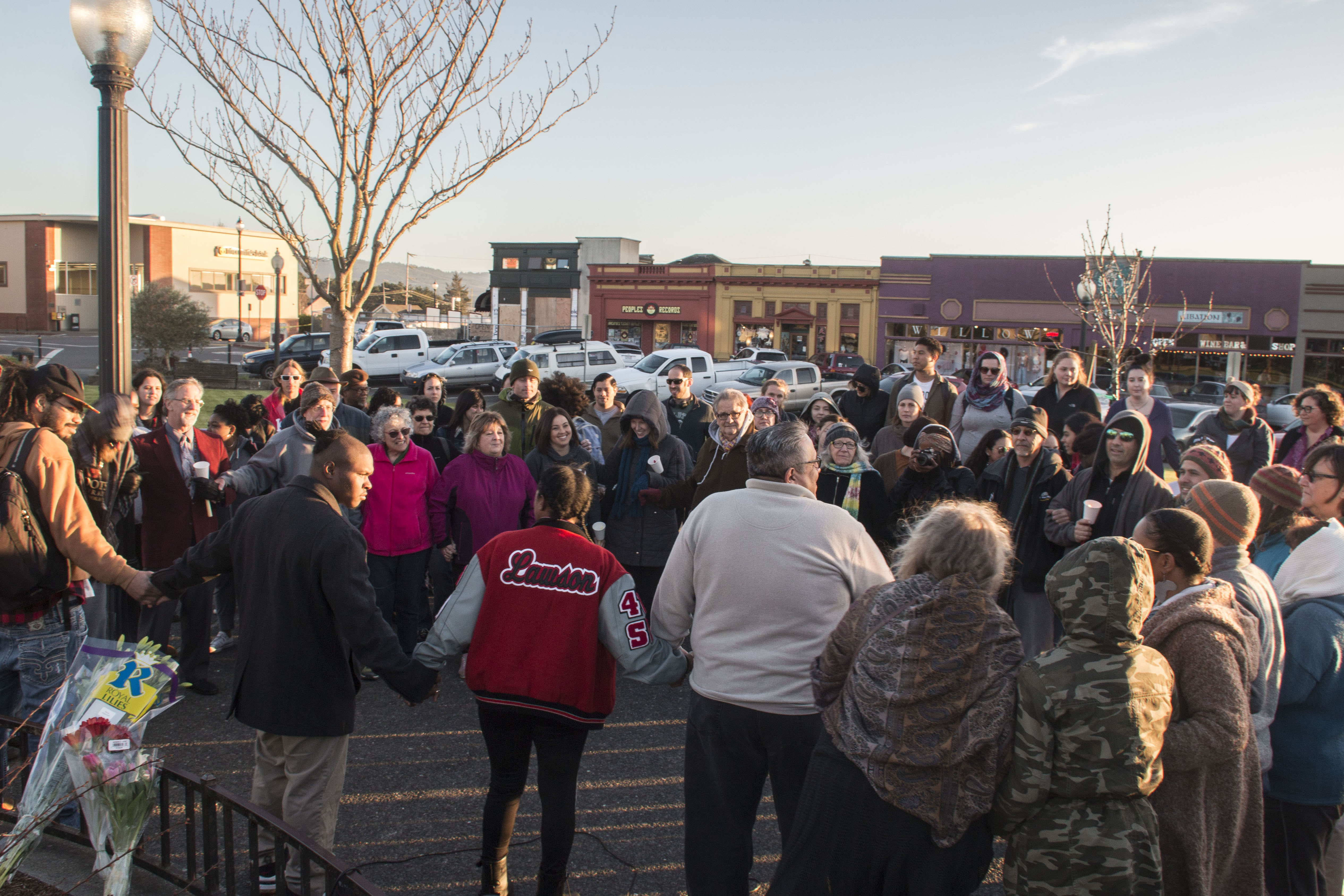
    A vigil has been held for Lawson every month since his untimely death last April. The turnout of the 11th vigil on March 15 at Arcata City Hall was lower than usual due to spring break and heavy rain, but over a dozen people participated in solidarity of Lawson nonetheless.

    During the vigil, Alex Foster, a leading force in finding justice for and preserving the memory of Lawson, said mixed messages aired by the media continue to hamper with the development of the murder case.

    “There’s a lot of rumors and false narratives, especially from newspapers,” Foster said. “It’s just different perspectives.”

    McKinleyville resident Kyle Zoellner was arrested for allegedly stabbing Lawson, but was released by Judge Dale Reinholtsen for lack of evidence. During the preliminary hearings, contradicting testimonials by eyewitnesses include Zoellner’s physical condition when Lawson was murdered.

    In a report by Mad River Union, Zoellner’s family said Lawson was stabbed to death while Kyle was unconscious due to a brutal assault. However, the Lost Coast Outpost reported Elijah Chandler, a friend of Lawson who was at the scene of the crime, witnessed Zoellner “drop something shiny on the ground” a moment after discovering someone had been stabbed. Conflicting reports such as these only muddy the waters of the case.

    What students, police officers, politicians and other community members need to understand is that the murder of Lawson brings up broader issues of social injustice and public safety.

    If people continue to downgrade the importance of this case or stay disinterested, then we are doing ourselves a huge disservice. We are allowing criminals to get away with hate crimes in a town that brings in innocent students year after year.

    Despite some of the challenges Foster and other tenacious supporters face, the search for justice carries on.

    Though the case remains open, relentless efforts are made to not only keep Lawson’s memory alive, but to spread awareness about the injustices that people of color still face in the area.

    April 15 will mark the one-year anniversary of Lawson’s death. Though details for the next vigil are in the works, tentative plans include a community gathering at the Arcata Plaza and a march to the D Street Neighborhood Center. Full details will be announced on the Justice For David Josiah Lawson Facebook page.

    In addition, the City of Arcata is supporting a safe space for a Community Dialogue on Race on March 22 at the D Street Neighborhood Center, located at 1301 D St. in Arcata. The meeting starts at 5:30 p.m.

  • “Unsolved Hate,” the case of David Josiah Lawson

    “Unsolved Hate,” the case of David Josiah Lawson

    The murder of David Josiah Lawson happened almost 11 months ago. On April 15, 2017, the 19-year-old HSU student Lawson was stabbed multiple times at a house party in Arcata and he died shortly after. The case remains unsolved and justice has yet to be served. Suspect Kyle Zoellner was arrested at the scene, but was later released due to lack of evidence. Lawson’s death is still felt deeply by students and community members.

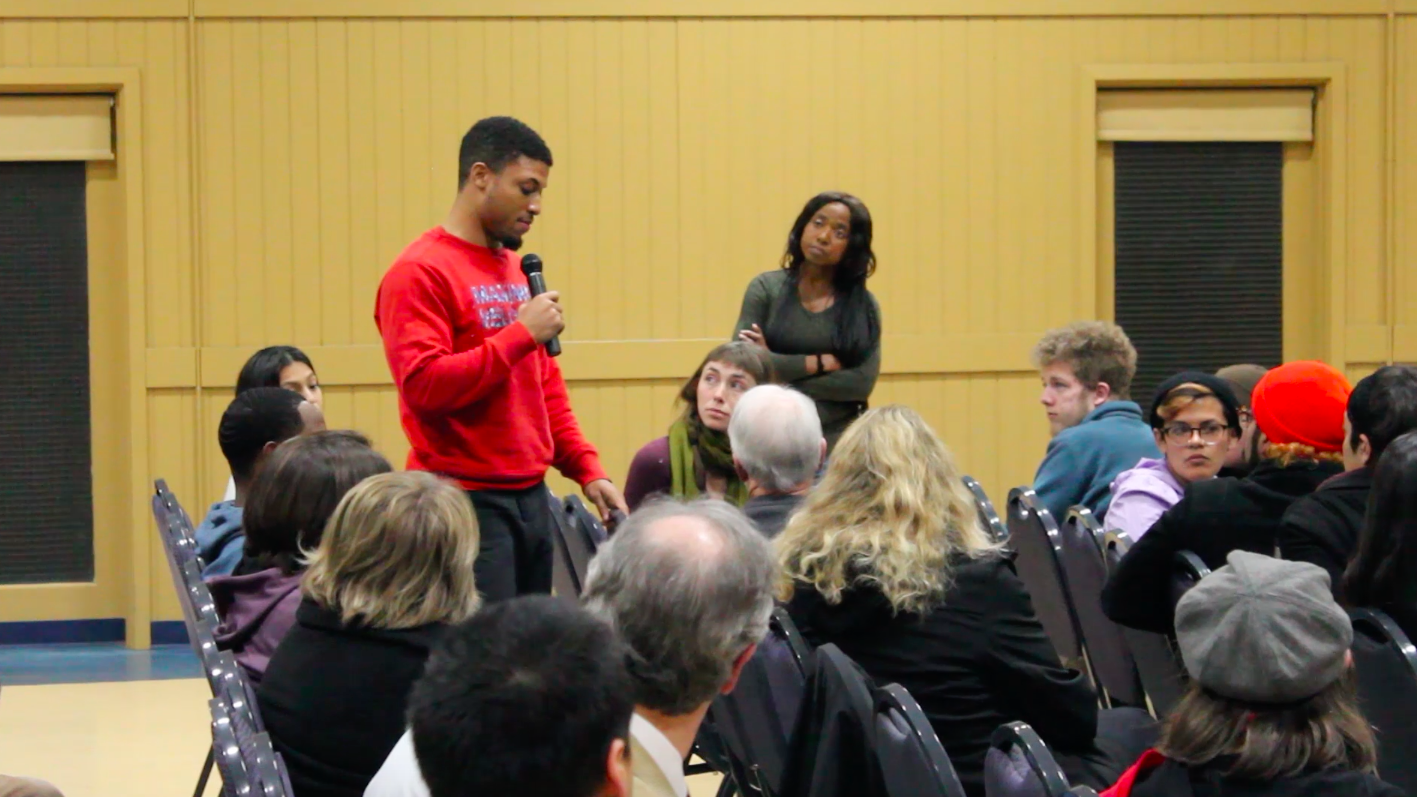
    Close to 100 people gathered at the D Street Neighborhood Center for a showing of the documentary “Unsolved Hate” last Thursday, which was directed by Courtney Wagner. The film focuses on the Lawson case and how his murder affected our small college town. The NAACP Eureka Chapter hosted the event as a part of the three-part film series they are showing for Black History Month.

    A discussion followed the film screening in which students and community members were able to discuss the case and the social issues surrounding Lawson’s death. The discussion was similar to the six forums the city council promised the students of HSU. The original meetings were meant to be a place to discuss the safety of minority students and provide community updates on the case. The six meetings that the city council promised were stopped after the fourth one with no notice. Community members are attempting to work with city officials to reinstate these forums without the updates on the case, because the case is ongoing and therefore cannot provide certain information.

    Footage by Patrick Maravelias. Edited by Kyra Skylark and Patrick Maravelias.

    Wagner is a recent graduate of Sacramento State University. She directed “Unsolved Hate” as her graduation project. Wagner got a panicked call from a friend at HSU the night Lawson was murdered in which she learned of the homicide and the potential mishandling of the case on behalf of the authorities.

    Footage by Patrick Maravelias. Edited by Kyra Skylark and Patrick Maravelias.

    “I want even the smallest amount of change, even if it’s just one local [who] watched it and thought, ‘Damn, I was raised with racist values and it affects all the people around me,’” Wagner said. “Even just one person becoming self-aware would be amazing, but I would really like to see some actual justice happen.”

    Community member Rachel Garcia attended the showing to get more information. She wanted to know what exactly happened the night Lawson died and if anyone filmed the cops to hold them accountable for how they handled the situation.

    “I think if people were cognizant that they have the right to [film the cops on the scene], it might help situations like this,” Garcia said.

    She learned at the showing that, no, the cops were not properly filmed by individuals on the scene.

    Footage by Patrick Maravelias. Edited by Kyra Skylark and Patrick Maravelias.

    HSU student Jamila Salih attended the screening to support the #JusticeforJosiah movement.

    “I’m here to bring consciousness to Humboldt,” Salih said. “There is no platform where black students are talking about black things, minority students or anyone talking about things that are uncomfortable. So I just wanted to create that platform for students. ”

    All Melanated Everything is a show on KRFH 105.1 that airs every Tuesday at 5 p.m. and Thursday at 3 p.m.

    Salih created All Melanated Everything as a platform to have “uncomfortable conversations about racism, classism, anything basically that the social construction is – you don’t talk about it.”

    Footage by Patrick Maravelias. Edited by Kyra Skylark and Patrick Maravelias.

    Deborah Sanchez, a board member on the Seventh Generation Funds Board and a Superior Court Judge in Los Angeles, attended the showing while in town.

    “There is enough information here to show that this is a possible hate crime and if the local authorities are not going to take this seriously, then perhaps we need to be looking into civil rights issues and putting pressure from the Federal authorities to take care of the situation,” Sanchez said during the discussion.

    Footage by Patrick Maravelias. Edited by Kyra Skylark and Patrick Maravelias.

    Whether it’s seeking justice for David Josiah Lawson in 2017 and HSU student Corey Clark in 2001 on a federal level, getting their story to a national publication or keeping their legacy alive here, the students and community members who attended the film showing will not stop searching for answers.

    “It’s gonna be a long road, but I also think that it’s definitely something the community can rally around, the community will eventually heal from and will also change the trajectory of everything that will happen in the future,” Sanchez said.

    To stay updated on the case and events related to the case, visit the Justice for Josiah Lawson site, the SLAWSON GIRL blog or the #JusticeforJosiah Facebook page. 

    ————

    If you are wondering what you as a community member can do to help the Lawson case, you can contact the Arcata City Council members to reinstate “the promised monthly meetings where we will be discussing racism in the community,” and to inquire about the status of the investigation.

    City Council members:

    1. Mayor Sofia Pereira, 707-633-8015, SPereira@CityofArcata.org
    2. Vice-Mayor Brett Watson, 707-293-3585, BWatson@CityofArcata.org
    3. Paul Pitino, 707-822-2556, PPitino@CityofArcta.org
    4. Michael Winkler, 707-822-1857, MWinkler@CityofArcata.org
    5. Susan Ornelas, 707-826-2722, SOrnelas@CityofArcata.org

    Contacting Democracy Now and NPR to encourage them to cover David Josiah Lawson’s case and the mishandling of the case as a nation-wide story is another way to show your support that was brought up during the film discussion.

    UPDATE: The monthly community meetings for updates on the case and discussion regarding student safety have been reinstated. The next will be held on Thursday, March 22, 2018.

    ————

  • Community gathers for David Josiah Lawson vigil

    Community gathers for David Josiah Lawson vigil

    Lawson’s homicide case is still open.

    Mother of David Josiah Lawson, Charmaine Lawson, drove eight hours to the Arcata Plaza to speak at her son’s vigil to remember, honor and celebrate his life. The African American Center for Academic Excellence organized Lawson’s vigil on Feb. 15.

    “For those of you who are mothers, I drove my baby to school and he came back in a box,” Charmaine said. “It’s not okay, I am not going to apologize for my tears. I am trying to be strong, but it’s hard.”

    Josiah’s homicide case remains open and active. The investigation interviewed 46 individuals that are believed to include all the witnesses who could have seen the fight and events leading up to the homicide.

    The initial review of all the evidence has been finalized with assistance from a retired FBI investigator, Tom Parker.

    Majority of forensic evidence has come back from the Department of Justice. Police are now awaiting a completion of DNA and specialty evidence testing.

    Humboldt State University student Erianna Blackwell said it’s important to come out for support.

    “Not only your people, but the cause,” Blackwell said. “Especially since they still haven’t found the killer.”

    Josiah was murdered 10 months ago at an off-campus house party. The city council held four meetings in 2017 to update the community on the investigation and present strategies on how to improve student safety.

    Michael Fennell, a Lawson supporter, said he’s been wearing his “Justice for Josiah” button for almost 10 months.

    “I didn’t think I would be wearing it for this long,” Fennell said. “I thought it would be solved long ago.”

    With two other children at home, Josiah’s mother told the crowd she was willing to move to Humboldt County to seek justice for her son.

    “If it takes me moving for the police to do their job, I will,” Lawson said. “I don’t care about materialistic things if I have to sell my car [or] my house. I’ll do it for my son.”

    Chairman of the Wiyot tribe, Ted Hernandez, showed up for the vigil and extended a prayer even though he had never met Josiah’s mother.

    “I came to support Charmaine as a parent. I have five children and some have gone to HSU,” Hernandez said. “It is all about the community and supporting the mother. It is a healing process.”

    Each month since Josiah’s death, a vigil has been organized in order to remember his memory and to put pressure on the ongoing investigation to find the murderer.

    HSU journalism major Angel Sylva said she comes every month.

    “I feel tired of having to come out every month,” Sylva said. “I feel like I’m coming out and nothing is being done. I come out regardless.”

    A reward of $40,000 has been offered to anyone with new information leading to the arrest and conviction of Josiah’s murderer.

    Mayor of the City of Arcata, Sofia Pereira, said when the AACAE asked her to come speak at the vigil, she agreed. But Pereira was uncertain on what she was going to say.

    Pereira said to Josiah’s mother, “You have given so much to the community. This is a community you owe nothing to.”

    “As a leader, I am going to fall short at times. I’d rather show up and fall short than to not show up at all,” Pereira said. “If we want true peace, we have to listen to our neighbors and take the situations seriously. I am engaging even though I feel uncomfortable.”

    Pereira has been mayor of Arcata for two months. Her first meeting as mayor was on Dec. 20. The council alternates the position on an annual basis.

    “I felt the gravity of the situation,” Pereira said. “It is not easy to speak in front of people who are grieving and want answers.”

    After the last meeting in October, students requested investigation updates be separated from the student safety discussion and that student safety meetings be held on campus following the October meeting.

    Student safety meetings in November and December were facilitated by students and held on campus. Meetings will continue to be held through the Student Diversity Committee with support from many campus club leaders.

    “My life will never be the same,” Charmaine said. “I can’t even mourn my child, because I have to fight for him. It is taking too long to get results.”

  • MCC vandalized twice

    MCC vandalized twice

    By | Iridian Casarez

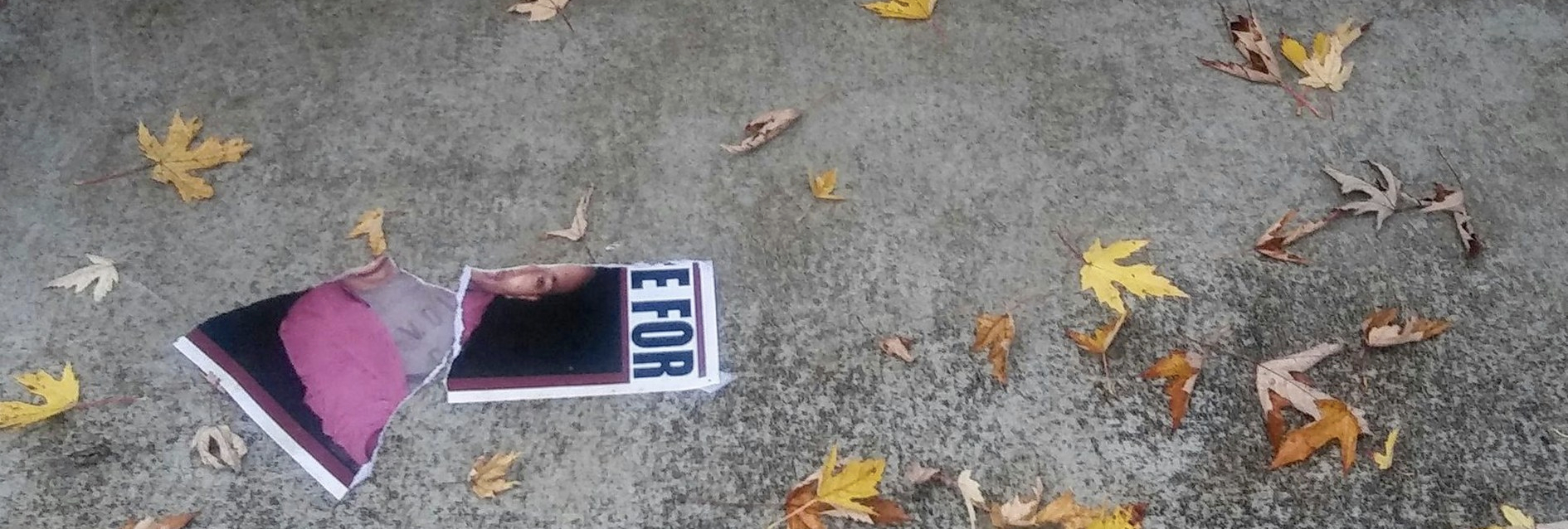
    As Joselin Dorado was walking up to the MulitiCultural Center (MCC) on Sunday afternoon, she started to notice that the “Justice for Josiah” posters as well as “Our Culture is Not a Costume” campaign posters had been torn and left in front of the MCC.

    “This makes me upset,” Dorado said. “We try our best to include everyone at the MCC and this vandalism makes it seem like we’re failing.”

    Dorado also found a note that read “It’s okay to be white.”

    Dorado said she was heading to the MCC to work on a Día de los Muertos altar with a couple of her coworkers when she found the ripped up posters. She sent a photo to her coworkers in a group chat to tell them what happened. Dorado picked up the ripped posters and told her coordinator about the incident.

    “This incident was racist,” Dorado said. “They targeted posters with people of color and culture.”

    They contacted UPD and filed a police report. Dorado said that UPD dismissed the incident and said it was because of the Halloween weekend.

    “UPD kind of dismissed it and made it seem like we weren’t going to be able to catch the person,” Dorado said. “They didn’t even offer more patrol.”

    Ana Maria Diaz also works at the MultiCultural Center as the Campus and Community Dialogue on Race Coordinator. When Diaz heard about the incident, she said she was upset.

    “We thought it was a prank until it happened again,” Diaz said.

    The Wednesday after the vandalism occurred, more posters were found torn in front of the MCC. UPD was contacted again, and Dorado said that a different UPD officer was more upset that the incident occurred than the first UPD officer.

    “It’s frustrating, someone targeted a safe house,” Diaz said. “Once is enough.”

    Luz Espinoza, the intercultural intersectional specialist at the MCC said she found the vandalism as a personal attack against the MultiCultural Center and Josiah Lawson’s passing.

    “We have heard complaints about white people not feeling welcomed at the MCC, but that’s not true,” Espinoza said.

    Diaz and Espinoza, with the help of their coworkers Deema Hindawi and Teadja Owings, decided to take matters into their own hands. They decided to stake out the Multicultural Center on Halloween night.

    “We tried our best to make it look like we left,” Espinoza said. “We spent the night hoping to find and confront the person who vandalized the MCC.”

    On the night of their stakeout, the MCC stakeout team didn’t hear or see anything suspicious. They were unable to confront and catch the person who vandalized the MultiCultural Center.

    “If someone has a problem with the MCC, come talk to us,” Diaz said. “We’re open to dialogue.”


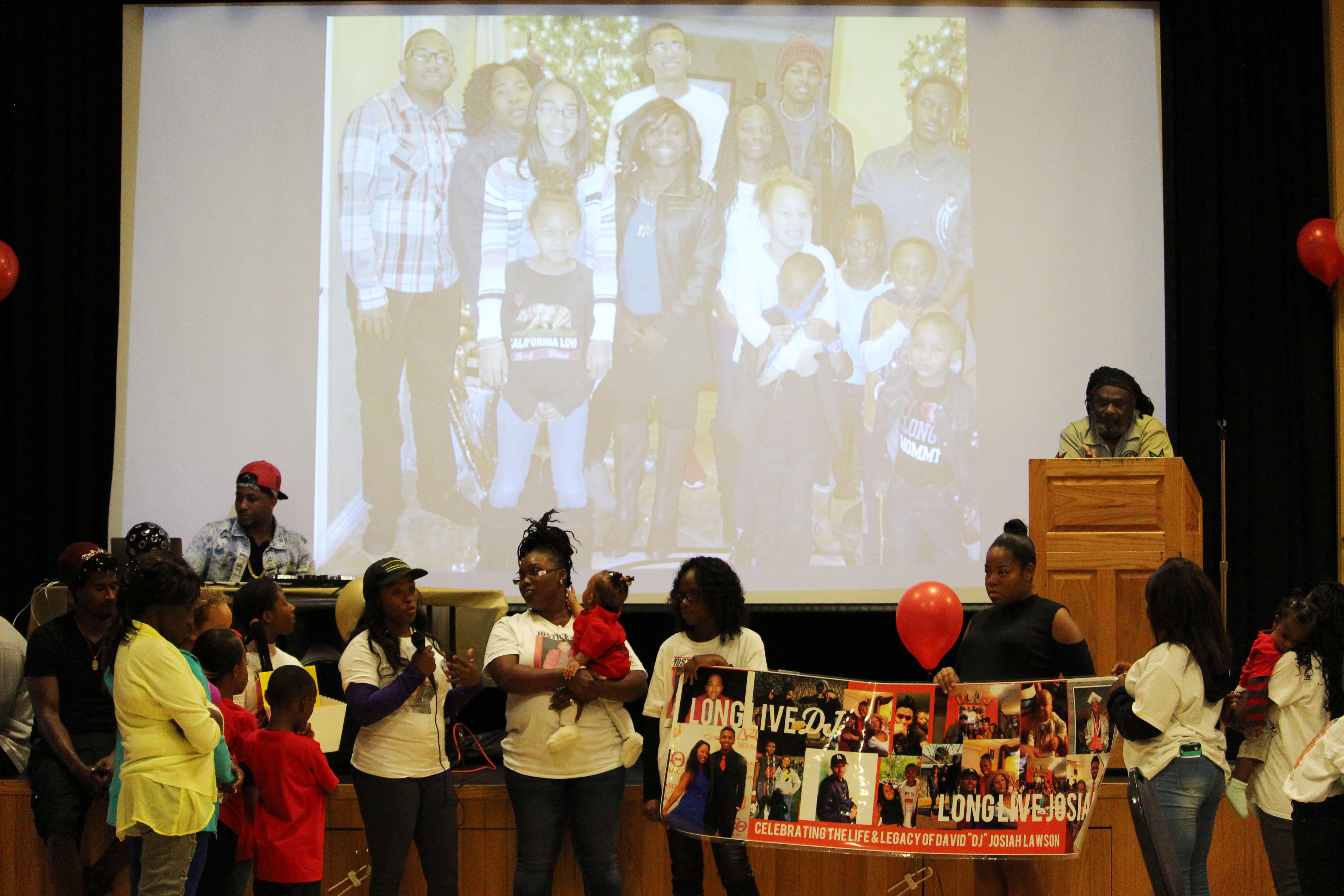
  • Josiah’s legacy

    Josiah’s legacy

    By Reza Sadeghzadeh and Curran C. Daly

    The Arcata Police Department is still investigating the homicide of Josiah Lawson, five months after his death. Charmaine Lawson, Josiah’s mom, has remained an ever constant presence in Humboldt County while living 14 hours away

    She is currently planning on a fundraiser to open a house for homeless students and community members that she calls, “Josiah Lawson’s house.” Citing Josiah’s desire to help reduce homelessness in Arcata.

    “I wanted to just celebrate DJ’s life,” Charmaine Lawson said. “The fun, energetic person that he was.”

    Charmaine Lawson revealed her fundraising efforts at a five month memorial for Josiah.

    One of the main topics of discussion by those who attended the event was restoring the relationship between the community, the university and students. Especially students of color.

    Barbara Singleton, Sophomore Criminology & Justice major, is the President of the Black Student Union. Singleton is concerned about security in the community.

    Lawson told Singleton to be patient waiting to get justice for Josiah’s case. Lawson said she will not give up on his case.

    “I have to fight for him because he cannot fight for himself, I have to make sure he receives justice,” Singleton said. “If it would have been anyone of us he would have done the same thing.”

    DaMon Thomas, Senior Communications Major, stressed the need for a more accepting community around Humboldt State.

    “The Humboldt State University diversity is growing, but the community is not keeping up,” Thomas said. “There needs to be more awareness, acknowledgement and cooperation.”

    The messages echoed by Josiah’s family and Kenya James, the president of the local NAACP, did not follow on empty ears. The event was attended by City and University officials including Arcata City Council member Sofia Pereira and Humboldt State Provost Alex Enyedi.

    Enyedi and Pereira emphasized some of the ongoing programs that are helping the community and university to achieve that equality in the community. Such programs are GARE (Government Alliance on Race & Equity) and NIOT (Not In Our Town) that are focused on issues of inequality in housing, hiring practices, customer service and first responders.

    The fight is not over. The students and the community have promised Lawson an endeavoring effort to bring justice for Josiah.

    “Josiah’s House is a great wonderful idea to persevere his legacy and help homeless students” said Corliss P. Bennett, Director of Cultural Centers for Academic Excellence. “Students of color can’t find housing, and not because they don’t have money, but because landlords don’t rent to African American students.”

    James said “this horrendous tragedy has been extremely hard on Lawson’s family, but she has proven to be tremendously strong and courageous due to the fact that she has turned this tragic incident into an opportunity to give back to the community.