The Lumberjack


Students Serving The Cal Poly Humboldt Campus and Community Since 1929

Tag: Karuk

  • Indigenous activism brings down Klamath dams

    Indigenous activism brings down Klamath dams

    Harrison Smith

    The Klamath salmon have been granted a reprieve. After decades of activism by Indigenous people, four of the six dams on the Klamath are finally coming down. Pacificorp, corporate owner of the dams slated for removal, was denied a renewal of their operating license by the Federal Energy Regulatory Commission in November of last year.

    The Klamath Basin is one of the largest watersheds in the continental United States. Melting snow in Oregon’s Cascade Range mixes with runoff from Crater Lake, frigid waters flowing south and west to fill Klamath Lake. In past years, Klamath Lake’s cold, high-nutrient water tumbled to the coast, providing habitat for dozens of salmonid species.  

    Until the dams were built. 

    “They haven’t had any salmon in over 100 years,” said Regina Chichizola, director of Save California Salmon. “The Karuk Tribe no longer has spring salmon even for their spring salmon ceremonies.” 

    Salmonid populations in the Klamath Basin have seen a staggering 95% decline since Copco 1 was built in 1918 and those numbers only continued to fall as the basin was strangled by the next three dams. 400 miles of river habitat have been either partially or completely blocked to fish passage, and Klamath salmonids were on the path to extinction. 

    “Having that acknowledgement is a really big deal, because it’s not just acknowledging that this is a bad deal the river’s been given, but also us as well,” said Brook Thompson, restoration engineer for the Yurok tribe. “And that our voice does matter. Sometimes when you protest, in activism work, it feels like nothing’s gonna change and no one is hearing you, and that’s the case; it feels like we were finally heard.”

     Thompson is a descendent of both Yurok and Karuk tribes, and a Ph.D. student. 

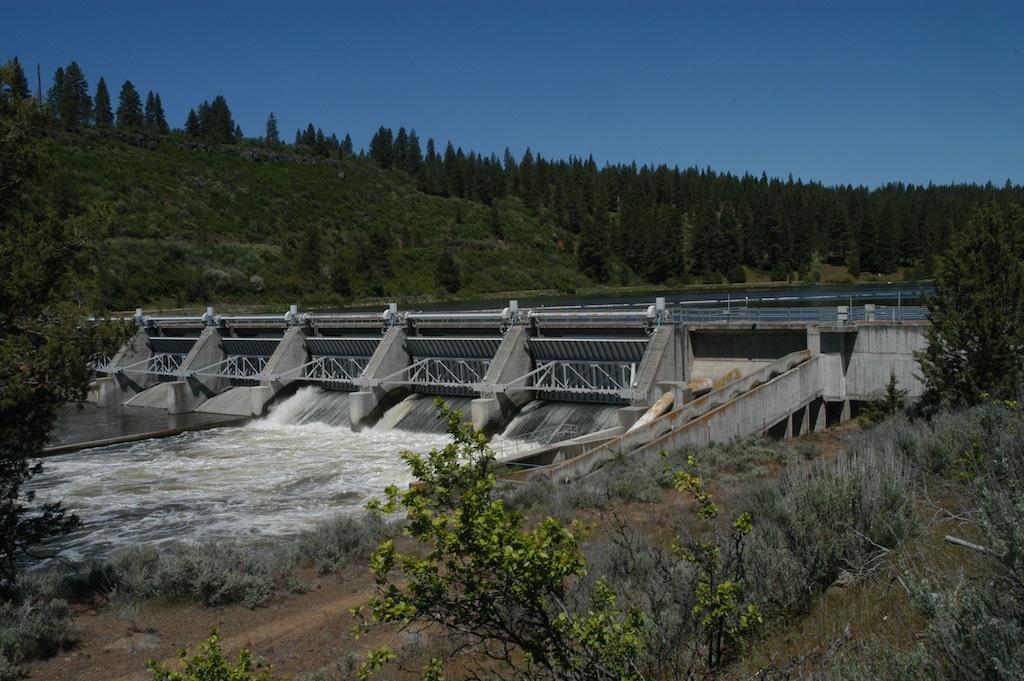
    There are currently four dams on the Klamath river. Copco 2 (1925) is slated for removal this year, followed by Copco 1 (1918), J.C. Boyle (1958), and Iron Gate (1964).  

    Photo courtesy of Regina Chichizola | Molli and son Chas smoke salmon over a firepit.

    Negative impacts

    The negative effects of the Klamath dams are numerous and interconnected. By slowing down the river, the dams allow the water to heat up in the sun. 

    “With that warm water, you get less dissolved oxygen, which the fish need to breathe,” said Thompson. “You get increased blue green algae blooms, which when they die, they take up dissolved oxygen, which, again, means less dissolved oxygen for the fish.” 

    The dams also cause the river to cut into the riverbed, by locking its flow into a narrow channel and preventing it from connecting to the wider floodplain.

    On September 19th, 2002, dead Chinook salmon began washing up on the banks of the Klamath. During the next week, over 60,000 adult Chinook would wash up on the banks of the river like a rotting carpet.

    “It was the day after one of the ceremonies,” said Thompson, who was present at the catastrophe as a child. “I was the same size as the salmon I saw the bodies of on the shore.” 

    This can be directly linked to the dams’ effects on the Klamath. The closely-packed conditions of the migrating Chinook and high water temperatures were a perfect environment for parasite Ichthyopthirius multifilis and bacteria Flavobacter columnare, which together ravaged the salmon population. Low flow from Iron Gate dam, due to irrigation runoff, was found to be a primary cause in the Fish Kill. 

    Indigenous sovereignty 

    The Yurok, Karuk, Hoopa, and Klamath tribes have been fighting for their rights to river governance and access for over a century. 

    “We’re fighting for our cultural sovereignty, making sure that we’re upholding our responsibility as human beings to make sure that we’re making this world a livable space for not just humans,” said Charley Reed, education director for Save California Salmon and descendent of the Yurok, Karuk, and Hoopa tribes. 

    Before colonization, Indigenous people depended on the Klamath as a primary source of food, with an average salmon intake of 450 pounds of fish per person per year. Today, that number has dropped to under a pound. 

    Activism

    In 1973, Yurok community leader ‘Aawokw Raymond Mattz took the issue of Yurok fishing rights to the U.S. Supreme Court and won. However, state and federal agencies continued to crack down on Indigenous fishing well into the 1970s. This sparked a period of protest now called the Fish Wars. Anti-dam protests continued sporadically for decades, but gained renewed purpose after the 2002 Fish Kill, according to Reed.

    “To get the U.S. to do things you have to sue them,” Thompson said. “That’s actually how we got the fishing rights back from my neighbor when I was a kid.”

    In the 2000s, dam protesters spent one week of every month traveling to protest. Reed’s father was deeply involved with the movement for decades. Protest efforts in the wake of the Fish Kill led to the founding of Save California Salmon, a nonprofit organization founded, operated, and led by Indigenous people. SCS along with other groups focused the energies of the Klamath Tribal communities onto the dams. In 2004, dam owner Pacificorp filed to relicense the four dams on the Klamath. This provided an initial objective for the activists—stop the relicensing. 

    The activists took a multi-pronged approach to the campaign for the dams’ removal. They applied public pressure on lawmakers and dam owners, as well as working with state and federal officials. 

    Activists traveled to Scotland in 2004 to demonstrate against the parent company of Pacificorp, Scottish Power, during a shareholders meeting. In 2005, Scottish Power sold Pacificorp to Berkshire Hathaway and activists continued the pressure.

    “2006 or 2007 was the first year we went to the Berkshire Hathaway shareholders meetings,” Chichizola said. “And even before that, we went to Pacificorp headquarters in Portland…. A big part of it was the community pressure for sure. Every step of the way, the community was there.”

    In response to the continued activism, the Berkshire Hathaway board changed the rules of their Q&A sessions in 2008 to forbid questions about the Klamath dams. 

    Activists succeeded in lobbying the California and Oregon governments to require extensive renovations of the dams before they could be relicensed — a major victory. The Klamath Basin Restoration Agreement (KBRA) between the states would have demolished the dams years ago and reallocated water for irrigation. It was killed in the house by republican congressmen Doug Lamalfa and Greg Walden. 

    In 2016, parts of the KBRA were salvaged to create the Klamath Hydroelectric Settlement Agreement. The KHSA was passed without congressional approval, but its passage was followed by another period of bureaucratic snarls that were only resolved last year. After relentless pressure from all sides, it proved far more expensive for Pacificorp to relicense the dams than to remove them. 

    In November of 2022, the Federal Energy Regulatory Commission denied Pacificorp’s license to operate its Klamath River dams, and the dams came under the jurisdiction of the Klamath River Renewal Corporation (KRRC). FERC credited Tribal activism for the government’s decision to decline Pacificorp’s license renewal. 

    Photo courtesy of Regina Chichizola | A pair of stalwart activists demonstrate in Scotland, 2005.

    Demolition and restoration

    Copco 2 is scheduled to be demolished this year, but much restoration work remains to be done before the basin is whole again.

    Extensive preparation must be completed on more than 400 miles of river that have been cut off from the greater watershed for the better part of a century, mostly on the lower river. The KRRC was created to carry out the restoration work. 

    “We’ve been collecting seeds for the last few years and then we’re growing plants,” Thompson said. “These native plant species will have a chance to take hold before invasives come in.” 

    Work must also be done to reconnect the river to the system of ponds and tributaries which fed it historically. All this will eventually restore habitat and favorable conditions for salmonids, according to Thompson.

    “All that habitat needs to be restored and that’s going to be creating more woodfill, creating different types of flow, so [salmon] can chill out in slower ponds or move up faster streams and try to get different types of food,” said Thompson.

    The Elwha Dam removal in Washington could give some insight into the Klamath’s future. 

    “As soon as a year after the Elwha dam removal, which happened just over 10 years ago, you saw salmon that were returning above the dam to breed, which is kind of crazy, because they haven’t been going there for generations,” Thompson said.

    For Reed, the victory felt bittersweet. It comes after many long decades of teeth-pulling effort, marked by the passage of loved ones and community members — stymied by corporate and governmental roadblocks.

     “There’s so many people who weren’t there that day that had passed on, but were very much a part of that effort in those early years,” Reed said. “If it wasn’t for them, it’d be really hard to imagine how we would have kept that momentum going, how we would have kept up the fight. It’s very much intergenerational.” 

    Reed plans to teach his daughter to fish when she’s old enough. By then, restoration efforts will be well underway.
  • Sacred lands returned to Karuk Tribe

    Sacred lands returned to Karuk Tribe

    by Camille Delany

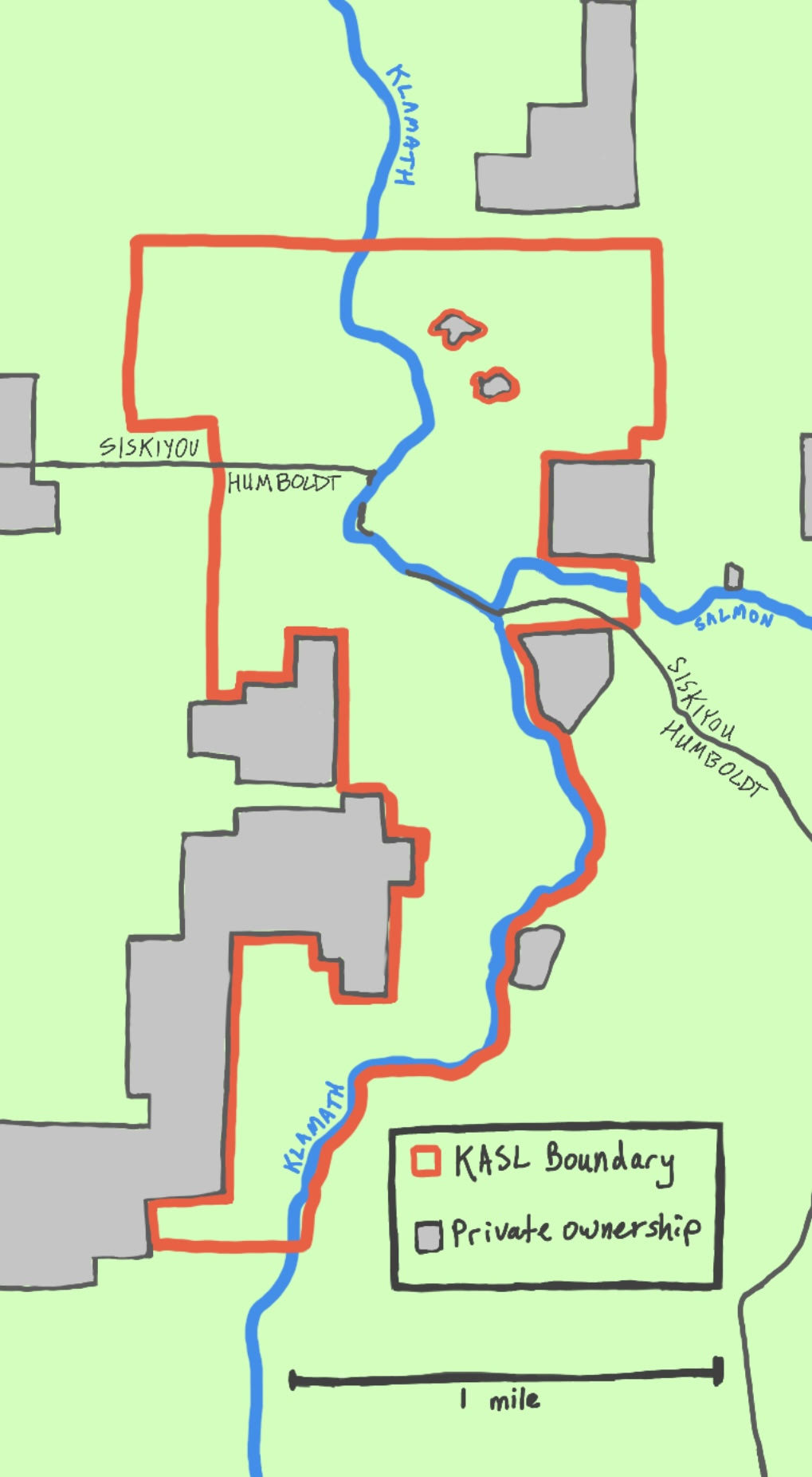
    On Thursday, Jan. 5 the Karuk Tribe’s Katimiîn and Ameekyáaraam Sacred Lands (KASL) Act was signed into law, reestablishing the Karuk Tribe as the steward of about 1,000 acres of public land in Humboldt and Siskiyou counties. 

    The Karuk Tribe’s ancestral lands encompass over 1.48 million acres of Northern California and Southern Oregon. Currently, 95 percent of this territory is occupied by the United States Forest Service. This has resulted in the curtailing of Karuk cultural practices and traditions. Until now, Karuk people have had to request access through a Special Use Permit to perform ceremonies on their sacred lands. Even so, their private ceremonies have been interrupted by individuals passing through the sacred areas on days of listed closure. Under the new legislation, the Karuk Tribe will have uninterrupted land access to hold their ceremonies. 

    The land returned Jan. 5 includes many sacred sites. Á’uuyich, a mountain at the confluence of the Salmon and Klamath rivers, is the center of the world for the Karuk people. The Act’s namesakes, Katimiîn and Ameekyáaraam, are also sites of celebration and worship. The historic village of Katimiîn is the site of the Tribe’s world renewal ceremony, and Ameekyáaraam is where multiple sacred dances continue to be performed as they have been for time immemorial. 

    “We never again have to fight federal and state agencies for the right to hold our sacred ceremonies without disturbance at Katimiîn and Ameekyáaraam,” Karuk Executive Director Josh Saxon said in a Jan. 6 press release. “Returning our center of the world protects our inherent responsibility to pass Karuk culture and customs down to the next generation.”

  • Memes, Genocide and Teaching in a Pandemic

    Memes, Genocide and Teaching in a Pandemic

    With life disrupted, lecturer Kerri Malloy perseveres with flexibility and humor

    A professor noticed students often left Kerri Malloy’s class laughing. One day the professor asked what he was teaching.

    “Oh, that’s my genocide class,” Malloy said.

    Malloy teaches courses in the Humboldt State Native American studies department on colonialism and genocide. With such somber subjects, Malloy relies on humor and honesty to engage students. Now that classes have gone online during the pandemic, Malloy has employed those traits, alongside plenty of flexibility, to keep students connected.

    “The hurdle is going to be maintaining that connection with the students,” he said.

    He created class blogs for students to post what they want—questions, memes, dog or cat or reptile pictures. Glance through Malloy’s Instagram, Twitter or Snapchat accounts, and you’ll find lots of memes, like one he posted April 3 on Instagram:

    “The year 2020. Brought to you by the letters W, T & F.”

    “I think you have to walk into it—at least my plan is to walk into it—with an incredible amount of flexibility.”

    Kerri Malloy

    “I love a good meme,” he said in one of two Zoom interviews. He sat in his home office. Behind him, family photos and a Star Wars Yoda action figure topped a bookshelf. He wore glasses and a button-up shirt.

    Memes dominate Malloy’s social media accounts, but there’s more to the accounts than humor. They make him accessible to students. He receives messages on those accounts about class, and he replies happily.

    “There are times where I’m like, ‘Why am I doing this?’” he said. “And then I realize, I’m getting to see a different side of students, and my colleagues, too.”

    Malloy also emphasized the importance of flexibility.

    “I think you have to walk into it—at least my plan is to walk into it—with an incredible amount of flexibility,” he said. “And let them—let the students—help guide where we’re going to go.”


    Yurok and Karuk by heritage, Malloy was born on the Oglala Lakota Reservation in South Dakota, but he grew up on the Quinault Indian Nation Reservation in Washington.

    Marlon Sherman, chair of the HSU NAS department, knew Malloy from working together for the Yurok tribe. Sherman and Malloy have a family connection, as Sherman grew up on the Oglala Lakota Reservation where Malloy was born.

    “If it wasn’t for Kerri, there might not be a NAS department right now.”

    Marlon Sherman, chair of the Native American studies department at Humboldt State

    After working together for the Yurok tribe, Sherman and Malloy parted. About six years ago, Sherman asked Malloy to come to HSU to teach two courses for a semester.

    Shortly after Malloy came on board, Sherman had to take time off. He had cancer. Sherman returned in about a year, but Malloy became program leader and helped steer the department. Sherman said Malloy basically did all the work and helped the department hire two professors.

    “If it wasn’t for Kerri, there might not be a NAS department right now,” Sherman said over the phone.

    Malloy said Sherman was too generous, but there’s no doubt that Malloy works, a lot—so much so that Sherman joked it might be illegal.

    Malloy wakes up around 4:30 a.m. every day. He gets up so early partly because he finds those early hours productive, and partly because his back is built on metal rods and pins that make lying flat for too long unbearable. He’s not exactly sure how he damaged his back—maybe a car accident—but he had to have surgery that put him out of commission for three years.

    He estimated he’s on eight to 10 HSU committees, from the University Resources Planning Committee to the Diversity, Equity and Inclusion Committee. Malloy does this while teaching multiple classes as a lecturer—a position with an uncertain future amid HSU’s projected enrollment decline and budget cuts. He joked when asked how he has the time.

    “People usually don’t like my answer,” he said. “How do I have the time? A calendar.”

    Kumi Watanabe-Schock, a 23-year HSU employee, works in public programming and as the library media coordinator. She first met Malloy when he was an HSU student getting degrees in economics and Native American studies.

    Since then, Watanabe-Schock has worked with Malloy on committees and for classes. Every time she talks to Malloy, he seems to be attending workshops or giving talks around the world. She praised his willingness to help out.

    “He’s not good at saying, ‘No,’” she said over the phone. “I don’t know if he’s that way with everybody, but when you ask him to do a favor he always follows through and he always says, ‘Yes.’ So I really am appreciative, yeah. He’s a good person.”

    When not working, Malloy is more private. He has a husband and three dogs. He has two sisters and 14 nieces and nephews he tries to see every year. Around 8 p.m. every night, he tries to unwind. Maybe he’ll watch some TV, or maybe he’ll read a book about genocide. Fun.


    While COVID-19 has pushed teaching online, Malloy has found his courses as relevant as ever.

    A key concept in Native American studies is survivance, a portmanteau of survival and resistance. Survivance is about the living of Native American lives in the present tense. By surviving, Natives resist, and by resisting, Natives survive.

    Malloy said people must fight right now to have their voices heard, like many Natives must do at all times. He said individual voices humanize current events and prevent people from kicking the ball of reality down the road.

    On that note, Malloy told a story. Last summer, he taught Native history in a program that spent two days in Auschwitz I, the main site of the Nazi concentration camp. One day he stopped and looked out a window. The bizarreness of the situation dawned on him. Here they were, decades later, standing in a place of horror and trying to learn from it.

    A window at Auschwitz I, the main site of the Nazi concentration camp on August 20, 2019. | Photo courtesy Kerri Malloy

    Later that night he received an email from then-HSU President Lisa Rossbacher. She was checking in, so he wrote back.

    “If we can educate in such a place of incredible horror and death, we have the ability to change the world,” he remembered writing. “We really do. If we can actually go into these places and find this incredible darkness and turn it into something that allows us to reach out to other human beings and get us to talk to each other and push the things that really don’t matter aside, I think we can do this.”

    To get people to talk, Malloy uses humor, which he said can get us past anything—and Malloy does seem capable of getting past anything. It seems strange to call research on genocide a passion, but Malloy approved the descriptor.

    “Passion’s a good word for it, actually,” he said. “You’ll find that for those of that this is what we do, it is a passion.”


    Every student interviewed for this story agreed on a few descriptions of Malloy. He’s open and funny, they said, and he can be brutally honest. They warned against getting into an argument with him.

    “If you’re gonna have an argument with him, you better have good stats and have all your ducks in a row, because you’re not gonna win Kerri in an argument—I’ve tried,” HSU biology major Michelle Navarette said over the phone.

    “And he told me, like, ‘You can’t let the system fuck you up and throw you down.’”

    Michelle Navarette, Humboldt State biology major

    Navarette, a senior, first had Malloy for a 9 a.m. general education course. Once she got to know him, she tried not to miss his class. Since that first course, she’s tried to have a course with him every semester.

    Navarette’s appreciation of Malloy goes beyond the classroom. She said she was losing her job last semester due to discrimination from her boss. She didn’t know what to do, so she went to Malloy.

    “He sat me down and was like, ‘You know what, this is just a portion of how life is,’” she said. “’You’re gonna have these obstacles all the time.’ And he told me, like, ‘You can’t let the system fuck you up and throw you down.’”

    When she thinks of Malloy, she remembers his honesty.

    “I think he was like the first person to tell me, ‘This shit is going to be hard.’”


    As a lecturer of general education courses, he usually has to work for the attention of students. He goes into his courses hoping for students to leave with more questions than answers. Students have told him he gives too many assignments, but no interviewed students said Malloy graded harshly.

    “My philosophy,” he said, “is if I can get one brain cell to function per student on an assignment, we’ve succeeded.”

    Malloy once had a student he didn’t think he had triggered any brain cells in. Malloy said the student believed everyone should be committed to a single belief. Malloy respected the devotion, but he worried about the implications.

    About a year after the student left his class, Malloy received a message on one of his social media accounts. The student wanted to know if a site he shopped on looked like a hate group.

    “I went and checked the site out and went, ‘Yeah, this is definitely an organization that supports anti-Islam—very Islamophobic,’” he said.

    The student thanked him and decided to shop elsewhere. Malloy remembered that as a success.

    “It’s when you see those little things, you’re like OK,” he said. “Even at some small level, we were able to plant some idea, some seed that is getting people to think differently, or at least question.”


    Like many of Malloy’s students, Joshua Overington, an HSU environmental science senior, only took Malloy’s introductory Native American studies course for a general education requirement.

    The class was so good Overington signed up for more. He eventually worked with Malloy on the Northwest Genocide Project, an online archive Malloy manages.

    Overington also worked with Malloy on a research project on Tuluwat Island for HSU’s IdeaFest, which led into a research paper Overington is now finishing.

    “He is incredibly passionate in what he does and he is uncompromising in his views,” Overington said over the phone. ”If Kerri feels something or has an opinion, he always speaks his mind and really, he’s always the one who’s honest and puts himself out there. And that’s not something I see at all in other teachers.”

    “If we can make those connections on that level, this is much more understandable. And then we get to be more willing to go, ‘Alright, maybe I need to look in the mirror.’”

    Kerri Malloy

    Malloy likes to tell people teaching about genocide is fun. People usually give him a blank stare and change the subject. But if asked, Malloy will elaborate.

    “And what it means is not fun as in, ‘Yay, happy stuff.’ It means that it’s fundamental,” he said. “Atrocity is a fundamental part of the human existence. Peace is a fundamental part of the human experience. It’s understandable—we can understand why it happened, how it happened, what needs to be done to prevent it. And it’s necessary.”

    Malloy knows most people don’t want to talk about atrocities all day. To get past that, Malloy said we have to be willing to look at ourselves.

    Malloy tries to relate concepts directly to his students. He sometimes asks if students curate their social media profiles—do they post every photo they take? They admit they do some curating, and he suggested history books do the same.

    “If we can make those connections on that level, this is much more understandable,” he said. “And then we get to be more willing to go, ‘Alright, maybe I need to look in the mirror.’”


    Malloy teaches because he believes we’re all here to learn. He admits his own ignorance and encourages others to do the same. That openness to learning is perhaps what makes Malloy love his job. His willingness to let students guide his classes is perhaps what makes students love him.

    “I tell my students this directly: ‘This is not my class,’” he said. “’This is yours. You guys are the ones who are paying for it. I am just the tour guide on this expedition.’”

    Malloy always ends each of his classes—each chapter of the expedition—with the same message.

    “Go out and learn something,” he tells his students. “Go out and breathe.”

  • Celebrating Culture and Success at the HSU Big Time

    Celebrating Culture and Success at the HSU Big Time

    The HSU Big Time, presented by the Indian Tribal & Educational Personnel Program, is a social gathering with dancing and cultural sharing events. What makes this event unique from other gatherings, is that it takes advantage of the campus to use this event as an educational opportunity for the community. Vincent Feliz, Chumash Master of Ceremonies, explained the songs and prayers during the event and introduced the dance groups from the Santa Ynez Chumash to the Tolowa Nation in Del Norte County. Each dance group also said who they are and where they come from, then lists the songs they sing. Along with the dance demonstrations, there were many cultural sharing events outside the arena that featured men’s and women’s gambling, basket weaving, carving, and a children’s tour of the fish hatcheries.

    Photo by Stella Stokes

    Feliz began the Big Time with a prayer with Julian Lang, a local Karuk storyteller. Then Feliz sang a grounding song with Lyn Risling, a local Yurok/Karuk/Hupa artist.When Feliz introduced the first dancers, the Maidu tribe, he explained they were one of the first tribes ITEPP invited to dance. They invited more tribes to dance and incidentally, Feliz said they decided to bring other California tribes. Chairs surrounded the dance arena in the West Gym, and each dance demonstration brought in a bigger crowd.

    After the Chumash singers finished, Feliz invited the ITEPP alumni and students who are graduating this year to the arena. He called out everyone by each name.

    “People wonder how we treat our introvert Indians,” Feliz said to the crowd. “We call them out.”

    A crowd of 30-40 people came, including some HSU faculty like Pimm Allen, who is one of the coordinators of the Big Time. They were met with a Chumash honoring song to thank them. Earlier that morning, ITEPP hosted an alumni breakfast to honor them.

    Photo by Stella Stokes

    Feliz emphasized the importance of  educated Indigenous people and the need for the Indigenous youth to succeed on a national and state level. On the HSU Fast Facts of the fall 2016 semester, there were a total of 89 students identifying as American Indian which makes up about one percent of the total student population. That population reflects the one percent of the national American Indian population in the U.S. at nearly three million citizens, according to the 2010 U.S. Census. The ITEPP’s mission is, “to facilitate and promote academic success and self-efficacy for primarily Native American Indian students at Humboldt State University.”

    Students in ITEPP like Bryce Baga and Adrian Romo would hang out at the Brero House, where ITEPP is located. They would study, talk to the advisors, or just hang out with other students. Baga also offers beading classes on his free time. He admits that being a double major in Native American Studies and Economics can be difficult.

    “It’s two completely different ways of thinking,” Baga said. “In my NAS classes, it’s all about community and connection. But in Economics, it’s all about-”

    “Supply and demand,” Romo said.

    “Yeah,” Baga said. “Just make money.”

    They were on the table to sell t-shirts to benefit ITEPP. There were more tables that featured non-profits and health programs from United Indian Health Services. The men’s gambling tournament was hosted by a newly founded non-profit called Ancestral Guard, whose goal is to teach Indigenous youth their culture. Founder Sammy Gensaw IV hopes to connect with Chile to fight for their water rights, just as the local tribes are fighting for water rights on the Klamath River. Having a student’s culture validated helps them succeed and help their communities, and the Big Time celebrates that.