Kris Nagel captures chaotic social demonstrations with photojournalist and professor Mark Mckenna
During speeches given at the Multnomah County Courthouse on the night of July 29, demonstrators carried signs signifying their investment. Pictured here, an unnamed protester carries a sign saying, “Black lives matter.” | Photo by Kris Nagel
On the north side of the Hatfield Federal Courthouse on the night of July 28, an unnamed protestor broke from the crowd to sit in front of a line of police, sitting cross-legged behind a sign. | Photo by Kris Nagel
During speeches given at the Multnomah County Courthouse on the night of July 29, demonstrators carried signs signifying their investment. Pictured here, two unnamed demonstrators in scrubs carrying signs saying, “No justice; no peace; no racist police; gestapo GTFO,” (left) and “I uphold my oath to first do no harm, what of you oath to serve and protect?” (right.) | Photo by Kris Nagel
Law enforcement began using crowd-control agents early in the night of July 29. They fired canisters of tear gas, shot pepper balls, and threw flash bangs. Many demonstrators attempted to clear the area of tear gas by throwing the canisters back. | Photo by Kris Nagel
A line of law enforcement officers forms near the Mark O. Hatfield US Courthouse on the night of July 29 in Portland, Oregon. Plumes of tear gas linger in the air from canisters fired into crowds shortly before this image was taken. | Photo by Kris Nagel
Each night in Portland, speakers address the crowd from the steps of the Multnomah County Courthouse. Pictured here is a protestor telling the crowd about law enforcement firing crowd control agents at the protesters and how several weeks prior he had be struck in the head, hospitalizing him. He carries with him a gas mask in a green bag to use when law enforcement begins crowd-dispersement measures. | Photo by Kris Nagel
As the police began firing teargas into crowds of protesters on July 28 in Portland, Oregon part of the “Wall of Moms” were caught in a thick cloud of gas. Only using common painter’s respirators for protection against the irritant, the moms soon broke up and fled away from the gas. | Photo by Kris Nagel
Vermont Senator Bernie Sanders won the California primary. With more than 400 delegates up for grabs, Sanders consistently polled higher for California Democrats leading up to the primary. Sanders’ progressive platform drew a coalition of voters and strong support from unions across the country.
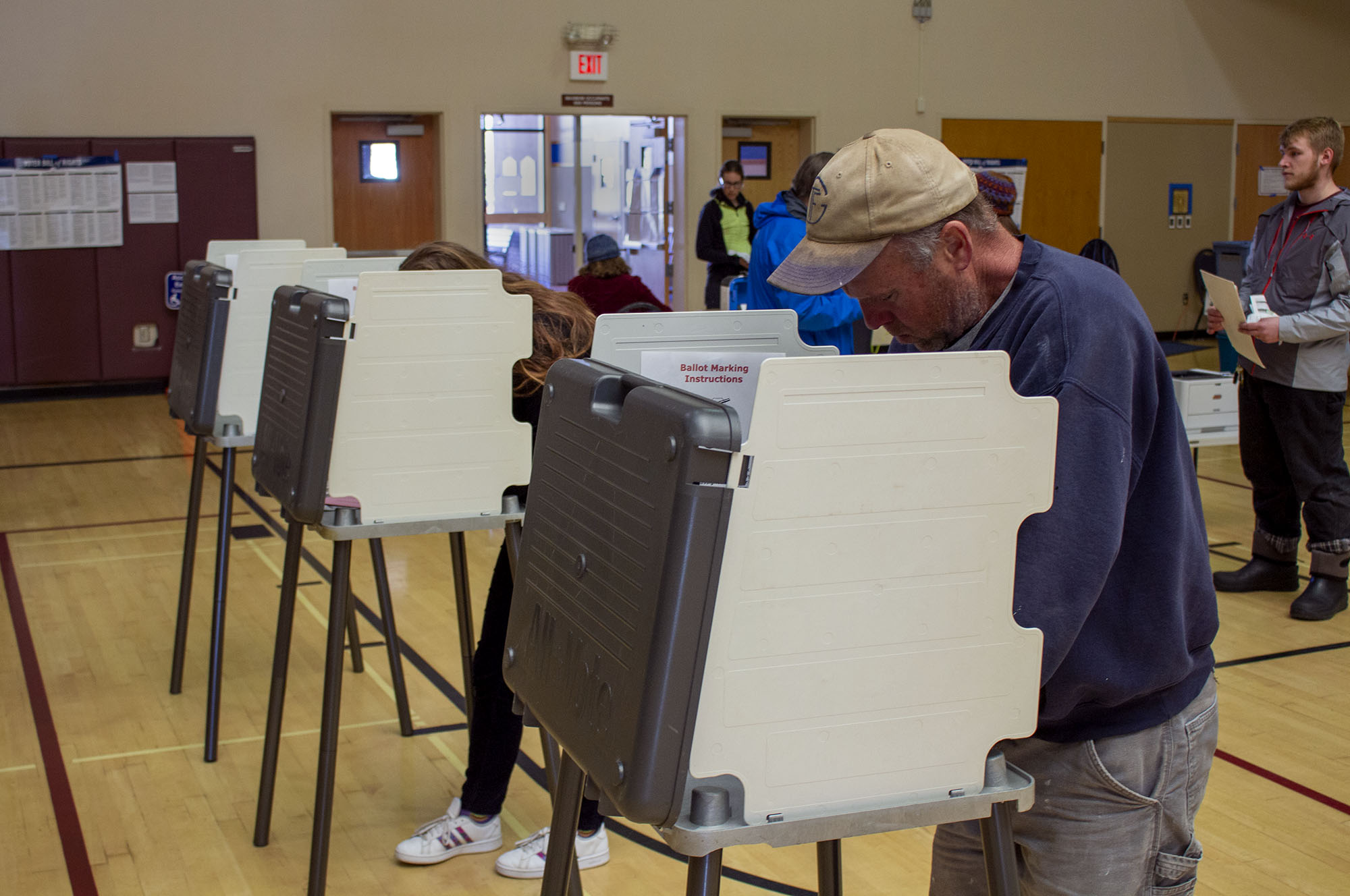
Tuesday night marked the biggest event in the primary season. Fourteen states plus American Samoa held primaries Tuesday, with 1,357 delegates to be allocated. That is just over a third of the delegate total needed to win the Democratic nomination.
Humboldt County overwhelmingly voted for Sanders. Part of California’s second congressional district, Humboldt voters choose six delegates to send to the Democratic National Convention in July. Tuesday night reports around 9:30 p.m. showed Sanders leading Humboldt with 42.4% of the vote, followed by Massachusetts Senator Elizabeth Warren with 14.5%.
Sanders led California overall with 28.7% of the vote. Michael Bloomberg was second with 18.8%. Biden was third at 17.2%.
Biden had a surprising surge in support in other states. Biden is running as a moderate, citing the need to beat President Donald Trump in the general election. Though Sanders draws support from demographics with generally low-voter turnout, Biden’s campaign claims a candidate running too far to the left will discourage many potential Democratic voters from showing up in November.
“I believe that Sanders is still going to be the delegate leader. And he has the enthusiastic base needed to beat Trump.”
Billy Cook
This boost in support may be a result of the recent dropouts of Indiana Mayor Pete Buttigieg and Minnesota Senator Amy Klobuchar. Both candidates were running moderate campaigns similar to Biden’s. Sanders had been accumulating significant momentum in the early primary states. Before Tuesday, many viewed Biden’s campaign as an insignificant challenge to Sanders’ campaign.
One of Humboldt County for Bernie 2020’s lead organizers, Billy Cook, remained hopeful that Sanders will win the nomination.
“I believe that Sanders is still going to be the delegate leader,” Cook said. “And he has the enthusiastic base needed to beat Trump.”
Since 2016, Sanders has drawn support around his long-standing progressive platform. His main campaign points are Medicare for All and the Green New Deal. Many Humboldt residents cited these policies as the main draw to support Sanders.
Sanders supporters in Humboldt County have been hard at work campaigning to get residents to vote for Sanders. They have regularly sent crews to canvass Arcata, Eureka, McKinleyville and Blue Lake. One of their strategies is to reach out to voters face-to-face. A few members of the group have also set up tables with voting and candidate information in pedestrian areas around Humboldt as well.
Another organizer for Sanders-supporters in Humboldt, Evan T. Nixon, said Super Tuesday made the race more complicated. Nixon said that the strategy for organizers in Humboldt is going to change. Their focus will shift to states that have not yet voted in the primary, like Oregon and Arizona.
Huffman talks greenhouse gases, sea level rise, salmon and more
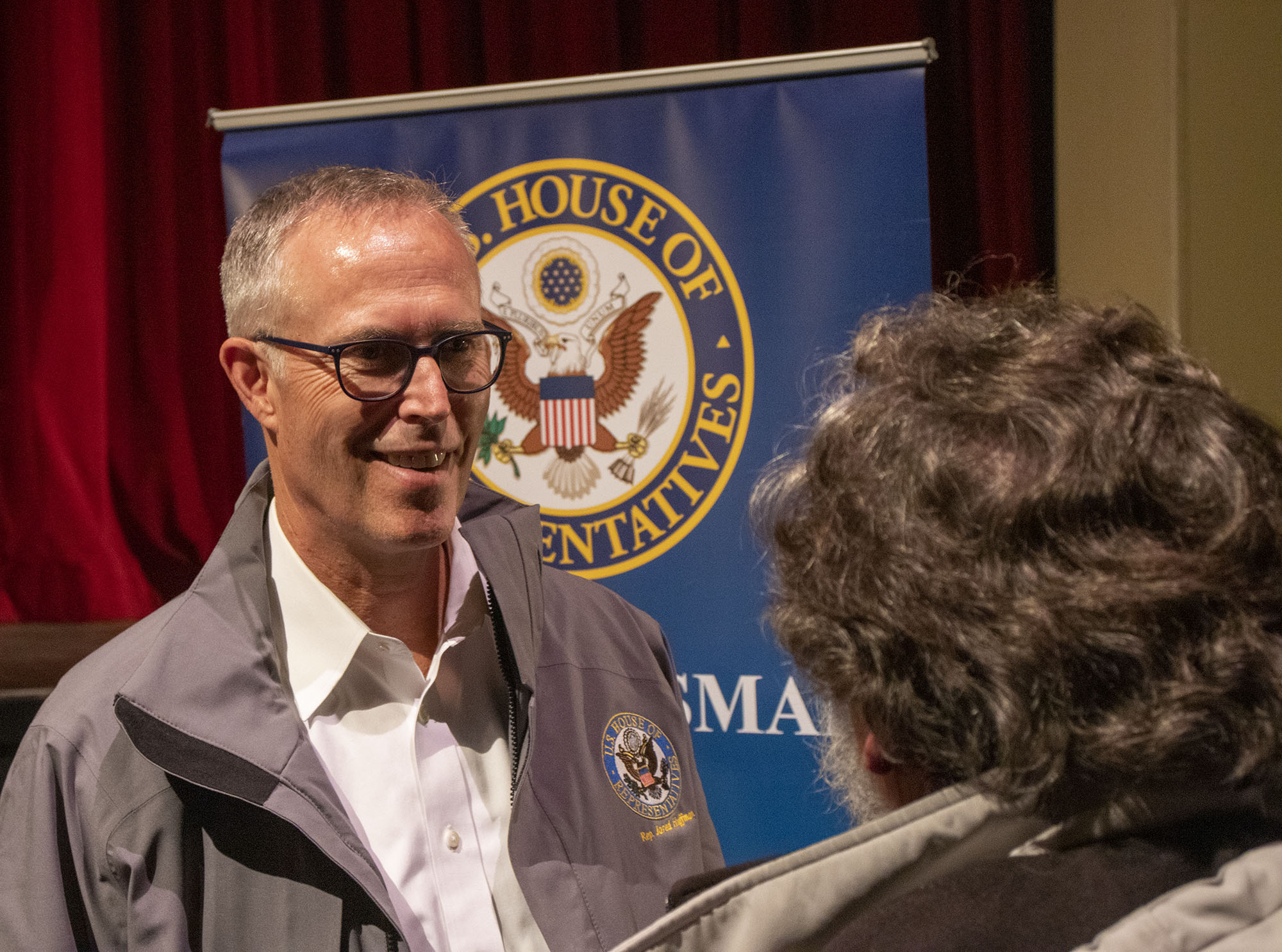
Jared Huffman, representative to California’s Second District, held a town hall at Eureka High School on Feb. 21 to engage his Humboldt constituents. After touting the progressive platform he’s pushing in Washington, D.C., Huffman answered questions spanning from immigration reform to the 2020 election—but the prevailing concerns surrounded the climate crisis.
“You got about a decade—less than a decade—to dramatically transform the global economy to put us on a path of decarbonization that gets us to net-zero greenhouse gas emissions by the year 2050,” Huffman said.
Huffman sits on the House Select Committee on the Climate Crisis along with 14 other representatives. Authorized in January of last year, the committee is set to release policy recommendations on March 31. The report will steer the current and upcoming Congress on legislation regarding the changing climate.
“Sea level rise and resiliency in coastal communities like this are just a huge part of the climate crisis. We are gonna have to do a lot of planning and prioritization for critical infrastructure.”
Jared Huffman
Several Humboldt residents questioned Huffman about protecting infrastructure from rising sea levels. Much of the county would be at risk if the sea rose. Low bridges and roadways are at risk as well as economic infrastructure like fisheries and farmland.
“Sea level rise and resiliency in coastal communities like this are just a huge part of the climate crisis,” Huffman said. “We are gonna have to do a lot of planning and prioritization for critical infrastructure.”
Huffman also sits on the Transportation and Infrastructure Committee. Huffman aims to focus some of the funding for infrastructure on coastal communities that would be impacted by rising seas.
Some audience members expressed concern about Pacific Gas and Electric’s role in California’s power supply. After months of sporadic power outages, many Californians are looking at the possibility of de-privatizing the utility company.
“I’d be fine if [PG&E] were reinvented into some type of not-for-profit entity as well,” Huffman said. “It would be nice to take that profit motive out of the situation to convert it from an investor-owned utility, where they gotta meet Wall Street’s expectations, to something that was publicly-owned or possibly a cooperative.”
Huffman then shifted his focus to the diversion of water from the tributaries that feed into the Trinity River to farmland in the San Joaquin Valley. The Trump administration is working to release a new biological opinion that will allow for significantly more water to be diverted from flowing down the Trinity. This would override the previous finding that diversion of water would drastically impact the salmon population.
A similar decision was made by the Bush administration in 2001. Restrictions on the natural flow of water down the Klamath River led to the mass salmon kill in 2002.
Huffman is hoping to hold the previous finding up long enough for a new administration and Congress that would prioritize protecting native species.
“You get the picture, right?” Huffman said. “The deck is pretty stacked right now against protecting our rivers and fisheries here on the North Coast. And it’s a fight I will continue to fight.”
This website uses cookies to improve your experience. We'll assume you're ok with this, but you can opt-out if you wish. Cookie settingsACCEPT
Privacy & Cookies Policy
Privacy Overview
This website uses cookies to improve your experience while you navigate through the website. Out of these cookies, the cookies that are categorized as necessary are stored on your browser as they are essential for the working of basic functionalities of the website. We also use third-party cookies that help us analyze and understand how you use this website. These cookies will be stored in your browser only with your consent. You also have the option to opt-out of these cookies. But opting out of some of these cookies may have an effect on your browsing experience.
Necessary cookies are absolutely essential for the website to function properly. This category only includes cookies that ensures basic functionalities and security features of the website. These cookies do not store any personal information.
Any cookies that may not be particularly necessary for the website to function and is used specifically to collect user personal data via analytics, ads, other embedded contents are termed as non-necessary cookies. It is mandatory to procure user consent prior to running these cookies on your website.