The Lumberjack


Students Serving The Cal Poly Humboldt Campus and Community Since 1929

Tag: Latinx

  • Recasting the narrative at the Latino Film Fest

    Recasting the narrative at the Latino Film Fest

    By Savana Robinson

    Chatter ceased as the house lights dimmed. Hands rustled in bags of popcorn and miniscule pieces dropped to the floor on their way to a mouth as an impressive scene of the Amazon appeared on the massive screen.

    The 25th annual Latino Film Festival at Mill Creek Cinema was held Feb. 27 through Feb. 29. This year’s theme for the festival was environmental issues. The films shown were “Nostalgia de la Luz” (Nostalgia for the Light), “El Abrazo de la Serpiente” (The Embrace of the Serpent), and “A Million Miles Away.”

    “Nostalgia de la Luz” is a documentary that takes place in the Chilean Atacama Desert, where a woman is searching for remains of loved ones whose lives were taken under the regime of Augusto Pinochet. At the same time, astronomers are looking for answers about the past of the cosmos.

    “El Abrazo de la Serpiente” shows a shaman in the Amazon who leads a sick man and his colleague to a flower that may cure him. Years later, a botanist leads him back to the sacred flower, which the shaman had forgotten. The film is set with overtones of the importance of protecting indigenous cultures and sharing knowledge.

    “A Million Miles Away” is a biopic about the life of José Hernández, a migrant farmworker who becomes an astronaut. The film is about hardship, perseverance, and the power of a dream.

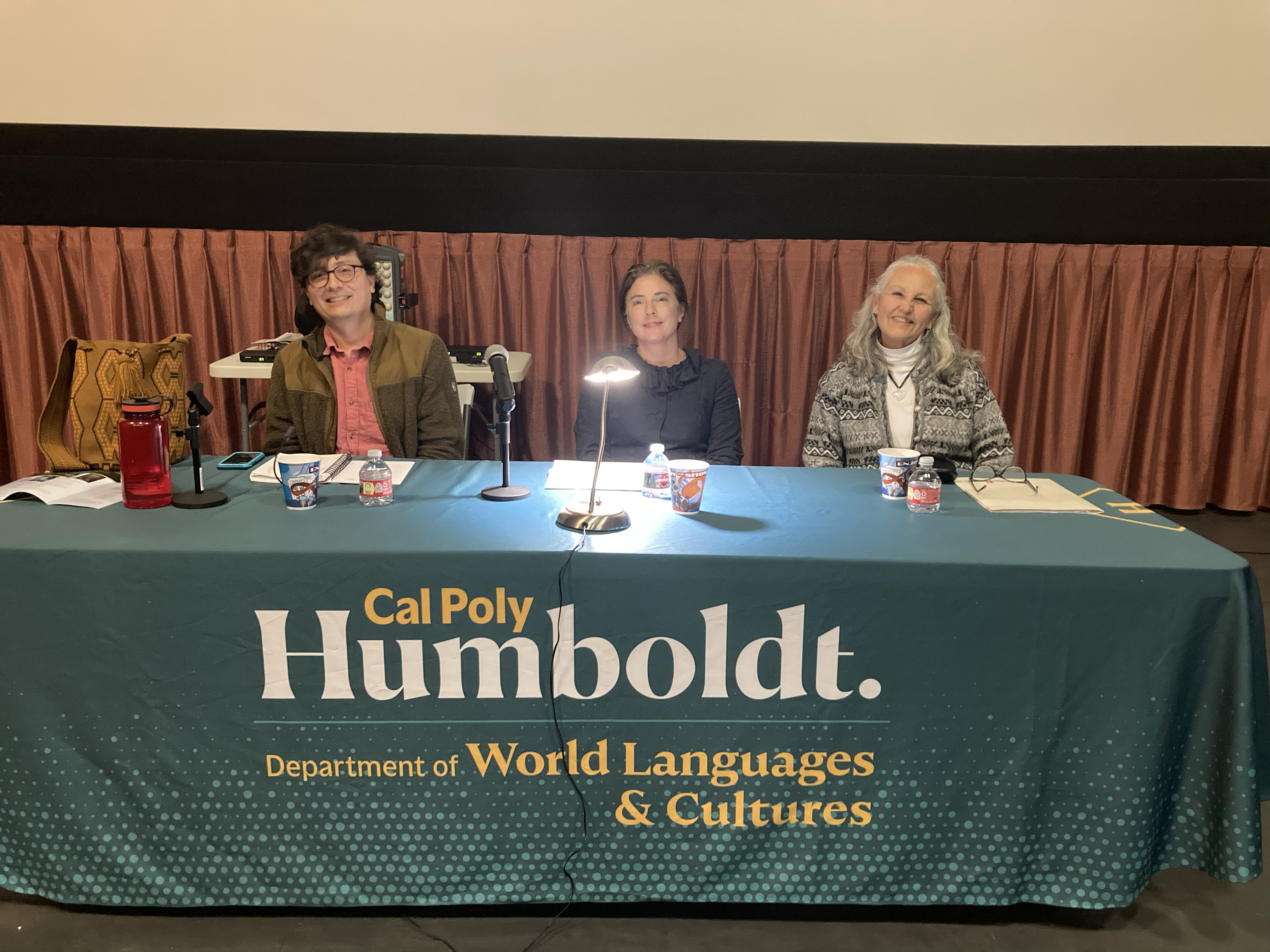
    Gabrielle Gopinath, professor of history of cinema and art at college of the Redwoods, was part of the panel discussion after the screening of “Abrazo de la Serpiente.” Gopinath noted the distinct difference between the film and others of its kind.

     “Films about the jungle typically cast the global south as a crucible existing outside time and history,” Gopinath said. “Indigenous characters only come into focus insofar as they play subsidiary roles in a white protagonist’s journey. However, in “Abrazo de la Serpiente,” the white characters and their quest are accessory to Karamakate’s central character arc.”

    José Marin Jarrín, a professor of fisheries biology at Cal Poly Humboldt, gave a speech during the panel after the screening of “A Million Miles Away.” Jarrín said that the movie reminded him of the history and stories of all immigrants.

    “When we arrive, we change who we are to try to assimilate with the majority,” Jarrín said. “We also eventually realize there’s nothing wrong with who we are, and that we should be very proud of where we come from.”

  • PSA: Mexican Independence Day does not equal Cinco de Mayo

    PSA: Mexican Independence Day does not equal Cinco de Mayo

    by Victoria Olsen

    Cal Poly Humboldt is an Hispanic Serving institution (HSI), so it is significant for students and faculty to be knowledgeable of these events. Latinx Heritage Month takes place from Sept. 15 to Oct. 15, acknowledging the time frame in which many Latin countries declared and gained independence.

    “Hispanic Heritage Month is a moment to recognize and honor the history of struggle of Latinx people in the United States. To recognize their achievements, their successes and their contributions to this nation,” said El Centro Coordinator Fernando Paz. 

    Former President Lyndon B. Johnson signed this Hispanic Heritage Week into effect that same Sept. of 1968 following Latin heritage being acknowledged in the Civil Rights Movement. Years later, former President Ronald Reagan officially changed it to Hispanic Heritage Month in Aug. of 1988.

    Sept. 15 marks the independence of Costa Rica, El Salvador, Guatemala, Honduras and Nicaragua. Sept. 16 celebrates Mexico, and Chile independence day is Sept. 18. 

    Latinx Heritage is a month of reflection, celebrating culture and growth. It is important to acknowledge one of the biggest questions and debates in the Hispanic/Latinx community right now is between the preference for being called “Latinx” or “Hispanic.” 

    “It’s a part of an ongoing debate, and discussion that’s happening within our community, and currently the debate around Latinx is that it is a term that is elitist, though it strives to be more gender inclusive and more embracing of everybody from Latin American descent…,” said El Centro Coordinator, Fernando Paz. 

    Paz also recognized that the term “Latinx” still fails to be completely inclusive and that the term does not translate well to the other spoken Latin languages.

    José Juan Rodríguez Gutierrez is a student here at Cal Poly Humboldt and works in the El Centro office.

    “I think it’s important for a lot of us Latin people that have been in the U.S. throughout our life and maybe have felt that our people have been ignored in the way history is told, but this is a time for us to let them know we’ve been here,” said Gutierrez. “Aquí hemos estado y aquí estaremos.”

    Melissa Torres Esacalante is a student who enjoys spending time in El Centros office. 

    “It’s not very widely celebrated back home in the motherland, but like here, we kinda need to. We need to celebrate our accomplishments with what we’ve done here,” said Esaclante. 

    According to the U.S. The Department of Education, Hispanic Heritage Month this year is going to focus on the theme of “Building Prosperous and Healthy Communities.” Each week during the month will have a new goal or focus. 

    September 15: Hispanic Heritage Month Kick-Off Day 

    Week of September 19th: Jobs and the Economy  

    Week of September 26th: Climate   

    Week of October 3rd: Education and Investing in HSIs   

    Week of October 10th: Mental Health and Wellness  

    October 15: Last Day of Hispanic Heritage Month

    “We have this term called ‘La Cultura Cura,’ it translates to culture heals, and it’s exactly that principle that there are elements within our cultural matrix that help us heal and become better and stronger, ideals, values, beliefs, those kinds of things,” Paz said.

    People should spend this month recognizing the debates going on in Latin America. It is important to acknowledge the history and trauma of colonialism, and what we can do now to repair the damage.

  • El Centro celebrates Latinx community in Heritage Month kickoff

    El Centro celebrates Latinx community in Heritage Month kickoff

    by Sophia Escudero

    National Latinx Heritage Month began on Thursday, Sept. 15, and was commenced on campus in a kickoff event by El Centro Academico Cultural. The event featured performances by Mariachi de Humboldt, Danza Azteca, and Ballet Folklorico, catering by Los Giles Taqueria and Pupuseria San Miguel, and keynote speaker Johanna Toruño. 

    Photo by Sophia Escudero | Dancer Jenny Leon lights the copalero, a traditional vessel in Danza Azteca. In the background, instructor Elizabeth Rivera announces as dancers Covin Sigala and Namixtulu Estevan and drummer Naeem Alston prepare for the dance.

    The event brought in over 100 students and community members of all ages as Humboldt’s Latinx community gathered to celebrate their heritage. 

    According to Fernando Paz, Coordinator for El Centro, community is what the month is all about. 

    “It’s a moment to really recognize and uplift the unique achievements, and celebrate and honor what the Latinx community has accomplished within the United States,” Paz said. 

    This national observation began in 1968 as Hispanic Heritage Week, and it was expanded to a month, Sept. 15 to Oct. 15, in 1988. The starting date of Sept. 15 is significant as it is the anniversary of independence from Spain for Costa Rica, El Salvador, Guatemala, Honduras and Nicaragua. In addition, Mexican Independence Day and Chilean Independence Day are Sept. 16 and 18, respectively. 

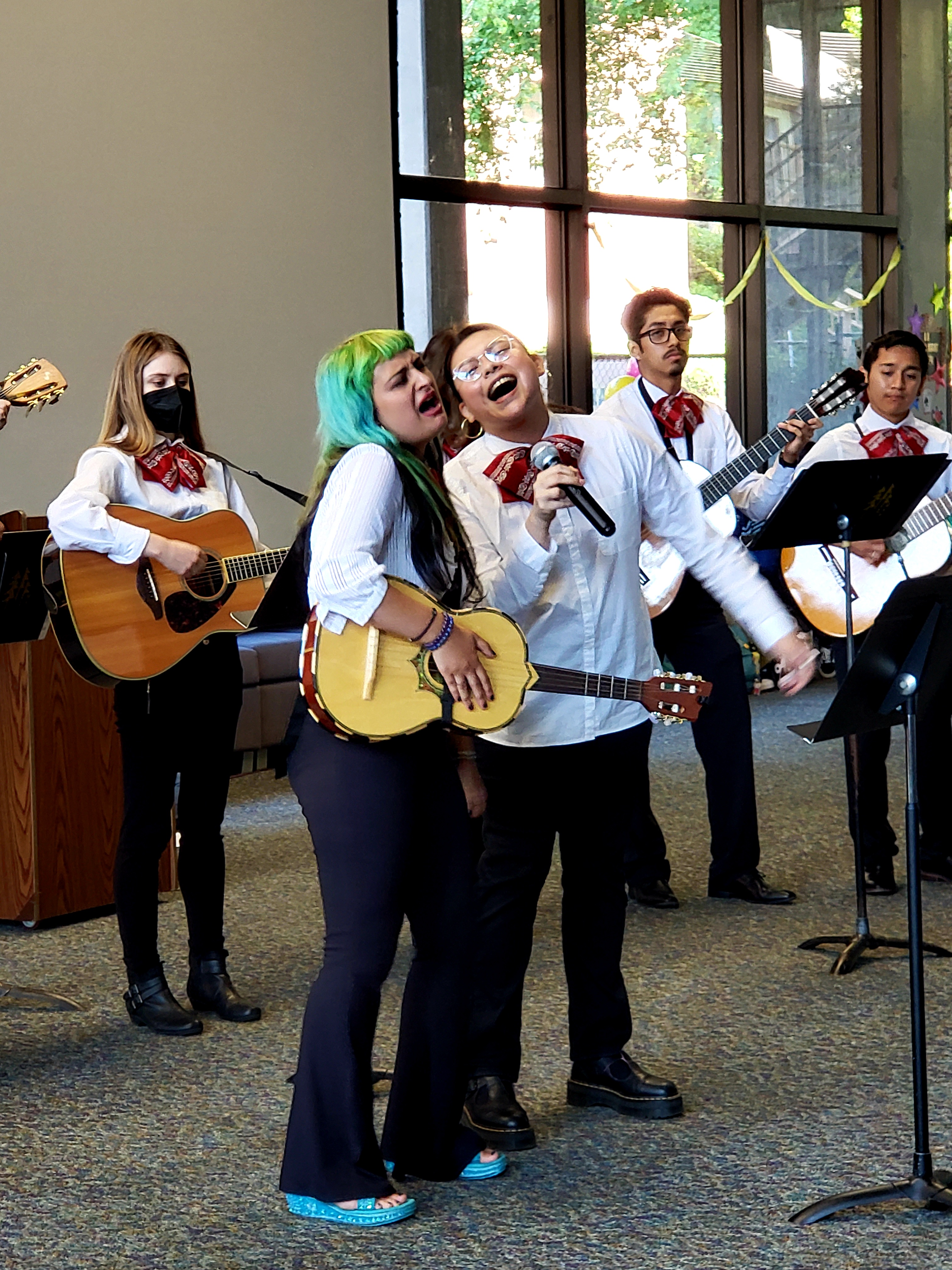
    After a land acknowledgement from El Centro, the event began with several songs by Mariachi de Humboldt. Mariachi de Humboldt features performers from the student body as well as the larger Humboldt community, and they soon amassed an enraptured audience, some singing along with the refrains while others simply listened. 

    Photo by Sophia Escudero | Mariachi de Humboldt violinist Raul Torres focuses on the music.

    Next up was speaker Johanna Toruño, a well-known street artist and activist. Much of her work involves messages of queer pride, Latinx identity, community support, and anticapitalism, and she works to make her art accessible through social media. Toruño was born in El Salvador and immigrated to the United States as a child. Many elements of her life are reflected in her artwork: floral frames in reference to the flowers her mother would buy, and a collage on supporting your own inner child featuring her own childhood photos. 

    Her art contrasts strong political messages with pink and pastel imagery in a deliberate subversion of cisheteronormative gender roles. The messages are soft and feminine, and with that, powerful.

    Toruño answered questions from the audience after her presentation, including one on what influences her art. 

    “People,” Toruño said. “And I know that sounds like a very generic answer, but I mean it. People in the community and the folks that look at this work. The people, the migrants, the people around here living our lives, I think of them when I put up posters and I’m telling you right now, the Dominican salon ladies, the mail folks, the kids who are playing in the street– gente. That’s what inspires my work. 100%.” 

    Photo by Sophia Escudero | Street artist Johanna Toruño explains how her lived experience as a queer migrant inspires her art as she presents traditional El Salvadoran art styles.

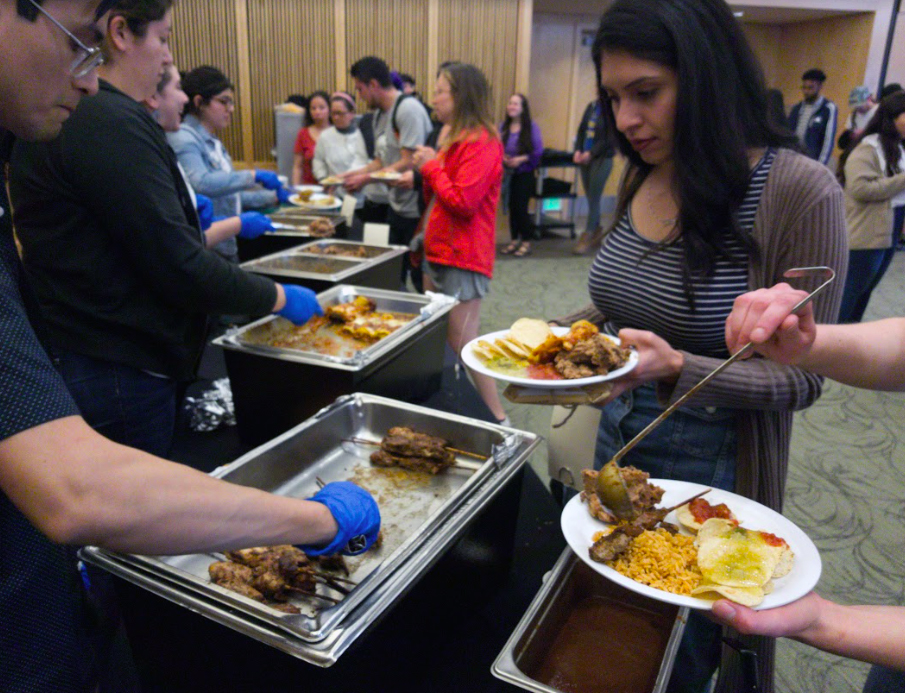
    Soon after Toruño wrapped up the questioning, the food was served. Students queued the length of the JGC for tacos, pupusas, beans and rice, and horchatas. Meanwhile, the Danza Azteca club, led by instructor Elizabeth Rivera, performed several dances for the assembled guests, even teaching the steps to audience volunteers and encouraging them to dance along. 

    As Paz and Toruño previously expressed, however, the most important part of the event was the people. Attendees eagerly dug into locally made food, applauded the performers, and danced in small groups as music played over the speakers. There was a sense of community, even as people were meeting for the first time. 

    Student Jess Angulo was one of many who felt at home at the event. 

    “I really enjoy it because I’m Hispanic, Latino, whatever,” Angulo said. “It feels familiar, like even the food feels nostalgic. It’s nice to see people like me.” El Centro will continue to hold events throughout the month, and their event calendar can be found on their website and their social media.

  • Students show out in solidarity for El Salvador

    Students show out in solidarity for El Salvador

    by Alana Hackman and Carlos Pedraza

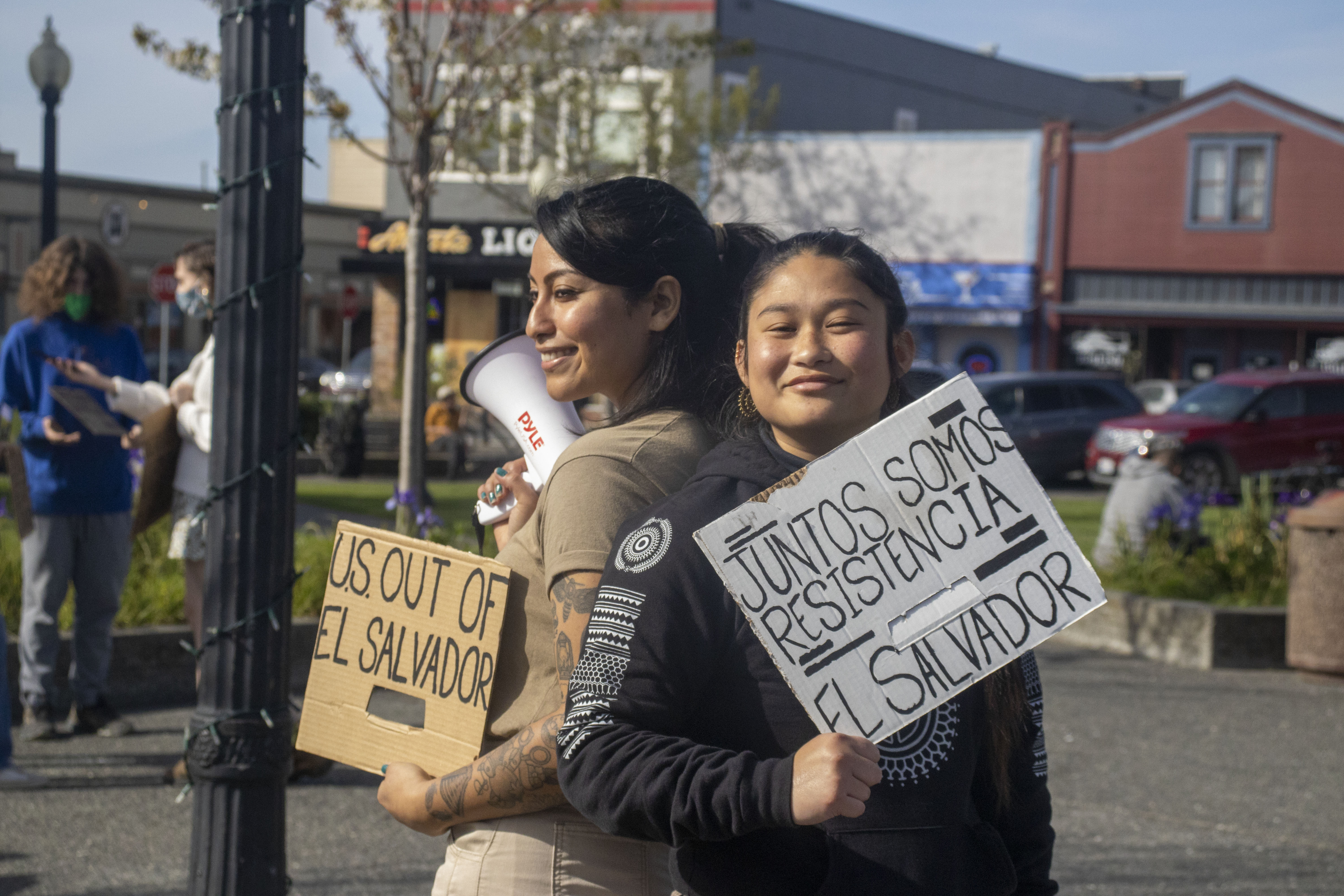
    Cal Poly Humboldt students and Arcata residents gathered around the plaza Thursday, April 7 in solidarity with El Salvador. The event was led by Klara Hernandez, a senior environmental studies student at Cal Poly Humboldt. Hernandez organized the event through her senior project and organization Eko Social Justice. Hernandez was also joined by Centro de Pueblo, an immigrant rights organization for Southern Indigenous communities also joined the event.

    Photo by Carlos Pedraza | Gathered crowd looks on during the speech at the Arcata Plaza on April 7.
    Photo by Carlos Pedraza | Gathered crowd looks on during the speech at the Arcata Plaza on April 7.

    The protest began at 4 p.m. and carried on into the evening around 6 p.m. Hernandez walked to the center of the plaza megaphone in hand and began her speech with a land acknowledgment and thoughtful address to her family who fled to the U.S. from El Salvador. Hernandez called for solidarity with the people of El Salvador and pointed out problems of racial discrimination against Indigenous and Afro-Salvadorian citizens as they are forced to adopt Spanish culture.

    Hernandez also addressed abortion laws in El Salvador and the rising violence and femicide rates in the country.

    “They imprison [women] even if it’s not your fault the baby didn’t make it,” Hernandez said.

    She continued to speak against many problems, including corporations privatizing and contaminating water, Bitcoin being adopted as their main currency is hurting those who don’t have access to it, and the LGBTQ+ community facing discrimination and violence in the country.

    An attendee of the protest was Alice Turk who heard of the protest from social media. The women’s rights issues spoke to her most and she feels people need to stand in solidarity with women everywhere.

    “I think the fact it’s a crime to have [an] abortion is something that needs to change, it’s a problem that is happening all over the place,” Turk said.

    Cal Poly Humboldt students Ben Cross and Evina Romero came out to the event also after being sent the social media post by friend and Cal Poly Humboldt psychology major Cheyanne Elam. Elam found out about the event through a class and was attending to learn more about what she can do for the people of El Salvador. All agreed it was important to use their privilege to be at this event and show their support for the citizens of El Salvador.

    “Immigrants from El Salvador and all over South America are being turned away at our borders, and the U.S. really has the ability to rectify these things,” said Cross.

    Photo by Carlos Pedraza | Klara Hernandez gives her speech to crowd while standing in the center of the plaza at the Arcata Plaza on April 7.

    Hernandez ended her initial speech with a call to action toward environmental justice and immigration rights for all. The crowd wavered cheers and screams from around the plaza flashing cardboard signs reading, “U.S. out of El Salvador,” “Women’s rights in El Salvador,” and “Indigenous sovereignty in El Salvador.” The signs were written in both English and Spanish. Hernandez mentioned her organization, Eko Social Justice, and that this event is an effort to use her voice for good and represent her home country of El Salvador in Humboldt County before her graduation and departure to Los Angeles this May.

    “The [Salvadorian] community is so tiny here that these things don’t get addressed. It’s like we’re invisible in this area so I wanna speak it out,” Hernandez said.

    Hernandez will be holding an art show at Brainwash Thrift Thursday, April 21 in solidarity with El Salvador. The event will be held from 2 p.m. to 6 p.m. and will include Hernandez’s own photography and art.

  • Latinx artists collaborate on chorus

    by August Linton

    Like the blossoms of our early spring, genuine and vulnerable artistic collaboration is blooming at Cal Poly Humboldt.

    The Toyon Multilingual Literary Magazine’s ‘SANA, SANA: Hope and Healing for Latinx Communities in Times of Precarity’ was a contest that asked for submissions of poetry, with the intention of having the winning entries set to music.

    The poem selected to be interpreted into a choral work by the award-winning composer Carlos Cordero was Alannah Guevara’s ‘Fresh Fruit.’ It is a deeply affecting rumination on vulnerability and intergenerational trauma, filled with haunting and tender images of bruised fruit and parental care.

    Guevara says that she wrote the poem thinking of her father, who passed over ten years ago. She’s a native of California’s Central Valley, where many Latinx people have settled and work on the area’s vast orchards. Guevara is half Mexican; she sees in her family and in her community an unwillingness to discuss the painful past, and an unending hope for the future.

    “I have really vivid memories of going to an orchard in the town I grew up in… It all melded together, these words that I had and these memories,” said Guevara. “Here in Southern California, who’s working in those orchards is Latinx people, Mexican people. And it got me thinking about my familial trauma, my generational trauma, the things that my dad left me to deal with.”

    Graphic by August Linton

    Guevara is about to become a parent herself. In ‘Fresh Fruit,’ she feels the protection and hope that her parents struggled to give her, and also the intense desire to protect and uplift her own child.

    The final choral piece is deeply beautiful, modern, and connected to the emotional core of Guevara’s poem. Cordero was a fantastic composer for the ‘SANA SANA’ project, both as a stunningly talented musician and also as a member of the Latinx community.

    Cordero’s Friday talk, hosted by CPH’s El Centro Académico Cultural, focused heavily on his personal struggle towards vulnerability, and how that has affected his compositions and musical career.

    Cordero’s writing process is a very visual one, although his medium is entirely auditory. He works with charts of inter-connected words and line graphs of emotional intensity to visualize his compositions in a more visceral way.

    “[Vulnerability] isn’t always going to come back to you immediately, but it’s coming to build or to open that door for people who want to connect with you,” Cordero said. “I’ve learned in art that I open up the door, I don’t make you come in. All I can do is present myself.”

    He recounted a story of opening up about his family’s experience of losing his younger sister to members of a choir he was working with. They came to him with stories of their miscarriages, of their losses, and that allowed the whole group to access an emotional connection that was not visible before.

    Cordero is originally from Maracaibo, Venezuela, and now lives in Austin, Texas. He says he, like Guevara, has struggled with an unwillingness to have hard conversations with his family about the traumas they’ve experienced.

    His piece ‘¡Ayúdame!’ was written as a “Venezuelan plea for life.” Members of the choir cry out “ayúdame, escúchame” (help me, listen to me) in Cordero’s attempt to communicate the suffering and disillusionment of the Venezuelan people.

    However, ‘¡Ayúdame!’ also represents the importance of being vulnerable, both by asking for help and by letting other people support you.

    Cordero spoke about the expectation within Latinx families and communities that people be strong, that they don’t show their struggles. As he struggled with the trauma of being Venezuelan in the midst of an ongoing humanitarian crisis, Cordero realized that he sorely needed help, that people need to ask for help.

    “[In ‘Fresh Fruit,’] Alannah showed me that the struggle is OK. It says to our kids, to our generation, to our families: we want to show that everything is ok but we can also share in their struggles,” said Cordero.

    The Cal Poly Humboldt University singers will perform ‘Fresh Fruit’ on Sunday, April 24th, alongside other musicians performing other works from the ‘SANA SANA’ project.

  • HSU establishes a collaborative space for Latinx STEM disciplines with ¡Échale Ganas!

    HSU establishes a collaborative space for Latinx STEM disciplines with ¡Échale Ganas!

    ¡Échale Ganas! is a $249,000 grant that was awarded to Humboldt State University to support hands-on learning and career advancement for Latinx students in STEM disciplines.

    The grant was named for the Mexican expression, ¡Échale Ganas! as it translates to “throw some life into it,” roughly similar to English expressions, “just go for it” or “give it your all.” The program hopes that by identifying the grant through this expression, it will enable and empower Latinx students to pursue opportunities that will further their learning and careers in natural resources.

    ¡Échale Ganas! provides students with an array of opportunities through a couple of main components. This consists of supporting two graduate STEM Promoters, providing a number of valuable learning sessions, and offering research internships to Latinx undergraduates.

    The promoters serve as a key component to the program as they use their academic and work-related experience to mentor Latinx undergraduates majoring in natural resource sciences.

    The grant was awarded to Wildlife Professor Matt Johnson and Fisheries Biology Professor Rafael Cuevas-Uribe, in collaboration with Fernando Paz of El Centro Académico Cultural.

    “El Centro works diligently to help students succeed in their respective major and academic disciplines,” Paz said. “In particular with STEM majors, we provide a cultural context that helps students persevere through courses that can be foreign and alienating.”

    Paz obtained his undergraduate through a double degree in history and ethnic studies from Humboldt State, as well as his Masters in social sciences a few years later.

    During his time as a student, he felt as though his path and the challenges he faced toward graduation were unique and different from those of many of his peers. He was consistently aware of the different perspectives he was able to contribute within his classes.

    Samantha Chavez and Laura Echávez are both graduate students studying wildlife at HSU and are the first two promoters for ¡Échale Ganas!

    “I’m hoping that my work as a promoter will inspire students to break out of their shells and believe in themselves and their abilities to succeed in this field,” Chavez said.

    Chavez said that she wishes that she would’ve tried to access established Latinx spaces during her undergraduate study because it was increasingly harder to make these types of connections once she entered the workforce. She explains that the the unique situations that seasonal field work brings intersects with one’s culture, so it is best to talk it through with a friend in a similar situation.

    The ability to learn and have access to other Latinx students of all different levels of experience is the primary goal of ¡Échale Ganas! Connecting these students within STEM disciplines is especially important as it allows them to feel supported in a field where they are predominantly underrepresented.

    The revelear sesiónes are a critical role within the collaboration process between the STEM Promoters and undergraduate students.

    Sarah Bacio, an academic and career advisor at HSU, attended both of the sessions last semester.

    “It’s really valuable to have that student experience and know what folks have done in the steps that they’ve already taken,” Bacio said as she spoke to those in attendance of the first revelear sesióne on Oct. 14.

    The Academic and Career Advising Center, along with other offices on campus, provides ¡Échale Ganas! with a number of valuable resources that coincide with the helpful tips that are given by the STEM promoters from their personal experiences.

    “The great thing about undergrad is that so many similar people gather in one place,” Chavez said. “So there’s no easier time for students to be able to find peers who are like-minded and share the same cultural background.”

  • Giovanni Guerrero Aims to Promote and Protect Campus Resources

    Giovanni Guerrero Aims to Promote and Protect Campus Resources

    Giovanni Guerrero makes his case for the Associated Students presidency

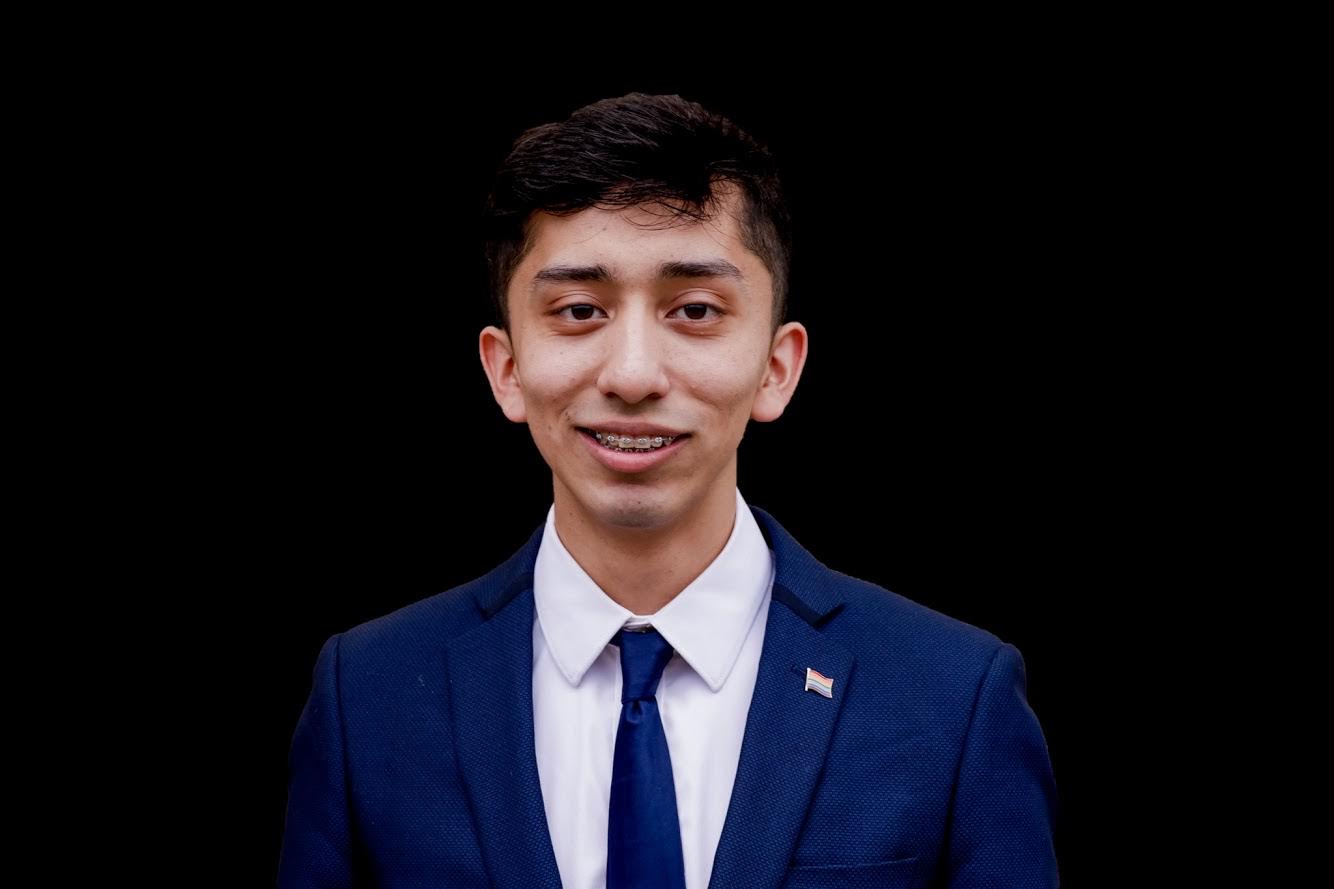
    Born and raised in southern California, Giovanni Guerrero is an openly gay, first-generation Latinx student. Coming to the end of his junior year, this is Guerrero’s first time running for a position with Associated Students, and he’s aiming straight for the top—the presidency.

    While Guerrero lacks a background with AS, he might make up for with a background working with the Federal Government. Last summer, he attended an internship with the Bureau of Land Management Eastern States division in Washington D.C. The division is an office of the BLM, a branch of the Department of the Interior. He spent time working with fellow interns in a geospatial segment of the Eastern States division—work that involved collaborating on several projects simultaneously.

    As an environmental science major, Guerrero brings preservation into the discussion as the foundation of his platform.

    “We have resources on this campus that help those students. And I think it’s very essential that we prioritize those resources and make sure that those resources aren’t seeing drastic reductions.”

    Giovanni Guerrero

    “We have some terrific resources on this campus, but over the next two years we’re gonna be facing $20 million in budget reductions, and that’s a big, scary number,” Guerrero said. “Those reductions will probably come in the form of student interests. So, it’s very important that we recognize the challenges that we’re gonna face, and we’re very vocal about it so that we can protect important resources.”

    Humboldt State University is home to many students in need, including those facing housing and food insecurities, as well as mental health issues.

    “We have resources on this campus that help those students,” Guerrero said. “And I think it’s very essential that we prioritize those resources and make sure that those resources aren’t seeing drastic reductions.”

    Guerrero advocates for more energy to be spent on the promotion of these resources. One idea is to feature a ‘program of the week’ on the HSU homepage because the current navigation system does little to support them.

    “I really wanna focus on promoting what Humboldt State has to offer,” Guerrero said. “Because our resources can’t serve the students that they’re meant to serve if they don’t know they exist.”

    “I think he would be a great leader because he understands the complexities in debates, that sometimes we have to find productive ways to maintain arguments we can’t end, and because he is so eager to make HSU a better place for students who feel left out.”

    Aaron Donaldson, debate team coach

    As the only upcoming senior running for the position, Guerrero has the most respective experience on the HSU campus and the challenges faced by its students.

    “I’ve been very fortunate to experience different areas around campus,” Guerrero said. “It’s really opened up my perception to how diligently students are working.”

    As well as working for Recreation Sports on campus, Guerrero also worked at the J. He’s also involved in several student clubs including the running, climbing and debate clubs.

    Aaron Donaldson, coach of the debate team, praised Guerrero as a genuine, sympathetic listener.

    “I would describe Gio as thoughtful, careful as an advocate and a good student,” Donaldson said. “I think he would be a great leader because he understands the complexities in debates, that sometimes we have to find productive ways to maintain arguments we can’t end, and because he is so eager to make HSU a better place for students who feel left out.”

    If elected president, Guerrero intends to improve HSU’s social media. That way students interested in attending the university will know what the campus has to offer. He advocated that all students take advantage of the opportunities at hand, especially clubs.

    “His ability to anticipate, plan for and respond to issues in dynamic and creative ways makes him an asset to any group or team he chooses to be a part of.”

    Katherine Earle, Recreation Sports

    “Clubs have really helped me to connect with other people, and I think they’re really essential to building community on campus,” Guerrero said. “That leads to retention as well. If you feel connected to your campus and where you live and where you study, then you’re more likely to stay.”

    One of Guerrero’s bosses at Recreation Sports, Katherine Earle, spoke highly of his performance.

    “Gio has already proven himself to be an effective leader while working for Rec Sports at HSU,” Earle said. “His ability to anticipate, plan for and respond to issues in dynamic and creative ways makes him an asset to any group or team he chooses to be a part of.”

    Another priority for Guerrero, as president, would be to ensure the security of student jobs.

    “A lot of students depend on those jobs and I think the more opportunities we have on campus, the more attraction we will get at HSU, and more retention,” Guerrero said.

    One of the biggest short-comings of AS, according to Guerrero, is active student engagement.

    “You could probably go up to any student on this campus and ask them, ‘Do you know what an Associated Student does or who they are?’ And they’ll probably tell you ‘No, I have no idea.’”

    Guerrero wants to create avenues to engage with the student body and inform them on what’s going on at an administrative level and within AS.

    Guerrero said this will help prioritize what students want from AS. If he wins, Guerrero is aware he has his work cut out for him, and he said he’s up for the task.

    “I’ve faced a lot of different barriers and a lot of different challenges, and just in general, it’s really helped me to be a resilient person,” Guerrero said. “And I think that’s the key to success. Cause you’re gonna face a lot of obstacles throughout life, and have to learn how to handle those obstacles.”

  • A Welcoming from El Centro

    A Welcoming from El Centro

    El Centro event welcomes and connects Latinx students and community members

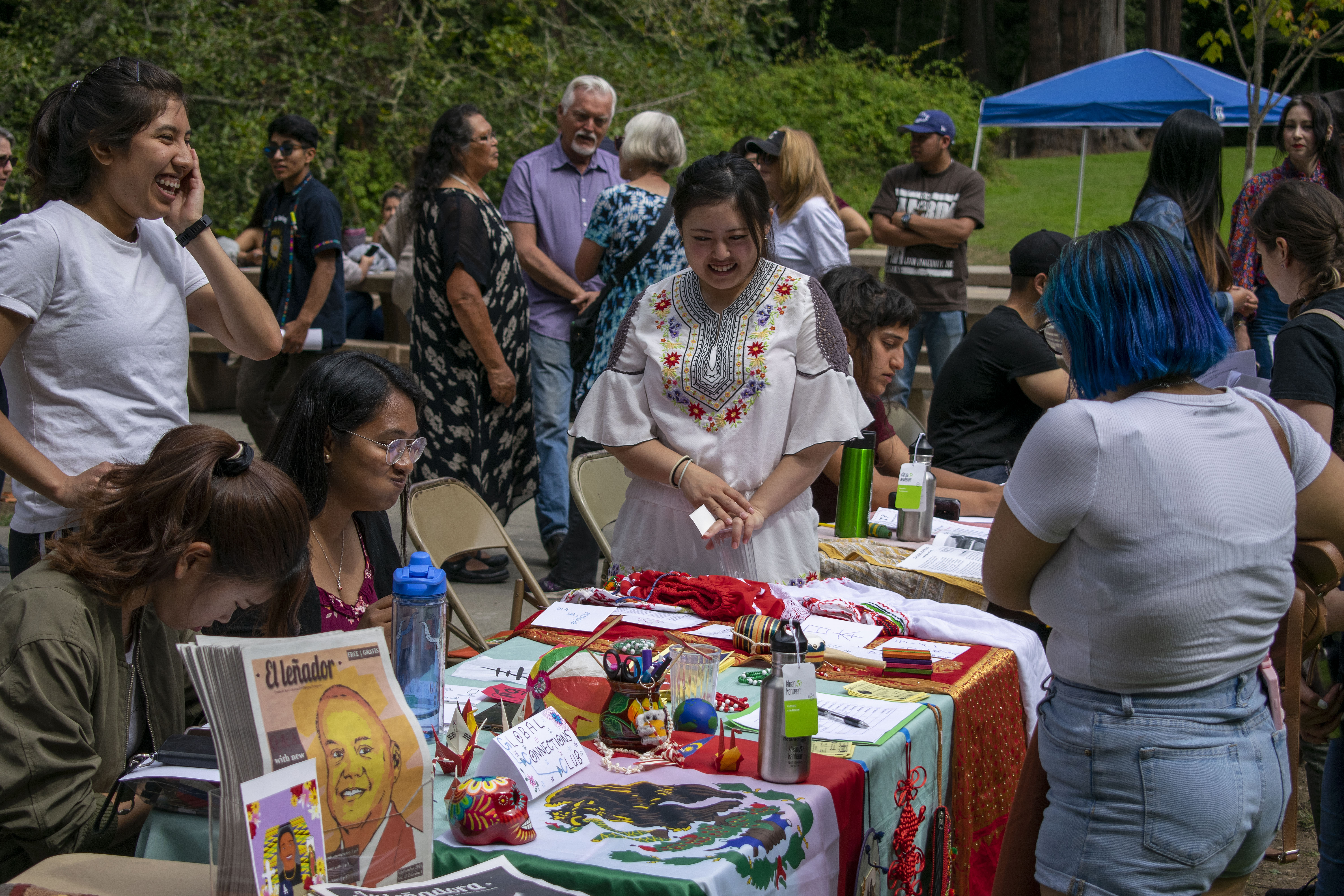
    Music and cheerful chatter filled Arcata’s Redwood Park on Sunday as Humboldt State University’s El Centro Académico Cultural held its Convivio de Bienvenida, a convivial welcoming event.

    Ritz Garcia, a junior and critical race, gender and sexuality studies major and liaison for El Centro, said he has loved being a part of El Centro.

    “It’s made me feel like family,” Garcia said. “Like there’s somewhere I belong.”

    Ritz Garcia, junior critical race, gender and sexuality studies major, at the Convivio de Bienvenida on Sept. 15. Garcia is a liasion for El Centro. | Photo by James Wilde

    The gathering served as an opportunity for Latinx students, families and community members to convene and connect with one another.

    Resource centers from HSU and the local community offered information on a wide range of topics that included parenting lessons, food pantries, housing insecurity, drug addiction recovery, communication with law enforcement and the expansion of diversity in the community.

    Meanwhile, children played in the grass and members of Latino Outdoors led hikes into the surrounding redwoods every 30 minutes.

    Daniel Gallardo, vice president of LatinoNet and coordinator for the Assisting Families to Access Change Through Resources Americorps program, hoped to connect attendees with community offerings.

    “There’s a perception of Humboldt not having a lot of resources,” Gallardo said. “We’re trying to debunk that.”

    Gallardo emphasized that resources for the Latinx community are available in Humboldt but can be difficult to access. Gallardo urged students to join the AFACTR program, which has a goal of preventing child abuse in Humboldt County. AFACTR awards up to $10,000 per year in services.

    Jorge Matias, health educator for St. Joseph Health, pushed table visitors to check out health classes offered in Eureka and Fortuna. Matias promoted a Zumba class for physical health but also emphasized the importance of mental health.

    Vice President of Latinonet and Program Leader at Americorps Daniel Gallardo at the Convivio de Bienvenida, a Convivial Welcome from HSU’s El Centro Académico Cultural on Sept. 15 at Arcata’s Redwood Park. Gallardo hopes to make resources more available for the surrounding community. | Photo by James Wilde

    “We want to get rid of the stigma with mental health,” Matias said.

    Before rain clouds crept in, attendees enjoyed a free lunch alongside a brief mariachi performance. A table for Adventure’s Edge offered raffle tickets for two new backpacks while another table for Equity Arcata offered information on housing, employment and education.

    El Centro intentionally designed the event with inclusivity in mind. El Centro, which was previously known as the Latinx Center for Academic Excellence, changed its name to better represent those it serves.

    Lunch at the Convivio de Bienvenida, a Convivial Welcome from HSU’s El Centro Académico Cultural on Sept. 15. The event, held at Arcata’s Redwood Park, had free food for all attendees. | Photo by James Wilde

    “Not everybody identifies as Latinx,” Garcia said. “El Centro sounds more inviting.”

    HSU’s Hispanic Serving Institutions STEM grant, a $3.9 million U.S. Department of Education gift spread over five years, from 2016 to 2021, funded the event.

    Each table offered its own brand of services focused on improving the local community. Bertha de la Cruz, a representative for Food for People, sought to connect attendees with free food resources.

    “There’s tons and tons of food,” de la Cruz said. “I wish I would’ve known all of this as a student.”

    Devon Hernandez, academic and career adviser, helmed a table for HSU’s Academic and Career Advising Center.

    Academic and Career Advisor Devon Hernandez at the Convivio de Bienvenida, a Convivial Welcome from HSU’s El Centro Académico Cultural on Sept. 15 at Arcata’s Redwood Park. | Photo by James Wilde

    “We’re here to make sure students have the resources they need,” Hernandez said.

    For attendees of the Convivio de Bienvenida, resources appeared abundant. More information on El Centro and their upcoming events can be found in room 205 of Nelson Hall East or on their website which is still branded as the Latinx Center for Academic Excellence.

  • The morals of Morla

    The morals of Morla

    Independent labeled alternative rock bands from Spain usually do not garner the attention in the U.S that say a band from California or New York tend to. Even the explanation of the band strikes as a hipster retweet but Vetusta Morla is nothing but an exception to this rule.

    Vetusta Morla has been nominated for three Latin Grammy awards this year for their recent album entitled “Mismo Sitio, Distinto Lugar.” These nominations include Mejor Album de Música Alternativa (best alternative music album), Mejor Canción Alternativa – ‘Consejo de Sabios’ (best alternative song) and Mejor Diseño de Empaque (best packaging design or best album cover art).

    Álvaro B. Baglietto has been the longtime bassist for Vetusta Morla and has seen both the highs and lows of working on an independent label.

    “We have always done what we want to do,” Baglietto said. “And we have never had to really have pressure put on us by some record [executive].”

    Baglietto and his bandmates, guitarist Juan Pedro “Pucho” Martin, drummer David Garcia, percussionist Jorge Gonzalez, guitarist Guillermo Galvan and keyboardist Juan Manuel Latorre have known each other since they were young. They grew up in the Tres Cantos neighborhood of Madrid, Spain, and formed the band in 1998.

    “We love Madrid; it’s our city, it’s our base,” Baglietto said. “And hey, maybe will move to Miami, who knows, but we love Madrid, we love the way of life here.”

    Baglietto and his bandmates said music is sacred, and since their creation, Vetusta Morla has been adamant about being independent from any record labels, media companies and celebrity management. Although this has made them into one of the most famous and acclaimed independent artists in Spain, Baglietto and the band don’t really think about themselves in the spotlight.

    “We don’t think about those things that much, we don’t even really talk about it,” Baglietto said. “In the beginning, we just wanted to do music in a honest way and the best that we could.”

    Vetusta Morla’s musical genre is generalized as alternative rock but Baglietto said that the likes and interest of the band and himself vary greatly.

    “The music that I listen to changes all the time,” Baglietto said. “I used to love rock, reggae, jazz, blues.”

    Baglietto says that the evolution of his musical tastes have led him to genres that he has never really listened to before and artists he never previously would have known.

    “Nowadays, I am listening to a lot of rap or hip-hop and it didn’t happen before,” Baglietto said. “I like Kendrick Lamar and Eminem.”

    With 20 plus years of experience under their belt, the band had a lot of time to work on different projects and album concepts. This includes everything from writing and producing the music for a video game entitled “The Rivers of Alice” all the way to writing and producing an album for an AIDs awareness program.

    “For me music is like poetry with a soundtrack and it’s so important,” Baglietto said. “We have to make people think and make people feel and not say something that others have said before.”


  • Celebrating five years of El Leñador

    Celebrating five years of El Leñador

    El Leñador has been publishing monthly bilingual stories for Humboldt State University since 2013. El Leñador has given a voice for the people whose voices are never heard, and its staff has been carrying on that drive to serve the community for five years.

    Diana Borman and Caroline Moira are students at HSU and read El Leñador in their spare time.

    “It gives a platform for Latino and Hispanic voices to be heard,” Moira said. “It also gives voices to people of color in general, which is something that is needed in this time we are living,” Borman said.

    April 19 marked El Leñador’s fifth anniversary. To celebrate, they offered free food and a place to hang out and learn the progress that El Leñador has made over the years.

    Hector Arzate is the current editor-in-chief.

    “I never imagined being involved in El Leñador,” Arzate said. “I went into the publication voluntarily, but it led to me overseeing the bilingual newspaper.”

    Many were in attendance of the celebration. Some were even former editors of El Leñador.

    Sam Armanino was a photo editor for El Leñador in 2016. He is now working as social media coordinator for the North Coast Journal.

    “There is a lot of room for creativity in a student-run publication,” Armanino said. “Working for El Leñador was a great experience.”

    Another editor from El Leñador who attended the event was Carmen Peña-Gutiérrez. She was editor-in-chief of the newspaper in fall 2017 and is now working as workshop organizer for the Check-It program.

    “I’m very happy to see that El Leñador has grown to become a news source for people,” Peña-Gutiérrez said. “What helped me write stories for El Leñador was helping the community that is underrepresented be heard.”

    Meg Bezak was announced to be the next editor-in-chief of El Leñador for fall 2018.

    “I’ve had two years of involvement in El Leñador,” Bezak said. “I fell in love with El Leñador. The staff has been exceptional and supporting.”

    El Leñador’s advisor, Andrea Juarez, has been involved with the newspaper since 2015.

    “The goal of this newspaper is to allow students to tell the stories they want to share,” Juarez said. “The students who write for El Leñador are getting experience for their careers.”

    In the future, one of the changes El Leñador wants to make is to create more multimedia content for their website, as well as expanding their staff. One thing that won’t change for El Leñador is providing stories for the community.

    “This job has a lot of big shoes to fill,” Arzate said.


  • The fight for sanctuary

    The fight for sanctuary

    By | Charlotte Rutigliano

    A rally led by Centro del Pueblo (CDP) will be held on Tuesday, September 19 from 8:30 a.m. to 10 a.m. in front of the Humboldt County Correctional Facility in Eureka.

    According to César Abarca, faculty coordinator for Scholars Without Borders (SWB), the purpose of the rally is to advocate for a county-wide Sanctuary Ordinance.

    “This is also to request a support statement from the county board regarding DACA residents in the county,” Abarca said. CRrallypreview

  • Fighting For D.A.C.A.

    Fighting For D.A.C.A.

    Rally Underway in response to Trump’s Retraction of D.A.C.A


    By|Michelle Meyers

    The smog and ash from the fires finally began to clear, yet it was emotion that hung heavy in the air this afternoon at the UC Quad. After the Trump administration announced this Tuesday that it will formally put an end the Deferred Action for Childhood Arrivals Program, or D.A.C.A. An end date was placed on the legal protections that were granted to approximately 800,000 undocumented people who entered the country as children. In response, M.E.Ch.A (Movimiento Estudiantil Chicano de Aztlan) De Humboldt State held a rally that took place this afternoon in the UC Quad. Students, faculty and members of the community came out in support of the Latinx community and those who may be affected by the recent retraction.

    As Karla Sanchez strolled calmly up to the microphone, the crowd quickly grew silent. Sanchez is an HSU student, member of M.E.Ch.A. De Humboldt State and a DREAMER. When she started to tell her story, her voice shook ever so slightly, and her eyes began to water. Sanchez’s parents brought her to the United States when she was only two years old. This year, she walked across the university graduation stage, but now Sanchez is here in the UC Quad to prepare for the next stage of her life in the face of the retraction. Even under the weight of her situation and with the fate of the Latinx community in clear view, it only took her a moment to strengthen her spine and speak before her local community with power and with pride.

    “Come out of the shadows and don’t be afraid,” Sanchez said. “We are supported in the school.”

    Sanchez said she felt that community support and action is vital, and she kindly turned to the crowd to ask for support.

    “Start speaking in your classroom, bring up the problem, ask what’s going to happen,” Sanchez said. Daca3_Print_Color.jpg

    Anayeli Auza is yet another HSU Student, member of M.E.Ch.A. De Humboldt State and DREAMER that came to the rally to voice her support for the Latinx community and stand in solidarity. Auza came to the United States when she was just one year old. While reflecting on her childhood after moving to the United States, she posed the question, “How do you tell a 12 year old that a paper defines their opportunities?”

    The answer to that question, she couldn’t provide. Both then and now. As of Tuesday, an unshakeable sense of worry and fear hangs over Auza regarding the future and the futures of other DREAMERS in the community.

    “People who are walking around don’t know what’s going to happen. Stay strong out there,” said Auza.

    While spirits were low in the face of a future so uncertain, the support was evident. The concrete seats, lawns and the balconies lining the UC quad were packed with students and members of the local community, some part of the Latinx community and others allies, but they had come to lend ears to listen, express their support and stand in solidarity with the Latinx community.

    In the midst of the rally the crowd began to chant,

    “Defend D.A.C.A, Down with Trump, Down with U.S. imperialism.”

    “This country is built on the blood, sweat and tears of immigrants,” said Cesar G. Abarca, Assistant Professor of the Department of Social Work.

    Abarca came out to speak on behalf of the Latinx community and those who support them, expressing not only a, “need to recognise that fear,” regarding the implications of the retraction within the Latinx community, but a great need for support from those outside of the community.

    “We need you right now, a lot of us are in the shadows,” said Abarca.

    In an email sent Tuesday afternoon to HSU students and staff, President Lisa A. Rossbacher expressed her support for students affected by the retraction, saying that, “Humboldt State University stands with you, and we care about you. We’re going to keep doing all we can to help you succeed in school and become Humboldt alumni.”

    In addition, she also expressed her feelings about the retraction itself.

    “I’m frustrated by this short-sighted thinking of our leadership at the national level. I want America to do better. We need America to do better.” said Rossbacher.

    “By doing so with no alternative solution in place, our government has created uncertainty and fear for hundreds of thousands of people, including thousands of college students.”

    Rossbacher also came to speak at the rally to show her continued support for HSU students affected by the reaction.

    “I was horrified by the announcements today,” said Rossbacher.

    “I join all of you who are part of D.A.C.A., especially our students.”

    “We are human beings, damn it,” said Marisol Ruiz, who came to the rally to stand in solidarity and act as a voice for her community. She spoke from the heart with intensity and integrity. When speaking about how her mother was deported when she was young, she turned to the crowd to offer them a piece of advice

    “Don’t feel alone,” said Ruiz

    When HSU student and Dorm Community Advisor Steph Cardenas found out about the event yesterday, she immediately began filling the walls in her dormitory with flyers for the event.

    “Silence is violence,” said Cardenas

    Cardenas feels that it is pertinent to be a voice in such a time, because to her, “being silent is being on the same side.”DACA.jpg

    Here are a few things you need to know if (Now that) D.A.C.A is repealed:

    • If the DACA program ends students enrollment and tuition will not be affected. In addition, funding under the DREAM Act will not be.
    • Depending on what action the government takes, you may not be able to continue to work on campus or other place of work. Federal law forbids employers from knowingly employing individuals who lack proper authorization to work in the country.
    • For undocumented students traveling abroad, it is likely that they will not be able to re-enter the U.S. upon return.
    • If you are traveling within the U.S., you should be permitted to travel within borders, but you may be asked for identification or about your immigration status.
    • If you you encounter Customs and Border Protection, they are authorized to verify your status. CBP agents can conduct a search if they have, “particularly probable cause.” Motorists are not required to consent to a search. If you have DACA, you can bring a copy of your EAD and your approval notices just in case you are asked questions.
    • If you come in contact with a police or immigration officer, observe your rights granted by the U.S. constitution.
    • If you are concerned about keeping your family safe, you can help them develop a safety plan as well as inform them of their rights. See the Immigrant Legal Resource Center Family Preparedness Plan.

    Scholars Without Borders is located on the second floor of the Multicultural Center.