The Lumberjack


Students Serving The Cal Poly Humboldt Campus and Community Since 1929

Tag: legalize weed

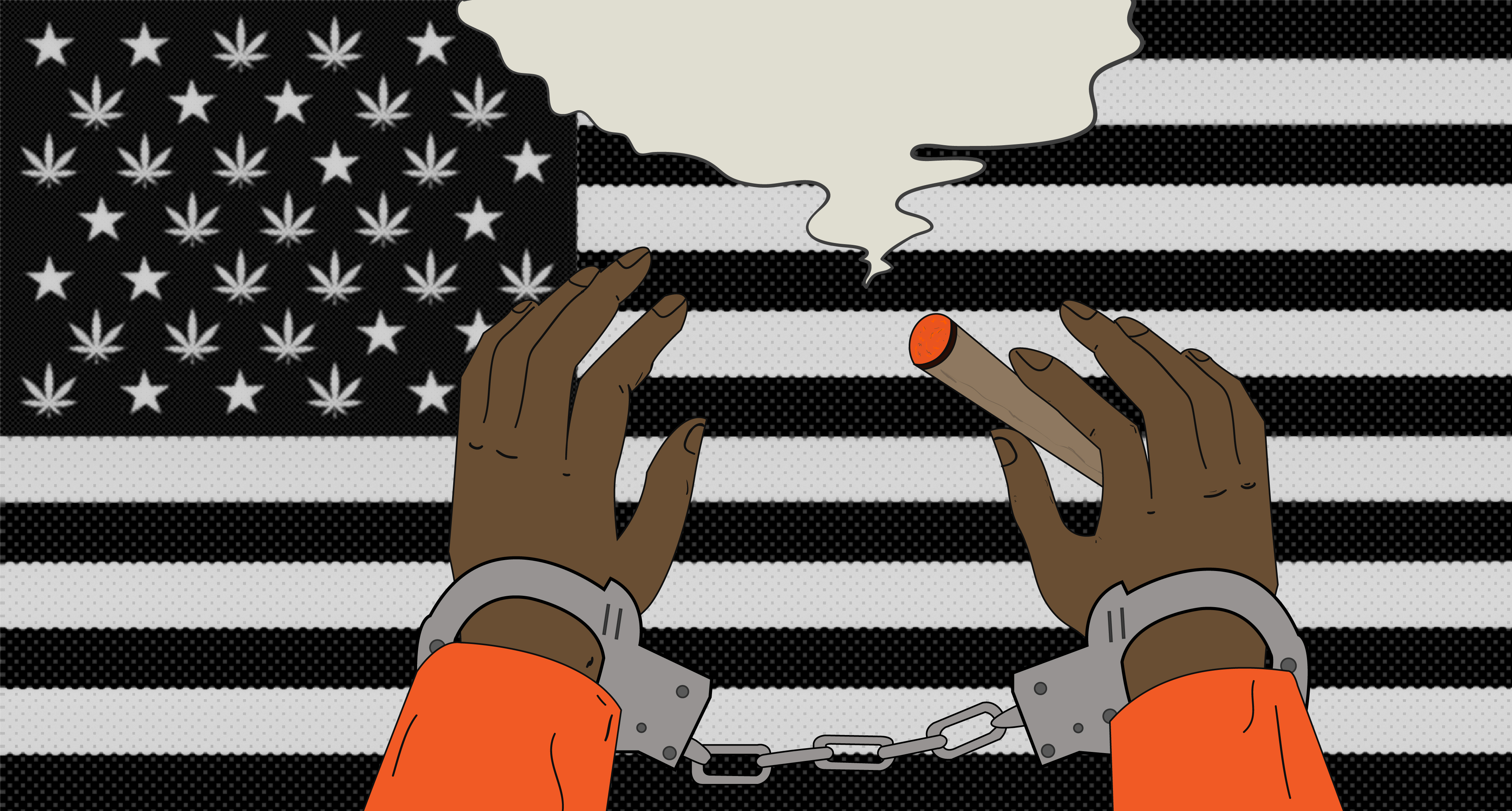
  • Marijuana Legalization is a Race Issue

    Marijuana Legalization is a Race Issue

    Marijuana laws are enforced unequally and minority communities bear the brunt of the consequences

    Many states have voted on the legalization of marijuana, a schedule one drug, and 11 states have legalized recreational cannabis. Weed is now a large source of legal income in the U.S.

    Forbes shows that the top three states where recreational marijuana is legal profited over $4 billion in 2018 on cannabis sales. But according to a 2010 study by the American Civil Liberties Union, states waste over $3 billion a year in weed-related arrests.

    We believe states waste more time and taxpayer money by not legalizing and decriminalizing weed. Law enforcement often enforce weed laws unequally, with more arrests in underprivileged neighborhoods, which are often filled with people of color. According to the ACLU, black people are four times as likely than white people to be arrested for marijuana possession despite similar usage rates.

    We are fed up with blatant inequality and discrimination.

    In July 2016, a Minnesota police officer shot and killed black 32-year-old Philando Castile in his vehicle. The Minnesota Bureau of Criminal Apprehension investigated the case, and was told by the officer that he “feared for his life” due to the smell of marijuana and Castile’s lack of concern for the child in the vehicle. This ended in the officer’s acquittal.

    While most states don’t keep data for marijuana possession by Latinx individuals, New York City’s data shows that the Latinx community has the same rate of use as black and white individuals, but recent data shows that marijuana possession is the fourth most common cause of deportation.

    It’s obvious that many of those affected by these ludicrous laws are from black and brown communities. And it may be relevant to note that there is political gain to keep it this way, as many people who have been arrested for marijuana can no longer vote.

    This war on drugs, specifically the war on marijuana, is a war on communities of color. Children are left without parents and people are locked up for years on minor counts. And yet, even when white people commit similar crimes the punishments are all too different.

    Opioid addiction is at an all time highs in the states. It has largely affected white communities, but the amount of arrests is no where near that of other cultural communities when marijuana is involved.

    If treatment and repercussions are unequal, we need to understand that the system is flawed. When one group is given more freedom to make mistakes than another, it seems that there is a hidden agenda at work to keep white communities more prosperous.

    Drug laws are just one example of discriminatory regulations within the United States. Data shows that law enforcement agencies often treat people of color differently, our laws only add tension to the problem.

    As of now, 10 states plus Washington D.C. have legalized recreation marijuana and an additional 20 allow medicinal use. These states should quickly look into decriminalizing the drug fully. If we take steps to free individuals locked up for minor drug possession charges and use the money saved to focus on bigger issues, then we take one major step toward reforming the country’s unjust system.

    It may be a slow process, but it’s one that needs to happen now.

  • The green is looking grey

    The green is looking grey

    Humboldt County’s cannabis policies are unclear

    By Ali Osgood

    Travis Poe is racing against countless others in Humboldt County to build a cannabis business under the recently passed Proposition 64, a bill that legalized marijuana in California. And much like his competitors, there is a lot of uncertainty as the policies change the landscape for cannabis farming throughout the state.

    “Right now it’s super exciting,” Poe said. “I’m glad we’re doing it and I’m glad it happened but it’s also fucking terrifying.”

    Poe spends his day building his business. As CEO of his startup company, most of his day involves market research, website development, company branding, and problem solving. If you looked at his to-do list, you might think he is your average young businessman, but he is not in the average business. He operates a legal cannabis nursery.

    Poe has been involved in the cannabis industry for several years and actually voted against Prop. 64. But since it’s passing he has fully embraced the changes and teamed up with four others to create a cloning and genetics company where they provide plant starts for full-term cannabis growers.

    PrintCurrently, the five are operating business under an affidavit which allows them to continue cultivation as they wait for their permit to be approved. The county is still working out the details on local legislature regarding the cannabis industry, which has caused a hold-up on Poe’s permit.

    “The process has been interesting, slow, and somewhat unclear,” Poe said. “What’s happening right now is that the county is feeling that too, realizing it’s not the right formulation and going back to the drawing board.”

    For Poe and many other longtime growers, the passing of Prop. 64 has been a confusing time. While they are excited to come out of the shadows the confusion and lack of clarity regarding county policies have given reason for caution.

    “It’s just a lot. A lot of moving parts and a lot of changes moving really really fast,” said Chris Anderson, the cofounder and president of Redwood Roots. “I think there are going to be a lot of people that don’t make it through the process and that breaks my heart. It’s a really hard pill to swallow.”

    Redwood Roots is a collective that oversees 25 different outdoor greenhouse marijuana farms in Southern Humboldt. Anderson created the collective in hopes of helping the smaller farm operations in his community have a chance at breaking through the expensive and competitive process of becoming a profitable farm under the new regulations.

    Currently, all cannabis businesses are required to obtain a permit. There are 17 different licenses available, according to Cal Growers Association, ranging from large-scale outdoor cultivation to transporting licenses.

    For those looking to cultivate marijuana outdoors they not only need to apply for a permit but they must go through extraneous lengths to come into compliance with Humboldt County regulations. These growers are hiring environmental, legal, and structural consultants so that they are within the specific codes the county requires for permitted cultivation. This includes soil testing, erosion surveying, environmental impact reports and, for many, regrading and rebuilding infrastructure. It gets expensive quickly which is separating the small farmers from the corporate farmers who are new to the scene.

    Anderson is currently waiting for approval on three different permits: dispensary, nursery, and transportation. Although he is eager to get his permits finalized, he has been patient with the county in recognizing the complicated scenario.

    “[It’s been] a huge challenge. The county has been helpful on our part, it’s just a really complicated process,” Anderson said. “We just wanted to step out and be ourselves and represent where we are from and make sure that our culture survives through the change.”

    Until the county confirms their policies and clearly defines the components of the local market, growers will hang in limbo. Many are hoping to keep a boutique approach to Humboldt grown marijuana in order to isolate themselves from the corporate structure forming in county’s like Monterey and Los Angeles.

    The biggest concerns expressed by Humboldt growers surrounding the new law are that the small grow operations won’t be able to compete with the larger corporate farms throughout California. Poe and his partners remain positive that the existence of big business will leave room for smaller well branded business.

    “We’re investing in the brand. You have to be building value in other areas of your business to compete with the big guys,” Poe said. “There’s always an evil empire, but that leaves a place for the rebel alliance.”
    The county is sensitive to these concerns as they reform their policies to help small farmers break through the startup costs and into the market.