The Lumberjack


Students Serving The Cal Poly Humboldt Campus and Community Since 1929

Tag: lgbtq

  • Canceled Ferndale drag show spurs protest

    Canceled Ferndale drag show spurs protest

    by Andres Felix Romero

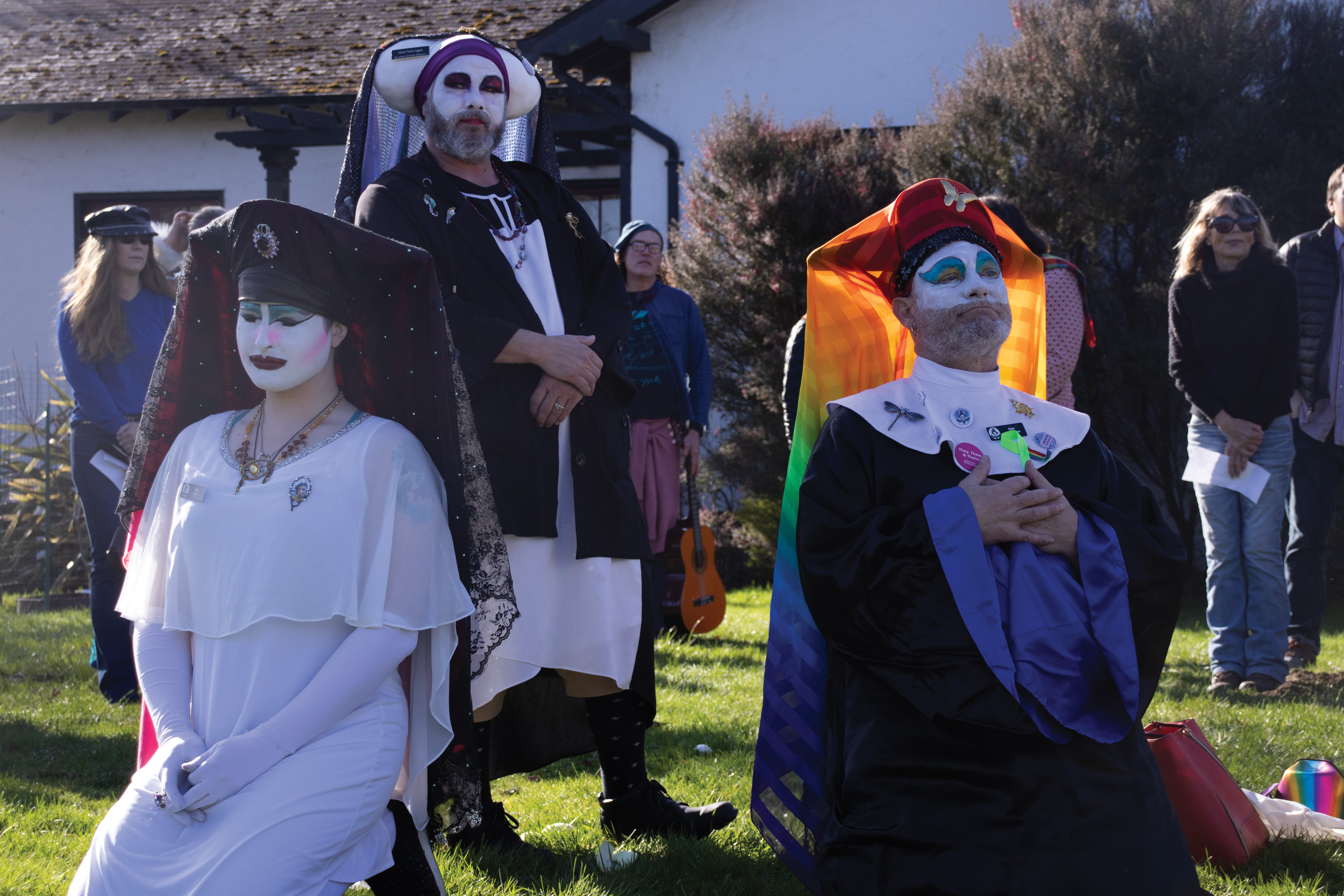
    Queer activists known as the Sisters of Perpetual Indulgence hosted an action they called a ‘Day of Non-Judgement’ outside the city hall in Ferndale, CA on Jan. 22 in response to the recent cancellation of a drag show fundraiser. The show was canceled by the venue ownerswho were concerned about extremist violence following anti-LGBT signage outside of a local church. The church has a history of using its signs to spread anti-LGBT hate. 

    The Day of Non-Judgement consisted of sermons, testimonies, and speeches in support of the Humboldt queer community from event goers such as local clergy, parents of queer youth, and Cal Poly Humboldt students and staff. Cal Poly Humboldt professor of psychology Benjamin Graham spoke in remembrance of Camile Nauta, a Humboldt student who recently passed away and was involved in the queer community. Graham also spoke on the significance of having the Day of Non-Judgement in Ferndale.

    “It’s a great opportunity for the community to come together and wash over the hate and fear that too many people live their lives in,” Graham said. 

    Other attendees supported the action by holding signs or flags. Phoenix Gomez held a pride-themed California state flag, and said they felt that there was work to be done due to the threats.

    “We should be allowed to have our events. We should be able to have them without being interrupted,” said Gomez. “If there’s hate by any form, there’s always going to be work to be done.”

    The Sisters’ Eureka order is also known as the Abbey of the Big Red Wood, and includes members such as Mistress of Scriptures (Secretary) Sister Gaia T of the Revolting Earth. 

    Sister Gaia T felt action was needed to support the Humboldt queer community.

    “The sisters respond to the need of our community. We were told that our community didn’t feel safe in Ferndale,” said Gaia T. “We were told that people wanted something that made them feel welcomed and loved. Part of what the sisters do is the ministry of presence, where just by entering spaces we create safe spaces for everyone around us just by being present.”

    The Day of Non-Judgement is an opportunity for the community to come together in a public space and support one another by speaking out against hate, and in support of diversity and acceptance. Sister Mary Magnalaid Me hopes that the action in response to the recent bigotry is an opportunity for change in Humboldt, especially as attitudes vary across the county.

    “Humboldt County is a very rural place and each little pocket really has its own flavor and its own local culture,” Magnalaid Me said. “My concerns are that the roots of the watermark of judgment, racism, patriarchy, homophobic, and negative sorts of perspectives, has roots in Ferndale that are in other places in Humboldt and other places in our nation and our world as well. Perhaps they’re visible here. And when things become visible, what we have are opportunities, opportunities to bring the margins together, and opportunities to galvanize people to organize for change.”

    This is not the first Day of Non-Judgement the sisters have hosted. Since the Abbey of the Big Red Wood’s debut at Humboldt State University’s 2006 Queer film festival, the sisters have been a part of the local community. They’ve hosted bingos and fundraised for local charities such as Humboldt Domestic Violence Services and Humboldt Breast Health Project, to name a few. 

    The canceled event was organized by Lost Coast Pride, and was going to be Roaring 20s themed. Already, plans are in the works for more drag events in the area. Shortly after the Day of Non-Judgement on Jan. 22, Rivera mentioned that a few venues had already offered to be a space for the show.

    The Day of Non-Judgement ended with the protestors performing their rendition of Johnny Cash’s “Ring of Fire,” with some, including Graham, providing instrumentals on their own guitar.


  • Our Flag Means Death gives the gays everything we wanted

    Our Flag Means Death gives the gays everything we wanted

    by Sophia Escudero

    In episode five of Our Flag Means Death, the two leads share a moment under the moonlight. Stede gently folds a piece of fabric that Ed’s mother had given him and tucks it neatly into a pocket of his waistcoat.

    “You wear fine things well,” he says, tenderly, and Ed looks up at him with nothing short of adoration in his eyes. He leans in, then stops himself, and as the two part ways they look back at each other, both clearly wanting more but unable to bring themselves to voice it.

    That’s pretty gay, I thought to myself, but I didn’t dare hope that this scene was intended as anything beyond bromance.

    I grew up on Tumblr as a queer kid at the height of Superwholock, reblogging edits of Emma and Regina from Once Upon a Time looking longingly at each other and watching conspiracy videos about how, if you really read between the lines, the BBC are totally going to make Johnlock canon in the next season of Sherlock. I believed that the new Star Wars trilogy would give us gay Jedi, and the MCU would give us gay superheroes. Eventually, this hope faded. Each new season of Sherlock was worse, each “first gay Disney character” was less relevant to the plot than the last, and every video I saw from a con featured actors and writers mocking fans in the audience for daring to ask if there would be queer characters.

    I grew to accept that any show that was not explicitly marketed as being about coming out or facing homophobia would ever have a central queer romance. Any scraps I got would be something confirmed on Twitter or by an actor in an AMA and the void would have to be filled by fanfiction.

    When I saw that Taika Waititi was producing a comedy about pirates, I was all in. I was pleasantly surprised when a side character was revealed to be nonbinary and used they/them pronouns. Frankly, my bar for LGBT representation in media is subterranean. If a single character is canonically queer, doesn’t die and is not treated as a joke by the narrative, I will embrace the work wholeheartedly. I don’t ask for much, but I still rarely get more than a “wait and see.”

    Every episode was tailor-made to convince me that this was a love story, but I refused to be tricked so easily. When these characters were found in suggestive scenarios, I accepted it as a joke, and when they shared moments of tenderness and emotional vulnerability, I accepted that they were just really good friends. Even when the cast and crew said, verbatim, “this is a love story,” I was certain they meant it in the nebulous way that a buddy comedy is a love story, and that if I read into it I was a stupid, greedy little homosexual trying to make pop culture gay. Hell, I made it to the ninth episode, where they kiss each other on the lips and make a plan to run away together, still half-convinced that this was some kind of friendship kiss found only in advanced queerbaiting.

    It shouldn’t be shocking to me that queer people exist in television and movies. As a queer person, I should know that we do. Yet, years of media telling me otherwise had convinced me that maybe I was wrong. It has been over a month since the season finale aired, and I haven’t recovered from the sheer impossibility of seeing a romance between two men as central to the plot in a show about something other than queer pain.

    These characters are in love. They kiss, they hold hands, they exist outside of subtext and punchlines. Some jaded part of me thinks that a second season must end in death and suffering, but the inner 14-year-old that was hopeful enough to suffer through four seasons of Sherlock dares to believe that maybe, just maybe, gay people can be happy outside of fanfiction.

  • Sex toys for the soul

    Sex toys for the soul

    By Alana Hackman

    The college experience is something you hear about before you get the chance to step foot on campus. Whether it’s beer talk with dad or sorority rushing advice with mom, we all get a little taste of the dining hall food and frat parties from the people closest to us before our own orientation day, but they usually skim over one major detail: sex. Blame it on your nearing 20s or the newfound freedom of living hours away from your parents, but sex is definitely a part of the college experience. Whether you participate in it or not, with sex comes sex toys.

    Graphic by Sierra Cosper

    Cal Poly Humboldt’s Peer Health Educators (PHE Humboldt) are here to promote sexual and mental health on campus. The program is funded through the Student Health Center and works to provide student-to-student education surrounding sexual and mental health. The peer educators apply their and others’ experiences to create interactive health promotions such as workshops or guest speakers. The program also focuses on sexual wellness within yourself as well as with partners. The educators encourage the use of sex toys and even have some silicone dildos on display in their office located in the Recreation and Wellness Center in room 127.

    The current Peer Health Educators are Sierra Cosper, Selena Aguilera, and Emily Black. All have been with PHE for over two years now. Cosper explained how they feel there is still a stigma around sex toys and sex education as they experienced it first hand as a peer health educator. Cosper also noted that discussion about sex toys and the use of sex toys sometimes intimidates those who identify as male and is more taboo in their daily discussions compared to women.

    “Sometimes when I talk to them [men] about the job I’m doing they’ve said ‘oh why would I come in here to know anything,’” said Cosper. “ There’s this idea with men and sex toys that they can’t be better than their penis.”

    Black also added they have a tendency to leave out the part about sex toys when explaining their job role to new people they have met to avoid assumptions. She also mentioned how she lacked exposure to toys and sexual wellness before coming to CPH and participating in PHE events.

    The group recommended the local storefront Good Relations in Eureka for those interested in dipping their toes into the world of sex toys for a wide selection of toys in discrete packaging as well as informative and helpful staff.

    “If you’re too embarrassed to go, you gotta remember they’re choosing to work there, they want people to come,” said Aguilera.

    “And then come,” joked Cosper.

    “They want you to be as healthy and comfortable about it as possible,” said Aguilera.

    The group also advised beginners to use toys by themselves before introducing them to a partner as it can cause some miscommunication sometimes. Although, all agreed using toys doesn’t have to be solitary and using them with others is an experience as well.

    Graphic by Sierra Cosper

    “It puts a lot of pressure on relationships sometimes, like ‘I’m not good enough’ feelings cause you’re using this toy, but they’re actually just really fun,” said Cosper. “You can’t expect your partner to get you off every time also.”

    “It’s supposed to enhance your experience not take anything away from it,” added Aguilera.

    Black, Cosper, and Aguilera also encourage proper care of sex toys to avoid sexually transmitted diseases or infections. They recommended a lot of toys are able to be boiled but toys usually come with care instructions on how to clean and properly care for them, also mentioning to steer clear of toys made of porous material and the use of silicone lubes on silicone toys to avoid degradation over time.

    “Something people forget to do sometimes is clean communal toys, which are more popular in queer communities,” said Cosper. “The communal strap-on, you should be using condoms on it between each person. Same with vibrators to avoid any risks of spreading.”

    The PHE educators all agreed they encourage more open discussions about sex toys to break the fears and taboos surrounding them, which is exactly what they’re doing within their roles on campus.

    Black encourages students to participate in their tabling events to enter a safe space for open conversations about sexual health and wellness.

    “Everyone gets embarrassed, but liking what you like is sexy,” said Aguilera. “Not being afraid to show what you like is nothing to be ashamed about, you know.”

    Join the Peer Health Educators at their annual Sexland event on April 23, a sex-positive, kink-based, informative event including sex toy giveaways and much more.

  • Photo Essay: Contrary

    by Lex Valtenbergs

    Photo by Lex Valtenbergs

    Breathe in,

    breathe out

    Feel divine pneuma

    climb up your lungs

    and oxygenate your blood

    Lock yourself

    in the closet

    and throw away the key

    Shut your eyes

    and pray to God almighty

    To eradicate your sins

    But not the shame

    Straddle opposing parts of you

    like church pews

    Dangling legs and

    Roving eyes

    When will the sermon end?

    It ends with you

    and begins anew.

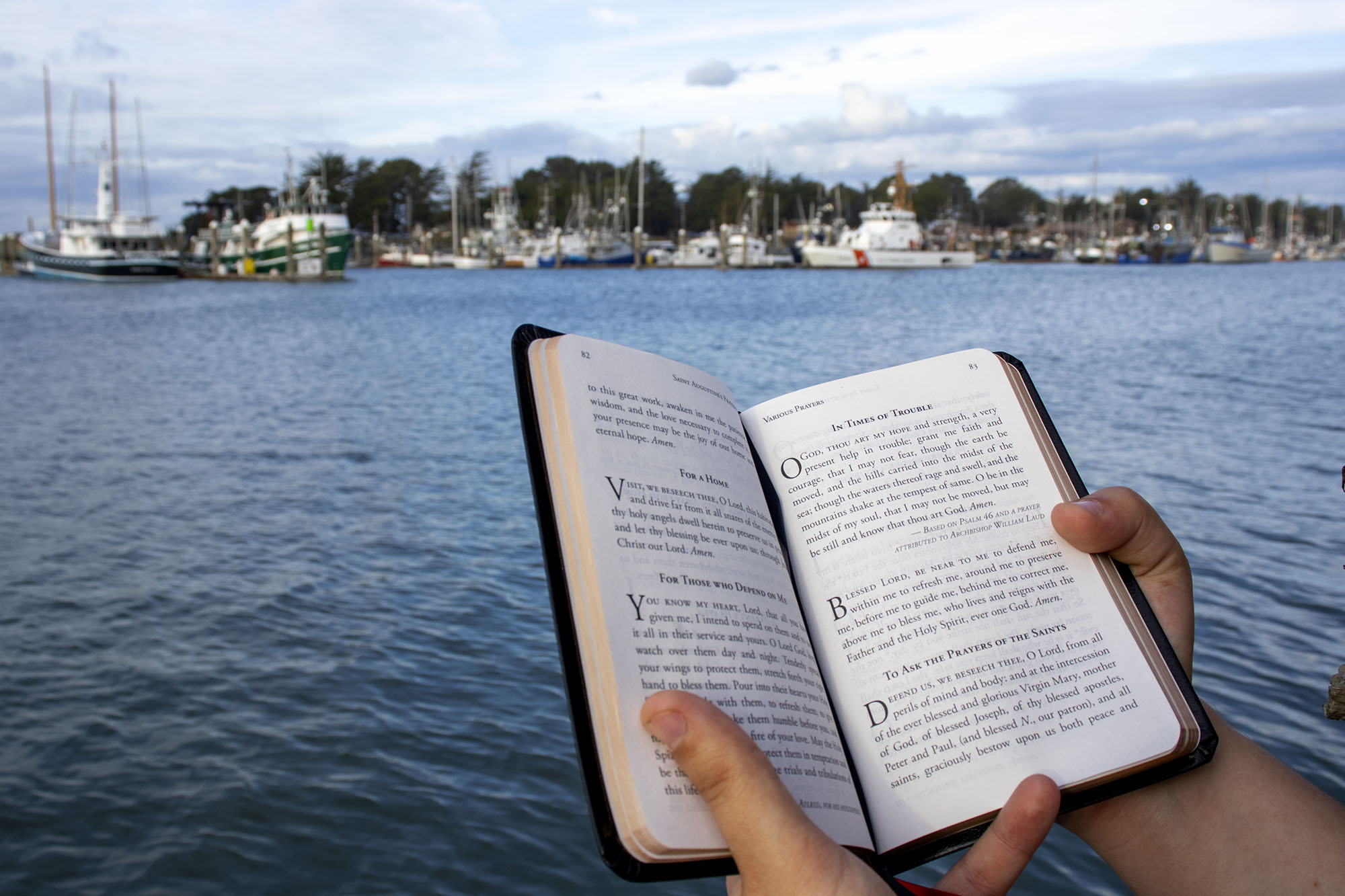
  • I am a queer Christian, not an oxymoron

    I am a queer Christian, not an oxymoron

    by Matthew Taylor

    My entire existence is a tightrope balancing act between two facets of myself, that are constantly told they cannot exist together. Yet these facets can not be divided from me nor from one another. I am queer. I’m a person of faith. I am a trans and bisexual Christian.

    As Lent rolls in, I often find myself having to reflect upon these two identities. I take this time of the year to re-orientate myself back to my spiritual core. It is a beautiful process that reminds me of my humanity and the love I receive everyday from my Creator, but it is a side that I often feel compelled to hide, just as I am often compelled to hide my queer side from the greater Christian community.

    It is a fine line. I’m constantly aware of my fellow queer peers’ religious trauma, something I’d never want to make them relive. It hurts, though, to know that my faith comes with so many automatic assumptions of my character.

    Some have ideas that I’m conservative in my politics or that I don’t affirm my own queer identity. I am neither of those, and neither are many other queer people of faith. So, I stay silent. Yet in this very silence I only continue to feed into the false narrative that all religious persons or persons of faith are non-affirming of queer identities, bigoted, or close minded.

    Growing up, I was extremely lucky to live in both a queer affirming and religious household. I was raised predominantly in a Christian denomination that had already begun to take the steps towards full LGBT+ inclusion by the time I was born.

    It is a huge privilege, one I constantly try to stay aware of. I also believe it is a statement of hope. I am living proof that one can grow up as Christian, as a religious person, and still fully affirm their own queer existence. It is because of this very truth that I continue to live knowing these two identities are not mutually exclusive.

    I don’t wish to proselytize or to convert any person to my own faith, nor to any religion in general. There is truth, validity and importance to be found in both agnosticism and atheism. All I wish is to break the narrative that all people of faith are non-affirming.

    This perception erases the amazing work that queer people of faith all around the world are doing to create rightful places for us in these sacred spaces. More frightfully, it gives more power to those of faith who may wish to silence us, oppress us or destroy us both within these religious spaces and out of them.

    I want to extend my love and validation to any fellow LGBT+ people out there who also desire to stay in or are currently part of any certain religion, whether you be Christian, Jewish, Muslim or belong to any other faith. There are people out there just like you, and there are resources out there that can allow you to flourish fully and wholly as you are.

    This Lent, as many like me take this moment to pause and self-reflect on ourselves, I hope to show through my actions and pure existence that religion and spiritual expression are as much a right to LGBT+ people as they are to others.

  • What Lesbianism Means to Me

    What Lesbianism Means to Me

    by Ione Dellos

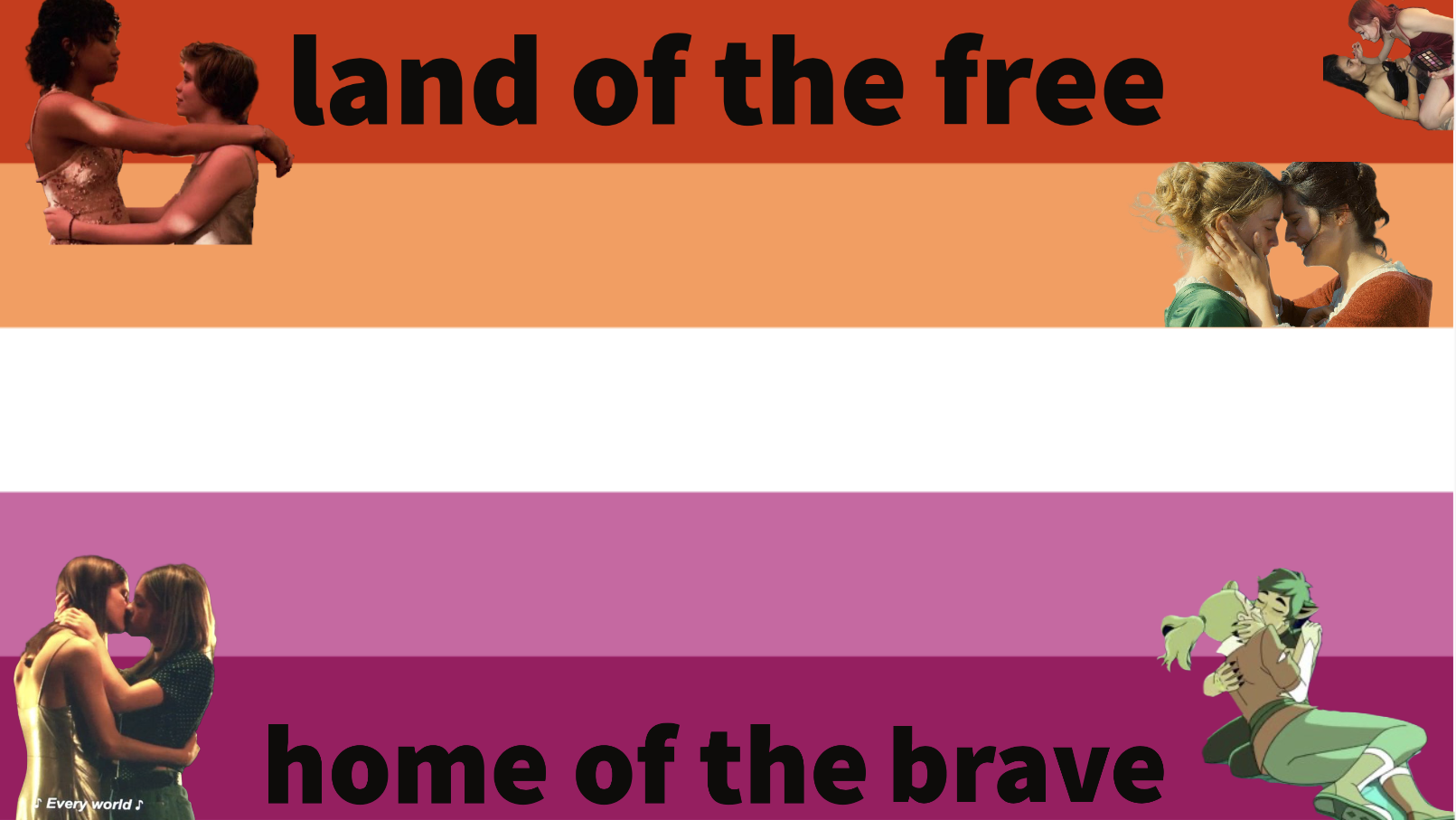
    To me, being a lesbian feels warm, like sunshine. It’s a part of you, more than just who you end up with at the end of the night. It’s in the way you get dressed in the morning, putting on what you want to wear instead of dressing for the male gaze. Maybe it’s wearing something that you would never have worn before, for fear that you wouldn’t be hot or sexy enough in it. It’s when you put a Princess Bubblegum and Marceline sticker on your laptop and start doing your eyeliner in ways that you would never have thought of before. It’s a breath of fresh air, to finally exist for yourself and no one else, free from the constraints of what once weighed you down.

    It can be looking up an “Am I Gay” quiz when you were fourteen and then promptly ignoring the results, or never looking at Victoria’s Secret when you pass it in the mall. It’s also learning to move past these things when you are older and wiser, laughing at the memories with friends who had similar experiences. Lesbianism is an act of resistance, to say no more to the patriarchal systems that run your life and live wholly and unapologetically without men. While it can be challenging, as it seems like you have to fight the heteronormative appropriation of your sexuality left and right, it is very important to resist these inaccurate deceptions of lesbianism. Think of ads, no matter where you’ve seen them, of two women posing suggestively to sell a product or yet another overly sexual lesbian indie film (cough “Blue is the Warmest Color” cough). Doing that can be as easy as waking up every morning, just existing as your authentic lesbian self. Being a lesbian feels like dancing like nobody’s watching, celebrating all the little lesbian traits inscribed on your body.

  • Moon Cycles: queer-owned bike shop in Arcata offers alternative space in male-dominated industry

    Moon Cycles: queer-owned bike shop in Arcata offers alternative space in male-dominated industry

    Correction (2/4/22): Co-owners Sage and Sprout did not meet while looking for a job but instead meet years prior as mutual HSU students.

    Moon Cycles, a brightly colored bike shop located on the side of the road near the intersection of Foster and Alliance in Arcata, is hard to miss. The bike shop was founded in October 2016 by nonbinary duo Sage and Sprout, a queer tour de force.

    Sage and Sprout serve the local cycling community by offering a queer-friendly space that goes against the grain of the male-dominated bike industry. Even the shop name is a pun that alludes to queer identity.

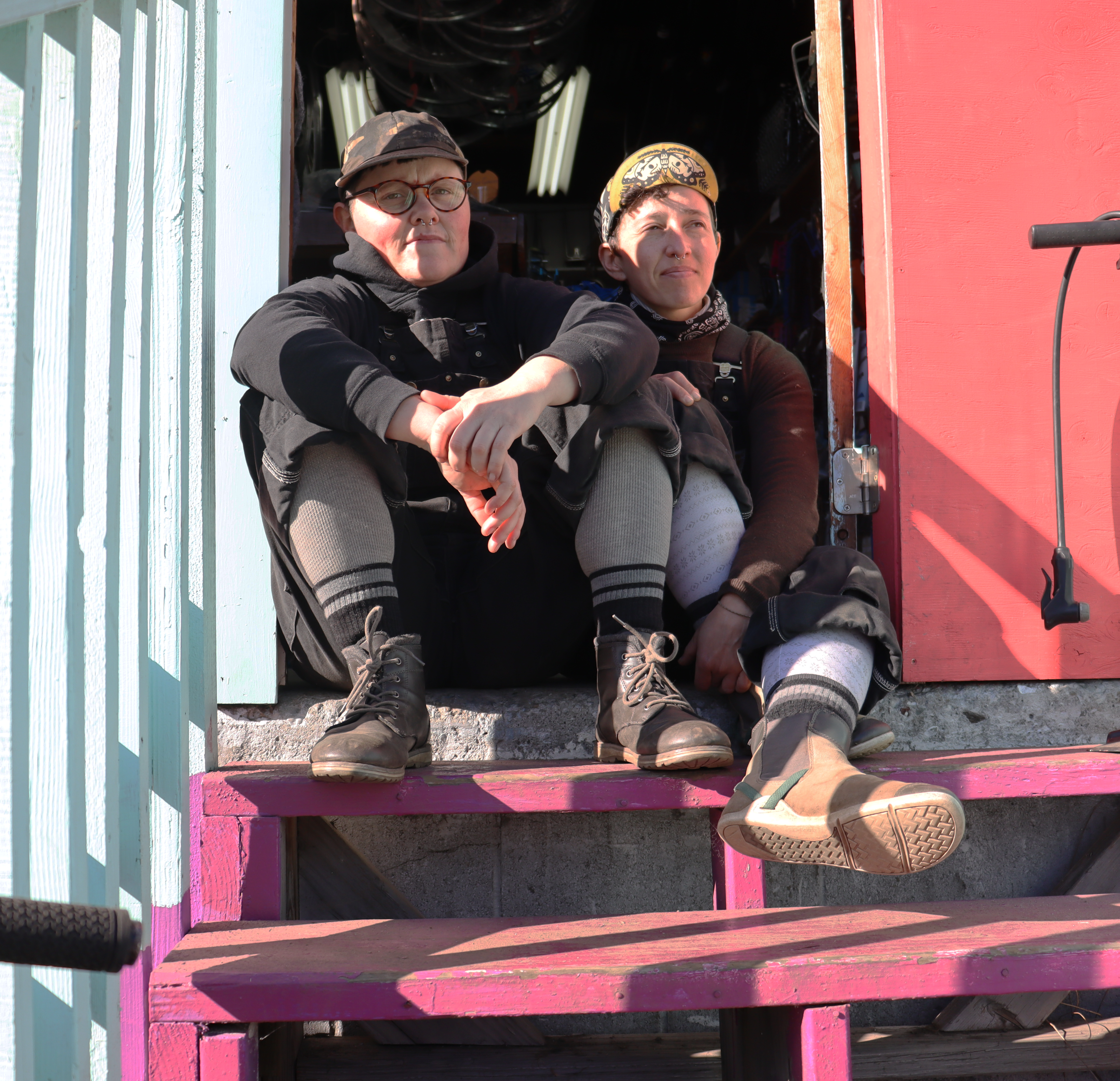
    Photo by Alexis Valtenbergs | Sprout standing in the doorway of their store Moon Cycles in Arcata on Jan. 27.

    “It’s a play on words, the moon being associated with femininity and the menstrual cycle,” Sage said. “Even if we don’t feel like women, the moon is a signal to our queerness and difference.”

    Sue Hilton, a 71-year-old lifelong bicyclist, is a regular customer at Moon Cycles. Hilton first caught wind of the shop in the L-Word, a lesbian newsletter based in Humboldt County.

    “My friend Susan did an article for the L-Word, so once I heard about it I started going,” Hilton said. “I loved the idea since I’m a big bike rider. Just that they’re great people, and they’re queer-friendly.”

    Although Moon Cycles is queer-owned, it’s not just for queer people. Moon Cycles an accepting space for everyone, regardless of gender or sexuality.

    “I’ve seen that especially with men but like most people, if they come in and they don’t know the words for things, they’ll feel apologetic,” Sprout said. “We’re not looking down on anyone for not knowing correct terminology or what the names of parts are or stuff like that.”

    Sage and Sprout met in Humboldt County while trying to find jobs at other bike shops, to no avail. After facing gender discrimination in the hiring process and being looked over in lieu of men, they decided to open their own shop instead.

    Photo by Alexis Valtenbergs | Sage (left) and Sprout (right) inside Moon Cycles in Arcata on Jan. 27

    “One year, neither of us could find jobs here,” Sprout said. “We kind of just started scheming and thought, ‘well, maybe we should just try to open a bike shop.’”

    “There’s an important caveat there,” Sage added. “Which is that I applied to all the bike shops here and I felt – I knew – I was being discriminated against and judged by my gender.”

    Sage won a mechanic scholarship from Quality Bicycle Products. The scholarship was an attempt to include more women and gender-nonconforming people in the bike industry.

    “They were trying to bring women – and gender-nonconforming people more recently – into the world of bike mechanics so that the whole industry can get more diversified,” Sage said. “And they can tip the balance a little bit away from men dominating the whole thing.”

    Ever since Moon Cycles opened, Sage and Sprout have played an integral part in tipping the balance in Humboldt. To learn more about Humboldt’s first and only queer-owned bike shop, check out @arcatamooncycles on Instagram.

  • Mike Bloomberg is Democratic Trump

    Mike Bloomberg is Democratic Trump

    Mike Bloomberg is just another billionaire with outdated views looking for attention

    We’ve all seen the campaign ads. “Mike will get it done,” they profess. What exactly has he done? He’s had 64 sexual harassment cases brought against him. He’s expanded the infamously racist stop-and-frisk policy in New York. He’s spied on the Muslim community. And he has bought his way into the primary.

    Not to bring everything back to another bigoted New York billionaire who got bored with having too much money and went into politics, but Mike Bloomberg certainly does remind me of someone.

    Were it not for the mark on the ballot calling him a Democrat, people would assume based on his fiscal policy and social track record that he was at least a centrist-Independent, if not a conservative-Republican.

    Despite being a registered Republican from the beginning of his political career up until 2007, and an Independent until 2018, he chose to run as a Democrat. Presumably, to gain the support of both Republicans and party-line Democrats.

    He’s an authoritarian, plain and simple. Party isn’t the real issue here. He cares about power.

    Bloomberg has a long history of bigotry. While his predecessor, Rudy Giuliani, first implemented stop-and-frisk, it was under his watch that the program grew to the widespread excuse for police brutality and racial profiling.

    When it was brought up by critics that New York police officers were disproportionately targeting black and brown communities, he gave the rationale that, “That’s where all the crime was.” In addition, he justified having undercover officers stalk Muslim New Yorkers as preventative measures against another 9/11.

    “We had just lost 3,000 people at 9/11,” Bloomberg said in an interview with PBS Feb. 27. “Of course we’re supposed to do that.”

    If anything, Bloomberg is a more dangerous version of Trump. He’s smart. He knows that putting up a polished front and playing up the establishment card will make him look like the opposite of the current president.

    Aside from his dubious past, Bloomberg’s current policy proposals are anything but progressive. While his website claims that Bloomberg will defend equal rights for LGBTQ+ Americans, he has stated as recently as 2019 that he considers transgender individuals as just “some guy in a dress,” or “he, she, or it.”

    On his website, aside from a reference to overturning the military ban, he has nothing to say on transgender rights. By considering equal rights for the transgender community to be reaching too far, he betrays the entire LGBTQ+ community.

    Being progressive is about supporting the oppressed and the marginalized. No ally insults the people they claim to stand with behind their backs and considers the value of their identities negotiable.

    According to his website, his plan for climate change is to “restore America’s leadership in fighting the global climate crisis, propel the United States toward a 100% clean energy future, make environmental justice a national priority.” These promises are all incredibly vague, and his campaign has been silent on the specifics of how they’d achieve any those goals.

    General promises of somehow solving climate change aren’t going to help us. If we want this planet to be livable for ourselves, our children and our grandchildren, we need to take serious and quantifiable steps to ensure it. The science says we need ambitious action. All he offers are glossy advertisements.

    If anything, Bloomberg is a more dangerous version of Trump. He’s smart. He knows that putting up a polished front and playing up the establishment card will make him look like the opposite of the current president.

    I’m not afraid that he couldn’t defeat Trump in an election. If Bloomberg wins the Democratic primary, the general election won’t matter. It’s a self-serving billionaire in office either way.

  • OPINION: More than a wave

    OPINION: More than a wave

    Thanks to fed up women and voters who took action, the Nov. 7 primary election was a night of firsts. The change we are witnessing is groundbreaking and we must sustain this shift in political power and build on it.

    One hundred and twenty three women were elected to the United States House of Representatives, 12 women were elected to the U.S. Senate, 9 women were elected to serve as governor and out of a grand total of 123 women elected, 42 of them were women of color.

    And of those 43, at least three are LGBTQ. These numbers are still rising as results are still being calculated.

    To put these numbers in perspective, one out of five congress members are women.

    Prior to this election, 84 women served in the House out of 435 members, and in the Senate, 23 women served in the Senate out of 100. Six women served as governors, out of 50.

    All of these women in positions of political power represent a beacon of hope during a polarized and dangerous political climate. Election by election, women, women of color and people of color must fill offices of power and influence until we are accurately and fairly represented in our government.

    Let’s rewind to how many women won nominations for state legislatures.

    According to the Los Angeles Times, the amount of women who decided to run for office was also a record high number, “more than any other election in U.S. history.”

    According to the Center for American Women and Politics 3,379 women won nomination for state legislatures across the country, breaking 2016’s record of 2,649.

    Two hundred and thirty five women won nominations in U.S. House races. This broke 2016’s record of 167. In addition, 22 women won major-party nominations for the U.S. Senate. The record previously stood at 18 in 2012.

    The numbers are proof of change that isn’t coming in waves, but rather in tsunami proportions. However, to any young women of color looking toward a future in politics, we still need you.

    Though what women have accomplished this election cycle is substantial, women are still not the majority in congress and we can not lose momentum.

    Do not forget the youngest you can be to run for office, per the constitution, is 35 years old for President or Vice President. California specifically requires a candidate to be at least 18 years of age and registered to vote.

    When the women elected take their well earned seats among the men who have grown comfortable there, we must not forget what it took for them to get there. It’s more than a foot in the door but there is more work to be done.

    Let the storm rage on.

  • Editorial:  Freezing tuition fee increase

    Editorial: Freezing tuition fee increase

    By | The Lumberjack Editorial Board

    At the end of January, the University of California Board of Regents approved a 2.5 percent tuition fee increase to take place in the 2017-2018 academic year. Though the University of California system said that financial aid will cover two-thirds of California undergraduates, protests against the tuition fee increase persist.

    Too many rights of college students have been under attack. There are worries about undocumented students’ access to education, the continuance of the anti-discrimination regulation safeguarding our LGBTQ community and the general welfare of our public school system under the direction of Secretary of Education Betsy DeVos.
    The increase may seem inconsequential to some, but many students struggle with affording both higher education and the daily cost of living. Decreasing the Pell Grant to cushion the cost of inflation means reducing supplemental income that helps students pay for vital services from transportation to housing.
    California State Assemblywoman Sharon Quirk-Silva and the California Faculty Association fought against the tuition hike with AB 393, the Student Protection Act. The Act states that the increase in college tuition has surpassed the cost of living while student debt continues to rise. 
    AB 393 cites a Consumer Financial Protection Bureau’s statistic that said, “one in four student loan borrowers are either in delinquency or default on their loans.”
    The Institute for College Access and Success reports that from 2010-2014, the average student debt rose by 56 percent. 74 percent HSU of graduates had debt in 2014.  
    The rising student debt numbers indicate that students are struggling to maintain a balance between the high cost of college and necessary expenses like housing, food and healthcare. The resulting cycle of loan defaulting continues to cause an unnecessary drain on the lives of students.  
    AB 393 suspends the tuition hike and limits the increase of system-wide fees to an amount that was agreed upon on Dec. 2016.  This suspension will be in place until the 2019-20 academic year. 
    The public education system is facing a myriad of problems; now isn’t the time to force a tuition increase. AB 393 also takes into account factors beyond the primary fiscal burdens of the cost of higher education. The Act will help students breathe easier during these contentious times and alleviates at least one worry.