By Emma Wilson and Griffin Mancuso
The new marine biology major provides students the opportunity to gain practical, hands-on experience in ocean and marine habitats. They will study different organisms and a diverse selection of marine ecosystems, such as salt marshlands and beaches.
First-year, first-time students will also be enrolled in Rising Tides, a year-long program of science and general education courses and activities specializing in the Humboldt and Trinidad bays.

Sean Craig, a professor at the university for 23 years, explains the need for marine biology professors and lecturers.
Currently, there are only three professors teaching marine biology classes, according to Craig.
“We asked for a new faculty member for our new marine biology major but we didn’t get it,” Craig said. “We only got a chance to replace one of our faculty who retired and left.”
“Starting in the spring there will be four because we are able to replace the one who left,” Craig said.
According to Craig, the university always had a marine biology program, but after becoming a California polytechnic now with the transition you can now declare in marine biology as a major.
“The fact that [marine biology] is now a major it rings more bells and connects with more people, especially people applying to Humboldt,” said Craig.
“Our marine biology major already borrows heavily from other marine majors, especially oceanography and fisheries,” said Craig. “I think it would be good in the future to have all us marine scientists to pull together and decide on things together to make an impact.”
“I think there are a lot of misunderstandings of the ‘marine biology major’ because really, at least at the moment, firmly in the biology department there are only 3 faculty at the moment teaching marine biology,” said Craig. “Like saying we got the best restaurant in the world off the highway, but we don’t have a sign.”
Craig expresses great discernment and feelings about the lack of professors teaching marine biology.
“Our biggest problem, which is a long term problem, we have been clambering for years for faculty,” Craig said. “All students benefit better from support systems, tutors and writing center help. All of that is better with more numbers.”
It is not unusual for a professor in marine biology to have 55 students. 55 students that need those professors help to figure out what classes to take, or what to retake, especially during registration. This is frankly a lot of students for one professor.
“It’s a problem, we don’t have enough faculty to do a good job of advising and providing opportunities for students,” says Craig. “We are handicapped, we can’t keep up with students increasing and with the faculty decreasing.”
“We were promised a new faculty member and we haven’t gotten that, yet,” said Craig. “We’re all going to have to work together to get exposure and make connections.”
A really cool and fun thing that you can do as a marine bio major is go on the Coral Sea, which is a research vessel and is 91 feet long. It’s parked on the docks in Eureka in the Woodley Island Marina, and is a wonderful platform for learning. It is the only vessel of its kind in size in California that is devoted to undergraduate education.
“The vessel itself is in pretty good shape, but the engines not up to standards in terms of output of different particulates in the air, so there is a major problem there, and to solve that problem so many of our faculty and Associate Dean are working together to, as part of the poly tech transformation, purchase a new brand new vessel that would be better in multiple ways. Eventually I hope there will be a new version of the Coral Sea,” said Craig.
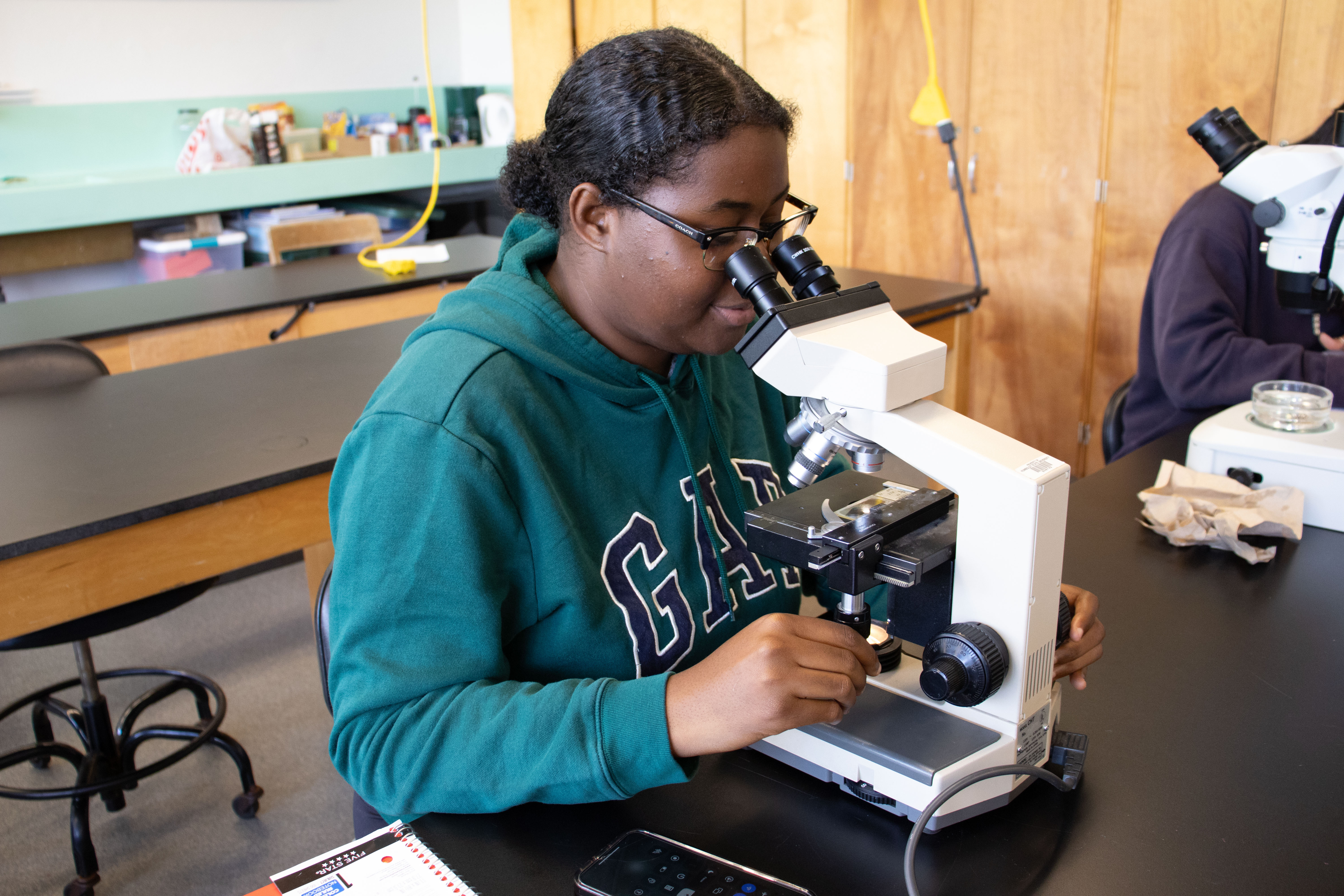
“Now we have a major, we have a 91 foot research vessel that students can go on cruises for, we have a marine laboratory where students can learn about live animals like crabs and octopus under a dish in a microscope,” said Craig. “Thanks to Cal poly tech, we got new microscopes for the marine lab. Many before dated back to the 1950s, so the new facilities after the Cal poly transformation makes our marine biology department even better.”

Kaci Dodd, a junior who changed her major to marine biology this fall, aspires to work in marine conservation or scientific diving instruction. She expressed excitement about marine biology having its own program at CPH.
“Now that they’ve added it more as a major, there’s definitely been more classes and more opportunities — which is super exciting — instead of just having biology with a marine concentration, “ Dodd said. “But I feel like what really attracts people to the marine biology program at this school is how hands-on it is with the equipment that they use and the professional element.”
Dodd recalls her experiences learning how to use new technology and gear on the Coral Sea.
“One of my favorite things in the biological oceanography cruise… It was an otter trawl, “ Dodd said. “And it pretty much was a huge net that went along the water column and collected all the fish or whatever was in that water column. And so we saw a lot of fish, some squid, that was really cool.”
Dodd also recommends that any student, marine biology major or not, should try the field techniques class taught by Daniel O’Shea.
“It was just like, so fun — fun to be on the boat and meeting the crew that works on the boat, how to work on the boat, and be a cruise assistant,” Dodd said. “And after that class, when you pass, you’re able to actually become a cruise assistant and work on the boat with cruises and classes, like that is really cool.”
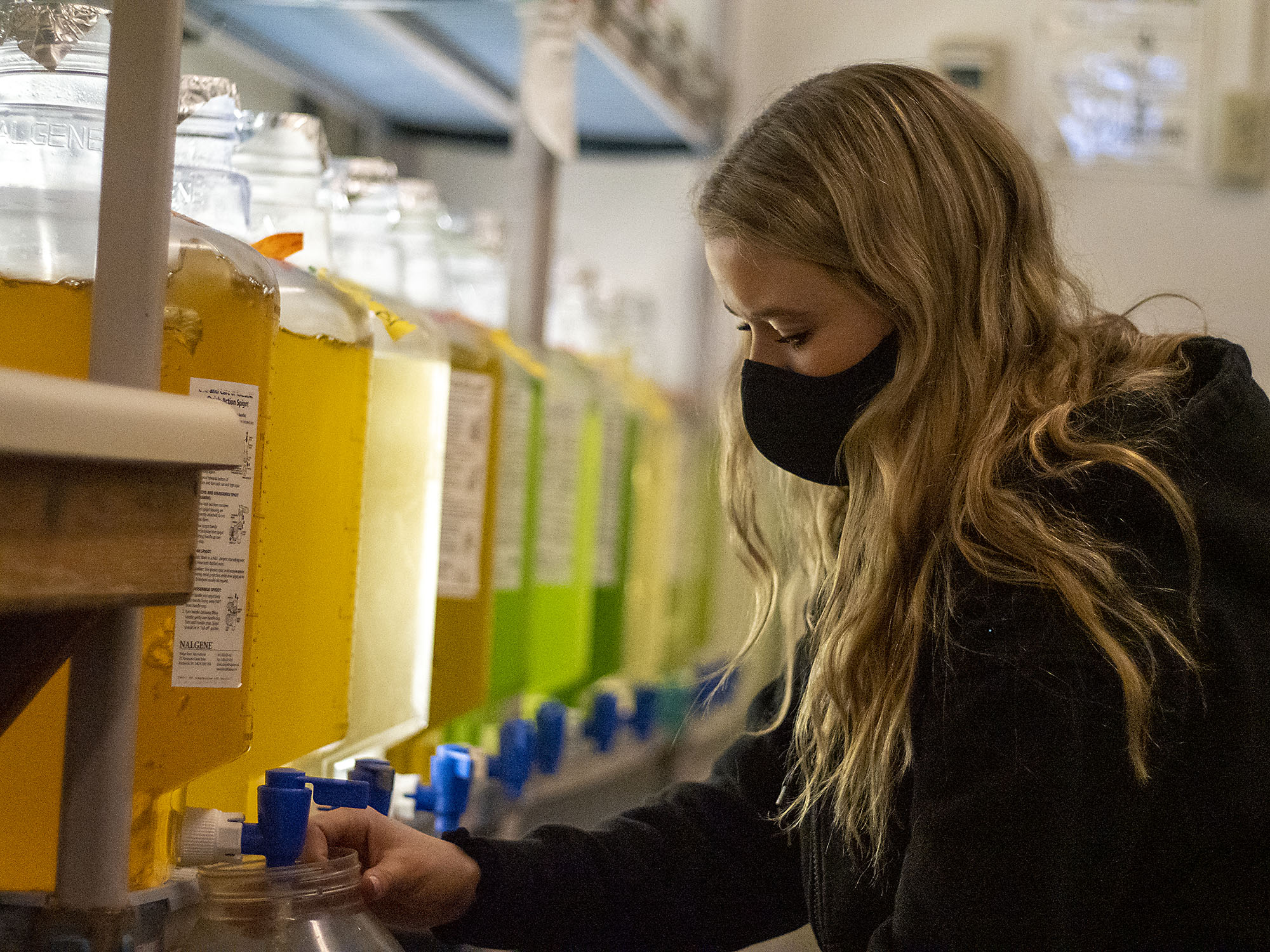
Marine biology students, along with other majors, analyze marine organisms at the Telonicher Marine Lab, located in Trinidad and home to various marine species and preserved specimens. The lab is open to the public on weekdays, and students also travel there for class labs and research.

Kyle Bailey, a junior and zoology major who wants to pursue a career in animal husbandry, described his experience with the marine biology classes at Telonicher Marine Lab.
“I’m taking invertebrate zoology right now… the class we’re taking is a crossroads for several different majors,” Bailey said. “I’d say the majority are marine bio, but there’s a couple of us who are just general zoology, wildlife, there’s a few others in there.”
Bailey elaborated on what sets classes at the marine lab apart from other biology classes.
“The main difference between the lab now and from intro zoo is looking at live specimens,” Bailey said. “It’s super cool to see how these animals would actually look living and we have the sea table to look at stuff. It’s a big difference to see what these animals would look like living as opposed to mush in a jar, which I think is a super fun experience.”