The Lumberjack


Students Serving The Cal Poly Humboldt Campus and Community Since 1929

Tag: masks

  • Not all masks are made equal

    Not all masks are made equal

    According to Cal Poly Humboldt regulations, face masks are required everywhere on the campus, and at all school functions. Amid the predicted peak of the Omicron surge, mandated masking is a key part of the university’s strategy to prevent widespread transmission of COVID-19.

    Humboldt County Health Officer Ian Hoffman has confirmed that the Public Health Department has been in contact with Cal Poly Humboldt with regards to the university’s COVID-19 regulations.

    “We, as Public Health, have continued to offer, you know, clear guidance on how to make public spaces safe, which includes things like masking, distancing, testing, vaccinations – they are doing all of those things at HSU [Cal Poly Humboldt], and we have been in communication with them,” Hoffman said. “So, I think the ultimate decision is up to them.”

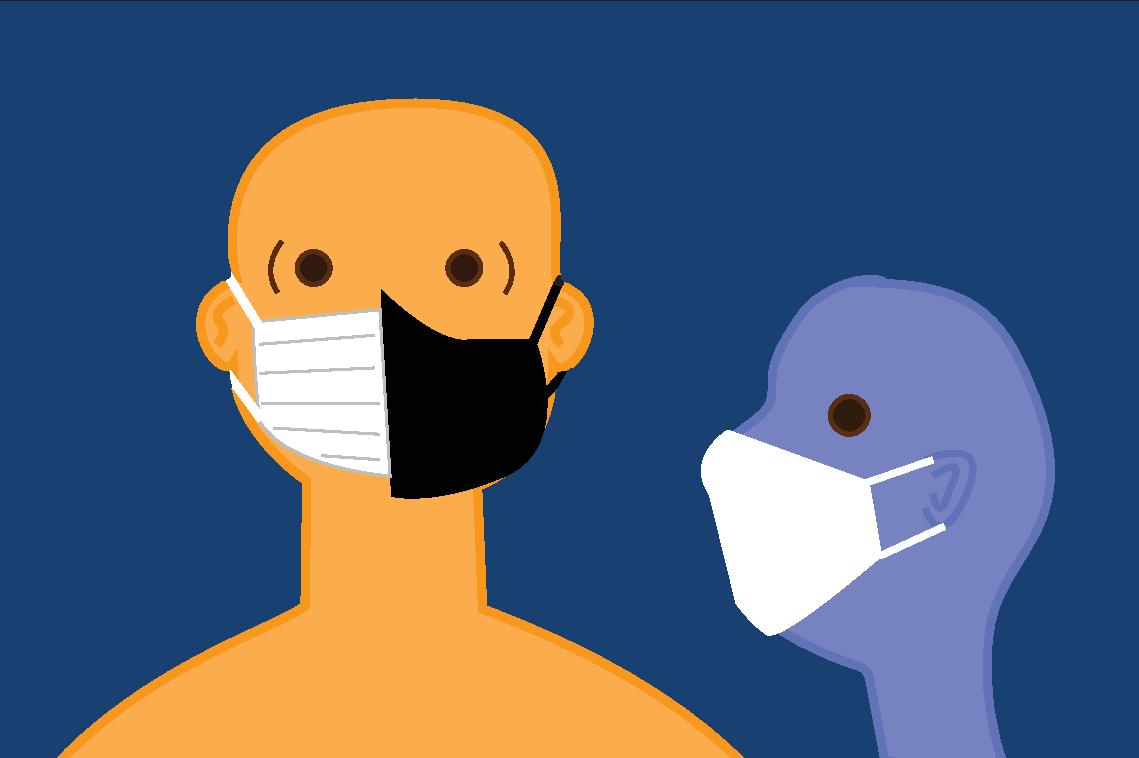
    Graphic by August Linton

    Not all masks offer the same amount of protection, to the wearer or to those around them.

    According to the CDC, NIOSH-approved N95 masks are the best, followed by KN95s and surgical masks. Cloth masks rank the lowest, although it is noted that layered, finer fabrics are more effective than loosely woven or single-layered varieties.

    Whatever type, it is important that masks be well-fitted, with no gaps around the nose or edges. A surgical mask underneath a cloth mask may resolve fit problems.

    County Health Officer Hoffman suggested double-masking for all types except N95s. He also cautioned against masks with one-way vents.

    “Those vents … protect the person wearing it, but they’re not protecting anyone around them,” Hoffman said.

    Despite their efficacy, Cal Poly Humboldt does not currently require that students wear N95s.

    “The reason N95 Masks cannot be mandated on campus is that there are some situations where N95 masks can exacerbate medical conditions for the wearer,” the university stated in a Campus Ready email update. “The campus community is encouraged to wear N95 masks if they are able.”

    Free N95s and surgical masks are available at College Creek Mailroom, JGC mailroom, UPD, Welcome Center, the Library, and the SAC.
  • More Layers, More Protection?

    More Layers, More Protection?

    Humboldt State demands double masking on campus, does more layers equal more protection?

    You’ve probably read the headlines: Wearing a Mask Prevents the Spread of COVID-19. But which mask you choose could affect how protected you and others really are.

    Masks were first mandated in Humboldt County on April 24 when Health Officer Dr. Teresa Frankovich introduced an order requiring all members of the public wear facial coverings while inside a facility other than their residence. Since Humboldt State University was required to close campus prior to that, the university announced safety precautions on Aug. 4, which included wearing face coverings with at least two layers of 100% cotton. This was done in conjunction with the reopening of campus for the fall semester.

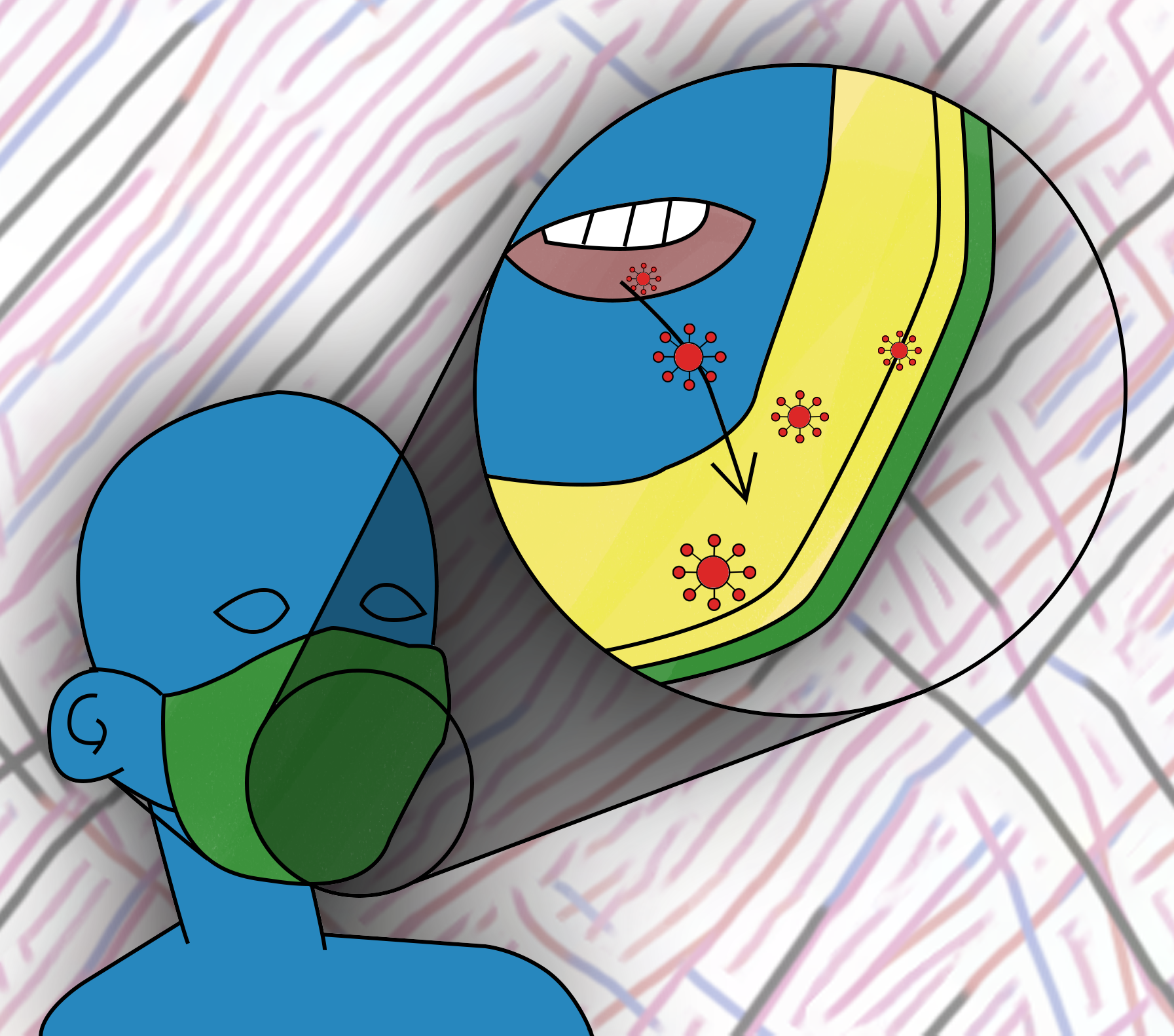
    The Centers for Disease Control and Prevention (CDC) urges people to wear masks with at least two or more layers of washable, breathable fabric. Masks need to be worn covering both your mouth and nose at all times.

    Director of News and Information Aileen Yoo stated, “HSU is following recommendations from the CDC. Its website is also a great resource for information on different types of protective gear.”

    Karen Wilkinson, Joint Information Center representative, said, “The county looks to the California Department of Public Health and the CDC for guidance.”

    According to the Association of American Medical Colleges (AAMC), “studies have shown a double-layer cloth face covering was significantly better at reducing the droplet spread caused by coughing and sneezing, as compared to a single-layer one.”

    Mark Wilson, a microbiology professor at HSU believes that “the main goal of mask wearing is to reduce the emission of droplets and aerosols from a person infected with the coronavirus, by trapping emitted droplets in the fabric. Mask-wearing can reduce the transmission of airborne diseases like coronavirus.”

    Wilson added that when deciding on the type of masks, “the tighter the weave of the material, and the more layers it has, the more effective it will be at filtering out particles.”

    May Chu, an epidemiologist at the Colorado School of Public Health, as quoted by NPR said, “a good option is a mask made of two layers of a tight-weave fabric with a built-in pocket where you can place a filter.”

    A University of California, San Francisco article reported that based on a simulation, researchers predicted that 80 percent of a population who wear masks would reduce the spread of COVID-19 more than being on lockdown. Further, the Institute for Health Metrics and Evaluation projected that 33,000 deaths could be prevented by October 1 if 95 percent of the population wore masks in public.

    Many researchers have looked into N95 masks which are made out of many layers of fine polypropylene fibers. They are able to block at least 95% of small airborne particles but only when worn correctly. Though they are proven to be effective, the short supply should be reserved for medical professionals and first responders.

    A recent Duke study rated a fitted N95 and a three-layer surgical mask as the top two protectors, followed by two layer cotton masks.

    According to an article by Science Daily in July, a team of Australian researchers did a study comparing the effectiveness of single and double layer cloth face coverings. They used LED lighting to film the airborne droplets. Their results showed that double layer face coverings prevented more droplets from spreading.

    HSU students can be provided with double layer masks at the campus Police Department, the first floor of Student and Business Services building, Jolly Giant Commons, College Creek Market and the Parking Kiosk.

  • A Simple Favor, Wear Your Mask Correctly … Please

    A Simple Favor, Wear Your Mask Correctly … Please

    Wearing a mask correctly shouldn’t be a hassle or the worst part of your day.

    All I ask is, “Ma’am, can you please put your mask over your nose?” “Sir, your mask needs to be worn at all times. Thank you.” “Yes, masks are required here.”

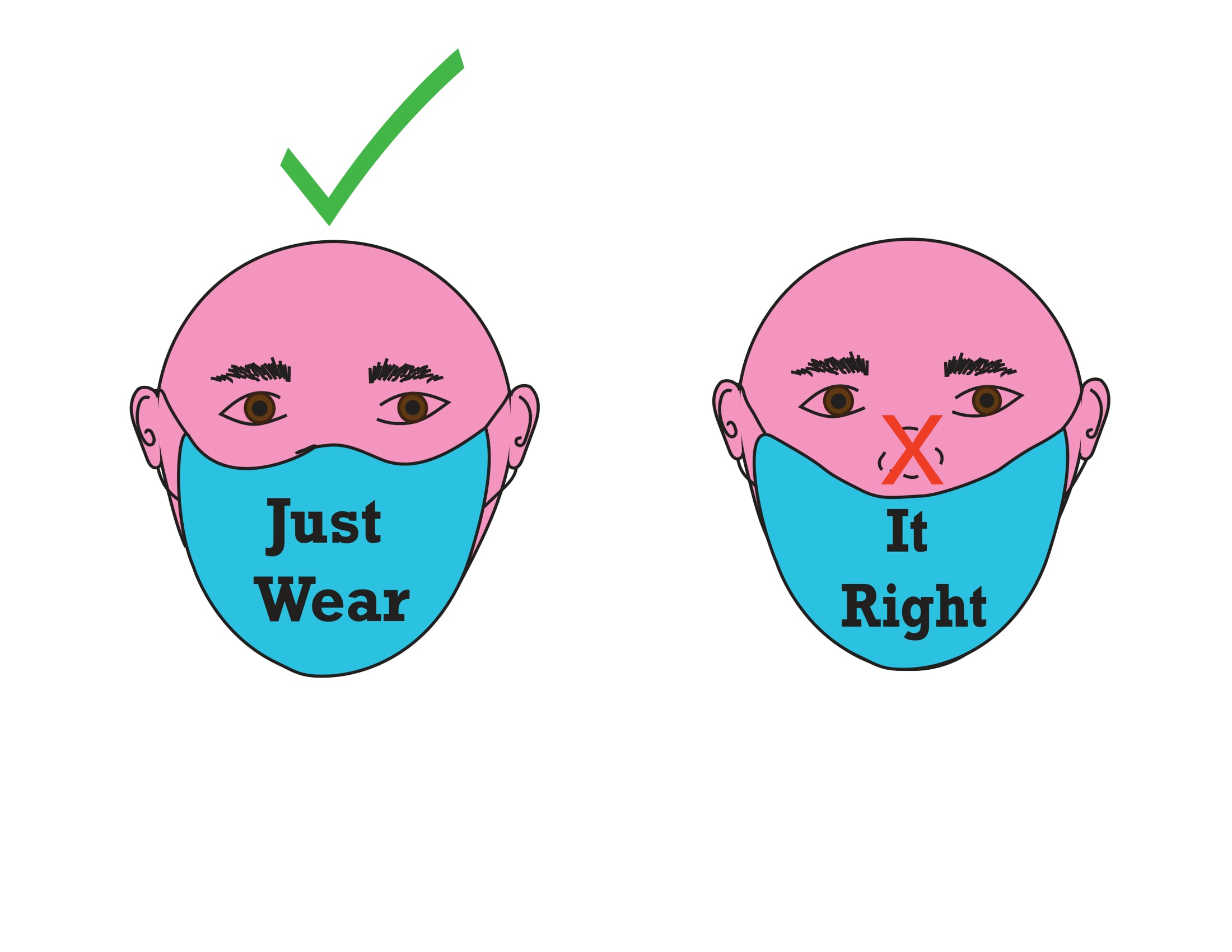
    When a mask is being worn correctly, it has to cover both the mouth and nose. Think of it this way, the mask is meant to prevent any respiratory droplets from spreading to other people and elements around you. These particles come from your mouth and nose.

    These face coverings aren’t much, but they are one of the best defenses we have, alongside staying home and social distancing. Now, who would have thought that such a simple and minuscule request can cause such hostility and chaos?

    I’m a retail worker in a small business. I wear a mask, over my mouth and nose, for five hours a day and expose myself to locals and tourists. Some days, I’ll be in contact with 20 people and other days, I can be in contact with close to 100 people.

    I will never understand why people try so hard to fight against wearing face masks correctly.

    I fear for my life and sanity every day. There are crazy stories circulating around the internet of customers harassing and assaulting workers for trying to enforce these health orders. A retail worker in Modesto was brutally attacked, a crazy lady in Trader Joes in North Hollywood making a huge scene and the worst, most extreme case I have heard so far, a security guard being shot and killed.

    My co-workers and I always brace ourselves for whatever may happen for calling someone out. We have gotten glares, we’ve been ignored, ridiculed and even belittled just for asking someone to wear a mask or wear it correctly. We have had out-of-state tourists obnoxiously defy the rules we have set for our store, for them to then leave our store and express how much they hate California’s rules.

    C’est la vie de 2020.

    I will never understand why people try so hard to fight against wearing face masks correctly.

    There have been customers that have come in and complained of not being able to breathe with the mask on. My solution is to stay at home. If you cannot breathe with a mask on, you’re already vulnerable and should not be outside. If you’re bothered at the thought of wearing a face covering for 10 minutes in a small gift shop, maybe you shouldn’t be out and shopping for home decor.

    In order for many of these small businesses to be open, they needed to be approved by the state. My boss had to fill out a very lengthy form to re-open her business. She had to describe every action we, as employees, would do to ensure we are all safely navigating this pandemic.

    If you see any shop with state/county paperwork taped in their front window, they had to apply to re-open as well. If a customer or employee ends up testing positive, the entire shop has to be shut down.

    These face coverings are for the safety of yourself and those around you. This isn’t a time to be individualistic, this is a time where you need to put your ego aside and realize that your selfish actions can potentially harm a business, a person next to you or the family they go home to.

    Wearing your mask correctly to cover both your nose and mouth won’t kill you, but refusing to do it at all can.

  • Myths and Truths of Surgical Face Masks

    Myths and Truths of Surgical Face Masks

    Mirage of safety causes mask supply to plummet and xenophobia to reemerge

    The emergence of everyday people using surgical masks amidst the COVID-19 pandemic has caused mass misinformation and the perpetuation of xenophobic ideas.

    Myth: Surgical masks make you immune to COVID-19

    Typically found on hospital workers and sick personnel as a safety barrier, surgical masks are almost regarded as invincibility devices, protecting the body from outside pollutants and threats. The implied purpose of surgical masks is to protect patients from the secretions of a doctor’s mouth or nose during surgical procedures or to protect doctors and nurses from infected patients. Either way, a basic surgical mask prevents the exchange of bodily fluids, not air particles. Surgical masks are often mistaken as invincible shields against all viruses and bacteria.

    Surgical masks show no evidence of prohibiting the inhalation or contraction of the virus that causes COVID-19. The COVID-19 virus particles are too minuscule to be stopped by a surgical mask barrier. According to the Centers for Disease Control and Prevention, “most facemasks do not effectively filter small particles from the air and do not prevent leakage around the edge of the mask when the user inhales.” In no way do surgical masks prevent or obstruct contaminated air.

    While surgical face masks are virtually pointless against COVID-19, N95 filtering facepiece respirators are different. These masks are personally fitted to the face and “filter out at least 95% of very small (0.3 micron) particles, capable of filtering out bacteria and virus particles,” according to the CDC. These masks are typically worn by hospital and treatment personnel that come in direct contact with infected patients. N95 masks prevent the inhalation of micro-particles.

    Truth: Surgical and N95 masks are running low

    Due to the personal fitting of each N95 mask, they begin to degrade overtime depending on their usage, storage and environment. The assigned expiration date and high demand due to the current pandemic has resulted in an unexpected shortage in supply. Doctors are now reusing their masks, but they risk contamination due to degrading components affecting the protection and performance of the mask. Government administrations are requesting N95 donations as well as demanding some occupations to give up their assigned mask for medical workers.

    While N95 masks are needed most, surgical masks are running low as well. Infected patients wearing masks benefit surrounding parties by limiting exposure of emitted particles into the air. The pandemic panic has misinformed the public to go buy surgical masks when patients and medical workers need them most.

    Myth: DIY masks provide reliable protection

    YouTube and social media platforms are advertising do-it-yourself face mask tutorials in response to the shortage in surgical mask supply. The misinformation has continued as people attempt to protect themselves with faulty protection materials. Bras and bonnets to sandals and plain cloths are being cut and trimmed to replicate surgical face masks. But, as previously mentioned, surgical face masks provide no protection against COVID-19 virus particles. Any alteration of store-bought or recycled material will have the same, if not less, protection against COVID-19 than a surgical mask.

    Truth: Mask usage has reignited xenophobic ideas

    Surgical masks provide zero protection from contracting COVID-19, but they have effectively reignited xenophobia. It’s completely normal for the mind to want to assign a face to an infected COVID-19 individual or picture what a threat would look like out of caution. Assuming someone wearing a face mask has the virus and extending that assumption past the mask, to their race or ethnicity, is disgusting, racist profiling. In a time of crisis, people should be exercising neighborly behavior and picking one another up, not perpetuating racist, profile-based assumptions on others in an attempt to accuse others of the chaos. It’s unproductive and invasive.