The Lumberjack


Students Serving The Cal Poly Humboldt Campus and Community Since 1929

Tag: meal plans

  • Why do Cypress residents need an All Access meal plan?

    by Shane Jarvie

    I find it extremely redundant that Cypress residents are required to own an All Access meal plan. When I’ve asked school officials why they’re needed, they’ve just responded, “Cypress residents are required to have one of the All Access meal plans. Upperclassmen living areas that do not require a meal plan are College Creek and Campus Apartments, both of which have shared kitchen areas.”

    I’m a junior who’s lived on campus for three years now, and Cypress has the best kitchen out of every residence hall I’ve seen. Yes, even better than the one in College Creek apartments. Having lived in College Creek apartments as a sophomore, I’ve found that Cypress has more counter space and many more cabinets for storage space. The Cypress kitchen has offered my suitemates and I enough room and resources to cook for 20+ people once a week for Cypress eighth floor’s “family dinners,” where both sides of the floor come together for a weekly feast.

    A suite on Cypress can house up to twelve students, so I’d understand if we were required to have a meal plan due to the number of suitemates who share the kitchen. However, I can’t understand why we’re required to have an All Access meal plan.

    As a student working in the housing department as a Resident Student Services Assistant, I’ve had the opportunity to study each housing option and meal plan that the school offers. The more I learn, the less it makes sense that Cypress suites require an All Access meal plan.

    For anyone who isn’t aware how the on-campus meal plan system works, here’s a quote directly from the Meal Plans page on our campus housing website: “All living areas require a meal plan except College Creek and Campus Apartments. Residents of the Hill, Canyon, Cypress and Creekview Suites are required to have one of the All Access meal plans. Residents of Creekview Apartments are required to have any one of the meal plans.”

    The cheapest All Access meal plan is the 5-day All Access plan. It’s $5,000 per academic year, and contains all access meals to the J five days a week, including 300 Flex dollars and 66 or 62 meal exchanges per semester. (The housing website says 66, the dining website says 62.)

    One of the alternative meal plans that I’ll be using as a comparison is the Lumberjack 125. This meal plan that Cypress residents don’t have access to costs $3,500 per academic year, provides 125 meals in the J (which is honestly still more than enough J food for me), has 525 flex dollars, and 31 meal exchanges per semester.

    As someone who isn’t impressed with the food that Chartwells has to offer at the J, I’d much rather have the Lumberjack 125, which has 225 more flex dollars and costs $1,500 less per year!

    If I can’t convince school officials that Cypress residents should have access to the other meal plans available, I at least want an adequate answer to why we shouldn’t.
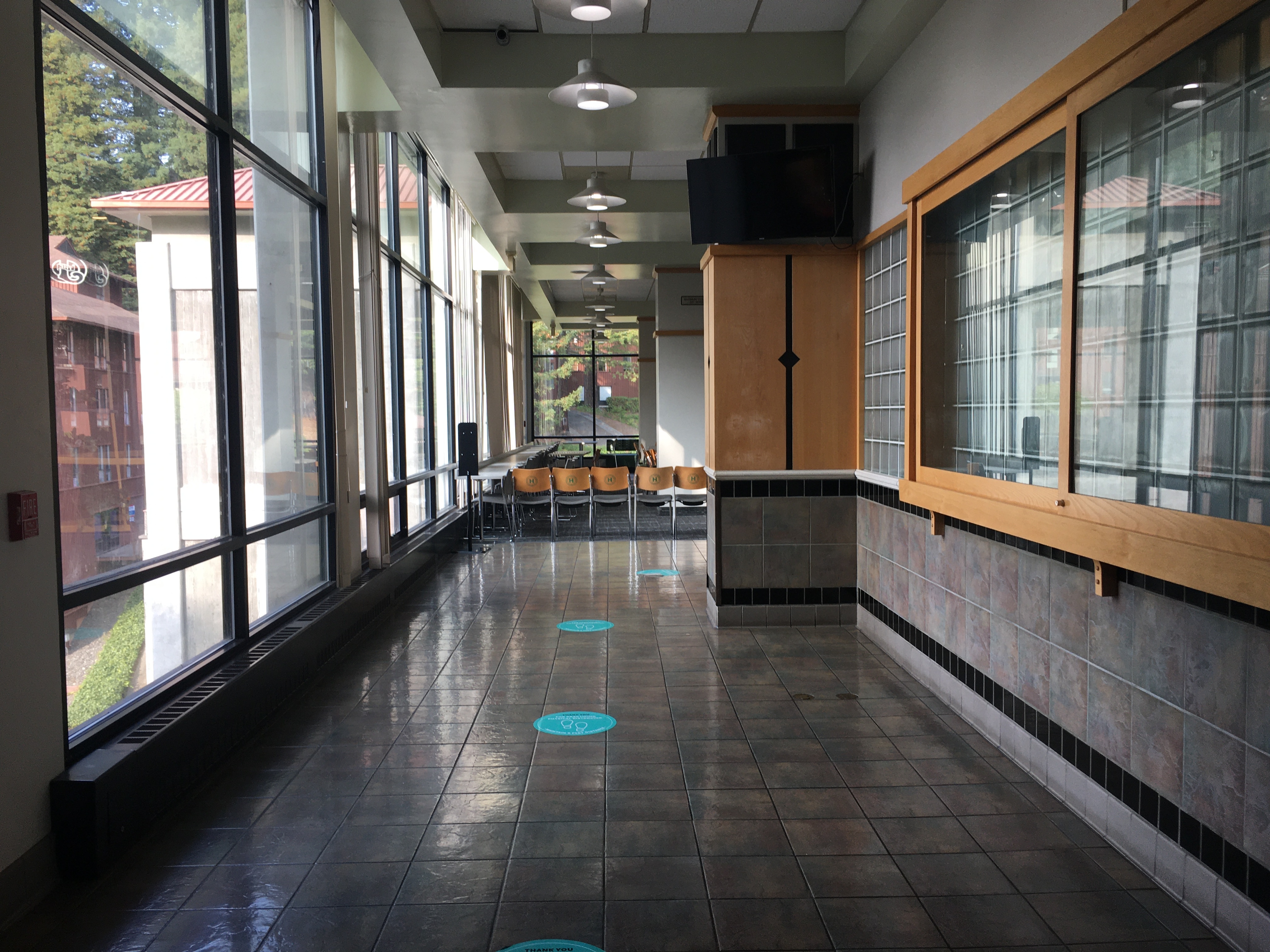
  • Students are dining in during the COVID-19

    Students are dining in during the COVID-19

    Students survive COVID-19 by cooking for themselves and avoiding college cafeteria

    Whether they live on or off-campus this semester, students are facing new challenges in just about everything they do and dining is no exception. Meal plans are offered to students living on the campus at a steep price, but this semester students have resorted to cooking for themselves.

    Humboldt State University botany major, Zeen Vincent, purchased a mini-meal plan but finds cooking in his dorm more affordable and enjoyable.

    “It’s just easier to cook at home and just buy groceries once a week than it is to go out and eat all the time.” Vincent said.

    Although the pandemic has turned trips to the grocery store into an uncomfortable mission, Vincent hasn’t allowed it to affect him much. When he does prepare food, it’s often raw ingredient based meals or snacks.

    “I’ve been making a lot of sandwiches,” Vincent said. “I am making burgers tonight so that’s kind of special. I usually don’t eat that on a daily basis.”

    HSU freshman, Jesse Barragan, lives on campus and has the green meal plan which is recommended for students who plan to cook on the weekends. Barragan eats at the J cafeteria weekly but is forced to occasionally cook when the J lacks in vegan options.

    “Sometimes for dinner they may not have a lot of options,” Barragan said. “Maybe like a few sautéed squash and rice but usually it is good.”

    With more vegan and vegetarian options than most places, Barragan is able to eat well on a budget. Barragan’s meals involve easy-cooking in his dorm kitchen, using mostly veggies and produce.

    “Lately I’ve been eating a lot of potatoes, squash, tomatoes and salads,” Barragan said.

    Although most students who came back to campus moved in at the end of Aug., HSU junior Vanessa Odom, stayed to pursue a work opportunity on campus.

    “There were no dining services,” Odom said. “The J and everything closed back in March after spring break.”

    Odom discovered they could acquire free food from the Oh SNAP! program. Receiving mostly raw foods, Odom took the opportunity to sharpen their cooking skills.

    “I really enjoy cooking for myself,” Odom said. “Obviously it’s a life skill to have and I’ve learned a lot about different kinds of cooking.”

    Richard Shilts is a sophomore at HSU and has a job at Domino’s Pizza in Eureka. He applied shortly after moving back to Humboldt and has been working as a delivery driver since July.

    “I work just about every day of the week,” Shilts said. “I work about 30 hours. I was working like 40 before school started.”

    Shilts’ main concern is work interfering with his education but the job pays too well to quit. Unfortunately, Shilts puts up with customers that are unwilling to abide by COVID-19 protocol, putting himself at a powerless, higher risk of getting sick.

    “I can’t do anything about it,” Shilts said. “I just have to deliver to them.”

  • Students’ J-point money washed away

    Students’ J-point money washed away

    As the end of last spring semester approached, sophomore Tonita Johnson, 19, had around $600 of leftover J-points on her meal plan. During the last weeks of the semester, Johnson was trying to spend her remaining points by paying for her friends who had used up all of their J-points.

    “I paid for other people who ran out of J-points,” Johnson said, “I had to get rid of $600, I got it down to $92.”

    Last year alone, $82,513 worth of unused J-points expired. HSU meal plan J-points expire at the end of every spring semester. Every year a number of students lose their leftover points. These already expensive points are nonrefundable and can’t rollover to the summer semester or the following school year.

    IMG_2885.JPG

    Like many other students, Johnson took out a loan to pay for the gold plan she had last year. Students pay $1.96 for every $1 they get on the gold plan. The plan costs $5,544 while students only get $2,832 worth of J-points. $1,416 for each semester. This hidden,

    prepaid cost is known as a fixed cost.

    Johnson lost $92 of J-points, but adding the fixed cost fees she paid for when purchasing the plan brings her total loss to $180.

    “That money would have gone towards my books and other stuff that I needed for this semester,” Johnson said.

    Besides buying things for friends, before heading home to Los Angeles, Johnson spent some of her J-points buying things from the on-campus markets and left them at a friend’s house in Arcata that caught on fire this summer.

    “My friend house caught on fire, a lot of those things that I’ve bought from all around got destroyed in the fire,” Johnson said. “Everything is gone. They lost a lot of stuff, I lost some of my stuff.”

    HSU does not refund students any part of their remaining meal plan balance.

    “They [HSU] should refund the points. I feel they have the ability to refund the points,” Joey Mularky, president of Associated Students, said.

    Sahil Barot, a 19-year-old international student from India, said it’s a waste of money.

    At the end of last spring semester, he had over $280 leftover points on his meal plan. He spent some of his remaining points on things from the on-campus markets, but still lost around $70 worth of J-points that expired. IMG_2909.JPG

    “It was sad. It’s a lot, it’s a big amount,” Barot said. “With that money, I could buy my stuff for a month. My food, groceries, milk or cereal or vegetables and fruits I could buy it for a month.”

    Barot’s family owns a farm in India where they grow cotton, potatoes and tobacco. His father helped him pay for the meal plan with their farm income savings. His father also took a loan to pay for his education.

    “My father saved some money for me,” Barot said. “My father took a loan from a bank and got money from the farm.”

    In a school where over 50 percent of student come from low-income families, there are no plans to consider refunding student for their unused meal plans money. This brings up the question, what does student who needs that money do?

    IMG_2976.JPG
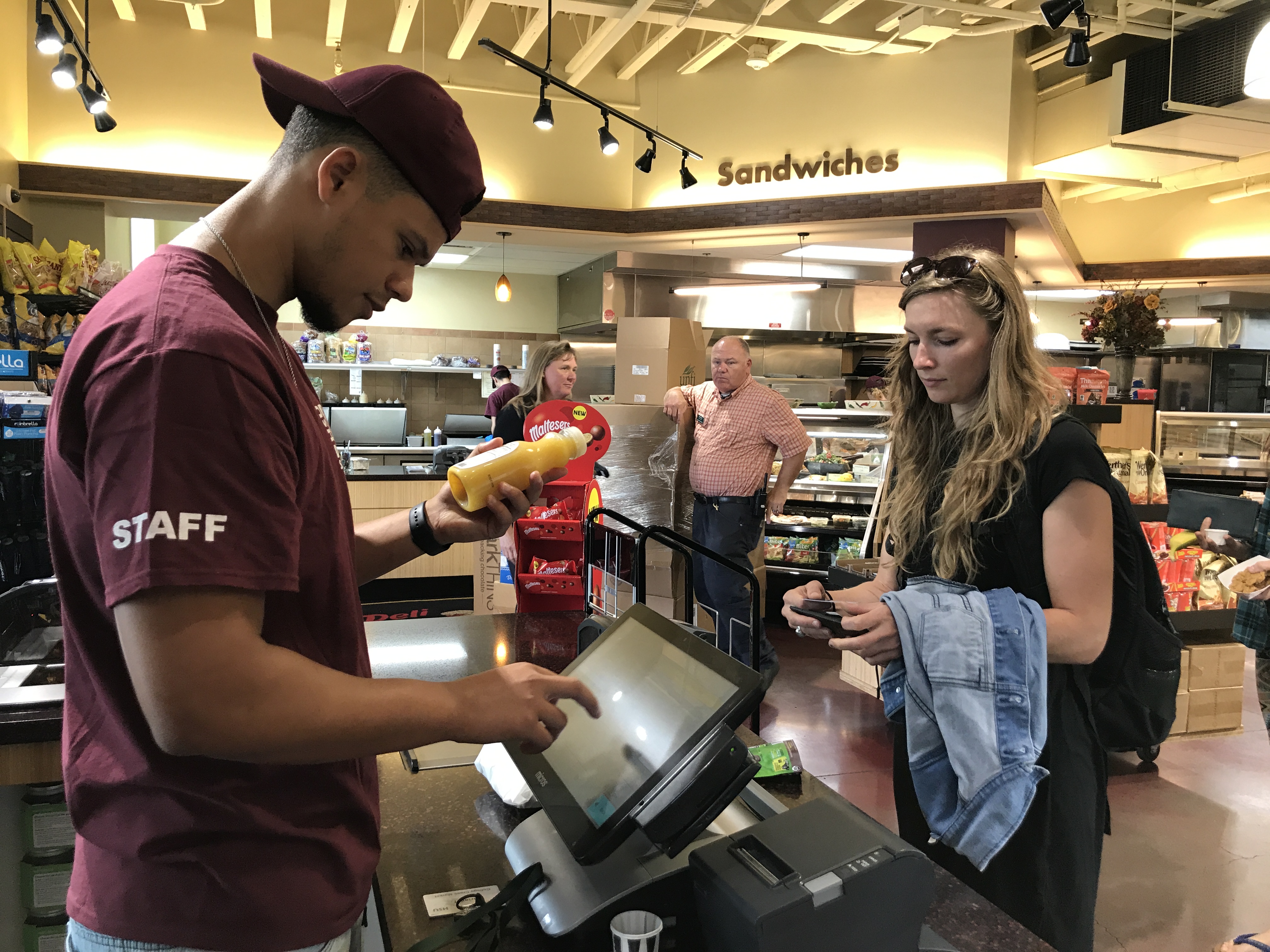
    Brian Thompson (Cashier) checking out items for a student at the college creek marketplace. Photo credit: Ahmed Al-Sakkaf

    “The answer to the question ‘What do student who need that money do?’ I don’t have a good answer for that,” said Ron Rudebock, the director of Dining Services. “Life is not fair sometimes.”