The Lumberjack


Students Serving The Cal Poly Humboldt Campus and Community Since 1929

Tag: Michael estrada

  • Motorcycle Tips for Riding in the Rain

    Motorcycle Tips for Riding in the Rain

    It’s always important to drive safely, but especially for motorcyclists in the rain

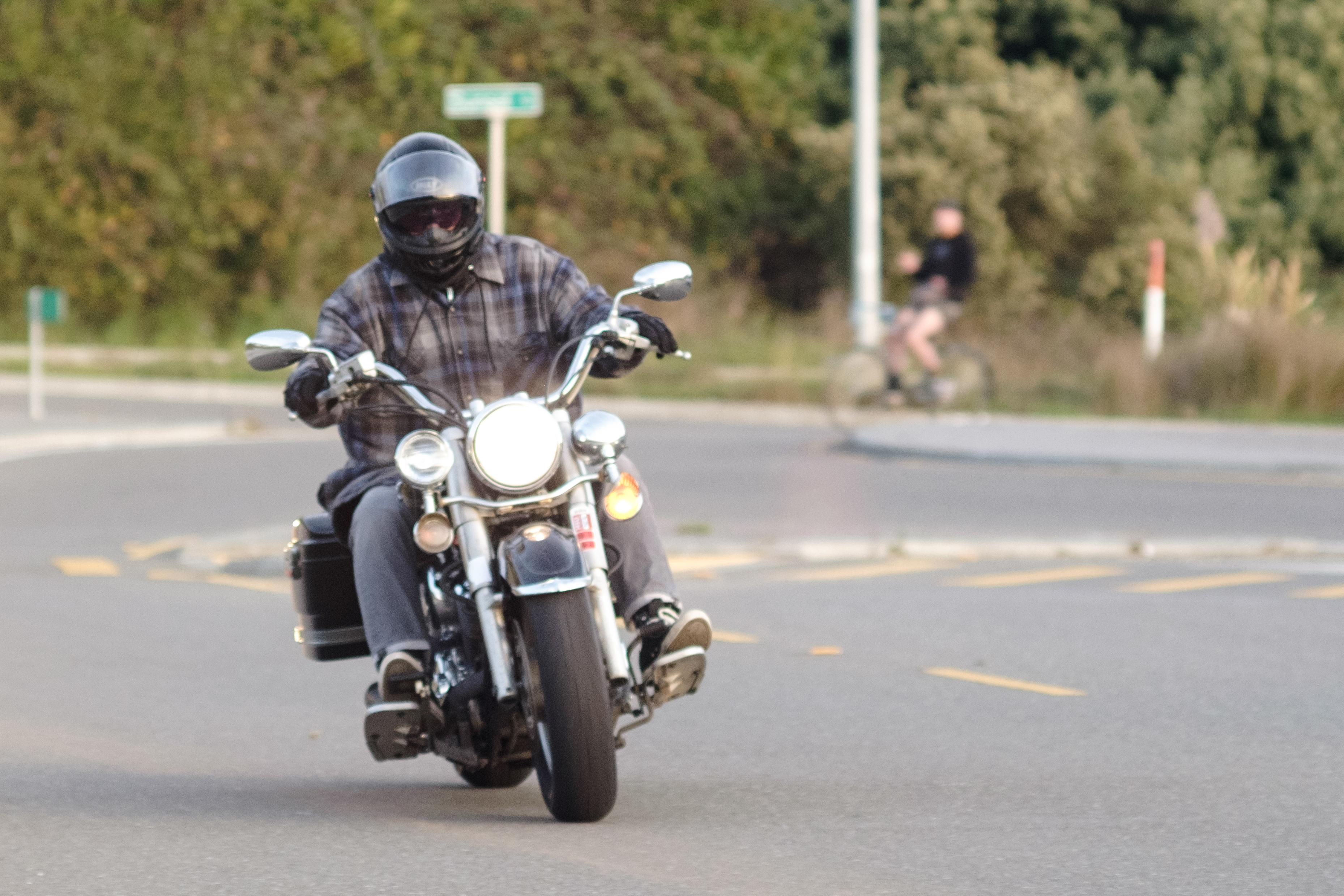
    Riding a motorcycle is a very exhilarating experience, and just like driving a car, it becomes a little more dangerous in the rain.

    Humboldt County is no stranger to the rain, and if two-wheel transportation is your main way of getting around, here are some things to think about before you ride.

    Proper Gear: Pants and a sweater aren’t going to cut it. Water resistant gear is highly recommended so you don’t freeze, it can impair both your decision making and ability to maneuver the bike. If you can afford it, heated vests and gloves are a great investment. You are better off with boots than sneakers, and luckily a dual-purposed pair of water resistant hiking boots will do the trick.

    Check Your Bike: Wet roads mean less traction. After it rains, oil comes up to the surface of the roads, so make sure your tires aren’t worn out. Leaning and shifting your weight is a critical part of riding. You don’t want the bike to go sliding because of bad tread. Check your brake pads, lights and do any other regular maintenance you may not have kept up on before riding out in bad weather.

    Puddles are NOT Fun: In a car or truck it can be fun to make huge splashes. However, puddles can be deceiving and even a small pothole can send you flying off your bike. If possible, always safely maneuver around puddles.

    Rainbow Roads Are For Mario Kart Only: The pretty little swirls of color you see are just oil puddles waiting to send your bike swerving. Be extra careful at stop signs and lights; cars and trucks sometimes sit at intersections for a while and any leaking oil adds up.

    Stay On Pavement: Try to avoid riding on painted lines, manhole covers or any other shiny/metallic surfaces in general. If it was slippery when dry, it is even more dangerous when it rains, especially given that the reduced tire grip can lead to hydroplaning. If you have to go over something, avoid any sudden inputs such as quick acceleration or slamming the breaks.

    Slow and Smooth: Ease off the throttle sooner and give yourself more room to stop. Take turns at lower speeds so you can keep a safe and constant speed, and don’t shift your weight too abruptly. Sudden actions like slamming on the breaks and quickly switching your weight can put you down quickly even in good weather.

    Find A Dry Path: Trucks and cars clear paths when they drive, pushing away water and other debris. Ride in their tire tracks, but that doesn’t mean tailgate them. You need to give yourself extra room to brake in the rain.

    As always, remember to have fun! Riding a motorcycle is a drastically different experience than driving a car, and they’re meant to be enjoyed. Humboldt is a beautiful place to explore, from the ocean to the forests there are no shortages of great views, and the rain doesn’t need to deter you from that experience.
  • Turkey Doomsday

    Turkey Doomsday

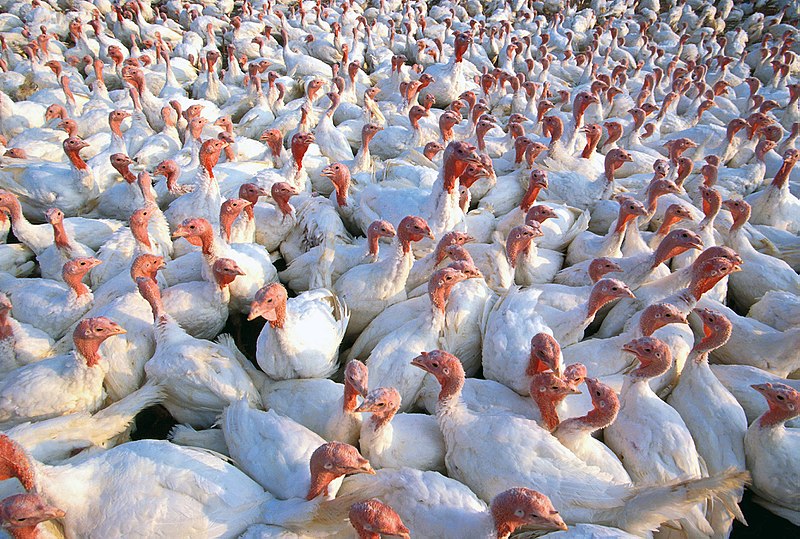
    Investigations have found that many large-scale poultry farms keep their birds intentionally overweight and injected with hormones

    Turkey Day is tomorrow, but people don’t always take the time to think about the farm to table process that leads to the birds ending up on our dinner plates.

    According to The American Society for the Prevention of Cruelty to Animals, “95% of farm animals in the U.S. are raised in factory farms,” with other sources, such as the Huffington Post, claiming numbers to be up to 99%.

    Factory farming has proven to be a profitable business, with the United States Department of Agriculture stating that there are approximately 2 million farms in operation.

    Poultry makes up a significant size of the income from animals, second only to calves and cattle.

    “Cash receipts for animals and animal products totaled 176.5 billion in 2018,” the USDA’s site says. “Cattle/calf receipts accounted for 38 percent of that total, while poultry/egg receipts accounted for 26 percent and dairy receipts 20 percent.”

    Some of the problems associated with factory farming include the health of the animals and their living arrangements.

    Investigations have found that many large-scale poultry farms keep their birds intentionally overweight and injected with hormones, only to be forced into tight cages until they are killed.

    “Due to selective breeding, commercial male turkeys rapidly grow to a weight 3 times larger than wild male turkeys in only 4 months,” Farm Sanctuary, an animal protections agency formed in 1986, states on their website. “Rapid growth and resulting heavy body weight can lead to heart problems and painful leg issues, which can eventually lead to crippling.”

    In 2017, The New York Times’ Editorial Board took a stand against factory-farmed poultry.

    “No animals raised on factory farms are kept and killed under worse conditions than turkeys and chickens, which make up most of the animals raised for food in the U.S.,” the editorial said. “Nearly 9 billion chickens are slaughtered each year for food. And because poultry is exempt from the federal Humane Methods of Slaughter Act, which the U.S. Department of Agriculture enforces, there are not even minimum federal standards governing how they live or die.”

    The Times continued their editorial, detailing how the “so-called broiler chickens” are genetically bred to grow fast, due to the demand for breast meat. According to the Times, these chickens grow so large that they can barely walk, suffering from painful skeletal disorders and deformities before they are killed.

    “The vast majority spend their short lives (about 47 days for chickens) in artificially lit, windowless, barren warehouse barns,” the editorial said. “So that turkeys won’t peck one another in these crowded barns, their beaks are painfully trimmed.”

    In Humboldt County, if you’re looking to avoid commercial, warehouse-raised poultry, one option is the Shakefork Community Farm. The farm raises small batches of turkeys every summer and fall.

    According to their site, Shakefork’s poultry is raised and slaughtered sustainably; raising their birds in open ranges as opposed to tight cages, believing in a more humane approach to raising animals.

    “We provide certified organic laying feed, but our hens provide for much of their own nutrition by foraging for seeds, bugs, and pasture,” the site says. “Our healthy and contented birds make for some of the best eating ever.”

  • HSU Library Hosts Digitization Day

    HSU Library Hosts Digitization Day

    Humboldt State Special Collections offers the opportunity for community members to preserve their history

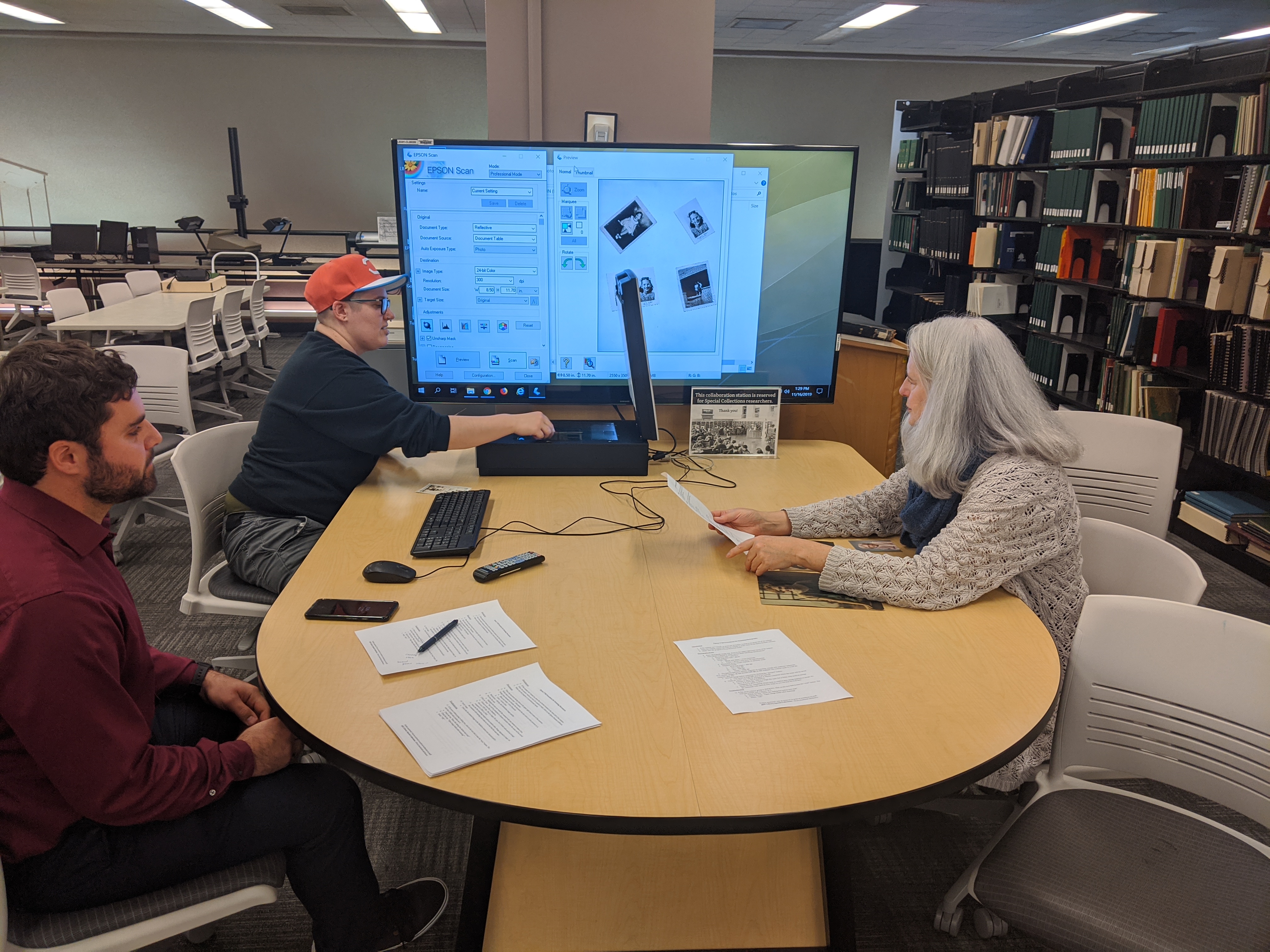
    On Saturday the HSU library played host to Humboldt History Digitization Day, an event that gave students, staff and community members the opportunity to take photographs and documents and save digital copies for free.

    Digital copies are a great way to save backups of personal documents and photos from deterioration. The cost of a photo scanner can get into the hundreds of dollars, and not everyone has an understanding of photoshop and other programs that can be used to crop and edit the digital copies.

    During this event, archivers were available to directly assist in the use of the scanner and photoshop courtesy of the libraries Special Collections division.

    Special Collections Instruction Librarian Louis Knecht was available to assist the public in digitizing their documents, as well as share some insight on the impact of archiving Humboldt history.

    Knecht saw the event as an opportunity to expand peoples’ digital literacy, as well as a way to archive history.

    “If you have any kind of family photos, or documents, that aren’t in digital form, digitize them. That’s your family history, you don’t want to lose that, that’s precious stuff.”

    Erin Sullivan

    “HSU is a center of technology in what is a relatively rural environment that is Humboldt County,” said Knecht.

    Erin Sullivan, an English professor at HSU, stopped by with a thick binder of her family history and was excited to start preserving the past. She had four generations of photographs, from Irish immigrants on her father’s side, to the pioneers on her mother’s side that were living on the plains.

    “If you have any kind of family photos, or documents, that aren’t in digital form, digitize them,” Sullivan said. “That’s your family history, you don’t want to lose that, that’s precious stuff.”

    She wasn’t afraid to learn the process, and was happy to share her appreciation of the assistance she was given.

    “I have never used any fancy digital equipment,” said. Sullivan. “I scan things for teaching purposes, but not high quality scanning.”

    Humboldt has benefitted from archiving history in the past, such as recording the protests of the Gasquet-Orleans road, whose inception began in the early 60s.

    “I think it takes away HSU as just relevant to students, staff and faculty,” said Knecht. “It opens the door to more community engagement.”

  • Film Screening Displays Indigenous Resistance and Heroism

    Film Screening Displays Indigenous Resistance and Heroism

    ‘From Wounded Knee to Standing Rock’ offers insight into 71-day rebellion

    As Indigenous Peoples’ Week came to an end, one of the last events was an airing of the documentary, “From Wounded Knee To Standing Rock: A Reporter’s Journey” at the Eureka Theatre.

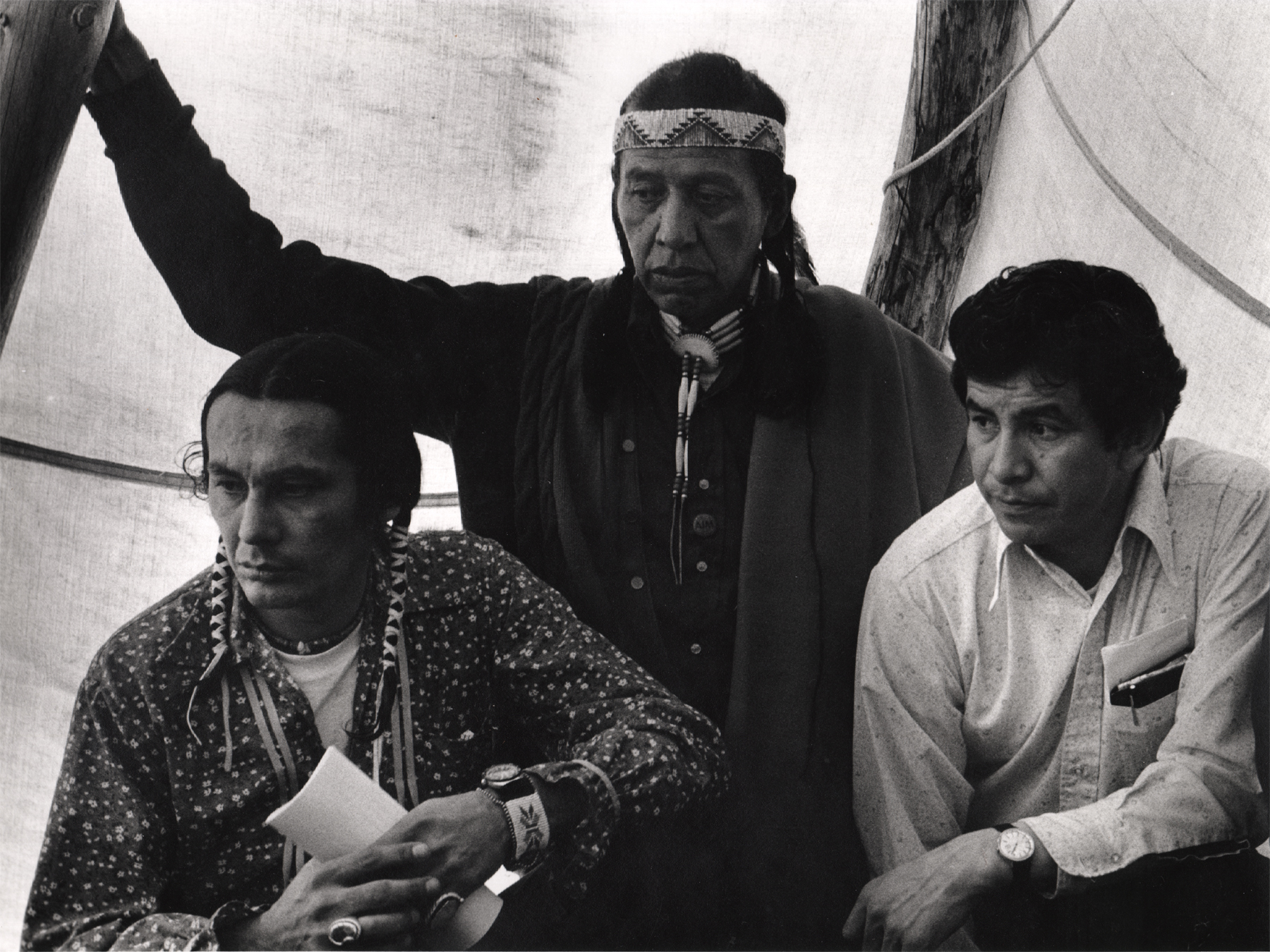
    This story followed rookie reporter Kevin McKiernan and his experiences recording the events of the 71-day seizure and occupation of the town of Wounded Knee, South Dakota on the Pine Ridge Indian Reservation from Feb. 27 to May 8, 1973.

    Richard A. “Dick” Wilson was chairman of the Oglala Lakota Sioux of the Pine Ridge Indian Reservation. Protests started in response to failures of impeachment. Wilson had accusations ranging from giving jobs to friends and family, to suppressing his political opponents with his private militia, the Guardians of the Oglala Nation.

    In addition, there were protests of the United States Government’s failure to uphold treaties with Native Americans. This was concerning since there was a history of abuse and neglect from American police and government. Cases such as State v. Bad Heart Bull served as a catalyst for the occupation.

    As a result of the GOON squads’ weaponized militia, the American Indian Movement was brought in to assist the protesters. Wilson also received help from the American Government in the forms of U.S. Marshals Service and the FBI.

    Photo courtesy Kevin McKiernan

    AIM started as a grassroots movement in Minneapolis, Minnesota, to address police brutality towards Native Americans; and grew to represent all indigenous tribes and help them with the issues they have faced since European colonialism, as well as helping people reconnect with their heritage. Many people lost their history once Americans forced native youth assimilate into Euro-American society.

    Acclimation to the colonizers’ lifestyles included forcibly removing Native people from their families, as well as preventing them from practicing their traditional customs. By accepting the different values as their own, such as Christianity, private property and material wealth, people became disconnected from their roots. AIM was a way for people to reconnect to their ancestors’ ways of life.

    During the time of this occupation, the U.S. Government prevented media personal from entering the reservation or recording any discussions between them and the rebel leaders, such as Dennis Banks and Russell Means. They also implemented roadblocks to prevent aid for the natives.

    McKiernan snuck in with the help of some rebels and slept on the floors of a church. While inside he recorded conversations with multiple members of the rebellion, shootouts with the FBI and USMS, took pictures of the aftermath of the altercations and recorded meetings with U.S. officials. Conflict escalated to the point of the USMS and FBI using helicopters, armored vehicles, snipers and automatic weapons.

    Photo courtesy Kevin McKiernan

    U.S. Marshal Lloyd Grimm was shot in the conflict and suffered paralysis from the waist down and Cherokee activist Frank Clearwater was shot in the head April 17, within 24 hours of his arrival, during a fire fight with federal forces.

    Shootings were just one reason for keeping the media in the dark, by preventing coverage of the measures that the government took against the AIM and Sioux. At one point during the winter, Department of Justice appointee Kent Frizell, to manage the government’s response, cut off water, electricity and food supplies to Wounded Knee in an attempt to starve them out. They also made attempts to stir up distrust in the local factions, which lead to some activists being killed by their own allies, for fear they were government plants.

    The final blow came in late April, when Lawrence “Buddy” Lamont, a local Oglala Lakota, was shot by a government sniper and killed. Soon after, both sides would come to an agreement to disarm. This led to the eventual end of the 71-day standoff between the Wounded Knee activists and AIM, and the United States assisted tribalists, serving as but one example of the Native American’s struggles since European Colonization.

  • Yurok Tribe’s Connection to Klamath River Weakens as Ecosystem Declines

    Yurok Tribe’s Connection to Klamath River Weakens as Ecosystem Declines

    Indigenous Peoples’ Week provided an opportunity for the community to not only recognize native culture but learn about it

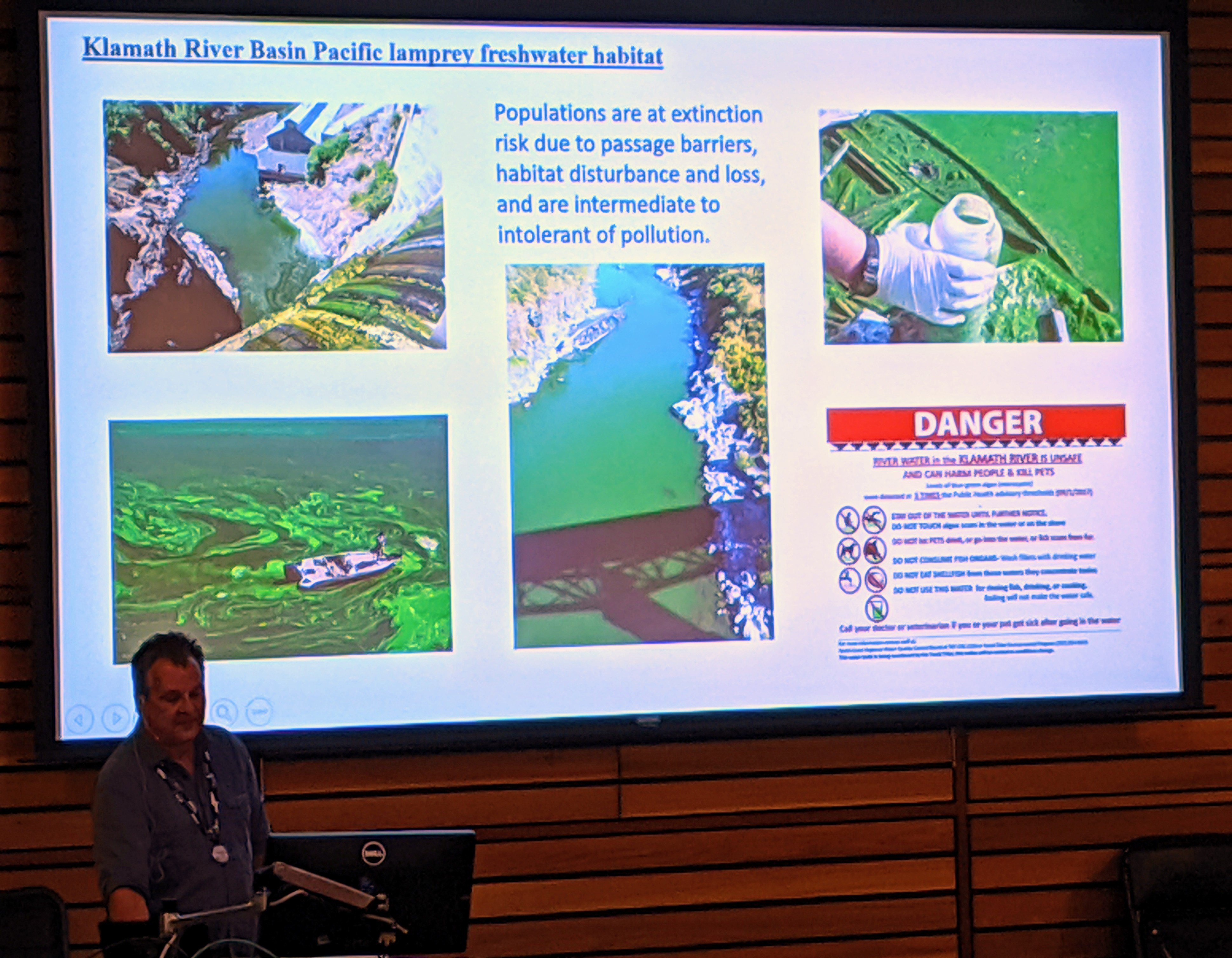
    Last Thursday Yurok Tribe member Keith Parker, a Humboldt State alumnus and fisheries and molecular biologist, gave a presentation on campus about the Klamath River, his work on Lamprey eels and the local ecosystem.

    As a tribal scientist, Parker gets to use his traditional knowledge from his Yurok heritage combined with his master’s degree from HSU to conduct field and lab work. The Klamath River is significant to the Yurok Tribe, as Yurok translates to “downriver people.”

    “I have a spiritual and innate connection to the land,” Parker said. “It’s not just a study subject for me, it’s not just empirical data. I have skin in the game, literally.”

    “I have a cultural connection. I live off that river, my kids eat off that river, we eat the salmon, the sturgeon, the lamprey, the elk, the deer and we harvest the roots.”

    Keith Parker

    Parker feels that his upbringing along with his academics makes him a better and more effective scientist. It is more than just conducting research for him, as he continues to learn and then teach others about a topic he feels passion for.

    “I have a cultural connection,” Parker said. “I live off that river, my kids eat off that river, we eat the salmon, the sturgeon, the lamprey, the elk, the deer and we harvest the roots.”

    The river has a rich history in native lore, being home to other tribes including the Karok and Modoc long before the earliest settlers came west. But in more recent years, the river has taken a decline in health.

    Some of the causes can be attributed to the damming of the river, preventing the water from flowing properly and allowing harmful algae to grow. Specifically cyanobacteria, commonly known as blue-green algae.

    The North Coast Regional Water Quality Control Board and the Humboldt County Department of Health & Human Services send out broadcast warnings, cautioning people to avoid swimming in areas that contain the algae.

    In July 2018, the Humboldt County Department of Health & Human Services issued a news release stating, “The presence of cyanobacteria has been previously confirmed in some water bodies within Humboldt, Mendocino and Lake counties including the South Fork Eel River, Van Duzen River, Trinity River, Clear Lake and Lake Pillsbury. It is difficult to test and monitor the many lakes and miles of our local rivers. Most blooms in California contain harmless green algae, but it is important to stay safe and avoid contact.” “It isn’t just a loss of biodiversity when you see a river system like that slowly dying, it’s a loss of cultural heritage as well.”

    Another effect of the damming is that the salmon find it much harder to swim to and from the ocean, which slowly harms the surrounding wildlife.

    “It isn’t just a loss of biodiversity when you see a river system like that slowly dying, it’s a loss of cultural heritage as well.”

    Keith Parker

    “Those fish leave as juveniles and they go out to the ocean and they come back later on in life much larger in size,” Parker said. “They then spawn and die, all those marine-derived nutrients that are in their flesh are absorbed into those forests.”

    Yurok culture is linked to the river in many ways, including using it for transportation and trade. The Yurok tribe would trade items downstream, from the ocean, as they looked to collect larger deer and elk from deeper in the mountains.

    “A lot of our people, even now, they’re breaking out in rashes from putting their hands in the water and taking the fish out,” Parker said. “The females of the tribe often weave baskets from roots they harvest from the water’s edge as well, and part of the method is sucking on the roots to soften them up so they can weave baskets and more. They are being affected as well.”

    The Lamprey eels used to thrive, and were something that the natives could smoke and preserve as their food throughout the winter. They used handmade eel hooks, which the men make by hand and include carvings that are personal to each individual.

    “When the women harvest those roots from this nasty river edge, when they’re making them they keep them in their mouth and they soften them up with their saliva while they’re making their basket, and they’re getting poisoned,” Parker said. “It isn’t just a loss of biodiversity when you see a river system like that slowly dying, it’s a loss of cultural heritage as well.”

  • Hoodies with Holes Trigger Responses

    Hoodies with Holes Trigger Responses

    Did streetwear fashion brand Bstroy take tragedy too far?

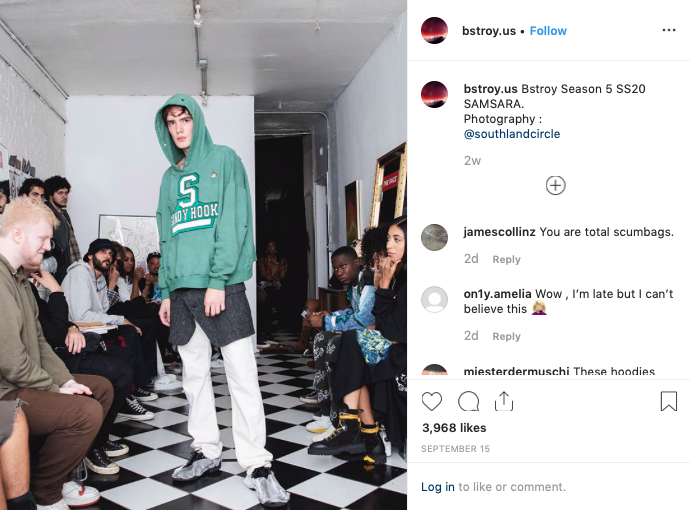
    Earlier this month at New York’s Fashion Week, streetwear brand Bstroy sparked controversy after unveiling a line of clothing inspired by school shootings.

    Founders of Bstroy and Atlanta based designers Brick Owens and Dieter Grams presented hoodies riddled with bullet holes and emblazoned with names of schools where mass shooting took place: Sandy Hook, Columbine, Virginia Tech and Marjory Stoneman Douglas.

    Bstroy’s Instagram page shares the brands description, a “Neo-Native Menswear Design House.” Owens and Grams have come under scrutiny and have defended their creations as a form of art and expression.

    After some of the backlash, Owens took to Instagram in an attempt to explain.

    “Sometimes life can be painfully ironic,” Owens wrote. “Like the irony of dying violently in a place you consider to be a safe, controlled environment, like school. We are reminded all the time of life’s fragility, shortness, and unpredictability yet we are also reminded of its infinite potential.”

    Grams and Owens sent a statement to TIME, the New York Times, the Cut and the Washington Post claiming their brand simply used its platform to shed light on important issues.

    “We wanted to make a comment on gun violence and the type of gun violence that needs preventative attention and what its origins are,” the statement read. “While also empowering the survivors of tragedy through storytelling in the clothes. Arts job is to wring emotion out, what we do with it after is subjective and on us.”

    Fred Guttenburg’s Twitter response.

    However, not everyone views the act in an artistic light. Family members of victims took to social media to share their views. Fred Guttenburg, whose daughter Jamie Guttenburg was killed by the gunman at the Marjory Stoneman Douglas shooting, went to Twitter to express his disgust.

    “Under what scenario could somebody think this was a good idea?” Guttenburg wrote. “This has me so upset. If any of my followers [know] anybody involved with this clothing line, please ask them to stop it immediately.”

    Shawn Sherlock, whose niece Gina Rose Montalto was also a victim at the Stoneman Douglas shooting, posted a tweet in response as well.

    “My 14-year-old fashionista niece was murdered in Parkland,” Sherlock wrote. “She was a professional illustrator and aspired to be clothing designer like you. You should be ashamed of taking advantage of her death to make [money].”

    Some HSU students noted that if Bstroy were to donate some of their proceeds, they could be more likely to accept the creators’ stance.

    Screengrab of Sherlock’s tweet in response to Bstroy’s hoodies.

    Journalism major Israel Landes said he found Owens’ explanation insincere, seeing it more as Owens defending his artistic choice and saying he thought there were ways to make it clear they were making a statement.

    “If at the event, fashion show, maybe just a quick announcement, ‘Hey we’re doing this to represent whatever group, whatever victims, whoever’s being affected by these shootings,’” Landes said. “He could if he wanted to go the extra mile and say ‘Hey you know we are donating X number of the proceeds to families of the victims.’”

    Mari Agaton, an art history major, agreed with the charity aspect lightening the grim connotation of the hoodies.

    “Coming as an artistic statement, if the proceeds were donated to the families I could buy into it better,” Agaton said.

    Owens and Grams met on MySpace while they were both living in Atlanta, and while they initially planned to have the sweaters be only for NYFW, they have stated they’re now considering putting them up for sale.