The Lumberjack


Students Serving The Cal Poly Humboldt Campus and Community Since 1929

Tag: Michael weber

  • Wind Farm Under Scrutiny

    Wind Farm Under Scrutiny

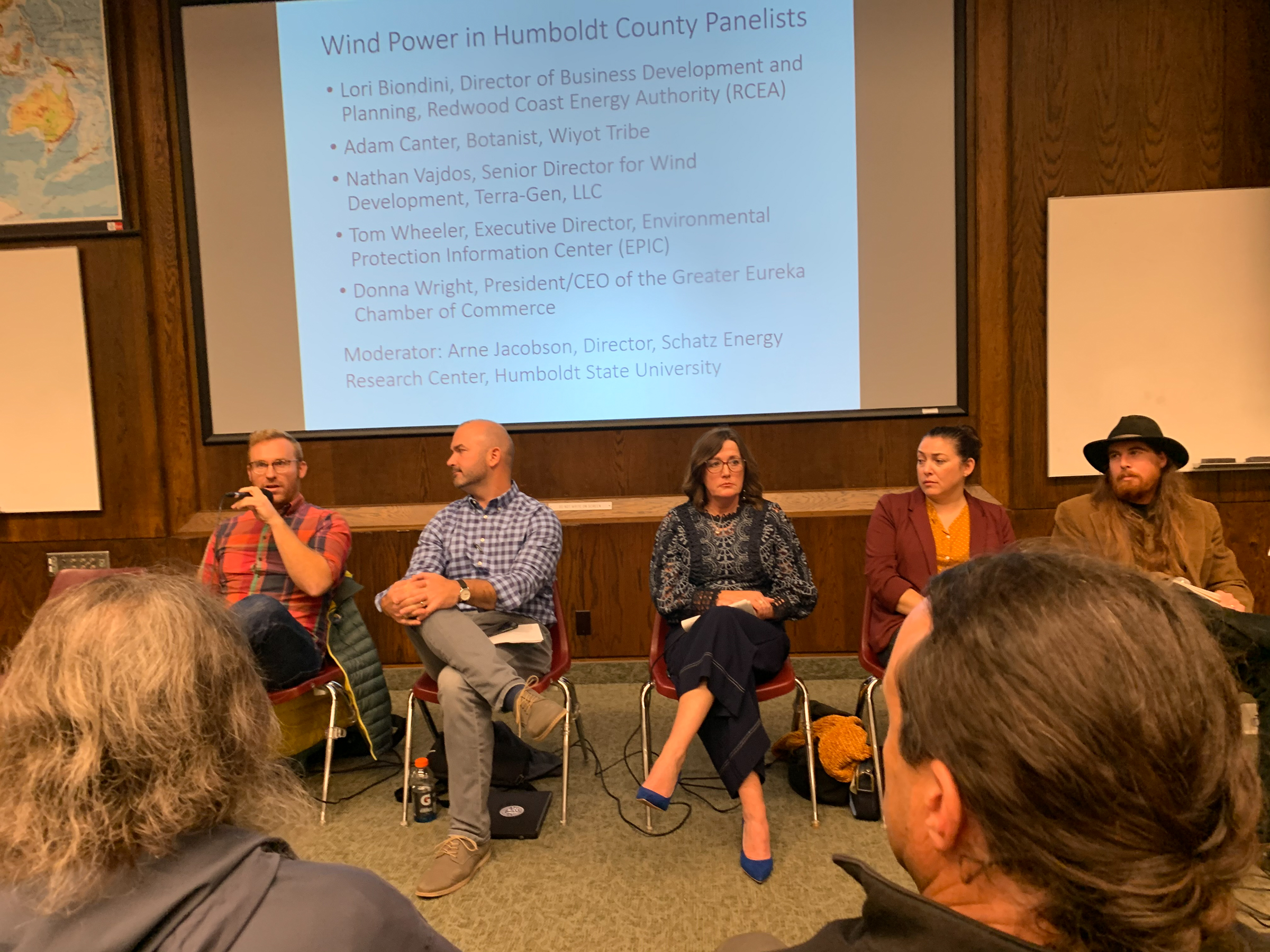
    A panel at Humboldt State University’s Sustainable Speakers Series weigh the pros and cons of the Humboldt Wind Energy Project

    As the global concern to act against climate change increases, Humboldt County is in a position to capitalize on an opportunity to establish a significant renewable resource.

    On Thursday, the Humboldt County Planning Commission votes on the wind energy farm developed by Terra-Gen. Terra-Gen, a Manhattan-based energy company, has proposed a wind farm to be built near Bear River, on Monument Ridge, above the city of Scotia.

    The Terra-Gen wind farm carries controversy for numerous reasons. The project will help achieve carbon emission-reduction goals and provide two million dollars in annual tax revenue for the county, but will impact wildlife, forest ecosystems and the Wiyot prayer site Tsakiyuwit.

    Arne Jacobson, director for Shatz Energy Research Center, said the proposed turbines will produce about 100 times less CO2 than burning fossil fuels.

    “From a climate change perspective, wind looks pretty good,” Jacobson said. “Whatever perspective we have on this particular project, I think one question we should be asking ourselves is what we want to do with that opportunity, because I think it’s there and I think we have the local ethic and the local talent to make that happen.”

    Lori Biondini, director of Redwood Coast Energy Authority, said the Terra-Gen wind project could be part of a solution to address RCEA’s goal of 100% renewable electricity in Humboldt County by 2025.

    “The Terra-Gen project is part of one scenario to reach our goals,” Biondini. “If it doesn’t get built, then we will come up with another scenario.”

    RCEA administers the community choice energy program, a program which allows communities to decide where their electricity comes from. It prioritizes local energy generation and generally more clean energy.

    “I think that one of the promises of community choice energy is that we get to make choices that are good to our entire community.” Biondini said. “Not further marginalize those that might not otherwise have had a seat at the table.”

    A crowd waits for Sustainable Speakers panel to begin. | Photo by Michael Weber

    Adam Canter, a botanist and representative of the Wiyot tribal council, defended the preservation of the land and disapproved of the Terra-Gen project. Canter cites ethnobotanical resources and culturally significant sites as reasons not to move forward with this project.

    “When we first heard about this project, there was this big pit that just kind of fell into our stomachs,” Canter said. “We thought when Shell came 10 years ago that no other company would come back and try to build a project here. But we were wrong.”

    Canter pointed out the cultural resource report for the site bound in a green, four-inch binder.

    “The representation of cultural diversity on this ridge is pretty magnificent,” Canter said. “We’re seeing evidence of Athabaskan peoples and the Wiyot-Algonquin peoples and really it should be listed on the National Register of Historic Places.”

    According to Canter, the area is also a high prayer site; a place where a large expanse of Wiyot ancestral territory is visible. Like the turbines obscuring the view, the Wiyot cultural heritage could be obscured too.

    Tom Wheeler, director for the Environmental Protection Information Center, said the proposed site is a questionable area to build a wind farm.

    “The representation of cultural diversity on this ridge is pretty magnificent. We’re seeing evidence of Athabaskan peoples and the Wiyot-Algonquin peoples and really it should be listed on the National Register of Historic Places.”

    Adam Canter

    According to guidelines set by the California Energy Commission and the California Department of Fish and Wildlife, the proposed site is “pristine.” Wheeler said the site has several rare and endangered species, including the rare Horay bat.

    Wheeler is still hopeful to keep the project, and said there is technology that can reduce some of the wildlife impacts. This, however, is only one mitigation measure to the several unavoidable cultural, environmental and wildlife impacts of the project.

    “I want this to be a better project and it’s not there,” Wheeler said. “At least not yet.”

    On Thursday, the final vote by Humboldt County’s Planning Commission will weigh impacts to Native American culture and environmental quality to the people’s interest in local, reliable energy.

    Aside from the benefit of reducing carbon emissions, allowing Terra-Gen to build the wind farm also comes with an economic and infrastructure benefit.

    Senior Director in Wind Development for Terra-Gen Nathan Vajdos said the company would be the second-largest taxpayer in the county, and could fund $14 million to Humboldt’s reliability network upgrades, with $1.3 million to the Humboldt substation.

    “As we charge our iPhones, we fill up our cars with gas, we’re having impacts.” Vajdos said. “Whether this project is built or not, we are having an impact in this room.”

  • A Pumpkin of Possibilities

    A Pumpkin of Possibilities

    4 ways to make the most out of your pumpkin this season

    They’re hard, wonky looking and often suffer from an acute case of the warts. Pumpkins are the fruit of October and epitomize the Halloween season. Here are four ways to get the most use out of your pumpkin.

    Photo courtesy of Pixabay

    1. Carving a Jack-O’-Lantern

    Jack-o’-lanterns are the most recognizable use for pumpkins. Local stores typically have all types of pumpkins available, differing in sizes and colors. Before choosing a pumpkin, be mindful of the design you want to fit onto the pumpkin.

    First, prepare a large surface with a mat or towel to minimize the mess. Then, equip yourself with a knife, a large spoon and a container for pumpkin flesh. A serrated knife with teeth will work best for cutting through thick pumpkin skin, while a paring knife works best for the smaller details of your design.

    Begin by cutting out a lid from the top of your pumpkin, and set it aside for later. Dig out the pumpkin flesh and seeds with a large spoon, and if you are interested in eating the seeds, save them in a container. Now for the fun part- carve out your design: a face, an animal, a monster or anything else that catches your fancy. If cutting straight lines is challenging, printing out a design and attaching it to the pumpkin with tape can help.

    Photo courtesy of Pixabay

    2. Compostable Plant Pot

    Instead of a jack-o’-lantern, turn a pumpkin into a compostable pumpkin planter. Save an extra step in the transplanting process by using a pumpkin planter as a naturally decomposing pot.

    Just like carving a jack-o’-lantern, cut an opening at the top of the pumpkin with a serrated knife. Feel free to decorate the plant pot by carving your own patterns on the surface of the pumpkin pot. After hollowing out the pumpkin with a spoon, just like a regular transplant, take a plant from its nursery pot and replant it with soil in the pumpkin.

    The plant should grow beautifully if loved and cared for. As the pumpkin ages, an eventual transplant of the whole pumpkin into the ground will take place, decomposing and fertilizing the area.

    Photo courtesy of Creative Commons

    3. Prepare Mashed Pumpkin Puree

    It’s a fact of life that some pumpkins just aren’t made for pie. The carving of the pumpkin contains flesh that is very fibrous and may not produce the best tasting pie. You can use puree in dishes like pumpkin pie and pumpkin soup.

    To prep, cut your pumpkin in half and take out stringy fibers and seeds. One and a half pounds of raw pumpkin will yield two cups of pumpkin puree. And again, if you want to eat the seeds, save them for roasting later.

    Cut the cleaned pumpkin into chunks and put them into a saucepan with one inch of boiling water. Turn the heat to low and throw on a cover to simmer for half an hour. Once the pumpkin is tender, drain the water and remove the peel. Use a potato masher to smash the pumpkins into a puree. The fresh pumpkin will last three days in the refrigerator, or months frozen.

    Photo courtesy of Creative Commons

    4. Roasting Seeds

    By virtue of carving, cooking or smashing pumpkins, you’ll eventually be left with a bunch of little pumpkin seeds. In their final, toasted form, pumpkin seeds are a delicious, high protein and high fiber snack.

    With your leftover pumpkin guts, separate the seeds from the stringy flesh. Run water over the seeds in a strainer or colander to make this process easier. Pat the seeds dry to ensure a crispy crunch.

    Grab two or three tablespoons of a favorite cooking oil or butter, and add any additional spices your taste buds may desire. Classic salt and pepper works well, too. Mix and spread over a baking sheet, and make sure to line the baking sheet with aluminum foil to help with cleanup.

    In a single layer, spread the clean and dried pumpkin seeds on the baking sheet. Throw it in the oven at 200°F for 45 minutes, stirring every 10 or so minutes. When the timer ends, turn up the heat to 325°F for five minutes to finish the seeds with a nice crisp.

  • Here to Stay: AACAE Hires Permanent Director

    Here to Stay: AACAE Hires Permanent Director

    Bridging the cultural gap between the campus and community

    Douglas Smith drove up to Humboldt State for the first time in 2013 as a transfer student with big eyes for a small school.

    Smith was seeking same the small school feeling that he got while attending College of the Canyons, away from his home in Los Angeles. At first, Smith experienced anxiety about being one the few people of color in Arcata, but he found a way to adapt and thrive in time.

    Today, he’s the director for the African American Center for Academic Excellence, and is four months into his new role. Smith holds his own college experiences as reference when approaching the job.

    “My big benefit to coming to Humboldt State was that I had these opportunities for cultural exchange with different kinds of people,” Smith said.

    Smith believes the center should be a place that highlights the black experience and culture, a space where students and community can freely speak and learn. Smith hopes the center will strengthen the campus community and bridge the gap between the campus and locals.

    Smith emphasized intercultural exchange as an important part of learning. One way the center achieves this is through Talking Drum, a safe space that gives students the agency to converse over the issues that matter to them.

    HSU sophomore Brooklyn Reed is the new facilitator for Talking Drum. She met Smith tabling in the quad and offered some of her ideas on how the center’s discussions could be run.

    “I talked to him about how to facilitate it, about what I wanted it to look like, how I wanted to build community,” Reed said. “He was just very, super supportive. Just yes, like, ‘let’s do this!’”

    Reed wants to run the discussions the way she learned back home in Los Angeles. She also wants the chief of police to attend some meetings so that the center can hold the police accountable if they disagree with their conduct.

    Smith’s approach to working with Reed speaks to how he wants to take a step back when it comes to campus dialogue. For his first couple of months, Smith said he spent the majority of his time listening to student feedback.

    “I’m trying to come in with this idea of like, ‘Okay, I have some ideas for things,’” Smith said. “But I really want to learn and listen to what students’ needs are, and identify those needs before I go in and start making decisions here and there.”

    In Talking Drum, students have a safe space that gives them the agency to converse over the issues that matter to them. | Photo by Michael Weber

    This approach allows the Dean of Students Office to be informed by what the center is doing, versus managing from the top down. Letting students take control of the dialogue means that they will be directly influencing the Dean of Students.

    “I have been wanting every [discussion] to be student-led, student-driven, and have that peer to peer connection,” Smith said.

    Smith promotes the free exchange of ideas because he believes dialogue and cultural exchange is important to becoming part of the community.

    One of Smith’s most profound influences on the way he approaches intercultural exchange occurred in his senior semester spent abroad in Santiago, Chile. When he landed, Smith recognized the feeling of being alone and started to familiarize himself with the local area.

    “My experience in Humboldt County and at HSU as the ‘other,’ and learning how to move from a perpetual state of survival mindset to adapting and thriving prepared me in so many ways for my time abroad,” Smith said.

    Smith’s directive for the center is a culmination of his experiences learning about other people.

    “Having that cultural exchange and different kinds of people allowed me to have more diverse viewpoints,” Smith said. “I’m an extrovert. Inside, I might feel anxiety about me, but I’ve always kind of pushed myself to engage with people.”

  • Banned Books Week at HSU

    Banned Books Week at HSU

    Controversial books read aloud at HSU library in protest and celebration

    Humboldt State University students and faculty gathered in front of the HSU library on Tuesday, Sept. 24 for a banned book reading in celebration of Banned Books Week.

    Garrett Purchio, librarian for the College of Arts, Humanities and Social Sciences, worked with Marcy Burstiner from the Humboldt Center for Constitutional Rights to host one of many readings held across the country for the campaign promoted by the American Library Association.

    “It’s a chance to really listen to different people’s perspectives,” Purchio said. “I think it’s always great to hear, you know, people are reading this book because of the impact it has on them, or maybe it really opened their eyes to the world.”

    Harriet Burr reads For Whom The Bell Tolls by Ernest Hemingway at the banned book reading in front of Humboldt State University’s library on Sept. 24. Burr chose the book because of its value in representing the Spanish Civil War. | Photo by Michael Weber

    Readers chose from a rack of more than 50 banned or challenged books, including books of diverse content—defined by the ALA to have content by or about people of color, LGBTQ+ people or people with disabilities.

    Purchio said that while many people feel we are at a point in history beyond censorship, literature still faces frequent challenges.

    “Every year there’s always a list of new words that are challenged for different reasons,” Purchio said. “The ALA puts out a list of the top books challenged in 2018, 2019.”

    Ocean Campbell, a graduate student in social work, read David Levithan’s Two Boys Kissing. According to the ALA, the book is ranked number 11 for the most challenged and burned book in 2018 because it included LGBTQ+ content.

    “I really wish that this book had existed when I was a teenager,” Campbell said. “I think it possibly could have changed my whole life.”

    Campbell said the book had a powerful message and brilliant moments that resonated with her. Campbell said any young person who wants the book should be able to have it.

    Harriet Burr, a librarian with a master’s degree in community economic development, read For Whom The Bell Tolls by Ernest Hemingway, a book set during the Spanish Civil War.

    “How many of you learned about the Spanish Civil War in school?” Burr said. No hands raised in the audience. “Why don’t we teach this?”

    Burr said people are unaware of a lot of history, in part due to purposeful obfuscation. Burr blamed former President Franklin D. Roosevelt and the Catholic Church for ignoring the Spanish Civil War.

    Purchio said people ban or challenge books because they feel threatened by a work and have a desire to respond. He said the book reading celebrates the freedom to read.

    Journalism professor Marcy Burstiner reads a banned book during a banned book reading in front of HSU’s library on Sept. 24. | Photo by Michael Weber

    Marcy Burstiner, who is also a HSU journalism professor, added a similar sentiment.

    “You can threaten the writers, but the book will go on,” Burstiner said.

    According to the ALA, it launched Banned Books Week in the 1980s after a United States Supreme Court case ruling said school officials could not ban books in libraries because of their content.

    Since then, the ALA has compiled lists of challenged books each year. The ALA also posts additional information on banned books on their website.

    “It’s still happening,” Purchio said. “It’s important to keep this band going, because it’s good to show that even though censorship exists in the world, there’s some people who champion freedom of speech and freedom to read.”


    A previous version of this article listed the author of “Two Boys Kissing” as David Campbell, but the author is David Levithan.

  • PC Gaming Club Installs Flight Simulator

    PC Gaming Club Installs Flight Simulator

    Bing! Flight attendants, please prepare for take-off

    We are now departing from the Humboldt State University library.

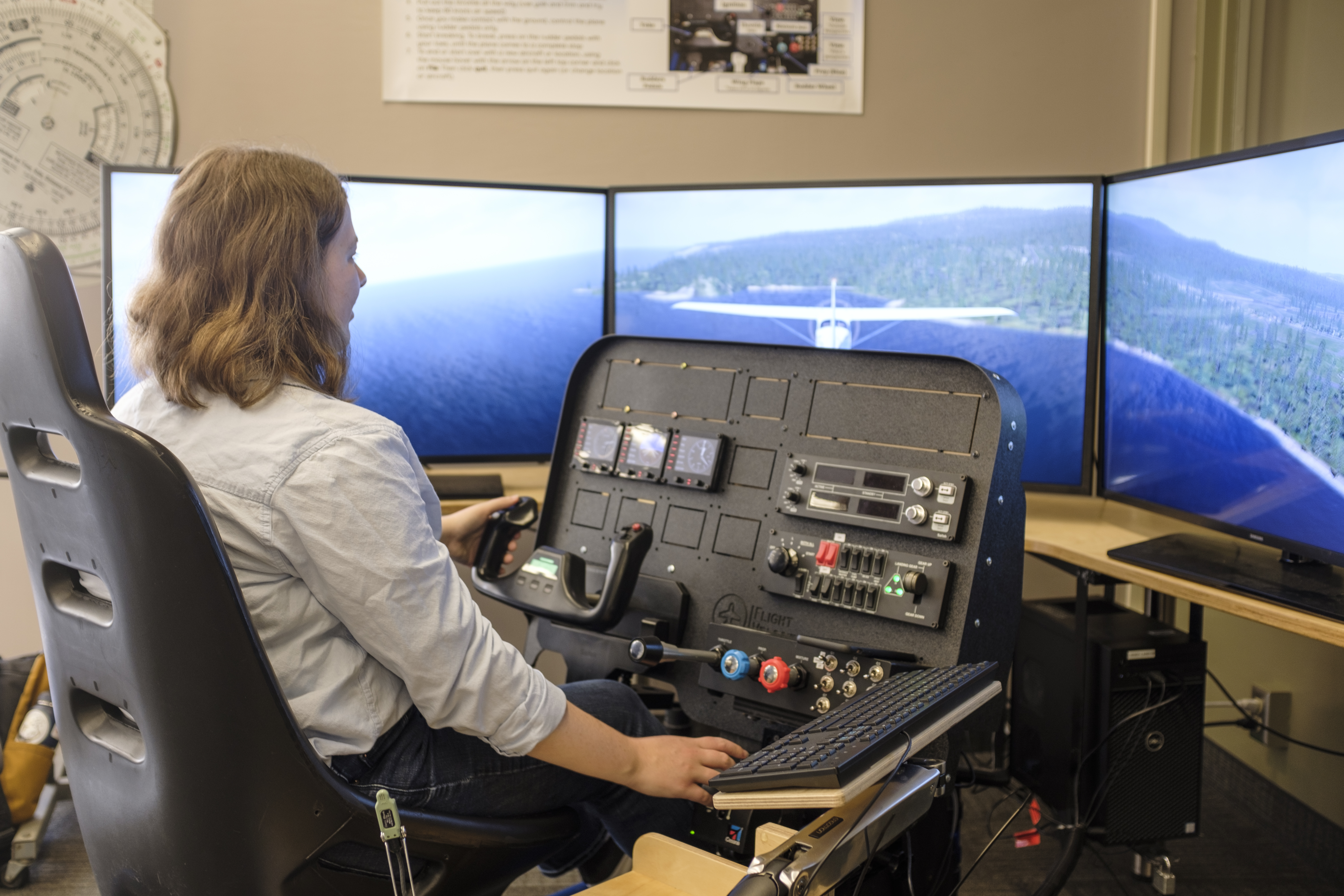
    Since fall 2018, Humboldt State University’s PC Gaming Club planned, fundraised and constructed a flight simulator for anyone to use. Students, faculty, staff and community members can learn how to fly an airplane by practicing in the simulator on the third floor of the library.

    “The amazing thing about simulations is that it’s designed to simulate real life,” Sarah Livingstone, president of the PC Gaming Club, said. “You are still having the same neural connections and the same wavelengths in your brain to replicate that. So then when you do step inside a real airplane, you are doing all the exact same things; you know how to do everything correctly.”

    The control wheel or “yoke,” juts out from the instrument panel of the flight simulator. | Photo by Michael Weber

    The simulator features all the levers, buttons, instruments, windows and pedals that one would see in a real-life cockpit. Library pilots can choose their airplane model, airport location, flight conditions and other variables within the software, Microsoft Flight Simulator X.

    Step-by-step instructions are posted nearby so that anyone may start the simulation solo. Livingstone said the club wants to hire a trained student to teach the public to operate the simulator and hire a flight instructor to allow anyone to obtain a real pilot license.

    “We’re looking into working with extended education to bring forward this flat ground school program that would help students get their pilot’s license at HSU.”

    Sarah Livingstone

    “We’re looking into working with extended education to bring forward this flat ground school program that would help students get their pilot’s license at HSU,” Livingstone said.

    Just like getting a license to drive a car, the two requirements for a pilot’s license—as defined by the Federal Aviation Administration—are to pass a written test and record 40 hours of flight practice with a professional.

    David Marshall, the advisor to the PC Gaming Club, said a pilot-in-training may save a significant amount of money for the 40 hours of practice by using a simulator rather than a real, gasoline-consuming airplane.

    A nearby supplemental book for pleasure reading rests on the flight simulator desk at the Humboldt State University Library on Sept. 23. | Photo by Michael Weber

    “The cheapest airplane is right around $100 an hour. On top of that, you get another $30 an hour for your instructor,” Marshall said. “So every hour, an airplane costs $130. In the simulator, if somebody else builds it for you, it’s just an instructor and it’s $30 an hour to put book time.”

    The club is searching for more funding to provide a classroom to study the written test and a professional instructor for the simulator.

    Livingstone said they are looking into purchasing the final flight instruments, headphones, a new cover for the chair and a pillow for younger pilots-in-training to access the simulator.

    The project started one year ago when Marshall said he required the club to create a project with a positive, meaningful and educational experience.

    “I suggested gently that gaming is really simulation,” Marshall said. “And there’s a lot of stuff we can do in simulation.”

    The club then raised $10,000 for the furniture, chairs, equipment, computer and software by writing grants, fundraising and working with community members that provided some equipment and furniture.

    Livingstone said the simulator caught the attention of HSU President Tom Jackson, Jr. and Provost Alex Enyedi, who are both aviators. Livingstone encountered unexpected enthusiasm when she met with Jackson.

    “It was supposed to only be a 40-minute meeting, but it ended up being an hour and a half,” Livingstone said. “He was having so much fun.”

  • Marijuana Breathalyzer Coming 2020

    Marijuana Breathalyzer Coming 2020

    No pee, hair or spit. One blow is all it takes to show marijuana intoxication levels with new breathalyzer.

    Marijuana has been a touchy topic since Colorado and Washington made their first moves to legalize recreational use in 2012. Since then, 29 states have followed and declared marijuana legal for medicinal and/or recreational use.

    Tension forms at the discrepancy between state and federal opinion on where marijuana falls legally as a drug. The lack of legal confirmation from the federal government makes it difficult for government employers, especially police officers, to execute and process circumstances surrounding marijuana intoxication. Recent developments in marijuana detection technology suggest a breathalyzer is in the works.

    Current marijuana testing requires a hair, urine or blood sample. The test results detect past use up to six months and reports the current THC level in the body. This testing proves to be unreliable as past use of marijuana will distort a current reading of bodily intoxication, which is what law officials care about.

    The two technology companies racing to release their version of a more accurate breathalyzer are Hound Labs and SannTek.

    Hound Labs was established five years ago and is leading the race with an expected release of late 2020. The Hound Labs breathalyzer operates on a specified time basis. It can detect marijuana if it’s been used in the last three hours. The three-hour window comes from two findings; one, marijuana is only detectable for the first three hours. Afterward, THC levels drop so low and so fast that it becomes virtually undetectable. Second, the initial three hours of intoxication are the most impaired and therefore the most crucial.

    The breathalyzer method proves to be more accurate and better suited for law and medical officials, as alternative testing can take hours to produce results. In addition, this method is also beneficial to the participant, as the regulated three hour time interval doesn’t hold participants liable for past usage beyond that time frame.

    If this new testing method becomes normalized, the three hours prior to testing will be the most critical, but anything before those three hours is merely tangential. Ideally, someone tested for their marijuana use could not be held liable for their marijuana use prior to the that three-hour window because the breathalyzer would not be able to detect it.

    The opposing company, SannTek, and their breathalyzer the SannTek 315 will operate similarly to the Hound Labs breathalyzer. SannTek 315 is still in early development so the company is not providing much information. Like Hound Labs, their product will utilize a time interval to reveal the last ingestion of marijuana and current intoxication.

    Hound Labs conducted clinical testing in 2017 in cooperation with University of California, San Francisco. However, no findings have been concluded publicly due to the small sample size. SannTek 315 lacks any formal testing or trials at this time.

  • Humboldt State Plans Annex Update for Children’s Center

    Humboldt State Plans Annex Update for Children’s Center

    HSU to repurpose Trinity Annex building into larger Children’s Center with $8.6 million grant

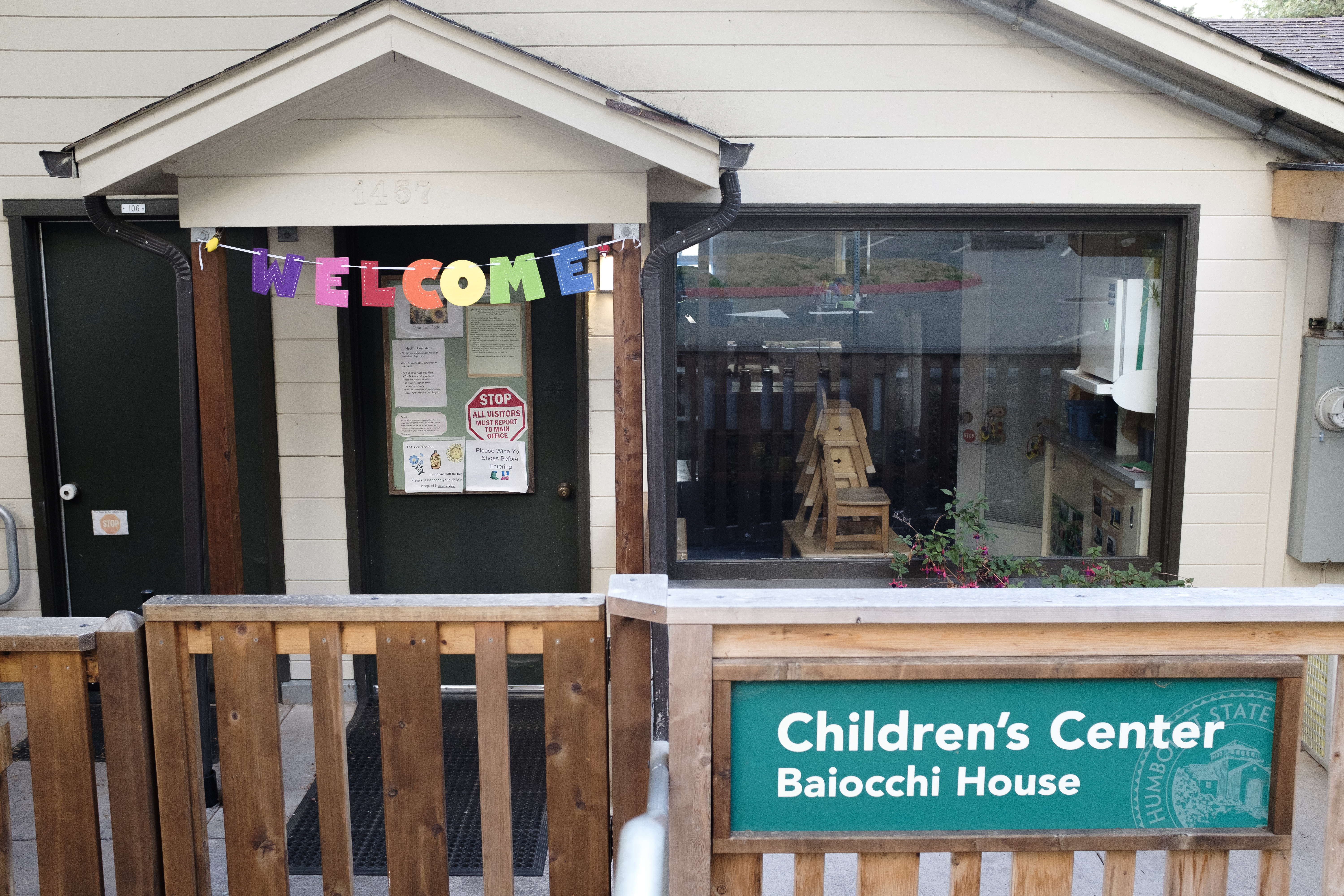
    Starting this semester, Humboldt State University will begin to redesign the Trinity Annex building at the corner of 14th and B streets into an updated facility to house a new Children’s Center. The current Children’s Center facility will continue child services until it moves in 2021.

    “We want folks that are going to be in the building to give feedback as to what it should look like,” HSU Associate Vice President of Student Success Steven St. Onge said.

    St. Onge, who oversees the Children’s Center, said the design phase of the new building will explore increased space, updated playgrounds, manipulative toys, dynamic crawling textures and additional infant care. The education program will not change, but the physical space will be improved.

    The staff responsible for the design held a recent meeting to develop ideas for the ideal facility. Staff will meet again later this semester to draft blueprints.

    The Children’s Center Administration building is located above the Children’s Center. | Photo by Michael Weber

    “I think we’re switching from the facility impacting the programto the program impacting the facility,” St. Onge said. “Which I think is a good step forward.”

    The redesign is funded by an $8.6 million allocation to HSU from a statewide grant for California State Universities. Betty Wilson, Children’s Center Program Director said the facility is limited by its budget.

    “We are constantly searching out new funding streams to help create better experiences,” Wilson said in an email.

    The Children’s Center daycare and education programs are regularly funded by Associated Students (both state and federal grants) and the university itself. This one-time grant will allow for a new facility.

    “There are 86 students in the Children’s Center, about 60% are children of HSU students. The rest are a combination of faculty, staff and community members’ children.”

    Steven St. Onge

    The current buildings that house the Children’s Center have reached maximum capacity for the number of children.

    “Right now, we’re limited by what the facility can give us,” St. Onge said. “The room size dictates how many children can be in a room, as well as the staff ratio.”

    The sign-up process for the programs begins with a wait list that prioritizes current HSU students.

    “There are 86 students in the Children’s Center, about 60% are children of HSU students,” St. Onge said. “The rest are a combination of faculty, staff and community members’ children.”

    Infant care is the most demanding service the Children’s Center provides because they require more attention than toddlers. St. Onge said the ratio of care for infants compared to toddlers is three to one.

    “It’s harder to find someone who will watch infants,” St. Onge said. That’s probably the largest wait list in that particular room.”

    Bikes are parked in one of the playgrounds of The Children’s Center on Sept. 9. The playground sports multiple textures for kids to walk on. | Photo by Michael Weber

    According to St. Onge, the new facility will improve operational efficiency. Currently, there are five buildings housing five different age groups. Each building has its own space, equipment and toys for its respective age group. The new facility will consolidate these spaces, improving efficiency.

    St. Onge said the design phase will be tied closely to the childcare and early education programs. The Children’s Center and St. Onge did not explicitly state ways the recent grant will benefit the children and parents of the program. St. Onge said the academic aspect of the Children’s Center will remain the same.

    “I think it’s exciting for the younger kids that will experience that new facility,” St. Onge said.

    One main function of the Children’s Center is to provide a place for students, faculty, staff and community members to drop their kids off when they are busy at school or work.

    According to Humboldt State Now, a recent survey conducted by the Campus Center for Rural Policy found that childcare improves student retention rates and work environments. Wilson said that the Early Head Start Grant allows parents to spend more time on schoolwork.

    A Harbert Roofing truck parked at the Humboldt State University Annex on Sept. 9, 2019. The Annex will be refurbished into a new Children’s Center. | Photo by Michael Weber

    “Family Service Coordinator Amy Pires-Moore helped to fulfill annual goals which the families create,” Wilson said. “By doing this, she is able to create a secure emotional base for the families to be able to succeed academically as some of their daily concerns can be taken care of.”

    The other main function of the Children’s Center is providing care and education to the children and student workers. They are accredited by the National Association for the Education of Young Children.

    The NAEYC website says, “The accreditation process provides a framework for self-study, external evaluation and improvement in the quality of teacher preparation programs.”

  • Infrastructure Updates on Campus Continue

    Infrastructure Updates on Campus Continue

    And yes, you can walk between Laurel Dr. and the library again

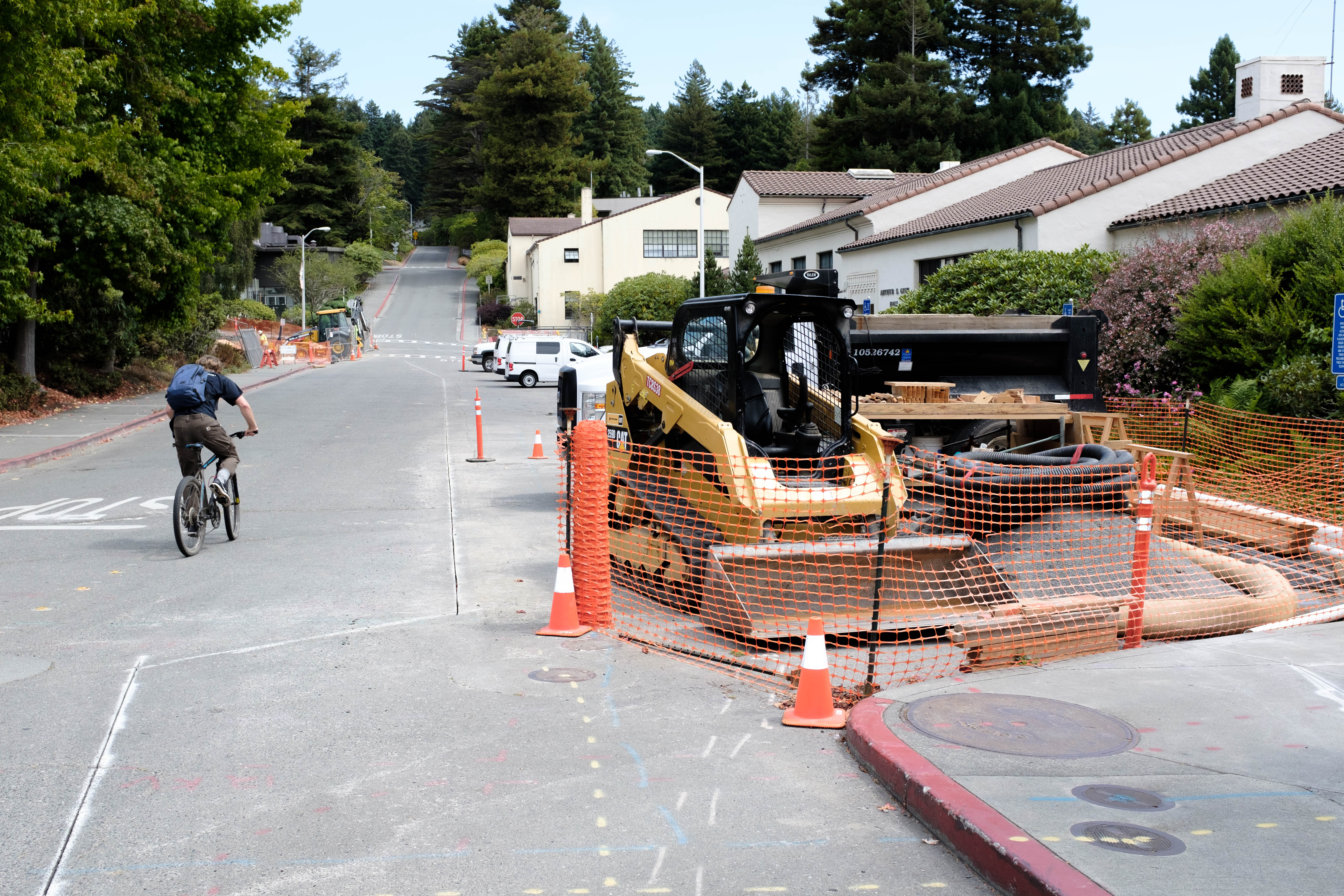
    Lined with ground marks, gravel, orange fencing and machinery, the parking spots of Laurel Drive are no longer accessible to staff and students. Where a tree surrounded by brick once stood, now lies a sectioned-off zone where two workers constructed a new pathway.

    Over the summer, Humboldt State staff and students received several updates about on-campus infrastructure arrangements including general maintenance, building renovations and repaved roads. Humboldt State Project Manager Michael Fisher said these updates are part of a large list of planned and required maintenance.

    The pathway from the library to Laurel Drive is open as of August 20. | Photo by Michael Weber

    Parts of Laurel Drive are now closed off for this construction. On the bright side, the Theatre Arts building is now open since its closure in 2018 and will hold classes this semester. The pathway from the Library to Laurel Drive is now open as well. Gist Hall is also open as of August 12 after the asbestos contamination discovered last Spring.

    Starting this semester until December 2019, Laurel Drive and Library handicap parking spaces, as well as pathways, will be redone to provide a path of travel to the Theater Arts Building and Library, respectively. The new path for wheelchair access from Laurel Drive will start at new handicap spaces and lead to the elevator in the Theatre Arts Building.

    Notable projects finished over the summer include Wildlife and Fisheries Building roof replacements, repaving of the Library Circle and LK Wood Boulevard left turn, six HVAC control replacements, housing maintenance, refurbished lecture halls, a new elevator in the Natural Resources Building and the near-completion of the Theatre Arts and Library seismic retrofits.

    Part of Laurel Drive’s parking lot is excavated for updated handicap spots. | Photo by Michael Weber

    Fisher also said portables in the Campus Events Field, which previously held the tutoring center and other facilities temporarily, are being moved out as the relocated tenants return home to the library.

    One of the most visible changes to returning students is the repaved library circle and left turn lane on LK Wood Blvd. Fisher said this new turning lane, built in partnership with the City of Arcata, helps ease congestion and improve bus route times.

    Less noticeable improvements are general “building system” updates in HVAC, electrical, plumbing and structural.

    “Every component of our built environment has a life cycle,” Fisher said. “That includes streets, roads, sidewalks, our buildings, and our building’s infrastructure.”