The Lumberjack


Students Serving The Cal Poly Humboldt Campus and Community Since 1929

Tag: microgrid

  • How a Local Clean Energy Microgrid Could Transform California

    How a Local Clean Energy Microgrid Could Transform California

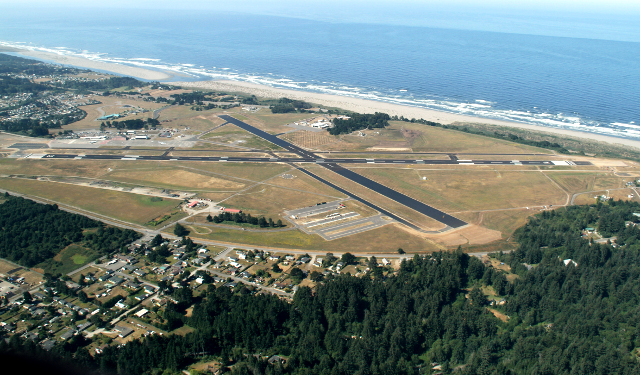
    A new project in Humboldt County is paving the way for clean energy operations throughout the rest of California. After two years of planning, construction of the Redwood Coast Airport Renewable Energy Microgrid is set to begin in April of this year.

    A microgrid is decentralized from the larger energy grid. It is able to become its own “island.” It ensures that power can be restored to a specific area during emergency situations even when the larger energy grid is down, such as during a public safety power outage. A notable component of the RCAM is that it is entirely run by renewable energy, operating off of solar power, making it even more appealing to the area.

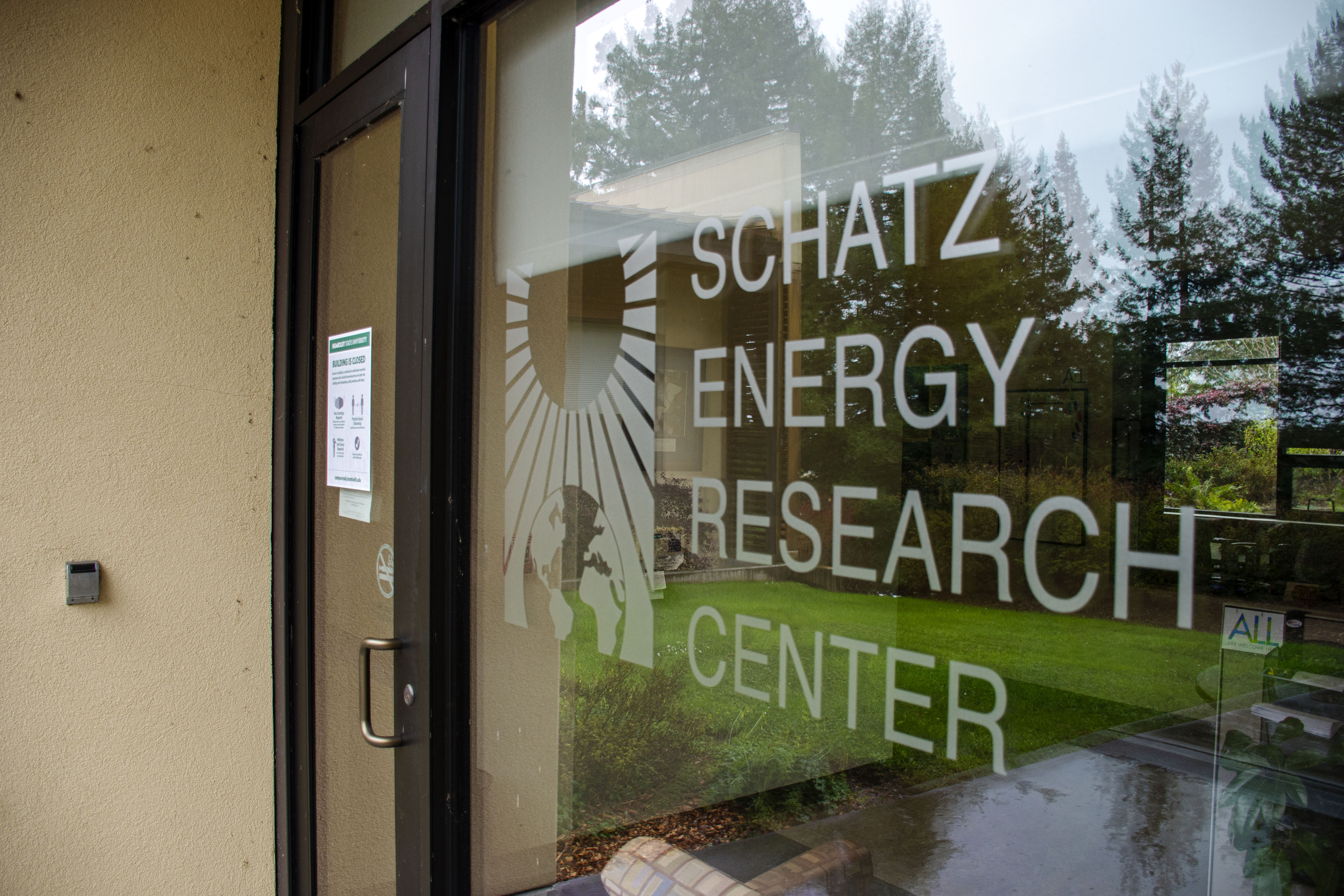
    The prime contractor and lead technology integrator for this project is Humboldt State University’s very own Schatz Energy Research Center. The RCAM will be the first-ever multi-customer microgrid in Northern California.

    Environmental Science Professor Jack Murphy said that in his opinion, the clean energy microgrid is a great idea for two reasons.

    “The first is just that it contributes to the decarbonization of our electrical generation, and that’s good,” Murphy said. “Less carbon dioxide going into the atmosphere is good and humanity needs big clean energy projects ASAP. The second reason it’s a great idea is that the airport could be critically important during regional disasters such as tsunami or earthquake, and having a microgrid operable when the grid is down would be hugely important.”

    Another important goal of the RCAM project is to create a template for the construction of other clean energy microgrids across the state. By partnering with PG&E and the Redwood Coast Energy Authority, the microgrid will be an example for the rest of California of the policies, tariff structures, and operating procedures that are involved with a project like this.

    “The RCAM project has led to the development of PG&E’s recently proposed Community Microgrid Enablement Program,” David Carter, principal engineer for the Schatz Energy Research Center said. “CMEP creates a process and a path for other eligible communities to deploy front-of-the-meter, multi-customer microgrids that will provide resilience to critical facilities.”

    With the details of the successful project documented, other communities can use it as a technical guide for the construction of new microgrids. Reducing the use of fossil fuels in a state that has the second highest amount of annual carbon dioxide emissions in the entire country is an exciting step forward toward combating climate change. The RCAM project demonstrates that it is possible for a community microgrid to be powered by 100% renewable, solar energy.

    When asked about the work of the Schatz Energy Research Center, HSU alumnus Kyle Powell said that he is continuously inspired by the various sustainability efforts that come out of the university’s programs.

    “Humboldt State as a whole does a great job of promoting sustainability and clean energy throughout all of its programs,” Powell said. “It’s one of the main factors that brought me to the university, and it continues to influence my life on a daily basis.”
  • Microgrid is in the works

    Microgrid is in the works

    Schatz Energy Research Center at Humboldt State was awarded a $5 million grant. The money is going to be used to build a microgrid at the Arcata-Eureka Airport in Mckinleyville. Peter Lehman, director of Schatz, said he was overjoyed when the good news broke.

    “Everybody was high-fiving and hugging,” Lehman said. “It is a big deal for us, and a big win.”

    Lehman spent about three months working on a proposal for the grant with his colleagues.

    “It was really competitive,” Lehman said. “The California Energy Commission only funded one proposal out of ten. There was a lot of universities that didn’t get funded, and we did.”

    The microgrid will be composed of a 2.3-megawatt photovoltaic array, or solar power system, and cover nine acres.

    “It is one thing to have an idea, but it’s gotta be based in reality,” Lehman said. “First you have to conceive the idea, flesh out the idea and decide what partners need to be assembled. It’s not easy.”

    Redwood Coast Energy Authority, or RCEA, partnered with Schatz, matching $6 million in funds to help the project. Executive director of the RCEA Matthew Marshall is optimistic about the project.

    “We were waiting to hear back from the Schatz Center to see if they received the grant before submitting the application for the loan, but it’s now in the works,” Marshall said. “I’m optimistic.”

    The RCEA is financing the upfront costs of the project with a low-interest loan from the United States Department of Agriculture’s Rural Utilities Service.

    “We’ve got a goal to support the development of local solar projects,” Marshall said. “The project is pushing the envelope. It’s exciting being on the forefront.”

    In addition to generating green electricity, the microgrid will create jobs for locals.

    “Somebody has to pour the concrete, drive the post into the ground to mount solar panels and run the wires,” Lehman said.

    In an emergency situation, the airports and United States Coast Guard could run for hours off energy gained from the microgrid .

    “The airport and the Coast Guard are really important,” Lehman said. “The Coast Guard can’t fly if the airport doesn’t have electricity.”

    RCEA owns the solar array and PG&E owns the wires, but who gets paid what for the electricity produced? How do customers get charged for that?

    “It’s all new, its never come up before,” Lehman said. “We are going to be plowing some new ground trying to figure that out.”

    The project is expected to begin this summer. PG&E will do a number of tests after the completion of the first multi-customer microgrid.

    “PG&E is careful about what goes on their grid,” Lehman said. “There are a number of tests we will have to pass with them, looking over our shoulder to make sure that is it safe.”

    PG&E communications representative Ari Vanrenen said PG&E is committed to clean energy.

    “We are a community partner dedicated to building a better, more sustainable future for all Californians,” Vanrenen said. “This includes understanding and responding to the different needs of our customers and communities.”

    Once the microgrid is established, the Schatz Center will spend a year writing reports on how it works and share their findings.

    “Lessons we learn are going to be valuable for other people. That’s how progress happens in technology,” Lehman said . “You do things and try something. You tell people about it. The next time you build it, you are a little smarter and you do a better job.”