The Lumberjack


Students Serving The Cal Poly Humboldt Campus and Community Since 1929

Tag: Mikayla Moore-Bastide

  • Affirmative Action Vs. Quotas

    Affirmative Action Vs. Quotas

    There’s a massive difference between affirmative action and quotas

    Reverse discrimination does not exist. Discrimination is discrimination. Now that we got that straight, let’s learn the difference between affirmative action and quotas, also known as tokenism.

    Affirmative action is an effort by institutions to improve educational and economic opportunities for underrepresented groups and communities.

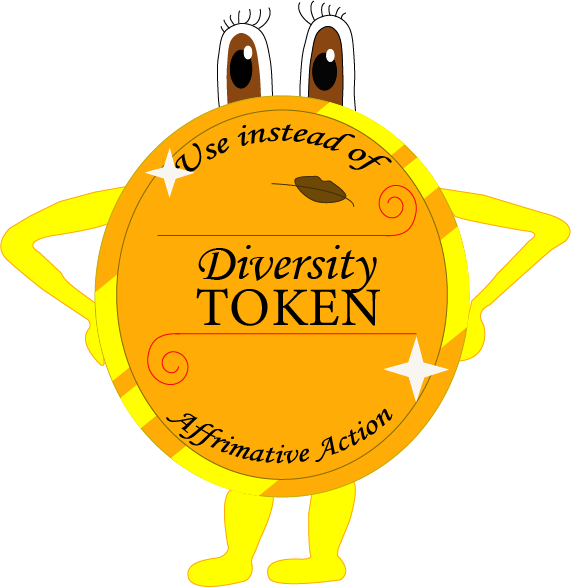
    Quotas force diversity without factoring in actual inclusion. The pathetic attempt to meet numerical goals to appear diverse. This would be considered discrimination. This is actually unconstitutional.

    Affirmative action does not mean that a university or employer is only making their decision based on race, ethnicity or gender. That is also discrimination.

    Affirmative action is taking the necessary steps to improve diversity and inclusion within the institution. This includes dismantling the deeply ingrained discrimination within the educational system and the workplace. Affirmative action takes time. Quotas are a quick fix that fixes absolutely nothing but pretends as if it had.

    We are all aware that proposition 16 did not pass. The proposition would have allowed California’s institutions to consider race, ethnicity, and gender when making decisions on hiring and admission by using affirmative action policies. This prop was attempting to reverse the affirmative action ban that took place in 1996 with proposition 209.

    This was meant to destabilize the lack of inclusion, and figure out ways to attract more members of underrepresented groups such as women and BIPOC. Of course, they need to be qualified. That’s the whole point of affirmative action.

    Let’s say there are two individuals applying for the same position, an example is the marketing director of a company. Imagine their resumes are identical, they have the same level of experience, graduated top of their class, perfect interviews, etc.

    One applicant was a white man from Los Angeles and the other applicant was a black woman from Atlanta. Using affirmative action, the employer should hire the black woman because her voice may be the voice they need at the table to move their company forward. That is affirmative action, it’s taking the necessary steps to be inclusive and open your eyes to expanding to various walks of life, not just one specific group of people.

    Now quotas, which are very different, are very problematic. It’s like a quick fix to diversify the workplace or the institution. Having and keeping a numerical goal is a problem. Saying that their company needs to have at least 10 percent BIPOC and 15 percent women is not okay, under any circumstances. When quotas are put into place, inclusion is not happening.

    When these quotas are not being met, the employer or institution may end up bringing on underqualified individuals just to meet their mark. This helps no one.

    This extends to tokenizing employees as well. An example of this would be Bon Appetit. Employees of color, specifically Sohla El-Waylly, the assistant food editor, went public saying that she was constantly being used as the face of diversity. She was being pulled into random photoshoots and continuously being asked to show up in cooking videos. Yet, she wasn’t paid for any of it. She was being used by the editor, Adam Rapoport, to make the staff look diverse and inclusive when in fact, that was not the case. It was a quick fix.

    Please, do not tokenize photographs, orientation videos, or the institutions or workplaces at all.

    Regarding universities and colleges, there would have been various programs resulting from affirmative action. Thomas Peele, Edsource investigative reporter, wrote a piece explaining what affirmative action was and an explanation on prop 16. Peele touched a bit on CSU’s and how this would impact the colleges.

    “Outgoing CSU Chancellor Timothy P. White said the ability to use affirmative action policies would have let the system address “a fundamental opportunity gap” that Black, Latino, and Native American students face by providing targeted scholarships and programs to help them stay in school and achieve a four-year degree,” Peele said.

    One way that we can put affirmative action into place is by recognizing that there needs to be a change. There needs to be representation present in order to attract people from different backgrounds. Everyone’s culture needs to acknowledged and respected. This includes religion, traditions, language and even holidays. Keep in mind not everyone relates to you.

    Don’t be afraid to receive criticism or feedback on how you can improve.

    Prop 16 not passing in California was a huge mistake. I hope that we can educate others on what this actually means and how it can improve institutions.

  • CDOR continues virtually

    CDOR continues virtually

    The Campus and Community Dialogue On Race returns covering global justice for Black Lives.

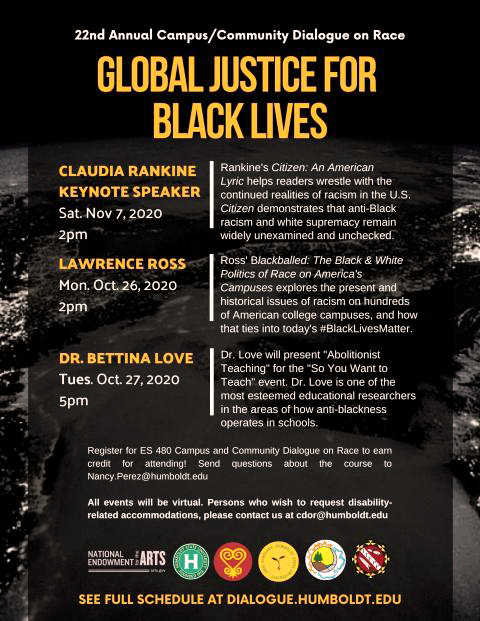
    The theme for this year’s Campus and Community Dialogue on Race will be “Global Justice for Black Lives: Examining the Past and Reimagining the Future.” Two guest speakers will present at the end of October and a keynote speaker will be introduced at the beginning of November. This event provides students, staff, faculty and community members a safe space to discuss race.

    The events will take place on Zoom and instead of lasting a week, there will be talks and workshops taking place for two weeks from Oct. 26 – Nov. 7.

    Featured speakers will be on Zoom and will be viewed webinar style, meaning the audience will not be able to view all other attendees, just the speaker.

    CDOR has been holding annual events since 1998 and has grown exponentially since then. CDOR gives attendees the opportunity to participate in workshops, have those important discussions and listen to keynote speakers.

    Claudia Rankine is the featured keynote speaker for this years’ CDOR event. She will be participating in two student engagements. The first will be a book talk at 11 a.m. for her new book “Just Us.” Next, is her keynote event taking place in the afternoon at 2 p.m. for “Citizen: An American Lyric,” a book loaded with poetry and media that questions racial politics.

    Rankine’s talk will take place on Nov. 7 conveniently after the election.

    Corrina Wells, the program coordinator for the Developing Hispanic Serving Institution (DHSI) grant program, explained that Rankine makes these questions about the topic available for her readers.

    “What’s really powerful about the book is that she, as a Black woman, is making [racial politics] visible for all of her readers,” Wells said.

    They added that Rankine makes relatable content for BIPOC and educational content for non-BIPOC.

    The keynote event will also touch on Rankine’s process of writing and creating “Citizen,” a book-length poem about race in America.

    Lawrence Ross will be holding a virtual talk Mon., Oct. 26 speaking on the politics of race in American colleges. This will be a follow-up on the talk he had earlier this year in February addressing campus racism.

    Ross will be referencing his book, “Blackballed: The Black and White Politics of Race on American Campuses.” The book exposes the racist practices prevalent in university politics that targets and distances students of color from engagement.

    “Ross really focuses on higher education and the ways that racism is perpetuated in institutions of higher education,” Wells said.

    Ross’ talk from earlier this year in February is available on the CDOR website on the welcome page.

    Bettina Love, Ph.D, will be presenting during the “So You Want To Teach” series all day and cover various aspects regarding white supremacy, incarceration, and abolition on Tues., Oct. 27.

    Douglas Smith, the African American Center for Academic Excellence Coordinator, explains that Love’s talk is about restoring humanity for children in schools.

    Love will be incorporating her new book, “We Want To Do More Than Survive” in her talk.

    “Dr. Love focuses on K-12, the overall education industrial complex and the ways that racism happens there,” Wells said

    CDOR is also a class that gives students credit for helping plan and participate in the events. Indigo Eden, a CDOR peer mentor, expressed great appreciation for this year’s event planning.

    “I give so much respect to the planning committee and everyone involved,” Eden said.

    Registration is open and required for all featured speakers and sessions.

  • Time for yourself is more than okay

    Time for yourself is more than okay

    If you needed a sign to tell you to take a break, this is that sign

    Burnout is among us, for some it hit pretty early on. Whether you’e a student, a worker or both, taking a step back just feels impossible. Why do we justify our exhaustion with more exhaustion?

    While it is important to take responsibility for our lives, we need to be kind to ourselves. Living in this pandemic, we have come across what is called “pandemic fatigue.” According to University of Californi a Los Angeles health, it comes in various forms like the inability to focus, not knowing what day it is, feeling anxious, hopeless and worrisome.

    How do we fight pandemic fatigue? How do we fight burn-out? How can we avoid a downward spiral of intrusive thoughts, fear, irritability and insomnia?

    In an article in General Surgery News, Rachel Goldman, Ph.D., FTOS, a licensed psychologist, talks about healthy selfishness. The phrase explains itself, “knowing what you need to do and allowing yourself to do it.”

    It’s time to be more selfish with our health and recognize that we need to take me-time. It’s a reminder and also heavily recommended that we do take time for ourselves.

    I personally struggle with taking that break and I wouldn’t consider myself selfish. We are living in a very unpredictable time. I’m a planner, not being able to plan for the holidays or the next semester drives me up the wall. However, maybe it’s time that I stop worrying about the future and worry about what I am doing right now.

    “People need to focus on what is in their control, which is behaviors, reactions and how they cope, and not on what is out of their control,” Goldman said.

    Worrying about things you can’t control is unproductive and a playing factor in my pandemic fatigue. The feeling of being lost and confused about what to do next runs through my mind every day. Dwelling on the unknown is out of my control and I need to let it be.

    I know we are all going through it differently, but we are all still going through it.

    So when you are too exhausted to go on, take that nap.

    When your head is spinning, go for that walk.

    When you find yourself reading that one page four times over because you’re just not getting it, take a step back and make some pasta.

    Hit a pillow. Call a loved one. Cry. Watch that cringey holiday rom-com. Draw something, ugly or pretty.

    Talk to yourself using only nice words.

    Learn some breathing techniques on YouTube, meditate with Spotify, watch the news or don’t, and don’t forget to drink water.

  • Tragic, but not shocking, no justice for Breonna Taylor

    Tragic, but not shocking, no justice for Breonna Taylor

    Opinion Editor Mikayla Moore-Bastide speaks on nationwide injustice

    How do I explain Breonna Taylor to my future daughter?

    A Black woman, in her own home, was shot multiple times by police and it took six months for the officers to be charged with a crime. Only one officer was charged, but it wasn’t even for killing her, it was for endangering the neighbors.

    How do I even explain Atatiana Jefferson to them?

    She was playing video games with her nephew in her own home when the police shot and killed her through her window.

    How could I explain Botham Jean?

    He was watching TV on his couch when an off-duty officer burst through his door and shot him. The officer said she mixed up his apartment with her own.

    How do I explain my fear of the police bursting into my apartment because my neighbor called for a wellness check?

    How do I explain that walls got justice before Taylor did? Or how it took national pressure from social media to keep the city from sweeping this under the rug. Or how any bad thing from your past will be brought up in an attempt to justify your death. Or that women already have to face enough oppression, but adding melanin to the mix just makes our odds worse?

    How do I explain the terror every black person faces on a daily basis?

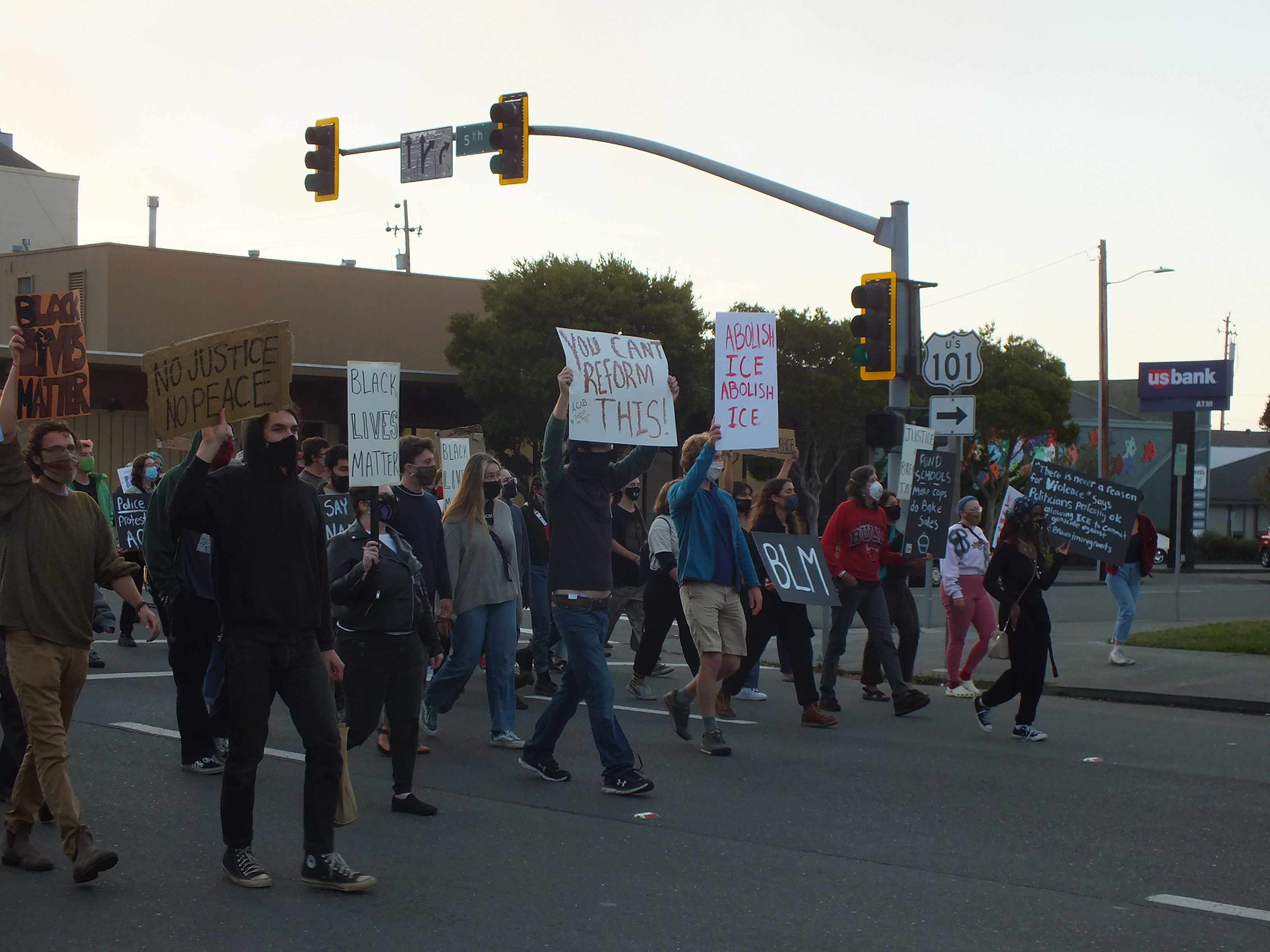
    The terror of becoming a statistic, a hashtag, or having their last breath recorded for all to see over and over and over again. Having our name and face plastered on a sign with the demonstrators chanting, “No Justice, No Peace.” Riots being named after us. How about the family not having time to grieve because they’re too busy making sure we get justice? Or the worst one, justice not being served because the system doesn’t care about black lives.

    How do I have “the talk” with my future kids?

    Usually, “the talk” is about sex, drugs, drinking, dating, or staying out late. My version of “the talk” was about how to talk to the police without looking like a threat. It was about why that one kid kept calling my little sister “brownie”. It was about avoiding certain cities,bars and malls because the people there have a certain mindset. It was about why I will get treated one way, but my white-passing friends will get treated another. It was about getting followed in stores because I looked suspicious.

    Of all the talks I’ve had, they would have never prepared me for not feeling safe in my own home or neighborhood.

    Our home is meant to be our relaxation spot, our comfort zone, and our safe space.

    Living while black, we don’t get that. We don’t get to go on innocent runs around the neighborhood, we don’t get to sleep, watch tv, or play video games in our home. Tamir Rice didn’t get to play in the park. Elijah McClain didn’t even make it home from the store. My sisters go to a school in a nice area, but they don’t even get to walk to McDonald’s after school without being questioned by police regarding their residency.

    How do I explain that we are not protected?

    Or that we were never protected?

    Breonna Taylor deserved better and the system just treated her life like it was disposable. Her life was not disposable. Black women are not disposable. Black people are not disposable.

    Say her name.

  • Drastic declines in the 2020-21 budget update

    Drastic declines in the 2020-21 budget update

    A quick and easy breakdown of how the university was impacted by budget cuts.

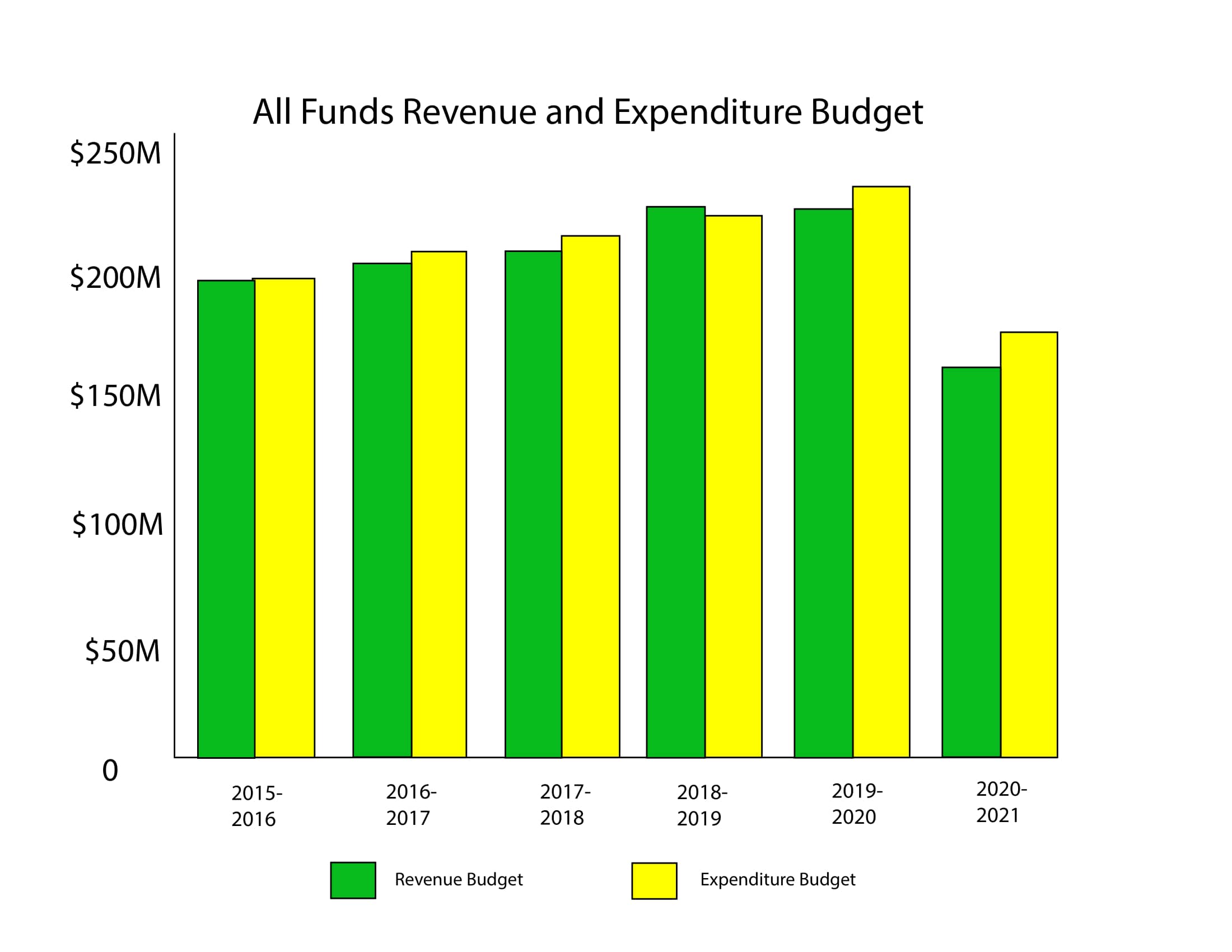
    The budget for this academic year was released on Sept 15. There are two sets of budgets laid out, the University Operating Fund and the All Funds Budget. Each budget provides the expenditure and revenue breakdown.

    The All Funds budgets dates back to the 2015-16 academic year to display all changes that the budget had gone through throughout the last five years.

    Both the Expenditure and Revenue All Funds budgets have significantly decreased in various ways.

    The budget released this past week does not reflect any Center Activities, Center Arts or HSU dining services funds.

    The revenue budget, is based on how Humboldt state University receives its money, is $164.6 million. According to the 2020-21 All Funds Revenue budget, this was decreased by $58.2 million. This is the first major decrease since 2015 and the lowest the budget has ever been since the last recorded academic year, 2015-16.

    Educational Appropriations, which is just another way of saying state and local funding, make up over 50 percent of HSU’s revenue. The amount of appropriations received for the 2020-21 academic year is $85.6 million, resulting from a $5.1 million decline. This is the first reduction recorded since the 2015-16 academic year.

    A quarter of the revenue comes from higher education fees, which includes tuition, student health, AS fees, graduation fee, etc. This portion stands at $42.2 million which is an $8.2 million decrease from last year. This could be the result of COVID-19 causing drops in enrollment.

    The expenditure budget, which is the budget based on what the university will spend their money on, is $180.5 million. According to the All Funds Expenditure budget, this was decreased by $43.8 million. This is the first reduction in the budget since 2015 and the lowest the budget has been since the last recorded academic year, 2015-16.

    The salaries and wages of HSU employees reflects 44.5 percent of the budget. These include not just tenured professors and lecturers but also department chair members, assistants, teaching associates, support staff and the university president.

    The Regular salaries and Wages budget did have an overall decrease of $8.9 million. With the budget dropping across the board, the president managed to increase his salary by $10,000.

    This is also the first time the revenue budget was significantly smaller than the expenditure budget since 2015. The usual trend is having the numbers very close in amount with a maximum $5 million gap. This year’s budget has a $15.9 million gap.

  • Plans to study abroad in the Czech Republic during COVID-19

    Plans to study abroad in the Czech Republic during COVID-19

    Journalism student looking to study abroad is questioning her decision

    My study abroad program in Prague, Czech Republic, takes place next semester.

    I speak in the present tense because it has not been canceled or postponed. The program is still set to happen. With this information, I keep asking myself, if the European Union miraculously opens up to the United States by Dec. and I am given the ability to travel to Prague, would I go?

    Well, yeah, most likely.

    However, there’s a lot to take into account.

    The program takes place from Feb. 2, 2021, to May 22, 2021.

    I bought my plane ticket back in April 2020 when it was ridiculously cheap, so there’s that going for me.

    I got my passport in Jan. which was super exciting. I would need to start getting my documents together to obtain my visa by Jan. 2021.

    There’s a lot of planning involved in something that is very uncertain.

    I’ve been having a lot of conflicting thoughts about studying abroad during COVID-19. Would I feel safe flying on a plane for 20 hours to get to Europe? What if there was another global shutdown while I was overseas? Would I be satisfied with my classes and internship being online? If I didn’t go, would this be one of the biggest regrets of my life?

    I’ve been so careful since March. I have been wearing my mask correctly, I’m constantly washing my hands, using hand sanitizer, keeping my distance, and I’m staying at home unless getting groceries or working. I’ve following all the rules here, why would it be any different there?

    Airlines have been taking the extra mile to deeply cleanse and sanitize the cabins, as well as limiting the number of people being put on an airplane. Would this still happen in 2021 for an international flight? I really don’t know.

    Upon arrival, I’m fully aware that I would have to self-quarantine for two weeks. Although self-quarantining sucks and is extremely boring, it would be absolutely necessary and worth it because I’d be living there for four months anyways.

    Now, another question would be, why would I travel across the world just to take some online classes for a few months. The experience! Being in a different country, experiencing the culture and of course eating the food. There wouldn’t be another time in my life that I’d have the chance to temporarily live in another country to go to school. It’s an opportunity unlike any other.

    Why would some students travel back to Humboldt State University just to take online classes? For the town, the environment, to get away from home, or even to just be here.

    If there was another global shutdown, I think I’d be okay being in the Czech Republic considering the U.S., specifically California, hasn’t been doing so great with the shelter in place order anyways. Would I technically be safer? I mean, maybe. The Czech Republic as a country has a smaller population than California and a lower rate of positive cases. So, yeah, it’s a possibility I could be safer.

    The program is being very transparent and answering a lot of questions that students like me had been having for the past four months. The information being provided has to do with the possibility of online internships, whether or not obtaining my visa is still worth it, how refunds would be issued, and even safety protocols for housing and such.

    I feel as though, as long as I am not being irresponsible and acting like an ignorant American tourist, it would be okay.

    I would just be wearing my mask (correctly) and minding my own business.

    However, this is only if the EU lifts the U.S. travel ban, which may not happen anytime soon.

    To je zivot?

  • The Ethnic Studies Bill is a Blessing

    The Ethnic Studies Bill is a Blessing

    Ethnic Studies will thankfully become mandatory for all California State University students – as it should be.

    College is meant to be the epi-center of uncomfortable conversations, meeting people we normally wouldn’t and learning about the world. How does one go through college and not participate in education regarding the systemic oppression impacting those around you?

    Assemblywoman Shirley Weber proposed Assembly Bill 1460, which requires all enrolled California State University students take a 3-unit ethnic studies course.

    Governor Newsom signed the bill on Aug 17.

    This was a monumental decision to be made because ethnic studies require students to learn about various cultures’ histories, struggles and successes.

    Since we were in grade school, we learned about Christopher Columbus discovering America, that Thanksgiving was when the pilgrims and Native Americans sang kumbaya while eating turkey and potatoes, and that George Washington had wooden teeth. The history we were taught when we were younger was just one point of view, one perspective, and that was the white man’s point of view.

    I didn’t even learn about my own Black history until I attended college and took an African-American History course. That’s when I learned that Christopher Colombus did, in fact, not discover America, because he never made it to what is now considered America. He came across the Caribbean and was rescued by the natives because he was found drowning. I think we all know what he did after that. The first Thanksgiving was pretty much the pilgrims killing the majority of the native Indians, pillaging their land and then having a feast on it. Now George Washington’s teeth? They were actually made of hippo ivory and his own slave’s teeth. Great guy.

    Taking ethnic studies courses will force you to unlearn the lies you were taught growing up and relearn the facts, the stories, the culture and how it all impacts these groups today. It doesn’t take a rocket scientist to know that people of color had a history of oppression that still takes place to this day. Denial of that is pure ignorance.

    We need ethnic studies more than ever. With various protests going on nationwide, there should be no excuse as to why you wouldn’t know what each one stands for. From Black Lives Matter movements to ICE detention centers, and from racist COVID-19 statements to Indigenous lands being destroyed, we need to acknowledge what has been happening and understand that it is not okay. This is where the necessary education comes in.

    Lucky for us, Humboldt State University has an amazing ethnic studies program run by phenomenal professors. From the introductory courses to the Dialogue on Race, having these conversations are extremely important and should have been mandatory a long time ago.