The Lumberjack


Students Serving The Cal Poly Humboldt Campus and Community Since 1929

Tag: Multicultural Center

  • HSU Cultural Center Budget Slashed

    HSU Cultural Center Budget Slashed

    Associated Students leaves student body devastated after significant reductions in cultural center’s budget.

    Two months ago, Associated Students released its proposed budget for the 2020-21 school year at Humboldt State University. Included in this budget were major budget cuts to on-campus cultural centers such as the Multicultural Center and the Eric Rofes Multicultural Queer Center.

    For the budgeting process to begin, A.S. applications are submitted by various campus-based clubs to the A.S. Finance Committee, previously known as the Board of Finance. From there, the committee reviews all the incoming applications and after holding public appeals, creates a Recommended Budget that is sent over the A.S. Board of Directors, a mix of A.S. elected representatives and faculty advisers. The Board of Directors then holds another round of public appeals, drafts a revised Recommended Budget and sends it over the A.S. president, who promptly turns it over to the campus president for official approval.

    David Lopez, the Associative Vice President of A.S. and a sophomore at HSU, emphasized that he still greatly values the cultural centers but they will be funded differently.

    “We really appreciate them for the work they do,” Lopez said. “So to make sure that they continue to do that work still because we’re not funding them, we’re doing it through the clubs grant, and we’re forming this grant process to be as neutral as possible with funding student organization needs.”

    Lopez is personally leading the charge for these new clubs grants, which aim to support student organizations like the Asian Desi Pacific Islander Collective and the Women’s Resource Center in a reduced capacity.

    One thing that factored into the decision by Associated Students to sever the cultural centers’ funding was the Apodaca v. White lawsuit that took place between a pro-life student organization at CSU San Marcos and CSU San Marcos’s Associated Students. The pro-life student organization claimed that it was being discriminated against by CSU San Marcos because requested funding for a pro-life speaker was denied while other groups were recieiving the same funding. The final ruling by a federal court was in favor of the student organization, arguing that the funds that come from student fees need to be allocated in the most viewpoint neutral way possible. The CSU Chancellor’s office has yet to clarify what this means.

    For Lopez, this new funding procedure is radical but also necessary given the circumstances.

    “We’re supporting the greatest amount of viewpoints and opinions possible,” Lopez said. “The plan for this club grant is to further diversify the opinions on campus per Apodaca v White and to err on the side of caution while awaiting the Chancellor’s interpretation of Apodaca v White.”

    Lopez recognized that he and his staff are working with a limited financial capacity and therefore need to distribute funding in a way that will keep clubs satisfied and avoid a lawsuit of their own.

    “What’s happening is we’re being faced with the choice of either becoming a club or becoming absorbed into an administrative or academic department.”

    Amanda Huebner

    “Our total budget is less than eight hundred thousand dollars,” Lopez said. “Meaning that by not funding in a viewpoint neutral manner, we are potentially risking over a fourth of our budget, a fourth of student fees that could go to things like our Club Grants Committee or that could go to other campus resources if we were to risk not funding in a most neutral way possible.”

    Celene Gonzalez is an HSU grad student in the psychology program and an El Centro employee. She has worked closely with the cultural centers and has seen their collective downfall over the years.

    “What gives me hope in what I had seen in that time is that students were getting really connected with each other,” Gonzalez said. “They were finding their communities. It is not shocking to me that the school felt the need to kind of push that down a little bit.”

    Gonzalez is disheartened by the disconnect that has been formed between her and these students through said budget cuts.

    “I feel like our work gave us a way to connect with one another and I feel like our activism gave us a way to connect with one another,” Gonzalez said. “That it’s going to be hard to maintain and it’s going to be hard to ask of them when I know that they aren’t being compensated for that work.”

    The Eric Rofes Multicultural Queer Resource Center is getting hit hard by the extreme budget cuts. Concerned about the future of her cultural center, Amanda Huebner, a rangeland and social sciences senior and an employee at the ERC, wants to see it remain in the state that it’s in already.

    “What’s happening is we’re being faced with the choice of either becoming a club or becoming absorbed into an administrative or academic department,” Huebner said. “So I think there has been dialogue by students in the past that this would be a bad move being absorbed by a department or by an administrative department because it would make the group not be as student-run.”

    In other words, the absorption of the ERC into another department would be ill-advised because there would be more faculty interference in how it would be managed, and that wouldn’t align with the goal of this cultural center of being a student-led one.

    Student leaders like Katherine Nguyen who work in the cultural centers are frustrated with the fallout from all of this. Nguyen doesn’t feel like the administration cares about its marginalized students.

    “Are you going to be supporting your cultural centers, are you going to be supporting your students?” Nguyen said. “I’m not confident about that and I’m tired of just being told by admin, like: ‘Oh, you got it wrong, like we actually care about you. We’re going to figure out a way,’ but it’s like if you did, why didn’t you make a plan? Show that you’re invested in students.”

    When it comes to the shrinking budgets for the various cultural centers, neither the students nor the administration can be totally satisfied. After the Fall 2020 census, the A.S. cumulative budget will be reevaluated.
  • MCC vandalized twice

    MCC vandalized twice

    By | Iridian Casarez

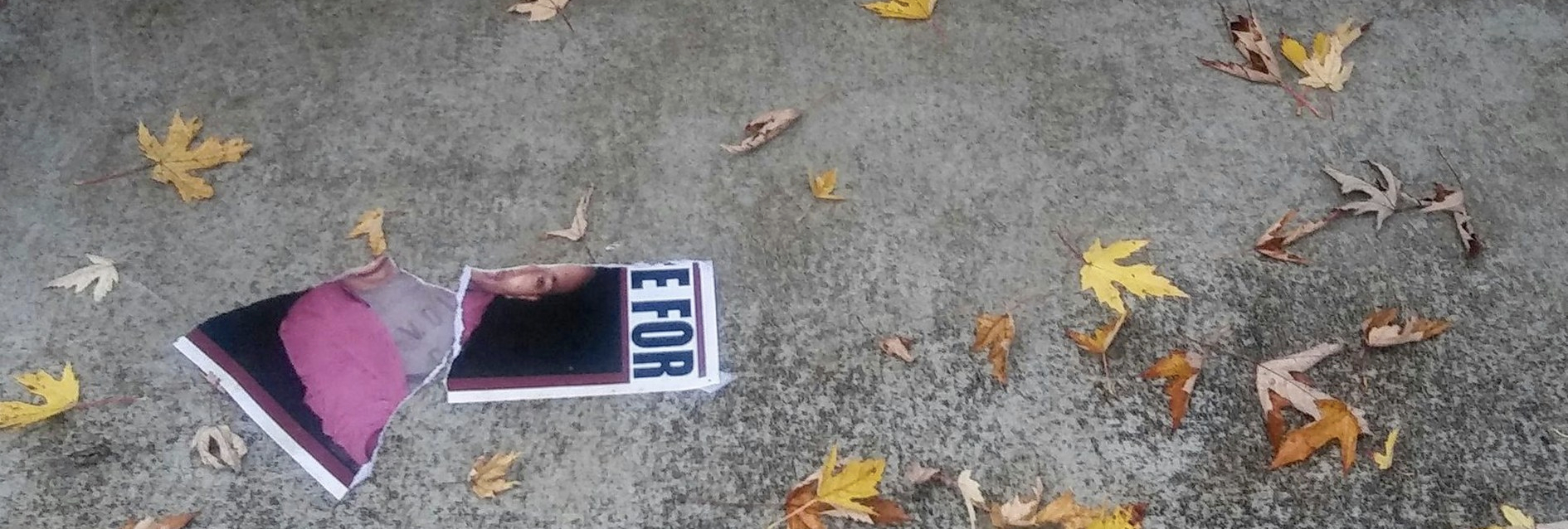
    As Joselin Dorado was walking up to the MulitiCultural Center (MCC) on Sunday afternoon, she started to notice that the “Justice for Josiah” posters as well as “Our Culture is Not a Costume” campaign posters had been torn and left in front of the MCC.

    “This makes me upset,” Dorado said. “We try our best to include everyone at the MCC and this vandalism makes it seem like we’re failing.”

    Dorado also found a note that read “It’s okay to be white.”

    Dorado said she was heading to the MCC to work on a Día de los Muertos altar with a couple of her coworkers when she found the ripped up posters. She sent a photo to her coworkers in a group chat to tell them what happened. Dorado picked up the ripped posters and told her coordinator about the incident.

    “This incident was racist,” Dorado said. “They targeted posters with people of color and culture.”

    They contacted UPD and filed a police report. Dorado said that UPD dismissed the incident and said it was because of the Halloween weekend.

    “UPD kind of dismissed it and made it seem like we weren’t going to be able to catch the person,” Dorado said. “They didn’t even offer more patrol.”

    Ana Maria Diaz also works at the MultiCultural Center as the Campus and Community Dialogue on Race Coordinator. When Diaz heard about the incident, she said she was upset.

    “We thought it was a prank until it happened again,” Diaz said.

    The Wednesday after the vandalism occurred, more posters were found torn in front of the MCC. UPD was contacted again, and Dorado said that a different UPD officer was more upset that the incident occurred than the first UPD officer.

    “It’s frustrating, someone targeted a safe house,” Diaz said. “Once is enough.”

    Luz Espinoza, the intercultural intersectional specialist at the MCC said she found the vandalism as a personal attack against the MultiCultural Center and Josiah Lawson’s passing.

    “We have heard complaints about white people not feeling welcomed at the MCC, but that’s not true,” Espinoza said.

    Diaz and Espinoza, with the help of their coworkers Deema Hindawi and Teadja Owings, decided to take matters into their own hands. They decided to stake out the Multicultural Center on Halloween night.

    “We tried our best to make it look like we left,” Espinoza said. “We spent the night hoping to find and confront the person who vandalized the MCC.”

    On the night of their stakeout, the MCC stakeout team didn’t hear or see anything suspicious. They were unable to confront and catch the person who vandalized the MultiCultural Center.

    “If someone has a problem with the MCC, come talk to us,” Diaz said. “We’re open to dialogue.”


  • Día de los Muertos at the MCC

    Día de los Muertos at the MCC

    By | Ian Benjamin Finnegan Thompson

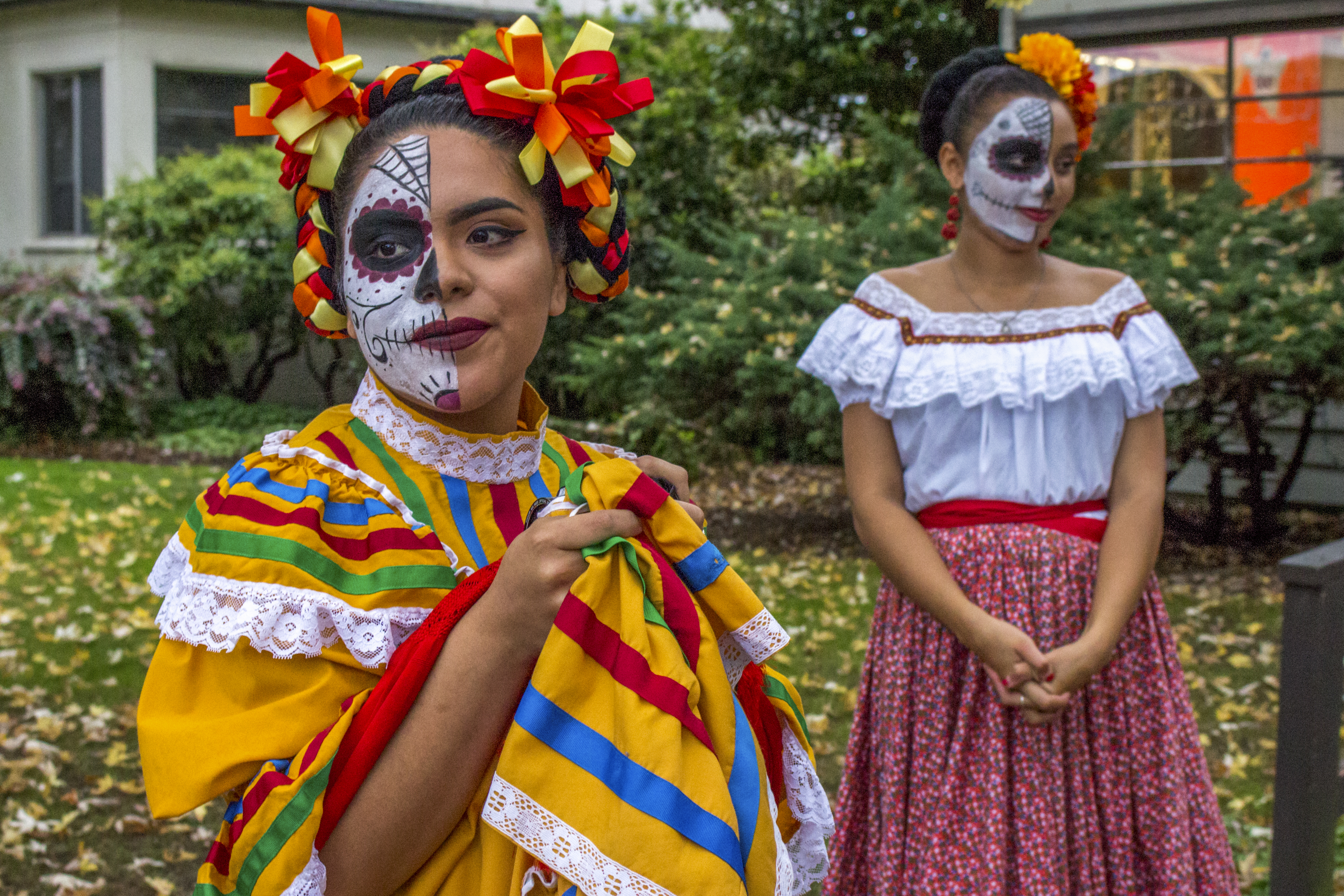
    Dancing, Mexican food and ephemeral art were all part of the celebration at the multicultural center of HSU last Thursday for the Mexican holiday of Día De Los Muertos. Food was provided free for students by Los Giles and paid for by the multicultural center. Local artist Lilia Valencia Duran created an ephemeral sawdust dye art piece in collaboration with students who wanted to participate. Ballet Folklorico De Humboldt put on a traditional Mexican dance performance. Vice President of the Ballet Folklorico De Humboldt club Daniel Gomez said the dances and attire for the dance performance were from varying parts of Mexican regions including Veracruz, Jalisco and Sinaloa. 


  • Open house with open arms

    Open house with open arms

    On a seemingly quiet Friday afternoon on the Humboldt State University campus, the MultiCultural Center was booming with energy, as international music and the savory smell of lumpia filled the air. Dozens of HSU students gathered in front of the center on Sept. 12 for the MCC open house to represent and celebrate the various cultures our campus consists of.

    LN_OpenHouse(3).JPG
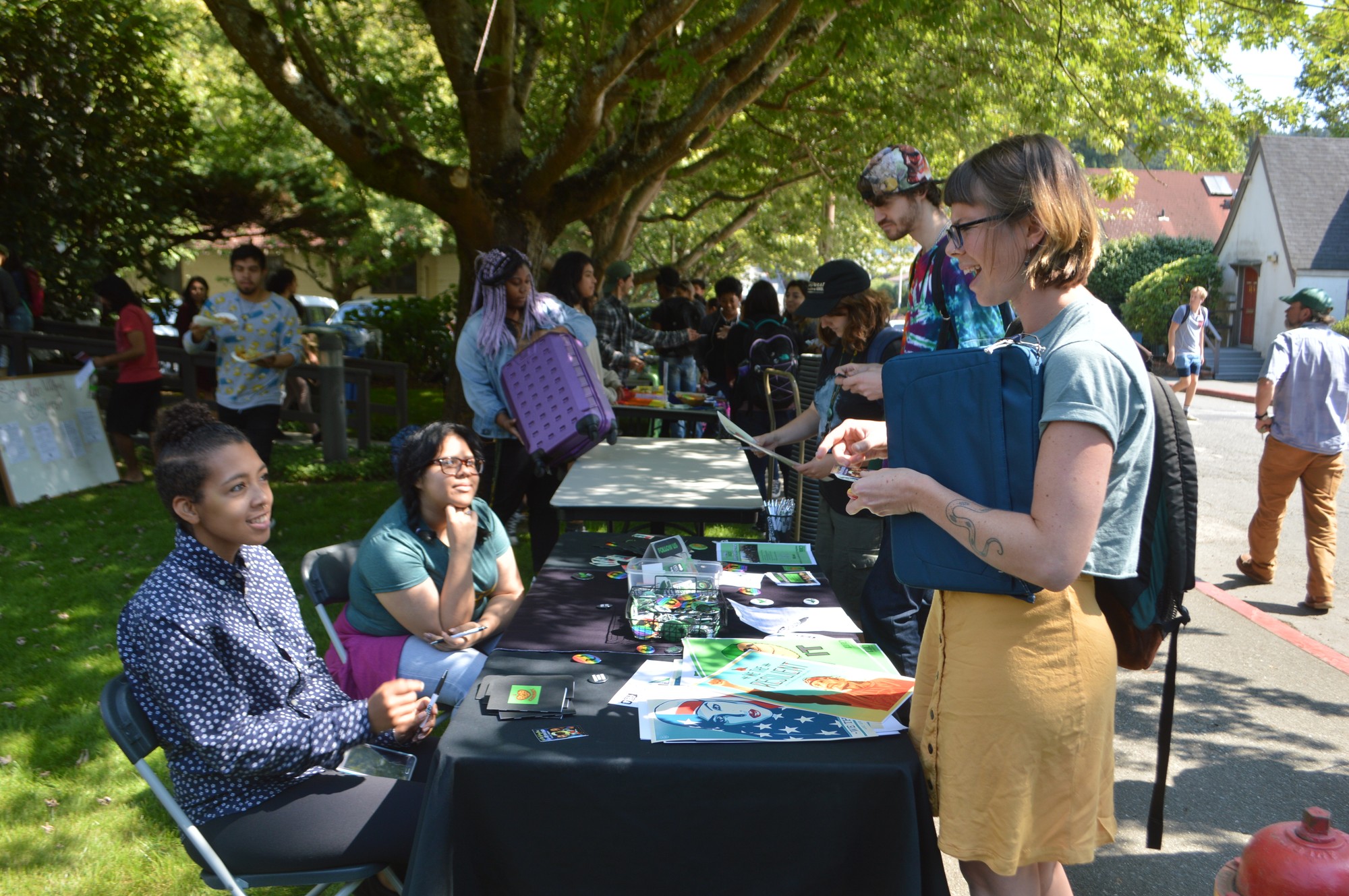
    The MCC featured a cultural exchange through cultural cuisine. Photo credit: Lora Neshovska

    The center open house aimed to familiarize students with the numerous cultural centers available on campus and create a comfortable environment for socializing and learning.

    Among the representatives were Scholars without Borders (SWB), Women’s Resource Center (WRC), the Latinx Center, and the Eric Rofes Multicultural Queer Resource Center (ERC). These centers, as well as much more serve as resources to anyone on campus, especially students who may feel marginalized.

    Although these centers and clubs seem to differ, they all share a passion for solidarity and intersectionality. Jonathon Salinas, 20, is majoring in Spanish and currently working as the event coordinator at ERC. Salinas says instead of viewing activism as separate social movements, it’s important to support each other, heal and move forward together.

    LN_OpenHouse(1).JPG
    Criminology and CRGS student Deema Hindwai (right) converses with EOP staff, Rama Rawal (left). Photo credit: Lora Neshovska

    According to a 2013 Humboldt retention report, an average of 25 percent of the first year, full-time undergraduate students were not retained.

    Cesar Abarca, faculty coordinator of SWB and an assistant professor in the Social Work department said this emphasizes the importance of student support centers, such as the MultiCultural Center and SWB.

    “In a small, rural area,” Abarca said. “It’s really important to make students feel welcome and accepted.”

    Abarca also said there needs to be support and advocacy specifically for underrepresented students

    As of late, SWB has shifted their focus towards assisting undocumented students, specifically with the application process for D.A.C.A. renewal. This includes providing information about the U.S. Immigration and Customs Enforcement (ICE) and basic guidelines and civil rights when dealing with law enforcement.

    Angie Muñoz, current editor of the Cultural Times said the MCC caters to what students need and can benefit from the most. This includes representing student voices and opinions in the Cultural Times, as well as opening up staff meetings to students with suggestions for the center.

    The MultiCultural Center on campus is located in the Balabanis House and is open Monday-Thursday from 10 a.m. to 8 p.m. and Fridays from 10 a.m. to 5 p.m.


  • Celebrating a multicultural campus

    Celebrating a multicultural campus

    With the official beginning of the new school year, clubs and organizations on campus are off to a strong start, including the African American Center for Academic Excellence, also known as the AACAE.

    The Center hosted their first event of the semester on Sept. 2, 2017, a Welcome Black Reception, to incoming and returning Humboldt State University students. The event brought together students and faculty of all different ages, genders, and races together to kick off the new school year.

    The AACAE is a student support space on the campus of HSU that aims to celebrate our multicultural campus by providing a guiding resource for students who identify as African American, Black or of African descent, as well as the entire university community. The organization was established in 2015 and since then has been continuously contributing to the efforts of making the Humboldt campus more inclusive and safe.

    LNACAAE_Web-1.jpg
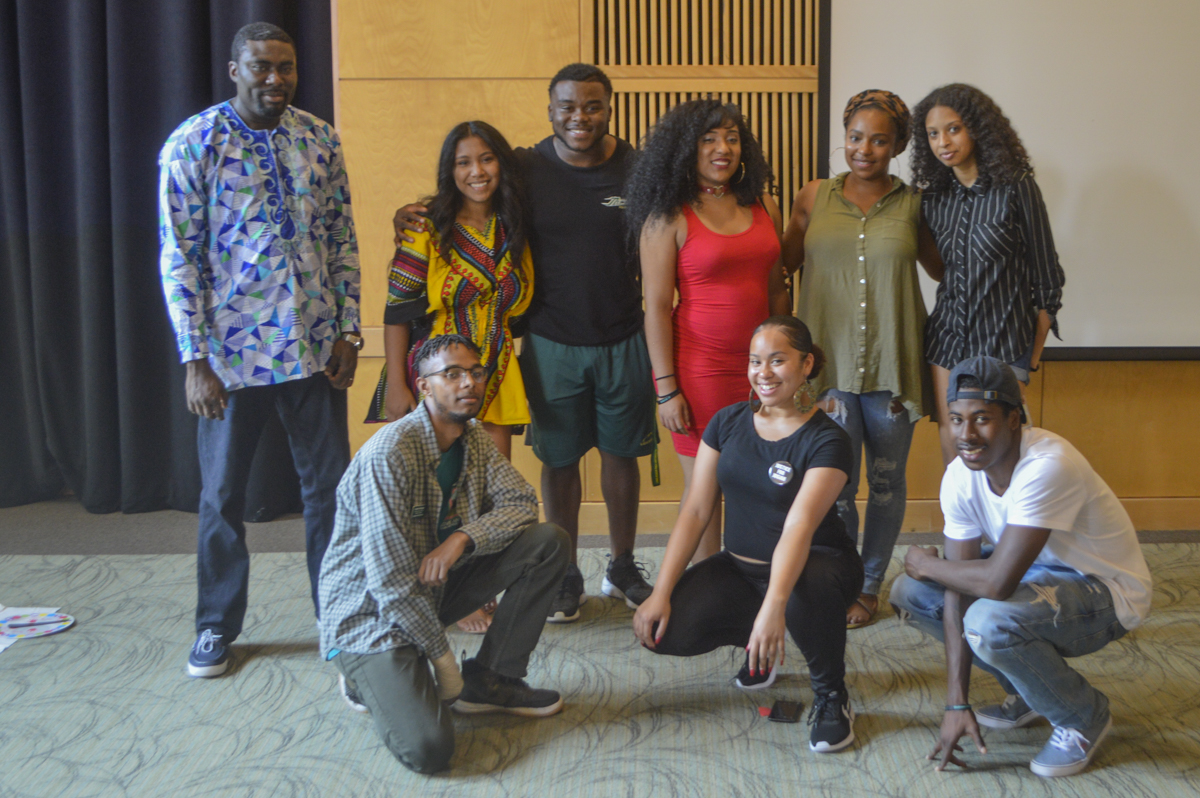
    Games, snacks and music bring together students at “Welcome Black Reception” in the KBR.

    Erin Youngblood-Smith, who is currently pursuing a master’s degree in Social Work and interning at the AACAE says, this semester, the Center’s goals are to continue helping, providing academic support and guidance for the student body of the HSU campus, as well as planning and collaborating with outside services, as well as other campus-based clubs on upcoming events.

    Additionally, the AACAE has a serious agenda this semester, following the murder of David Josiah Lawson in April.

    Jimento Aikhuele, a graduate student majoring in Environmental Engineering and intern at the AACAE said that the event is what brought him into the Center. “I knew the local [population] would be down and they might need support, one way or another.”

    Both Youngblood-Smith and Aikhuele agree there is a gap between the Humboldt University community and the Arcata community that must be bridged.

    “There cannot be a separation between the campus and the local community, there needs to be really structured communication,” Youngblood-Smith said, “stronger ties between the city and the university’ In order for all students to feel safe.”

    Youngblood-Smith advocates education, such as conversations and workshops on safety in communities other than your own.

    “That’s a priority, making sure our students know there are dangers everywhere and you need to be aware of them,” Youngblood-Smith said.

    One student that has benefited from AACAE’s resources and proactivity is 19-year-old senior Psychology major Gabrielle Fox.

    Fox says her transition to HSU would not have been as smooth if it wasn’t for the Center.

    “There are people there who genuinely, truly want to see you succeed, it really makes a difference when you know you have somebody, who has your back and genuinely wants to see you the best that you could be,” Fox said.

    According to Fox, to be willing to open your mind to different experiences and opinion is a significant step to inclusivity on campus and in the community.