The Lumberjack


Students Serving The Cal Poly Humboldt Campus and Community Since 1929

Tag: mushrooms

  • I was California sober, and still unfulfilled

    I was California sober, and still unfulfilled

    by Carlina Grillo

    This year I turn 21, and I’ve never been drunk in my entire life. 

    Looking back on that sentence, it seems counterintuitive. Legally I wouldn’t be allowed to drink anyway, so the night’s still young – right? Well, I don’t know, maybe the night is starting to get old.

    In March, it will be six years since I was diagnosed with epilepsy. I was a freshman in high school with a couple of alcoholic parents, and I wasn’t interested in drinking anyway. In fact, when the doctors told me I shouldn’t drink because of my epilepsy, I felt relieved to have an excuse not to drink. An excuse other than not wanting to – or because my dad died from alcoholism, that is. 

    The relief didn’t last though. Throughout highschool, I made friends with the stoners. It was easy because they wouldn’t drink like other teenagers, and I saw myself as a patient using marijuana medicinally – or at least that’s what I told my neurologist. Truth is, I’ve never had a medical problem with smoking weed or the occasional mushroom trip. I was California sober, as they say.

    When I moved to Humboldt for college, to no one’s surprise, I kept up with my “medicinal” lifestyle. In high school and throughout college, I’ve stayed close with people who aren’t heavy drinkers. No frat bros and no fake IDs. Just deadheads, med cards and many tours of our local herbal facilities. That’s why I chose Humboldt over other schools. The party scene is mostly BYOBs (bring your own bong) and forest shindigs. 

    All that being said, it’s impossible to avoid FOMO around alcohol. Whether it’s at parties, concerts, house dinners, first dates… even in pop culture – movies, music, books – it’s everywhere. It’s as if people think college students can’t be alcoholics.

    The problem I’ve always had with being California sober is the fact it never felt like I had an option. While everyone was drinking at parties, I needed to feel included in social settings. If I couldn’t pass a bottle at least I could pass a joint. I started smoking weed for fun, I kept smoking weed to feel like a normal college student. I thought because I didn’t drink I was sober, but I wasn’t. I was stuck in an in-between. 

    I wasn’t consciously choosing to be California sober. I couldn’t drink alcohol because of my epilepsy, and I couldn’t stop smoking weed because of Humboldt’s societal standards. After smoking weed for six years, it only made me anxious. I didn’t enjoy being high anymore, I just liked smoking in a circle with my friends. Smoking weed is a way of socializing. I don’t smoke cigarettes and I don’t vape, so how else was I supposed to fit in?

    At the end of last year, I made a choice. I’m already halfway there, why not embrace it? Lean into the discomfort. I guess at parties I’ll have to rely on my natural charm. Feel my emotions, feel the social anxiety, and ride out that feeling. When I’m sober I am in complete control. Epilepsy doesn’t rule me, my surroundings don’t rule me, my inner monologue is under control… like I said, just me and my natural charm. 

    Now when people offer me drugs, because let’s be honest it oddly happens all the time, I tell them I’m sober. This time I mean it. Nothing to justify, no specifying what sober means, just sober by definition. It’s even got a ring to it.

     “Yeah, I’m sober.”

    Spending time with friends, laughing until I’m crying, journaling before bed, it’s all got a new ring to it. 

    I still have my vices though. Ice cream by the quart, getting way too invested in board games, trauma dumping in the newspaper…

    You could say it’s a different kind of high, but I’d rather not. I’m sober. 

  • Decriminalizing entheogens for mental health

    Decriminalizing entheogens for mental health

    by Maranda Vargas

    It is a sunny afternoon, and Cal Poly Humboldt student Camryn Hanf is standing in front of the Student Activities Center with a stack of petitions for potential supporters to sign and send to the Eureka City Council in support of decriminalizing the use of specific entheogens within city limits.

    Hanf moved to Arcata a little over two years ago to pursue a degree in psychology. Quickly after moving to the area, Hanf expressed she felt an innate curiosity towards psychedelics. One afternoon while at the Arcata Farmers Market, she saw a table for Decriminalize Nature Humboldt. Although she says she felt nervous about approaching due to anxiety she had at the time, she felt compelled to approach the table and quickly joined the cause.

    “I feel entheogens are not the answer for everybody,but they are absolutely life changing for some people,” said Hanf. “I feel strongly that people should have the choice whether to use them or not.”

    Photo by Maranda Vargas | Camryn Hanf sits with a stack of petitions in front of the Gutswurrak.

    A California State bill that will decriminalize the usage and possession of entheogenic substances, plants and fungi was passed by the state assembly and has moved along to Governor Newsom’s desk. Newsom has until Oct. 14, to veto or approve the bill. 

    The bill was sponsored by Senator Scott Weiner and will decriminalize the possession and use of a list of approved psychedelics for adults 21 years of age or older. If Governor Newsom approves the bill, it will go into effect on Jan. 1, 2025, making California the third state to decriminalize entheogens for personal and medical use. Orgeon legalized the use of entheogens in 2020, while in 2023, Colorado legalized the usage of certain psychedelics, including psilocybin containing mushrooms. 

    The usage of naturally occurring psychedelics known as entheogens are being studied for their potential in treating and alleviating anxiety, depression, PTSD, addictions and cluster headaches. Psilocybin containing mushrooms are one of the proposed entheogenic substances on the list that has been gaining the attention of research hospitals and institutions for its treatment of mental and physical health issues. The bill, SB 58, would end the practice of criminalizing access to entheogenic substances despite their potential benefits.

    “Veterans and anyone suffering from PTSD and depression should not face criminal penalties for seeking relief,” said Senator Wiener in a press release. “Plant-based psychedelics are non-addictive and show tremendous promise at treating some of the most intractable drivers of our nation’s mental health crisis.”

    The Department of Veterans affairs has advocated for the need to study the therapeutic usage of entheogens such as psilocybin containing mushrooms for the treatment of PTSD, depression and substance abuse disorders. 

    The usage of naturally occurring psychedelics found in entheogens as a therapeutic treatment for mental and physical health issues is being studied at a rapid pace by research hospitals as well. Johns Hopkins Hospital is a non-profit academic and research medical facility that has a Center for Psychedelic and Consciousness Research that has been conducting studies exploring the medical usage of psilocybin for over twenty years. 

    Those who live in the cities of Arcata, Oakland, San Francisco or Santa Cruz where entheogens have been decriminalized can use the approved psychedelics. Entheogens have been decriminalized in Arcata since the city council approved the measure almost two years ago. 

    “I have only used it a couple times myself. I think it’s really helped me feel more of a connection to all living things,” said Hanf. “I had this one experience that was really helpful for me. I used to struggle with being alone quite a bit and didn’t really feel capable of helping myself out of my rut or like, my bad feelings… and during that experience, I was opened up to, you know, like the voice in your head. That’s kind of just stuck with me. I would call it like an older Cameron, kind of guiding me through.” 

    Cal Poly Alumnus Danielle Daniel of Decriminalize Nature Humboldt presented the Eureka City Council with 105 letters from the community in support of decriminalizing entheogens for personal use at the first council meeting of September. 

    Decriminalization would make the possession and usage of entheogens a low priority for law enforcement. It will allow for those over the age of 21, the ability to grow, gift and gather entheogens. If the measure is approved to decriminalize the usage of entheogens within city limits, the law prohibits entheogens on school grounds, the sale of entheogens, impaired driving  or being a public nuisance. 

    “The decriminalization model is needed so people feel safer to heal with these medicines and have safe access to these medicines,” said Daniel. “The freedom to grow, gift and gather without having a fear that they are stepping over the line to some regulation which is going to turn them into a criminal.”

    The Eureka City Council can decide on the proposed decriminalization measure to allow the usage of the approved entheogenic plants and fungi within city limits. On Thursday, Sept. 28, there will be a community roundtable open to the public from 6 to 8 p.m. at the Labor Temple community center to discuss the decriminalization of entheogens in the city of Eureka.

    “I think in this climate with mental health issues being so prominent and profound, it’s important that we look at all avenues of treatment,” said Bergel.

    Eureka Mayor Kim Bergel said the Eureka City Council sent a letter to the state in support of State Bill 58, which will decriminalize entheogens in California. If the Eureka city council approves the proposal, they will be following in the footsteps of Arcata.

     “On a personal level, I do support this coming forward,” said Bergel. “I know so many people with PTSD and different trauma problems that this has helped.”

    Resource List 

    SB 58

    Eureka City Council Meeting 09.05.2023

    John Hopkins Center for Psychedelics Research and Psilocybin Therapy

    VA Health Services and Research Development

    STLPR The VA looks to psychedelic drugs to treat its veterans

    The NYT Psychedelic Therapy returns to the VA

    Decriminalize Nature Humboldt

  • Festivities marked one year anniversary of entheogen decriminalization

    Festivities marked one year anniversary of entheogen decriminalization

    by Camille Delany

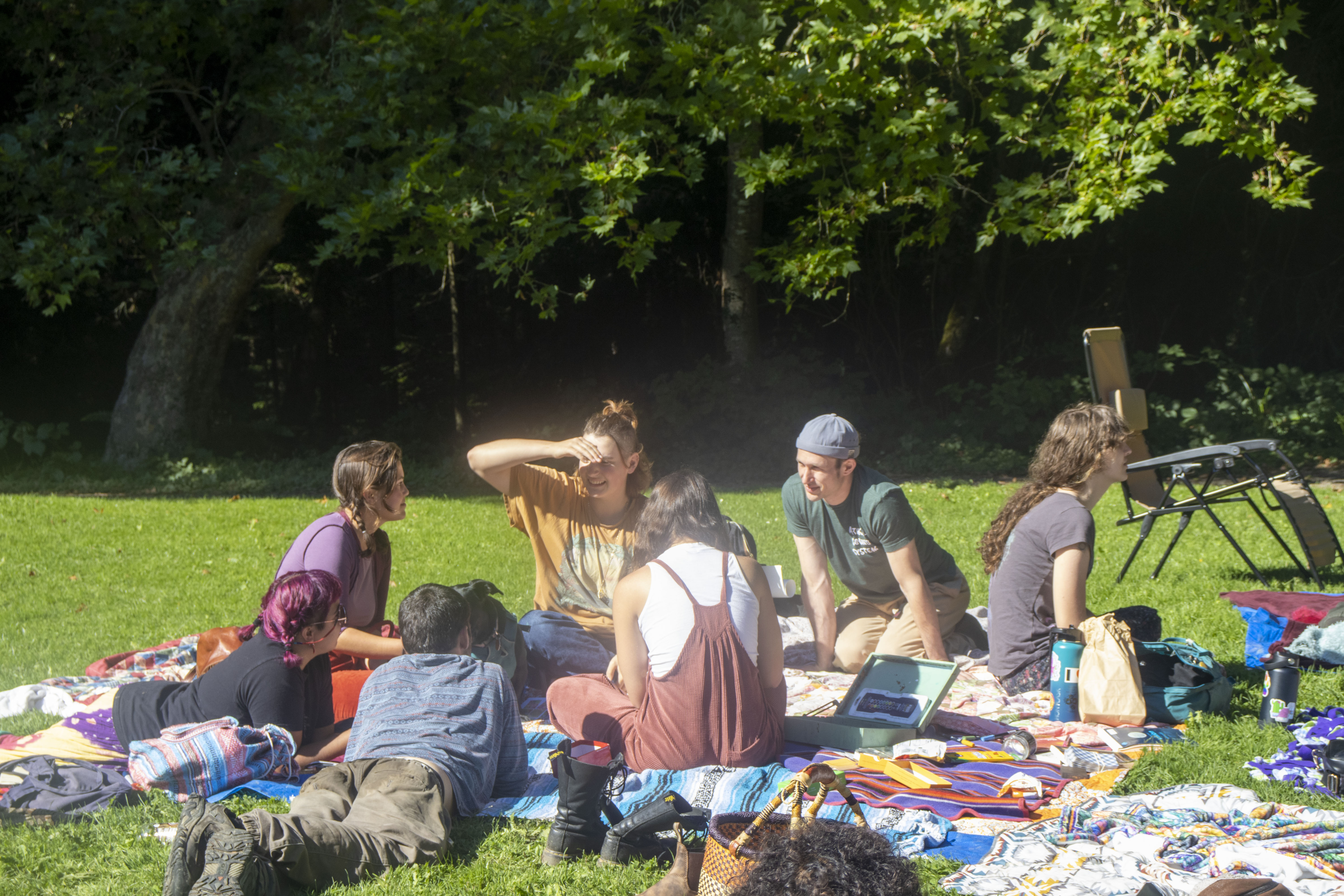
    Thursday, Oct. 6 marked one year since the passage of a resolution that decriminalized entheogens, or plant-based psychedelics, in the City of Arcata. Celebrations took place in Redwood Park at an event organized by Lissie Rydz of the Do Nothing Society and Danielle Daniel of Microdosing Humboldt. The sky had been overcast all morning, but as the event was underway the sun began to shine through the clouds, illuminating the colorful hammocks and blankets clustered in one corner of Redwood Park.


    Danielle Daniel, a local microdosing coach who led advocacy for decrminizalitation at the City Council meeting one year ago, reflected on a year of decriminalization in Arcata.
    “I’m just excited, and feel so blessed, and just like really relieved that everything’s fine,” Daniel said. “That was the big fear of decriminalization. Like, ‘What’s going to happen?’ ‘People will just be tripping in the streets!’ It’s like, no, it opens up access for people to heal.”
    The decriminalization process took a concerted effort from the community, the support of the Arcata City Council, and hard work on the part of organizers


    “Coming into it last year, it was really stressful. It took a lot of energy. It really drained me,” Daniel said. “It was freaking hard! And when it was decriminalized, I was so happy, but I was so drained at that time.”


    “Since then it’s just been really magical just feeling safe to be able to provide my services in educating the community about microdosing and the healing potential,” Daniel said.
    Daniel handed out free microdoses of psilocybin mushrooms (decriminalization permits the gifting, but not selling, of entheogens) in baggies that included a card with her contact information to adults over 21 with proof of ID.


    “There’s been quite a few people coming up to me that have never done [psilocybin] before and they feel safe enough to do it here,” Daniel said. “It’s very cool, witnessing that fear dissipating more and more.”


    Students mingled with members of the larger community as art supplies, snacks, and books were shared across vibrant blankets. Roslyn Gilbert, a Cal Poly Humboldt student, often attends Do Nothing events and values their atmosphere of friendly relaxation and inclusion.


    “Being a trans woman, I feel like there’s a lack of spaces in this world that are friendly to trans women without being explicitly queer,” Gilbert said. “This is a very safe place to be trans. It doesn’t feel like I have to carve out a safe area.”


    Hosting the event with Daniel was Lissie Rydz, who started the Do Nothing Society over the summer. With the Do Nothing Society, she aims to create public spaces for social relaxation in the face of growing productivity culture. The Do Nothing Society isn’t always entheogen-specific, but held Thursday’s “Microdose and Do Nothing” celebration in honor of one year of decriminalization.


    “I credit most of my growth as a person to psychedelics,” Rydz said. “So I think that it’s beautiful that [since decriminalization] there’s not all this fear and anger.”


    Rydz advocates for building community, enjoying public spaces, and making time to play. Do Nothing events are public and, when not held at Redwood Park, can often be found at houses of community members, local events, or a nice river spot.


    “It’s proof of concept by doing it,” Rydz said of decriminalization. “It’s not scary, it’s sweet!”

  • Mycologists club: Fun-gis in the forest

    Mycologists club: Fun-gis in the forest

    by Alina Ferguson

    Mycology is a very young science, a baby in fact. Up until 1969, Fungi did not even have their own kingdom, as they do now, but were technically considered to be plants. Mushrooms are not plants, contrary to what many may believe.

    Some of the most prominent and common mushrooms in Humboldt are actually the edible ones such as the King Bolete and the Pacific Golden Chanterelle. According to Cal Poly Humboldt Mycology Club President Jack Mccann both of these mushrooms are very delicious. 

    Mccann said what brought him to the Mycology club was cooking. 

    “As a mushroom person I really love to cook,” said Mccann. “I think I like to cook first, that’s part of what got me into mushrooms, it’s just cause it opens a whole new world of food,” said Mccann.

    The club holds weekly mushroom hikes on Fridays, which are open to everybody regardless of club membership. This is a chance for the hikers to go out and experience the forest through a mycologist’s perspective.  Every alternating Friday, they host workshops and guest lecturers. These meetings are more targeted towards people who already know about fungi. 

    The Mycology club is having a two day DNA barcoding workshop on September 30th-October 1, 2022. The club members will learn about the process used to genetically test the species of a mushroom. This process can often lead to the discovery of new species. During the workshop, club members will see if there is a difference between different mushrooms on a genetic level. 

    “We’re gonna borrow a lab and, basically in a pretty sterile environment you separate the mushroom using some primers, seek out the genes you’re looking for and then amplify those genes so you could actually read them,” said Mccan.  

    Essentially, what Mccan said is that the club will be collecting mushrooms and then using their DNA to see if there are any genetic differences between species of mushrooms. 

    “The machine, known as a thermal cycler, gives you a visual representation of what it looks like, you compare it to what it’s supposed to look like, what you’re expecting.”
    All of the prep work will be done at the two day workshop. This includes the collection, the DNA sequencing and the comparison of the DNA. 

    Then, their guest speaker Damon Tighe will get back to them with the results. Tighe is a mycologist working out of Oakland and is working with the Company Bio-Rad. He is driving into Humboldt with all the equipment.

    The logging industry has a negative impact on mushroom culture. Unlike foragers, who simply take the ‘extension’ so to speak, of the fungi, what is known as the fruiting bodies, loggers do damage with their machines that dig into the ground. 

    Logging practices harm the mycelium, the other part of the fungus’ body.  Mycelium is a root-like network that grows under the soil, it is what produces the fruiting bodies we know as mushrooms. According to Tighe, mycelium is just the vegetative state of a fungus. 

    Treasurer Sam Parker said he was drawn to the foraging aspect of Mycology. 

    “I first learned to do that when I was around eight with morels, and I just love being out in the woods,” said Parker “Mushrooms are a very diverse lifeform and I feel like they just kinda tie everything together, and I just think they are just interesting to learn about,” said Parker.

  • HSU Mycology Club Identifies Mushrooms for National Research Project

    HSU Mycology Club Identifies Mushrooms for National Research Project

    Students at HSU participated in the iNaturalist-sponsored Mycoblitz to contribute to the North American Mycoflora project

    Humboldt State University’s Mycology Club is collecting samples of mushrooms and sending them to Purdue University for DNA testing.

    In association with iNaturalist, the Humboldt Bay Mycological Society and the North American Mycoflora Project, the Mycology Club is helping a national team of scientists record the location and species of as many fungi as possible.

    The North American Mycoflora Project will allow the scientific community to compile and use a huge amount of knowledge and data about the identity and location of macrofungi in the United States.

    “The sheer quantity of data getting piled in will give [scientists] a better idea of where species grow in the world. Sometimes people find species in a place where they were thought to be gone thousands of years ago.”

    Lucas Burton

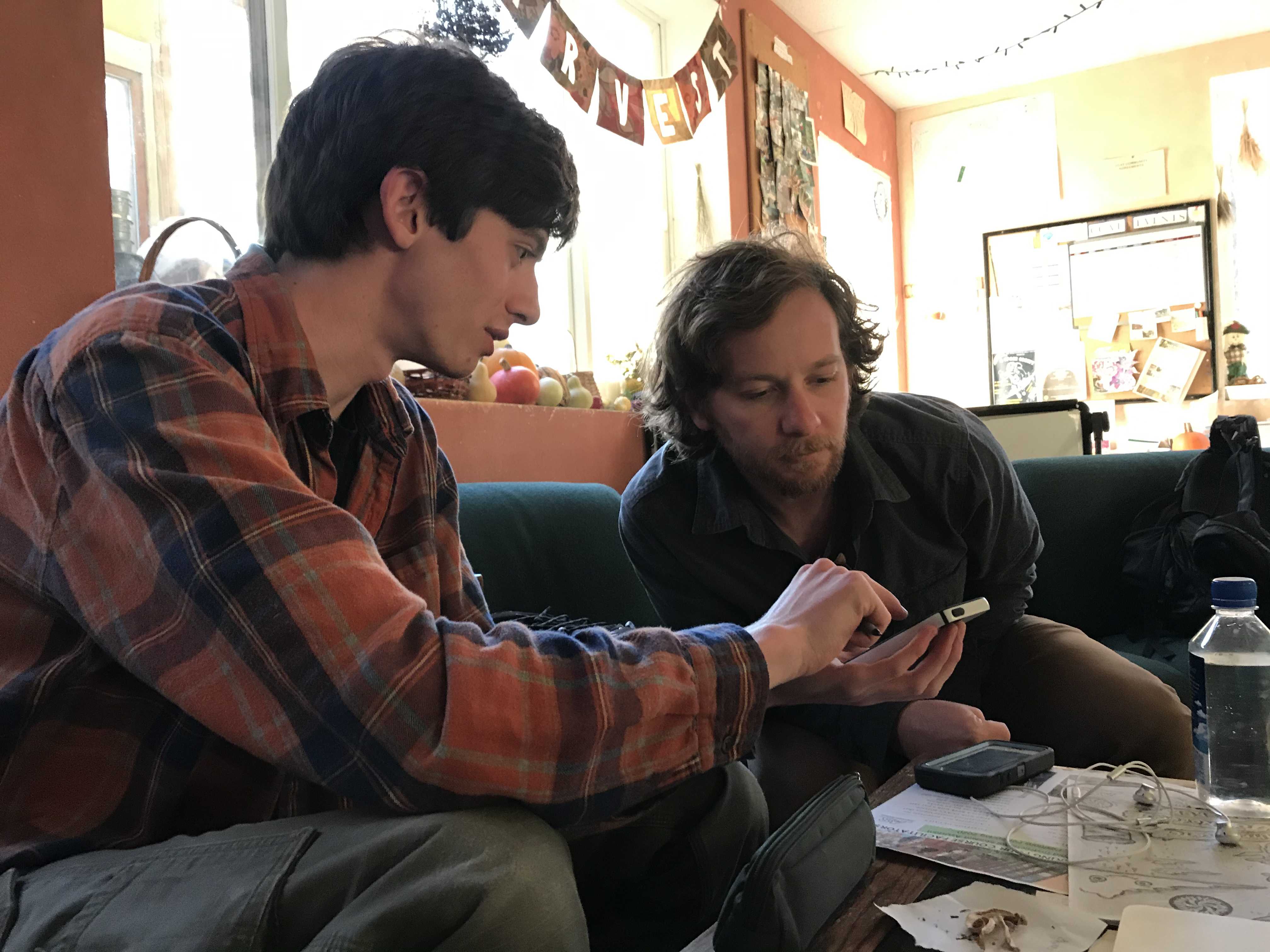
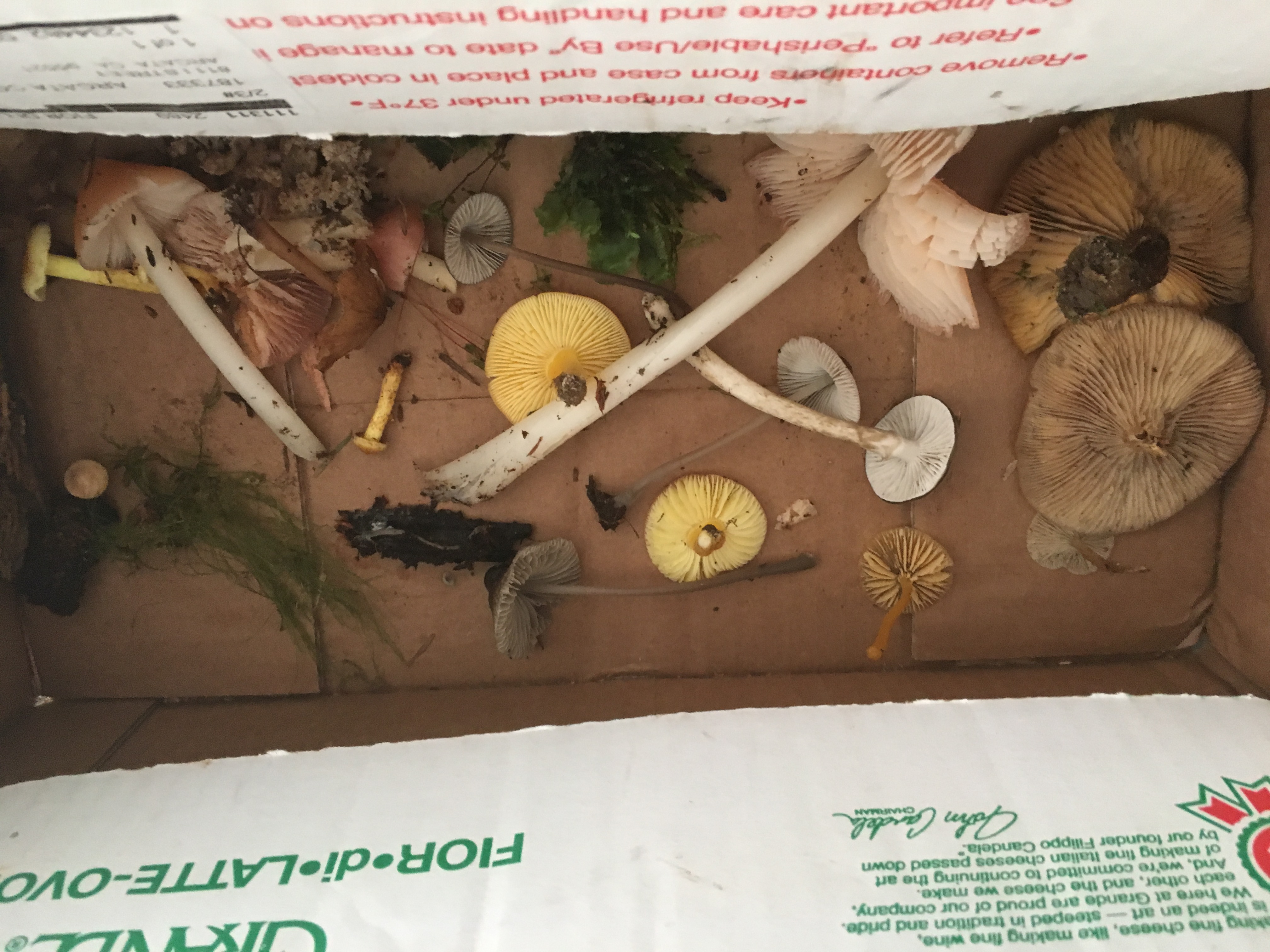
    Mycology Club members Lucas Burton and Caleb Von Rossum spent a cold Monday afternoon documenting their mushroom samples in the bottom of the Campus Center for Appropriate Technologies. Burton and Von Rossum recorded their amateur identifications of the mushroom and the date and location where it was found on a little slip of paper that would travel with their specimen.

    “We are using iNaturalist,” Burton said. “We upload a photo and GPS location, and people from all over the world can come together and help us positively ID it.”

    iNaturalist is a popular tool for biologists and botanists who want to take advantage of citizen science for data collection. Von Rossum mentioned a lot of people in the club record their mushroom finds on iNaturalist, but Burton and Von Rossum were taking it to the next level by mailing in their samples.

    “The sheer quantity of data getting piled in will give [scientists] a better idea of where species grow in the world,” Burton said. “Sometimes people find species in a place where they were thought to be gone thousands of years ago.”

    Mycology Club President Austen Thibault worked with the Humboldt Bay Mycological Society to get the Mycology Club participating in the Mycoblitz, the official iNaturalist mushroom-recording event.

    “Contributing to the Mycoblitz, you could easily be one of really just a few thousands of DNA specimens ever taken in the history of the globe. And for the rare specimens, your name will be saved with the specimen forevermore.”

    Austen Thibault

    The Mycoblitz was a national week long mushroom foraging event which challenged citizen scientists to record the location of as many mushrooms as they could. Participants rummaged through undergrowth for mushrooms and submitted pictures of their finds on iNaturalist. Locally, the Mycology Club was encouraged by the Humboldt Bay Mycological Society to participate.

    The Mycological Society offered a thorough training on iNaturalist and mushroom identification to prepare participants for the Mycoblitz challenge. The data and specimens that were gathered will be sent to Purdue University for DNA testing so they can be incorporated into the North American Mycoflora Project.

    “Contributing to the Mycoblitz, you could easily be one of really just a few thousands of DNA specimens ever taken in the history of the globe,” Thibault said. “And for the rare specimens, your name will be saved with the specimen forevermore.”

    The Mycology Club meets every other Wednesday in the Campus Center for Appropriate Technologies at 5:00 p.m.

  • The fungi among us

    The fungi among us

    Mushroom week is in full swing at HSU

    Humboldt State is home to a variety of mushrooms that are sprouting as the rain comes and goes. CCAT held a series of presentations and workshops to further educate more students on mycology this week, and it came with a lot of educational fun facts about mushrooms. The most interesting being the things that can be made from mushrooms.

    Casey Albarran, the internal co-director of CCAT said mushrooms can be more than just food.

    “There are so many applications of mushrooms that are revolutionizing different things in the world,” Albarran said.

    According to students at CCAT mushrooms can be made into bricks, buildings, leather and of course food. They can be medicinal as well. These discoveries of mushrooms have led to so many innovations with what can be made from them. There is still a lot of testing that needs to be made, though. The use of mushrooms traces back to traditional Chinese medicine, and that’s the kind of information that CCAT wanted to display to the students.

    Michelle Stone, president of CCAT said that her favorite thing about mushrooms is identifying them.

    “It’s kind of like a scavenger hunt without knowing what you’ll find,” Stone said.

    Stone explained that with making something like leather out of mushrooms, it would support the vegan movement and revolutionize the industry making leather. She also explained that over-producing mushrooms can be a problem with all these innovations, and the goal would be to create a more sustainable form of production.

    “We wouldn’t be able to just completely switch to myco-building, but it’s still an interesting idea,” Albarran said.

    IMG_4586.JPG
    Mushroom growing locally in Humboldt County. | Photo by Amanda Schultz

    One big thing about mycology is that it is incredibly complex. Just when you think you know a good amount of information there turns out to be a whole new array of facts and information.

    JT Abbott, a student involved with CCAT, explained that despite his knowledge on mushrooms that there is still so much he doesn’t know.

    “I love substituting my groceries by finding mushrooms, they’re a really fun addition to my forest walks,” Abbott said. “But eat them only if you are good at foraging.”

    Mushrooms are notorious for their role in breaking things down in the ecosystem, and it’s myco-remediation that draws so many students to learning more about them.

    Ben Nguyen is another student that is apart of CCAT.

    “Nothing would be possible without them because they’re the natural digesters of Earth,” Nguyen said.