The Lumberjack


Students Serving The Cal Poly Humboldt Campus and Community Since 1929

Tag: My Culture is Not a Costume

  • Commercial Costumes Can Be Problematic

    Commercial Costumes Can Be Problematic

    Many costumes portray culture and lifestyle in an insensitive manner

    Humboldt State students hurry last minute to piece their Halloween costumes together but find no comfort in commercial Halloween stores as the stores will often have sections full of costumes that are ignorant or insensitive.

    Sierra Cosper, a forestry major, expressed her discontent in the commercial Halloween store, Spirit Halloween.

    “I went through Spirit Halloween and they had a whole aisle of Pocahontas and it’s not cool,” Cosper said. “It’s 2019, can we move on from that now?”

    Students agreed that Pocahontas and Native American themed costumes were disrespectful and unacceptable to wear. Haley Fedalizo, a liberal studies elementary education major, found another commercial Halloween store, Party City, to be disrespectful toward culture and body weight.

    “Obviously the [costumes] that are in your face like the Native American one is not okay,” Fedalizo said. “I was literally at Party City yesterday and I saw a “fat costume” and that’s not cool.”

    Jose Moreno, a social work major, also found fault in the commercial chain Party City. Moreno practices an ironically ‘fun’ tradition at the store every year. Often losing count of the inappropriate costumes.

    “I went through Spirit Halloween and they had a whole aisle of Pocahontas and it’s not cool. It’s 2019, can we move on from that now?”

    Sierra Cosper

    “When I go to Party City or anything like that, I count how many cultural appropriation outfits there are,” Moreno said. “I’m like ‘there’s one right there, and right there! I lost track.”

    Beyond the recognizable commercial chains, the internet continues to advertise culturally insensitive and inappropriate Halloween costumes and accessories.

    HSU student Gabrielle Sturm, an environmental studies major, went online to browse for the Halloween season and couldn’t believe what was advertised.

    “I was looking up costumes online and I was a little surprised to see how many [inappropriate costumes] there still are,” Sturm says. “I think they’re bad but a lot of people still do it.”

    While cultural appropriation continues to popularize social media with cultural awareness movements, HSU promotes a safe and respectful Halloween season. Of course, the message on campus has no influence on commercial chains.
  • MCC vandalized twice

    MCC vandalized twice

    By | Iridian Casarez

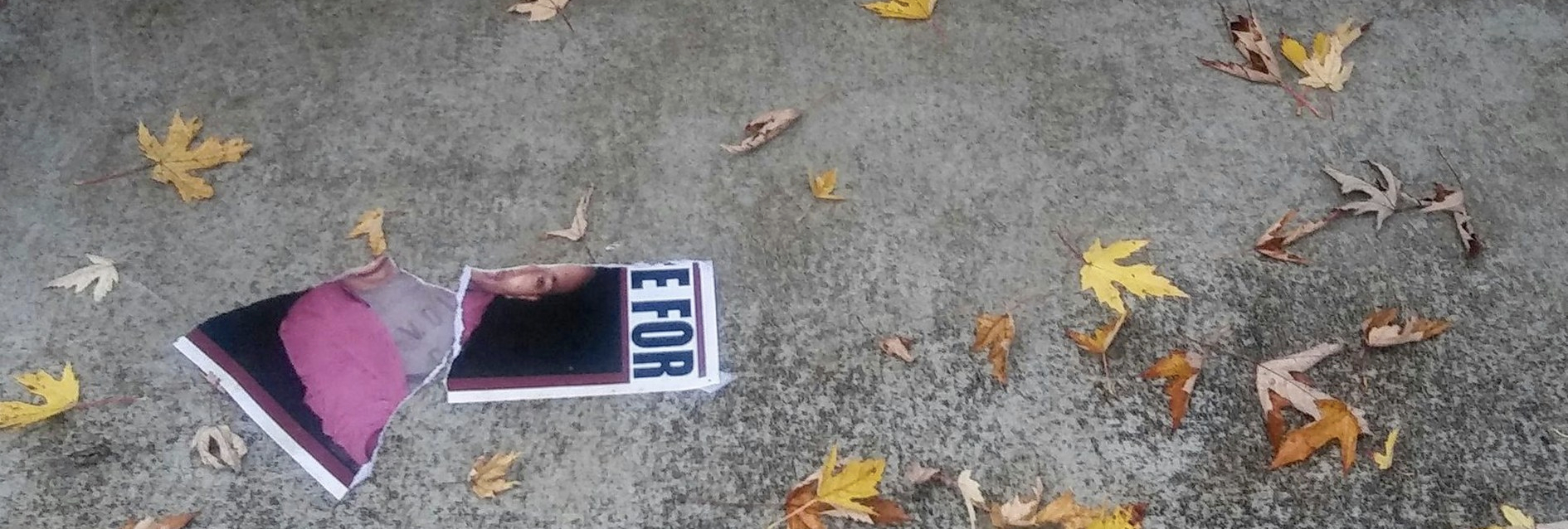
    As Joselin Dorado was walking up to the MulitiCultural Center (MCC) on Sunday afternoon, she started to notice that the “Justice for Josiah” posters as well as “Our Culture is Not a Costume” campaign posters had been torn and left in front of the MCC.

    “This makes me upset,” Dorado said. “We try our best to include everyone at the MCC and this vandalism makes it seem like we’re failing.”

    Dorado also found a note that read “It’s okay to be white.”

    Dorado said she was heading to the MCC to work on a Día de los Muertos altar with a couple of her coworkers when she found the ripped up posters. She sent a photo to her coworkers in a group chat to tell them what happened. Dorado picked up the ripped posters and told her coordinator about the incident.

    “This incident was racist,” Dorado said. “They targeted posters with people of color and culture.”

    They contacted UPD and filed a police report. Dorado said that UPD dismissed the incident and said it was because of the Halloween weekend.

    “UPD kind of dismissed it and made it seem like we weren’t going to be able to catch the person,” Dorado said. “They didn’t even offer more patrol.”

    Ana Maria Diaz also works at the MultiCultural Center as the Campus and Community Dialogue on Race Coordinator. When Diaz heard about the incident, she said she was upset.

    “We thought it was a prank until it happened again,” Diaz said.

    The Wednesday after the vandalism occurred, more posters were found torn in front of the MCC. UPD was contacted again, and Dorado said that a different UPD officer was more upset that the incident occurred than the first UPD officer.

    “It’s frustrating, someone targeted a safe house,” Diaz said. “Once is enough.”

    Luz Espinoza, the intercultural intersectional specialist at the MCC said she found the vandalism as a personal attack against the MultiCultural Center and Josiah Lawson’s passing.

    “We have heard complaints about white people not feeling welcomed at the MCC, but that’s not true,” Espinoza said.

    Diaz and Espinoza, with the help of their coworkers Deema Hindawi and Teadja Owings, decided to take matters into their own hands. They decided to stake out the Multicultural Center on Halloween night.

    “We tried our best to make it look like we left,” Espinoza said. “We spent the night hoping to find and confront the person who vandalized the MCC.”

    On the night of their stakeout, the MCC stakeout team didn’t hear or see anything suspicious. They were unable to confront and catch the person who vandalized the MultiCultural Center.

    “If someone has a problem with the MCC, come talk to us,” Diaz said. “We’re open to dialogue.”


  • My culture is NOT a costume!

    My culture is NOT a costume!

    By | Reza Sadeghzadeh

    Some people might think it’s sexy to wear a Pocahontas costume for Halloween or funny to dress up like a Muslim wearing a thawb with a fake bomb strapped to their chest.

    But ask a Native American woman if she thinks it’s sexy to dress up like a subordinate Disney character where Native Americans are portrayed as a second-class citizens. Ask her if she thinks it’s sexy to dress up like Pocahontas when Native American women have the highest rate of rape and assault.

    Ask Mohammad Maleki, a former HSU student from Iran, if it’s funny to dress up like a stereotypical Muslim suicide bomber when he was unable to come back to America during Trump’s travel ban earlier this year.

    Those who like to use other people’s cultures as costumes might claim that they are only choosing to dress as such just for the sake of Halloween. They’ll add that they don’t mean to promote racial stereotypes. But their intention is irrelevant.

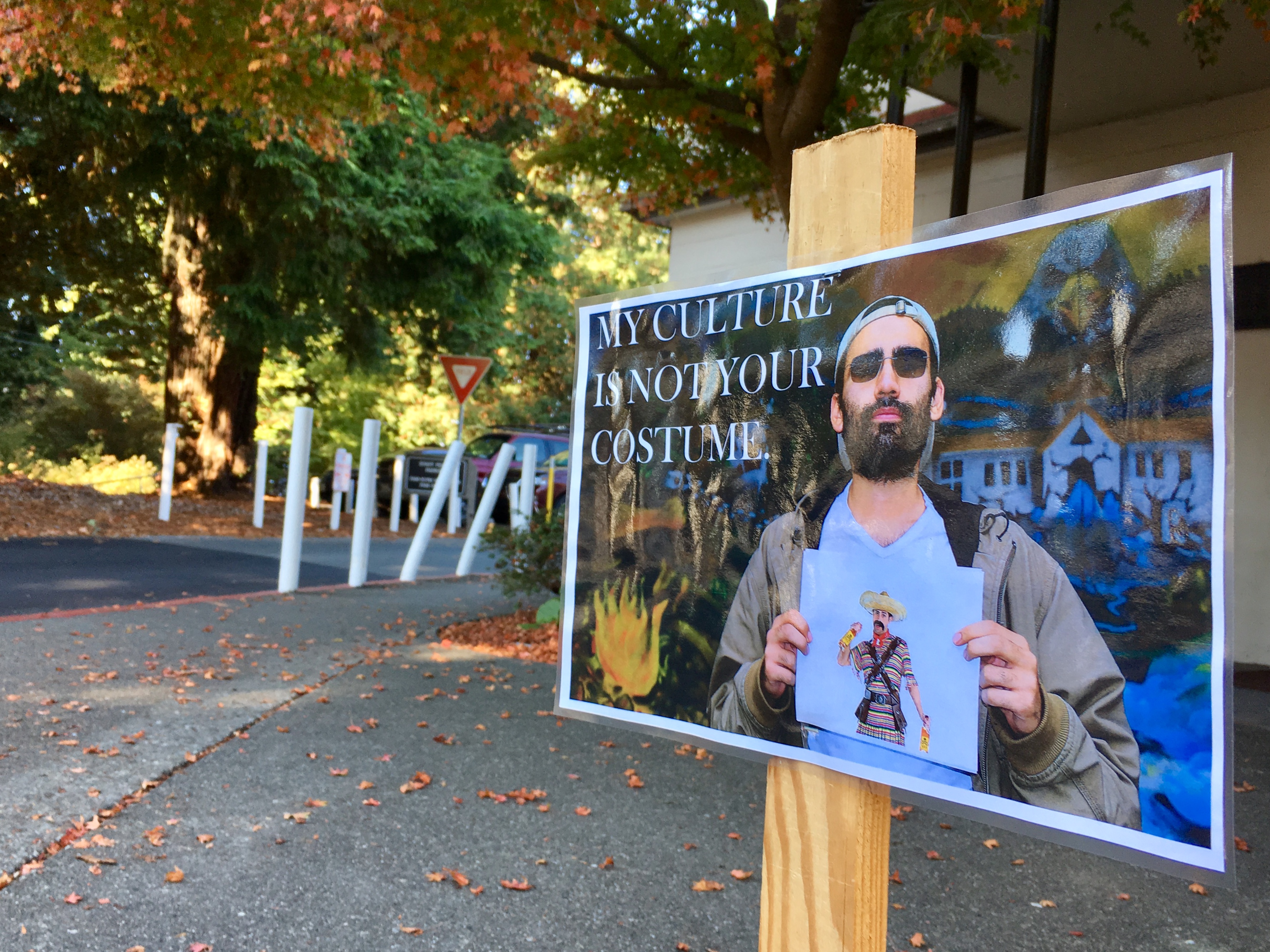
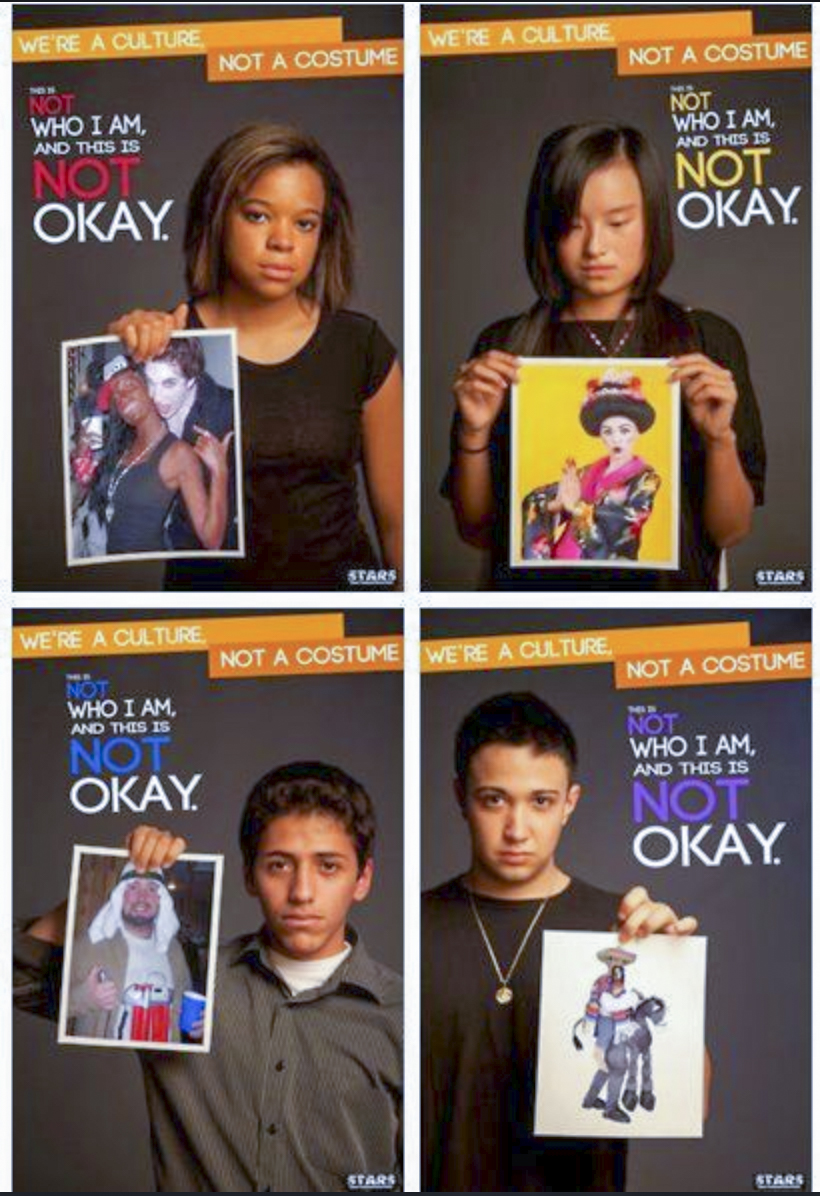
    That is why the My Culture is Not a Costume campaign has been brought to our campus with the endeavor of students like Deema Hindaw to raise awareness about this issue.

    “My goal with this campaign is to show people that cultural appropriation is not a joke,” said Hindaw. “The culture of others shouldn’t be a costume that one gets to wear for a night.”

    Hindaw and other students from the MultiCultural Center have also put together a workshop to inform others about the distinction between cultural appreciation and appropriation.

    My Culture is Not a Costume is a nationwide movement. It is not just about a costume, it is also about “putting on other people’s skin for that one night as a prop,” said Elizabeth Phillips, a Communication student at HSU. “And at the end of the night, you get to take it off and maintain your privilege while other people have to deal with their cultural reality… the reality that our society has viewed skin color in a hierarchy.”

    Every culture is beautiful and slightly different from one another. But at the end of the day, we are all humans who want the same things in life. Cultural appropriation is a systematic ideology implemented by those who are advocates of racial segregation and the scandalous rhetoric of “divide and conquer.”

    Cultural appreciation is a framework for solidarity, because it helps us admire our cultural differences that is used as guidance for a healthy dialogue regarding race. Finally, culturally appropriated costumes discourage us from having any type of healthy dialogue about our different cultures.