The Lumberjack


Students Serving The Cal Poly Humboldt Campus and Community Since 1929

Tag: NAS

  • Music of the Moment 2

    Music of the Moment 2

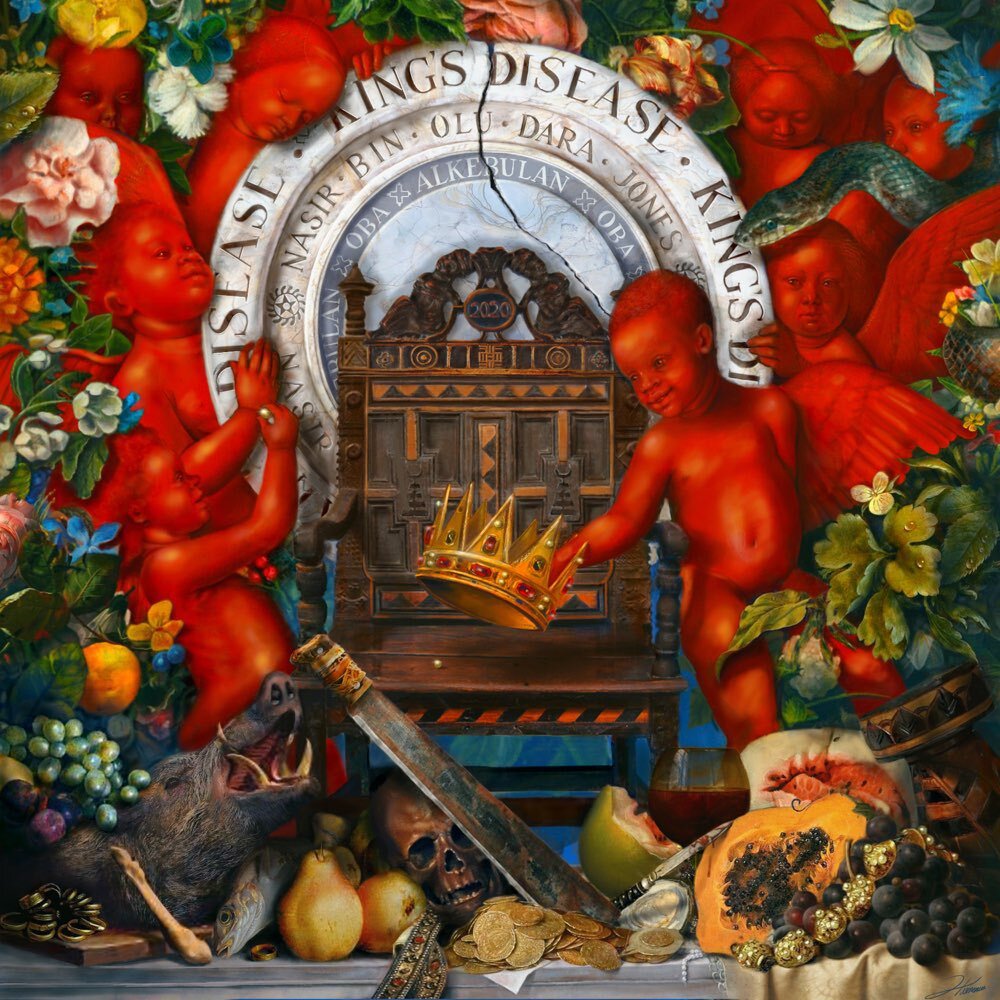
    The long awaited return of God’s son, Nas.

    Regarded unanimously as one of the greatest rappers of all time and by many as having created the best hip-hop album to date with his 1994 debut, “Illmatic,” Nas has returned at the age of 46 with his studio album, “King’s Disease.”

    More than eight years since his last full-length album, “Life is Good,” Nas has been more active than usual in the last few years. In June 2018, Nas released his seven-track “NASIR” album, executive produced by Kanye West, then followed it up with “The Lost Tapes 2” compilation album in July of 2019.

    To set the tone for his new album, Nas released the lead single, “Ultra Black,” boasting the beauty of black life, a theme which is felt throughout the album and heavily featured on songs like “27 Summers,” “10 Points,” and the title track. In these songs, Nas lays down the definition of a true king: someone who is willing to work their way to the top, leave their baggage behind them and give back opportunities and knowledge to their people. In other words, a leader not a ruler.

    Produced entirely by Hit-Boy, with occasional assists from other producers, “King’s Disease” features a mixture of old school beats on songs like “Full Circle” and “Car #85” and more modern instrumentals on tracks like “Til the War is Won” and “Spicy,” a New York anthem featuring hometown rappers Fivio Foreign and A$AP Ferg. To compliment the tone of the tracks, Nas recruits features for over half the songs on the album, including unlikely appearances from Travis Scott’s new artist Don Toliver and Big Sean on the track “Replace Me.” Nas also reunites his old group, The Firm, to please fans of the old-school, with nearly four minutes of uninterrupted bars, on the track “Full Circle.” The features that stand out the most, however, both in terms of their quality and the surprise of hearing their voice alongside Nas on a song are Lil Durk with “Till the War is Won” and Anderson.Paak with “All Bad.”

    As Nas fans have come to expect, he delivers more of the signature story-telling style that caused hip-hop to fall in love with his music. He brings you into his world like no one else can with the songs “Blue Benz” and most especially “Car #85,” as Nas reminisces on life in the hood. Forever a part of him, mentions or allusions to the hood appear on the majority of the album, most powerfully on the track “Till the War is Over.” In this song Nas expresses his sympathies for single mothers and especially those who’ve had to bury a child, while Lil Durk provides the perspective of one of the children caught up in the streets.

    Following the longest break between proper full-length albums in his career, Nas lays all his cards on the table, dedicating entire tracks on “King’s Disease” to addressing the ugly, prejudiced state of the world and reflecting back on his 27 summers in the game with “The Definition” and “The Cure.”

    Around 7,500 people in the world can be considered one in a million with “King’s Disease,” Nas proves once again that he’s one of a kind.
  • Indigenous Environmentalists Connect Environment and People

    Indigenous Environmentalists Connect Environment and People

    Campus discussion touches on importance of traditional knowledge

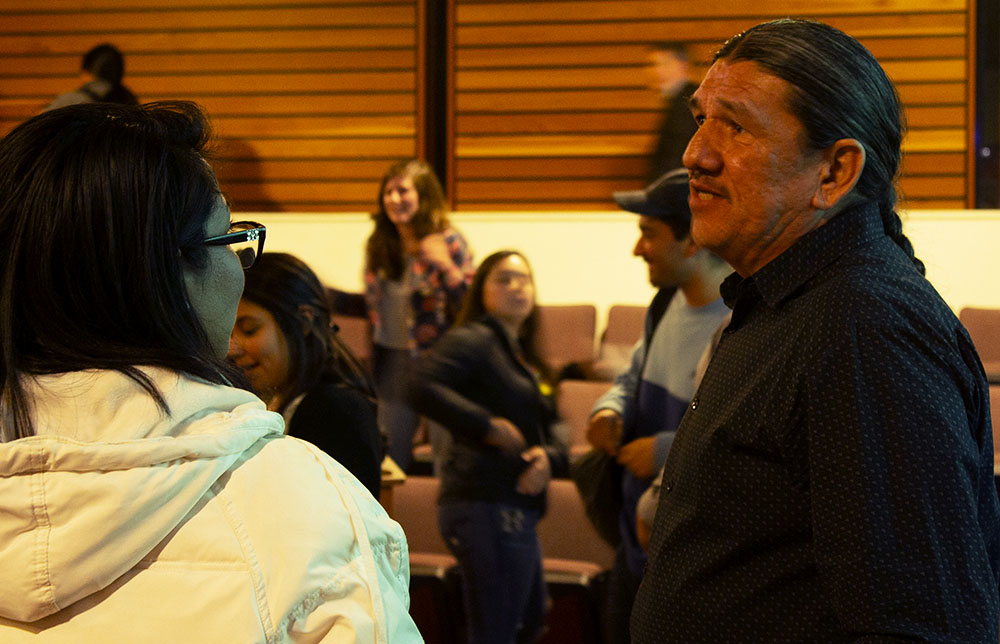
    Students, faculty, friends and family packed the Native American Forum March 5 to listen to author Kari Norgaard and Karuk environmentalist Ron Reed discuss Norgaard’s most recent book, “Salmon and Acorns Feed our People: Colonialism, Nature, and Social Action.”

    Before the speakers began, Cutcha Risling Baldy, assistant professor of Native American studies, announced the NAS department’s 25th anniversary at Humboldt State University.

    An introduction followed, led by Reed’s son, Charlie. Charlie Reed, a recent alumni from HSU’s NAS program, has continued as an environmentalist to help battle climate change. Before the talk began, Reed said it was important to give proper acknowledgement to the lands of Indigenous peoples. HSU sits on ancestral Wiyot land, and recognizing the land’s history is of utmost importance.

    “There is a symbiotic relationship between our environment and our people.”

    Charlie Reed

    “Whether you are a faculty member or student or just a community member, it starts with a conversation,” Charlie Reed said. “You never know who is in the room who has something to offer or give back the things that have been taken from Indigenous people.”

    Growing up with his father, Reed learned about his culture and the traditional ceremonies that tied in not just physically, but spiritually with the environment.

    “There is a symbiotic relationship between our environment and our people,” Charlie Reed said.

    With a warm thank you to the Reed family and the community, the floor was given to author Norgaard and Ron Reed. Reed introduced himself and what he learned as a child. Reed said learning the traditional ways of his people at a young age taught him how to sustain the environment.

    “That’s where it all begins, ladies and gentlemen, when you have the ability to be taught things that you don’t even know you’re being taught,” Ron Reed said. “That will stay with you the rest of your life.”

    In one of Norgaard’s chapters, she mentions an Indigenous tradition of using fire to cleanse or manage the land. Western science has given us the narrative that fire is dangerous and destructive. Thanks to “Smokey the Bear” and other forms of wildfire prevention advertisements, fire is seen as something to fear.

    Even though fire can be seen as scary, Norgaard argued it’s also a way to help manage landscapes by getting rid of invasive species and even enhancing plant growth. Indigenous peoples used fire to help the environments they lived on, not to destroy or cause damage. Reed stressed the importance of bringing that narrative to our attention.

    “We’re trying to get back to an intact world. Climate change can be a vehicle for that because of the awareness it brings to so many.”

    Kari Norgaard

    “We Native Americans—we the family—cannot let that narrative go,” Ron Reed said. “I don’t need some lone ranger to tell me the way. I know the way.”

    With Indigenous knowledge and science being pushed to the side when it comes to environmental issues, Norgaard said settler colonialism is still causing misinformation about the knowledge base of Indigenous peoples. Norgaard said this is changing.

    “Indigenous concepts and ideas have been making their way into academic spaces,” Norgaard said.

    Climate change is perhaps the most pressing modern issue, but Norgaard and Ron Reed agreed it would help bring more awareness in our communities.

    “We’re trying to get back to an intact world,” Norgaard said. “Climate change can be a vehicle for that because of the awareness it brings to so many.”

    The consensus of the talk was that combining Indigenous knowledge with western science can change the way we view the world as well as how we take care of it. Coming together and working with each other on both sides of science can also help combat climate change. From the ways of the rivers to the fires of the forests, Indigenous knowledge can teach us more about our world.

    “We need all the community on the river, but don’t forget us,” Ron Reed said. “Don’t forget the first people on this nation, on this ground that has created the environment that we’re trying to reestablish in this world today.”