
The Lumberjack


Students Serving The Cal Poly Humboldt Campus and Community Since 1929

Tag: Netflix originals

  • Arcane Review: Alternative Canon Done Right

    Arcane Review: Alternative Canon Done Right

    Two months ago, ‘Arcane’ dropped and took the world by force. The animated steampunk series is a League of Legends adaptation that debuts a few show-exclusive characters, most notably the villainous kingpin Silco.

    For people who don’t play League, ‘Arcane’ sets itself apart as an alternative canon to its video game predecessor – and it does it right, something that isn’t always the case for TV and film adaptations.

    ‘Arcane’ catches the viewer’s undivided attention within the first few minutes of the pilot episode and consistently maintains it throughout the course of the tumultuous, action-packed storyline. Beloved League legends roam the streets of the undercity and maneuver testy politics in the edifices of Piltover as the two worlds collide with explosive consequences.

    Viktor, a chronically ill Hextech inventor with a progressive disability, straddles both as undercity stock working far above the poisoned squalor of his original home. He and his research partner Jayce face various moral dilemmas as they make the push for progress, at great cost to themselves, particularly Viktor. An aged-up Ekko, a far cry from the young boy introduced at the start of the series, takes the helm of the Firelights, an undercity rebel group, with unabashed swagger and style.

    Caitlyn, the posh rifle-wielding daughter of a prominent council member in Piltover, finds her bearings in the undercity as Vi, tattooed and grisled from her formative years in the undercity and subsequently in prison, shows her the ropes. While the two women initially find each other at odds, they soon form a strong sapphic bond that defies the strictures of their respective differences in social status and upbringing. Korra and Asami from ‘Legend of Korra’ and Adora and Catra (and many more) from ‘She-Ra’ walked so Caitlyn and Vi could run.

    The unique art style, bombastic musical score, and thorough character development flourish the compact plot, which largely centers around the estrangement of Vi and her younger sister Powder, aka Jinx. The tragedy of Jinx lies in her inability to reconcile her younger self, Powder, with her present self. The inclusion of Silco is necessary to piece together Jinx’s elusive backstory while still maintaining congruence with the original canon of League, a feat that Arcane managed to pull off seamlessly.

    Jinx’s mental health issues are spurred on by Silco, who took on the role of her adoptive father at the end of the third episode and psychologically groomed her to become an explosive human weapon as a means to meet his nefarious ends. In the backdrop of this central conflict, mounting tensions between the elites of Piltover and the vagabonds of the undercity rise to a dramatic crescendo and abruptly halt with a jaw-dropping cliffhanger that leaves the viewer teetering on the razor thin edge of Jinx’s deteriorating mental health.

    When done right, TV and film adaptations embellish the canon of the original source material, not detract from it or contradict it. In the span of only nine episodes, Arcane succeeded and kept its viewers braced for the second season.
  • What (Not) To Watch This Week: ‘The Dirt’

    What (Not) To Watch This Week: ‘The Dirt’

    There are many ways to make a decent biopic, but this wasn’t it

    We’re all familiar with the term ‘clickbait’—that thing YouTubers, social media influencers and crappy publications utilize to get views by advertising mind-blowing topics that don’t pan out too much. Netflix is guilty of this.

    Netflix advertises original movies with all-star casts on popular topics and many have been total flops. It’s mind-blowing to try to analyze why these movies haven’t worked out as there are usually decent actors and a whole lot of money thrown at scripts approved by Netflix executives. Yet, somehow we end up with biopics like “The Dirt.”

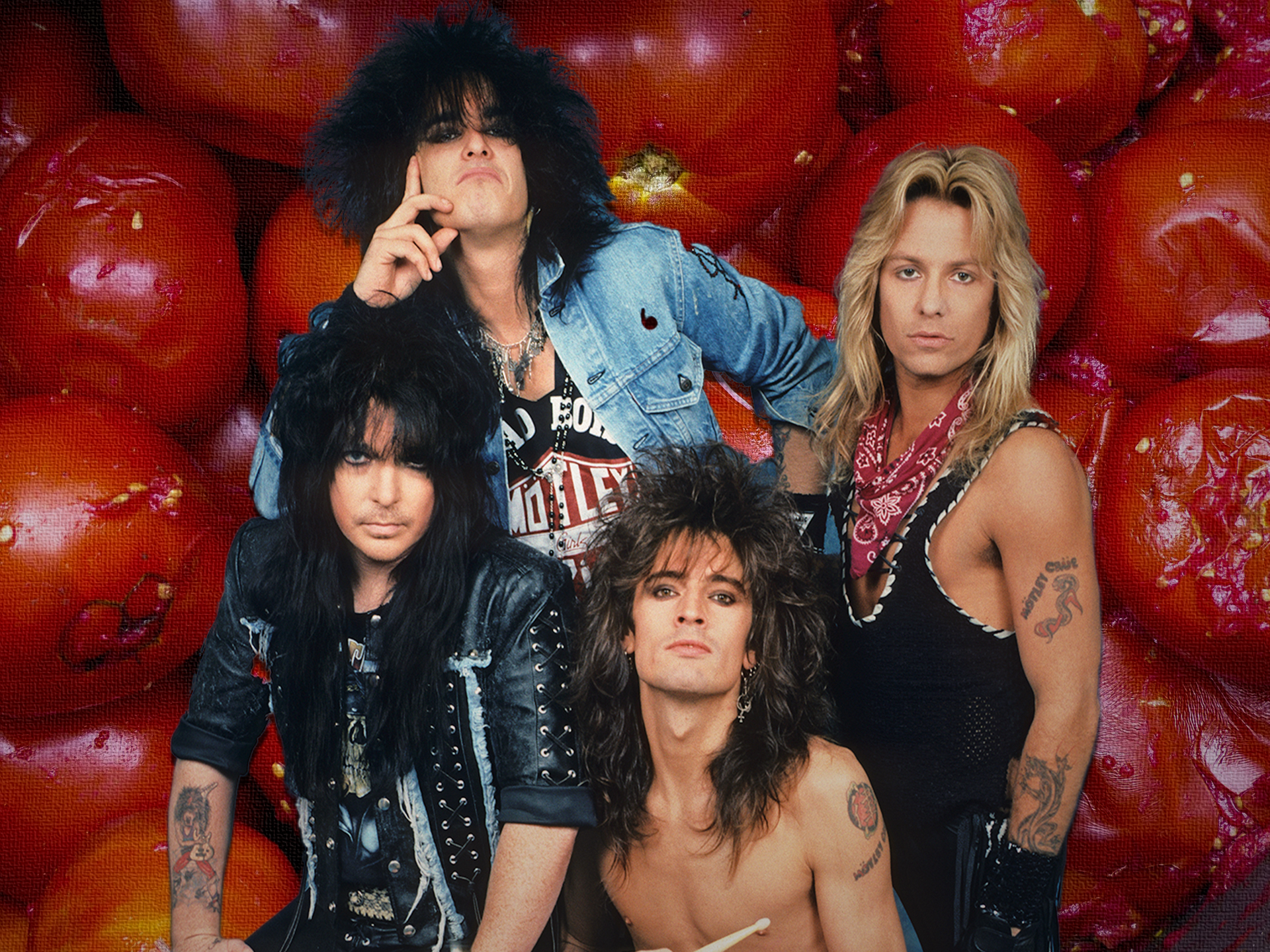
    The film follows the life and times of the band Mötley Crüe, a rock group from the 80s that were as influential to rock as N.W.A. was to rap. The movie is based on the autobiography of the band by the same name and the production received first-hand help from the members themselves. Somehow, it still managed to suck.

    I would go as far as referring to it as a dumpster fire, but one with a $28 million budget. I hate this expensive dumpster fire so much that it inspired me to start this column, investigating and deconstructing Netflix’s worst original movies.

    “The Dirt” starts with a cliché voice over as we watch the band form, negotiate a signing and start making music before they dive headfirst into a world of debauchery. Despite this and heavy sourced material, the plot feels empty.

    I would go as far as referring to it as a dumpster fire, but one with a $28 million budget.

    There’s tons of drama, struggles with addiction and the rockstar lifestyle, yet all of it feels disconnected. What is a crazy and interesting true story turns into a passionless montage of crude humor, nudity and subplots that have no bearing on the rest of the story.

    The poor structure and terrible acting could be forgiven if the writing didn’t feel so lazy. There were far too many conflicts that resolved due to convenience or off-screen. When the band formed they were down a lead singer. They sought out Vince Neil at a half-nude backyard party and gave him their mixtape in hopes that he’ll join their band.

    Neil starts making out with a girl as a voiceover plays (did I mention that they pointlessly include these fourth-wall-breaking voiceovers that aren’t even consistent throughout?) of him saying he had no interest in joining the band because he was only in a band to get chicks.

    Fast forward five seconds to him and this same girl at his house, the voiceover plays again and he randomly decides that he will call the band back. He hasn’t had an epiphany of any kind, Neil just decides to join the band. Instances like these are prevalent and pointless but, hey, writing like this gives us more time to watch the band do drugs and hang out with naked women. And, of course, see Ozzy Osbourne drink urine off the ground.

    When I said that the movie was a bad montage, I wasn’t exaggerating. The filmmakers decided to take all of the band’s most iconic and emotional moments and reenact them for the camera. Then they threw in some basic cut edits of band arguments and performances. The scenes are exaggerated for shock value and not narratively rewarding.

    This brings us to N.W.A. and their 2015 biopic. The exaggerations made by the screenwriters of “Straight Outta Compton” were intentional and contributed to tension within the movie which helped hold it together. The characters that N.W.A. struggled with in the film motivated the audience to root for their success.

    Mötley Crüe’s biopic has no antagonists or even attempts to emphasize tensions felt between members. When the band gets back together at the end of “The Dirt,” I felt nothing.

    Mötley Crüe’s biopic has no antagonists or even attempts to emphasize tensions felt between members. When the band gets back together at the end of “The Dirt,” I felt nothing. There was no struggle to get to that point and the movie never made a play for conflict in that regard. Besides external motivations, I also felt very little about Nikki Sixx’s overdose and his continuous struggle with addiction due to the way it was portrayed.

    Meanwhile, I cry every time I watch Eazy-E receive his HIV/AIDS diagnosis in “Straight Outta Compton.” I don’t cry in the scene where he dies, but the scene where he is diagnosed. Why? Because after all the conflict that he and fellow group members survived, this moment pulls everything out from under them.

    What happens with Sixx’s initial overdose and the band’s continuous struggles with addiction? The directors chose to do a thirty-second scene where the band decides to go to rehab. That’s cool, I guess. Not as much of an emotional impact, though.

    And while we’re on the topic, here are some other things that bothered me about this garbage fire of a movie: Machine Gun Kelly’s over-acted and exaggerated portrayal of Tommy Lee, the recurring mention of the band’s lead guitarist Mick Mars always being sick and no one caring, the weird humor they try to force onto Pete Davidson’s character Tom Zutaut (including a scene where he speaks with a band member through a door while the same band member has sexual relations with Zutaut’s girlfriend), Machine Gun Kelly’s acting (again), the lack of cohesion between personal and on-stage life and finally, the lack of grounding in real world events. I, obviously, could keep going.

    The absence of tension, overarching narrative or fun scenes showing off the band’s greatness doom this movie from the get-go. Even if you were able to look past those issues, the terrible writing and bad performances, the movie leaves you with nothing more than unintentional laughter and the urge to turn it off. Which isn’t anything that even shock value or sweet nostalgia can salvage.