The Lumberjack


Students Serving The Cal Poly Humboldt Campus and Community Since 1929

Tag: North Coast Rape Crisis Team

  • Take Back the Night coordinators raise concerns about event speaker

    Take Back the Night coordinators raise concerns about event speaker

    by Matthew Taylor

    Corrections: The event was not hosted by CAT or the North Coast Rape Crisis Team but instead the Women’s Center at CPH, they were important guests and coordinators there.

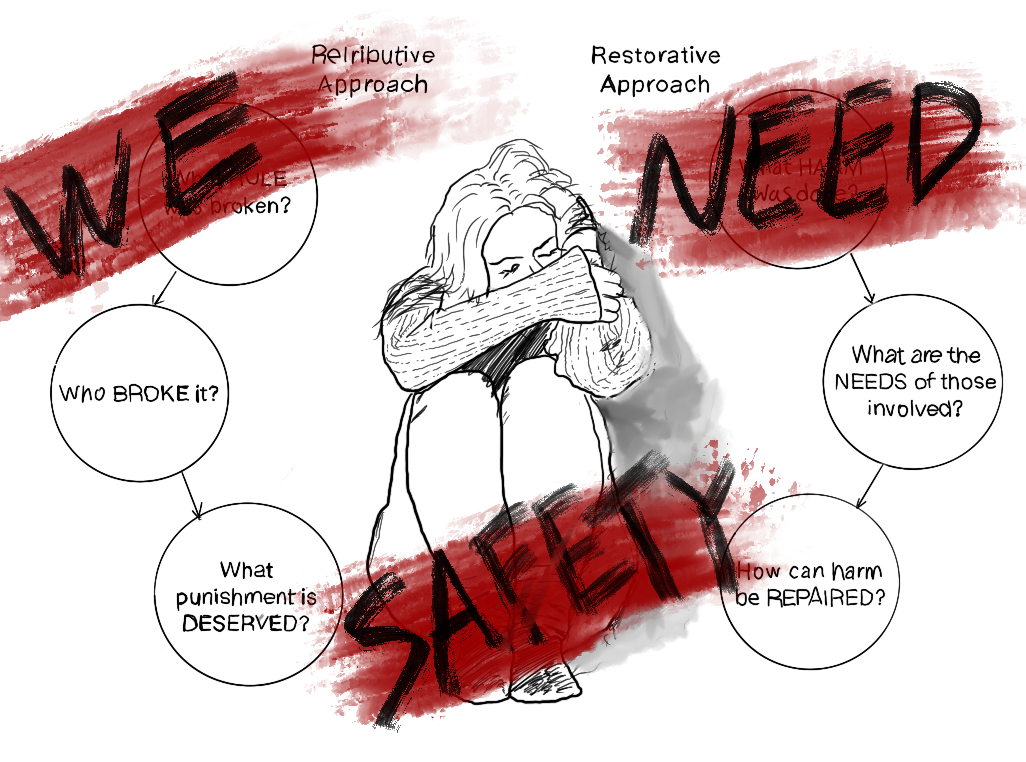
    Cal Poly Humboldt’s Campus Advocacy Team (CAT), along with the help of the North Coast Rape Crisis Center, hosted the annual international event known as Take Back the Night last Friday. This college campus-focused event looks to empower women and other vulnerable minorities. This year’s event began with a presentation by Dr. Rachel King, a specialist in issues of sexual misconduct within higher education. Her presentation explored the usage of restorative justice in situations of sexual assault on college campuses.

    Restorative justice focuses on the rehabilitation of offenders through reconciliation with their victim(s) and the community at-large. The framework often assumes that the offender committed their crime due to a perceived need in their life that wasn’t being met or a lack of knowledge towards the harm they inflicted. Proponents say that restorative justice has the capability to be incredibly effective and healing to all parties involved in a crime. However, should we assume sexual assault falls into this category of effectiveness?

    An hour into the presentation, many participants were disheartened, disgusted, and frustrated. At multiple points in the Zoom-based presentation, King implied that many perpetrators of sexual assault did so based on a simple ignorance or misunderstanding of the situation. While this could be true for a minority of cases, statistically, the vast majority of sexual assaults are done with the explicit understanding that these actions were unwanted.

    “It’s not about ignorance, it’s about power and control,” an event coordinator said after the presentation.

    Many of the event coordinators present refused to speak on the record regarding their feelings on the hour-long speech. Their reasons ranged from the sensitivity of the topic to a perceived backlash from the administration.

    “I personally have a very hard time with restorative justice as a survivor myself, working as an advocate, and hearing survivors on a daily basis,” another event coordinator said. “I’m not saying that the normal system is [made] to protect the survivors in any way. It’s not. The traditional justice system is very re-victimizing and very re-traumatizing for survivors, but the model that was shown today could also be set up for survivors to be re-victimized and re-traumatized.”

    Whether intentional or not, restorative justice processes can put the offender and the victim on equal levels of legitimacy. In the case of sexual assault, this makes little to no sense. As advocates in this area, the members of CAT and the North Coast Rape Crisis Center know that these actions predominantly come from an abuse of power or a complete apathy towards the victim, not due to innocent miscommunication.

    “I feel like this presentation weighed a bit too heavily on the perpetrator and their choices,” a coordinator said. “It just wasn’t all that comfortable for me to hear, it’s like ‘if they get this little bit of accountability, then they’ll never do it again’ when we know that that’s not true.”

    The event ended four hours earlier than its intended conclusion, in part due to the extremely low turnout. It is unknown if CAT and the North Coast Rape Crisis Center will continue to use Rachel King as a resource for sexual assault trainings, especially in light of the negative reaction towards her presentation.

    Both teams stand firm in their mission to empower survivors on campus, whether they wish to take a restorative justice approach or a traditionally retributive one. Their concern lies solely with the victims and their personal well being.

    The Campus Advocate Team runs a 24 hour anonymous support line for any and all student victims of sexual assault that can be reached at (707) 445-5881.
  • Painting it teal for sexual assault awareness

    Painting it teal for sexual assault awareness

    by Matthew Taylor

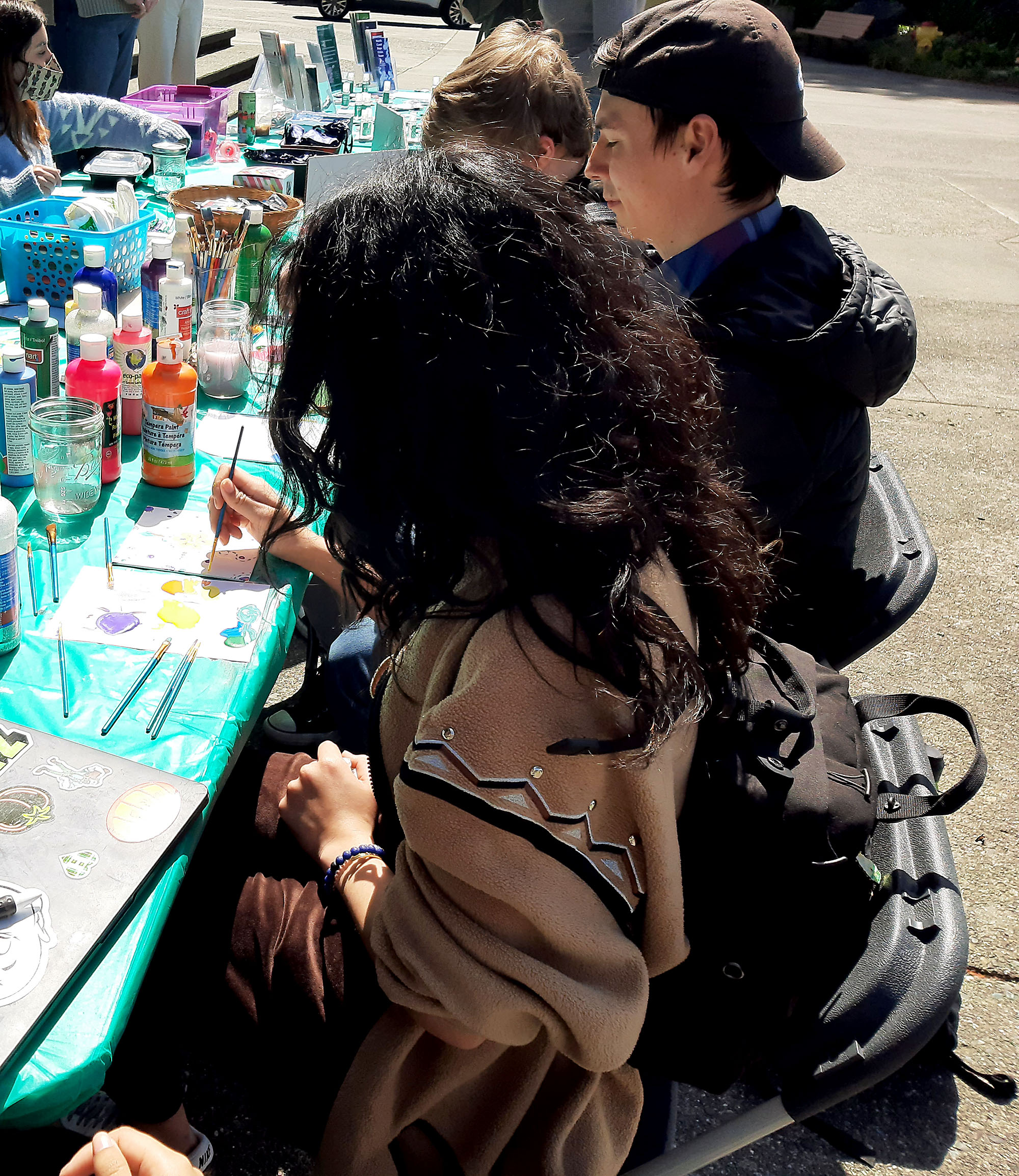
    Pamphlets and papers flew around the UC Quad. Three teal blue tables stood to the right of The Depot entrance, pushed up close to the SAC’s concrete stairs. Dozens of paint bottles cluttered the leftmost table while various pins cluttered the right. April is international recognized as Sexual Assault Awareness month and The North Coast Rape Crisis Team alongside its on campus program Campus Advocate Team (CAT) have worked together to host its annual Take Back the Night week. The week-long event lasts from April 4 to April 7 and includes activities such as Denim Day, Clothesline Project Workshop, and Take Back the Night.

    Photo by Matthew Taylor | Liliana Cortez (center) speaking with students on the UC Quad about Teal Day on April 4.

    Tuesday marked Teal Day, a day dedicated to the awareness of sexual assault survivors and their stories. Students at the tabling event were encouraged to paint their expressions of positive growth and healing. By the end, all the small canvases would be placed together to form a larger mural. Liliana Cortez, the Violence Prevention Advocate at the Women’s Resource Center, expressed that the mural was an optional part of the activity.

    “It’s up to them,” Cortez said. “If they want to create their piece and keep it, or if they want to go ahead and give it to us so we can make it part of [the mural].”

    Together with Cortez, CAT Education Coordinator Kira Morse was also present at the table.

    “We provide services here on campus for survivors of sexual assault,” Morse said. “We have counseling, we have an office here, and we also respond out if there’s any incidents or things like that and help with [things] like Title IX and accommodations.”

    Rachel Mack, a Rangeland Resource Management major, was one of the handful of students painting at the table.

    Photo by Matthew Taylor | Painting by Rachel Mack created during the Teal Day event at the UC Quad on April 5.

    “It’s nice to have something positive as well as it being important for what it stands for,” Mack said, whilst painting her sunflower piece. “I think [it’s] really important for survivors to be able to have control over their own situation.”

    Alexa Farias, a Critical Race, Gender & Sexuality Studies major, expressed this event is very important to her work and role within Students for Violence Prevention.

    “We actually want to be part of the whole Speak Out, because it’s a really good way to show people what it feels like to really look through the situations,” Farias said.

    Speak Out is one of the many sub-events planned within Friday’s Take Back the Night program. This event will provide a safe space with counselors on hand for survivors to ‘speak out’ about their experiences and tell their stories.

    “The main movement and push with Take Back the Night is that people can feel safe here on campus and have their voices heard,” Morse said. “I feel a lot of times that survivors feel like they’re hush hushed. There’s not that open space where people can name their experiences. Take Back the Night, there is a lot of this amazing support where people feel comfortable.”

    Friday’s event will begin with a speech by Dr. Rachel King that will culminate into a rally and the aforementioned Speak Out event. Lasting between 6 to 10 pm, the event will end in a vigil dedicated to the victims of sexual violence.

    “I feel like [this] is really good,” said psychology major John Clark. “If this could happen at most events, then people would start to see that this is a [common] thing that we should talk about.”

  • Bystanders begone

    Bystanders begone

    The Check It program is hosting Bystander Intervention workshops, which provide students the knowledge and skills to intervene when they witness an act of violence in the community.

    Have you ever seen a situation that you knew wasn’t right, and wanted to say something, but maybe didn’t know how or what to do?

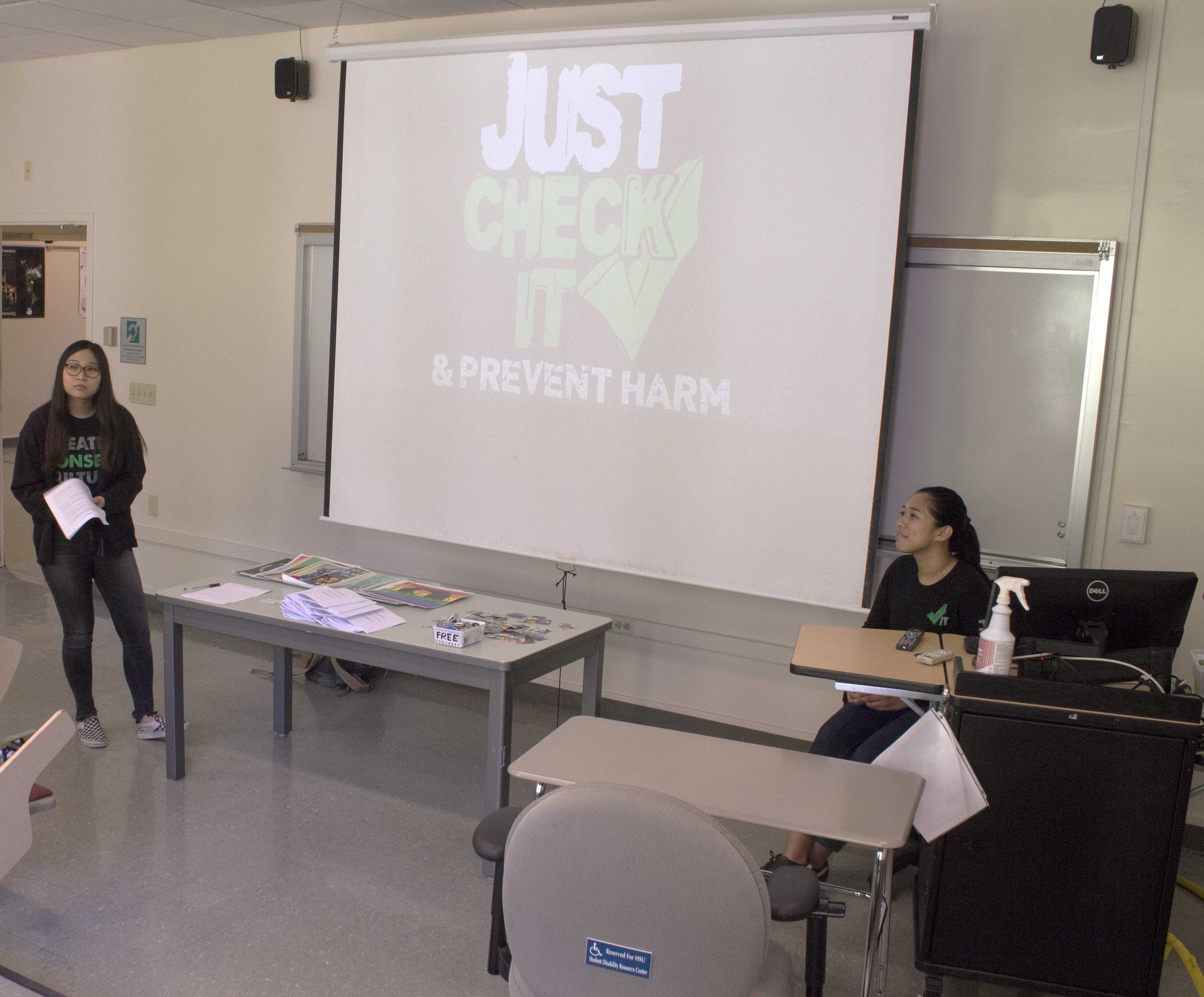
    The Check It program at Humboldt State is hosting bystander intervention workshops to give students the tools to step up and say something in “check it” situations. The workshops are on March 29 and April 4.

    The workshop on March 29 was hosted by two students, Adrienne Banh, 19, a psychology major, and Skye Peredeo, 21, majoring in social work. Both students are a part of the Check It launch team as a student-led movement to intervene when we see moments of harm.

    “We want to give the tools so if something does happen, we can intervene,” Peredeo said.

    The workshop had multiple portions and activities to help attendees better understand and give a language to situations with a lack of consent.

    The workshop defined consent as yes, a definite yes, which is active, collaborative and retractable.

    “A Check It moment is a situation with an absence of consent,” Peredeo said.

    The skills taught in the workshop focused on three D’s of a check it moment: direct, delegate and distract.

    Each of these terms correlate with a coping strategy to intervene in a Check It moment. The workshop also emphasized the personal barriers individuals experience, particularly the fear for personal safety and the safety of the survivor.

    Another huge focus was intimate partner and dating violence, and how individuals can best handle those situations.

    Ariel Fishkin, 26, an applied anthropology graduate student who attended the workshop, said she thought the intimate partner violence was the most important takeaway from the workshop.

    “I think that checking it and intervening in intimate partners is really important,” Fishkin said.

    The workshop also focused on support for survivors and how individuals can best be there for a person who has been a victim of sexual violence.

    Some of the main strategies for helping survivors is to get informed on the professional resources available for survivors, such as the North Coast Rape Crisis Team. The Team offers 24-hour hotlines to talk in Del Norte and Humboldt counties. Another strategy for providing support is just listening to the survivor.

    “Sharing one’s story can be incredibly difficult,” Banh said.

    The workshop addressed how this is a hard subject and many people have experiences that we need to be mindful of when tackling this issue. It also addressed how marginalized communities are more likely to be victims of sexual violence, particularly the LGBTQ community, and initiated a conversation on how they are specifically targeted.

    Overall, the workshop used a variety of multimedia tools including videos, games and discussions to help students to better come to an understanding of when and how to intervene in situations involving sexualized violence, which can show itself in a wide range of manifestations.

    The Department of Justice released a study in 2016 which showed that one out of every five women in college will experience sexual assault.

    “We want to make sure it doesn’t happen for future generations,” Peredeo said.

    If you or someone you know has been a victim of sexualized violence and would like to contact a safe source, the North Coast Rape Crisis Team has 24-hour hotlines available in Del Norte and Humboldt counties.

    Del Norte: (707) 465-2031
    Humboldt: (707) 443-2738
    Humboldt Domestic Violence Services: (707) 443-6042
    HSU Counseling and Psychological Services (CAPS):
    * 24-hour crisis hotline: (707) 826-3236

  • Consent is the word

    Consent is the word

    By | Lauren Shea

    Brave students walked up to the podium to share their story in front of supporters of a culture of consent.

    HSU students attended The Consent Project 2017 in the Kate Buchanan Room on Oct. 10 to talk about consent and listen to survivors of sexual violence.

    The Consent Project is an event held through the Check It program to talk about what it means to consent, what consent looks like, and how to communicate consent though choices and actions. The project aims to create a culture of consent and reduce the harm caused by sexual violence. The event provided a place to educate students and the community about consent and provide community resources. It also provided a place where survivors of all genders of sexual violence could speak out about their story.

    018.jpg
    Photo credit: Lauren Shea

    This year’s theme is the Seasons of Change. One of the event coordinators, Skye Peredo, talked about the meaning behind the name by describing how seasons change just as people do.

    The event provided many resources such as the North Coast Rape Crisis Team, Check It, the Women’s Resource Center and the Multicultural Queer Resource Center. The event provided food and drinks as students engaged in conversations about consent and the importance of self-care. Arts and crafts were supplied for students to create crafts and build a comfortable and creative environment.

    052.jpg

    The second part of the night shared a space where survivors talked about their story on consent. Survivors shared their gratitude for programs such as Check It and The Consent Project that encourages a consent culture where people can talk about sexual violence. It also encourages people to support each other and educate people in hopes to reduce to harm caused by sexual violence and the lack of clear consent communication.

    Students talked about consent culture during the event and the importance of caring for yourself. Elissa Rodriguez, a junior at HSU studying English, gave her thoughts about the importance of self-care and mental stress breaks.

    “I advocate a lot to my friends about self-care,” Rodriguez said. “I think we go through so much stress and taking the time even if it’s just a little bit of time to recuperate before getting back to what you need to do is really important.”

    She also talked about her experience with the consent culture being built at HSU.026.jpg

    “I feel like there is always more room for improvement,” Rodrigues said. I feel like people are still afraid to talk about sexual violence because if they weren’t, we wouldn’t need events like this. Not everyone is involved as they should be.”

    Alex Heart, a sophomore at HSU studying Geology, talked about the influence that Check it and the Consent Project has on new students.

    “I think the school does really well on educating freshman that come from all walks of life about consent,” Heart said.

    035.jpgJonathan Salinas, a senior at HSU studying Spanish, talked about his experience with consent culture at HSU.

    “I definitely think there is a lot of work to be done about creating a consent culture here,” Salinas said. “But I think events like this gives students on campus the vocabulary to have the conversations. I think there is that fear to talk about these topics, but at the same time empowers people to have these discussions.”

  • Don’t be a creep

    Don’t be a creep

    Grabbing or groping a person without their consent are desperate acts of perversion. The same goes for ogling at someone’s body for too long or texting unsolicited photos. While they may not seem like a big deal, you’re ruining someone’s day to say the least. There is no excuse for sexual harassment.

    Contrary to the sexual harassment case that was reported to the University Police Department this month, many survivors choose not to speak up, especially survivors of rape.

    Allie Jones, 20, is majoring in geography and journalism at HSU. She was harassed and assaulted twice last semester by two different men, both on and off campus. The worst incident involved stalking and attempted rape.

    It took Jones almost a month before calling UPD, yet she disguised her report with hypothetical questions about how to deal with sexual assault. Jones did not get help that day. In fact, she didn’t want help.

    “I realized that I didn’t want to talk about it,” said Jones. “I didn’t want to rehash it… you just want some normalcy, because you just want to move on.”

    Before long, Jones opened up to her friends and accepted their emotional support. She also signed up for Counseling & Psychological Services (CAPS) and credits them for partial recovery.

    Sergeant Janelle Jackson of UPD handles cases of sexual misconduct. She says that sexual harassment is “a burden to hold in.”

    Survivors who don’t speak up are suppressing trauma that may lead to long-term consequences of phobias and chronic stress. If many stories go untold, sexual harassment wins. Speak up in numbers and let your voices be heard.

    If you feel inclined to speak up, there are resources available to you, including North Coast Rape Crisis Team (NCRCT), Sexual Assault Prevention Committee (SAPC) and Campus Assistance Response and Education (CARE).

    Print
    Graphic by Michelle Meyers