The Lumberjack


Students Serving The Cal Poly Humboldt Campus and Community Since 1929

Tag: nurses

  • HSU starts new program for active nurses

    HSU starts new program for active nurses

    RN-BSN nursing program for incoming or working nurses to continue their education

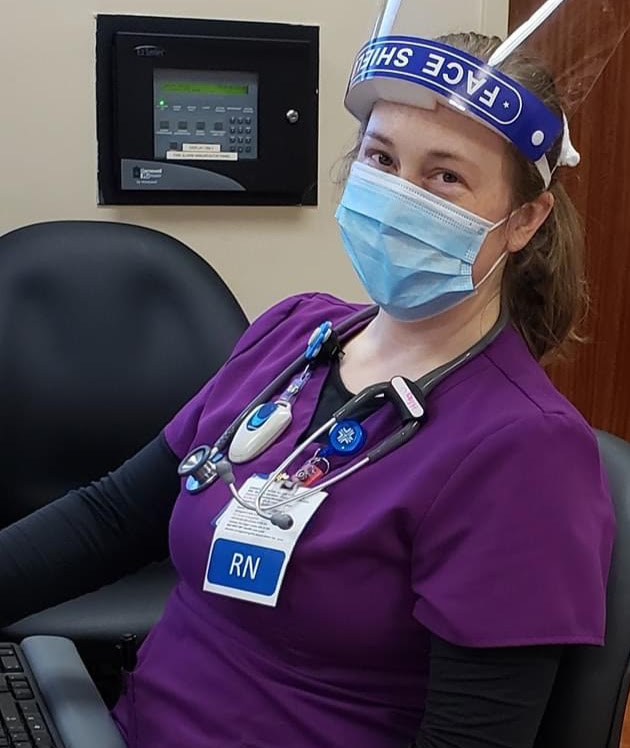
    Humboldt State University introduced a new nursing program this semester. The program started as a hybrid course for returning or new, incoming nurses wishing to continue their college education. Since it is an online format, nurses have a flexible timeframe between school and work.

    Kimberly Perris, the director of the nursing program at HSU, played a significant role in getting the program started, along with Assistive Director Eden Donahue. The program is designed for those who have finished their nursing degree and have prior experience working as a nurse.

    “All the students that come into the program have already been through a nursing program through a community college and have gotten their associate degree in nursing,” Perris said. “This program offers those nurses an opportunity to get their bachelor’s in nursing.”

    The program is less about hands-on nursing and more focused on critical thinking and management as a working nurse.

    “Our particular program is focused on our rural population, Indigenous populations,” Perris said. “So they are getting exposure to cultural humility and the social determinant of health and all the things that affect a person’s healthcare.”

    Prior to the pandemic, the class was designed for working nurses and already planned to operate as a hybrid class with intensives on weekends.

    Hilary Bagnell, a Registered Nurse for Saint Joseph Hospital, is ednrolled in the program. Bagnell decided to further pursue her education after graduating from the College of the Redwoods.

    “I graduated CR a year ago,” Bagnell said. “I was in the mode to do academic work already and I find that it’s a good thing to keep the momentum going and to go for those goals rather than let them get pushed back.”

    Bagnell works as a nurse and has a family, the issue is finding time to manage home life, work and the program.

    “It’s been challenging, on top of working full-time it’s a lot to do, but the content is so applicable to what I am doing,” Bagnell said. “It applies directly to things I experience every day on my job.”

    Katie Ohlsen, a nurse with Saint Joseph Hospital, is participating in HSU’s program. Ohlsen wants to further her education and credentials as a nurse. She found the program online and signed up in July, knowing the class could be altered due to the pandemic.

    “COVID was one of the reasons I decided, the final push I needed to go back to school,” Ohlsen said. “I knew the program was going to be online because it is meant for working nurses.”

    Ohlsen enjoyed classes and even though she’s experienced as a nurse, she finds the new and old critical thinking, and nurse management in class compelling.

    “I’ve actually been a nurse for 22 years now,” Ohlsen said. “So it is interesting to be back in school for being out for that long.”

    Nurses from different backgrounds, ages and hospitals are coming together to attend this new program to learn, boost their credentials and be around peers who experience similar stresses and understand their careers.

    “In a way,” Bagnell said. “It’s kinda like therapy for all of us to come together and talk about these stressful experiences we have as nurses.”
  • Myths and Truths of Surgical Face Masks

    Myths and Truths of Surgical Face Masks

    Mirage of safety causes mask supply to plummet and xenophobia to reemerge

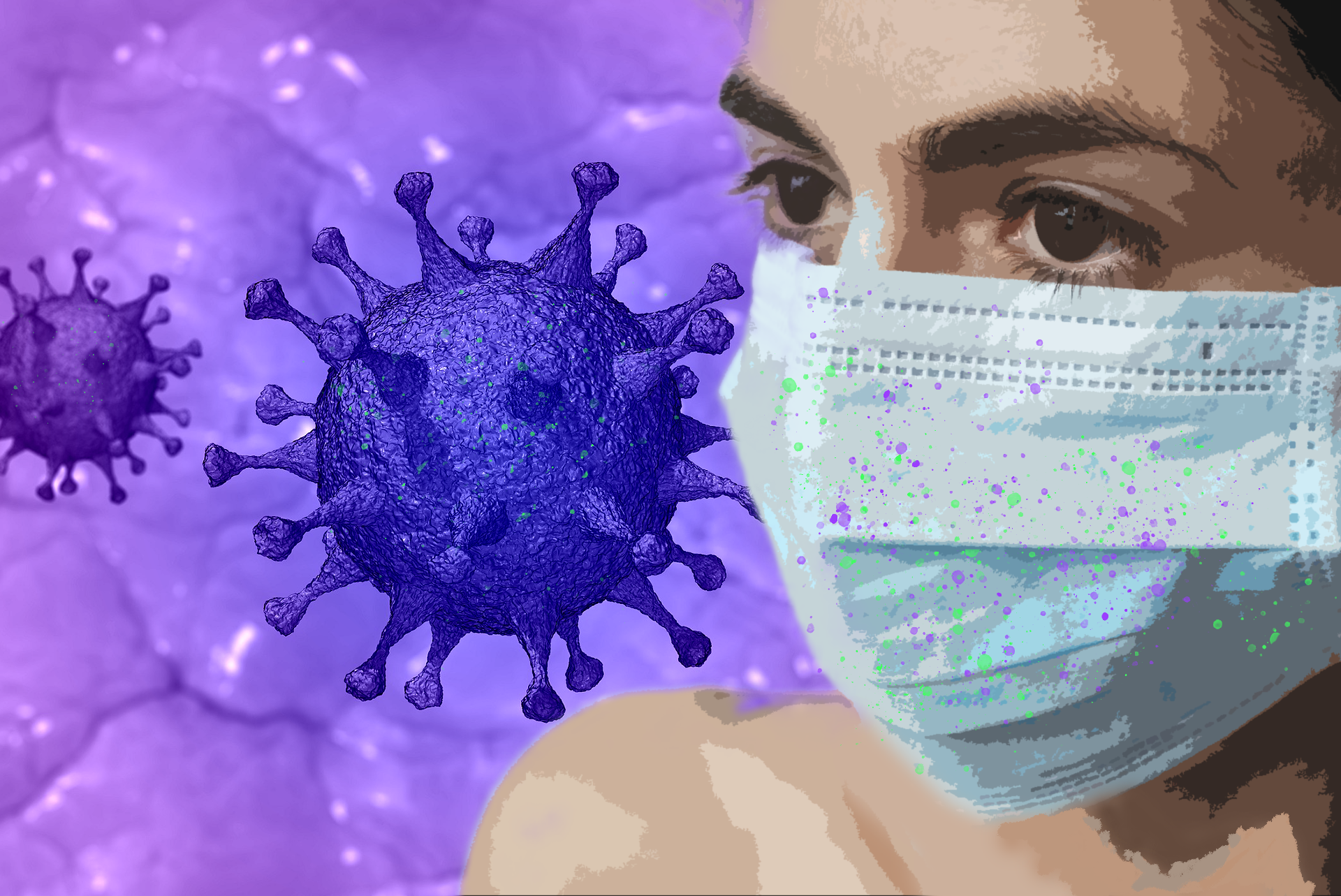
    The emergence of everyday people using surgical masks amidst the COVID-19 pandemic has caused mass misinformation and the perpetuation of xenophobic ideas.

    Myth: Surgical masks make you immune to COVID-19

    Typically found on hospital workers and sick personnel as a safety barrier, surgical masks are almost regarded as invincibility devices, protecting the body from outside pollutants and threats. The implied purpose of surgical masks is to protect patients from the secretions of a doctor’s mouth or nose during surgical procedures or to protect doctors and nurses from infected patients. Either way, a basic surgical mask prevents the exchange of bodily fluids, not air particles. Surgical masks are often mistaken as invincible shields against all viruses and bacteria.

    Surgical masks show no evidence of prohibiting the inhalation or contraction of the virus that causes COVID-19. The COVID-19 virus particles are too minuscule to be stopped by a surgical mask barrier. According to the Centers for Disease Control and Prevention, “most facemasks do not effectively filter small particles from the air and do not prevent leakage around the edge of the mask when the user inhales.” In no way do surgical masks prevent or obstruct contaminated air.

    While surgical face masks are virtually pointless against COVID-19, N95 filtering facepiece respirators are different. These masks are personally fitted to the face and “filter out at least 95% of very small (0.3 micron) particles, capable of filtering out bacteria and virus particles,” according to the CDC. These masks are typically worn by hospital and treatment personnel that come in direct contact with infected patients. N95 masks prevent the inhalation of micro-particles.

    Truth: Surgical and N95 masks are running low

    Due to the personal fitting of each N95 mask, they begin to degrade overtime depending on their usage, storage and environment. The assigned expiration date and high demand due to the current pandemic has resulted in an unexpected shortage in supply. Doctors are now reusing their masks, but they risk contamination due to degrading components affecting the protection and performance of the mask. Government administrations are requesting N95 donations as well as demanding some occupations to give up their assigned mask for medical workers.

    While N95 masks are needed most, surgical masks are running low as well. Infected patients wearing masks benefit surrounding parties by limiting exposure of emitted particles into the air. The pandemic panic has misinformed the public to go buy surgical masks when patients and medical workers need them most.

    Myth: DIY masks provide reliable protection

    YouTube and social media platforms are advertising do-it-yourself face mask tutorials in response to the shortage in surgical mask supply. The misinformation has continued as people attempt to protect themselves with faulty protection materials. Bras and bonnets to sandals and plain cloths are being cut and trimmed to replicate surgical face masks. But, as previously mentioned, surgical face masks provide no protection against COVID-19 virus particles. Any alteration of store-bought or recycled material will have the same, if not less, protection against COVID-19 than a surgical mask.

    Truth: Mask usage has reignited xenophobic ideas

    Surgical masks provide zero protection from contracting COVID-19, but they have effectively reignited xenophobia. It’s completely normal for the mind to want to assign a face to an infected COVID-19 individual or picture what a threat would look like out of caution. Assuming someone wearing a face mask has the virus and extending that assumption past the mask, to their race or ethnicity, is disgusting, racist profiling. In a time of crisis, people should be exercising neighborly behavior and picking one another up, not perpetuating racist, profile-based assumptions on others in an attempt to accuse others of the chaos. It’s unproductive and invasive.