The Lumberjack


Students Serving The Cal Poly Humboldt Campus and Community Since 1929

Tag: oil

  • War on the Horizon? Iran Blamed for Oil Field Attacks

    War on the Horizon? Iran Blamed for Oil Field Attacks

    United Nations pointed to Iran after Houthi rebels initially claim Saudi Aramco attacks

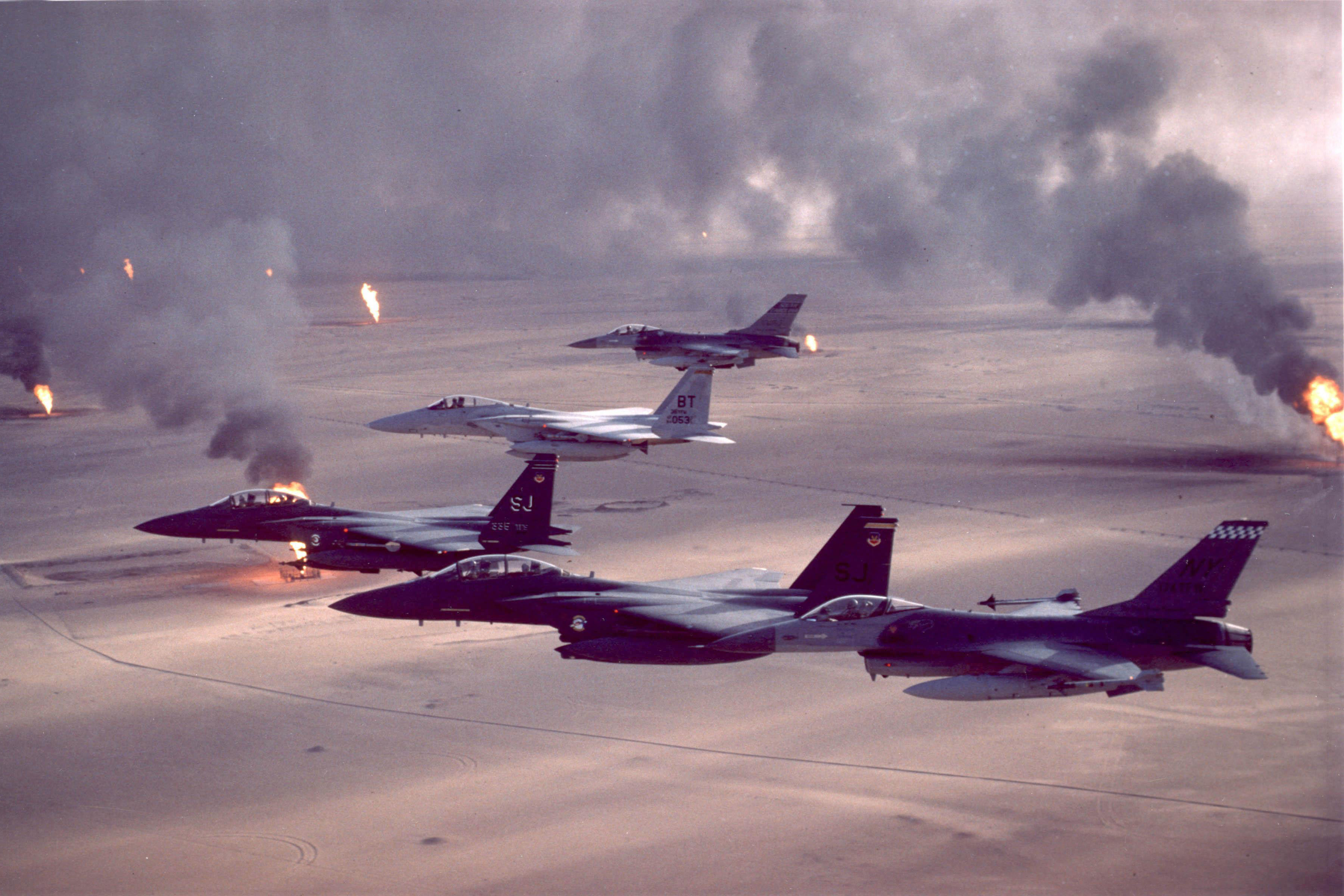
    On Sept. 14, drones attacked two of Saudi Aramco’s oil plants and the United States quickly pointed fingers at Iran as the perpetrator, sending military aid to Saudi Arabia.

    Iranian-backed Houthi rebels initially claimed the attack as their own, reporting that they sent missiles from Yemen, but U.S. Secretary of State and former CIA Director Mike Pompeo were adamant that Iran was to blame for the attacks on the Abqaiq and Khurais oil facilities. Pompeo commented on the incident during an episode of CBS’s “Face the Nation.”

    “No reasonable person doubts precisely who conducted these strikes,” Pompeo said. “And it is the intelligence community’s determination that it is likely the case that these were launched from Iran.”

    Iran drew global attention by targeting Saudi Arabia, the world’s oil exportation leader. In an interview on 60 Minutes, Crown Prince of Saudi Arabia Mohammad Bin Salman put the attack in context.

    “This attack didn’t hit the heart of the Saudi energy industry, but rather the heart of the global energy industry,” Bin Salman said. “It disrupted 5.5% of the world’s energy needs; the needs of the U.S. and China and the whole world.”

    Iran and Saudi Arabia both continue to try to gain influence in the Middle East, and the ongoing conflict in Yemen proves that while they may not want full-scale war, neither side fears conflict.

    After meeting with President Donald Trump and his national security team, U.S. Secretary of Defense Mark Esper explained Trump’s approval of military support in response to Iran’s aggression during a press conference at the Pentagon.

    CNN’s coverage of US Secretary of Defense Mark Esper and Gen. Joseph Dunford announcing the United States sending troops to Saudi Arabia.

    “It is clear based on detailed exploitation conducted by Saudi, United States and other international investigative teams that the weapons used in the attack were Iranian-produced, and were not launched from Yemen as was initially claimed,” Esper said. “All indications are that Iran was responsible for the attack.”

    Esper added that in response to the attacks and a Saudi call for help, the U.S. will deploy defensive forces focused on air and missile defense.

    At the United Nations General Assembly, the leaders of Germany, France and the U.K. released a joint statement concurring with the U.S.

    “It is clear to us that Iran bears responsibility for this attack,” the statement said. “There is no other plausible explanation. We support ongoing investigations to establish further detail.”

    Trump said the U.S. also employed economic measures against Iran.

    “We have just sanctioned the Iranian National Bank,” Trump said. “That is their central banking system and it’s going to be at the highest level of sanctions.”

    CBS News coverage of Trump’s announcement of new Iran sanctions on national bank.

    However, President of Iran Hassan Rouhani has denied Iran’s fault. Rouhani called the attack a retaliation from Yemen for unwanted outside influence.

    “The people of Yemen are forced to respond to all the violations and the flood of weapons from U.S. and Europe toward Saudi Arabia and the United Arab Emirates,” Rouhani said in a televised press conference in Ankara. “They cannot show legitimate defense in the face of their country being destroyed.”
  • Alaska Wildlife Refuge Vulnerable to Drilling

    Alaska Wildlife Refuge Vulnerable to Drilling

    The Department of the Interior finalizes the plan for leasing out the Arctic National Wildlife Refuge’s Coastal Plain

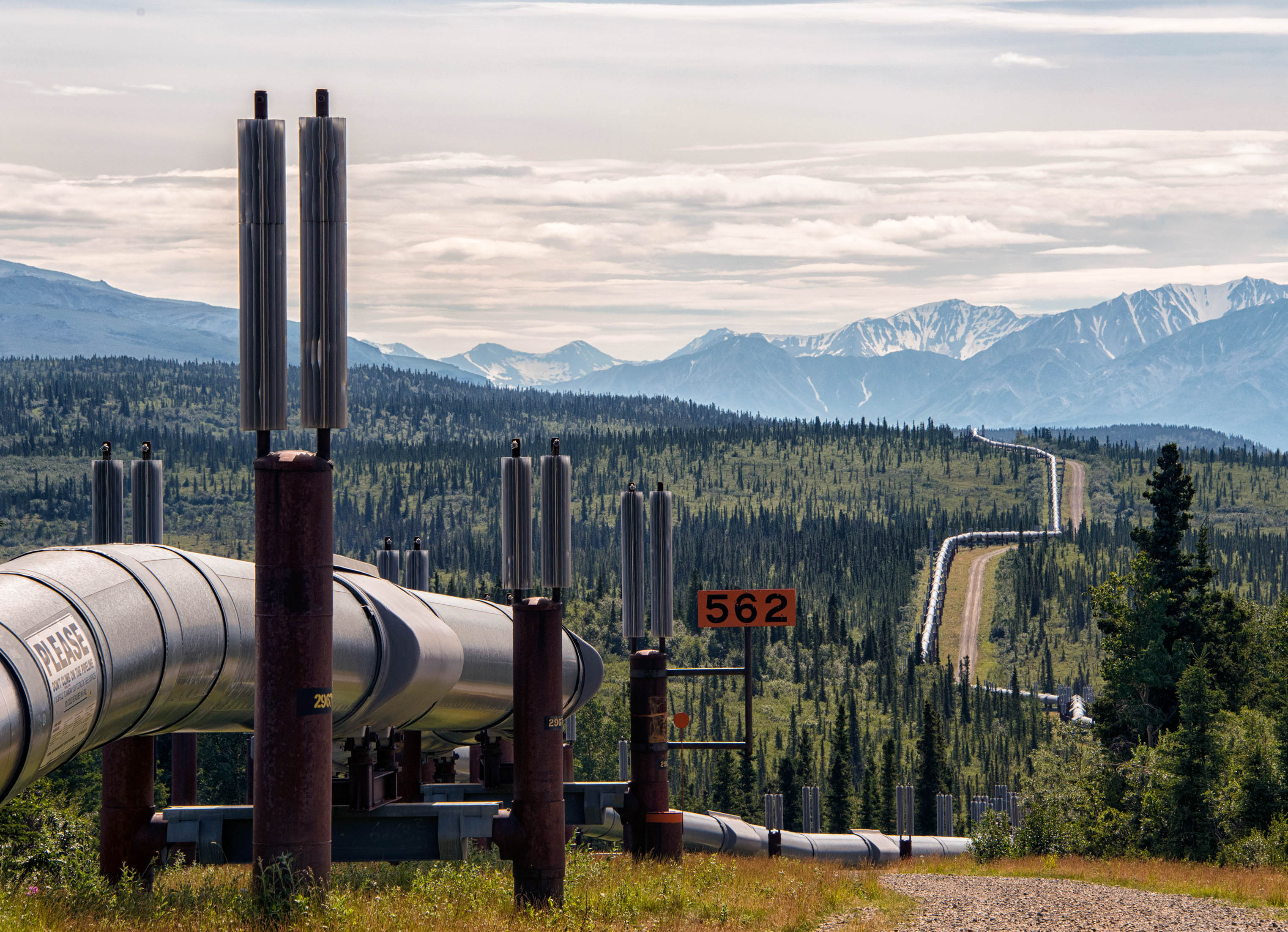
    The Federal Government has finalized the Environmental Impact Statement to open Alaska’s Arctic National Wildlife Reserve for oil drilling.

    The hands of industry and development have clawed at wilderness since pioneers began pushing westward. Oil has tempted landowners for decades, but the Arctic National Wildlife Reserve denied the resource to industry interests in order to preserve its unique, ancient landscape.

    gwichin_streering_committe-07

    That landscape is threatened. In the perpetual words of writer and wilderness activist Robert Marshall, “And so the path of empire proceeded to substitute for the undisturbed seclusion of nature the conquering accomplishments of man.”

    “[The Oil and Gas] Leasing Program will help meet the long-term energy needs of the nation, support job creation and economic growth of rural Alaskan communities,” The Department of the Interior, acting through the Bureau of Land Management, announced on September 12. “The [Tax Cuts and Jobs] Act directs the Secretary of the Interior, through the Bureau of Land Management (BLM), to establish two area-wide leasing sales, not less than 400,000 acres each, along the Coastal Plain of the Arctic National Wildlife Refuge.”

    The legal authority for the Oil and Gas Program is found in Public Law 115-97, otherwise known as the Tax Cuts and Jobs Act. Written into Title II, section 20001(page 184) are simple yet powerful exemptions for the oil industry’s special interests. For example, “Section 1003 of the Alaska National Interest Lands Conservation Act (16 U.S.C. 3143) shall not apply to the Coastal Plain.”

    The intent of the Tax Cuts and Jobs Act is clearly to honeypot Alaska into opening up the refuge to industrial interests. The Act sets aside standards in the Mineral Leasing Act as the Federal Government plans on claiming royalties at a rate of 16.67%, when standard royalties are 10%.

    While the Mineral Leasing Act Section 35 gives 37.5% of money made from sales, bonuses, royalties and rentals of public lands to the State, the Tax Cuts and Jobs Act declares 50% of the money made will go to the State Treasury.

    The Trump Administration declared $1.8 billion dollars of oil could be mined, essentially promising Alaska $900 million in revenue. The latest federal report suggests the potential income is half of that, approximately $905 million in revenue for the government and significantly less for Alaska.

    The pristine wilderness within the Alaskan Arctic Wildlife Refuge. | Photo by Greg Wiler, U.S. Fish and Wildlife Service

    The projections continue to fall as independent studies conclude significantly lower revenue opportunities based on other local lease sales. How low can you go? Alaska’s governor is prepared to open up the wildlife refuge no matter the cost.

    “Forty years after Congress selected the Arctic Coastal Plain for potential energy development, the Trump Administration is making good on that decades old potential,” Alaska Governor Mike Dunleavy said. “I join with all Alaska Governors since 1980 in assuring the nation and the world that we develop our natural resources responsibly. I look forward to the lease sale scheduled for later this year.”

    In 1929, a 28-year-old forester named Robert Marshall visited the landscape which would eventually become Alaska’s Arctic National Wildlife Refuge on summer vacation. He chose that area because it was the most remote section of Alaska.

    Marshall published an essay titled The Problem of the Wilderness where he describes the extraordinary benefits of the wilderness, considers the drawbacks of preserving wild lands and calls wilderness allies to action in the face of society’s aggressive advance into nature.

    “Within the next few years the fate of the wilderness must be decided,” Marshall wrote. “This is a problem to be settled by deliberate rationality and not by personal prejudice. Fundamentally, the question is one of balancing the total happiness which will be obtainable if the few undesecrated areas are perpetuated against that which will prevail if they are destroyed.”

    Alaska Governor Mike Dunlevy is prepared to open up the wildlife refuge no matter the cost.

    The U.S. Fish and Wildlife Service manages the network of protected lands in the United State’s National Wildlife Refuge System. The mission of the National Wildlife Refuge System is “to administer a national network of lands and waters for the conservation, management and, where appropriate, restoration of the fish, wildlife and plant resources and their habitats within the United States for the benefit of present and future generations of Americans.”

    The Arctic National Wildlife Refuge has been referred to as “The American Serengeti” for its rich biodiversity and untouched landscape. The ANWR is home to a caribou herd nearly 170,000 strong and other beasts including polar and grizzly bears, snow hares, mink and beavers. None of the revenue from Oil and Gas sales will go toward reserve restoration efforts.

    The Coastal Plain is “Iizhik Gwats’an Gwandaii Goodlit,” the sacred place where life begins, to the native Gwich’in people. Both the Gwich’in and Inupuat people have depended on caribou and the land for food, clothing and resources to support their way of life. Gwich’in Elder Jonathon Soloman acknowledged his people’s connection to the land.

    “It is our belief that the future of the Gwich’in and the future of the Caribou are the same.” Solomon said. “Harm to the Porcupine Caribou Herd is harm to the Gwich’in culture and millennia-old way of life.”

    It seems, despite the 89 year difference, Robert Marshall’s word still ring true.

    “There is just one hope of repulsing the tyrannical ambition of civilization to conquer every niche on the whole earth,” Marshall wrote. “That hope is the organization of spirited people who will fight for the freedom of the wilderness.”