The Lumberjack


Students Serving The Cal Poly Humboldt Campus and Community Since 1929

Tag: open forum

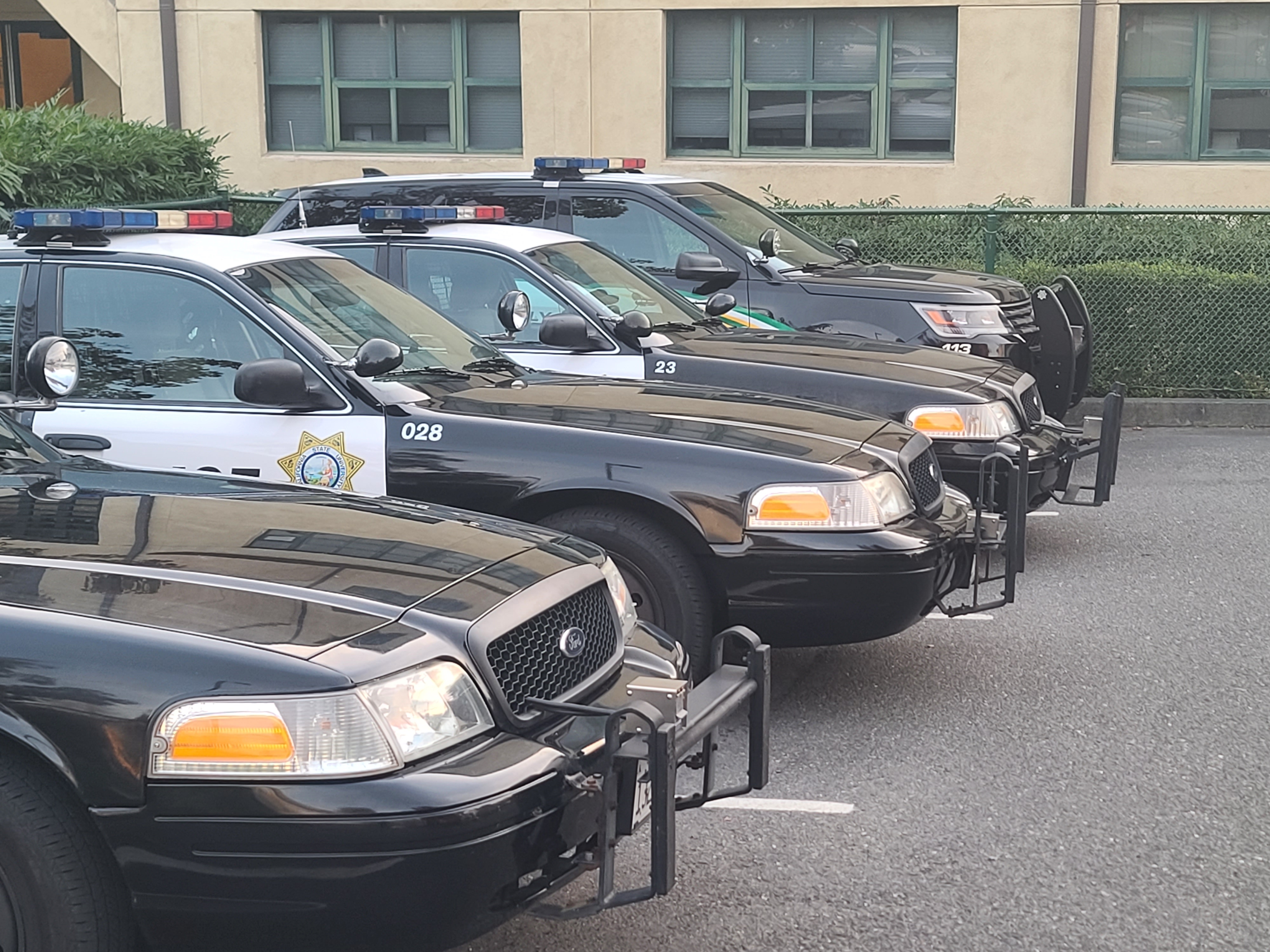
  • Police chief candidate views cause concern among students

    Police chief candidate views cause concern among students

    by Carlos Pedraza

    The Chief of Police Search Committee held an open forum on Wednesday, Oct. 19 for students to ask questions of Thomas Calucci, one of the police chief candidates. A Cal Poly Humboldt email stated the meeting was being held in the Library Fishbowl but was changed at the last minute to the Great Hall above the Marketplace. In total, only two students were present to ask questions.

    Calucci is a former police captain from the University of Texas at San Antonio and was a member of the Behavioral Intervention Team, an organization that provides mental health checks. While at UTSA, Calucci collaborated with school counseling faculty to provide crisis training to university police.

    Calucci wants to bring a similar program to Cal Poly Humboldt.  

    “I want social workers to ride with our police officers,” Calucci said. 

    He went on to explain how he wanted police to integrate with the community and was against the us vs. them mentality of the thin blue line.

    “I need our cops to understand at this university, we are not here to kick ass and take names, we are here to protect you all,” Calucci said.

    Still, Calucci made it clear his main goal was to protect the university from those whom he saw as outsiders. 

    “I’m fairly certain that somewhere, someone in this community has a grievance against this university,” Calucci said. “Whether it be a faculty member or other student, I’m fairly certain that person is planning revenge… I wanna be here to protect you from them, not from yourself.”  

    When Calucci was asked who “them” was, he answered, “there are people who intend to do you harm, those are the people who I don’t like.” 

    Calucci appears to understand that policing has caused problems, specifically citing police-related generational trauma. Though he is aware of it, Calucci does not consider it his role to solve this problem. 

    “I did not sign up for the things you are asking me to do,” Calucci said.

    Humboldt student Elizabeth Rubio explained how the police system has a history of racism, prejudice, and violence, and asked how Calucci would handle prejudice in his staff and himself. 

    “First thing you said is we live in a racist society and that sucks you feel that way.” Calucci said. He acknowledged that racism was present in society. “ If I could wave a magic wand and make it go away I would because of that crap,” Calucci said in response to Rubio.  

    Rubio proceed to asked if Calucci was aware of the murder of Josiah Lawson and the case surrounding the alledged murder. Calucci said he saw a sign supporting Justice for Josiah, but he did not know any specifics of the case.

    Rubio also asked about the police response to student homelessness. Calucci said police would not harass students sleeping in cars and wanted them to feel safe. He stated his main goal was to get students off the streets and find temporary housing for them. 

    Jue Smith, the other student at the forum, felt that both police chief candidates were unprepared. 

    “Neither candidate did their homework about this area or legislation that’s been passed,” Smith said.
  • Humboldt professors speak in ‘Ukraine in Crisis’ forum

    Humboldt professors speak in ‘Ukraine in Crisis’ forum

    by Liam Gwynn

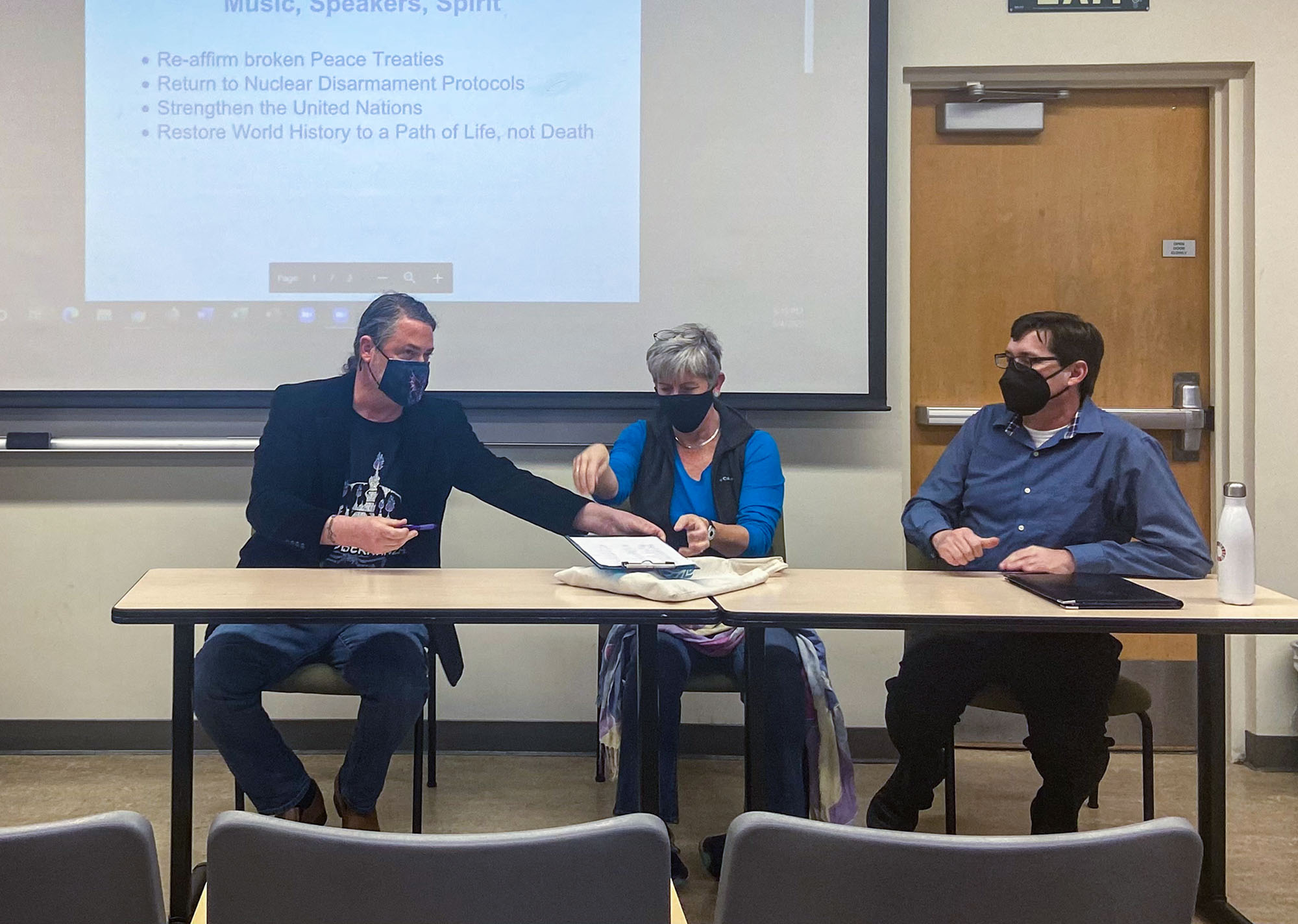
    Professors addressed the complex and multifaceted nature of the Ukraine invasion during an event hosted by the political science department on Friday. They addressed the situation from three different angles with professors breaking down the topic relevant to their expertise.

    Dr. Robert Cliver is a history professor at Cal Poly Humboldt. Cliver gave historical context for the war in Ukraine and explained how the situation is not black and white in his mind. Between the corrupt Ukrainian white nationalist oligarchs and Ukraine’s tentative alliance with the west, Cliver doesn’t think Ukraine is as innocent as they are being painted by the media at large.

    Cliver drew criticism after claiming there were no heroes or villains in war. In his eyes, all of the world leaders are villains fighting over power and resources.

    “I’m against war, period. I think if you’re resorting to violence to achieve your ends you’re not a hero,” said Cliver.

    Cliver warned students against glamorizing and glorifying political figures like Ukrainian president Volodymyr Zelenskyy. Cliver supports the Ukrainian people, but thinks people need to look into the historical context of situations and understand that their perspective may have been altered by nationalistic rhetoric they have been exposed to.

    “It’s very difficult to find heroes and villains historically and when people do, it’s usually for nationalistic reasons and I’m very skeptical of that,” said Cliver.

    After Cliver’s talk, Noah Zerbe from the political science department gave a thorough breakdown of the international relations situation currently unfolding between Russia and the rest of the world. In particular, he explained how the sanctions put in place by NATO would affect both Russia and the global economy.

    “Russia and Ukraine account for about 20% of the world’s corn exports and about 30% of the world’s wheat exports,” said Zerbe, continuing. “So cutting that off from global markets is going to have a huge impact on food prices.”

    Zerbe went on to explain how Russia also accounts for about 20% of the world’s fertilizer so not having that on the global market will impact many types of agriculture on top of the ones previously mentioned.

    Allison Holmes from the international studies department took over after Zerbe. Holmes gave an urgent speech about the importance of fact-checking what you read online and the unreliability of news in the era of social media.

    Holmes explained how social media has changed the way people digest information which has, in turn, made times of crisis like this even more disorientating.

    “Everyone became their own spokesperson, nobody needed to wait for the official statement, nobody waited for a press officer to tell you what was happening out there, the feeds from Twitter, Facebook, TikTok, went straight to the news headlines,” said Holmes.

    She explained how this massive change has resulted in a repetitive news cycle where the most TV-ready looking civilians are asked the same questions over and over and other important developments are pushed to the side.

    “This has produced hours and hours of interviews with young women, most of whom happen to be lovely blondes who all speak perhaps halted but excellent English with at least one if not preferably two children sitting on a train platform going they know not where,” said Holmes.

    Holmes did not want to downplay the situation in Russia, but she does think it is being overplayed by the media, especially in comparison to how other conflicts outside of Europe are covered.

    “I’ve lost the number of times I’ve heard ‘we haven’t seen this since world war II’ which is simply not true,” Holmes said, continuing. “What about Yugoslavia, what about Syria’s impact on Europe and the estimated 13 million refugees or displaced people who are still not home?”637 words

  • Upset students storm WSCUC open forum

    Upset students storm WSCUC open forum

    Cold and wet students gathered in the lobby of the Native American Forum at Humboldt State on March 21 for the WSCUC student open forum.

    The WSCUC, or Western Association of Schools and Colleges Senior College & University Commission, is a team of multiple administrators from different colleges across the country. This agency is given the task of reviewing an institution’s accreditation every 10 years and compiling a report that shows the results of this review.

    The open forum was for HSU students to share their input with WSCUC, and students were not happy. While this was not an opportunity to have questions answered, or problems addressed, it was a chance for students to tell WSCUC what concerns them about HSU.

    The issues that were brought up to WSCUC concerned student homelessness, financial issues, racism in the surrounding areas and, most commonly, the lack of communication between the students and administration.

    “Many of the students were informed of your arrival through this screensaver on all HSU computers,” HSU student Jessa Anderson said as she presented the Star Wars-themed flyer on the computer that informs viewers of WSCUC’s visit.

    Other students said they were not aware of the open forum until the budget cuts walkout that occurred in the UC Quad and Siemens Hall on the same day.

    Rita Cheng, the president of Northern Arizona University, is a member of WSCUC and mediated this open forum.

    “We are just peer reviewers, and it allows us to get a better look when we look from this perspective,” Cheng said.

    Students continued to speak of the pattern of poor communication between administration and students. Students also expressed how the stresses of not knowing what will be cut might affect their lives.

    Toward the end of the forum, the conversation shifted to the ignored racism problem in the university and surrounding areas.

    “I don’t feel safe and I don’t even know how to begin to feel safe here,” HSU student DaMon Thomas said.

    While HSU’s administration was not at the open forum to hear these grievances directly, many students were able to have their voices heard by WSCUC.