The Lumberjack


Students Serving The Cal Poly Humboldt Campus and Community Since 1929

Tag: opioids

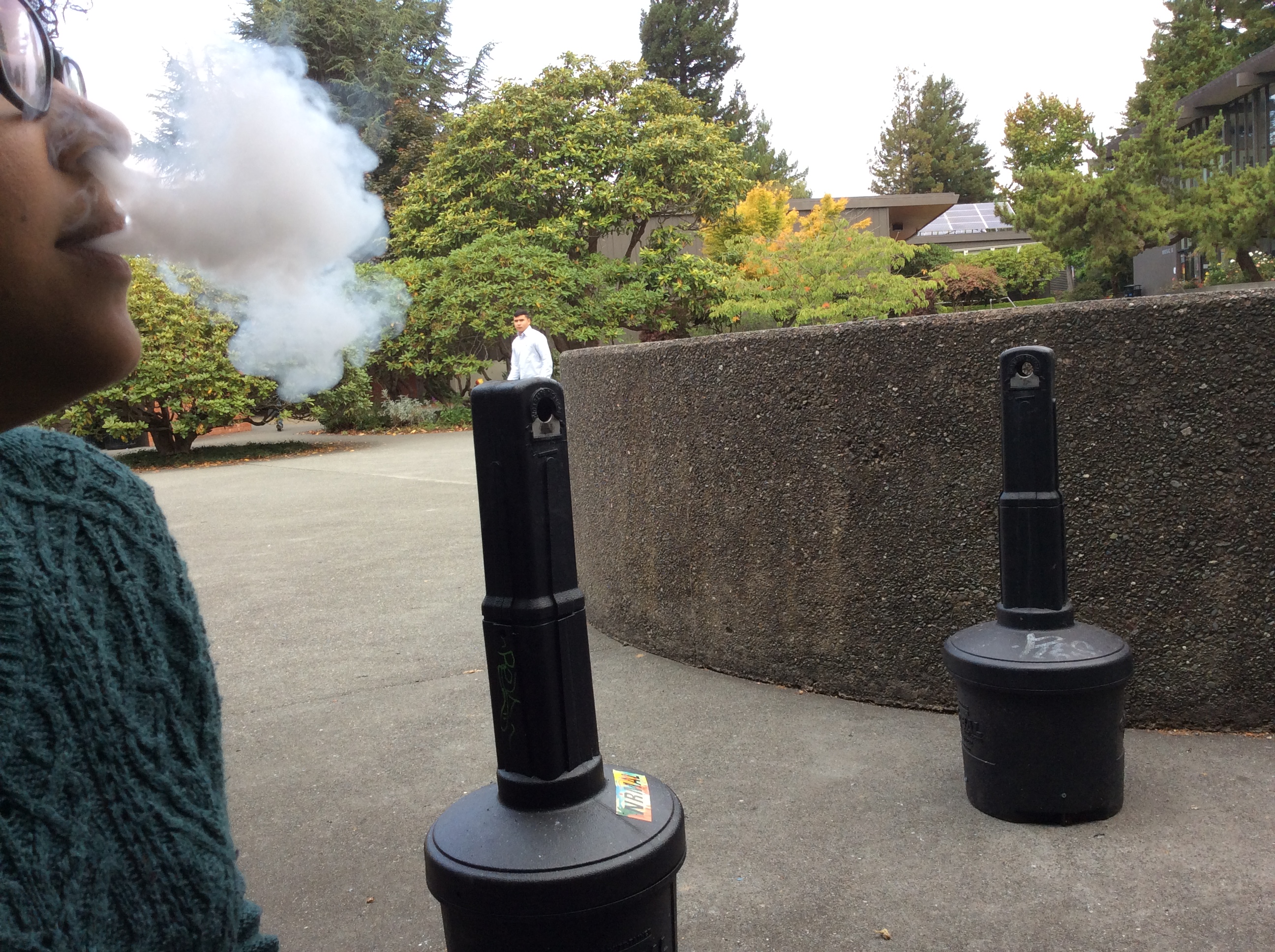
  • Vaping Epidemic Overshadows Opioid Crisis

    Vaping Epidemic Overshadows Opioid Crisis

    Opioid crisis overlooked as ‘vaping epidemic’ is brought to the foreground

    With Hollywood actors and prominent public figures accessorizing day-to-day life with a JUUL in hand, vaping was quick to enter the teenage party scene and develop a reputation amongst the younger crowd.

    Years ago, public disapproval was primarily aimed at the advertisements vaping companies released. The younger crowd became the target audience with the promotion of sweet, tempting flavors, and the original audience, adults who were looking to quit cigarettes, quickly became a secondary target.

    In late August, seven deaths in relation to vaping were confirmed. Beyond that, 530 cases of lung illness found in young adults have been attached to vaping with the numbers on the rise. Regardless of whether marijuana or nicotine cartridges are being used, an unrelated chemical substance is being singled out. Vitamin E acetate, a common diluent used in vaping cartridges to cut the product and increase shelf longevity, appears to be the cause.

    Vitamin E comes in many forms and is most commonly known for its moisturizing and adhering quality. Physicians are dumbfounded by the idea of smoking it. Medical officials compare smoking Vitamin E acetate to “[s]aran wrap around your lungs” as the tocopherol element adheres to the lungs liner fluid, blocking oxygen travel.

    The light on vaping has cast a shadow on a much older and somehow less prominent issue affecting our country, the opioid epidemic. Since the ’90s, medical officials began distributing pain relievers at a higher rate after pharmaceutical companies assured them of their non-addictive quality. Proven to be false, this ultimately resulted in over 700,000 people dying from a drug overdose within the 1999 to 2017 time period. And according to the CDC, 400,000 of the deaths were due to overdose involving opioids, prescription and illicit.

    Since then, an estimated 130 people die daily from opioid-related drug overdoses. Unlike the vaping “epidemic,” officials are aware that 40% of opioid overdose deaths are connected to a prescription but refuse to take action and put restrictions on pharmaceutical companies.

    Focus continues to surround vaping. Measures are being introduced to limit access to vaping devices. Meanwhile, the country has been at war with drugs since the ’70s with little to no improvement.

    It took less than two months for legislators to begin discussions on vaping issues and introduce more than 200 bills to combat it. In almost half a century the opioid epidemic has claimed more than 400,000 lives, with 47,000 in 2017 alone, and leaves 1.7 million people suffering from substance disorders relating to prescription opioid pain relievers.

    The more urgent issue is somehow the least prominent thought in any officials mind.

    Before jumping into the next news-worthy drug epidemic, let’s overcome the current opioid battle we’ve been struggling with for almost 50 years and relieve the pain of over a million people before forgetting them altogether.

  • The community speaks at town hall  opioid meeting

    The community speaks at town hall opioid meeting

    California state senator Mike McGuire and County Supervisor Virginia Bass hosted a town hall meeting on March 29 to discuss the opioid crisis in Eureka. Panels of statewide experts, health professionals, local leaders and addiction specialists were present.

    Social work major at Humboldt State, Ana Guerrero said, “I have seen teens shooting up in alternative schools. The thing is that in TV they show drugs as cool.”

    Mike McGuire who is currently representing California’s second congressional district began the meeting speaking behind the podium.

    “Our job is to clean up the streets of syringe land, and to deliver as many resources as possible,” McGuire said. “Our job is to better manage syringe distribution, and to go after pharmaceutical committees and hold them accountable. The unfortunate thing about this crisis is that there won’t be an easy solution.”

    Aegis Treatment received a $4.8 million investment for a medication-assisted treatment center and needle collection program, which was announced last November at the first opioid town hall meeting.

    “The grant is designed to do a few things,” Alex Dodd, Aegis CEO said. “It is designed to extend addiction treatment into primary care, to extend and expand medication treatment. It is also used to help people pay for treatment.”

    Before Dodd talked about the new center that will be open in the former Eureka Pediatrics. He wanted to clear up a misconception about the funding Aegis received.

    “This $4.8 million federal funding is coming through us to give to the communities. It isn’t being given to us to do what we want with it,” Dodd said. “The funding is not being given to Aegis to open the clinic. We don’t see one dollar of that money ourselves.”

    Technical difficulties arose with planned video conferences with outside experts. Director of technology for Humboldt County Office of Education, Doug Lee, worked behind the scenes to fix the problem as well. The problem was fixed, and the video conference ran smoothly.

    “We had 10 microphones going into one microphone jack, and one mixer. Our system didn’t understand it,” Lee said. “We muted all the mics from the control panel. Once I did that, it was fine. All things considered, I think it went well.”

    A man walking into the Sequoia Conference Center for the opioid town hall meeting. The meeting was hosted on March 29 by Senator Mike McGuire and County Supervisor Virginia Bass. Photo by Bailey Tennery.

    Lesley Hunt, project manager for the Hoopa Valley Tribe planning department, said there is a huge taboo on substance abuse.

    “In my community, we are dealing with adolescents from a heartbreak age of 10 dealing with some of the stuff talked about tonight,” Hunt said. “It is how we address it from here and how we move forward.”

    Hunt said the Aegis funding is a step in the right direction, and believes it gives us a hope and some breathing room.

    “It’s a set if money you don’t want to talk about, but it has strings attached,” Hunt said. “Sometime those strings don’t match up to what our community needs, which is infrastructure money, the facilities are outdated and overcrowded.”

    John McManus, executive director of Waterfront Recovery Services, addressed a comment about empty beds in recovery programs.

    “For the beds you are concerned with, it would be about more measures Z funding,” McManus said.

    Crossroads, a drug and alcohol rehabilitation center, and Waterfront Recovery Services are all working on being drug Medi-Cal certified, to be able to treat people who have Medi-Cal.

    “We have submitted our application. Hopefully it will take less than nine months to a year,” McManus said. “The certification standards will raise the level of Medi-Cal care we are providing for the rest of the residents.”

    In the midst of the question and answer portion, Trish Cottrel, a social work major at HSU was given the microphone.

    “I also want to encourage you to have a tribal representation at the next meeting, because I think that community really needs to be served, they are disproportionately affected.”

    Blue Lake resident Alex Bodie works for a non-profit attended the meeting. She said she liked how experts who were outside of the region commented on the problem.

    “Our numbers are high with it, but this is happening all across the country. There are root things that are underlying the problem that happens within this,” Bodie said.

    Bodie said the hosts of the meeting didn’t realize there was no tribal representation until the community members brought it up.

    “They needed to include other folks. There definitely needs to be more inclusion for the people who are doing the work on the ground,” Bodie said.