by Mekiah Glynn
The geology colloquium on Monday, March 28began with the introduction of Dr. Jeffery Knott. Knott is an emeritus professor at California State Fullerton and an experienced researcher in paleogeography and paleoclimatology. Paleography is the study of historical geography and paleoclimatology is the study of ancient climates. Combining these studies and biology, Knott shared the research he’s done. He explained how pupfish are so widely spread around the globe using paleogeographic understanding of past lakes and rivers where the pupfish were.
Pupfish are about 2 inches in length and are often a blueish color. This group of species is found in a variety of locations throughout the world. The Death Valley pupfish (Cyprinodon salinus,) which lives exclusively in a small body of water known as Salt Creek, is the focus of Knott’s research.
“[Salt Creek] is mostly a series of pools and sometimes very little ponds to the side, and it’s not very fast-moving as well,” Knott said. “It’s a relatively slow and low gradient stream but this is where one species of pupfish happens to live at the bottom of Death Valley”.
The pupfish at Salt Creek are disconnected from other bodies of water. This makes it impossible for them to be related to pupfish in other parts of the world unless there was a connection to other bodies at some point in the past. This is why comparing the pupfish species proves that sea levels were higher and lakes in the past were big enough to connect these water sources.
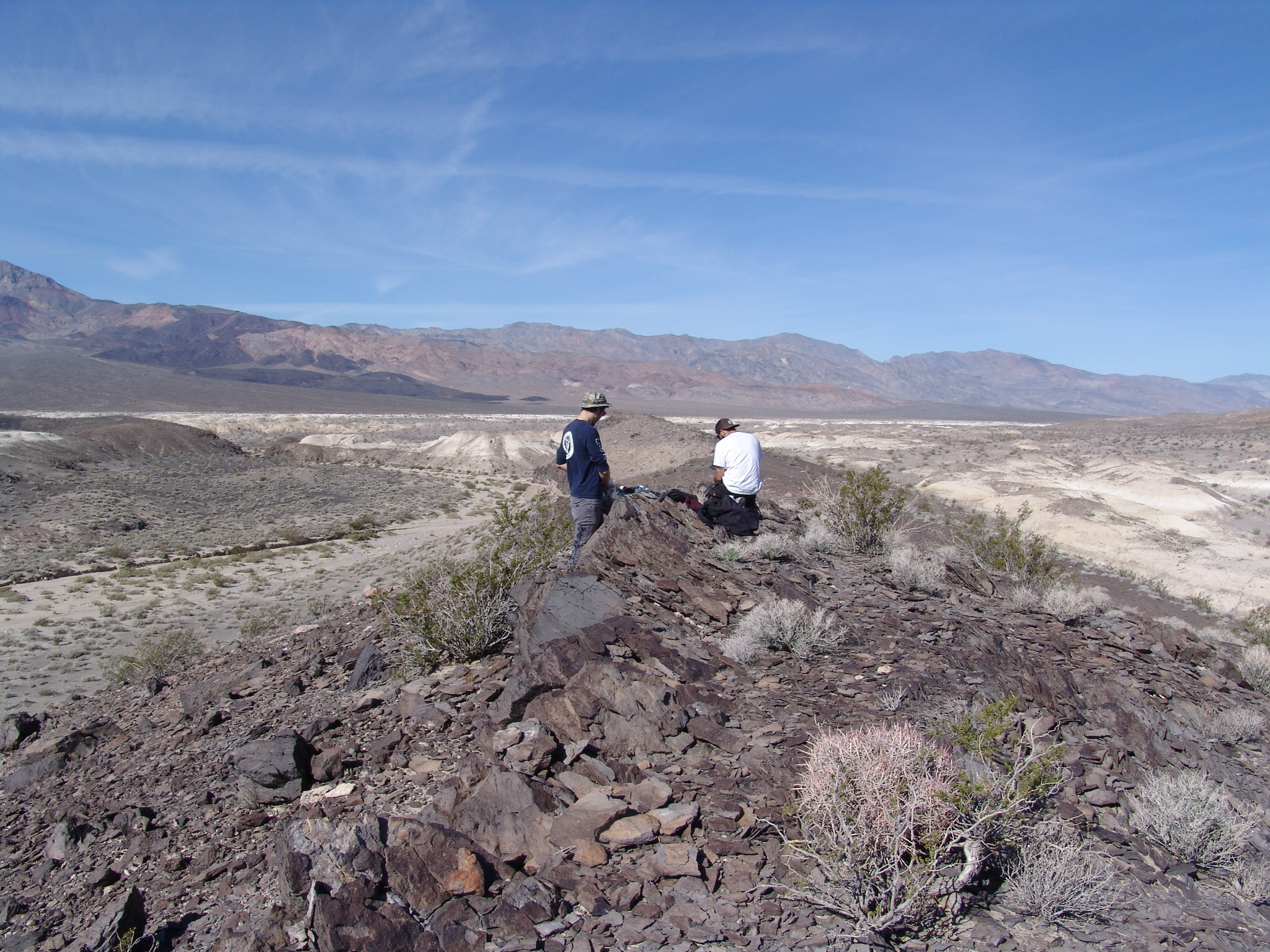
To figure out where and when these lakes existed, Knott had to use regional stratigraphy, which studies the layers of rock to determine time frames. Using geological evidence, Knott found that Death Valley had a deepwater lake from around 3.2 to 3.6 million years ago. Along with the timeline of the lakes, the rocks can be used to tell when the area was dried up or whether the lakes were warm.
From there, Knott then compared the timeline set by different sediments to discover when and how the lakes may have overflowed into each other, and where there isn’t overflow there is usually a realistic explanation. Through the study of historical writings, we know that Native Americans moved pupfish into the Devil’s Hole in Death Valley because they used it for a bathing hole.
There have been similar studies done to try and explain the evolutionary relationship between the Deep Springs black toad and the toads at Darwin Canyon. These toads are entirely aquatic, so the distance between these species also has to be explained by the history of lakes in the area.
The next species that Knott and other researchers will focus on are the spring snails. These are a unique case: they move a lot slower than the pupfish and the toads so the distribution of the species is hypothesized to take a lot longer. Finishing the seminar, Knott acknowledged the team that helped him.
“We’ve done a pretty good job of establishing a stratigraphy here in Death Valley in the western Great Basin,” Knott said. “Through the efforts of many, many people, we can correlate this with global climate records, and then we can start to look at the timing of these… lakes.”