The Lumberjack


Students Serving The Cal Poly Humboldt Campus and Community Since 1929

Tag: pedestrian safety

  • Fuck cars

    Fuck cars

    by Harrison Smith

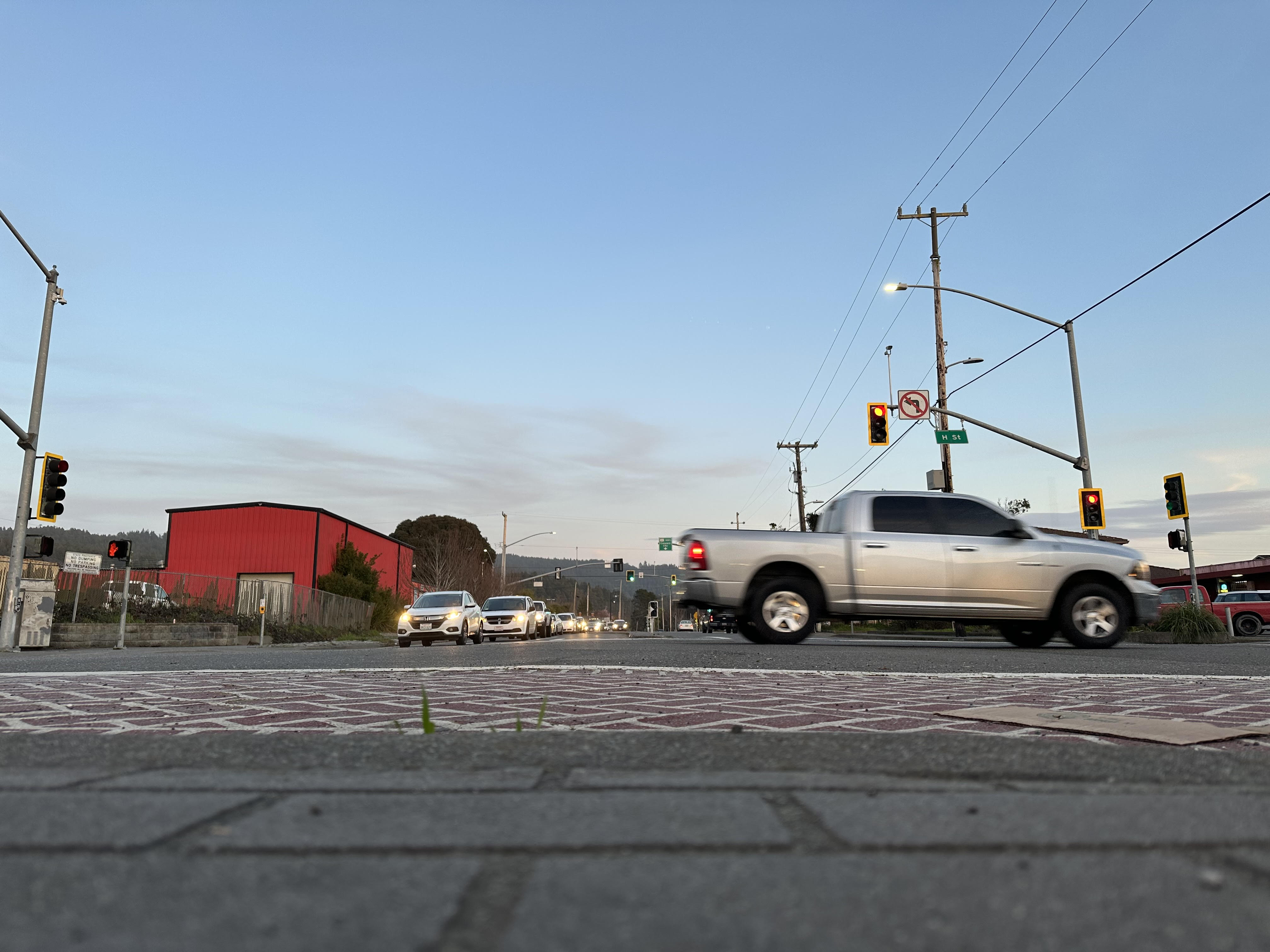
    At any given moment in Arcata, there is a game of frogger being played at a grand scale. Students who walk or ride their bikes to class are familiar with the everyday peril of crossing L.K. Wood Blvd where it meets Sunset Ave. Drivers rolling down the Sunset overpass towards campus regularly blow through the long, winding crosswalk, which is about as useful at protecting pedestrians as is a paper shield against a lance.

    I have lost count of the times I have almost been hit by an unaware driver while riding my bike to campus. The three gauntlets which I run daily are the roundabout at Foster Ave, the intersections of Sunset and H St., and the aforementioned L.K. Wood crossing. At the Foster roundabout, I was nearly paved into the street by a lifted white (and squeaky-clean) F-150. I let out a perfunctory, “Fuck you!” to the prick whose $35,000 dealership-bought manhood nearly killed me. His response was to pull the truck to a screeching halt in the middle of the roundabout, hop down from the cab, and scream, “You got somethin’ to fuckin say?” I, who had a chemistry quiz that morning, did not have anything to say. I turned my happy ass around and rode away. 

    Last Wednesday, my boyfriend witnessed three separate screaming arguments in quick succession between drivers waiting their turn to cross the intersection of Sunset and H St. It even sucks to drive here, let alone walk here. Driving everywhere has made it impossible to walk anywhere. So why do we design our cities like this?

    Because of Robert Moses, baby. The Biblical Moses may have parted the Red Sea, but Robert Moses did something far more impressive–part every street in the United States (and the world) with a stream of cars. Robert Moses was the municipal planner for the city of New York for over forty years, beginning in 1924. He was never elected to office, but nevertheless used his position in city planning to dramatically expand New York City’s automobile infrastructure, and thus structural racism. 

    Moses worked like a factory farmer, plowing up historically Black and low income neighborhoods to sew a crop of asphalt and steel. He connected the boroughs of New York with the ribbons of highway that would come to serve as a shining example of urban design to younger architects all around the country. He designed his infrastructure to exclude public transit—for example, Moses ordered the bridges over the Jones Beach Parkway be built too low for buses to access the beach, ensuring that it was only accessible to those (white) people prosperous enough to own their own automobiles. 

    Robert Moses shrugged away this mortal coil in 1981, but his legacy lives on in the 4.17 million miles of road that stretch across the United States and the 286 million cars that ply them. City planners in the latter half of the twentieth century followed the example set by New York, designing cities to be traveled by private car. 

    The only future for our planet and for our cities is one with streets designed for people, not cars. Ride your bike to class. If you’re unable, take the bus. If you can’t take the bus, carpool with your friends. Agitate with the city council for safer streets. Fight for a car-free future.
  • Coalition looks to improve pedestrian safety

    Coalition looks to improve pedestrian safety

    New criteria, if adopted, could lead to pedestrian-focused modifications for Arcata square

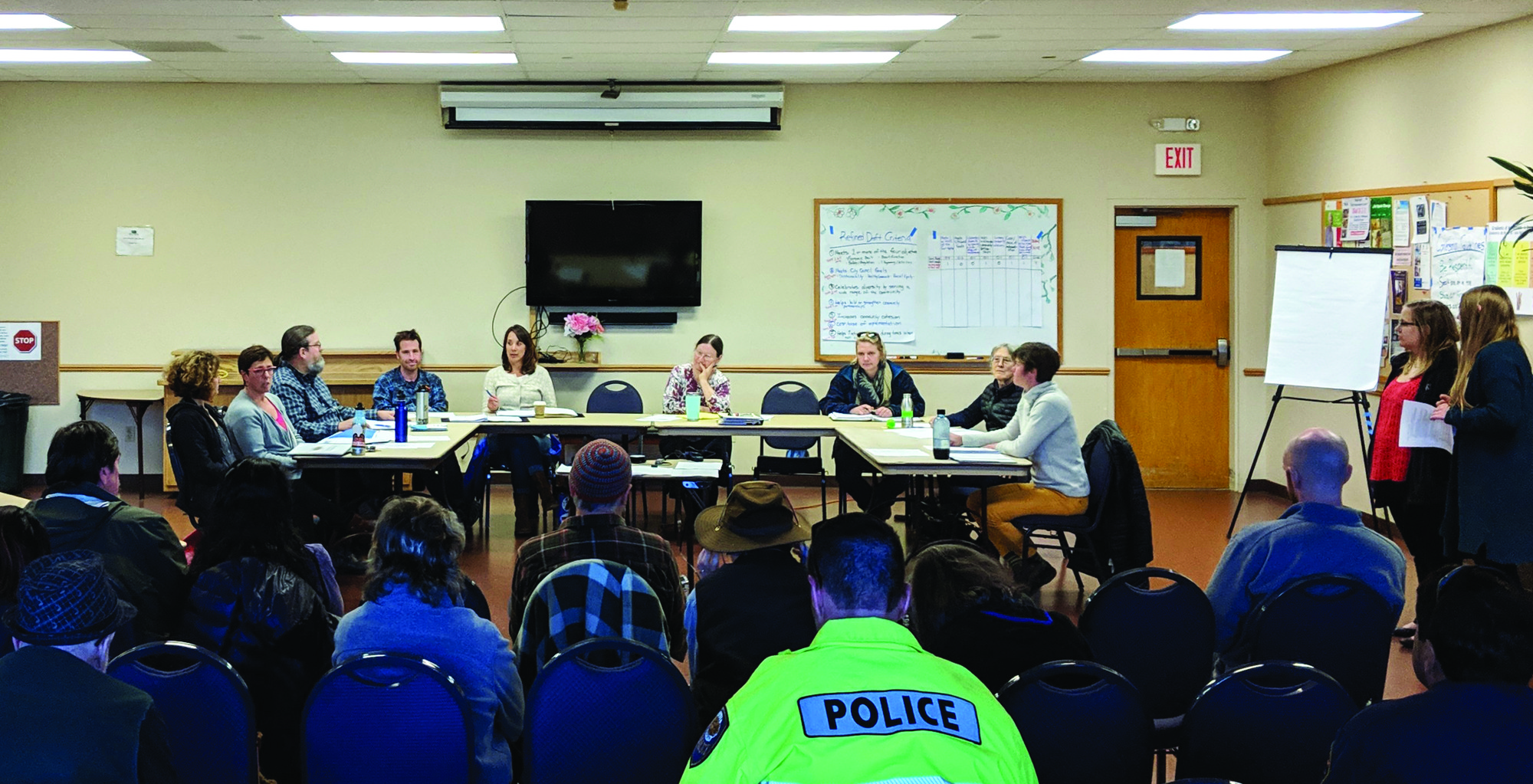
    Colin Fiske has a vision for a safer, cleaner and more pedestrian-friendly Arcata. Last Thursday the Plaza Improvement Task Force looked into adopting criteria focused on protecting pedestrians and cyclists, bringing Fiske’s vision closer to reality.

    Fiske is the executive director and co-founder of the Coalition for Responsible Transportation Priorities, or CRTP. Fiske said the project started to challenge a move to widen sections of the 101 highway near Richardson Grove that would allow oversized truck access. From there, it grew into a multifaceted coalition focused on advocating for non-vehicular commuters and transportation mode shifting.

    “Getting into a car is the most dangerous activity most people do every day, statistically,” Fiske said. “Even if you’re walking, taking the bus or riding a bike, you’re still affected by our landscape which is built for and dominated by cars.”

    [perfectpullquote align=”right” bordertop=”false” cite=”David Miller” link=”” color=”” class=”” size=”17″]“We’re in a culture where people are comfortable walking right out into the street without looking first.”[/perfectpullquote]

    Soon, the city will make moves to revitalize the plaza as a more inclusive space, where families can let their kids play freely without worrying about shady people or heavy vehicle traffic. Proposed modifications range from small changes like clearly marked public restroom signs and motion-activated lighting to big overhaul projects, like closing 8th and 9th streets to vehicular traffic.

    Police officer David Miller has spent many hours on the plaza as a member of Arcata’s homeless liason and said pedestrians and bicyclists must exert due diligence before entering the roadways, lest they place themselves in danger.

    “You probably heard me yelling at two people for jaywalking as you pulled up,” Miller said. “We’re in a culture where people are comfortable walking right out into the street without looking first.”

    For pedestrians, jaywalking poses the biggest risk, as it exposes you to vehicle traffic without the protection of an intersection. Many drivers are distracted by cell phones, food or a passenger. This could mean disaster for someone jaywalking.

    [perfectpullquote align=”left” bordertop=”false” cite=”David Miller” link=”” color=”” class=”” size=”17″]“I saw a woman on a bike who struck a pedestrian crossing the crosswalk, and ended up with a seven year sentence for vehicular manslaughter after killing the pedestrian.”[/perfectpullquote]

    Miller said that cyclists have an even greater responsibility when commuting, as they must comply and assume all the responsibilities that motor vehicles have according to California Vehicle Code 21200.

    “I saw a woman on a bike who struck a pedestrian crossing the crosswalk, and ended up with a seven year sentence for vehicular manslaughter after killing the pedestrian,” Miller said.“For bikes, the fines are the same, the points on your license are the same and the courts don’t offer leniency,” Miller said.

    This high stakes environment is what Fiske is trying to change. He envisions a plaza and community where bikes, cars and foot traffic can coexist peacefully. The addition of his criteria to the list was a victory, but the battle is not yet over.

    The task force that has been assembled to rate and approve changes to the plaza is conducting a survey of all Arcata residents and community members to see what they want changed in the plaza. Anyone who uses the plaza is encouraged to take the survey, as the results will affect the final decisions of the task force.