The Lumberjack


Students Serving The Cal Poly Humboldt Campus and Community Since 1929

Tag: people of color

  • Jeremiah Finley is Willing to Face Consequences to Create Change

    Jeremiah Finley is Willing to Face Consequences to Create Change

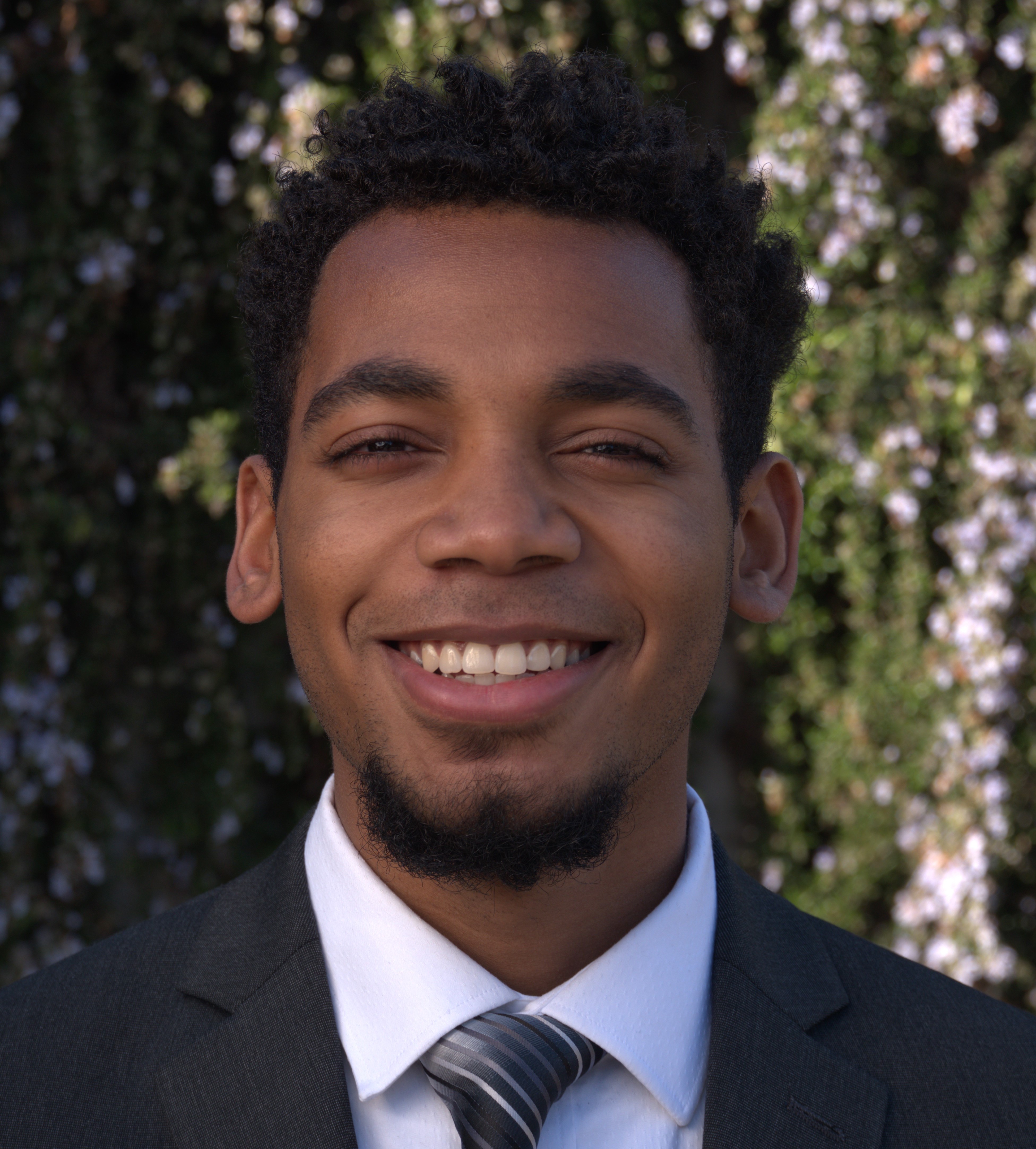
    Associated Students Legislative Vice President Jeremiah Finley runs for the presidency

    Former Vice President of Student Affairs and current Associated Students Legislative Vice President Jeremiah Finely has placed his hat in the race for the 2020-2021 AS presidency.

    Majoring in political science, Finley’s passion for politics can be traced to the last presidential election.

    “When I watched the 2016 race, I think something just awoke within me,” Finley said. “It got nasty, it got dirty, and that’s something that I don’t want to see happen ever again.”

    “When he walked into our first meeting, I knew he was going to be a great leader then.”

    Jourdan Lamar, Resident Hall Association president

    A sophomore in high school at the time, Finley didn’t put his passion into practice until arriving at Humboldt State University. In his first semester, Finley became president of the Cypress Hill Council after attending the info session and receiving encouragement from the council to run. Current Residence Hall Association President Jourdan Lamar first met Finley when he joined the council.

    “When he walked into our first meeting, I knew he was going to be a great leader then,” Lamar said. “He was advocating, asking questions, joining other organizations to learn more about HSU. Since then, I have had the opportunity to work alongside him in many organizations on campus, seeing him become a great student leader.”

    From day one, despite the threat of consequences, Finley said he’s made it his number one priority to place students’ interests first.

    “Due to this I have been penalized a lot, in various different ways,” Finley said. “Whether it be not getting the votes I needed to pass certain legislation, or not receiving the same type of social treatment. Ultimately, I bet on the students consistently. I think that all my students are worth it.”

    Jeremiah is a super bright and motivated student leader, both in AS as the legislative VP and housing as an RA. On multiple occasions, he has combined those roles by educating his residents about current issues on campus as well as bringing his residents to campus events.”

    Jenessa Lund, executive director of Associated Students

    Finley began making regular visits to the AS office in his first semester on campus, familiarizing himself with the organization. He attempted to apply for the position of social justice and equity officer, but was turned down due to lack of a college GPA. He returned the following semester and was appointed to the position of student affairs VP in February of 2019.

    Executive Director of AS Jenessa Lund has worked closely with Finley since he became a part of the board.

    “Jeremiah is a super bright and motivated student leader, both in AS as the legislative VP and housing as an RA,” Lund said. “On multiple occasions, he has combined those roles by educating his residents about current issues on campus as well as bringing his residents to campus events.”

    Finley’s favorite thing about being part of AS is watching students engage with one another and the various programs on campus.

    “When I get the chance to see how my advocacy helped them along the way, those moments are my favorite moments,” Finley said. “I get to interact with folks, I get to hear about their passions, what they’re excited about, what they’re doing.”

    “It’s been tough. It’s been really hard trying to navigate that, especially as a person of color in this predominantly white institution. It’s really difficult to make sure I can still be myself, but at the same time, be professional.”

    Jeremiah Finley

    Beyond the rewarding big-picture projects, Finley finds plenty to be proud of in his daily routine.

    “My day-to-day experience is something special,” Finley said. “It’s always fast-paced, there’s always something new going on—so you have to really adapt quickly to the changing scenarios. One thing you hear in the morning could be totally different from what you hear in the afternoon. And it’s been tough. It’s been really hard trying to navigate that, especially as a person of color in this predominantly white institution. It’s really difficult to make sure I can still be myself, but at the same time, be professional.”

    Despite everything HSU has to offer, including various programs and resources, a sense of community on campus and the attention paid to student voices, Finley sees endless room for improvement.

    “I don’t think anything should really stay the same, and I mean that,” Finley said. “There’s just too much complacency and I think there’s a lot that needs to change.”

    Finley intends to place more emphasis on incorporating student engagement within AS.

    “Yeah, we have the AS board of directors, but that’s really geared towards AS and what AS wants to do,” Finley said. “But I feel like we don’t have a place where all students can come together to talk about what we all want to do and want to see happen. So, if we can make a central hub where we can talk and just listen to each other and hear what we want to do as a collective, then I think we can truly start generating some great ideas to change the way this campus runs.”

    Finley said he understands the struggles college students face, whether it’s coming up with enough money to pay bills or buy groceries, providing for your family or setting aside time for schoolwork.

    “But ultimately you just gotta keep going, you gotta keep fighting. And so I’ll keep fighting, I’ll keep going and I’ll keep being persistent, that way I can make sure I can advocate for students.”

    Jeremiah Finley

    “It’s just this balancing act and I think there’s a lot of things that can be easier for students, things that I currently have no direct control over,” Finley said. “So, if I can put myself in that position to really help, then that’s what I want to do.”

    As legislative VP, Finley referred to his magnum opus, his great work, as the AS Constitution, Codes and Policies. He put together a full constitution revision packet over the course of the 2019-2020 school year, including new bylaws and revisions for out-of-date codes and policies. Presented to the board back in February, the revision wasn’t passed.

    “It hurt,” Finley said. “It really did hurt when the board decided not to think carefully or listen carefully to what I was saying. I think from that moment I knew that if I wanted to bring the change that I want to see in HSU, and I think that we all deserve here, then I can’t continue in this role.”

    Finley said he’s not only prepared, but is determined to take on bigger challenges and face greater consequences in the name of improving the lives of students.

    “Some days are good, some days are better than others,” Finley said. “But ultimately you just gotta keep going, you gotta keep fighting. And so I’ll keep fighting, I’ll keep going and I’ll keep being persistent, that way I can make sure I can advocate for students. And come election time, I have faith that I’ll be elected for AS president for the next academic year.”

  • My Hair is Not a Dress Code Violation

    My Hair is Not a Dress Code Violation

    Natural hairstyles are often shunned, but these hairstyles keep hair healthy while representing cultures

    “You would look so pretty if you straightened your hair,” is something I heard a lot growing up. So much so that for two years I straightened my hair everyday. It took three years of haircuts and deep conditioning treatments to get my hair back to normal.

    That comment along with others like, “Your hair gets in the way,” seem small but take a toll on an individual’s self esteem. A lot of care goes into textured hair. Someone tearing it down hurts.

    “It’s discouraging to know that there are not a lot of people that like or can handle your hair,” Humboldt State University student Dimitri Mark said.

    There are still some schools in the United States that ban natural hairstyles such as braids or dreadlocks because they violate dress codes. I’m not sure how they violate dress codes—these hairstyles keep your hair back and can even keep your hair healthy.

    In 2018, a video surfaced on the internet of a 16-year-old boy crying as his dreadlocks were cut off for him to participate in his wrestling match—it was either that or forfeit.

    Hair comes in many different textures, lengths and colors, and should always be taken care of and accepted. Hair doesn’t get in the way. Get over it and stop trying to pick on people of color.

    Girls have also been suspended, sent home or given detention in Boston, Atlanta and Terrytown, Louisiana for their hairstyles.

    At the 2015 Oscars, Zendaya sported dreadlocks to go with her hairstyle. Giuliana Rancic, a host on “Fashion Police,” wasn’t a fan of Zendaya’s locks, which she said smelled “like patchouli oil and weed.” This comment almost led to the end of Rancic’s career. Rancic’s prejudiced words hurt, and they caused a riot against her.

    The reason natural hairstyles such as big curly hair, afros, dreadlocks, braids and twists are a problem is because they’re considered dirty. Things like accents are considered dirty too, unless they’re coming from a blue-eyed, white boy. Many places in Africa, Italy, and Greece once considered braids to be a sign of wealth. Braid-making hairdressers were worshiped and highly trusted.

    It’s understandable why schools have certain dress codes, but hair shouldn’t be part of them. If a school said I had to have my hair in a ponytail everyday, I’d probably fight it everyday and then get kicked out. Hair comes in many different textures, lengths and colors, and should always be taken care of and accepted. Hair doesn’t get in the way. Get over it and stop trying to pick on people of color.

  • We still don’t feel safe

    We still don’t feel safe

    Racial discrimination on campus is rampant

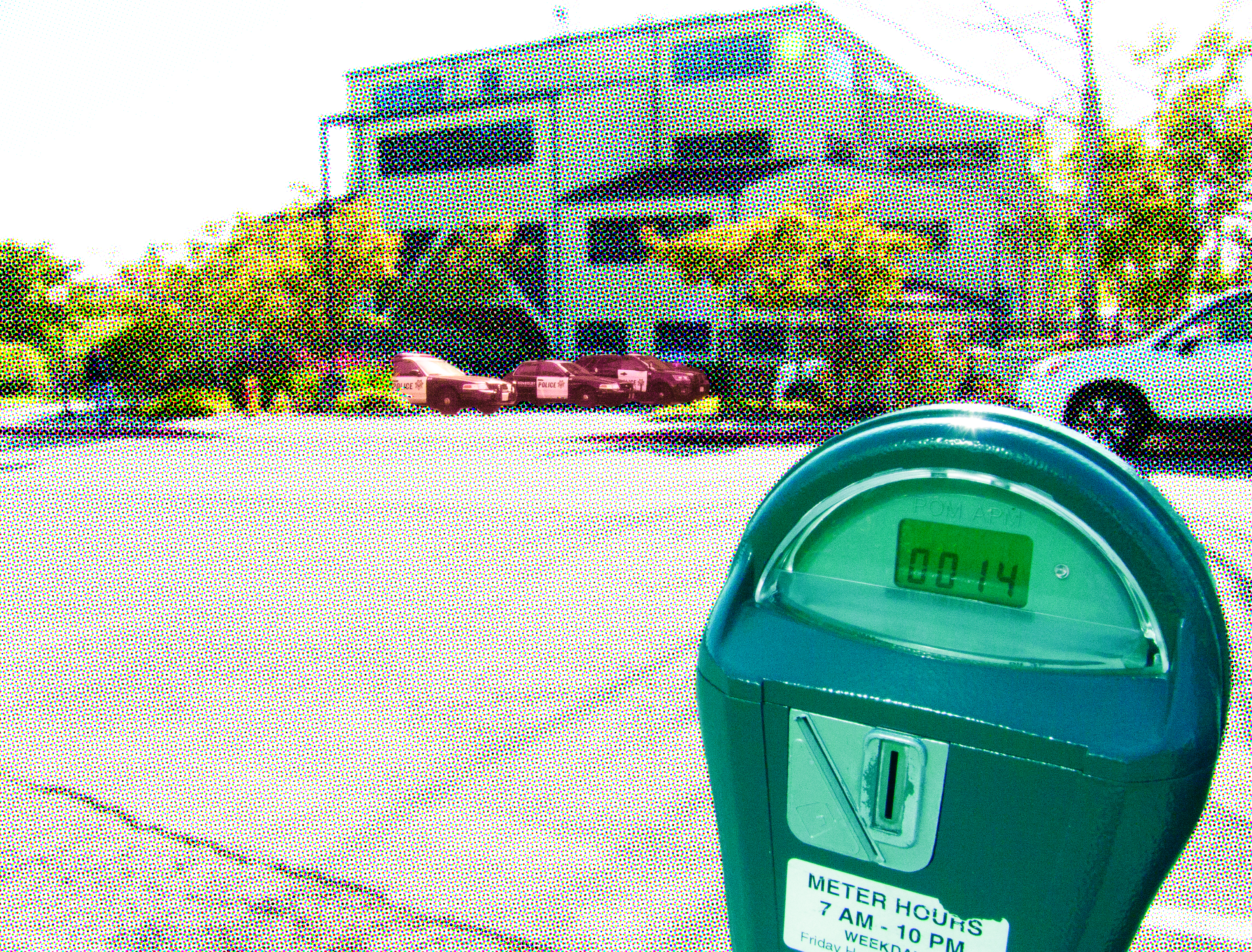
    I, Skye Kimya, believe I was detained on Feb. 14 over a $40 on-campus parking ticket because of the color of my skin.

    Around 8 a.m. that morning, I walked out of a building on the northeast side of campus to find two parking officers giving me a ticket for where my car was parked.

    After getting into a small verbal altercation with these parking officers, I realized it wasn’t worth the argument. I asked them to give me the ticket and let me go about my day.

    The parking officers were not happy with me driving off while they were still giving me my ticket, and before I knew it, Humboldt State police Chief Donn G. Peterson was pulling me over in an undercover vehicle.

    Within minutes, another University Police Department vehicle arrived to the scene. I was interrogated for approximately 10 minutes by two officers on each side of my car about the incident that had just occurred. After the officers spoke with each other for a few minutes, another cop car pulled up, and UPD officer Delmar Tompkins made his way to my driver side.

    “Please step out of your vehicle and put your hands behind your back,” Tompkins said.

    “Excuse me? I don’t understand,” I said.

    I was told I was being detained under suspicion of assault with law enforcement. After questioning this accusation, I was told I was a threat at that time and needed to be detained for the safety of the officers because they did not know the full story yet.

    Confused and scared, I got out of the car, did what Tompkins asked me to do and began to cry like a baby as he placed me in the back of his cop car.

    Imagine being detained and told you are a threat, under suspicion of assault, by a white officer twice your size. Imagine feeling confused and alone. Imagine questioning what could possibly happen next.

    When you grow up trying to understand the purpose behind discrimination, you begin to notice how common it is and wonder if it will ever go away.

    At times, you lose hope for your children’s generation. Yet other times, you want to become the greatest activist that has ever walked this planet, in order to actually make things right for those future generations.

    Students at HSU don’t feel at home. We don’t feel as though there are people by our side, and we don’t see the amount of people of color around campus that the HSU pamphlets and website photos presented to us when we were deciding which university to attend.

    According to HSU’s “fast facts,” the incoming class of fall 2016 consisted of 549 Hispanic/Latino students, 51 African American students, 31 Asian students, 11 American Indian students and four Pacific Islander students.

    Additionally, the entire fall 2016 student body consisted of 2,869 Hispanic/Latino students, 271 African American students, 279 Asian students, 89 American Indian students and 20 Pacific Islander students.

    With a student body total of 8,503, you can imagine what it is like to see only 270 other faces similar to yours on one side, and only 88 other faces similar to yours on the other side.

    Hispanic and Latino students made up almost 35 percent of the entire student body that same year. Seems like a reasonable amount, right?

    HSU actually receives funds from the U.S Department of Education ever since they became a Hispanic-Serving Institution at the start of the fall 2013 semester.

    To become a Hispanic-Serving Institution, the university has to have an undergraduate full-time equivalent enrollment of at least 25 percent Hispanic students, and HSU was at 26.6 percent for the fall 2013 semester.

    HSU continues to flaunt a great amount of diversity that it does not have. These incoming students, like many of us who were once in their shoes, attend HSU and slowly begin to witness and experience how diverse this campus and community is truly NOT.

    Just the other day, the NAACP Eureka Branch called out HSU and asked them to stop recruiting students from minority-majority neighborhoods until changes are made around campus and within the community.

    A majority of the students of color who have attended HSU for at least two academic years have experienced some type of discrimination, whether it was verbal, physical or emotional.

    In 2013, Tompkins had a civil lawsuit filed against him by a Fieldbrook man who alleged he was the victim of a brutal assault back in January 2012. It turns out the Fieldbrook man wasn’t lying and the Cal State University system paid him $135,000 to keep him quiet.

    As students of color at this university, how are we supposed to feel safe if our own UPD officers don’t do things the right way and have our back?

    Cases like the murders of HSU African American students Corey Clark (2001) and David Josiah Lawson (2017) are still unsolved to this day, and we as students have not seen enough action taken by our president, UPD and even the Arcata Police Department.

    Students of color do not feel safe, nor protected here. The NAACP Eureka Branch is right and something has to change before HSU tries to drag more students of color to this campus.

  • 11 months and no justice for Josiah

    11 months and no justice for Josiah

    David Josiah Lawson was a victim of a hate crime and has become the poster child of the racism that exists in Humboldt County. Though the Arcata Police Department has been working through the investigation using physical evidence and witness statements, the trail remains cold in the pursuit to bring justice to Lawson.

    Lawson was a black 19-year-old criminal justice student at Humboldt State when he was stabbed to death at a house party in Arcata on April 15, 2017. The efforts of local authorities attempting to solve the case of his death fall short to this day. Those who spoke up after the incident hold little water in the eyes of the law due to conflicting reports of hearsay and lack of evidence. So much is against Lawson under these unfortunate circumstances.

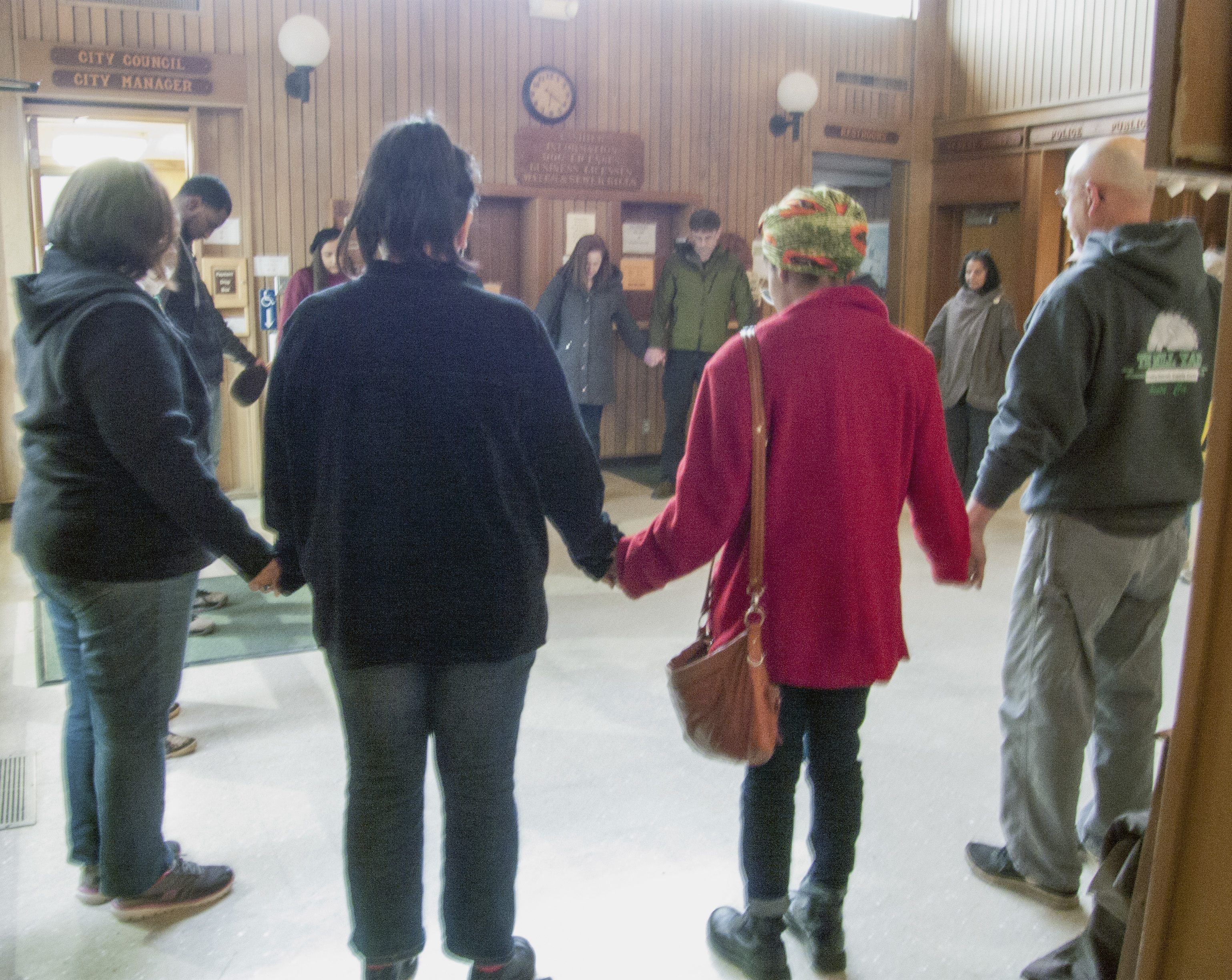
    A vigil has been held for Lawson every month since his untimely death last April. The turnout of the 11th vigil on March 15 at Arcata City Hall was lower than usual due to spring break and heavy rain, but over a dozen people participated in solidarity of Lawson nonetheless.

    During the vigil, Alex Foster, a leading force in finding justice for and preserving the memory of Lawson, said mixed messages aired by the media continue to hamper with the development of the murder case.

    “There’s a lot of rumors and false narratives, especially from newspapers,” Foster said. “It’s just different perspectives.”

    McKinleyville resident Kyle Zoellner was arrested for allegedly stabbing Lawson, but was released by Judge Dale Reinholtsen for lack of evidence. During the preliminary hearings, contradicting testimonials by eyewitnesses include Zoellner’s physical condition when Lawson was murdered.

    In a report by Mad River Union, Zoellner’s family said Lawson was stabbed to death while Kyle was unconscious due to a brutal assault. However, the Lost Coast Outpost reported Elijah Chandler, a friend of Lawson who was at the scene of the crime, witnessed Zoellner “drop something shiny on the ground” a moment after discovering someone had been stabbed. Conflicting reports such as these only muddy the waters of the case.

    What students, police officers, politicians and other community members need to understand is that the murder of Lawson brings up broader issues of social injustice and public safety.

    If people continue to downgrade the importance of this case or stay disinterested, then we are doing ourselves a huge disservice. We are allowing criminals to get away with hate crimes in a town that brings in innocent students year after year.

    Despite some of the challenges Foster and other tenacious supporters face, the search for justice carries on.

    Though the case remains open, relentless efforts are made to not only keep Lawson’s memory alive, but to spread awareness about the injustices that people of color still face in the area.

    April 15 will mark the one-year anniversary of Lawson’s death. Though details for the next vigil are in the works, tentative plans include a community gathering at the Arcata Plaza and a march to the D Street Neighborhood Center. Full details will be announced on the Justice For David Josiah Lawson Facebook page.

    In addition, the City of Arcata is supporting a safe space for a Community Dialogue on Race on March 22 at the D Street Neighborhood Center, located at 1301 D St. in Arcata. The meeting starts at 5:30 p.m.

  • The fight for David Josiah Lawson’s justice continues

    The fight for David Josiah Lawson’s justice continues

    Community members expressed frustration with the progress of the Lawson case at a community meeting held by Arcata City Council on Oct. 26.

    The second of six planned community sessions was held to provide Lawson case updates and discuss student safety. Humboldt State University students and faculty and Arcata community members filled the D Street Neighborhood Center expecting answers.

    Arcata Police Department Chief, Tom Chapman gave updates on the Lawson murder case. Chief Chapman said APD has recruited Tom Parker, former FBI agent “to objectively review the case…considering the complexities and subtleties.”

    Chapman said forensic evidence testing results have been received, yet APD is “a couple months out from ability to do testing on the last, outstanding piece of evidence.”

    Limited information was provided due to the confidentiality of the case.

    Community members urged for more transparency with the current process of the investigation and activism on behalf of the city.

    Students of HSU voiced concerns of student safety both on campus and in the community.

    Humboldt State University President, Lisa Rossbacher said “we [HSU] are working in conjunction with the city to ensure we have a safer environment for students.”

    “By hearing stories of students feeling threatened… give city insights of how to provide safety for students.” Rossbacher said.

    Chief Chapman urges students to come forward with any safety concerns, as well as suggestions for community involvement.