The Lumberjack


Students Serving The Cal Poly Humboldt Campus and Community Since 1929

Tag: pipeline

  • Standing Rock Reflection

    Standing Rock Reflection

    By | Phil Santos

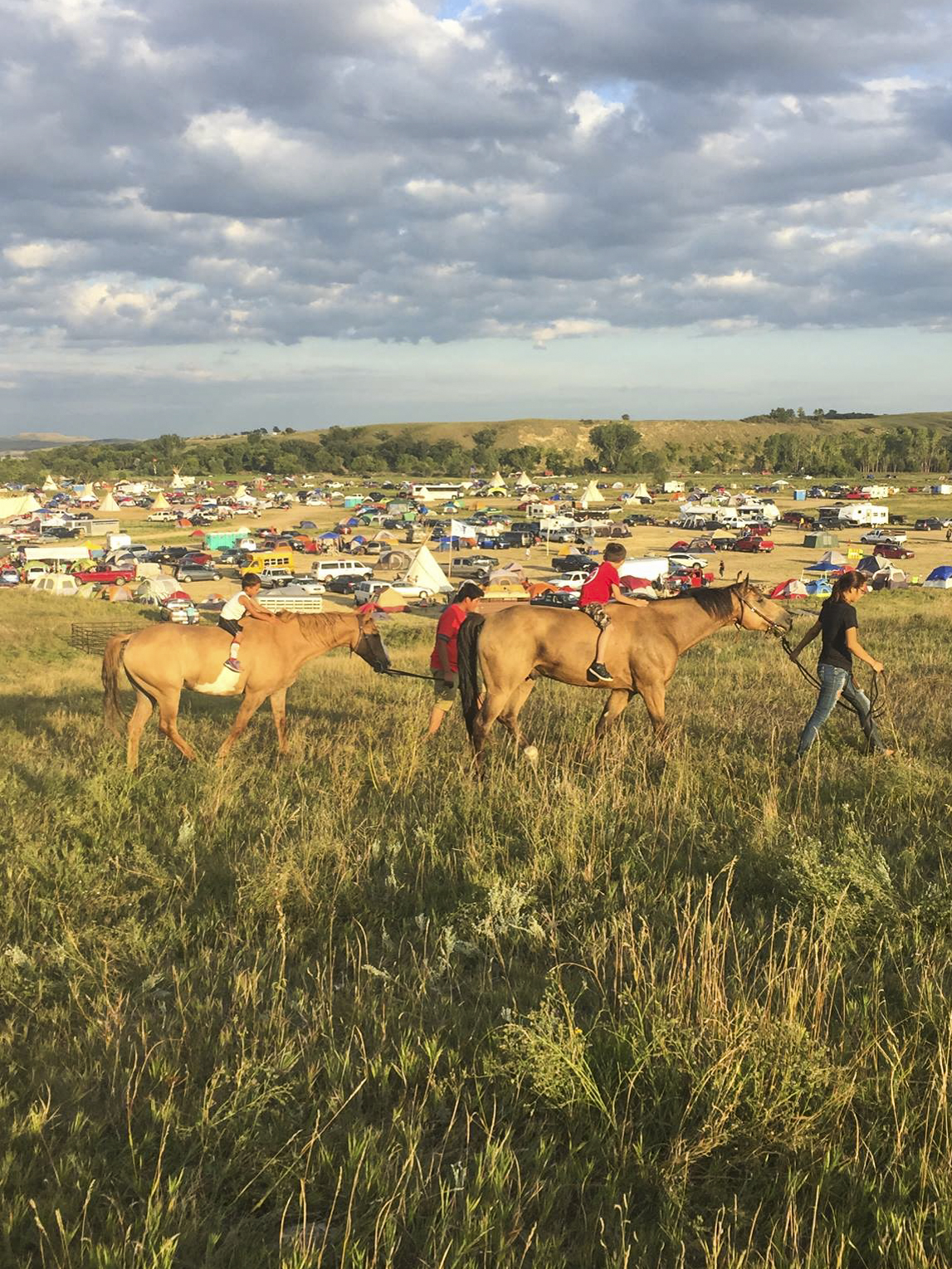
    We brought prayers to a gunfight, and we won. I’m talking about the water protectors who stood against military, police and mercenary forces last year at Standing Rock. We were there to protect the water, to preserve the future and to stand against those who would see our precious earth destroyed for a dollar. We were there to stop the construction of the Dakota Access Pipeline.

    It was around this time last year that I had been released from jail. I was one of about 150 water protectors arrested on Oct. 27, 2016 during the invasion of Standing Rock. It’s 2017, and the pipeline has been built. So, how did we succeed?

    While I cannot speak for everyone, here is my individual take.

    Standing Rock demonstrates the active presence of a powerful Indigenous community. Historic and contemporary narratives often portray Indigenous culture as a part of the past. I’ve met people who didn’t know Indigenous Peoples still existed. I think Standing Rock has made this much less likely. Thousands of Indigenous protectors from hundreds of Indigenous nations from all over the world came together at Standing Rock. The media coverage of Standing rock sent a loud and clear message that Indigenous nations are not passive and that they are here and now.

    Standing Rock created alliances that might have otherwise never have been forged. The Sacred Fire of the Seven Councils was lit, something that hadn’t happened since the 1800s. Indigenous nations from all parts of the world came to show their solidarity. Groups from every race united under Indigenous leadership. I saw Indigenous and non-Indigenous alike all acting for one cause. This is an image that captures true power. I met like minds from across the world. I found lifelong friendships in a matter of hours. Although I’ve returned from Standing Rock, the reason I went carries forth.

    Standing Rock brought attention to Indigenous issues. Over 300 cities in the U.S. joined in to slow the construction of the pipeline. Newscasters across the world cast light on the continued violation of Indigenous rights, of Treaty rights and of the continued history of violence against Indigenous nations. The issue of environmental racism was explicitly raised and people were engaged. Footage showing the willingness for state and federal governments to utilize violence for the benefit of private companies broadcasted across the world. The U.N. sent human rights investigators. All of these events contributed to raise awareness of Indigenous issues which are typically marginalized.

    Sure, the pipeline was built – so one could say the movement at Standing Rock was actually a failure. But the protectors at Standing Rock who aren’t still in jail continue to forward the call, which brought them there in the first place. Thousands of protectors have been changed forever. You don’t forget something that has made you who you are, and Standing Rock is now a part of who I am. Standing Rock was not a defeat. It was empowering and gave me the courage to challenge the structures around me. I’m not the only one, and that is why I think we won.
     

  • Potential pipeline meets resistance

    Potential pipeline meets resistance

    Story by | Emily Owen

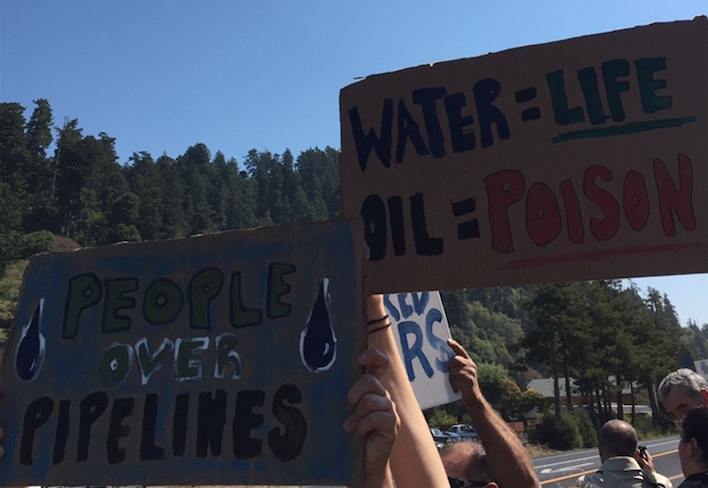
    Since the 1970s, a Canadian-based energy company called Veresen Incorporated has been working on a plan to build a pipeline to carry natural gas through Southern Oregon, just 200 miles north of Arcata. After being repeatedly turned down, documents are currently being prepared to be re-submitted with the expectation of eventual approval. 

    According to Veresen Incorporated’s website, the Pacific Connector Gas Pipeline is proposed to be 232 miles long, cross under five major rivers and result in the clear-cutting of up to 30 miles of forest. At $7.5 billion, the project is worth twice as much as the Dakota Access Pipeline and is being praised for its potential in economic benefit.

    When Leonard Perry heard about the Pacific Connector Gas Pipeline and that sections were going to pass through the Klamath River, he readied himself for the fight he knew was coming. Perry, an 18-year-old student attending College of the Redwoods, is a founding member of a group known as Humboldt Water Protectors. The group, now called Sacred Seeds, has made it their main goal to protect the abundance of natural resources in and around Humboldt County.

    “We see what’s happening to the world, what’s happening in our own backyard, and people are waking up,” Perry said. “We all drink water. This isn’t a party issue, we need to start looking out for our brothers and sisters. The minute we start coming together there’s change.”

    Mouth of the Klamath River in the fall. Photo by Emily Owen.

    The HSU Environment and Community Club is organizing an on-campus event titled Water is Life: The Standing Rock-Klamath Connection to publicize and spread awareness of the potential Pacific Connector Gas Pipeline. The event will happen on March 4 in the Kate Buchanan Room from 12 to 6p.m. and will shed light on interconnectivity behind the movement for clean and safe water.

    Francesca Gallardo and Yojana Miraya, both graduate students in the environment and community program, are coordinating outreach for the event. Gallardo sees the potential to unite these communities and cross boundaries through building coalitions.

    “These movements are for everyone,” Gallardo said. “We are fighting the biggest fight of our lives. It is time for everybody and anybody to step up.”

    Miraya is from an indigenous tribe in Peru and recognizes the parallels in the global struggle to protect natural resources. 

    “Leaders aren’t working for the communities” Miraya said. “Educating people will bring consciousness and the parts of society that are marginalized can come together.”

    Cutcha Risling-Baldy professor of Native American studies at HSU, is Karuk, Yurok and an enrolled member of the Hoopa Valley Tribe, thinks of pipelines as last resort efforts from the nonrenewable energy industry to stay relevant in a world relying on a failing system.

    “There’s a Gold Rush mentality of wanting to make as much money as possible no matter what the consequences are,” Risling-Baldy said. “That’s why we need to always include an indigenous perspective. Native people consult with the land and we see those connections. You can’t account for the way nature plays with your best plans.”

    Risling-Baldy stressed the importance of divesting from companies and organizations that fund nonrenewable infrastructure. 

    “We’re finding out that people think with their money,” Risling-Baldy said. “The government is actively working against the people so you need to speak with your money. Take it out.”

    Michael Hinrichs, Director of Communication for the Pacific Connector Gas Pipeline, acknowledges the opposition that is growing and wants to assure people that the project is meeting all environmental standards set by the federal government.

    “We’re trying to avoid the impacts that people are worried about,” Hinrichs said. “I would encourage people with concerns to make them known.”