The Lumberjack


Students Serving The Cal Poly Humboldt Campus and Community Since 1929

Tag: probiotic

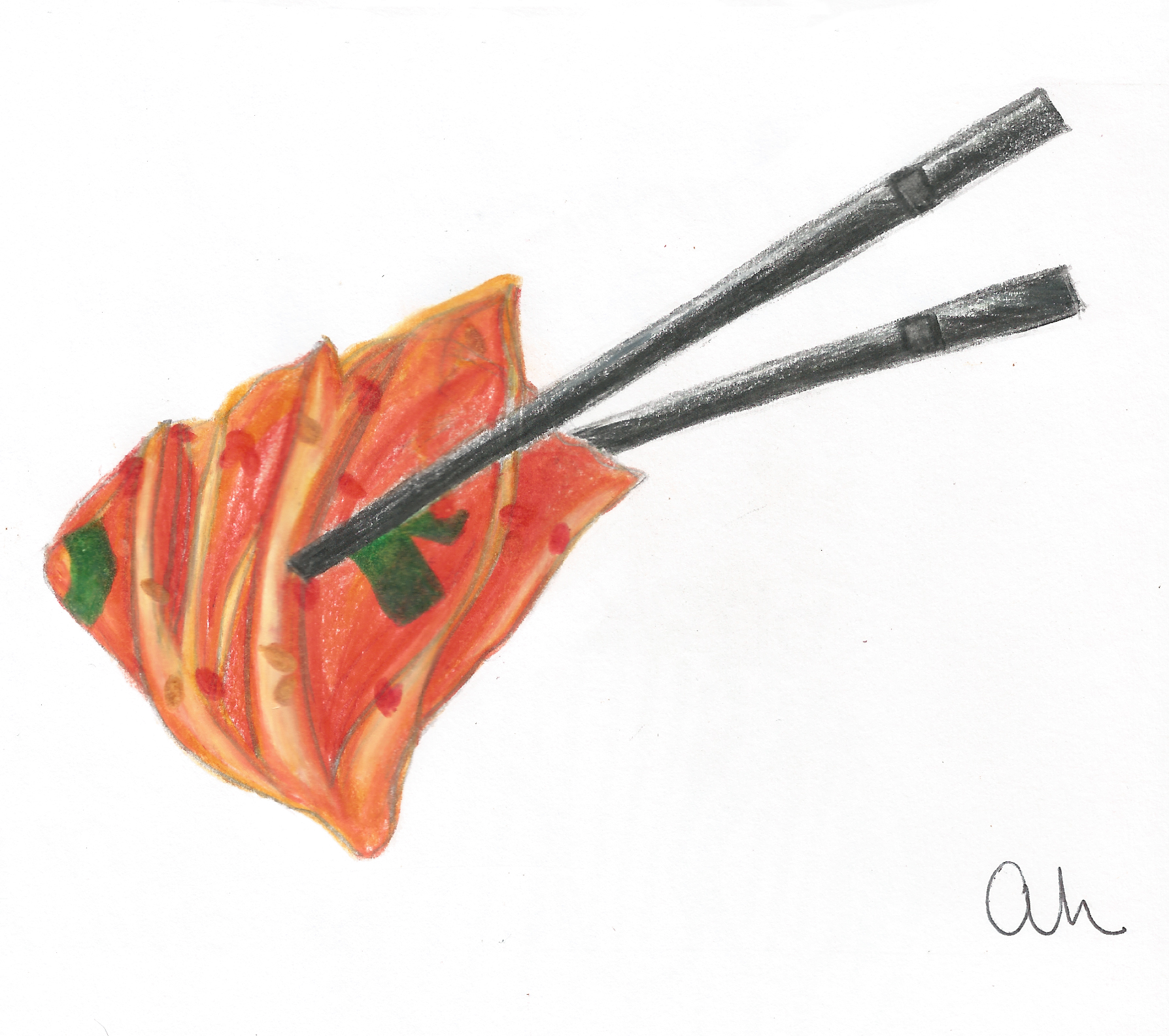
  • Kimchi trend is hard to swallow

    Kimchi trend is hard to swallow

    Many Koreans who grew up in the U.S. probably understand why the recent kimchi trend is a little irritating. Korean Americans know full well the shame they had to endure by their non-Korean friends who expressed disgust of the pungent smell and taste of kimchi. That sense of shame is then heightened by alienation, making them feel as if Korean culture isn’t normal.

    “I see a lot of white guys making Korean food ,and I’ll be honest, it pisses the shit out of me,” David Chang, renowned Korean American chef, said. “It’s everywhere now. Kimchi this, kimchi that. You weren’t like, ostracized in elementary school because everyone thought when they visited your house that it smelled like garbage. They didn’t have to endure emotional hardship. And now it’s cool.”

    Kimchi is a staple Korean food made from various vegetables, most commonly with napa cabbage and radishes. It contains an assortment of spices, including seafood sauce, red pepper paste, garlic and ginger. It has a sour taste, a crunchy texture and a fishy smell that is packed with probiotics, vitamins and minerals.

    “Kimchi is a traditional Korean food manufactured by fermenting vegetables with probiotic lactic acid bacteria,” the Journal of Medicinal Food wrote. “Accordingly, kimchi can be considered a vegetable probiotic food that contributes health benefits in a similar manner as yogurt as a dairy probiotic food.”

    Nowadays, you can find kimchi in supermarket chains, taco trucks and on hot dogs. What used to ostracize Korean Americans has now become trendy, which is annoying in some ways, but exciting that the western world is finally appreciating Korean food.

    Popularization is a foolish way to appreciate ethnic foods. Waiting for celebrity chefs and publications to tell us what cuisine is worthy of attention is a small-minded way of enjoying foods outside of your comfort zone.

    “Declaring an entire ‘ethnic’ cuisine a trend is inherently dismissive,” Khushbu Shah, Thrillist’s senior food features editor, said. “Filipino food, for example, is the main source of sustenance for more than 100 million people around the world today and has been eaten for centuries, even in the United States. So the very nature of tagging something as a trend also gives it a shelf life that is set to expire after its moment of popularity. But that’s not how cuisines work.”

    Kimchi’s trendiness will likely wane, but it will certainly not lose its cultural significance. The first step in exploring foods past your customary tastes is to have an open mind. If you don’t like it, that’s fine, but don’t hold it against us.
     

  • Dorm-made kombucha is a thing

    Dorm-made kombucha is a thing

    A funky, moldy belch clings desperately to the humid air, evoking a similar funk to a brewery.

    Will Suiter, 18, is an amateur chemist and kombucha connoisseur. He makes kombucha in his HSU dorm room.

    Kombucha, as many of us Humboldt dwellers know, is a trendy probiotic drink brewed with the help of “symbiotic culture of bacteria and yeast” (SCOBY), similar to the “mother” found in apple cider vinegars.

    The SCOBY appears much like an agar found in a petri dish or perhaps a somewhat slender jellyfish. It houses millions of bacterial colonies that help cultivate kombucha, as well as protecting the elixir from “bad” bacteria that could contaminate it.

    The process itself is deceptively simple, but Suiter says that each nuance in flavor and carbonation is deliberately cultivated from many failed batches.

    “Kombucha is brewed just like wine or beer,” Suiter said. “But instead of just yeast, it’s brewed with bacteria that converts sugar into acid instead of alcohol”.

    Consumers can flavor the beverage any way they want during fermentation.

    “The base of it is essentially a sweet tea,” Suiter said. “Once it’s brewed in a large jar, I add flavorings like ginger, blackberry juice or lemon peels… and transfer it to bottles.”

    Once it’s in the bottles, Suiter lets the kombucha ferment a little bit longer, “which creates carbon dioxide that pressurizes the bottles and makes the kombucha fizzy.”

    Explosion is pretty common, which is due to over-filling the containers or an excess of carbonation when a batch has been fermented for too long.

    “Since I actually brew a lot of kombucha, I have several large glass jars I brew the base tea in so I can reduce risk of everything exploding,” Suiter said.

    The process itself requires several tools that just about anyone can pick up at their local hardware store.

    “Kombucha is really good for you,” Suiter said. “It has tons of vitamin B and probiotics from the bacteria we introduced, which are healthy for your gut.”

    The drink pairs well with a multitude of snacks.

    Suiter said his favorite meal is a “fat slice of pizza with a big glass of some sour kombucha.”

    So if you are in the mood to experience a rather funky new drink, help out your digestive system or follow a trend, maybe reach for a bottle of kombucha.