The Lumberjack


Students Serving The Cal Poly Humboldt Campus and Community Since 1929

Tag: problematic

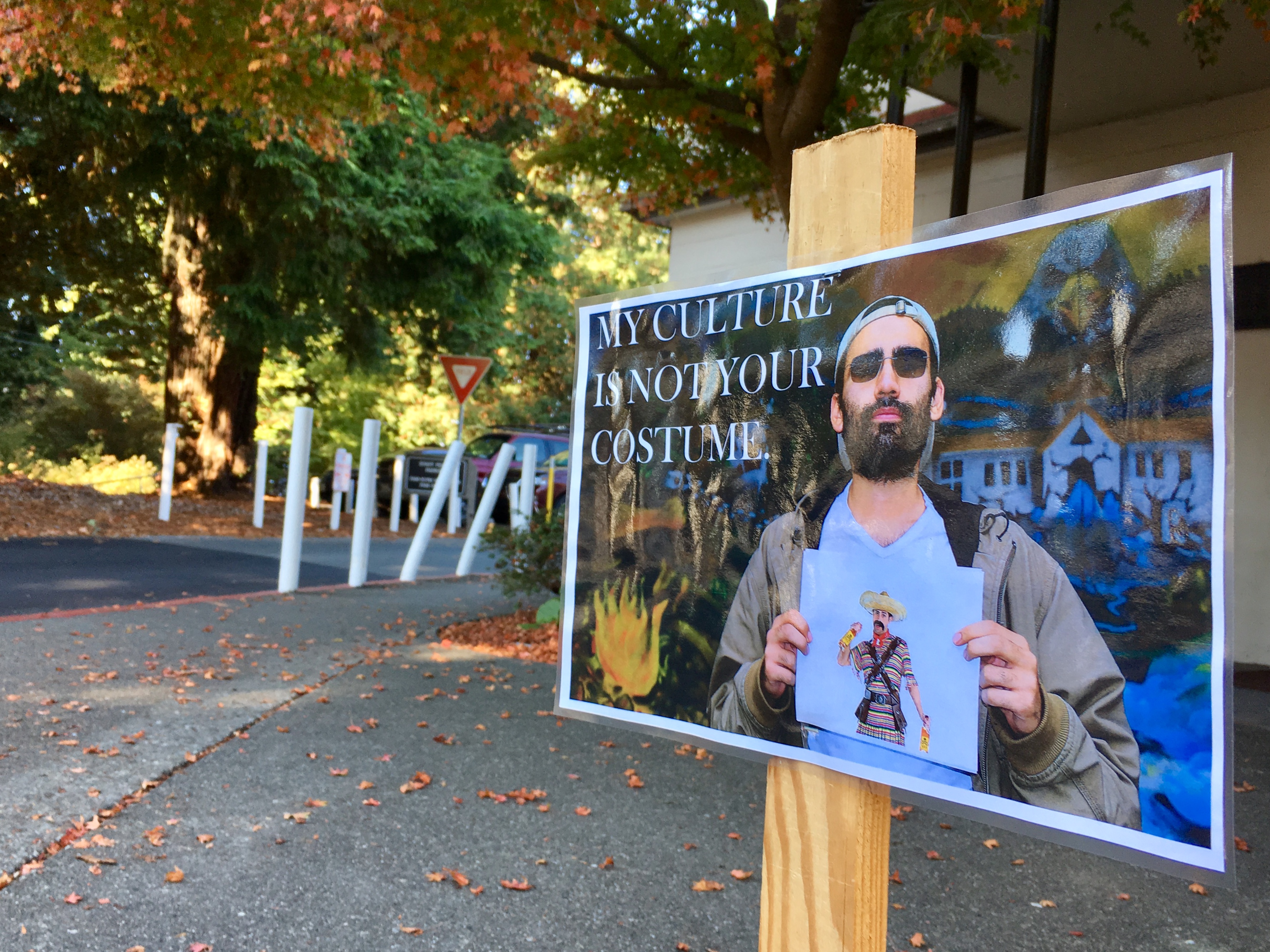
  • Commercial Costumes Can Be Problematic

    Commercial Costumes Can Be Problematic

    Many costumes portray culture and lifestyle in an insensitive manner

    Humboldt State students hurry last minute to piece their Halloween costumes together but find no comfort in commercial Halloween stores as the stores will often have sections full of costumes that are ignorant or insensitive.

    Sierra Cosper, a forestry major, expressed her discontent in the commercial Halloween store, Spirit Halloween.

    “I went through Spirit Halloween and they had a whole aisle of Pocahontas and it’s not cool,” Cosper said. “It’s 2019, can we move on from that now?”

    Students agreed that Pocahontas and Native American themed costumes were disrespectful and unacceptable to wear. Haley Fedalizo, a liberal studies elementary education major, found another commercial Halloween store, Party City, to be disrespectful toward culture and body weight.

    “Obviously the [costumes] that are in your face like the Native American one is not okay,” Fedalizo said. “I was literally at Party City yesterday and I saw a “fat costume” and that’s not cool.”

    Jose Moreno, a social work major, also found fault in the commercial chain Party City. Moreno practices an ironically ‘fun’ tradition at the store every year. Often losing count of the inappropriate costumes.

    “I went through Spirit Halloween and they had a whole aisle of Pocahontas and it’s not cool. It’s 2019, can we move on from that now?”

    Sierra Cosper

    “When I go to Party City or anything like that, I count how many cultural appropriation outfits there are,” Moreno said. “I’m like ‘there’s one right there, and right there! I lost track.”

    Beyond the recognizable commercial chains, the internet continues to advertise culturally insensitive and inappropriate Halloween costumes and accessories.

    HSU student Gabrielle Sturm, an environmental studies major, went online to browse for the Halloween season and couldn’t believe what was advertised.

    “I was looking up costumes online and I was a little surprised to see how many [inappropriate costumes] there still are,” Sturm says. “I think they’re bad but a lot of people still do it.”

    While cultural appropriation continues to popularize social media with cultural awareness movements, HSU promotes a safe and respectful Halloween season. Of course, the message on campus has no influence on commercial chains.
  • Hoodies with Holes Trigger Responses

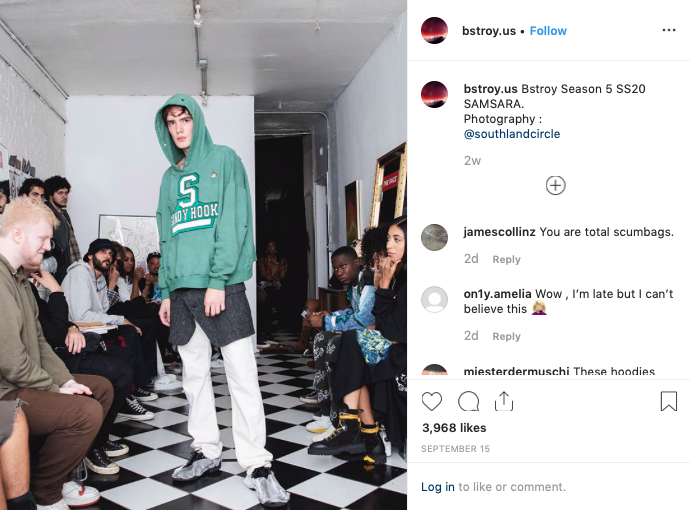
    Hoodies with Holes Trigger Responses

    Did streetwear fashion brand Bstroy take tragedy too far?

    Earlier this month at New York’s Fashion Week, streetwear brand Bstroy sparked controversy after unveiling a line of clothing inspired by school shootings.

    Founders of Bstroy and Atlanta based designers Brick Owens and Dieter Grams presented hoodies riddled with bullet holes and emblazoned with names of schools where mass shooting took place: Sandy Hook, Columbine, Virginia Tech and Marjory Stoneman Douglas.

    Bstroy’s Instagram page shares the brands description, a “Neo-Native Menswear Design House.” Owens and Grams have come under scrutiny and have defended their creations as a form of art and expression.

    After some of the backlash, Owens took to Instagram in an attempt to explain.

    “Sometimes life can be painfully ironic,” Owens wrote. “Like the irony of dying violently in a place you consider to be a safe, controlled environment, like school. We are reminded all the time of life’s fragility, shortness, and unpredictability yet we are also reminded of its infinite potential.”

    Grams and Owens sent a statement to TIME, the New York Times, the Cut and the Washington Post claiming their brand simply used its platform to shed light on important issues.

    “We wanted to make a comment on gun violence and the type of gun violence that needs preventative attention and what its origins are,” the statement read. “While also empowering the survivors of tragedy through storytelling in the clothes. Arts job is to wring emotion out, what we do with it after is subjective and on us.”

    Fred Guttenburg’s Twitter response.

    However, not everyone views the act in an artistic light. Family members of victims took to social media to share their views. Fred Guttenburg, whose daughter Jamie Guttenburg was killed by the gunman at the Marjory Stoneman Douglas shooting, went to Twitter to express his disgust.

    “Under what scenario could somebody think this was a good idea?” Guttenburg wrote. “This has me so upset. If any of my followers [know] anybody involved with this clothing line, please ask them to stop it immediately.”

    Shawn Sherlock, whose niece Gina Rose Montalto was also a victim at the Stoneman Douglas shooting, posted a tweet in response as well.

    “My 14-year-old fashionista niece was murdered in Parkland,” Sherlock wrote. “She was a professional illustrator and aspired to be clothing designer like you. You should be ashamed of taking advantage of her death to make [money].”

    Some HSU students noted that if Bstroy were to donate some of their proceeds, they could be more likely to accept the creators’ stance.

    Screengrab of Sherlock’s tweet in response to Bstroy’s hoodies.

    Journalism major Israel Landes said he found Owens’ explanation insincere, seeing it more as Owens defending his artistic choice and saying he thought there were ways to make it clear they were making a statement.

    “If at the event, fashion show, maybe just a quick announcement, ‘Hey we’re doing this to represent whatever group, whatever victims, whoever’s being affected by these shootings,’” Landes said. “He could if he wanted to go the extra mile and say ‘Hey you know we are donating X number of the proceeds to families of the victims.’”

    Mari Agaton, an art history major, agreed with the charity aspect lightening the grim connotation of the hoodies.

    “Coming as an artistic statement, if the proceeds were donated to the families I could buy into it better,” Agaton said.

    Owens and Grams met on MySpace while they were both living in Atlanta, and while they initially planned to have the sweaters be only for NYFW, they have stated they’re now considering putting them up for sale.