Sociology peer mentors shine with Youth Educational Services and help students
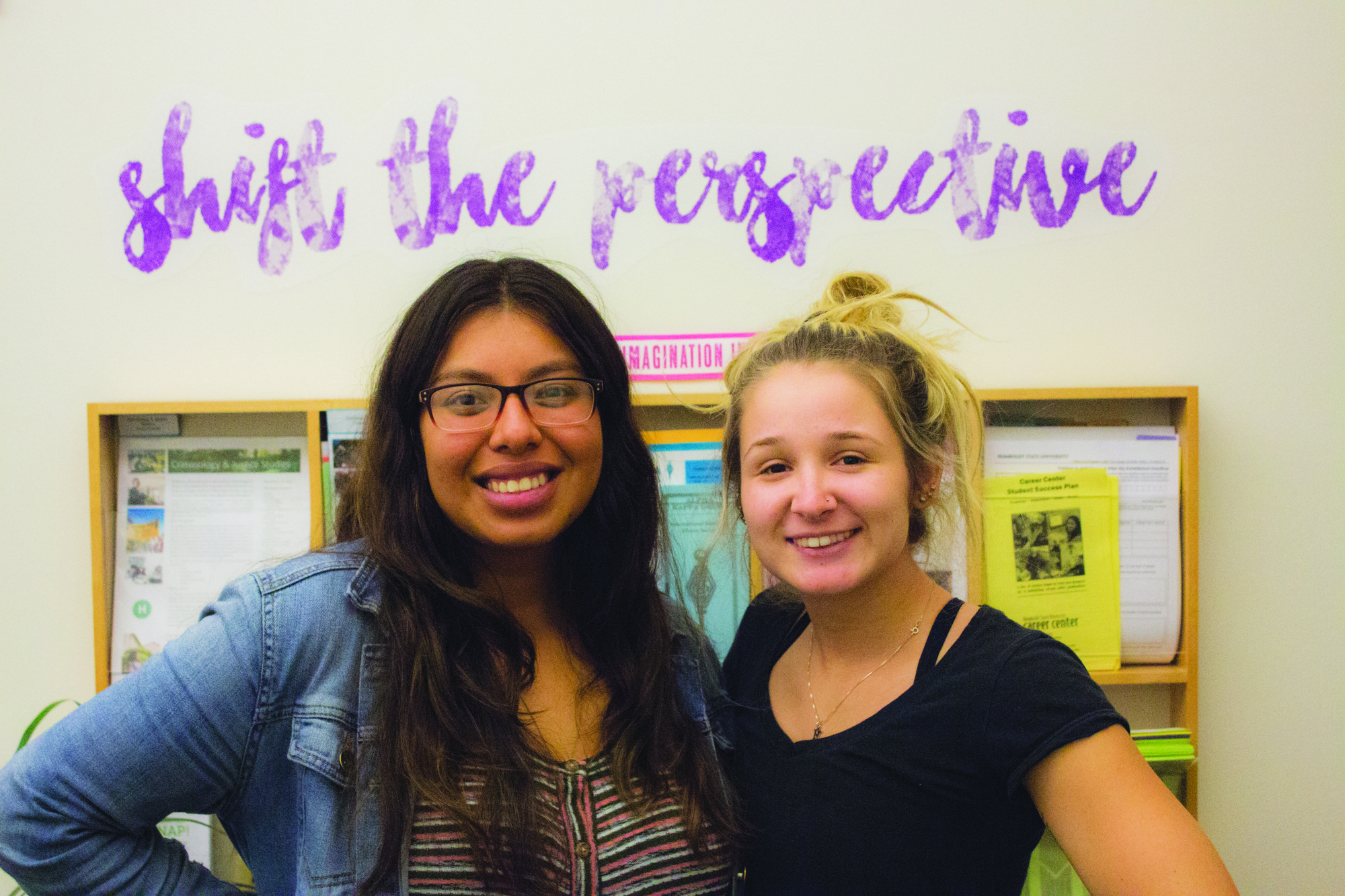
News editor, T. William Wallin sat down with Ashleigh DeFraga and Belen Gutierrez during separate interviews for a Q&A.
DeFraga and Gutierrez are seniors in the criminology and justice studies program at HSU. They are peer mentors for the sociology department and can usually be seen helping out a student in the business of social sciences building. They volunteer with YES and are very involved with the community. They both are pursuing law degrees and want to become lawyers after graduation.
WHAT ARE YOU STUDYING AT HSU?
DeFraga: I am studying Criminology and Justice studies major, with a double minor in psychology and Philosophy
Gutierrez: Criminology and Justice studies with the minor in comparative ethnic studies
WHY DID YOU PICK THE MAJOR AND DOUBLE MINORS?
DeFraga: I love all aspects of the criminal justice system. Our school has a unique program and since day one I knew I wanted to be a lawyer. I chose psychology because I am interested in how the brain works. I am minoring in the philosophy of ethics, which we talk a lot about ethical dilemmas that get brought up in criminal justice such as rape, or voluntary suicide. Taking philosophy will help me with questions that will be on the bar exam and the LSAT.
Gutierrez: I interned at a law firm in high school and I knew I wanted to do law when I graduated but I didn’t want to do the traditional political science. Not that there’s anything wrong with that but I was more interested in the criminal justice aspect of it. I started learning about intersexuality in high school and that drew me in having a minor in comparative ethnic studies.
WHERE DID YOU MOVE FROM?
DeFraga: I came from Sacramento. I came straight from high school and enrolled at HSU in August of 2016. I have been taking 20-22 units each semester to graduate sooner because I don’t get financial aid. I did get some scholarships but I wanted to get done as fast as possible.
Gutierrez: Orange County, Santa Ana, in particular, Southern California. I came straight from high school. I graduated in 2015.
HOW DO YOU JUGGLE THE WORKLOAD AND VOLUNTEER WORK YOU DO?
DeFraga: I go day by day. You can’t go each day and think past that because then it’ll be overwhelming. I have a google calendar, a wall calendar and a million sticky notes everywhere. I’m really organized.
Gutierrez: My mom is really good with time-management and I really just inherited her skills a little bit. I really try to think about what I’m taking on and how that is going to fit in with my schedule. I know my limits and I try to stick to them. But google calendar and a planner is your friend.
WHAT’S THE PLAN AFTER YOU GRADUATE?
DeFraga: Straight to Law School. I’m going to go to Pepperdine in LA. It’s a private school with lots of scholarships and I love the area its in. It’s smaller than Harvard and I think it’s best for me to thrive.
Gutierrez: I’m taking a year off and then going to law school. My top schools right now are Berkeley and I got a full-time offer for Chapman Law. I’m debating that because I want to go to the bay so I’m not sure if I’m willing to relocate to So-Cal but we’ll see. Berkeley is number 1. They have a Ph.D. program on social well-being so you can do a program to get your Ph.D. in social justice and also your law degree which is what I’m really interested in doing.
WHAT ARE YOU MOST PASSIONATE ABOUT?
DeFraga: I am most passionate about juvenile kids. They need help, it’s not their fault when they get in trouble. I want to make a difference in the juvenile justice system. Kids are important and not enough people are making an effort with them.
Gutierrez: I think definitely collaborating with communities that are oppressed and striving for social justice.
WHAT HAS BEEN YOUR FAVORITE EXPERIENCE IN HUMBOLDT?
DeFraga: My favorite experience is all in all the environment. I think the environment has shaped every aspect of my experience. Everyone is super genuine. The JRVP program has been one of my favorite experience up here.
Gutierrez: Definitely volunteering with YES. I started volunteering as a freshman through the step-up program which is HSU’s alternative spring break. That’s where we went to San Francisco to volunteer for spring break, and then when I was a sophomore I directed the program myself and planned the Sacramento trip. My junior trip I applied to be one of the five paid staff positions and I got it. This year I applied to be the lead program consultant and I love it. I love YES and I think if it weren’t for YES I would have transferred out of HSU because it’s so isolated. I think finding a community is really important and I found it at YES. That has definitely been my favorite part so far at HSU.
WHAT ADVICE DO YOU HAVE FOR INCOMING STUDENTS?
DeFraga: Be brave. Don’t be afraid to ask questions. Don’t be scared to not know something, just ask and be comfortable in your own skin.
Gutierrez: Definitely, get involved. Maybe not your first semester if you want to get a taste of college and what classes are like as a full-time student and how you fit in because that’s the time to dip in your toes and see what you want to be involved with.
WHO IS YOUR FAVORITE PROFESSOR AT HSU?
DeFraga: Michihiro Clark Sugata.
Gutierrez: Wow, I’ve had so many. I think so far it’s been Nancy Perez. She just got hired through the CRGS department and I took Chicana/Latinx with her last semester. I really like the structure of the class and how she gave us assignments I never had before and so she was really relaxed with what we could do. One of the assignments was to write a children’s book and what stood out for me was to write a children’s book that you wish you had when growing up. I really liked it and I wrote a book about my experiences growing with a message I would have liked to see growing up. That really stood out for me and that has made her one of my favorite professors. She really thinks outside the box and giving us assignments that were challenging because you think you can write a children’s book no problem but really it’s a lot more than that. It’s a lot deeper than that and there’s a lot of thinking that goes into it like ‘how can I put a message into it in a way that a 5-year-old or whoever is reading it will understand it.’ That’s why she’s my favorite professor.
HOW LONG HAVE YOU WORKED WITH THE JUVENILE CENTER AND WHAT IS IT LIKE? WHAT HAVE YOU GAINED MOST WITH WORKING THERE?
DeFraga: It’s pretty awesome getting to go into the Juvenile hall and work with the kids there. They are honestly just normal kids we have just labeled them as bad or delinquent! I think that the best part is being able to see that they are just kids, not criminals! To be able to just hang out with them and show them a positive example is a small way in which each and every one of us can help them. I’ve been working with them since my freshman year! It also makes you feel like your life isn’t so bad in retrospective to theirs. Putting yourself in their shoes and looking at the intersectionality that goes along with it!
WHAT IS WORKING AT YES LIKE?
Gutierrez: It’s really rewarding in several aspects. It’s not just going out into the community that’s rewarding, it’s also all the skills I have learned that I didn’t even know I had, such as facilitating meetings and learning people’s first language and how there’s a savior complex when volunteering and how YES is striving more towards collaborating with communities instead of really just going in and serving them. It’s more like we’re here if you need us and what is it you would like from us instead of going in and being like we’re here to do this for you. So I think that’s what I really fell in love with YES, there really striving to make those changes.