The Lumberjack


Students Serving The Cal Poly Humboldt Campus and Community Since 1929

Tag: racial inequality

  • Activist calls out Humboldt community for limited BIPOC support

    Activist calls out Humboldt community for limited BIPOC support

    By Liam Gwynn

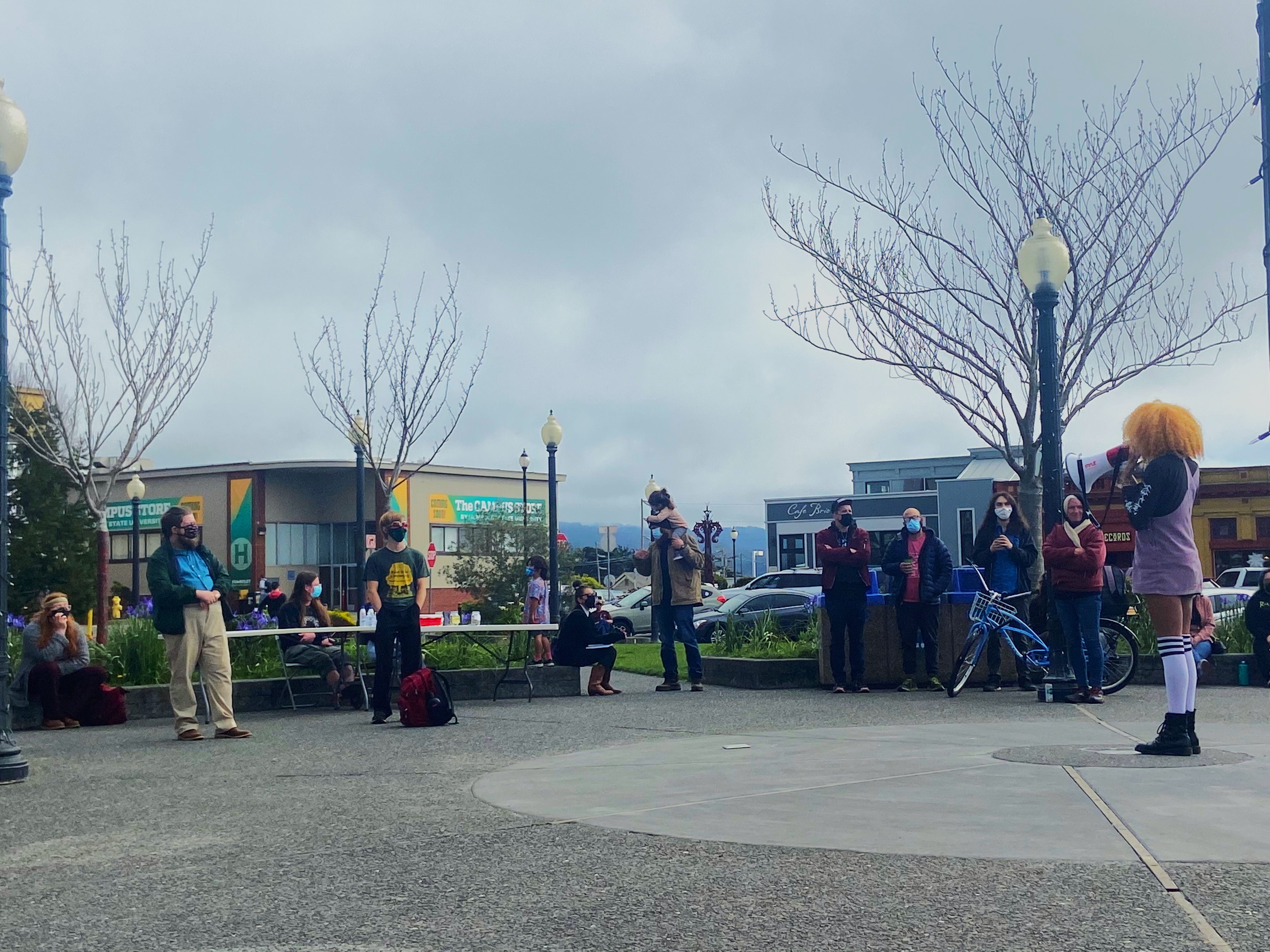
    Nikki Valencia hosts a protest in the Arcata Plaza with a group of supporters on the last Thursday of every month. These protests are meant to raise awareness for the problems facing the BIPOC and LGBTQ communities and March’s protest had an emphasis on Women’s History Month. Despite Valencia’s poster gaining traction ahead of time online, only a handful of people showed up for the actual protest.

    The first hour of the protest consisted mostly of a few people meandering around the plaza while Valencia and her group of supporters sat at booths handing out flyers and selling art created by Valencia. After a few more people arrived, Valencia took out her megaphone and gave an impassioned speech to the twenty or so people who had gathered.

    The protests around these issues weren’t always so small in Humboldt County. In previous protests, during the peak of the Black Lives Matter movement, the community rallied and supported the causes in a far more substantial way.

    Valencia is a Cal Poly Humboldt student and she organized her first protest in McKinlyeville in 2020 and over three hundred people showed up.

    “A lot of supposed allies fell off,” Valencia said. “When I had my protest in 2020, you know, I had three hundred people, all these people cared and it was easy to care because black death you know, it doesn’t take much for that.”

    The problem activists are facing now is getting people to still care and be active when there isn’t a sensational story playing through social media constantly.

    “What I learned from a lot of people is a lot of that (community support) was outrage and outrage runs out fast and then you see who’s really there,” said Valencia.

    Valencia thinks a lot of these problems stem from students lacking intersectionality in their social circles. They said that people will post infographics on their Instagram stories but that doesn’t actually mean they’re attending protests or even connecting with people outside of their race and social circle.

    “People can hide behind their infographics and say that they’re progressive by like sharing something and they don’t have to really read it, apply it or really like care about that,” said Valencia, continuing. “It takes no energy to do that and a lot of people can barely do that.”

    The best way that Valencia thinks allies can show their support for these issues is by diversifying their social circle and embracing intersectionality, educating themselves on topics so others don’t have to do it for them, and finally showing up for events and protests that support BIPOC and LGBTQ communities.

    For more information regarding future protests, follow Nikki Valencia on Instagram @soulbunni. The protests are held in the Arcata Plaza the last Thursday of every month from 3-5 pm.
  • Marijuana Legalization is a Race Issue

    Marijuana Legalization is a Race Issue

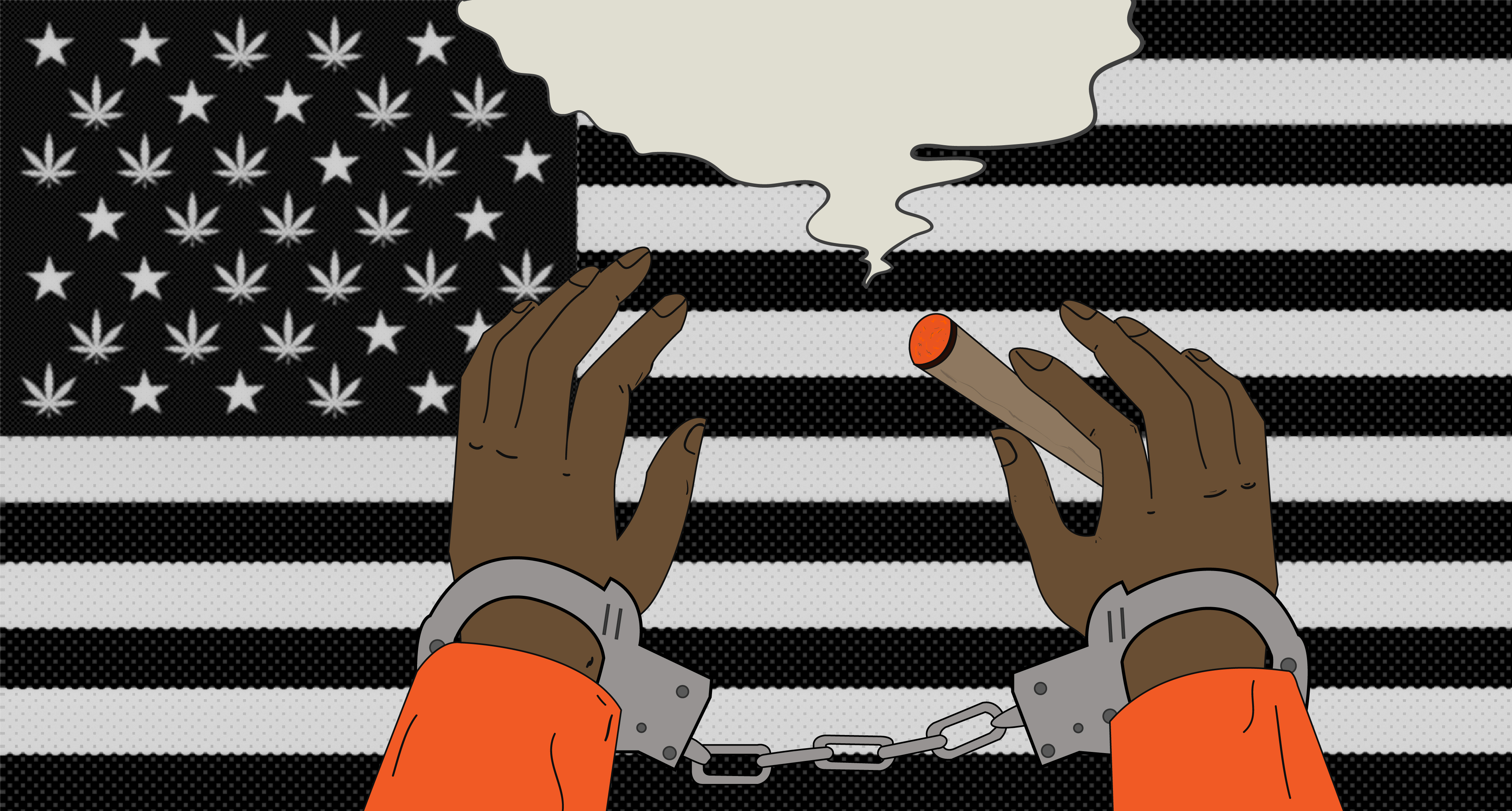
    Marijuana laws are enforced unequally and minority communities bear the brunt of the consequences

    Many states have voted on the legalization of marijuana, a schedule one drug, and 11 states have legalized recreational cannabis. Weed is now a large source of legal income in the U.S.

    Forbes shows that the top three states where recreational marijuana is legal profited over $4 billion in 2018 on cannabis sales. But according to a 2010 study by the American Civil Liberties Union, states waste over $3 billion a year in weed-related arrests.

    We believe states waste more time and taxpayer money by not legalizing and decriminalizing weed. Law enforcement often enforce weed laws unequally, with more arrests in underprivileged neighborhoods, which are often filled with people of color. According to the ACLU, black people are four times as likely than white people to be arrested for marijuana possession despite similar usage rates.

    We are fed up with blatant inequality and discrimination.

    In July 2016, a Minnesota police officer shot and killed black 32-year-old Philando Castile in his vehicle. The Minnesota Bureau of Criminal Apprehension investigated the case, and was told by the officer that he “feared for his life” due to the smell of marijuana and Castile’s lack of concern for the child in the vehicle. This ended in the officer’s acquittal.

    While most states don’t keep data for marijuana possession by Latinx individuals, New York City’s data shows that the Latinx community has the same rate of use as black and white individuals, but recent data shows that marijuana possession is the fourth most common cause of deportation.

    It’s obvious that many of those affected by these ludicrous laws are from black and brown communities. And it may be relevant to note that there is political gain to keep it this way, as many people who have been arrested for marijuana can no longer vote.

    This war on drugs, specifically the war on marijuana, is a war on communities of color. Children are left without parents and people are locked up for years on minor counts. And yet, even when white people commit similar crimes the punishments are all too different.

    Opioid addiction is at an all time highs in the states. It has largely affected white communities, but the amount of arrests is no where near that of other cultural communities when marijuana is involved.

    If treatment and repercussions are unequal, we need to understand that the system is flawed. When one group is given more freedom to make mistakes than another, it seems that there is a hidden agenda at work to keep white communities more prosperous.

    Drug laws are just one example of discriminatory regulations within the United States. Data shows that law enforcement agencies often treat people of color differently, our laws only add tension to the problem.

    As of now, 10 states plus Washington D.C. have legalized recreation marijuana and an additional 20 allow medicinal use. These states should quickly look into decriminalizing the drug fully. If we take steps to free individuals locked up for minor drug possession charges and use the money saved to focus on bigger issues, then we take one major step toward reforming the country’s unjust system.

    It may be a slow process, but it’s one that needs to happen now.