by Jake Hyslop
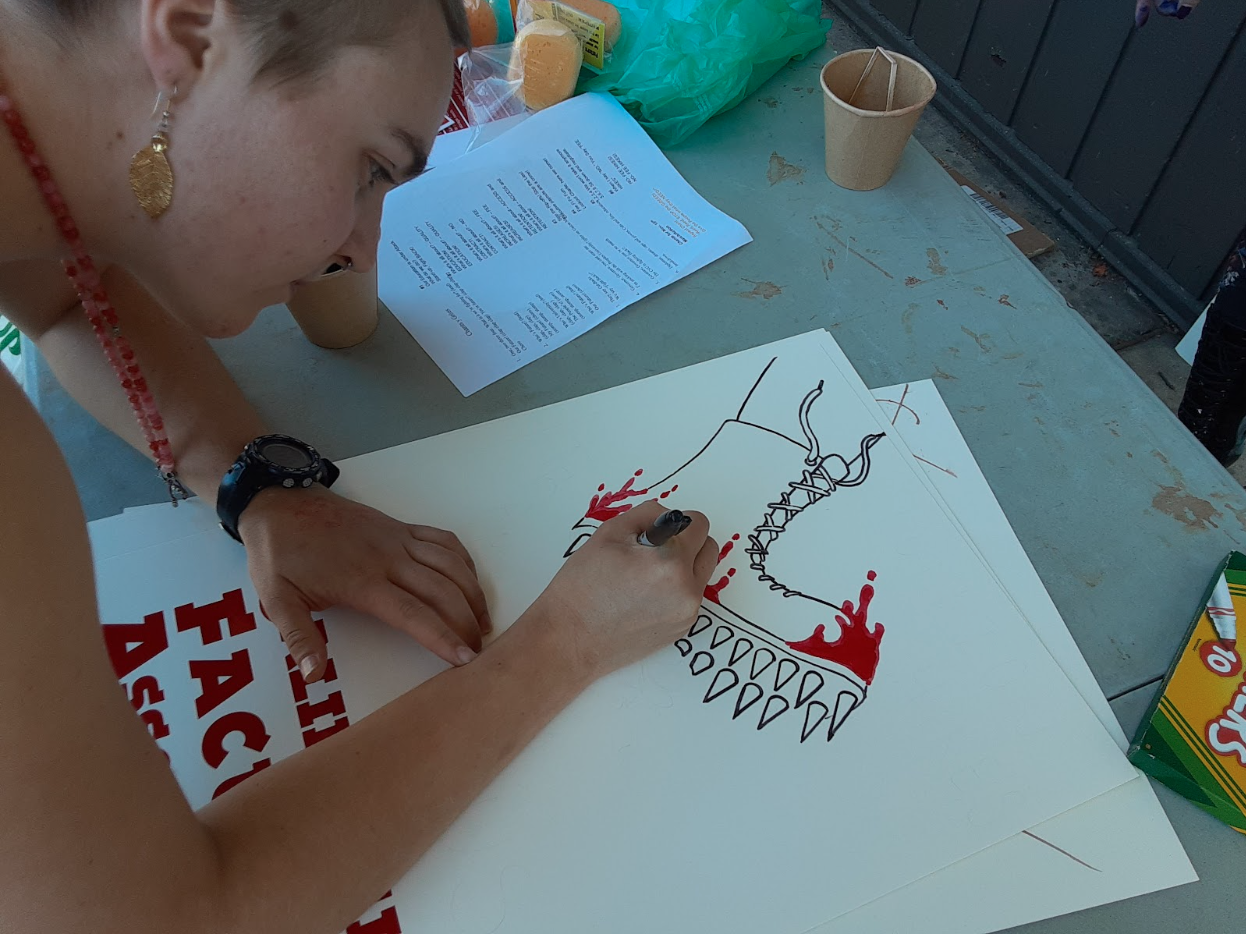
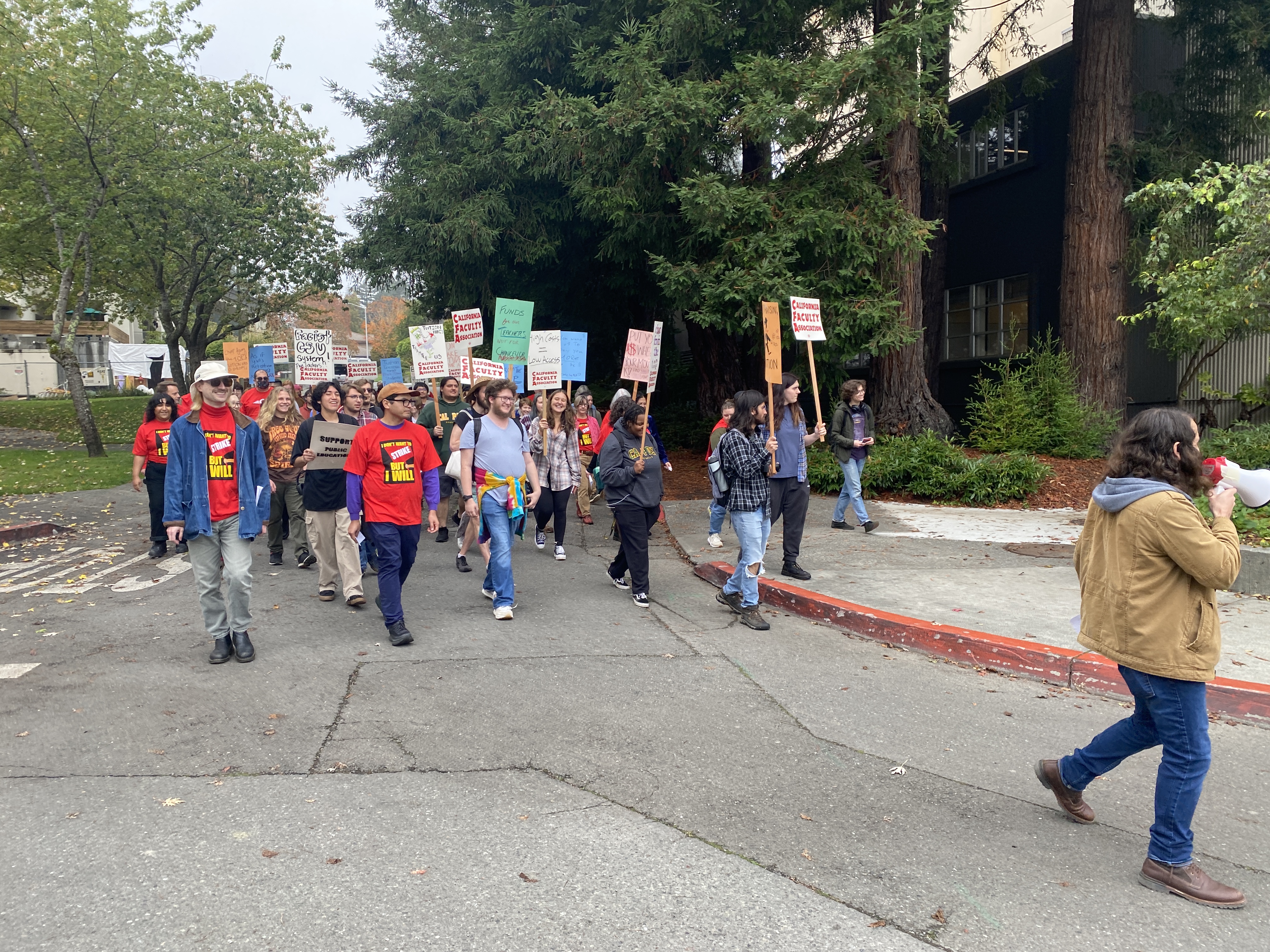
On an otherwise unremarkable foggy Thursday morning, students and faculty alike met on the main Quad at Cal Poly Humboldt in order to protest the vote to raise tuition by the CSU Board of Trustees. Signs adorned with, “don’t make students your ATM” and “stop targeting education,” were taped to walls and held by protesters.
As the weather began to heat up, so too did the rally. Cries of, “chop from the top” and “education is a right,” rang out across the campus.
The event was organized by the Students for Quality Education (SQE) and the California Faculty Association (CFA), as well as by the Students for a Democratic Society (SDS). Other groups showed up to speak, including the Critical Race, Gender, and Sexuality (CRGS) Club and the CSU Employees Union (CSUEU).
The rally was held in response to the Sept. 13 vote by the Board of Trustees to raise tuition 6% every year for the next five years. CSU defended the vote by pointing to inflation increases and a relative lack of tuition rate increases; the Board of Trustees deemed it a necessity.
“We know [administration] can pull from their own salaries and they have reserves they can pull from,” Zoe Reed, a third-year CRGS student and intern for SQE said. “But instead, they’re putting that on us, the people who work here and are learning here, who can’t afford that.”
Many speakers at the protest, including Mary Mangubat, a third-year environmental studies student and SQE intern, called for the CSU to rely on the reserve money they have to account for inflation and rising costs rather than taking it out of the students’ pockets.
“The CSU has $8.8 billion in reserves that they do not want to touch because they said that they only pull out that money when there’s financial uncertainty in time,” Mangubat said. “What the hell are we in right now?”
Mangubat cited the pandemic and the student organizations struggling under the recent Associated Students budget cuts due to low enrollment numbers as criteria befitting a time of uncertainty.
Another common complaint was the amount of money CSU administrators were paid relative to the income and costs suffered by students and faculty. President of the CFA Humboldt Chapter Marisol Ruiz weighed in and called for the current Board of Trustees to be fired.
“I think it’s just terrible that we have faculty here that make as much as someone’s housing and car allowances,” Ruiz said. “We need equity, and we need people that are responsible to the people to be part of the Board of Trustees.”
Rick Toledo, an environmental science major and one of the main organizers of the event as a representative of SDS, led many of the chants at the rally before providing a speech of his own.
“Think about the weight of a billion dollars,” Toledo said. “They have over 12 of those in their budget. Yet they can’t pay faculty and staff? Yet they have to use students as their ATM? I call BS.”
Toledo explained how the administration has sewn a narrative of discord between faculty and students, pitting them against each other to cover for themselves. He went on to say that the CSU is lying in their reasoning for not using the reserves available to them.
“In reality, the reserves have been built up to boost their credit so they can borrow more money for more capital investments on projects,” Toledo said. “They’re basically turning the entire thing into a hedge fund with education as the front.”
Some students expressed skepticism over the success of holding a rally. Gavin Martin, a theater arts student, questioned how successful a protest against administration sanctioned by administration can be. He likened it to the housing protests during the Spring 2023 semester.
“After the protest, we all went to look for homes individually,” Martin said. “We were supposed to be in this together.”
Mangubat announced the rally’s list of demands for the CSU through a megaphone. The first was to end the tuition hike and take money from the reserves. The second was for the administration to stop relying on students to fund student programs. The third demand called for higher wages for faculty, staff and student workers. The fourth demand called for funding for programs that provide resources for basic needs such as housing, food and mental health resources. Sufficient funding for cultural centers for marginalized communities was the final demand.
‘If we are not heard, we will continue making noise,” Toledo said. “We will continue to be loud until we are heard.”