The Lumberjack


Students Serving The Cal Poly Humboldt Campus and Community Since 1929

Tag: recycle

  • SCRAP Humboldt: Saving the Planet One Scrap at a Time

    SCRAP Humboldt: Saving the Planet One Scrap at a Time

    Affordable art supplies with environmental consciousness in mind

    Doohickeys, thingamabobs and whatchamacallits galore. One local craft store has it all and does so with purpose to provide a community with creative inspiration and affordable art supplies while reducing, reusing, recycling and repurposing.

    SCRAP Humboldt is a craft supply store with hundreds of items available for creative reuse. The store started as a temporary holiday season shop in 2012 at the Jacoby Storehouse and later became an established organization aimed at repurposing items that society would typically deem as waste.

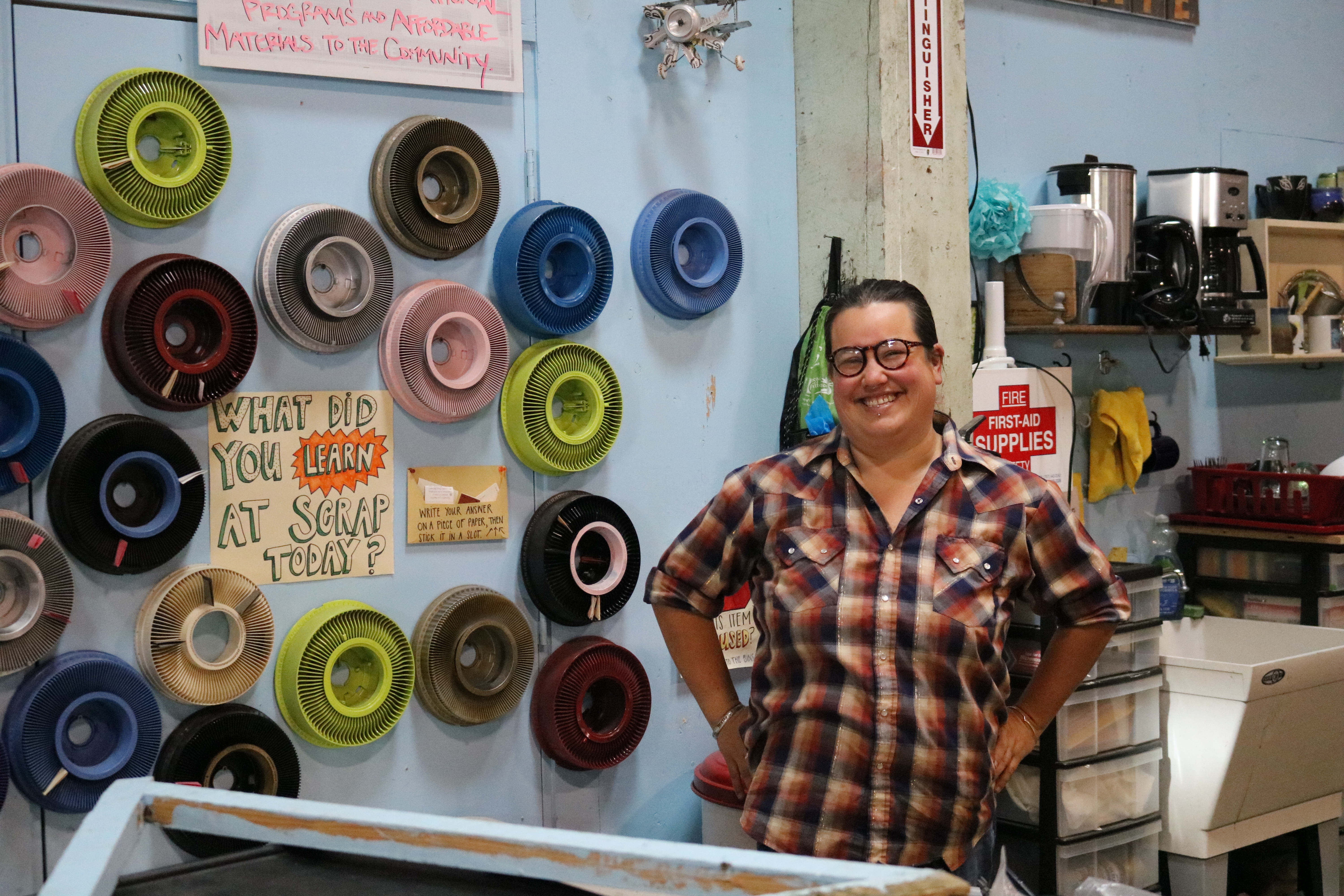
    Malia Matsumoto first began volunteering her time with SCRAP Humboldt and later became the director of the organization in 2017.

    “As an artist, I taught classes at Scrap and volunteered my time to come take care of the store,” Matsumoto said.

    As director, she coordinates events, reaches out to similar organizations for cross pollination and manages staff and volunteers at the center. SCRAP Humboldt also works with other local organizations for mentoring programs like the Humboldt Area Foundation.

    SCRAP Humboldt relies heavily on donations and receives items for reuse from community members, businesses and even Humboldt State University. Steady donations also come from partnerships with local businesses that aim to reduce their product waste. Local donors include Los Bagels, Kokatat and the Humboldt Bay Coffee Company.

    Donations are sorted into respective categories and then placed on the store’s floor. SCRAP Humboldt has supply sections for sewing, painting, scrapbooking, holidays, jewelry-making and crafting.

    “Because everything is donation-based, it’s a really low price point,” Matsumoto said. “As an artist or a maker you’re able to get more materials than you would if you went to a traditional brick and mortar store like Michael’s or JoAnn’s.”

    The variety of conventional and unconventional up-cycled items SCRAP Humboldt has to offer gives locals access to affordable art supplies. The organization also hosts weekly tutorial classes to teach the community how to complete projects with repurposed materials.

    Matsumoto and the crew at SCRAP Humboldt have a passion for diverting reusable waste from landfills by finding creative ways to repurpose items that typically wouldn’t be thought of as art supplies.

    Matsumoto said that once people start making things on their own, they begin to see the hard work it takes to create something. Matsumoto said people also learn to give more value to scraps while seeing the potential for an old thing to become new.

    The SCRAP Humboldt team spreads this message and their passion for waste reduction and art creation with the community by offering summer camps for kids, creative reuse classes and a space for an artist-in-residence program.

  • Reduce, Reuse, Repurpose Recyclables

    Reduce, Reuse, Repurpose Recyclables

    Earn money. Many recycling plants in California offer trade-in programs where you can redeem money from the cash refund value (CRV) of plastic, glass and aluminum cans. The CRV amount for aluminum cans under 24 ounces and for glass and plastic bottles is $0.05. Containers larger than 24 ounces are redeemable for $0.10. Here in Humboldt you can take your bottles and cans to Humboldt Sanitation & Recycling in McKinleyville or the Eureka Recycling Center.

    Make something new. There are so much things that can be reused and transformed into something new. Milk cartons can become bird feeders and trash can become artwork. Locally, Scrap Humboldt offers hundreds upon thousands of recycled, slightly used and new items for sale to let your creativity soar. They host creation tutorials to show people how to turn something discarded into something useful again. You can also donate your clean recyclables to their Arcata location to add to their collection of items for repurposing.

    Clean them. Clean your recyclables before you toss them. Be mindful of the journey your recycling has yet to take in this consumerist chain. Besides knowing what is appropriate to recycle, it’s also important to properly prepare items before you recycle them. Cans should be rinsed clean, plastic caps should be discarded and wrappers should be torn off of containers.

    Compost. Compost what you can. Paper materials like cardboard and newsprint are great materials for creating new flower and produce beds. These items don’t have to end up in the trash or even the recycling bin. Paper is great for reducing decomposition stench from compost bins and the carbon in paper can help facilitate the breakdown of waste. Just be sure the paper you use in your compost doesn’t have glossy inks like magazine paper.

    Throw away the rest. You might be recycling things that aren’t recyclable. Plastics numbered with 3, 4 or 7 are sometimes not accepted by curbside recycling programs. Check your local recycling plant’s policies on what materials they accept and what they reject. Things like pizza boxes, aerosol cans, batteries and styrofoam are not recyclable. Throw items like these away or find a proper disposal. Here on campus there are several recycling hubs which offer bins for proper disposal of batteries, computer products and cellphones.

  • CCAT Poised to Pig Out

    CCAT Poised to Pig Out

    CCAT plans to keep pigs on campus to reduce food waste

    Humboldt State University’s Campus Center for Appropriate Technology plans to house two pigs on campus as soon as next week.

    CCAT will loan the pigs from the Tule Fog Farm in Arcata for the duration of the fall semester. CCAT plans to feed the pigs food waste from HSU’s J dining hall.

    Jacob Gellatly, environmental resources engineering major and former CCAT Co-Director, helped lead the project from concept to reality.

    “We want to show how animals can be raised in a residential environment, and how you can use urban byproducts such as food waste to raise animals in an urban setting,” Gellatly said.

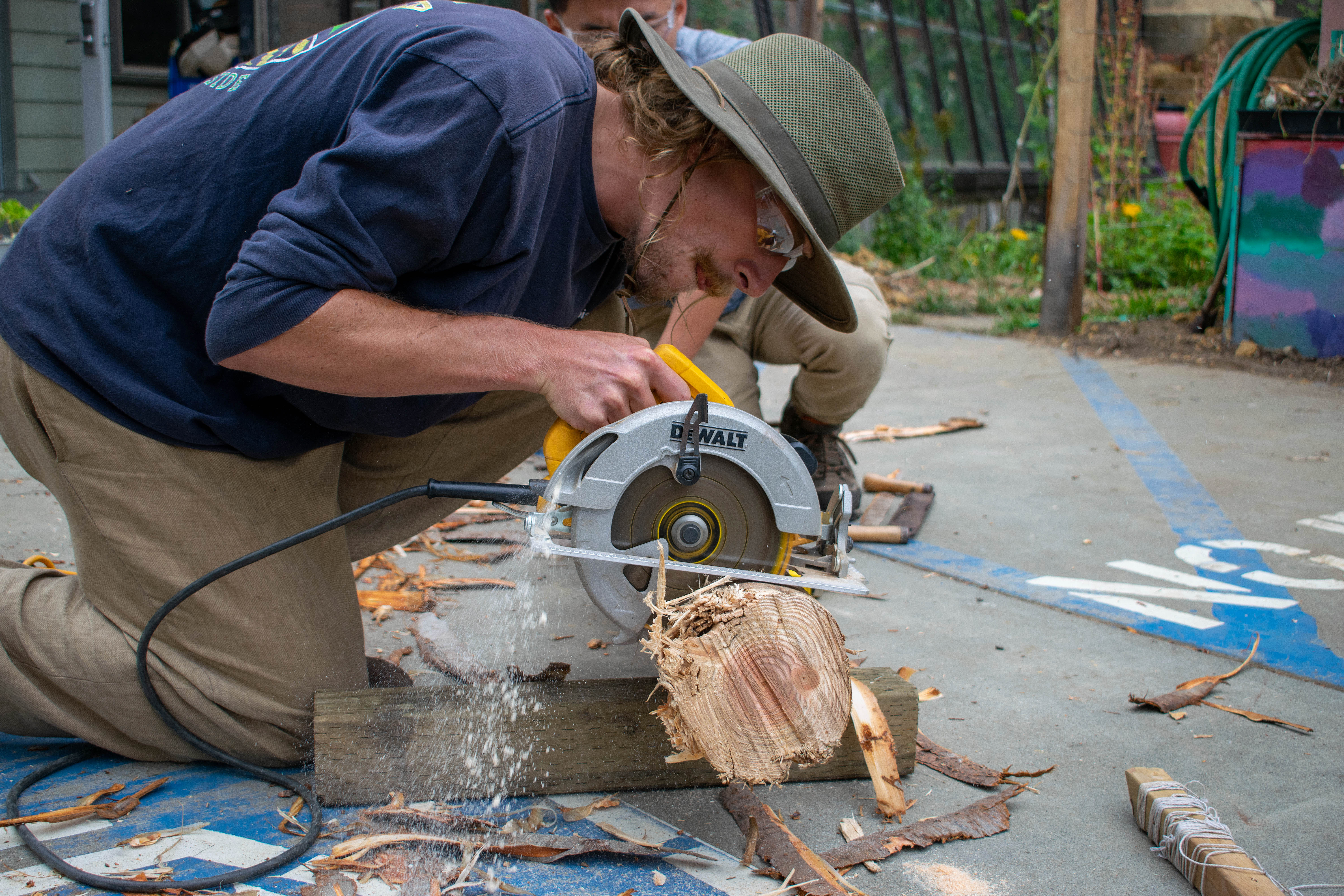
    EnvironmentalRresource Engineering majors Jacob Gellatly (right) and Kong Vang (left) prepare a log on Sept. 6 to be used for the roof of a pig pen. | Photo by James Wilde

    The plan to house the pigs began last fall when students in the CCAT Student Club vocalized interest in keeping animals on campus. CCAT contacted Shail Pec-Crouse from the Tule Fog Farm in Arcata. Pec-Crouse recommended pigs as the most viable animal.

    “The easiest animal for us to raise would be pigs,” Gellatly said. “The reasoning for that is—a big thing is predators. So it’s a lot harder for something to come and get a hold of a pig as opposed to a chicken.”

    As part of their plan, CCAT realized they could feed the pigs food waste from the J. While CCAT couldn’t feed the pigs food thrown away by customers of the J, CCAT could feed the pigs pre-consumer waste, such as food trimmings or spoiled foods not suitable for people.

    “Another goal with the project was how can we divert food waste on campus,” Gellatly said. “And with that we can feed almost, and in some cases, their entire diet from food waste that’s at the school here.”

    Once CCAT decided to loan the pigs from the Tule Fog Farm it needed approval from HSU’s Associated Students, Institutional Animal Care and Use Committee, Facilities Management, Risk Management and an environmental health and safety specialist.

    The pig pen-in-progress on Sept. 6. CCAT plans to house two pigs in the pen for the duration of the fall semester. | Photo by James Wilde

    Humboldt State’s IACUC reviews the use of animals on campus to ensure the animals are treated humanely under the requirements of federal and state law. College of Natural Resources Associate Dean Rick Zechman, who chairs IACUC, said the IACUC proactively reviews and inspects over 100 animal-involved projects on campus each year.

    “There’s varying kinds of emotional feelings about the use of animals, and that’s respected and honored in the system of review,” Zechman said. “And that’s why the Animal Welfare Act was developed, to prevent mistreatment of animals. And I think, you know, in our committee, that’s sort of our first principle.”

    While Zechman could not comment on the details of CCAT’s proposal, which is still pending, CCAT has worked over the last year to assuage concerns raised by various HSU faculty.

    CCAT started by building a pig pen out of reclaimed wood from a local logging operation in Fieldbrook. CCAT has since integrated plans for a roof to prevent flooding of the pen and security to prevent people from getting harmed by the pigs.

    In the long run, Gellatly hopes the project might convince the University to keep animals around for good.

    “Big picture, I would like the school to see this and see, with what we’re having to deal with—getting rid of all this food—we could be raising meat for the school and have locally-produced meat with a byproduct of our current dining system,” Gellatly said.

    Environmental Rresource Engineering majors Jacob Gellatly (right) and Kong Vang (left) working with a log for the pen. | Photo by James Wilde

    CCAT’s plan to house pigs has only recently become known to the wider HSU campus. Saraí Escalante, psychology graduate student and president of HSU’s Vegan Club, sees the value of reducing food waste but wonders about the sustainability of the project.

    “I think the underlying problem is that we see them as a convenience, as objects, so we see them as a tool to help us fix a problem or make our problems or our lives easier,” Escalante said. “And from a sustainability point of view, you still waste a lot of water in all of the slaughter process and the cleaning up of the meat. In that way, it wouldn’t be sustainable.”

    Escalante said she’s considering starting a fundraiser to purchase the pigs and send them to a sanctuary instead of a slaughterhouse. However, Escalante said she plans to talk with CCAT to exchange thoughts, as she does like the idea of reducing food waste on campus.

    Gellatly, for his part, noted that the current plan as registered with Tule Fog Farm and IACUC is for CCAT to house the pigs only for the rest of the semester.

    “I think it’s, in theory, possible for them to buy the animals from the farmer if that’s something they’re inclined to do,” Gellatly said. “But, as far as our scope goes with the IACUC, once the project’s done, we’re taking the animals back to the farm and that’s where it ends for us.”

    The project’s beginnings are dependent on approval from IACUC, but the pigs could arrive at CCAT as early as the week of Sept. 8 through 14.

  • Recycling isn’t working

    Recycling isn’t working

    Recycling is not as sustainable as you might think. It has become a wasteful movement that was beneficial during the early stages of the environmental movement. Now the cost outweighs the satisfaction we get out of recycling.

    “Recycling has been relentlessly promoted as a goal in and of itself: an unalloyed public good and private virtue that is indoctrinated in students from kindergarten through college,” wrote John Tierney, journalist and self-described “contrarian” for the New York Times. “As a result, otherwise well-informed and educated people have no idea of the relative costs and benefits.”

    To put it in another way, most recycling advocates are unaware of the cost of transportation, labor and production of renewable materials that ultimately defeats the purpose of saving the planet.

    Recyclers are validated by the collective consciousness of fellow believers. They don’t realize the wastefulness that occurs after rolling the recycling bin to the curb. Why did things get worse? The short answer is the success of an ongoing marketing campaign that resonates with a growing population of millennials and aging liberals.

    Since the advent of the “Reduce, Reuse, Recycle” idea, recycling received the most attention. Why? Because there’s barely any money in reducing or reusing. If you think about it, recycling starts its capitalistic cycle from our wallets to the bins or recycling centers, then to the manufacturing plants, the businesses and back to burning a hole in our pockets.

    So, there you have it, reduce consumption and reuse your renewable materials. Buy used products and learn how to repair them if they break. Borrow, rent or share if you can. The point is to reduce the disadvantages of recycling that is practiced by too many people and apply smarter solutions to climate change. If enough of us consume less and reuse more, the act of recycling can reclaim its integrity. It’s all about balance.