The Lumberjack


Students Serving The Cal Poly Humboldt Campus and Community Since 1929

Tag: Reopening

  • Minor Theater is back after closure scare

    Minor Theater is back after closure scare

    GoFundMe saves The Minor Theater thanks to community support.

    The Minor Theater has reopened to the public after closing at the start of the COVID-19 outbreaks eight months ago.

    Reopening was never a certainty for Josh Neff, building owner and co-owner of The Minor.

    “I was trying to have an optimistic outlook and thinking this is something we can handle. We’re gonna get through it and it’ll take a few weeks then we’ll be back to some sort of new norm or a norm, but that was not the case,” Neff said. “We were nursing the business along by paying the minimal amount of bills and rent that we could and just kinda running out of money.”

    Coming into late July and early August, the likelihood of reopening was slim. But, on Sept. 28, the theater opened a GoFundMe page in hopes they would earn enough money to reopen.

    “It was either that or fold the business, that’s where we were at,” Neff said. “We didn’t want to ask for anything for free. That’s why we did the incentive program and gave them the discounted theater rentals in exchange for the donations.”

    Currently the GoFundMe has raised $32,805, well over their $20,000 goal, with 364 donors. This outpouring of support from the community came as a surprise to Neff.

    “I didn’t think it would be so generous and so fast,” Neff said. “I did expect that the community would have a heartfelt response to our donation request but I didn’t realize that it would come so fast and exceed our expectations like it did.”

    Travis Bille, a community member and donor to the Minor, expressed the significance and importance of keeping the Minor operating.

    “It’s a staple of the community,” Bille said. “I love this place.”

    Before they could open up, they had to make some health and safety changes first to comply with COVID-19 guidelines.

    “I put a two stage HEPA air filtration system in and it runs 24 hours a day,” Neff said. “We did a 60 percent seating capacity reduction, we implemented some COVID software that allows people to pick the actual seat they want to sit in, and you can buy it online and it automatically gets rid of the seats next to you on both sides. We did a bunch of enhanced cleaning safety protocols, obviously masks are being worn at all times.”

    On Oct. 9, the Minor Theater reopened its doors to the public for weekend showings with the new safety protocol in place.

    “We followed all the health and safety measures that the county guidelines put out and then we sorta went above and beyond and did everything else we could think of to do,” Neff said.

    Fans of the theater, like Christy Mast, were thankful that the theater was able to bounce back and begin showing again.

    “It was nice to just get back in with the community and be at the movies again,” Mast said.

    Neff is extremely thankful and overjoyed by the community’s effort to save his business. He recalls the day the Minor reopened with glee.

    “I couldn’t wipe the smile off my face the day that we opened,” Neff said. “Just to have the theater experience, have those doors open, have the marquee lit up, and have the popcorn machine running. It was glorious, everything you had hoped for.”

  • Living on Campus during a Pandemic

    Living on Campus during a Pandemic

    Humboldt State University reopens campus and student housing for new incoming students.

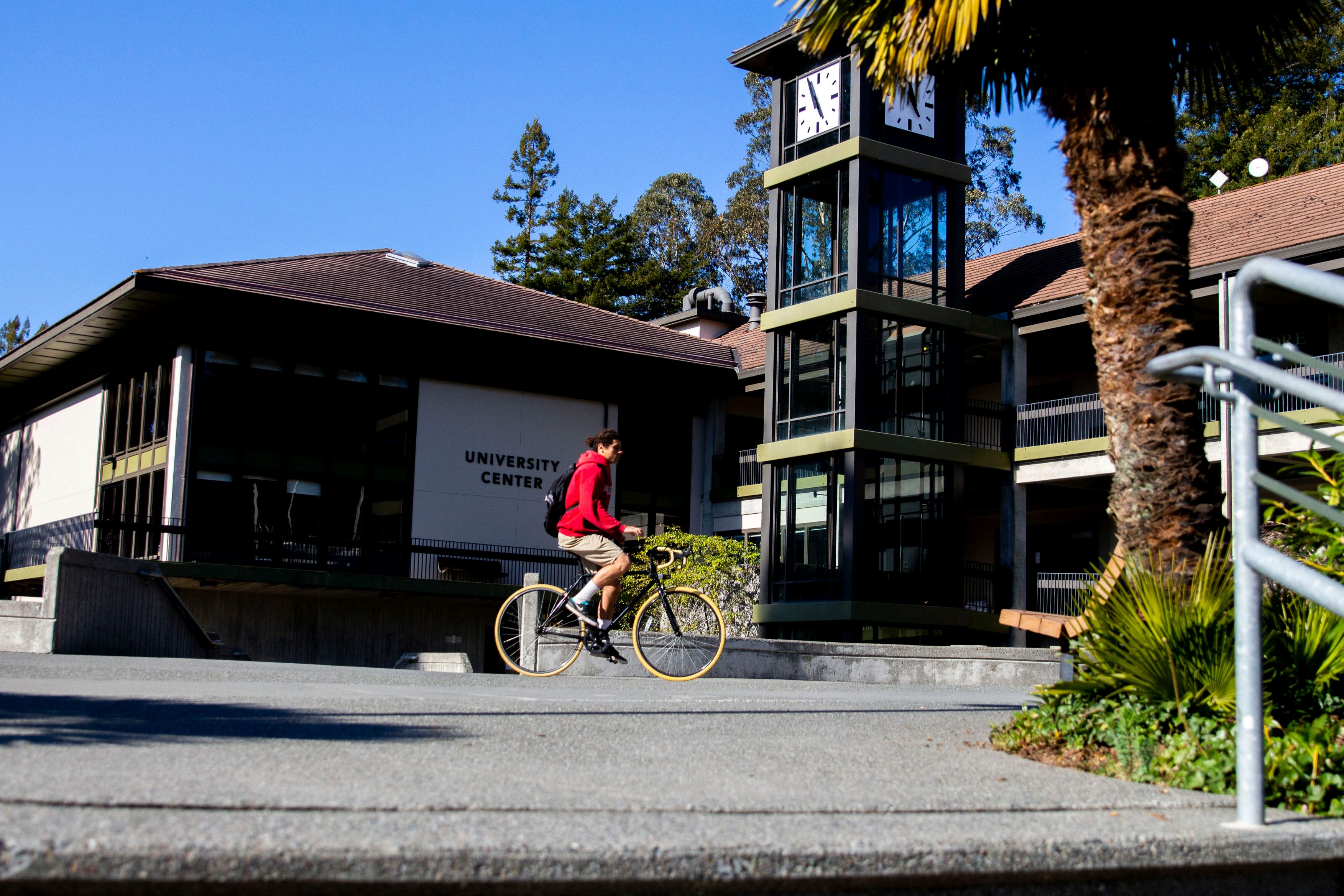
    Universities across the nation are experiencing a drop in enrollment this year due to COVID-19 and Humboldt State University is no exception. With around a thousand new students moved into single-occupancy rooms on Aug. 17, HSU remains determined on reopening campus and providing student housing for the fall semester.

    Among those returning is second year HSU student, Bryce Hunt. Hunt lived on campus prior to in-person instruction ending and he knew he would be returning to campus.

    “I had already made my decision internally,” Hunt said. “I knew a majority of my friends were coming back up and I needed to get out of my home and my hometown.”

    For Hunt, the adjustment to life on campus during the pandemic has been fairly easy. While he admits the absence of resources such as in-person advising has been a hindrance, he feels the school is taking strong protective measures.

    “I like that they’re offering free coronavirus testing,” Hunt said. “They’ve been open about the fact that they have had cases.”

    Hunt feels that campus is safe as long as everyone takes proper precautions and follows the advised county health guidelines.

    “Even with everything going on, I want to be here, because I’m happy here.”

    Adrian Black

    “I feel fairly comfortable,” Hunt said. “I know I’m taking the protective measures so I can to be safe. I don’t think it’s bothering me as much as it did after spring break.”

    Adrian Black, a second year student at HSU, is staying off-campus but remaining in Humboldt. Without any in-person classes, Black made their decision partially out of want, and partially out of need.

    “I don’t really have any other place to live,” Black said. “My parents don’t have room for me. Besides, I really like living here. Even with everything going on, I want to be here, because I’m happy here.”

    While they had previously considered not returning to HSU after last semester’s disorganized attempt at online classes, Black decided to give this semester a try. Driven by both a passion for learning and a fundamental hunger for something to do, Black returned. However, they’re disappointed in the lack of resources and social-outlets available to students.

    “A lot of the charm of being a student is being on campus, interacting with students and faculty,” Black said. “I feel like clubs and such are going to be lacking since we can’t do in-person meetings. It limits what types of clubs are allowed and accessible and puts a damper on social lives.”

    With students and faculty better prepared for online classes, new precautions in place and the world adjusting to a new reality, they believe that it can be a good semester.

    “I have high hopes, and I hope that by next year, things will have gotten better,” Black said.

  • All aboard the plague ship

    All aboard the plague ship

    Reopening the school in any capacity must have been the worst idea possible. There was not enough preparation for letting students come back to Humboldt State University. While it is understandable that every student has their own reasons for living on campus, the risks are high. HSU President Tom Jackson made it clear that suspending move-in dates and face-to-face instruction until a later date was prejudice and not necessary.

    With cases spiking in recent days, the community is at risk. In a press release from the Humboldt County Joint Information Center, people between 20 and 29 have the highest percentage of new COVID-19 cases locally. Young adults are becoming the primary carriers of COVID-19 and are spreading it unknowingly.

    Humboldt County Health Alert recently rose to a Level 3, which means “High Risk- Many cases with conditions for community spread, with many undetected cases likely. Limit everyday activities to increase safety.”

    Opening up the university to a thousand students in a single week is like pouring salt on a fresh wound. Although Arcata is open to tourism for the economic stimulation, the town was not ready for it. When Arcata first opened back up to the locals, the cases were low and stable. Then tourism started to pick up. Travel has put the community in danger and is a contributing factor for the rise in cases.

    There is a large elderly and retiree population in Arcata and surrounding communities, like Eureka and McKinleyville. Humboldt County Public Health Officer Dr. Teresa Frankovich stated that the transmission can, in time, contribute to increased exposure for older individuals who are of higher risk of serious disease and even death.

    Letting a large amount of students move in during the middle of a pandemic in a small town was not a good judgment call. The protocols and guidelines put in place by HSU can go wrong in various ways.

    While the single occupancy rooms for student housing were supposed to be a way to shelter in place, there are common areas that the students will share with their housemates such as the living room, kitchen and bathrooms. On the Humboldt State Campus Ready website, it was vaguely mentioned that these common areas will be limited and if violations persist, they will be restricted. But with student housing employees matching one to every hundred students, the likelihood of knowing these violations are occurring are nearly impossible.

    With five students and one faculty member having tested positive, HSU has made COVID-19 testing mandatory for student residents throughout the semester. However, the Student Health Center states on the Campus Ready website that testing will be done “in a limited capacity due to a nationwide shortage of tests.”

    Regarding limited face-to-face instruction, the administration is putting the responsibility on the students to ensure they stay healthy. If a student were to test positive for COVID-19 while at HSU, it would be their fault for not following the guidelines to satisfaction, instead of the university’s for being open. The best way to keep students safe is to not have contact with other students. That risk became a reality when a thousand new, incoming students decided to move on campus.

    Dr. Frankovich and President Jackson should not have agreed to open the campus in the first place back in June. There had to have been consideration of the possible influx of cases during the summer months with tourism. Not to mention, fall and winter months correspond with the influenza season. Incoming students will not just be battling COVID-19 but also the flu, the symptoms of which are almost identical.

    There were a lot of important individuals that conversed in making these decisions. Unfortunately, the people being put at risk obviously weren’t a part of the conversation.