by Gabriel Zucker
On Aug. 23, 2023, the University of California and the state of California announced they would be awarding over $80 million in climate action grants. These grants will find solutions that directly address state climate problems. In total, the grant is funding 38 projects across California, involving over 130 communities, California Universities and industries, while also taking perspectives from local tribes.
Justin C. Luong, is a new forestry, fire, and rangeland professor at Cal Poly Humboldt. He previously worked as a restoration coordinator at the Cheadle Center for Biodiversity and Ecological Restoration, where he is still currently a research affiliate. He is also a leader in the conservation community, working in key leadership positions in the California Native Grassland Associated, Big Sur Land Trust, and the Ecological Society of America’s Restoration Ecology Section. He was awarded a $1.5 million California Climate Action Seed Grant. He named his grant proposal, “Establishing drought resilient grassland restoration networks in California.”
According to Luong’s grant proposal, biodiverse grasslands are a key part of California’s ecosystem and economy. These habitats take up 25% of California, offering services like flood mitigation, ecotourism and forage production, while also being the foundation of the ranching economy. Currently, most grassland restoration projects use easily cultivated species that are known to work, but do not give any future benefits. This not only creates biodiversity loss, but also ignores the need for adaptation in a changing climate.
“We find that practitioners across the entire state tend to be using the same seven species, even though California Grasslands support thousands of native species,” Luong said. “The reason people use these same seven species is because they know they’ll do well and that they’ll be successful… they have to use those species because there’s no other information about these less common species.”
Luong is taking a three pronged approach to his research. First he is creating an online database called, The Grassland Restoration Action, Science, and Stewardship Network (GRASS-Net) focused on seed sharing and education. He is also studying three different grassland sights around California, taking data from the soils, looking at climate adaptive characteristics, and finding out what the best combination of plants are for the location. Lastly, he is conducting greenhouse studies by looking at samples from the sights, and is conducting research on different grassland species’ ability to survive a changing climate. His goal is to create a climate aware toolbox to help future projects with drought resilient plant selection and site assessment.
“Those three things all go together to help inform restoration projects across the state,” Luong said. “To better understand when we should use climate adaptive plant sourcing or when we should use locally sourced plants.”
Luong is working in collaboration with the Bureau of Land Management, Cal Poly San Luis Obispo, CSU Chico, California Department of Fish and Wildlife, Hedgerow Farms, Mattole Restoration Council, Pepperwood Preserve and California Native Grassland Association, Point Blue Conservation Science, UC Irvine, UC Santa Barbara, Watsonville Wetlands Watch and the Wiyot Tribe. He is also working with another Cal Poly Humboldt professor Kerry Byrne, and is taking on five graduate and undergraduate students to help him with his research.

Field study
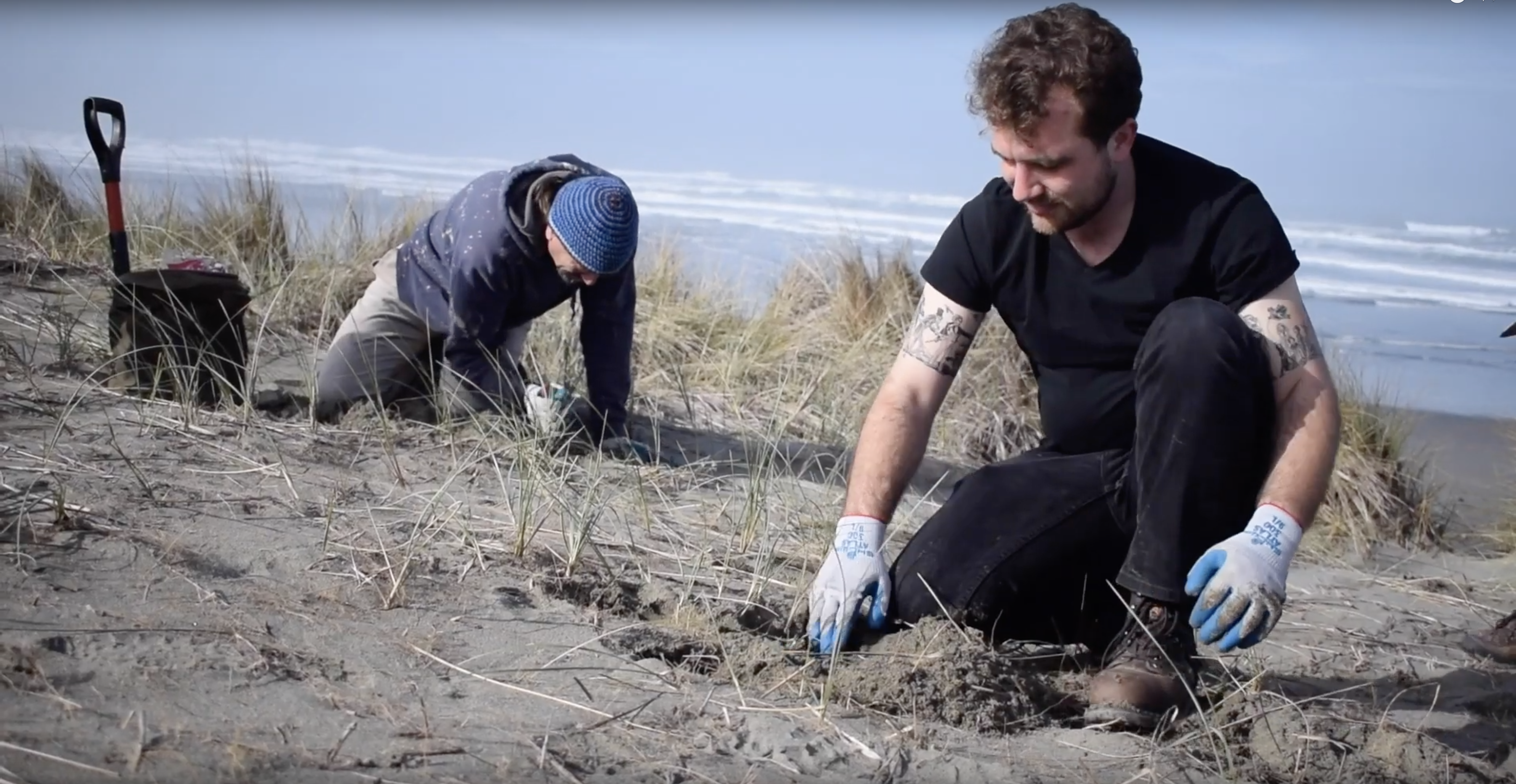
Luong is conducting field studies across three sites in California. Focusing on lesser known species that are currently not used in grassland restoration.
“I am working with my grad student to evaluate site characteristics, the climate, the soil, and all the plants that occur at those different sites at three different Grasslands across the state,” Luong said.
Byrne, an associate professor in applied ecology at Cal Poly Humboldt is working closely with Luong on his field research.
“We’re going to be collecting information or characterizing both plants and roots and soils at three sites,” Byrne said. “The Coastal prairie from up here in Humboldt, our central site is going to be in Sonoma County, and then our southern site is down near San Luis Obispo.”
Ernesto Chavez-Velasco is a national resources graduate student at Cal Poly Humboldt. He has worked with Luong before when they both attended UC Santa Cruz and is working on his graduate thesis while working with his old mentor.
“We’re looking at soil and climate and their neighboring plants essentially. We’re seeing how all of those three things affect the plants we’re studying,” Chavez-Velasco said. “The goal of this is to generate a lot more information for plants that aren’t really used in restoration.”
Byrne’s said that they will be using a standardized protocol across all three sights.
“We’ll collect some soils that we bring back to the lab for analysis,” Byrne said. “We’re going to look at root production or root biomass across all those sights.”
The goal of this research, according to Chavez-Velasco, is to understand how the species react in different environments across a giant gradient.
Greenhouse study
Luong is also doing greenhouse research on campus. By focusing on environmentally resistant species, he is finding the best species for an ever changing climate and environment. Specifically, he is conducting a Lethal Drought 50 (LD50) Experiment.
“Essentially, when 50% of the plants in a pot die from drought, we measure their soil moisture levels and we see at what level do these plants experience death?” Luong said.
Byrne is a big part of the greenhouse study, focusing on plant traits and culturally relevant plants to the local tribes.
“We’ll collect some soils that we bring back to the lab for analysis,” Byrne said. “Then we’re going to look at root production or root biomass across all those sights, using a standardized protocol.”
The Grassland Restoration Action, Science, and Stewardship Network (GRASS-Net)
GRASS-Net is the final step in Justin Luong’s project. He wants to create a website with information that all grassland restoration projects can use, no matter the location. The website will include climate-smart protocols, information and tools to help with drought-resilient plant selection, and an increased access to rarer plants, native to the area.
“We’re working with that Grassland Restoration Network to do essentially interdisciplinary work,” Luong said. “We’re first starting with conducting interviews and surveys with practitioners from across the state to best understand engagement methods to engage people in a network, and how to get people to actively participate for the network to continue to persist over time. We also talked to them about how we could share knowledge and about species selection; about what species do well.”
A problem a lot of scientists have is how to communicate their findings to the masses, while also collaborating with multiple agencies and people.
For Chavez-Velasco, this is the first time he is engaging with people in the field as a graduate student, not just conducting research.
“I feel more involved with engaging practitioners and communicating and sharing,” Chavez-Velasco said.
The idea of communication in the field is not new to Luong. He understands the shortcomings of scientific communication and teaches his students how to communicate their ideas.
“When you get into the workforce, you can’t choose who you’re interacting with,” Luong said. “You have to know how and learn how to interact with everyone to be effective in your position. Ecology is [the] absence of people, and we can’t understand ecological responses without understanding human responses.”