Two free events promoting a new HSU scholarship in memory of slain environmental activist
A new scholarship is available for HSU students in memory of slain environmentalist David Nathan “Gypsy” Chain. Chain was was a young forest activist killed in 1998 while trying to prevent illegal logging near Grizzly Creek in the Van Duzen River valley.
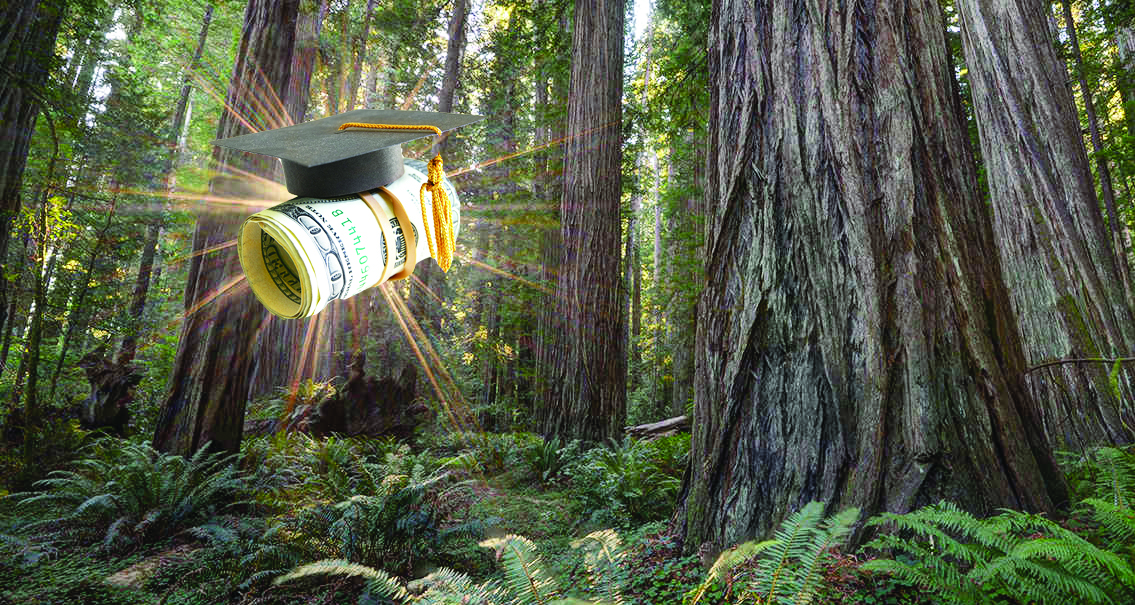
On the 20th anniversary of his death community leaders, friends and fellow activists established the David Nathan “Gypsy” Chain Memorial Scholarship to provide an annual $1,000 scholarship for students who have demonstrated commitment to issues of forest ecology through volunteer or academic projects.
Environmental activist Rabbi Naomi Steinberg said the idea started from a conversation between friends who were active in the Headwaters efforts 20 years ago.
[perfectpullquote align=”left” bordertop=”false” cite=”Rabbi Naomi Steinberg” link=”” color=”” class=”” size=”17″]”We don’t want anyone else to lose their life, God forbid. Students need to understand making change requires great effort, dedication and certain kinds of sacrifice.”[/perfectpullquote]“Gypsy’s death practically happened in my backyard…it was heart wrenching,” Steinberg said. “When I realized it was going to be the 20th anniversary of his death I said to my friends we should do something positive to immortalize him.”
Gypsy moved to Humboldt County in the 1990s from Texas to join Earth First! in the midst of the timber controversy. He learned non-violent protesting tactics and how to climb 200 foot redwood trees, and participated in tree sittings.
In 1998 Gypsy and other activists were in Grizzly Creek National Redwood Park to persuade tree loggers to stop cutting down trees and to wait for the California Division of Forestry. This is the state agency charged with overseeing timber harvest plans on non-federal land throughout the state, to assess the land for endangered species.
Pacific Lumber Company logger Arlington Earl “A.E.” Ammons argued all morning with activists and decided to start cutting down trees that were positioned on slopes. The last tree Ammons cut fell directly onto Gypsy, killing him on Sept. 17, 1998.
“We want this scholarship to keep Gypsy’s story alive because he was a wonderful idealist and young person,” Steinberg said. “We want students to understand 20 years ago a young man was willing to put his life on the line at great risk to prevent illegal logging. We don’t want anyone else to lose their life, God forbid, students need to understand making change requires great effort, dedication and certain kinds of sacrifice.”
Two upcoming events will be taking place to benefit the scholarship. The first event is part of HSU’s Social Justice Summit on March 2 with a showing of “Who Bombed Judi Bari?” followed by a workshop and singing. The second event will be a benefit show at the Arcata Playhouse on March 9. Local activist and musician Darryl Cherney will be hosting both events and playing music.
[perfectpullquote align=”right” bordertop=”false” cite=”Judith Mayer” link=”” color=”” class=”” size=”17″]”It was a nonviolent movement and remains so, yet many of these activists had been labeled as eco-terrorists.”[/perfectpullquote]Judith Mayer, environmental planner and HSU lecturer in environmental science and management, said that the benefit is meant to honor Gypsy’s memory and the forest defenders.
“This is to support local students at HSU and CR who are pursuing further studies and have a commitment to environmental activism and protection,” Mayer said.
Mayer organized the event for the Social Justice Summit and said Gypsy was emphatic in his forest defense and one of hundreds of young people in Humboldt at the time involved in the movement.
“It was a nonviolent movement and remains so, yet many of these activists had been labeled as eco-terrorists,” Mayer said. “The bottom line is to see the defense of the forest in our ecoregion of the north coast not only in terms of environment, but social justice and sustaining life on Earth.”
Mayer wants to encourage students to apply for the scholarship soon. She said the scholarship is for students who are graduating from any Humboldt high school and planning on attending HSU or CR. The scholarship is also available for first year students at HSU or CR who are planning on continuing.
“The people who established the scholarship initially conceived it as an academic landing pad for environmental activists in college,” Mayer said.
One of the creators of the scholarship, Marion Nina Amber, wanted the scholarship to bring awareness of environmental issues and help students understand activism. Amber’s son was friends with Gypsy and said it could have been anyone else at that time getting killed due to the high tensions between activists and loggers. Amber said students are unaware of the timber wars that occurred in Humboldt County and this scholarship will help teach history.
“Those ancient redwoods cannot reproduce themselves, we are planting more but the conditions are not like they were back then due to climate change,” Amber said. “People need to know about the value of the natural landscapes. Gypsy is a symbol and was willing to put his life on the line and defend this. We need to teach about him and people should know about him.”
More info on the scholarship: http://www.wildcalifornia.org/about-us/who-we-work-with/david-nathan-chain-scholarship-fund/