The Lumberjack


Students Serving The Cal Poly Humboldt Campus and Community Since 1929

Tag: Service animals

  • Pets keep students healthy and happy

    Pets keep students healthy and happy

    by Savana Robinson

    Finals week: a stressful, anxious time for all. During this time, Raymond Haeckel, a forestry major at Cal Poly Humboldt, had a public panic attack.

    “It was really embarrassing and not the best on my mental health,” Haeckel said. “I’m thinking about how all those people saw me freak out. It sucks.”

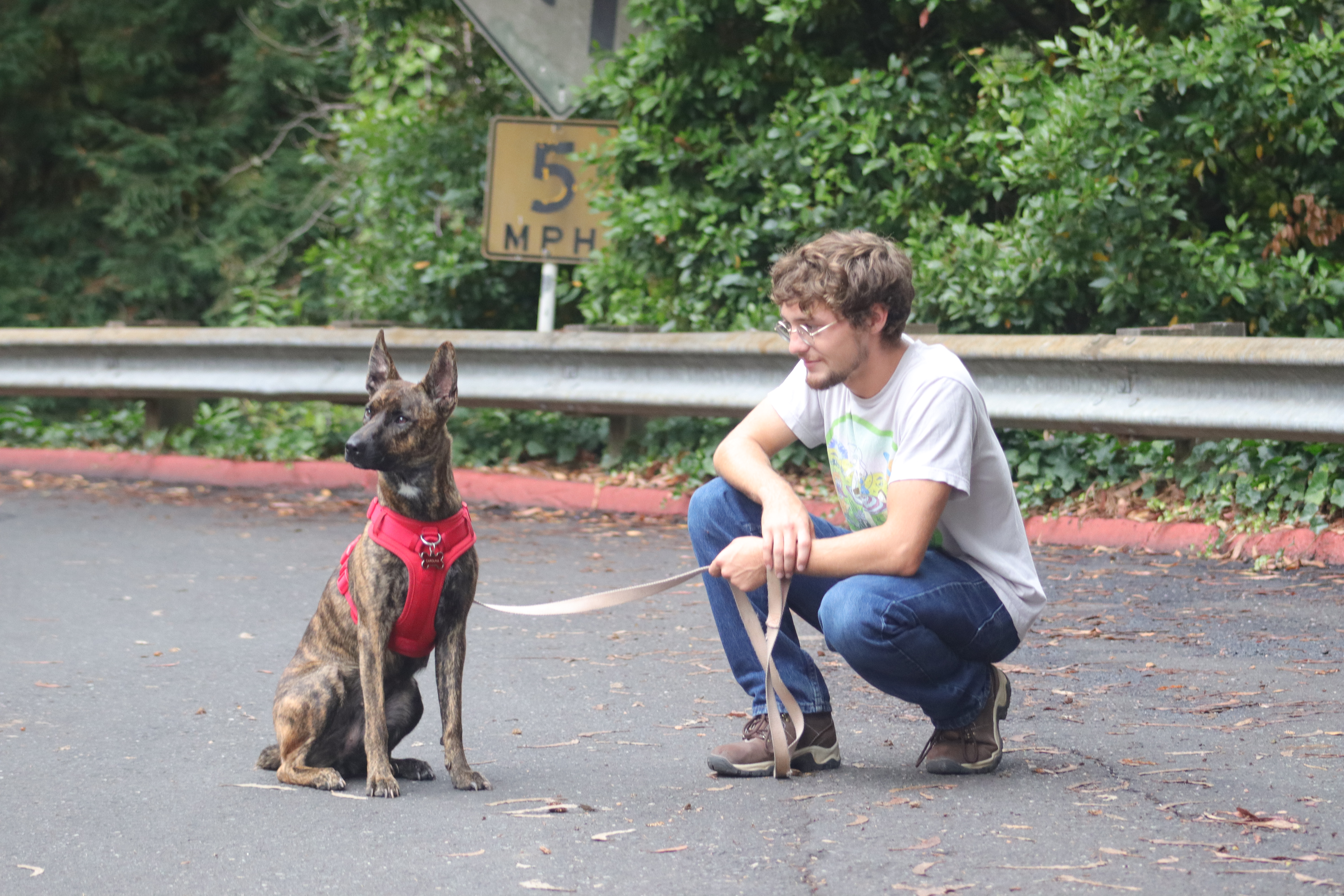
    After the panic attack, Haeckel decided to adopt a companion that would ease his troubles and calm his mind; he is now the owner of a beautiful cattle dog mix, Carolina. He is certain that having an animal companion has helped support healthier habits.

    “It’s a really good, big motivator to keep on a healthy schedule in my life,” Haeckel said. “When I’m feeling depressed, I have trouble keeping up with my daily habits. Having a dog to calm me down when I’m feeling anxious is really important for my mental health. It’s thanks to her that I was able to overcome my inability to sleep through the night.”

    Vanessa Hidden, a leadership studies major at Cal Poly Humboldt through the College of Extended Education and Global Engagement, believes having a pet or emotional support animal can be one of human’s deepest connections.

    “Our pets can stimulate the healing process within ourselves,” Hidden said. “They can help us look forward to tomorrow and get out of bed.”

    Hidden is the administrator for the Co-Sheltering Collaborative, a peer-to-peer support network by My Dog is My Home. The organization is a national nonprofit focused on supporting people experiencing homelessness and their pets.

    Having had pets most of her life, Hidden feels a certain sense of comfort and safety from having animals around. She has struggled with depression and anxiety disorder, and her pets were a core part of her healing process.

    “To this day, [they] provide the connection and consistency I need to get through new challenges,” Hidden said. “Being fully remote for school and work… is a challenge that I don’t know I would be able to sustain without the company and emotional stability that my pets provide for me.”

    Maia Ryan, a Counseling and Psychological Services therapist and campus outreach coordinator at Cal Poly Humboldt, provided some insight on how emotional support animals can improve their owner’s mental health. Social connection is crucial to overall wellbeing and there is ongoing research to prove that the positive interactions with animals offer psychophysiological and psychosocial benefits like lowering anxiety, alleviating loneliness and normalizing heart rate and blood pressure.

    “People who may have difficulties with medical or emotional conditions exacerbated by stress could potentially benefit from having an emotional support animal,” Ryan said.

    Mental health is heavily influenced by social connection and animals can provide that necessary companionship. The unique bond between humans and animals is a powerful source of comfort and healing, underscoring the vital role animals play in bolstering our emotional resilience and overall mental health.
  • Put em’ in a cage they say!

    Put em’ in a cage they say!

    By Phillip Santos

    The HSU campus is not a zoo. After attending this university for almost four years I’m inclined to disagree with that statement for a variety of reasons, but those who carry that sentiment have made their voices heard. Last semester the HSU Senate passed a draft resolution banning all animals except service animals from campus buildings. Who does this policy affect? Everyone really, but three groups in particular.

    The first group is made up of those who have certified service animals. Service animals go through a vigorous training regiment and are considered “working” animals who assist people with disabilities. Various examples include calming individuals with PTSD, alerting others if the owner is having a seizure, etc. Service animals are trained to perform a task specifically related to the disability the owner has.

    IMG_20170831_165334161.jpg
    Michelle Meyers with her seizure alert dog, ” Roody.”

    The second group is made up of the people who have emotional support animals. There are a few distinct differences between emotional support animals and service animals, but I will only outline two. The first is that emotional support animals are intended to help treat persons with psychological and emotional disorders. Whether or not these qualify as legitimate disabilities is something that mainstream society continues to argue about. The second difference is that emotional support animals don’t go through a vigorous training program, they are essentially prescribed by a licensed medical professional as a way to ease the symptoms of the patient’s disorder.

    IMG_20170831_164941367.jpg
    Kimber Nguyen and her emotional support anima, “Duke.”

    The third group is probably the largest of the three. These are the people who bring their pets to class because they can. When a dog jumps up onto a food surface in the Depot or leaves behind a steamy pile of excrement, these are the people that passerbys think of. Based on the comments made during the HSU Senate meeting when this resolution passed, this is the group that is being targeted by the new pet policy.

    The problem with this policy is that it uses broad measures to target a specific group of people and in the process, causes substantial damage to students with real and pressing needs. These are the students who depend on emotional support animals to make it through a tough class, or to even get there in the first place. Companionship is a powerful thing that enables human beings to do incredible things, but it’s at times necessary to achieve the ordinary. Because sometimes the ordinary becomes the impossible, but an impossible that can be diminished by a familiar friend doing what any friend would do, which is to offer support.

    This policy is also cruel towards the emotional support animals themselves. The policy mandates that emotional support animals be caged or kenneled while their owners are in class. Does anyone have class all day? Both the owner and the emotional support animal lose out in this arrangement. But this collateral damage is readily accepted in an environment where members of the HSU campus are tired of dealing with students who have abused the tolerance towards animals on campus.

    One of the worst things about this policy is that it doesn’t have to be crafted this way. Emotional support animals can be allowed in classrooms, and they should be. But the easiest solution to the host of issues that animals on campus have created is the current version of this policy. Supposed “modest revisions” are being made, but I’m skeptical that will amount to more than the correction of a typo.

    The other awful aspect of this policy is the lack of student input. During the HSU Senate meeting when this draft resolution passed, multiple Senate members expressed the need for student input to formulate a better pet policy. When it comes to this policy, it’s not that the HSU Senate isn’t listening, it’s that the student body isn’t talking. Don’t “sit down, be humble” stand up, don’t mumble!

    Through a variety of voices and action, HSU students and staff have created amazing programs and initiatives to address a variety of issues and interests such as : Check It (a nationally renowned movement to eradicate sexual assault and violence), KRFH (a FM college radio station that reels in awards every year), and WRRAP ( a waste reduction program which has reduced waste by 50% since 1996!). There is no reason that animals on campus cannot be met with the same type of creative and effective measures, but there is an explanation as to why that isn’t happening – I’ll let you finish that thought.