The Lumberjack


Students Serving The Cal Poly Humboldt Campus and Community Since 1929

Tag: Shawn Leon

  • Climate change puts the heat on clean up of dioxin hotspot

    Climate change puts the heat on clean up of dioxin hotspot

    Vice Mayor alerts City Council to Arcata Bay Shoreline dioxin threat

    City Council Vice Mayor Paul Patino said he intends to pull the approval of the Wastewater Treatment Facility Plan and Plant Improvement Project from the items scheduled to be rubber stamped by the city council.

    The $60 million investment is a response to the threat of sea level rise which involves enlarging levees around the Arcata Wastewater Treatment Facility. Patino is calling on the council to further discuss the project after he learned the mud around the bay shoreline of the wastewater facility has the highest levels of dioxin ever discovered in Humboldt Bay sediments.

    “I don’t see how you could mess with that area without it affecting that dioxin,” Patino said. “I think we need to get clear here.”

    Dioxin can cause birth defects, cancer and organ failure. It is known to undergo bioaccumulation, meaning it increases in toxicity as it moves up the food chain from plants to predators. It was widely used from the 1940s to the 1980s before the EPA started regulating its use.

    Patino raised particular concern with the staff report in the council packet where it states, “This project would involve enlarging the levee surrounding the majority of the outer perimeter of the Arcata Wastewater Treatment Facility (AWTF) by increasing the levee’s height and volume.”

    The Arcata City Council is faced with the choice to approve the final application for the project, or first investigate the dangers of the dioxin believed to be largely the result of pentachlorophenol used during historic lumber mill operations up Jolly Giant Creek several blocks south of the town square.

    The city is only now beginning to grapple with the impact the very high levels of dioxin have on plans to increase the height and volume of dikes around the marsh wastewater treatment facility and prepare for rising sea level already beginning as a result of climate change, and sea-level rise could complicate cleaning the dioxin.

    “Disturbingly, the site near the Arcata Marsh was found to have the highest levels of dioxin ever documented in Humboldt Bay sediments to date (38 parts per trillion),” wrote Jennifer Kalt, director of Humboldt Baykeeper in the report New Dioxin Data: Good News, Bad News.

    Kalt said she learned of the high dioxin levels from the report 2015 Feasibility Study: Beneficial Reuse of Dredged Materials for Tidal Marsh Restoration and Sea Level Rise Adaptation in Humboldt Bay, California.

    The dioxin hotspot extends from the end of Butcher’s Slough, where Jolly Giant Creek hits the bay several blocks south of the plaza, to over 2,000 feet on either side along the bay shoreline: around the wastewater treatment facility on one side, and around the main Arcata Marsh parking lot and boat launch on the other side.

    While Kalt acknowledged that many mills have existed along Jolly Giant Creek, she said, “We do know that Little Lake Industries was one source [of the contamination] because the city got a Brownfield grant…and found it around where the mill used to be.”

    The council signed off on a grant application in October for $300,000 to clean up the Little Lake Industries property 17 years after pentachlorophenol was first discovered in levels exceeding federal benchmarks. The Environmental Protection Agency identified high levels of pentachlorophenol onsite in their 2003 report South I Street Mill Reuse Project, Arcata, California, Targeted Brownfields Site Assessment Phase II Investigation, Final Report.

    Aldaron Laird is an environmental planner that specializes in sea level rise vulnerability assessments for Humboldt Bay.

    “With rising water elevations [the dikes] could be overtopped maybe as early as 2050…on a monthly basis…We really only have 20 to 40 years to relocate all of that utility and transportation infrastructure to higher ground before it is inundated,” Laird said.
  • Sweet Mama Janisse hit hard by COVID-19

    Sweet Mama Janisse hit hard by COVID-19

    Local owner of Sweet Mama Janisse, Marie Janisse-Wilkins struggles to make up losses

    The Arcata community came together to save Marie Janisse-Wilkins, owner and operator of the local, soul food catering business, Sweet Mama Janisse, Inc., from eviction as COVID-19 has wiped away all her revenue for this year.

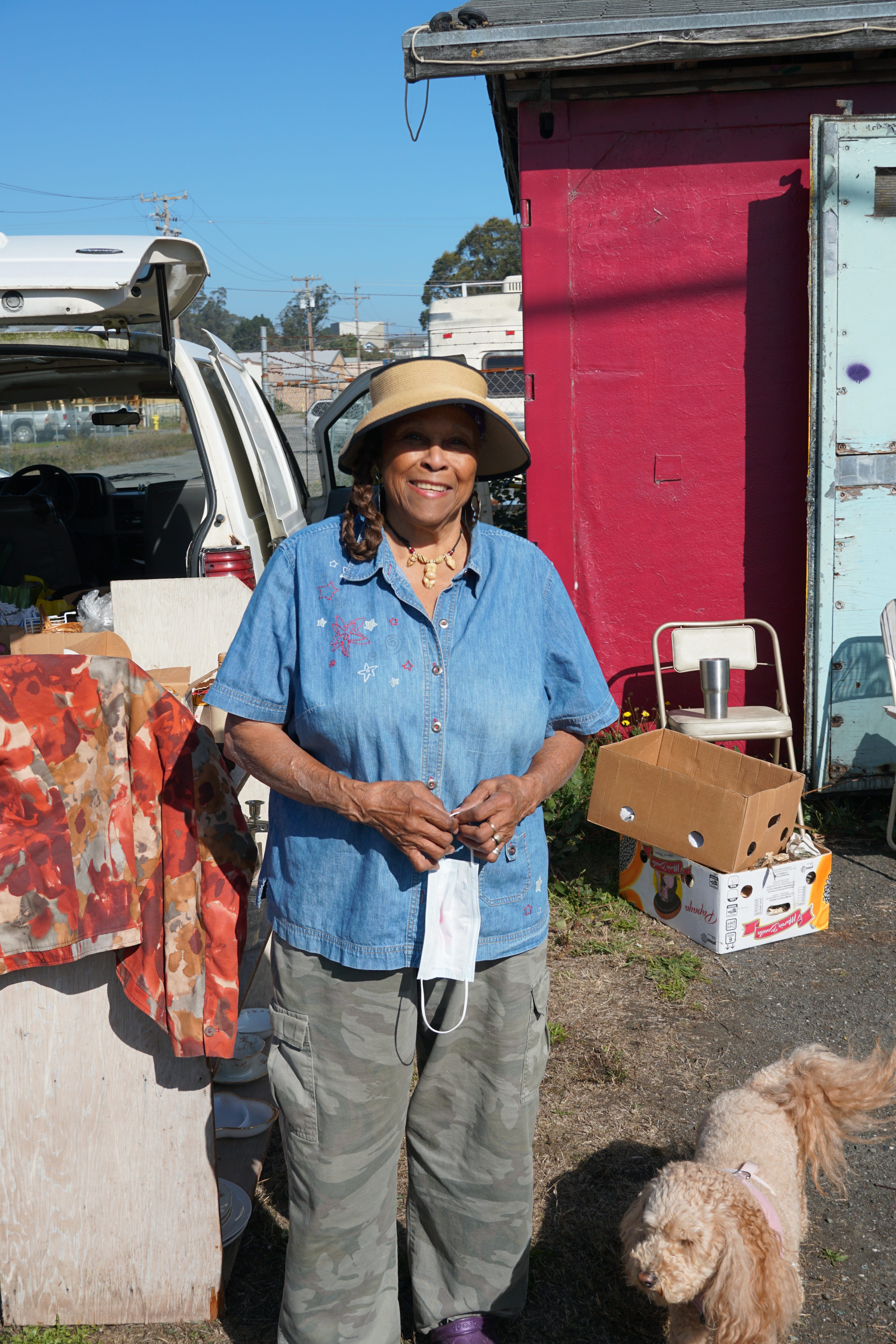
    During a garage sale Fri. Oct. 23, Janisse-Wilkins explained how she used her own money to start her business and when the business got into financial trouble, she refinanced her house to keep the business afloat, then COVID-19 struck.

    Janisse-Wilkins said she had paid all her bills before COVID-19 hit. Without the money from catering, she struggles to pay her mortgage.

    “[The banks] have no sympathy. They want their money. They want their money,” Janisse-Wilkins said.

    The Federal Reserve reported COVID-19 has disproportionately affected Black owned businesses. Janisse-Wilkins is Louisiana Creole, which includes a diverse heritage of European, African, and Indigenous America traditions.

    Shelter-in-place orders began in March and wiped away Janisse-Wilkins yearly schedule of catering for weddings, special events, graduation celebrations and the annual Independence Day celebrations in Eureka.

    The Federal Reserve said in a report titled “Double Jeopardy: COVID-19’s Concentrated Health and Wealth Effects in Black Communities” that while the national average of active small business owners dropped by 22 percent between Feb. and April, Black owned businesses saw a drop of 41 percent, almost twice the average, and the biggest decline of any racial group.

    This disparity is the result of historically unequal relationships to banks, increased likelihood of not being able to qualify for the Paycheck Protection Program and the higher rate of COVID-19 impact on Black communities.

    An online GoFundMe fundraiser started by Janisse-Wilkins’ friend, Julie du Bois, raised about $7,000 in two weeks. With a goal of $50,000, her friends have helped her host yard sales to sell off her possessions.

    Bob Dorn, friend of Janisse-Wilkins and writer of The Hum, a column that runs in the Mad River Union, received about 2000 of her books, mostly cookbooks, and decided to offer them in exchange for donations outside his storage unit at Arcata Bay Self Storage.

    “What she has going for her is she is an incredibly generous woman,” Dorn said.

    Nearing retirement age and without an income from her business, Janisse-Wilkins fears being homeless. She is currently unable to afford her rent, forcing her to ask for help.

    “It’s hard when you have to ask people to do something like this for you,” Janisse-Wilkins said.

    Oryan Peterson-Jones, Arcata City Council candidate, unloaded Janisse-Wilkins’ books from a storage unit and stated how he grew up in Arcata, and his first job was with Janisse-Wilkins as a dishwasher.

    “It was the best job I ever had,” Peterson-Jones said. “Marie was such an important person on my early development as a musician.”

    Peterson-Jones explained before Janisse-Wilkins moved to Humboldt in the 1990s, she worked at the Topanga Corral, which was a hot spot for rock and movie stars in the 1970s in Topanga Ca., just north of Hollywood.

    “She had all these stories and pictures of her with George Harrison, and the Rolling Stones,” Peterson-Jones said.

    Henry Saint Clair Fredericks, the multi-Grammy award winning musician known as Taj Mahal, is Janisse-Wilkins best friend. Fredricks even wrote a song, “Sweet Mama Janisse,” about her which tells of how good her cooking is. She even did two cruise gigs with Fredricks, called the Legendary Rhythm and Blues Cruise, where he sang and she did catering.

    Spencer Kennedy, another former dishwasher of Janisse-Wilkins, volunteered to help host a yard sale and recalled how Janisse-Wilkins made the restaurant feel special.

    “I hope we can get a lot of customers to make some money to make a difference,” Kennedy said. “I haven’t seen anyone walk out of the kitchen and talk to everyone in the restaurant. But Marie did that with every table.”

    Jannise-Wilkins said while she is able to cater during COVID-19 and sells a line of sauce, finding work is tough as clients are not booking very many events and employees are harder to find.

    “I just hope everything gets better and I can cook food for people again,” Janisse-Wilkins said.

  • COVID-19 isolation increases domestic violence

    COVID-19 isolation increases domestic violence

    October is Domestic Violence Awareness Month

    COVID-19 social distancing has increased the demand on local domestic violence services according to some professionals in the field.

    Locally a 27-year-old Asian woman was forced into a car at gun point in Fieldbrook, seven miles north of Arcata, on Aug. 4, and returned safe after the suspect, a 43-year-old George Rose, previously known to the victim, turned himself in after fleeing the state to Oregon.

    In nearby Mendocino, Khadijah Britton, a member of the Round Valley Indian Tribes, was forced into a car at gun point on Feb. 7 2018, allegedly by her ex-boyfriend. Britton is still missing and there is a $50,000 reward for information on her location.

    Stephanie Weldon, Humboldt State University social work masters graduate and Yurok Tribe member, was the director of the Yurok Tribe Department of Health and Human Services until August and currently is a consultant for state and federal agencies on tribal social services.

    Weldon said the tribe received increased calls related to domestic violence as the shelter in place orders went into place in March, and she has heard anecdotes from clients regarding the challenges that COVID-19 places on an already underserved population of victims.

    Brenda Bishop, executive director of Humboldt Domestic Violence Services, and HSU alumna, said “Rape culture is very alive and well on [HSU] campus.” The HDVS runs a 24/7 emergency domestic violence hotline which has had a reduction in the number of calls.

    Bishop said she suspects this is related to the difficulty for victims to make personal phone calls for help while living in close quarters with their abusers.

    Bishop does not believe the reduced number of calls reflects a reduction in domestic violence incidents, and in fact may indicate victims are in increased danger.

    Bishop said domestic violence includes intimate partner sexual violence and sex trafficking which may start as intimate partner violence.

    “We see a lot of HSU women that get involved in trafficking as well,” Bishop said. Usually this occurs through intimate partner violence with non-students, but sometimes with other students as well.

    Lundy Bancroft, author of an Amazon bestseller, “Why Does He Do That? Inside the Minds of Angry and Controlling Men,” said in an abuser’s mind everything is about winning and losing and the woman is not seen as having equal rights, her purpose is to satisfy his needs.

    Abusive partners can be even more violent when victims try and leave, or immediately after they leave.

    “The attitude abusers exhibit in this type of violence when women attempt to leave their partners is, ‘she must have to pay for my unhappiness,’” Bancroft said.

    About double the number of women were killed by current or ex-male partners than US soldiers died in Iraq and Afghanistan between 2001 and 2012, 11,766 and 6,488 respectively, according to a report by the Huffington Post.

    Police historically do not treat domestic violence as a crime but as a private matter meaning many incidents are not reported. Victims have expressed that they feel their reports are not taken seriously by police.

    Entrenched sexist bias is compounded by race. Weldon said, “You can’t talk about trauma without talking about race. How can you talk about a mission to wipe [Native American] people out, without talking about the impact that has had on those communities?”

    The structure of tribal police, which rely onUS police to cross-deputize the force and certify criminal charge procedures, aren’t able to collect tax revenue that could improve investigative work.

    “You go from no response and no intervention to overreaction where a ton of [non-tribal] law enforcement shows up because it’s a known family name,” Weldon said.

    According to the Institute For Women’s Policy Research, Black women are two and a half times more likely to be murdered by men than their White counterparts.

    Meanwhile, according to the study “Race and the Likelihood of Intimate Partner Violence Arrest and Dual Arrest,” non-white female victims of intimate partner violence are less likely to have their perpetrators arrested by police.

    Guns in the home increase the deadliness of domestic violence incidents. According to Giffords Law Center, “Guns kept in the home are more likely to be involved in a fatal or nonfatal unintentional shooting, criminal assault or suicide attempt than to be used to injure or kill in self-defense. Rather than conferring protection, guns in the home are associated with an increased risk of homicide by a family member or intimate acquaintance.”

    Bishop encouraged victims to call the 24/7 hour HDVS hotline for resources and emergency help.

    Bishop believes the most important thing for people in domestic violence situations is to feel supported and hear affirmation.

    “We believe you,” Bishop said. “And the longer you’ve been in abusive relationships the harder it is to make that call.”

  • Students shocked at Arcata Community Forest logging

    Students shocked at Arcata Community Forest logging

    COVID-19 hampered the communication of logging plans between the city of Arcata and new members of the community

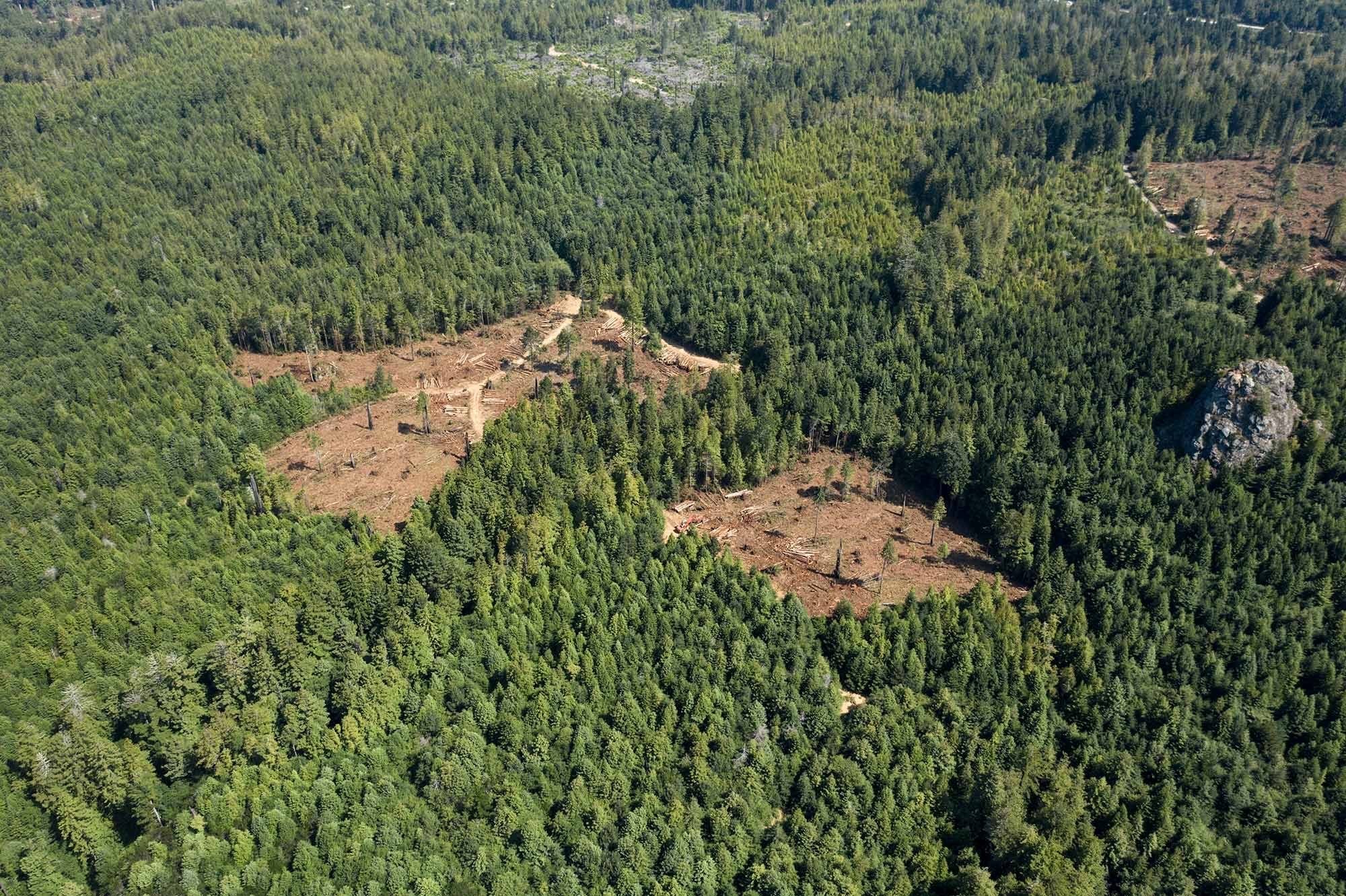
    Lumberjacks with heavy equipment felled redwood trees in the Arcata Community Forest during the last two months, shocking some Humboldt State University students who regularly use the park. The City of Arcata uses timber harvest money to fund the management of the park and purchase additional park land in the area.

    HSU senior Isaac West downhill bicycles the trails most days. He was disappointed when he came across the heavy equipment in the park near Fickle Hill Road, and a friend told him a section of the bicycle “jump trail” had been ruined.

    “We have trees burning down everywhere,” West said. “It just seems like a really bad time to be cutting them down.”

    Karlee Jackson, an HSU transfer student majoring in environmental studies, said many students she talked to hadn’t heard the tree cutting was happening, and were shocked by it.

    “I am so mad they are cutting down these trees when so many trees have already been cut down,” Jackson said. “Why wasn’t it discussed with the community?”

    Jackson acknowledged that COVID-19 may have made it more difficult to consult with the community, but said she would have liked the city to have found another way to engage the community before cutting.

    Mark Andre, Arcata City director of environmental services and former HSU watershed management graduate student, said community engagement in the forest’s management was greatly impacted this year due to COVID-19.

    “The biggest challenge to us is to explain to new people who are moving here,” Andre said. “During this COVID-19 year [community consultation] has not been as perfect as it could have been.”

    Andre prepared the current Non-Industrial Timber Management Plan which allows some logging in local community forests. It was approved in 1999 and therefore public comment is not required each time the city wishes to cut, but the city is required to submit a Notice of Timber Operations (NTO). The city did issue a press release and convened the city Forest Management Committee, made up of appointed experts, although some regular meetings were canceled this year due to COVID-19.

    The NTO includes an impact analysis on spotted owl populations, and the steepness of the grade to ensure the cuts do meet environmental regulations.

    Greg King, executive director of the Siskiyou Land Conservancy and one of the first-ever Redwood tree-sitters, said he supports the efforts of Andre and the city.

    “I’m pretty skeptical when it comes to most logging,” King said. “It almost surprises me to say I support this.”

    King said he was far more concerned about the practices of logging companies owned by the billionaire family, Fisher, and Green Diamond Resource Company. Together these companies own roughly half of all redwoods in existence and regularly get “incidental take permits” which are essentially licenses to kill endangered species found while cutting.

    “What you see is a lot of faux [or fake] sustainable logging, but that’s not what you see here,” King said.

    He hasn’t read the forest management plan, but King encouraged students and community members to keep a close eye on the city. He is impressed at the “light touch” of the operations, and how the city has been able to purchase additional land in the area for conservation with the money from the park’s timber harvest. But King does believe public notice could be improved.

    Andre said he has been working for the city since 1984 and since then the size of the forest has doubled. In the past decade about 30% less is cut annually compared to the 1980s. The city originally purchased the park and instituted the arrangement to use timber harvest money to purchase additional land for conservation after a city bond measure passed in 1979. Andre said since then the city has set standards in sustainable forestry and community based forestry even winning an award from the Forest Stewards Guild.

    Regarding the recent destruction of a section of the downhill bike trail Andre said, “If we damaged the jump trails it’s going to be rebuilt this fall anyway.”

  • Tree sitters defend forest near Strawberry Rock

    Tree sitters defend forest near Strawberry Rock

    The Redwood Forest Defenders demand Yurok tribal land be returned

    Green Diamond Resource Company, (GD), an Humboldt State University research partner and local logging company, made two clear cuts near Strawberry Rock in Trinidad this summer. Redwood Forest Defense partially blocked the logging by creating a tree sit village in the forest canopy.

    A Redwood Forest Defense tree sitter risking arrest asked to remain anonymous, but provided the alias Lupine. Lupine said the tree sits were erected April 1 immediately after Humboldt County imposed the COVID-19 isolation order.

    The company stopped about 20 acres, or 20 football fields, short of logging the whole area they originally intended. Roughly 100 acres between two timber harvest plans, Lupine said.

    Karen Pickett from the Bay Area Coalition for Headwaters and an Earth First!er since the early 1980s believes protecting the forest is crucial.

    “I guess forest defense is an essential job too,” Pickett said. “I find it really inspiring that people are up there doing this.”

    Lupine and the tree sitters have defended a five acre area this year. In previous years the sitter protected the remaining untouched 20 acres of the timber harvest plan. Green Diamond and the Trinidad Coastal Land Trust are in active discussion over the 20 acres, wanting to preserve a strip of forest for trail access to Strawberry Rock.

    Sarah Lindgren-Akana, Yurok tribe member and secretary of the Tsurai Ancestral Society, an organization advocating for the Indigenous of the area whose land was stolen, said she supports the tree sitters.

    “I really admire their dedication and I hope people are listening to their message,” Lindgren-Akana said. “While some may argue that this is just a small area, or that it is not an old growth forest, we need to keep in mind that over the past 500 years America has lost about 95 percent of its forest due to development and logging.”

    Gary Rynearson, GD chief communications officer, claims the company stopped logging the clear cuts near Strawberry Rock more than three weeks ago.

    “We think it’s dubious for them to say that [since] they have refused to file the completion paperwork [for the timber harvest plan],” Lupine said. “We are staying here since they are still legally entitled, within the timber harvest plan, to come here and cut.”

    Lindgren-Akana disapproves of the management practices of GD advocating for the land to be returned to the tribe.

    “The Strawberry Rock property is within the Tsurai village and should be returned to the tribe for proper management and care,” Lindfgren-Akana said. “The Yurok tribe can bring the land back into balance and ensure the plants and forest, animals and people all have something to enjoy for generations to come.”

    Lupine supports Lindgren-Akana and the idea of the land being returned to its rightful protectors.

    “The goal for this land is not to be held by an entity like the land trust, but to be returned to the Indigenous people it belongs to, the people it was stolen from,” Lupine said. “Whether that be the tribal council or groups like the Tsurai Ancestral Society.”

    Lindgren-Akana stated that the GD was starting to move towards a streambed that directly impacts the surrounding ecosystem.

    GD declined to comment on stream encroachment and sustainable forestry practices.

    Lupine said very little is done to ensure the company complies with sustainable forestry practices.

    “I think there is very little oversight whether it is from those types of third party certifiers or whether it is from the state and federal agencies who are tasked with overseeing these things,” Lupine said. “I often wonder if [third party] certifiers are doing more harm than good.”