The Lumberjack


Students Serving The Cal Poly Humboldt Campus and Community Since 1929

Tag: siemens hall protest

  • Dozens of protestors decide to stay on Cal Poly Humboldt campus, occupation continues

    Dozens of protestors decide to stay on Cal Poly Humboldt campus, occupation continues

    by Dezmond Remington

    Resolute hope mixed with a tinge of fear and anxiety have been the dominant emotions today on Humboldt’s campus after officials sent an email saying protestors participating in the ongoing Siemens Hall occupation should leave before 5 p.m. to avoid being arrested. 

    Though only a few people have been arrested, many more than that have received interim suspensions today. 

    Administration set up a “check out” booth next to the library circle, where activists who got a suspension could make a case that they didn’t deserve one and attempt to get it wiped. 

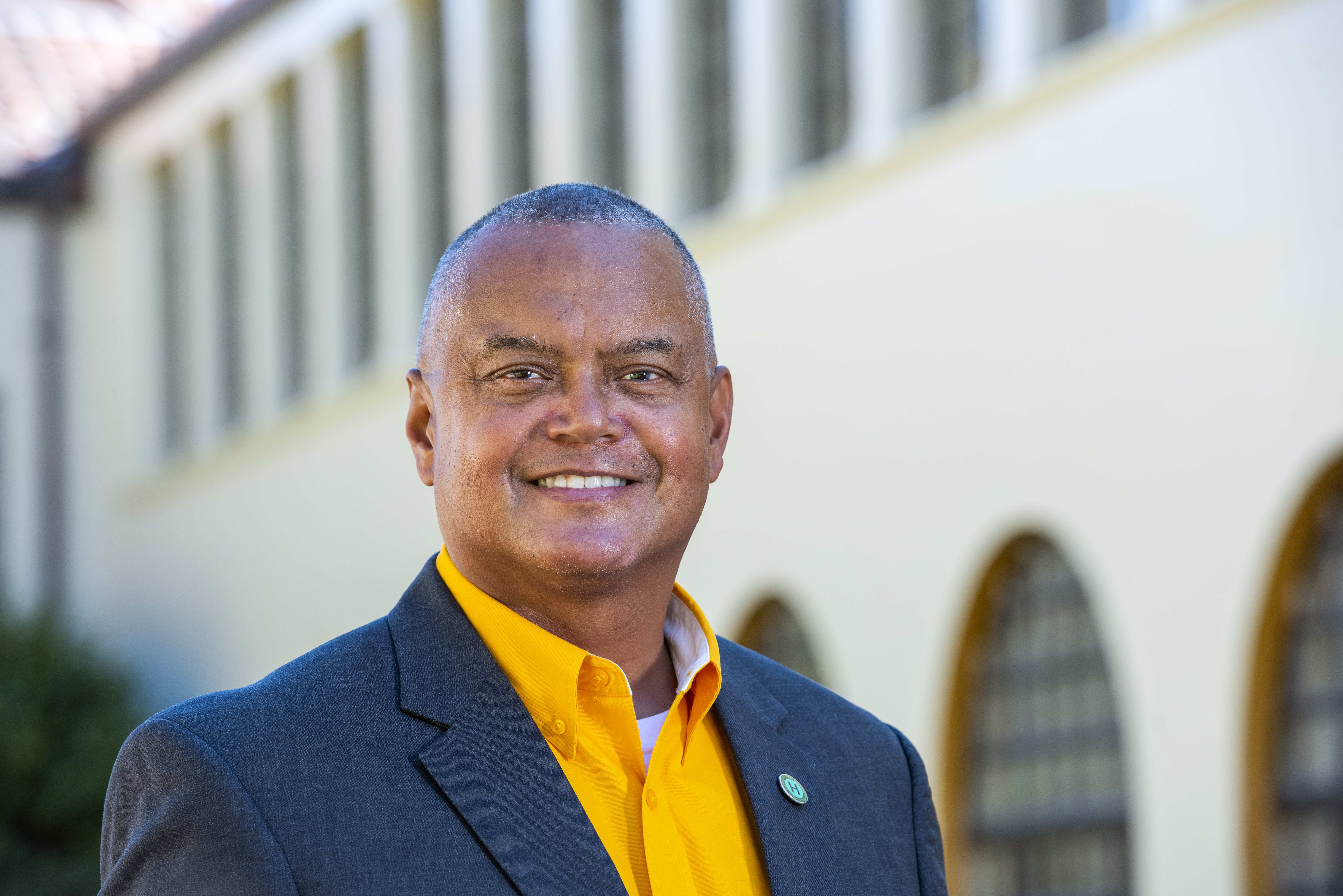
    According to Dean of Students Mitch Mitchell, the decision was made by an emergency operation committee with over 30 people on the board. They thought it was the best way for students to vacate without being physically harmed. Mitchell believed it was highly likely that many people would take the opportunity to leave. 

    “This is not a person’s normal dwelling,” Mitchell said. “Students walk out, same way they walked in.”

    Most of the activists are staying, and won’t leave until the university meets their demands.  Many of them say it’s worth getting arrested.

    “A lot of us have known that the university has problems caring about students,” one protestor who asked to remain anonymous said. “This just confirmed what I suspected.”

    Another protestor, who gave the pseudonym “Rosie”, thought the check out booth and insinuation that everyone else who didn’t use it could be arrested was an unnecessary scare tactic. To leave, Rosie said the CSU would have to commit to a system-wide divestment policy to stop investing in Israeli interests, a statement a lot of protestors echoed. 

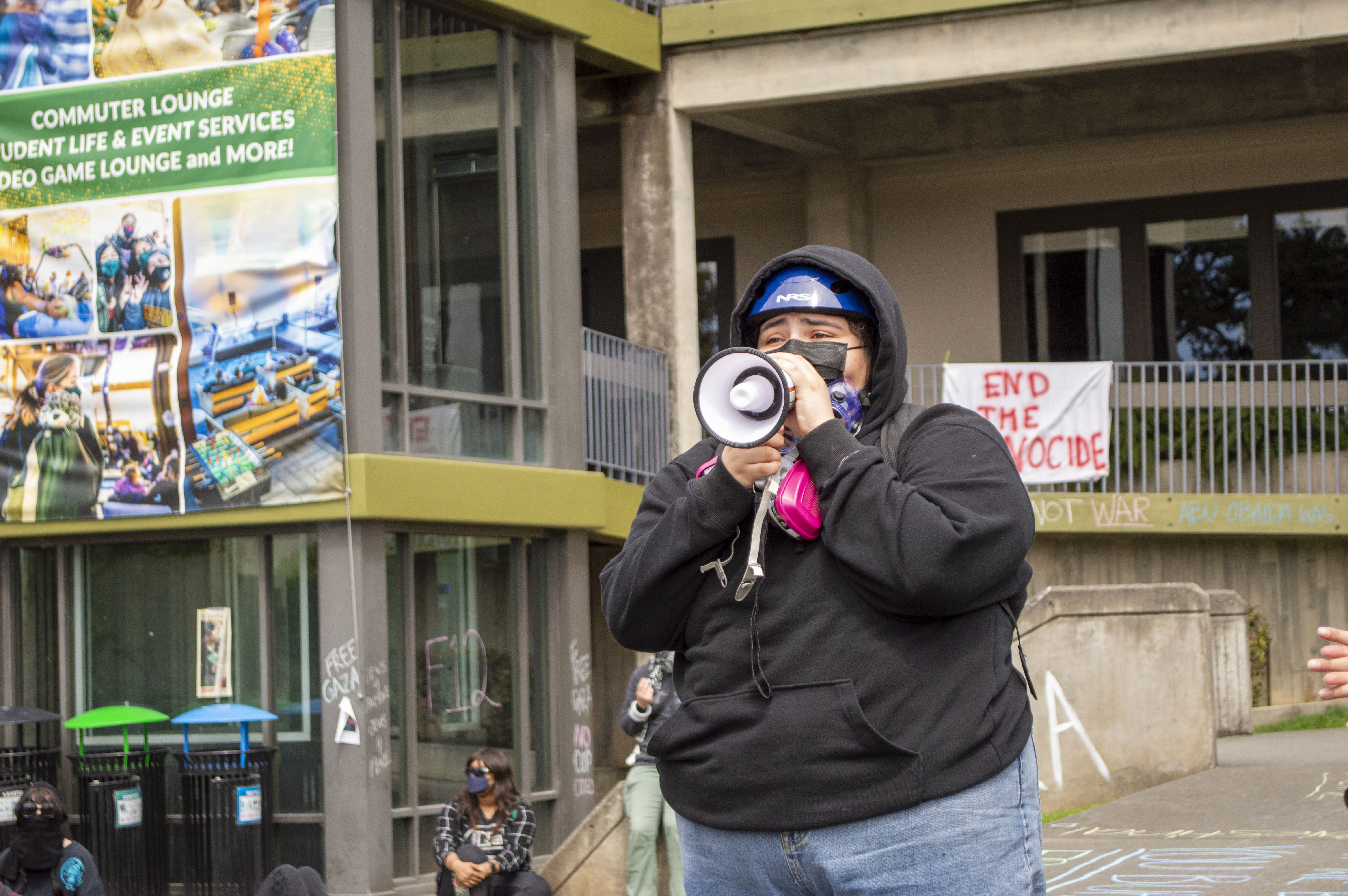
    “If we stay here long enough, we can get the CSU to divest,” said one speaker in the UC quad with a megaphone. “We can be a thorn in the side of Genocide Joe [Biden] as long as it takes.”

    Although the vast majority of protestors have decided to stay, at least one who asked to go by “Tord” left because of the threat of violence. Tord had been staying on campus since Monday, and could not condone the possibility of physical harm coming from either law enforcement or protestors. 

    “I’m leaving for my own safety,” Tord said. “I want to be 100% peaceful and I won’t associate with violence. I just wanted community.”

    Humboldt County Sheriff William Honsal showed up to campus at around 4 p.m. to try and work with activists to devise a plan to get everyone to leave campus. He also said the sheriff’s office had no plans to breach the barricades and enter the occupied portion of campus, but only if the police and protestors could come to some agreements.

    “The last thing we want is violence,” Honsal said. “If we continue down this road, that [could] happen.”

    The occupation continues to disrupt campus life as in-person classes have been shut down for the rest of the semester. Many of the activists have little sympathy for students who are mad at the developments. One alumni said the protests are “land-based learning.”

    “If our demands are not met and if all we’ve done is show hope, I am happy,” one speaker said. “To those who have said this was a waste of time, or unproductive, or just a lot of needless destruction of property, I say we inspired hope.”

    Dean Mitchell doesn’t agree.

    “I think there’s been a lot of light shed on the situation [the war in Palestine],” Mitchell said. “My focus is the student body. What about the other students? There is no access to the cultural centers or study halls. How are we showing support for all of our campus? How do we restore our campus? I believe in disruption, not destruction. Don’t take it [destruction] home.”

    Protesters have been moved to Nelson Hall while university officials currently survey the damage in Siemens Hall.

  • President Tom Jackson should resign, say Cal Poly faculty and CFA

    President Tom Jackson should resign, say Cal Poly faculty and CFA

    by Dezmond Remington

    University president Tom Jackson and his Chief of Staff Mark Johnson aren’t fit to lead Humboldt, according to both the Humboldt CFA and 174 Humboldt faculty.

    The executive board of the Humboldt chapter of the California Faculty Association passed a vote of no confidence today in Jackson’s leadership. The vote comes after Jackson’s handling of the student pro-Palestine protests this week.

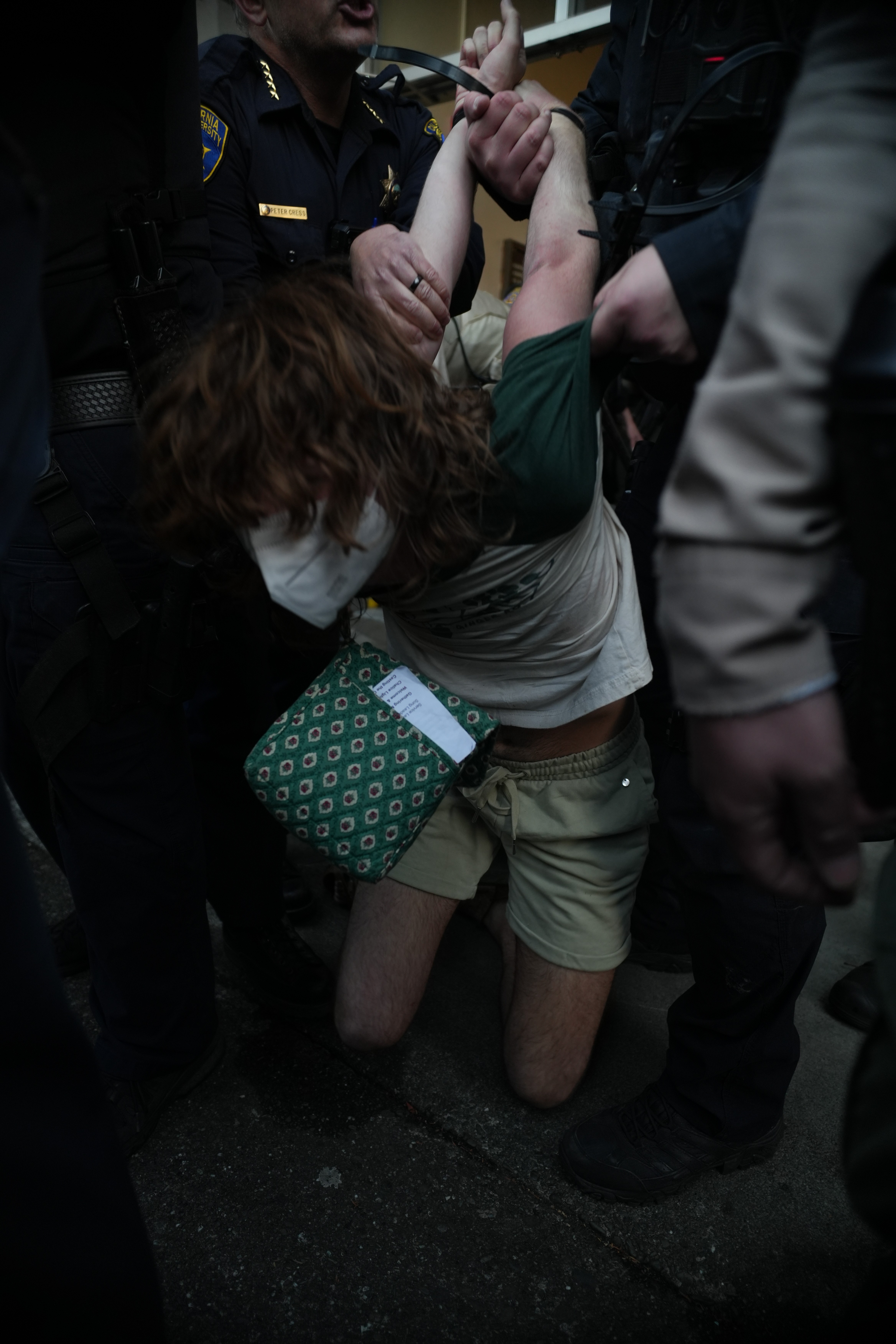
    According to the faculty resolution, Jackson and Johnson were responsible for calling the police to campus, a move which led to police hitting several students with batons and three people being arrested. 

    In addition to the CFA’s vote, a university faculty meeting held on Zoom today also ended with a resolution calling for Jackson and Johnson’s resignations. Although the vote isn’t completely verified due to uncertainty about proxy votes, it was 174-10. 

    The resolution does not force them to resign.

    “[Tom Jackson and Mark Johnson], through their unfamiliarity with the Cal Poly student body, mishandled the protest by calling those law enforcement agencies to attempt to extract protestors from Siemens Hall, which led to the injury of students and faculty of Cal Poly Humboldt,” the resolution reads. 

    Faculty were divided on whether to include University Provost Jen Capps. Professor Nicola Walters thought she should be included, but the resolution went unamended so it could be passed as quickly as possible. 

    “[We’re doing this] so we can tell our students we’re doing something to protect their safety,” said James Woglom, who lead the meeting. “I will pass whatever resolution you want, as long as we get those kids out of there safely.” 

    Many of the faculty believe Jackson is doing a bad job leading the university through this moment, if he’s leading them at all.

    “We’re rudderless,” sociology professor Josh Meisel said. “There’s a complete lack of leadership.”

    Read the faculty resolution below.

  • Student protestors barricade themselves inside Siemens Hall, demand end to war in Gaza

    Student protestors barricade themselves inside Siemens Hall, demand end to war in Gaza

    by Dezmond Remington

    Dozens of students barricaded themselves in Siemens Hall and hundreds more swarmed the UC quad to protest the war in Gaza and to demand Humboldt stop associating with Israeli organizations.

    At least one person, local teacher Alice Rose Finen, was arrested by the University Police Department. She was released on Monday night. 

    The protest started at around 5 p.m. on April 22, when a few protestors showed up to Siemens Hall. They piled chairs and tables up in front of entrances. The five classes being taught in Siemens were evacuated. Police arrived soon after, as did a California Highway Patrol helicopter.

    As of publication, the protest is still ongoing. Dozens of students occupy Siemens, and doors have mounds of office furniture blocking them. Though there’s no consensus, they plan on staying until their demands are met or they are forcibly removed. Several occupiers broke into university president Tom Jackson’s office by shattering the window on the door. Siemens Hall is covered in graffiti, as is the outside of the Van Duzer theatre. The American and Californian flags were taken off of the flagpole in front of the library by a man with climbing gear. 

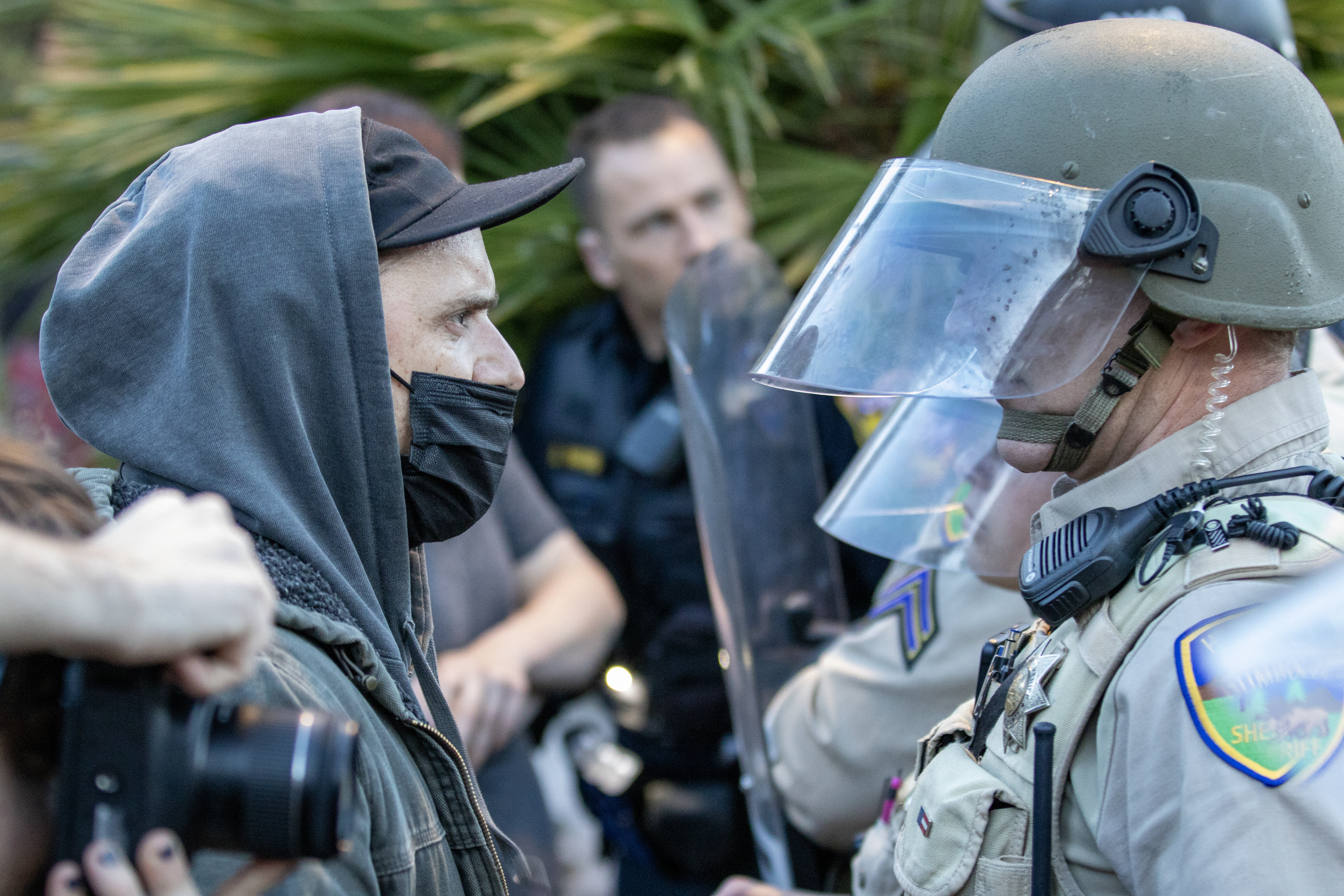
    For hours, student activists inside Siemens Hall were only a few feet away from the police on the other side of the main entrance on the second floor. Cops showed up from all over Humboldt, including the California Highway Patrol, Humboldt County Sheriff’s Office, and even some officers from as far away as Rio Dell. At one point, police scanner traffic indicated riot control police from Redding were coming to campus, but they never showed up.

    Police left at 11 p.m. on April 22, and those inside tore the barricades down. Over 100 students entered the top floor, walked to the end of the hallway, turned around, and left. After that, the protest dwindled to less than 100 people, most of them outside. People played music and barbecued. 

    The occupation had been generally peaceful, but violence broke out at around 7 p.m. when police tore down the barricade and entered Siemens Hall. A line of law enforcement with riot shields and a crowd of activists crushed together, and a protester inside hit an officer with an empty water jug. At least one officer retaliated by bludgeoning a protester with a baton. Other reports of students being batoned are circulating, but unconfirmed. 

    The main demands of the protestors are: to end the war in Palestine, for the university to disclose any dealings with Israeli companies or the Israeli government (and end those relationships if they exist), cut all ties with Israeli universities, and for the university to end prosecution of student activists. Many of the same demands student activists all over the nation are demanding at universities such as Columbia and UC Berkeley.

    “We’re doing this out of principle and righteous rage for our comrades,” said Casey, one of the protestors who was inside the building before the police left. “We want to make this happen at other universities across the nation.”

    Another one of the protestors, who asked to be identified as “Bum,” was one of the first to blockade inside the hall. They decided they would join their friends the day before the protest was planned. 

    “When the homies started talking, I was like, ‘Yeah, dog,’” Bum said. “It’s time to fight genocide in general. It’s time to stand up with our Indigenous homies. [We’re occupying the building because] trying to dialogue with the oppressors doesn’t work well.”

    Cal Poly Humboldt has not responded to a request for comment on its ties to Israeli institutions.

    Some of the people at the protest weren’t there to demonstrate. Students thronged the balconies of the Student Activities Center and crowded around the main cluster of activists in front of Siemens Hall to watch the action, many of them on their way home from class. The helicopter hovering overhead attracted many sightseers.

    “Nothing ever happens in Arcata,” said Shawn Rogan, a curious student. “It’s novel for a small campus, and [the war in Gaza] is a cause worth protesting.”

    One of the biggest concerns the protestors had was the heavy police presence. Before they left, those barricaded inside the building said they would negotiate once the police were gone. One protester blockaded inside who asked that he only be identified as “Joe” said he would stay there until he was fought off by law enforcement.

    “I’m going to resist,” Joe said. “If they beat me, they beat me.”

    Protestors chanted anti-police slogans at law enforcement to try to get them to leave, and many of them tried to talk some officers into leaving. Communications professor Aaron Donaldson argued with Rio Dell’s Chief of Police Greg Allen and two other officers outside of Siemens Hall for over half an hour. Donaldson attempted to make the case that they could decide to leave. Allen disagreed. 

    Cal Poly Humboldt has made it clear they want protestors to leave Siemens Hall and to return home. As of April 23, graduation is still planned to happen on May 11.

    “The University supports free speech through open dialogue that is respectful and constructive, but will not tolerate endangering people, destroying property, and disrupting campus,” read an alert published on April 23. “As a community, we are committed to keeping our students, staff, and faculty safe and fostering a learning and working environment where the campus community can feel safe, included, and respected.” 

  • Cal Poly Humboldt faculty criticize administration for policing pro-Palestine protest

    Cal Poly Humboldt faculty criticize administration for policing pro-Palestine protest

    by Alana Hackman

    Cal Poly Humboldt students, faculty, and community members joined a virtual University Senate meeting on Tuesday, April 23. 

    “There is considerable interest in engaging with the open forum today. More than is likely to be possible, given due to time constraints,” meeting leader James Woglom said. “Given that, we’re going to prioritize guests. If you are a senator and we are unable to get to you today, I do apologize.”  

    Woglom then continued to introduce senators present in the meeting that evening, including Provost Jenn Capps and Chief of Staff, Mark Johnson, who would be present on behalf of the university president, Tom Jackson.

    Senator and graduate coordinator of the sociology department Mary Virnoche proposed the upcoming agenda be edited. Virnoche proposed a discussion item to be inserted into the agenda to receive an update on the campus response to the current protestors occupying Siemens Hall. No senate members objected. 

    Woglom began the discussion by citing their own experience observing the protest last night. They mentioned speaking with other individuals earlier in the day to discuss how they can make progress to meet the needs and demands of those occupying Siemens Hall. 

    Woglom then called for any member of the campus faculty or community to share any up-to-date information they may have regarding the current occupation. Each speaker was allocated a three-minute time limit.

    “I had a meeting with [Chrissy Holliday] right before this and it seems the current concern is that there [are] confidential documents in Siemens Hall,” Parker said. “So far, no one has made an attempt to reach those. If that continues, it sounds like they’ll be fairly hands off.”

    The open forum discussing the current state of the Siemen Hall occupation continued with Jamela Hashim, a social work student who was currently joining from a smartphone with other senate meeting attendees, Gabi Kirk of the geology department, and Janet Winston of the English department. All mentioned they were currently outside of Siemens Hall.

    Hashim urged meeting attendees that it was vital to address that internet services have been cut off within Siemens Hall so nobody inside would be able to comment. 

    “That seems like a bias that should be addressed in some way,” Hashim said. 

    Wolgom acknowledged the statement and encouraged protestors inside of the hall should text outside sources information they would like to be relayed during the meeting. 

    The proposed discussion by Virnoche lasted until about 4:12 p.m., until it was cut off to discuss the UPRC budget, CR/NC deadline, and Faculty Awards. 

    As the discussion unfolded many faculty, students, and community members spoke up about supporting the student protestors’ requested demands and urging for a ceasefire. 

    “Here at Cal Poly Humboldt, we pride ourselves on being student-centered and guiding our students’ academic journeys towards careers that will usher in a brighter and more empathetic world grounded in values of justice, diversity, equity, and inclusion,” said Kelly Fortner, Community-based learning faculty. “If we want to hold true to those values, as a university and campus community, we need to meet the demands of our students and make a stand against genocide.” 

    On the frontlines of the sit-in, Kirk and Winston used their three-minute speech slots to read a three-page letter collectively written by faculty deploring the University administration for the use of police force, and standing in solidarity with student protestors. As of now, the letter has 164 signatures from staff, students, and community members. 

    “We call on Cal Poly Humboldt to reflect on the real harm this crackdown on free speech inflicts,” the letter states. “And the message it sends to current and future students, their parents, faculty, and staff, and our communities within and beyond Humboldt”

    Following that, Chief of Staff Mark Johnson made a statement on behalf of the university and President Tom Jackson. Johnson encouraged meeting attendees to share possible ways they can move forward from the current events of possibly 40 to 60 protestors currently occupying Siemen Hall.

    Johnson explained that the students inside Siemens Hall were offered on several occasions to exit the building and protest in the quad or somewhere else suitable for them. He then explains that their denial to do so then equates to trespassing on public property. 

    “They refused that offer and insisted on occupying and effectively shutting down the nerve center of the campus,” Johnson said. “I think all of you understand what happened yesterday as we went through actions to try to remove those protestors who were effectively trespassing in the building.” 

    Johnson also commented that the police force was removed after the realization it was inflaming the situation rather than aiding it. Johnson mentions there are planning efforts moving forward to communicate with the protestors inside the building and provide a more peaceful and secure environment to the other students on campus. Johnson then opened the floor for constructive criticism on how to move forward with current events after reiterating that the police force involved was once again a result of the students refusing to protest in a content-neutral way. 

    “The president’s administrative team and President Jackson are making operational decisions based on real-time information about what is happening around voting and on campus,” Johnson said.

    California Faculty Association (CFA) president Marisol Ruiz laid out recommendations for moving forward on behalf of the CFA. Her requests included not prosecuting anyone involved, showing support for students’ organized efforts for Gaza, and rejecting the use of force and policing. Ruiz also called for a statement from Tom Jackson and Jenn Capps. 

    “The lesson should not be in the sacrifices that have to be made for advocacy but about the possibilities we find there for solutions,” Ruiz said.

    Geology professor Jim Graham followed Ruiz’s statement with a request for possible outside sourcing of an arbitrator to speak to the current protestors. Graham also reflected on the student sit-in in 2015 in regards to Native American Studies professor, Jacquelyn Bowman’s termination. Giving student protestors credit for their organizational abilities and dedication during that event.  

    Another attendee, Katie Koscielak the sustainability analyst at Cal Poly Humboldt then questioned if any of the student protestors’ demands were being met. A list of the demands had been circulating around social media. 

    Woglom spoke before Johnson stating that they are currently working with the students to make their demands more concise. Woglom and Johnson mentioned specifying the investments within the demands of the university can make them more achievable. 

    “The investments at the system level, at the state level, are not under our control in any way shape, or form,” Johnson said. “We do have some investments as part of the endowment and to add to James’ point we are looking into those investments, those portfolios to make certain that we understand what if, if any, percentage of those investments are already in better, broad terms, defense contractors.” 

    Johnson continued to state that President Jackson would not be making any statements in support of or against any political opinions or subjects. 

    “With regard to having a war or causing a ceasefire, causing the United States to divest in broader terms, those are things really outside of the control of anybody here on campus, and therefore are not actionable or realistic for the university to consider as demands to be met,” Johnson said. 

    After Johnson’s final comment, concerned community members shared their thoughts on the University’s handling of the student protestors. Concerns were made surrounding words used to villainize the protestors, hygiene following campus closures, and the overall prioritization of property safety over people. 

    One community member Genevieve Ameduri shared a strong message of disdain of the university’s call for policing the student protestors. Ameduri explained that she and her husband have recently moved to Arcata and adopted three Palestinian children who are hopeful to attend Cal Poly Humboldt in the future. She explains seeing a student hit over the head by police in riot gear in the first fifteen minutes of attending the protest was extremely upsetting and made her question the University’s priorities. 

    “Our children have the decency and the heart to stand up and we put them in violent outcomes, it’s unacceptable,” Ameduri said. “I am ashamed of all of you who have not spoken up and stood with them.”