The Lumberjack


Students Serving The Cal Poly Humboldt Campus and Community Since 1929

Tag: Slackline

  • As students return to campus post-COVID, so do club sports

    As students return to campus post-COVID, so do club sports

    by Alina Ferguson

    COVID-19 disturbed, disrupted, and delayed many lives and events over the past few years. Club sports at Cal Poly Humboldt were no exception. Sport clubs that have been around since the 90s had to be put on hold, as none of their members could meet in person. Some clubs had to completely cancel competitions, events and all club activities. Now that it is once again safe to gather, club sports are making a comeback. Various clubs on campus are seeking to grow their numbers, and are once again practicing and competing as a group. 

    Archery

    The Archery club has a team that travels for competitions. This club is reliant on frequent practices, which was difficult to do away from the field. This year, with the participation of new freshmen, club membership is finally growing.

    “To join you need no experience or gear,” club president Zachary Gaydosh said. “Our practices [are] at the Student Recreation Center next to the football field on Saturdays 3 p.m. – 6 p.m. [and on] Thursdays 7 p.m. – 9 p.m.”

    Disc Golf

    Photo courtesy of Evan Connors | Disc Golf Team tournament in Monterey 2021

    President of the Disc Golf Club Malcolm Silva said he is looking for new members. Club membership was negatively impacted by COVID, as members could no longer meet together. Also, at the start of the pandemic, many of the players that had been on the team were in their final years at Humboldt and have since graduated. While the club as an organization was affected, Silva thinks the restrictions on activities during the pandemic were to the benefit of the solitary sport in some ways. When there was nothing else to do, many people just went out and practiced playing the game. The club itself could not partake in any competitions. 

    “That really gave us the time to hone our craft and get a lot better at it,” said Edwards Silva. 

    Silva said that they are losing a good chunk of their team this semester and he definitely wants to get more people in the Disc Golf Club this year.

    “We do Redwood Bowl every Sunday and on Wednesdays we do putting practice, that’s just where you throw the target at the basket,” said Edwards Silva.

    Slacklining

    If readers are interested in walking amongst the trees, so to speak, Slackjacks is the club for that. Slacklining is very popular among both students and locals. 

    Slackjacks is for all levels, including beginners. Most common slacklines are 1 inch or 2 inches in width; beginners would most likely start on a 2 inch. 

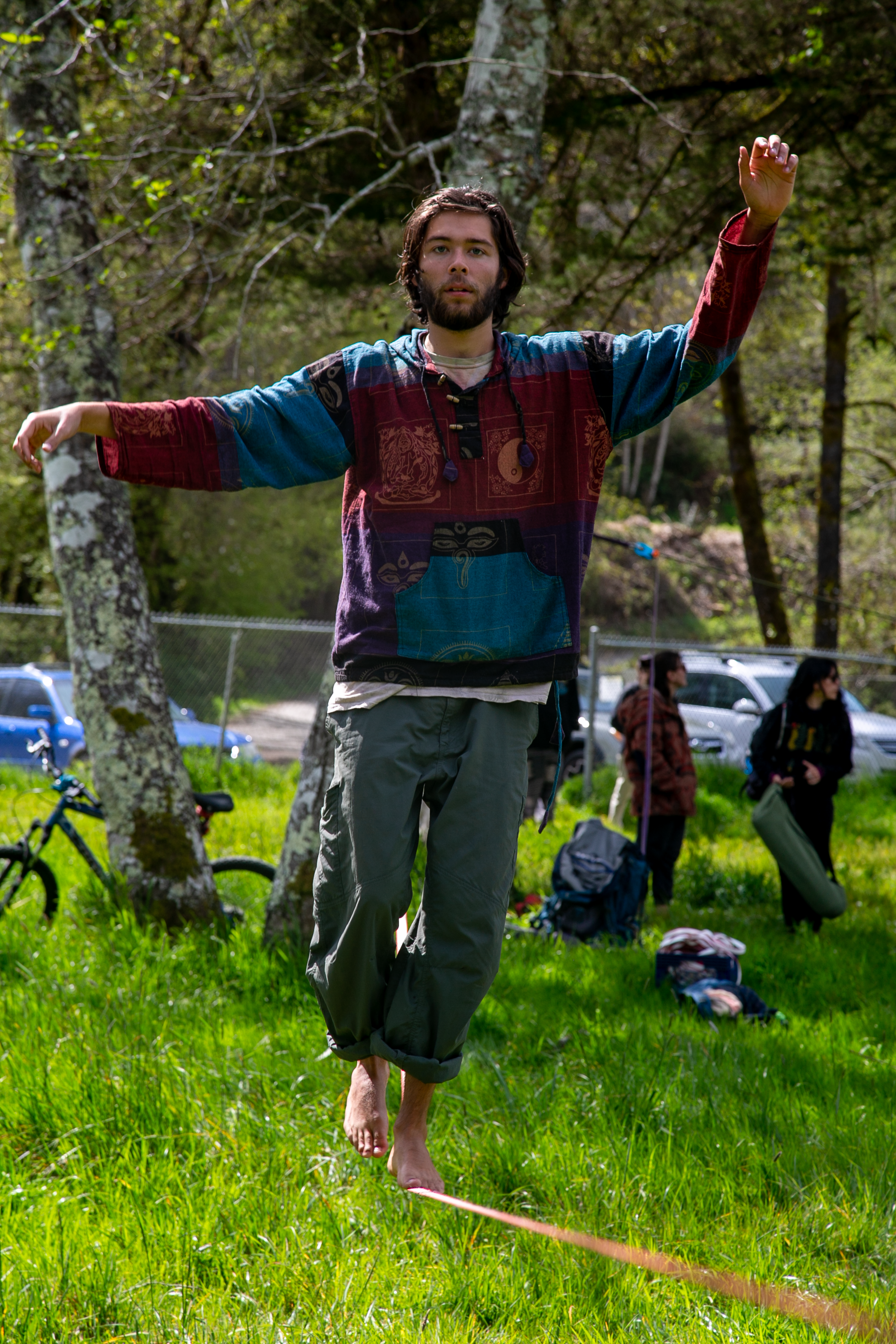
    Photo courtesy of Tori Lindvall | Aang Sterling on the line

    Aang Younger, a club member, said the real secret to walking on a slack line is mental. 

    Club President Joseph Aguilar mentioned the club was really born in 2018, but then had to take a hiatus during COVID. It has been difficult recruiting new members.

    This club not only teaches you to slackline, but it is also about community. Many people get together to jam, hangout, or even study for tests. 

    “We always have people who come and play guitar,” Sterling said. 

    Sterling also said they bring spirit cards, snacks, and circus props.

    “It’s just a bunch of kids playing,” Sterling said. 

    The Slack Jacks typically meet at the Mad River Pump Station on Sundays, known as Slack Sunday by its members. They have a loosely set time of 12:00 p.m. – 12:30 p.m. 

    Cycling

    Humboldt’s Cycling Club formed between the years of 2008-2009.

    Club president Ian Bowden says he feels that the pandemic definitely impacted this club; the season they were about to embark on in 2020 was completely canceled.

    “As a team we were struggling to find a way to organize any meetings and schedule COVID-safe group rides,” Bowden said. “During the 2020 season if we were to see people riding in the forest at the same time we would only wave before going down and continuing to ride alone.” 

    This kind of isolation impacted club morale and only a few people showed up to races in 2021. 

    Bowden said this season is gearing up to be one of their best yet. He feels they are back to nearly full membership. They are excited about their growing membership of 25 cyclists.

    “I personally have made great efforts to unite people and recruit riders to join the club, personally asking people when I see them riding in the forest if they go to the college,” Bowden said. “I love the cycling community in Humboldt and foresee a definite increase in interested people as the years keep coming.”

    The cycling club does both mountain and road racing. The club season opening on the 24th and 25th was hosted by Bowden. 

    “I am extremely excited for this race, as it is the first one that I have organized,” Bowden said, prior to the event. “I think we will have a good turnout from the schools in the division.”  

    Trash Pandas Soccer
    The Trash Pandas is a co-ed soccer team that welcomes players of all levels. They are technically not a club in the eyes of the university, though they do hold similar activities. They meet for practice every day on the field behind College Creek, and played their first game on Tuesday, Sept. 20 at 7 p.m. at the indoor soccer field.

    This group is for those who enjoy playing soccer, but may want less commitment than being on a university team. 

    “It’s cool to see the people who didn’t know how to play a couple weeks ago, are playing against the Division 2 soccer team,” said Zach Meyer. 

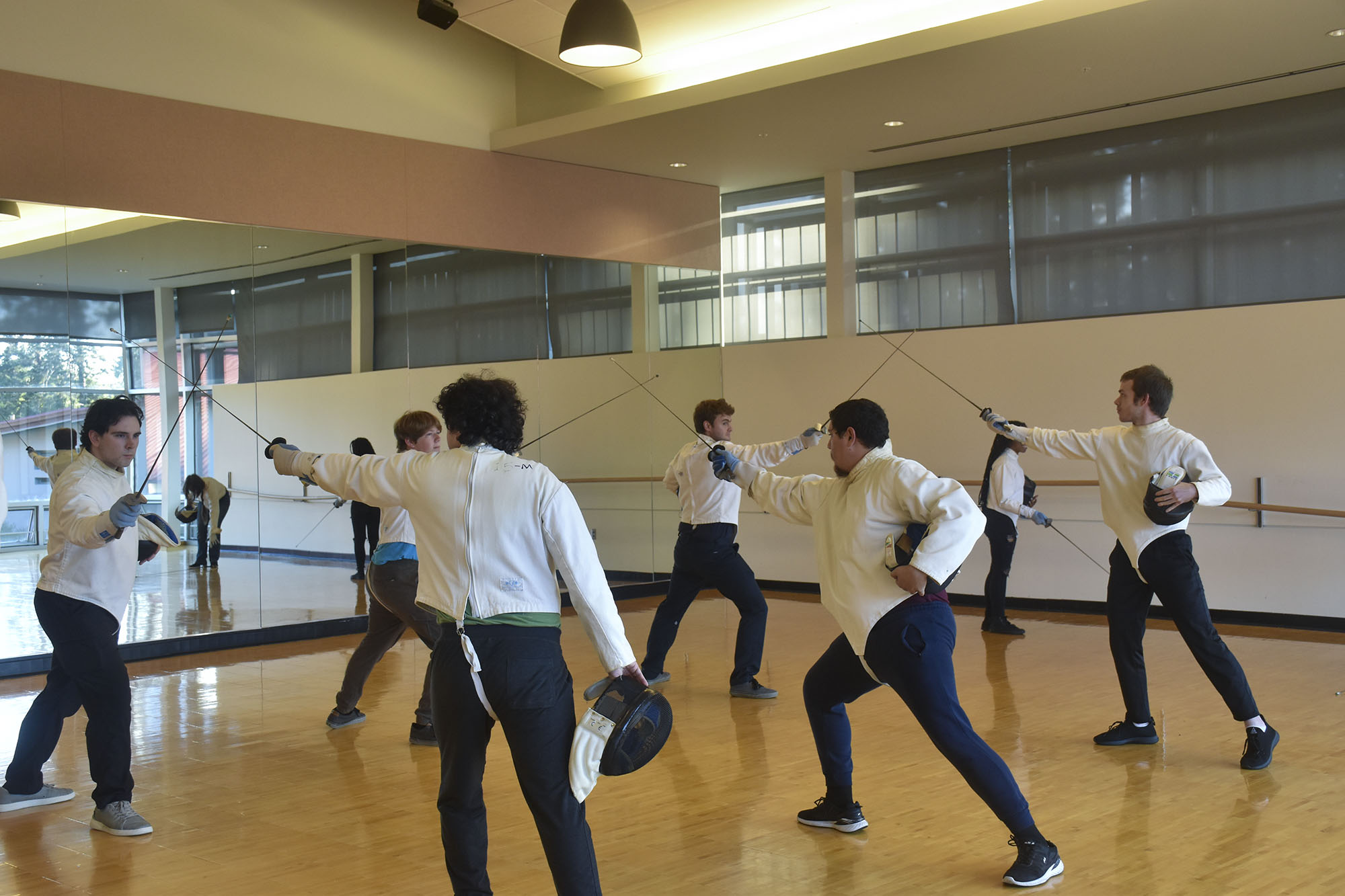
    How do I join?The Club Sports section of the Recreational Sports page on the University’s website illustrates more options, including fencing, Ultimate Frisbee, and men’s crew. Follow the Archery club’s activities @humboldtarchery on Instagram, and keep up with the Slack Jacks @humboldt_slackjacks.
  • Slack is Back at Cal Poly Humboldt

    Slack is Back at Cal Poly Humboldt

    by Liam Gwynn

    Ethereal flute, harmonious tarot prophecies, and a faint vaguely skunkish smell: you’d think it was a description of a sixties wet dream. However, you would be wrong, that dream is very much alive in Humboldt county, particularly with a group of students who have started a slacklining group that meets every Sunday.

    Before the pandemic, Cal Poly Humboldt had a thriving slacklining community with a club that would meet weekly. The club fell apart in 2020, however, one former member has gathered a group of fellow slackers and begun the process of getting this group turned into an official club at Cal Poly Humboldt. Joseph Aguilar, organizer of the prospective slacklining club, joined the original club in 2019 and has been slacklining ever since.

    “I love how when you’re on [the slackline] it’s just you, you have to be focused and present, and in that moment and you have to be hyperaware of all the muscles in your body,” Aguilar said. “It’s really good for core strength and all sorts of stuff.”

    Aguilar decided to start throwing “Slack Sundays” with a group of his friends and it gradually blossomed into a communal gathering of musicians, slack enthusiasts, and an assortment of nature lovers.

    The atmosphere at “Slack Sunday” was laid back and welcoming. Unlike many sports activities, there was no sort of competitive spirit or pressure to perform perfectly. People stretched back on picnic blankets and relaxed while others painted, played a variety of instruments, gave tarot card readings, threw a frisbee, and even tossed around a boomerang. Others came just to meet new people and hang out.

    The skill levels at “Slack Sunday” were equally diverse. For some, it was their first time and veterans held their hands and gave tips on how to cross. On the opposite side of the spectrum, genuine professionals showed off their skills with remarkable tricks on a line five feet off the ground.

    Photo by Abraham Navarro | Gabriela Vargas and Joe Mallory, both experienced slackliners do tricks and balance on their lines at the Mad River Pump Station on March 22.

    One of those professionals was Gabriela Vargas. She started by slacklining in her hometown Mexico City and moved to the US after receiving a sponsorship for competing in a trick line competition. Vargas originally moved to Colorado but was attracted to Arcata because of the slacklining culture that exists here.

    One issue that many professional slackliners face is debilitating injuries. Vargas said one injury she had forced her out of the competitive space after a leg injury that took six months to recover.

    “I like to take my healing slow, because if you don’t let it fully heal and just go back to doing it, it can get chronic and I don’t want that to happen,” said Vargas.

    Despite the setback from her injuries, Vargas has continued to expand her skills and has become proficient in highline, when a slackliner is harnessed to the slackline and balances over massive heights. Vargas showed a picture of her slacklining over an incredible drop of over 6,500 feet.

    People enjoy slacklining for a variety of reasons but one central theme is the benefits of achieving mental and physical balance when on the line. The appointed treasurer of the prospective club Ella Feick explained how her passion for slacklining stemmed from that need for balance.

    “You’re thinking in your head, you’re breathing in your body, and you’re focusing on your balance in a way that you’re not typically. If you’re stressed out or having a hard day you can’t really be thinking about all that stuff, you’re just there,” Feick said. “It’s a very present activity.”

    “Slack Sundays” are hosted every Sunday from 12-5 p.m. at the Mad River Pump Station 4 – Disc Golf Course.

    Photo by Abraham Navarro | Destiny Vera, Joey Agualar, Ella Feic, Ang Younger and Younger, all students interested in the Slacklining club on campus, at the Mad River Pump Station on March 27.
  • Slackjack Sunday

    Slackjack Sunday

    The sport where slacking off and eating is expected and encouraged

    Levitating above the ground on a line not much wider than your big toe, slackliners use their arms and core to maintain balance while walking along their line suspended between two trees.

    Meet the Slackjacks, a new club devoted to sharing the sport of slacklining, not just to HSU students but to the community at large. Established last fall by club president Amanda McDonald, the young club has already partnered with the Trinidad Coastal Land Trust in an effort to spread environmental awareness and protect their slacklining spots.

    “We are all environmental stewards, everyone here loves nature,” McDonald said. “The Trinidad Coastal Land Trust approached us after seeing one of our high lines on their beaches.”

    Every Saturday, the Slackjacks have stewardship work day, where they volunteer at the Trinidad State Beach aiding in restoration work.

    “They [Trinidad Coastal Land Trust] love what we do and we embody their mission,” McDonald said.

    Besides the physical preservation work, the Slackjacks impact and connect to the community through the practice of slacklining. Every Sunday, the club sets up in the Arcata Plaza and opens up their lines to the people.

    “Slack Sunday isn’t something I can take credit for as a club,” McDonald said. “The Humboldt Slackers are not associated with the school, but they are a group of friends, maybe alumni now, and they started Slack Sunday. It’s all about the young kids and elders, and just holding their hand.”

    The connection created between the Slackjacks and the community is far deeper than the physical linkage of hands. Slackliners can enter a state of mind called “the flow state.” In this state of mind one experiences:

    “Heightened awareness, it feels easy, and you totally lose sense of time,”McDonald said.flow.jpg

    Liam Murray-DuMond, is the treasurer of the Slackjacks, and describes the insane euphoric feeling associated with the flow state.

    “When you find your flow, I’ve had moments where I black out,” Murray-DuMond said. “I literally don’t remember walking. It’s the highest you can be without doing drugs.”

    The flow state occurs when one is faced with a challenge that adequately correlates with the level of skill of the slackliner. This perfect balance in challenge and skill causes one to drift and experience the effects of the flow.

    “I’ve seen kids in it when they slackline for the first time, they click with it,” McDonald said. “They want to keep trying and you can see they are getting exposure and want to latch onto it. Kids are very profound with wanting to keep slacklining.”

    Slacklining is a physically demanding sport. Buddy Mitchell, a transfer student at HSU and member of the Slackjacks, describes the effect it has on the human body.

    “Slacklining is definitely a sport,” Mitchell said. “You sweat, your arms get tired, your tummy gets tired and your core is sore the next day, and your back and your legs.”

    While slacklining posesses the physical exertion of other athletic sports, it maintains a heavy emphasis on social interaction and connecting with the community.

    “Since there can only be one or two people on a line, a lot of it is sitting down in the park and eating,” jokes Mitchell.

    The Slackjacks embrace their club as more of a community of friends. Wanting nothing to do with exclusiveness, the club is constantly reaching out to the community and encouraging others to slackline.

    [perfectpullquote align=”left” bordertop=”false” cite=”Liam Murray-DuMond” link=”” color=”” class=”” size=”18″]”It’s the highest you can be without doing drugs.”[/perfectpullquote]

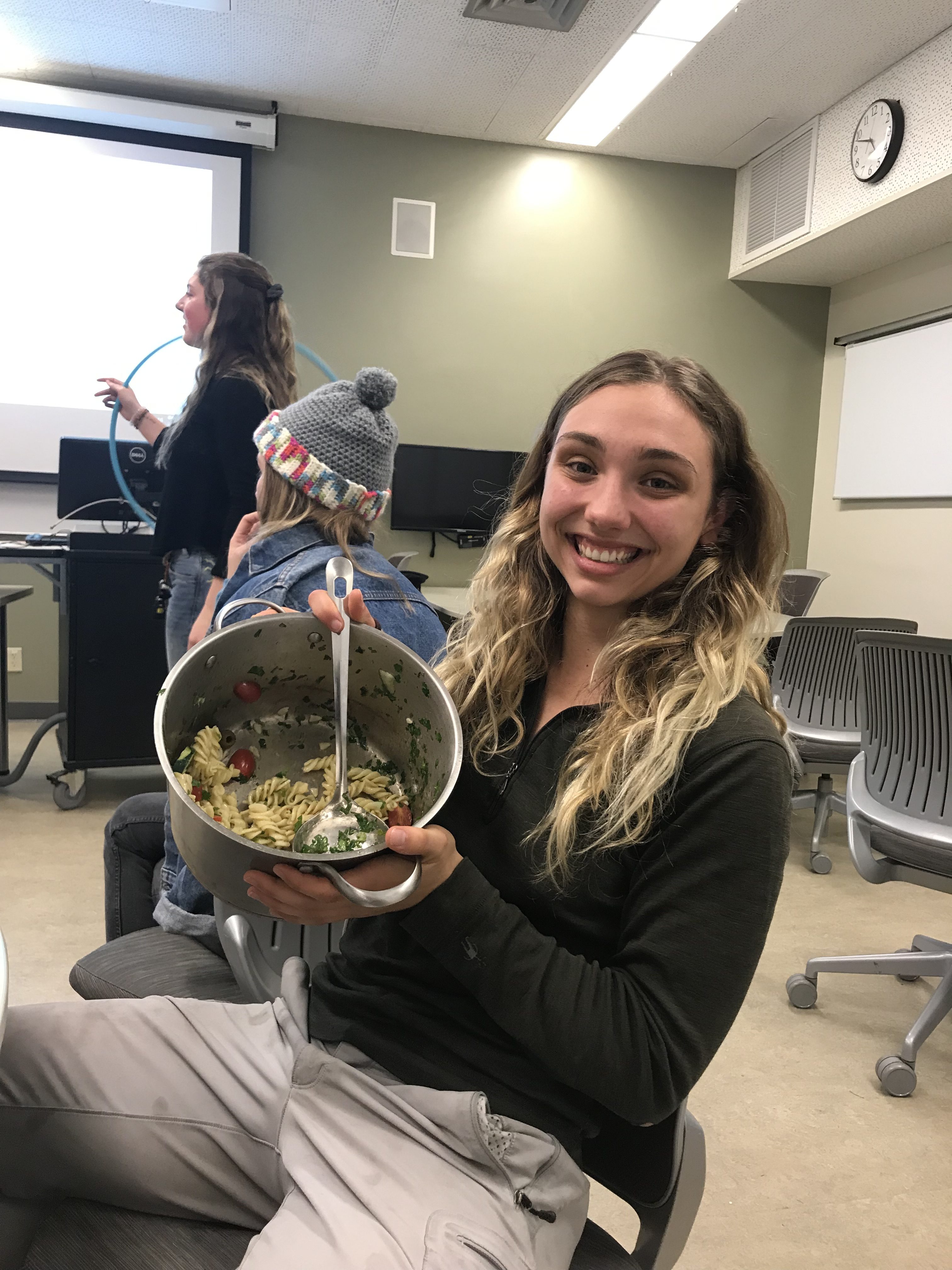
    “I absolutely wanted a club, it provides this,” McDonald says as she looks around the room of members enjoying their Friday potluck. “Otherwise we don’t have this. By not having a club, it would be restricting us from tapping into the community, and all the resources HSU provides, like the ability to create space, education and community.”

    With a goal of integrating slacklining into the normalcy of society, McDonald explains how regardless of their positive presence in Arcata, they still receive pushback.

    “It’s hard to break through. When climbing evolved into society, people did not like climbers, it was taboo, same with skateboarding in the 90’s, slacklining is exactly like that,” McDonald said. “We’re stuck in this transitional time period, but we want to keep our wholesome values. We don’t want to be non-welcoming or snobby.”

    Regardless of the challenges, the Slackjacks continue to practice and share the benefits of their sport.

    “I slackline for the feeling. It’s pretty hard to describe, but once you do it you just want to be in that moment and have that feeling as much as possible,” Murray-DuMond said.

    Slacklining is one addictive activity that serves not only the individual but the community at large. With a constant emphasis on welcoming others to practice and preserving the communal values they identify with, why wouldn’t you slackline?

    “It’s fun, a great way to spend the afternoon, or morning, or evening,” Buddy said. “I can’t really put it into words, I do it for different reasons. Mostly, it’s very social, probably the most social thing to do, and the easiest way to make friends.”

    Between Friday club meetings in Siemens hall, Slack Sundays in the Arcata Plaza and environmental steward work Saturdays, the Slackjacks are hard to miss.

    “I know we look crazy but come try!” McDonald jokes.