The Lumberjack


Students Serving The Cal Poly Humboldt Campus and Community Since 1929

Tag: smoking ban

  • Reject the smoking ban

    Reject the smoking ban

    By | Phil Santos

    HSU students should take the campus tobacco ban, roll it up and smoke it. The ban prohibits any tobacco products from being used on campus property. This ban intends to promote air quality and general health, but that comes at a cost.

    The ban means that smokers have to travel long distances to be compliant with city and campus policies.

    HSU student Michael Erickson said, “The campus police say to go about a mile into the community forest, because that’s where it becomes city, not university property.”

    Let’s think about the implications of this from a smoker’s perspective in a hypothetical situation.

    It’s late at night and you’re in your dorm craving a smoke. Instead of heading down to the well-lit gazebo to smoke, you now have to traipse a mile into the community forest. So you suit up, pray the charge on your phone will light your way and head out for a late night hike into the forest alone. This sounds like the beginning of a horror movie!

    “Being by yourself can be kind of sketchy with some of the people out there,” said Erickson. “There are definitely safety concerns.”

    A smoking ban that forces smokers into vulnerable situations like solo night hikes must be revised.

    I can just see the headline now, “HSU student assaulted in community forest while smoking.”

    This is only one unintended consequence of the blanket ban on tobacco. And if there is one unintended consequence, there are certainly others.

    Another consequence of the ban is an increase in loose cigarette butts.

    “People are going to smoke no matter what you do,” said HSU student Marek Halaj. “But now there are cigarette butts all over the place, because people no longer give a shit.”

    This is because without designated smoking areas, smokers have resorted to unconventional locations.

    When asked about the impact of loose cigarette butts, Erickson, who is an environmental science and management major, said “the big thing would be water pollution.”

    Cigarette butts contain concentrations of various chemicals like arsenic, lead, acetone, ammonia and so on. They eventually wash into our waterways after they’ve been flicked on the ground. Those chemicals are then leached from the butts into the water. Let’s be real here, Halaj is right when he says that people are going to smoke no matter what you do. So if we don’t want people putting these chemicals in our lungs, why pass a policy that puts them in our water?

    Where else are students putting their butts?

    “In trash cans,” said Erickson. “There’s more of a fire risk now.”

    All it takes is one cigarette left unextinguished for a campus fire to break out. Additionally, if students need to disguise their smoking, chances are they’ll look for well-covered areas, which means places where a fire could be started. When it’s peak fire season, do we really want students sneaking into the trees where a dropped ember could mean a forest fire?

    So what are the alternatives? The CSU policy is a full smoking ban, so there are none. This means all of these issues will continue to be a reality. Erickson and Halaj both agree that designated smoking areas are a must.

    “Properly placed smoking sections away from major areas shouldn’t be a problem” said Erickson.

    This would ensure that asthmatic students or otherwise have greatly reduced their exposure to smoke while satisfying smokers with designated areas. How we can make that happen is a hard call as the CSU is likely firm on the smoking ban. But I’m a fan of civil disobedience, which speaks loudly. My suggestion? To hell with it. Smoke ’em if you got ’em!
     

  • California State University enforces system-wide smoking ban on every campus in California

    California State University enforces system-wide smoking ban on every campus in California

    By|Robert Brown

    Beginning with a letter originally issued by CSU President Mark Yudof in 2012 and ending with an executive order, the university system adopted the new policy. Each campus president is being asked to comply with the system-wide policy and create a smoke-free campus by creating a task force, including a student representative that will serve on the Smoke and Tobacco-Free Policy Task Force to ensure the campus is moving forward. Over 1,500 other colleges and universities nationwide have already gone smoke and tobacco free.

    image.jpeg
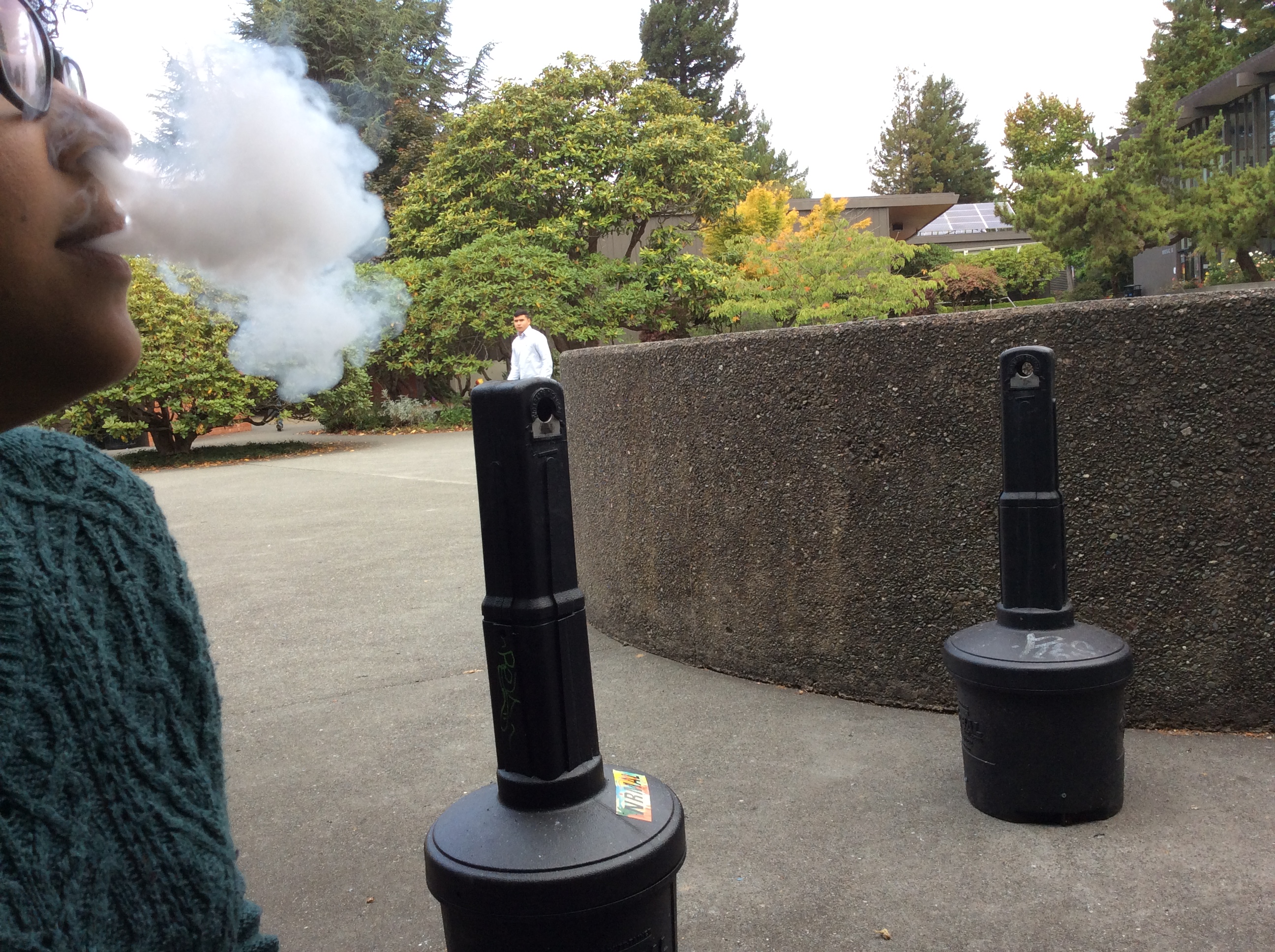
    A designated smoking area on HSU campus.

    Kim Comet, HSU Director of Risk Management and Safety Services, said the smoke and tobacco free policy is per executive order from the Chancellor’s Office.

    “It applies to all CSU campuses,” Comet said. “Smoking has to occur off of campus.”

    The U.S. Department of Health and Human Services created the Tobacco-Free College Campus Initiative (TFCCI) to promote and support the adoption and implementation of tobacco-free policies at universities, colleges and other institutions of higher learning across the United States. Enforcement of the new policy will be primarily focused on educational campaigns, outreach programs and the promotion of tobacco treatment options, including resources and referrals for quitting.

    “We will mostly be dealing with the policy in the form of education and monitoring,” Chief of University Police Donn Peterson said.

    “We will not be the smoking police and will likely refer cases to the appropriate authorities for administrative action once the ban takes place after September 1,” Peterson said, “maps located online and all around campus can be quickly referenced to determine campus boundaries.”

    According to the Center for Disease Control, tobacco use is the leading preventable cause of death and is responsible for 443,000 deaths per year in the United States, with an estimated 49,000 deaths annually due to secondhand smoke exposure.

    HSU Director of Housing and Residence Life Steve St. Onge said, in regards to smoking in the residence halls, the school has never allowed smoking in any campus housing facility.

    “What has changed is that the smoking gazebos, which had been designated as smoking areas are no longer available for students, faculty or staff to use as designated campus smoking areas,” St. Onge said.

    Students have voiced concern over the amount of trash and litter that could increase due to the smoking ban, saying students will not quit smoking and will more than likely resort to becoming sneaky, trying to hide and smoke, which will lead to cigarette butts being thrown on the ground instead of in proper receptacles. Also, the lack of a safe environment on campus to smoke may cause students to walk off campus and put themselves at risk of violence or assault.

    HSU student Elena Rios said you can’t force people to stop a habit they have had for awhile.

    “As a smoker, you are bombarded with why smoking is bad. People do it all the time, they try to get you to quit,” Rios said. “They tell you reasons why you should quit. It’s your life and you should be able to make your own choices. It’s a civil liberty. I think it’s funny to ban smoking outside.”

    According to the CSU website, a cornerstone of the California State University and higher education is the principle of one’s individual freedom to learn, teach, work, think, and take part in their intellectual and career endeavors in a fulfilling, rewarding, safe and healthy environment.

    “I can understand banning smoking in certain areas,” HSU student Alex Pickering said, “if they gave us another solution or something. Just give us another area to smoke.”


  • Smoking Ban at HSU

    Smoking Ban at HSU

    By Danny Dunn

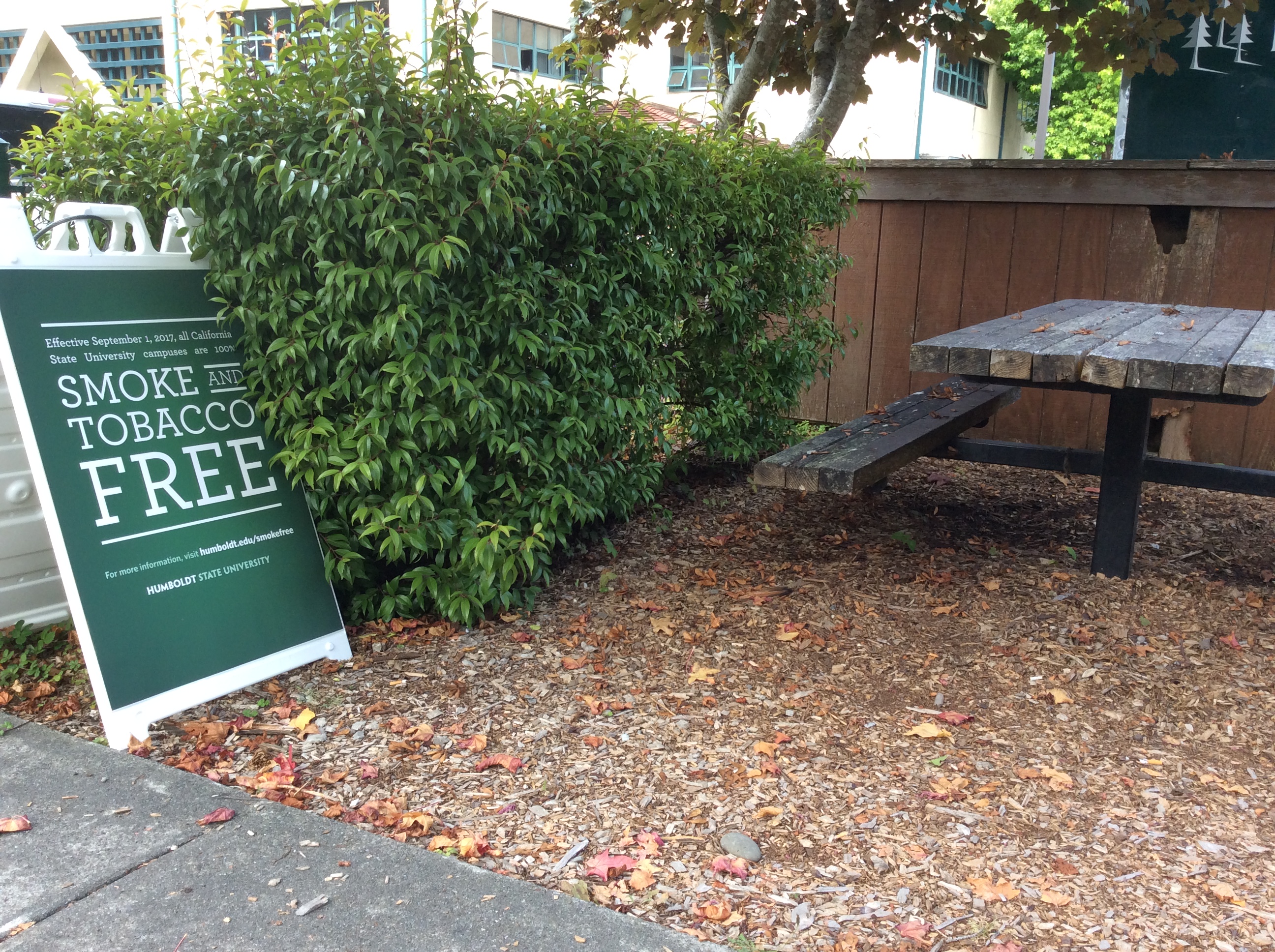
    This fall Humboldt State University will officially become a tobacco and smoke free campus. This ban includes all tobacco products such as, but not limited to cigarettes, tobacco pipes, and cigars along with electronic smoking devices like vape pens and box mods.

    Several California State Universities have already enforced this rule, and all 23 CSUs will eventually become smoke free.

    There are some exceptions to this ban, though not very many. According to the Executive Order 1108 exceptions include: smoking in a university sponsored theater, as well as ceremonial campus events may be authorized by the President or designee only when a required part of a specific performance. This includes smoking and tobacco use for traditional ceremonial activities of recognized cultural and religious groups.

    The use of nicotine cessation products such as Nicorette products are permitted under the order.

    This order will help to create a safer and more healthy environment on campus, but not everyone is onboard with this new smoke free campus.

    HSU student Jason Henkle believes that this new order treads on his rights as a smoker on campus and that it will give smokers a bad look among their fellow classmates.

    “There will be a stigma now for smokers at CSUs,” Henkle said. “This ban is going to isolate smokers from the non smokers.”

    Henkle went on to say that if he had not already planned on living off campus next fall, that this order would have made that decision for him.

    HSU student Joseph Keith also believes that smokers and even some non smokers social lives will take a hit from this new ban, because of the connections that people make throughout the gazebos on campus, most notably the gazebo at the bottom of campus apartments.

    “What are people going to do, we are not going to hang out our tiny ass living rooms all day,” Keith said. “I have friends now that I would have never had, not just through smoking, but me having a friend that I smoked with that introduced me to their friends.”

    HSU student Oscar Arzate admits that he is relieved that HSU is becoming a smoke free campus.

    “Honestly I am glad people will not be smoking or vaping on campus,” Arzate said. “The smell is very irritating to me.”