The Lumberjack


Students Serving The Cal Poly Humboldt Campus and Community Since 1929

Tag: Social Justice Summit

  • The 28th annual Social Justice Summit concluded with paddle-boarding to Big Lagoon.

    The 28th annual Social Justice Summit concluded with paddle-boarding to Big Lagoon.

    by Kris Nagel

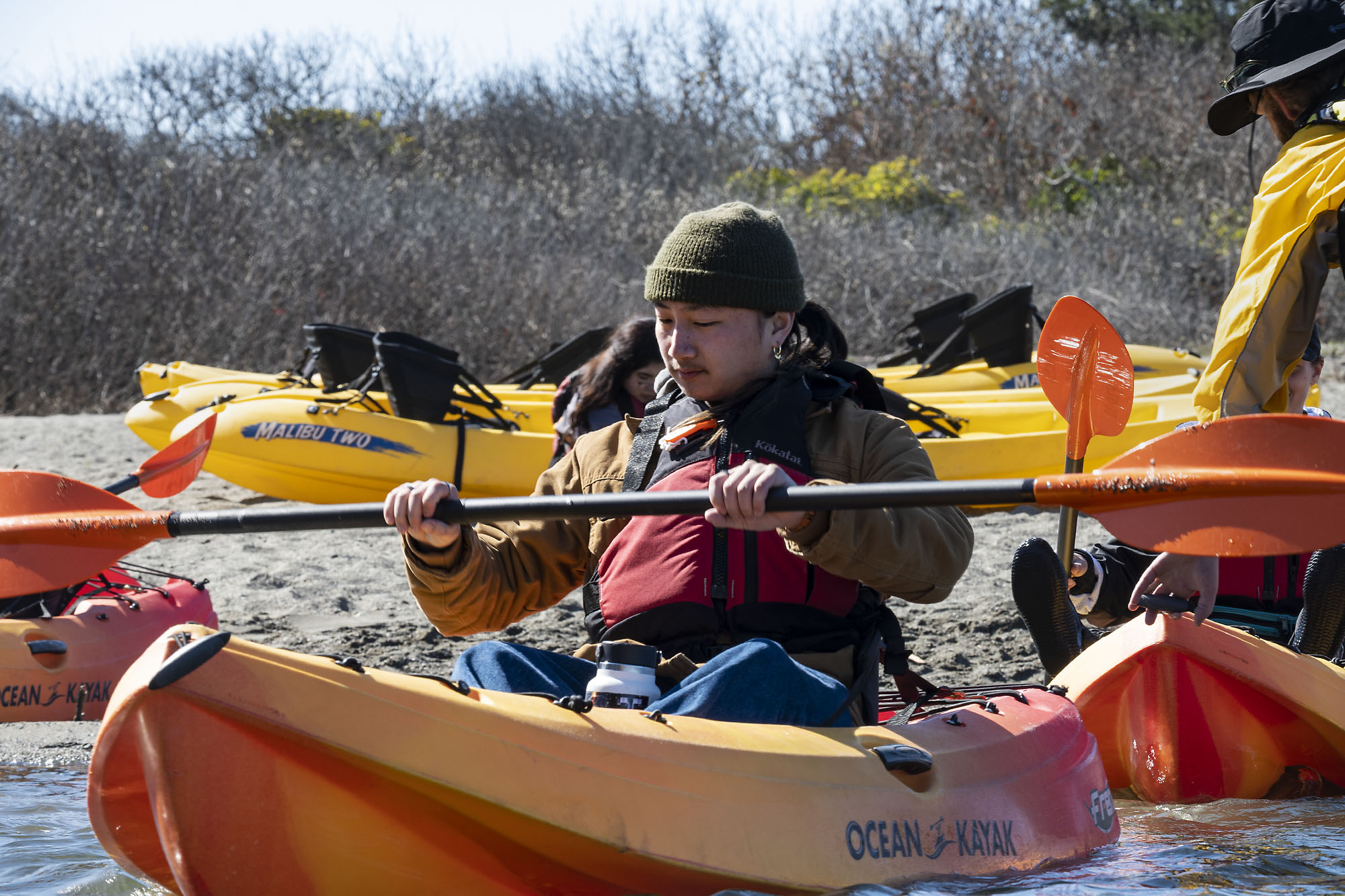
    An almost-spring chill in the wind convinced almost all of the attendees present to wriggle into one of the wetsuits piled on the warm sand. The Social Justice, Equity and Inclusion Center (SJEIC), in tandem with Center Activities, hosted a kayaking and paddleboarding trip to Big Lagoon for students on March 6.

    Photo by Kris Nagel | Attendees of the 2022 Social Justice Summit trip to Big Lagoon suited up with life preservers and splash guard gather on the beach on March 6, 2022.

    The event capped off a week of activities as part of the 2022 Social Justice Summit, which was themed around climate justice and intersectionality. Part of a 28-year tradition, the annual Social Justice Summit is a place for students to get directly involved in making our community more inclusive. Frank Herrera, the SJEIC coordinator, helped oversee the student leaders who put together the week’s schedule with accessibility in mind.

    “Big Lagoon is a cool spot. I would imagine that it’s probably going to be transformational for some,” Herrera said. “Hopefully in a positive way.”

    The summit was one of the first programs to be offered in person now that COVID-19 restrictions are starting to be lifted. Herrera said this year drew a smaller crowd than it had before the pandemic hit, with around a hundred students attending events over the week.

    About 16 people went to Big Lagoon on Sunday. In part, the limited itinerary was due to this year lacking a credit program for student organizers of the summit. Normally, a class credit is offered through the Critical Race, Gender and Sexuality Studies (CRGS) department. However, Herrera’s request for the program was denied this year.

    Photo by Kris Nagel | Aelis Hanson, a guide with Cal Poly’s Center Activities, walks a program participant through their launch at Big Lagoon on a paddleboard March 6, 2022.

    The summit was a work in progress for months prior to the first speaker taking the stage at the end of February. However, some accommodations took on-the-ground problem solving by the event coordinators.

    One student registered for the Big Lagoon trip had requested additional assistance in transporting their mobility aid before arriving at the pickup location. Not having planned for the additional cargo, organizers scrambled for an additional vehicle. Fortunately, another van was available that morning and the student was able to join shortly after the first kayaks launched.

    Photo by Kris Nagel | Center Activies’ Mairead Sardina educates program participants on water safety, showing how a tight life vest helps keep the head above water March 6, 2022.

    Mairead Sardina works for Cal Poly Humboldt’s Center Activities and helped plan the outdoor programming of the summit. Sardina hoped that the trip would help re-establish a sense of normalcy on campus, now that activities are held in person again.

    “It gets them out and engaged with the local environment which helps with student retention, makes them feel safer, makes them want to get out and care about protecting the environment and see what a beautiful place Humboldt is to live,” Sardina said, promoting the Center Activities center where students can rent outdoor gear at low or no cost.

    Cal Poly Humboldt student Tatiana Gamboa joined the journey out to Big Lagoon. A second-semester student, Gamboa was drawn to the school behind the redwood curtain because of its emphasis on the local environment.

    “It encourages [students] to come out and do something different, without having the funds to rent gear and the previous knowledge of how to paddleboard and kayak.” Gamboa said. “So it kind of gives that gate to students exploring something they might like and I think that’s pretty special.”
  • Dr. Asao Inoue Looks to Lead Academic Revolution

    Dr. Asao Inoue Looks to Lead Academic Revolution

    Inoue confronts the supremacist ideas within American academia

    From unkind flyers to nasty messages written on bathroom walls, Humboldt State University has dealt with its fair share of acts of hatred and racism.

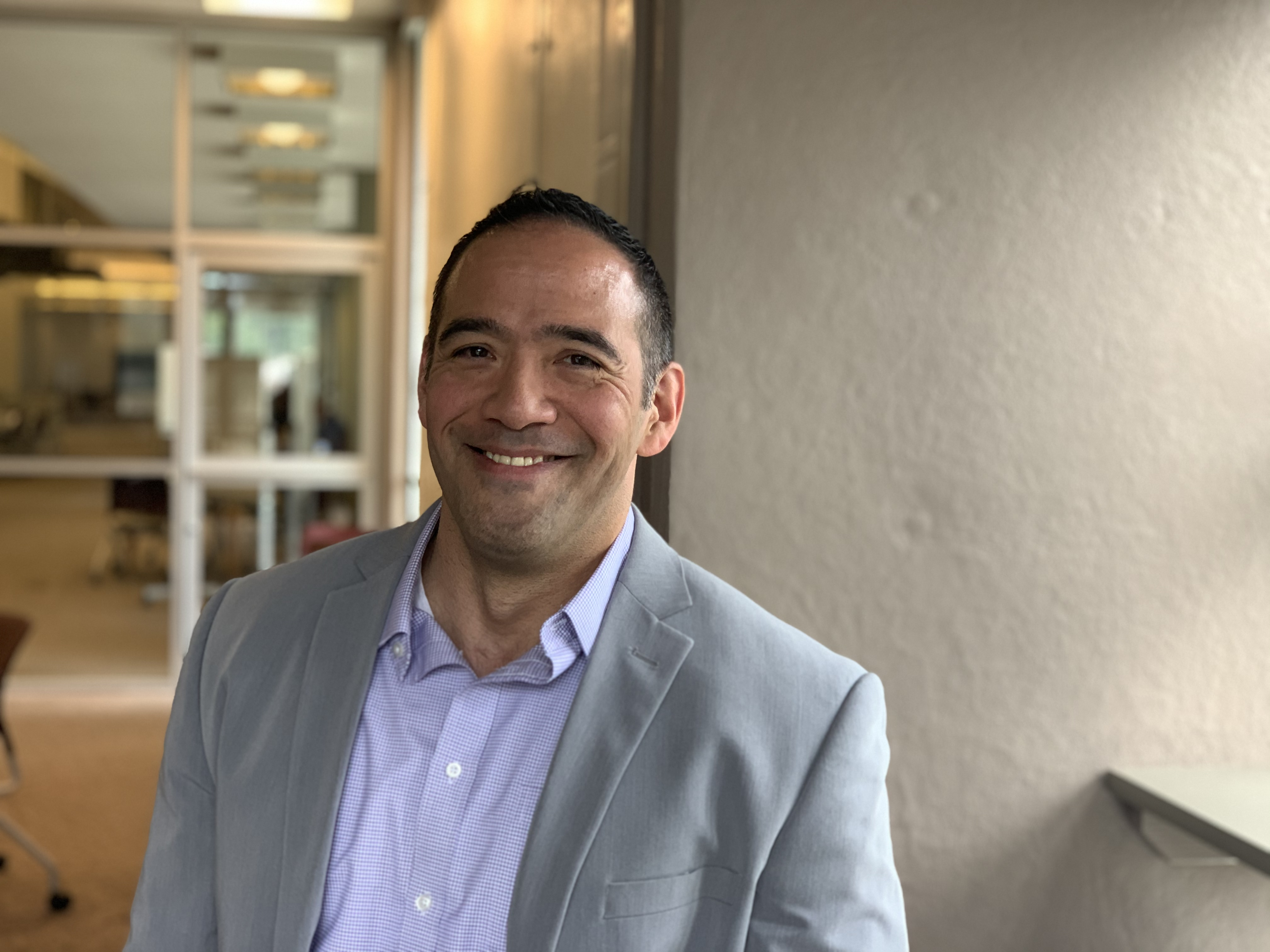
    Asao B. Inoue, a professor and associate dean at Arizona State University, studies student writing assessment, race and racism. In a Social Justice Summit talk and an exclusive interview with The Lumberjack, Inoue pondered how a university can be anti-racist and address white supremacy.

    “I was asked to come here and give a talk at a workshop, and I love doing that—it feels like an important part of the public work that I do in the academy,” Inoue said. “I help teachers think about ways to do social justice projects in their class, particularly around literacy classrooms and the grading evaluation and feedback of student literacy projects or writing.”

    Inoue’s objective is to change the ways professors think about language and white language supremacy, and to start a revolution within the American grading system.

    “My scholarship and research is in writing assessment and racism studies and the intersection of those two things,” Inoue said. “This [workshop] is an extension of that by trying to engage with writing faculty, English faculty and the curriculum.”

    Inoue described white supremacy as a condition in which a particular group’s dialogue dominates others.

    Inoue said white supremacists are often middle to upper-class people from the East Coast that attended an elite school. Inoue said these conditions collectively make up the identities of white supremacist perpetrators.

    “It’s rarely, if ever, anybody else but that group of people from their particular material conditions in life that produce a certain language, which we tend to call standard or proper English,” Inoue said.

    Inoue called out academia for actively perpetuating racist standards. He said the American grading system reaffirms racist ideals and practices through assigned curriculum.

    Inoue said proper English can be especially problematic in academic settings.

    “There’s lots of research that shows that we don’t actually agree about what that standard looks like,” Inoue said. “But I’m talking about when the rubber meets the road and you have to grade a paper based off of this, or decide whether something is consumable for the public. That’s where we start to have a lot of disagreements.”

    Inoue called out academia for actively perpetuating racist standards. He said the American grading system reaffirms racist ideals and practices through assigned curriculum.

    “I don’t want one to confuse me calling the system racist, with me calling people racist,” Inoue said. “[Professors] are thinking about the disciplines they have to teach and they’re not always thinking about, ‘How do I teach this?’”

    One of the structural flaws within the educational system that Inoue noted was that professors fail to question the academic system and how it reaffirms practices of white language supremacy.

    “It’s difficult to be critical of a system that has really benefited you,” Inoue said. “It seems like everything is working.”

    Inoue said the façade of the education system being equally supportive can be convincing enough that people don’t see the flaws. Inoue said many professors inherit the practices that were inflicted upon them, and because those practices worked for them, they assume they work for others.

    “It’s a fairly narrow economic and social bandwidth of people, so that means that all those practices are fairly narrow and the language practices are fairly narrow,” Inoue said. “So it doesn’t really leave a lot of room for considering differences or changes or being critical about those things.”

  • Humboldt State presents Social Justice Summit

    Humboldt State presents Social Justice Summit

    The MultiCultural Center presented their 24th annual Social Justice Summit at Humboldt State on Saturday.

    Deema Hindawi is an HSU student and a co-event coordinator of the summit.

    “The theme for the summit this year is ‘Who Am I? [Back to Our Roots],’” Hindawi said. “We want people to look beyond their skin color and look into their roots. That is the purpose of this event.”

    HSU student Lizzie Philips is also a co-event coordinator of the summit.

    “We want to give students here at HSU a platform to hear their voice,” Philips said. “There are those who feel like their voices are not heard, but we want to change that with Social Justice Summit.”

    Various workshops hosted by the MultiCultural Center were open to anyone. Topics ranged from social identities, sexual orientation and environmental justice.

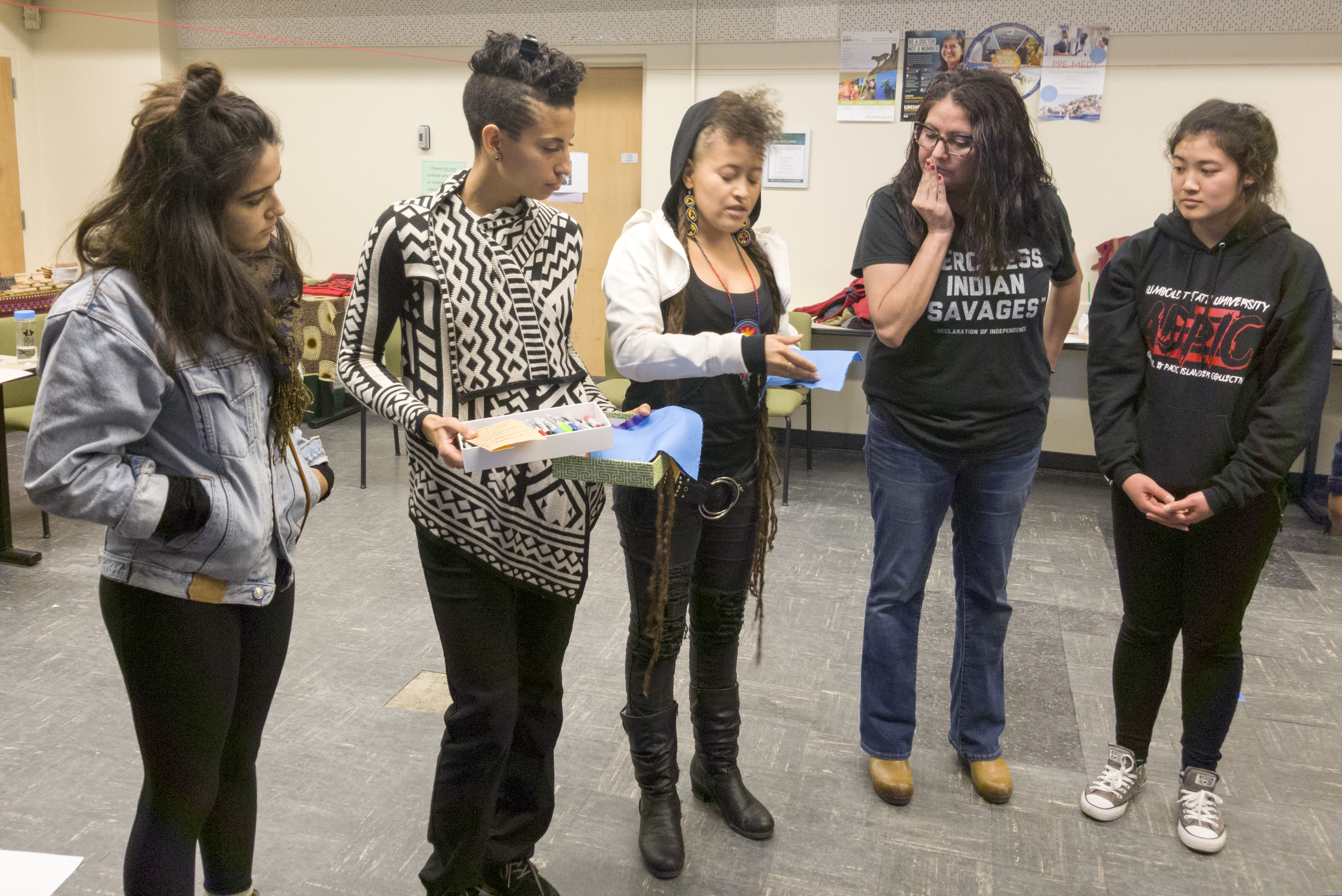
    Alixa Garcia and Namia Penniman are multimedia hip-hop artists from the group Climbing PoeTree. They came all the way from Brooklyn, New York to share their thoughts on environmental justice.

    “Since we were kids we’ve been advocating for environmental justice,” Garcia said. “We came to Humboldt to highlight environmental issues and create awareness that there are groups that are fighting for the environment.”

    One of the projects that Garcia and Penniman shared with those who attended the workshop was their S.T.I.T.C.H.E.D. workshop, a mural made of fabric where strangers wrote uplifting and positive messages that others can read.

    “In a way, we [Garcia and Penniman] want to show how art can empower social and environmental activism,” Garcia said. “Because we’re all living [on] planet earth, right? We only have one shot at fixing it. If we don’t, where can we go? Mars?”

    For those who missed the chance to meet Garcia and Penniman, they will deliver a keynote performance in the Kate Buchanan Room at 7 p.m. tonight.