Sorting through the mainstream, and now local media
When you turn on your local news TV station, you expect a solid mix of local and national news, and a variety of messages between stations.
The news coverage from one area to the next will differ based on location.
What you don’t expect is to be able to watch hundreds of news anchors, ironically reading the same script, on hundreds of different channels, about the importance of varied news sources and supported communities, like the companies owned by Sinclair Broadcast Group.
Recognizing and understanding how to sort through the news, and have a well-rounded idea of what is happening, is important to processing the information you consume. Here are two important parts of journalism and fake news you should understand when consuming information.
Understanding journalism objectivity
Before diving into how to fact check and navigate the media, it is important to understand that objective journalism is incredibly hard, if not impossible, to achieve.
People are inherently biased and influenced by the world around them. Journalists do their best, however, to inform the public, simply for the sake of the public.
However, it is equally as important to understand that when it comes specifically to the news facet of journalism, journalists study, and are taught, to present the facts of a story from either side.
This does not mean journalists agree with the information they have been given, but instead are presenting this information to the reader or viewer with as much objectivity as they can manage.
The Society of Professional Journalists code of ethics is one of the most prominent professional ethics guidelines journalists follow, and sets the tone for what real journalism is supposed to be. These ethical principles exist to promote clear and concise reporting with four main facets: to seek the truth and report it, act independently, minimize harm and be accountable and transparent.
For example, mainstream media outlets being owned by giant companies allows an argument to be made that these outlets are not independent, though they should work this way.
Consider the case of Sinclair pushing right-based opinions and scripts to their newscasters across multiple local news stations. Sinclair also released a video in an attempted act of transparency, trying to inform the public why this script was given out. Deadspin, who released the compiled video footage of news anchors reading from their script, also provides this video in order to provide more detail to their story. This style of reporting leans toward writer bias, and is a little less formal than other outlets.
In order to rise above the many messages media on all formats is designed to present to you, start with skepticism, and then some careful consideration. Make sure you’re digesting factual information, as opposed to fake news or misinformation.
There are websites that specifically try to sort through political fact and fiction like the website Politifact.com. Politifact aims to provide fact-checking based journalism with principles based on “independence, transparency and fairness through reporting and clear writing.”
Fake news in itself could be considered an oxymoron. News must be factual to be news. However, as the word of the year, and the biggest threat to our democracy today, knowing when you’re being fooled is vital.
Skepticism and careful consideration
As declared watchdogs of those in power, and also those who abuse their power, journalism is easily considered to be shady. The idea that journalists are out to dig up dirt and expose powerful or public figures for joy is an easy mistaken thought process to fall into.
When you hear something on the news you find to be negative or shocking, understand there are news determinants that allow journalists to consider what is noteworthy and important for the general public to know.
We take it upon ourselves as journalists to study these determinants seriously and with practiced objectivity. Knowing trust in the media is at an all time low, we encourage you to refer to other news sources when this happens.
Use your skepticism of what you’ve heard reported and consider other articles or broadcasts on the same subject. Different reporting might present different facts. Even after studying a variety of sources, you as a reader or viewer may only have a small piece of the picture still. We as journalists have also considered multiple sources before presenting information so we are not failing our public by reporting on rumors or false information.
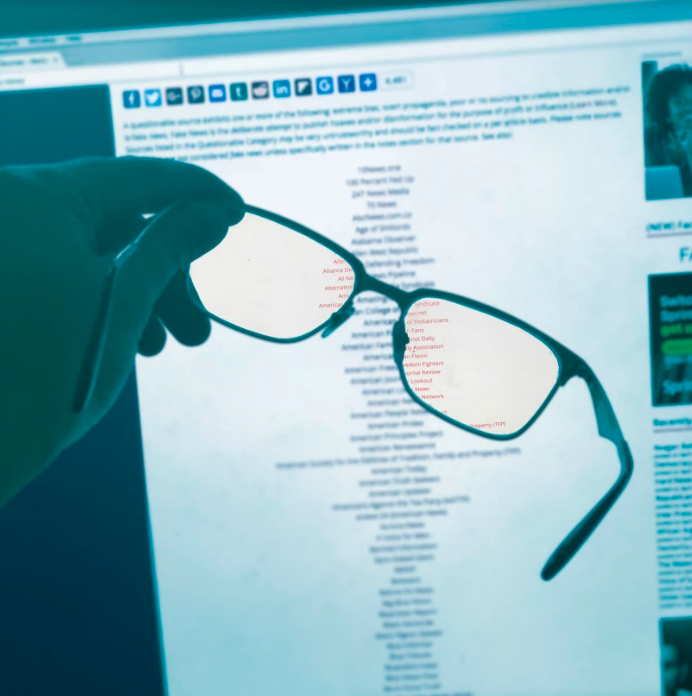
Some websites exist to make this easier for you, such as Media Bias/Fact Check. This website lists specific sites and news sources that are either politically left-biased, centralized, right-biased or left-center and right-center-biased. You can find a list of questionable sources here as well. If you see a source on this list, they may not be the most trustworthy news outlet to refer to.
Politifact, an outlet centered around fact checking, provides a truth-o-meter that follows the specific decisions and promises of politicians by following their actions and reporting back to inform the public whether their actions align with their words.
The sources provided here are merely suggestions and are not an end all to fact-checking sources.
Practicing the ability to step outside your own bias and recognize that of some media outlets to compare and contrast information is important to democracy.
Always double check where your information is coming from and who might be influencing the message.