The Lumberjack


Students Serving The Cal Poly Humboldt Campus and Community Since 1929

Tag: SpongeBob

  • The Spongebob Musical is faithful to StephenHillenburg’s legacy and work

    The Spongebob Musical is faithful to StephenHillenburg’s legacy and work

    by Andres Felix Romero

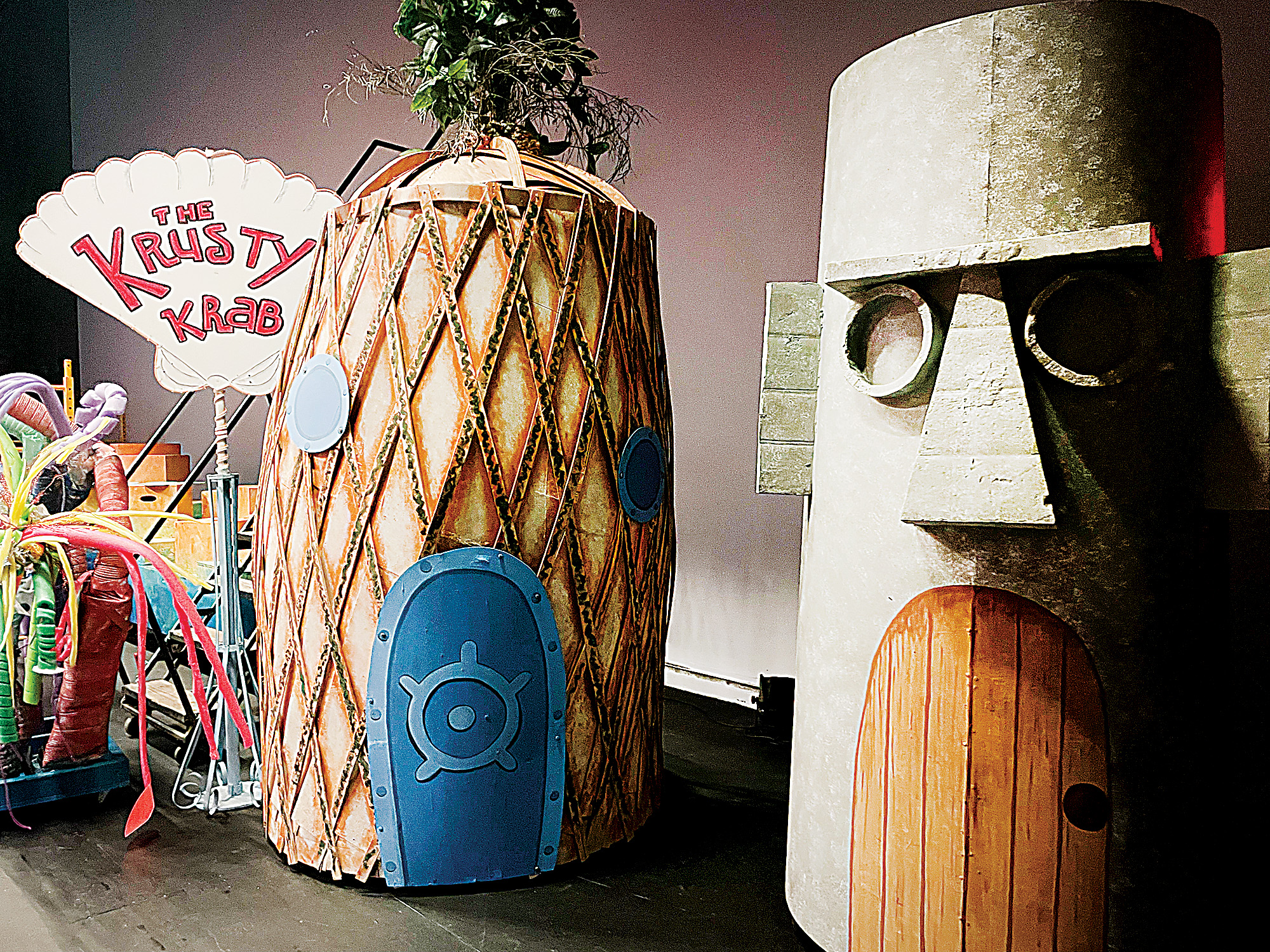
    Sitting in my seat in the Van Duzer Theatre’s mezzanine, I was anxious to see how a cartoon favorite such as SpongeBob Squarepants would be brought to life on stage. The moment that curtains opened to SpongeBob’s pineapple, Patrick’s rock and Squidward’s home between them, it felt like my childhood was alive and well in front of my eyes. I knew from that moment this show would be an experience.

    After a five year hiatus, local theater group Humboldt Light and Opera Company (HLOC)  made its comeback on the Cal Poly campus in the best way possible, with its rendition of the Broadway show The SpongeBob Musical. HLOC’s performance and production of the musical is a love letter from Humboldt, to Humboldt.

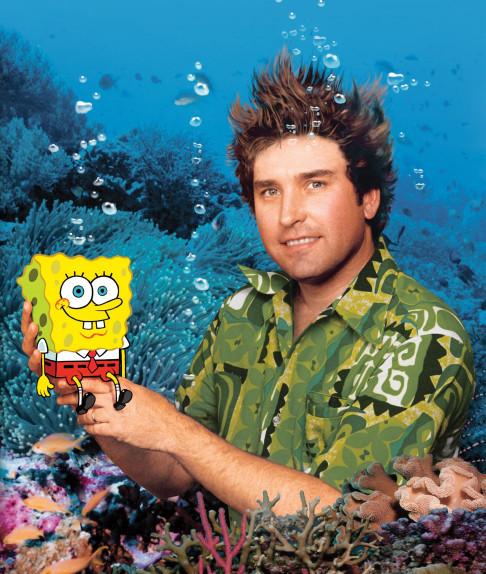
    SpongeBob Squarepants creator Stephen Hillenburg earned his Marine Science bachelor and Art minor at Humboldt State University. Many of the musical’s cast and crew are Humboldt alumni or current faculty and staff, and they certainly did Hillenburg’s legacy justice. 

    The musical’s director, Carol Ryder was ecstatic to return to the Van Duzer, as this is the only locale in the area that could accommodate a Broadway musical like SpongeBob.

    “This venue is the only theater where we can do a show like this because it’s built as a theater and not a concert hall,” Ryde said, “We have all of the technical aspects that John Van Duzer researched available.”

    The show itself was spectacular. Everything from the prop and costume design to sound production made it feel like an episode of the beloved cartoon brought to life. The story was simple and easy to understand, with high stakes to keep the plot fresh. I was pleasantly surprised to see the story tackle heavier themes such as persecution, distrust of government, and media spreading hysteria in non-polarizing or heavy-handed ways. 

    Much of the song and dance was erratic, just like the cartoon, but it always felt precise and never disorganized or out of hand. My favorite song was the track that kicked off Act II, Poor Pirates, performed by Patchy the Pirate who was played by Humboldt Professor Larry Pits. 

    The audio and visual gags brought that show to life. Much of the action was accompanied by sound effects straight from the cartoon, such as Pearl’s stomps and SpongeBob’s squeaky shoes. There were a few hilarious visual gags that were great callbacks to the cartoon as well. Patrick Star, played by Tristin Roberts, broke the fourth wall when he asked the live orchestra leader if mayonnaise was an instrument. The leader’s response? Tossing a tub of mayonnaise for Patrick to rock on with during one of the final musical numbers. 

    The costume designers were able to capture the essence of each character. Every costume incorporated the iconic color schemes and features of the character. The ensemble outfits were impressive as well. Just like the background characters from the show, each costume looked unique but never distracted from the action of the main characters. 

    Photo by Andres Felix Romero | Life sized Gary the Snail, handmade by Cal Poly Humboldt’s Casey Vaughn.

    The most impressive costume by far was that of Squidward Tentacles, played by Bill Ryder. The outfit consisted of an extra pair of legs built by the actor himself, to give the impression of eight limbs. I was awed to see Squidward dance and move with ease on stage and how realistic the legs moved along with him.

    Each character’s performance was outstanding and on point. Although the star of the musical is the titular sponge played by James Gadd (who definitely knows how to hold a note), Patrick Star was the one that stole the show for me. Patrick’s actor looked stellar in his costume, with a bright pink shirt and Hawaiian overshirt, paired with his iconic green and purple-flower shorts. Robert’s mannerisms and voice felt like I was truly watching the famous pink starfish in human form. 

    My favorite part of the show was by far the set design. LED lights in the shape of the flower clouds from the show illuminated the stage, and the prop design had a genius DIY feel that added to the cartoonish atmosphere. Items as simple as old plastic water bottles were creatively strung together and hung to give the impression of flowing water. To create the effect of the corals often spotted in the background of the cartoon, cut-up pool noodles were used.

    The most impressive aspect of the show and production to me wasn’t necessarily what was on the stage, but what went on behind the scenes. I had the opportunity to go backstage and see some of the props and sets up close, as well as meet much of the cast and crew. 

    I discovered how many of the actors built the props and costumes themselves. Plankton’s actor, played by Humboldt Professor Casey Vaughn, broke down how he hand-built my favorite prop, the adorable life-sized Gary the Snail. I also saw everyone from the most minor of the ensemble to the lead roles helping to break down the set and take props home. Everyone was laughing, joking and happy to be among each other. Ensemble actor Isabella Green highlighted the support the cast and crew received from everyone present, including the lead actors.

    “There’s a lot of older people who are really talented, like Fiona [Gadd-Ryder],” Green said. “But they don’t treat us like we’re different. They treat us with respect and try to help wherever they can. In the end, they treat us like we’re equal.”

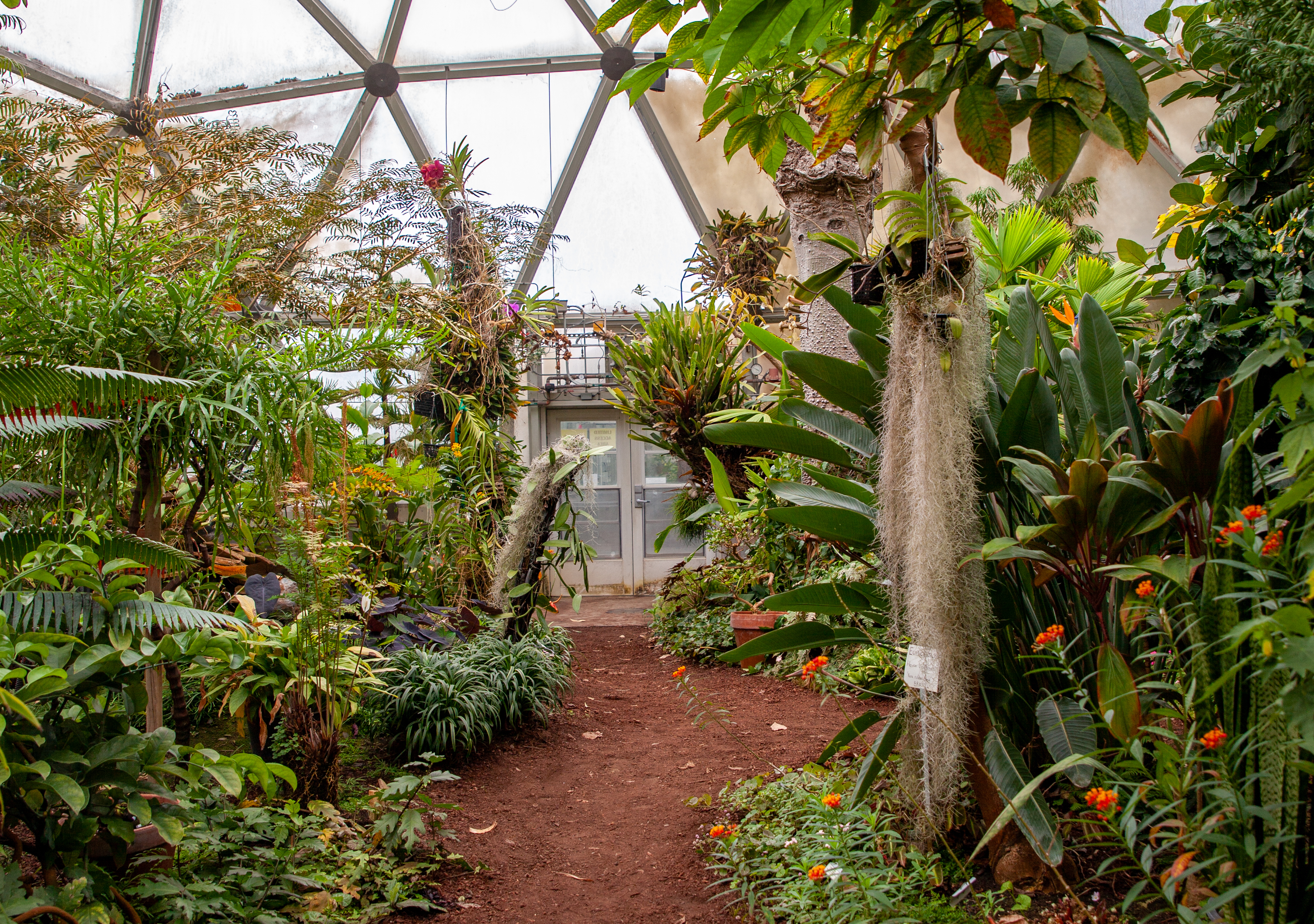
    There was something beautiful and full circle about Hillenburg’s creation, which in part was inspired by the dome-shaped greenhouse only blocks away from my seat, alive and in the flesh making hundreds in the audience entertained. It was a beautiful lesson in how our actions and legacies have the power to bring laughter and joy to others. Gadd shared a similar attitude when he was asked how it felt to play a revered character as SpongeBob Squarepants. 

    “It was a blessing and honor…”Gadd said. “It was a mountainous excursion as well because it is something that represents so much positivity and optimism in today’s world.”
  • Green Thumbs at the Greenhouse

    Green Thumbs at the Greenhouse

    Dennis K. Walker Greenhouse provides a haven for a diversity of plant species

    A sky full of grey clouds smothers the sun and with a chilling breeze even the most layered person shivers down to their toes. One step into the Dennis K. Walker Greenhouse transports you away from the cold into a world of warm, enticing, vivacious plants.

    There are six rooms in the greenhouse: temperate, tropical, desert, fern, aquatic and the subtropical dome. Each room has an appropriate climate and a resident community of plants. Greenhouse manager Brianne Lee, along with student assistants Dabid Garcia and Courtney Harris, maintain the greenhouse at Humboldt State.

    “Essentially, the greenhouse is a living museum,” Harris said. “It’s something that we are trying to preserve here and not kill with love.”

    The large botanical collection contains more than 1,000 species of plants belonging to 187 families. According to the Department of Biological Sciences website, students and faculty studying botany and biology use the greenhouse and its plant life to research and learn.

    Harris, a botany major, said the greenhouse is a magical place, especially since there are only two student positions. After transfering from the College of the Redwoods in 2017 Harris was hired as an assistant.

    “It feels like a unique experience being that this is such a cool staple and an important part of the botany program,” Harris said.

    The job of a greenhouse assistant consists of maintaining the facility and its residents residents, which means sweeping the rooms, hand watering plants, managing pests and propagating plants.

    “Essentially, the greenhouse is a living museum. It’s something that we are trying to preserve here and not kill with love.”

    Courtney Harris

    Garcia, a rangeland resource science major, said that there’s a lot of care and research that goes into the plants, but the goal is to make sure the plants are happy and thriving.

    “Every species needs their own little formula of fertilizer,” Garcia said. “Some require more nitrogen than phosphorus and some others more potassium. We have to do our own research and sometimes that research isn’t available, so we’ll give the plant fertilizer and see how the plant reacts to it. A lot of our plants are really rare in the wild.”

    The trio look out for signs indicating whether something might be wrong, such as droopy leaves and discoloration. The team also checks soil moisture levels, but all plants indicate issues to caretakers in unique ways.

    “The biggest challenge is understanding how each plant reacts and responds to the care that we give it, and adjusting our behavior accordingly,” Harris said. “It requires a tremendous amount of teamwork and communication between us.”

    Harris added that some plants don’t like attention while others, if left alone, will wilt and die.

    Mihai Tomescu teaches plant morphology, plant anatomy, paleobotany and general botany. The trio’s work supports Tomescu in the botany department, as well as supporting the biological sciences. Faculty often use plant specimens during lectures and labs.

    “Plants don’t move, and yet they are exposed to pretty much the same challenges that we are exposed to in terms of surviving. There’s all sorts of stressors. They have to procure their food and because of that, just like other types of organisms, have to have some type of behavior.”

    Mihai Tomescu

    Tomescu said his area of expertise and research is plant structure, including topics like how plants are put together, how they grow, how they look and how their features evolve over generations. Some of his methods include digging deep into geologic time.

    “I know how they grow at the cellular level,” Tomescu said. “So coming from that perspective, I realized that one of the most fascinating things about plants that people don’t realize is that compared to us animals, and compared to what we think of in our culture about aliens, is that plants are more alien to us than the craziest aliens that human imagination has come up with.”

    In his classes, Tomescu has his students visit the greenhouse three to four times a semester for assignments and brings live samples for labs when examining roots, leaves, stems, cells and other internal parts of plants.

    “If you have a big botany program that emphasizes organismal biology, the diversity of plant groups and so on, then it makes sense to have something like this,” Tomescu said. “How else are you to teach your students about the diversity of plants if you can’t show it to them alive.”

    Some people may question the general interest in plants because at the surface they seem not to do anything. But Tomescu said that if you are able to slow down and get pass the green blur of a forest of plants, you’ll come to find some interesting organisms.

    “Plants don’t move, and yet they are exposed to pretty much the same challenges that we are exposed to in terms of surviving,” Tomescu said. “There’s all sorts of stressors. They have to procure their food and because of that, just like other types of organisms, have to have some type of behavior.”

    Plant behavior is what a plant does, including how it grows. According to Tomescu, plants have control of their growth, from the depth of their roots to the direction of their leaves.

    “The plant makes a lot of choices because growing in one direction or another means spending energy,” Tomescu said. “It’s very calculated — not consciously calculated– but basically plants sense their environment very well.”

    In the broader sense, he said that plants make him think. Tomescu hopes more people will become interested in plants since they are so different compared to other life forms.

    “It’s kind of exhilarating to realize that we live next to these super weird organisms,” Tomescu said. “It maintains this fascination that there are these organisms that do the business of living in a very different way from us.”


    The Dennis K. Walker Greenhouse is available to instructors and students in the Department of Biological Sciences, and access is limited by the availability of instructors or greenhouse staff.

    It is open to the public by appointment or when greenhouse staff are available. If you are interested in making an appointment contact Brianne Lee at 707-826-3678 or schedule a visit via email at bms561@humboldt.edu.

  • ‘SpongeBob’ creator dead at 57

    ‘SpongeBob’ creator dead at 57

    Alumnus Stephen Hillenburg makes permanent mark at HSU before passing

    Stephen Hillenburg, Humboldt State alum and creator of Nickelodeon cartoon “SpongeBob SquarePants,” has passed away.

    Nickelodeon confirmed the news in a Tweet on Tuesday.

    “We are sad to share the news of the passing of Stephen Hillenburg, the creator of SpongeBob SquarePants,” the network wrote. “Today, we are observing a moment of silence to honor his life and work.”

    The 57-year-old Hillenburg revealed March of last year to Variety Magazine that he had been diagnosed with Lou Gehrig’s Disease, or ALS.

    Hillenburg and his wife Karen gifted $135,000 to HSU back in Sept. to grant awards for students doing research with faculty in the marine sciences. The couple used the money to create the Stephen Hillenburg Marine Science Research Award Endowment fund.

    According to an HSU press release, Stephen Hillenburg furthered both his knowledge of marine biology and his talent as an artist while he attended HSU. The creation of SpongeBob SquarePants was a natural merging of Hillenburg’s passion for art and the ocean.

    The animated series first aired on Nickelodeon in 1999 and features a square yellow sponge named SpongeBob SquarePants. He lives in a pineapple under the sea with his pet snail, Gary, in the city of Bikini Bottom on the floor of the Pacific Ocean.

    SpongeBob SquarePants has won both U.S. and British Emmy Awards and has been translated in more than 60 languages, including Urdu, Azerbaijani and Maori.

    Hillenburg is survived by his wife of 20 years Karen Hillenburg, son Clay, mother Nancy Hillenburg and brother Brian Kelly Hillenburg.