Killer views? Rock climbing? Questionable legality? This trail has it all!
Welcome back to the #ExploreHumboldt column, where I give you the low-down on the most accessible natural locations for HSU students to visit when they need a healthy way to relax.
Last time, we looked at the option closest to campus, the Arcata Community Forest. Now that we’ve settled into our new schedules, I’ll be suggesting a hike that some of you may already be familiar with: Strawberry Rock!
This three-mile out-and-back is a very popular local destination with a short but somewhat strenuous hike and gorgeous panorama views at the namesake summit.
To get to Strawberry Rock from Arcata, drive North on 101 until you reach the Trinidad exit, number 728. Go straight at the stop sign and continue until you reach the end of Trinidad Frontage Road.

Park anywhere in the cul-de-sac and look for the gate covered in stickers and graffiti. This is the trail head.
Alternatively you can take the bus (free for HSU students) up to Trinidad, then it’s an additional mile’s walk from the bus stop to the trail head.
The hike starts close to the freeway, but you are soon enveloped in the classic green curtains that characterize many of Humboldt’s best trails. This particular line is built on Green Diamond logging land and follows an old access road for most of its length.
Soon after you start the hike the trail begins to steepen and split into several optional lines. Most of these lead back to the main trail but use your best judgment when exploring. Luckily, you keep a good cell signal for the entirety of the hike.

The main trail is marked with a series of makeshift arrows, built out of fallen logs and rocks by considerate trail users. These ensure that first-timers don’t get confused at the multiple splits.
If you’re especially worried about getting lost, there are maps of the full hike available at singletracks.com.
About a mile into the hike, look for a muddy spot with a long bent log spanning the right side of the trail. Look up to see the platforms used by activists who camped high in the trees to protest Green Diamond’s logging operations. A banner is also visible with a call to “Stop Clearcutting.”
Currently, Green Diamond is in an agreement with the Trinidad Coastal Land Trust to not log while the Trust attempts to fundraise.

If they can raise enough money to buy the land from Green Diamond, the Trust will be able to keep this gem open for future generations. If not, Green Diamond is looking at logging several tracts of land near the trail, according to the TCLT website.
In the last third of the climb, you’ll come across a wide-open quarry area. From here, the trail takes you through several rock designs laid onto the gravel before following an established road to the final climb.
The ‘crux’ of this hike comes at the end, where explorers will have to use a rope to scale an exposed rock wall. If you’ve made it this far, you can probably handle this last bit of exertion. There are views below this point, but climbing the rope is the only way to get the full experience.

When you’ve made it to the rock, be careful! The edges are cliff faces and you have to use your best judgment while maneuvering around.
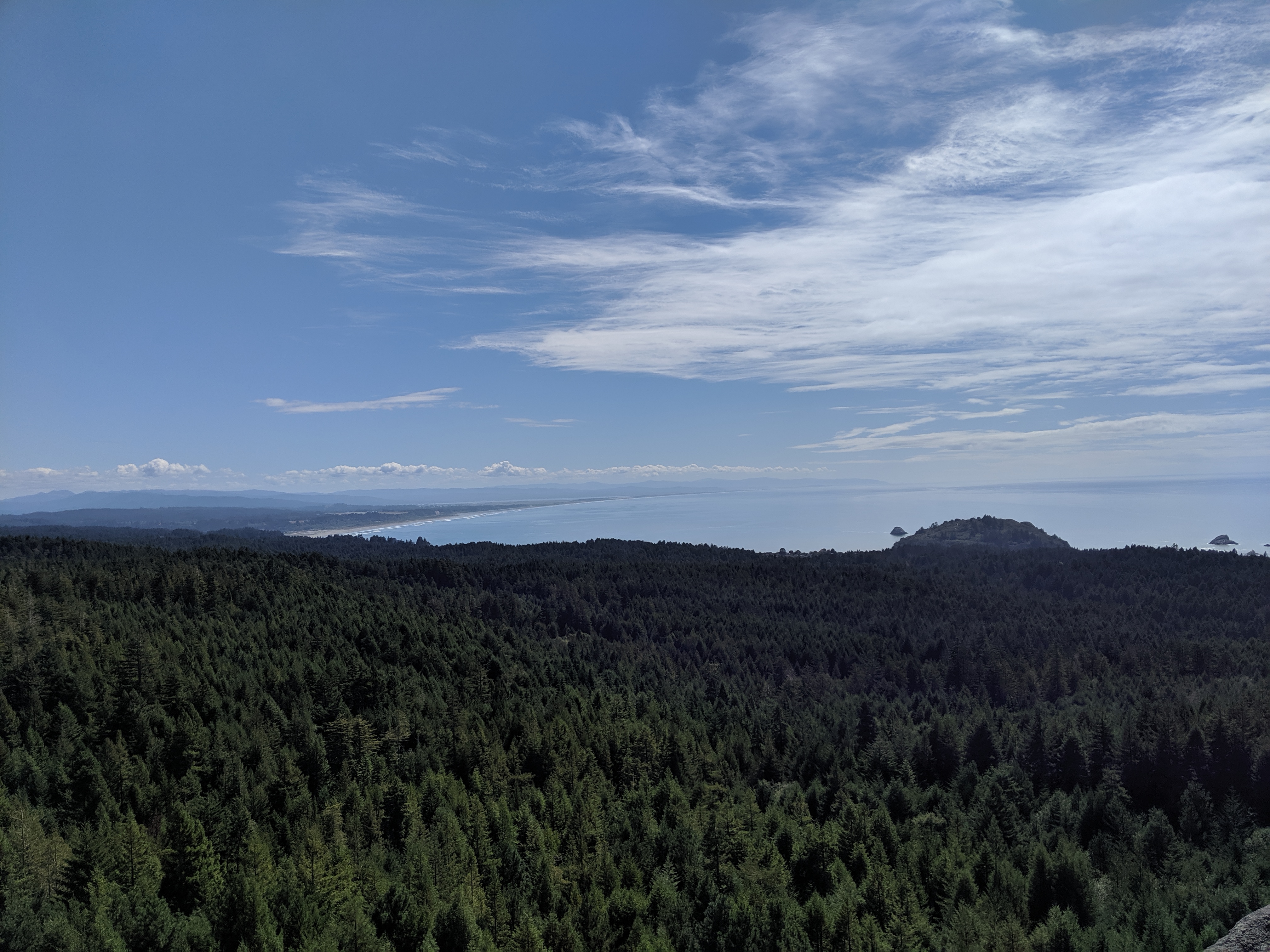
Come prepared with extra water and snacks as you’ll want to relax and soak in the views for a while when you reach the top. On clear days (the only days worth visiting!) you can see Trinidad Head to the west and far beyond Eureka to the south.
After you’ve had your fill, enjoy the downhill hike back. The trail is usually muddy and rooty, so the best shoes for the hike are both sturdy and dirty.
This trail is a perfect place to get a good walk in while experiencing some truly dank Humboldt forests. It’s also a good spot for anyone wanting to do some light bolder-scrambling and climbing without having to invest in expensive shoes or harnesses.
Early birds and latecomers will get the best experience, as this spot can get crowded during peak traffic hours. Get out there sometime between your busy schedules and don’t forget to #ExploreHumboldt!