The Lumberjack


Students Serving The Cal Poly Humboldt Campus and Community Since 1929

Tag: student fees

  • IRA Budget Expected to Take Substantial Hit

    IRA Budget Expected to Take Substantial Hit

    Associated Students prepare for massive budget cuts

    Associated Students is anticipating a nearly 20% cut to the Instructionally Related Activities Committee budget.

    As of April 7, the IRA Committee budget for the 2020-2021 academic year is predicted to be about $375,000, compared with around $520,000 approved for the 2019-2020 budget. This accounts for an anticipated loss of around $27,000 due to COVID-19.

    As a condition of enrollment at Humboldt State University, each full-time student pays about $3,900 in student fees, around $2,900 of which is tuition. The remaining amount of about $1,000 is split between six student fees, including a $337 contribution the IRA.

    From that $337 paid by each student, the IRA budget is divided into about $260 for athletics, $8 for the Humboldt Energy Independence Fund, about $17 for the Jack Pass and about $19 for the IRA Committee. Made up entirely of Associated Students board members, the IRA Committee votes on the allocation of their budget among instructionally related activities.

    Executive Director of AS Jenessa Lund is heavily involved in the committee.

    “It’s interesting that there is not a lot of money compared to the big budget, but what I’ve realized over the past couple of years is because they are so visible, people react to them very strongly,” Lund said. “IRA is less than $500,000, and compared to the campus budget that’s just drops in the bucket. But because it means whether or not a group of students can go compete, or do something, they feel it directly.”

    “We had conflicting pieces of arguments that said, ‘You do this, but you don’t do that in these cases,’ which makes it very hard to evaluate who’s gonna be in and who’s gonna be out.”

    Sandy Wieckowski

    IRAs are limited to those that are disciplined, department-based and sponsored, and are integral to formal instructional offerings. They are intensive, structured activities that reflect active rather than passive student involvement. They are considered essential to the quality of an educational program and an important instructional experience, and they demonstrate skills derived from intensive coursework. They include everything from The Lumberjack newspaper to club sports, and almost everything in between.

    Made up of majority student voters, the IRA Committee has been meeting to re-evaluate their funding guidelines, based on the Education Code, their current IRA funding guidelines and memos between the AS president and HSU president from the 2019-2020 academic year that outline the direction they were headed. Sandy Wieckowski is currently the longest-acting board member.

    “This is the same thing we hit last year,” Wieckowski said. “We had conflicting pieces of arguments that said, ‘You do this, but you don’t do that in these cases,’ which makes it very hard to evaluate who’s gonna be in and who’s gonna be out.”

    Lund blamed the rotating chairs for inconsistent goals.

    “This current model has annual turnover,” Lund said. “It’s new faculty on this committee every year, and it’s often new student leaders every year.”

    On top of HSU having new administration for the past three years, AS has had four presidents in three years. With administrations in a constant state of change, it’s much more difficult to accomplish progress.

    “I’ve been on the committee four years and we’ve done it different every year,” Wieckowski said.

    Board members were assigned budget applications from IRA groups to review in advance of their April 7 meeting. During the meeting, the board looked at each application and adjusted the proposed budgets where they saw fit. As Lund scrolled down the list of submissions, board members weighed in with their recommendations.

    One significant impact looks to be the denial of a budget for the campus sexual assault prevention program, CHECK IT, as the “swag” the budget was requested to pay for wasn’t considered a priority.

    Other impacts include The Lumberjack newspaper, which faces over $8,000 in cuts from a budget of around $28,000. Osprey magazine faces about $4,000 in cuts from a $10,000 budget, and the KRFH student radio station also faces a $5,000 cut from their budget of $10,000. AS Public Relations Officer Cassaundra Caudillo suggested the cuts.

    “All of the publications on campus tend to over-print,” said Caudillo. “I think all of the publications could probably take a little bit of a cut because of that.”

    Despite the budget crunch, the IRA committee managed to make room for programs that did not receive IRA funding in the 2019-2020 academic year, including $2,500 for the Youth Educational Services program, $5,000 for reserve library textbooks and $3,000 for the Society of American Foresters Quiz Bowl. The IRA budget recommendations have been finalized, but they currently have an open appeals period before the budget will be sent to HSU President Tom Jackson by April 30.

    A potentially significant factor in next year’s budget is possible carry-over from money that didn’t get spent in the 2019-2020 academic year. That amount, for now, is yet to be known. However, the IRA Committee felt comfortable over-allocating about $25,000 they expect to gain in roll-over.

    “We have all these potential expenses out there that we need to get covered and tidy up before we try and allocate that money to next year,” Lund said.

    In the past, AS has put in place a contingency plan to allocate money based on a projected headcount in case there is money left over from the previous school year’s budget.

    “If money were to roll forward and be available in addition to what we’re looking at today, then they gave three priorities, and that was already voted,” Lund said. “So, it made it a pretty clean process for us if there was funding there.”
  • Athletics department faces deficit growth

    Athletics department faces deficit growth

    By | Andrew George Butler and Keaundrey Clark

    Humboldt State University’s athletics department will face a budget deficit as the fiscal year comes to a close on June 30, 2017 for the second consecutive year. The athletic department is expected to come up $669,000 short, once again requiring HSU to divert $500,000 from its general fund to help curtail the deficit.

    HSU students spend $4.3 million a year on athletics, resulting in the highest Instructionally Related Activities fee of any CSU, at $674 a year for full-time students. The next highest IRA fee at a CSU is $460 a year, at Sonoma State. 77 percent or $518 of HSU’s IRA fee goes towards athletics.  In 2015, HSU students paid $4,221,825 toward athletics. The median of all other CCAA schools in the same year was $2,181,874, and a median of $16,737 for all of Division II.

    File_000 (1) (1)
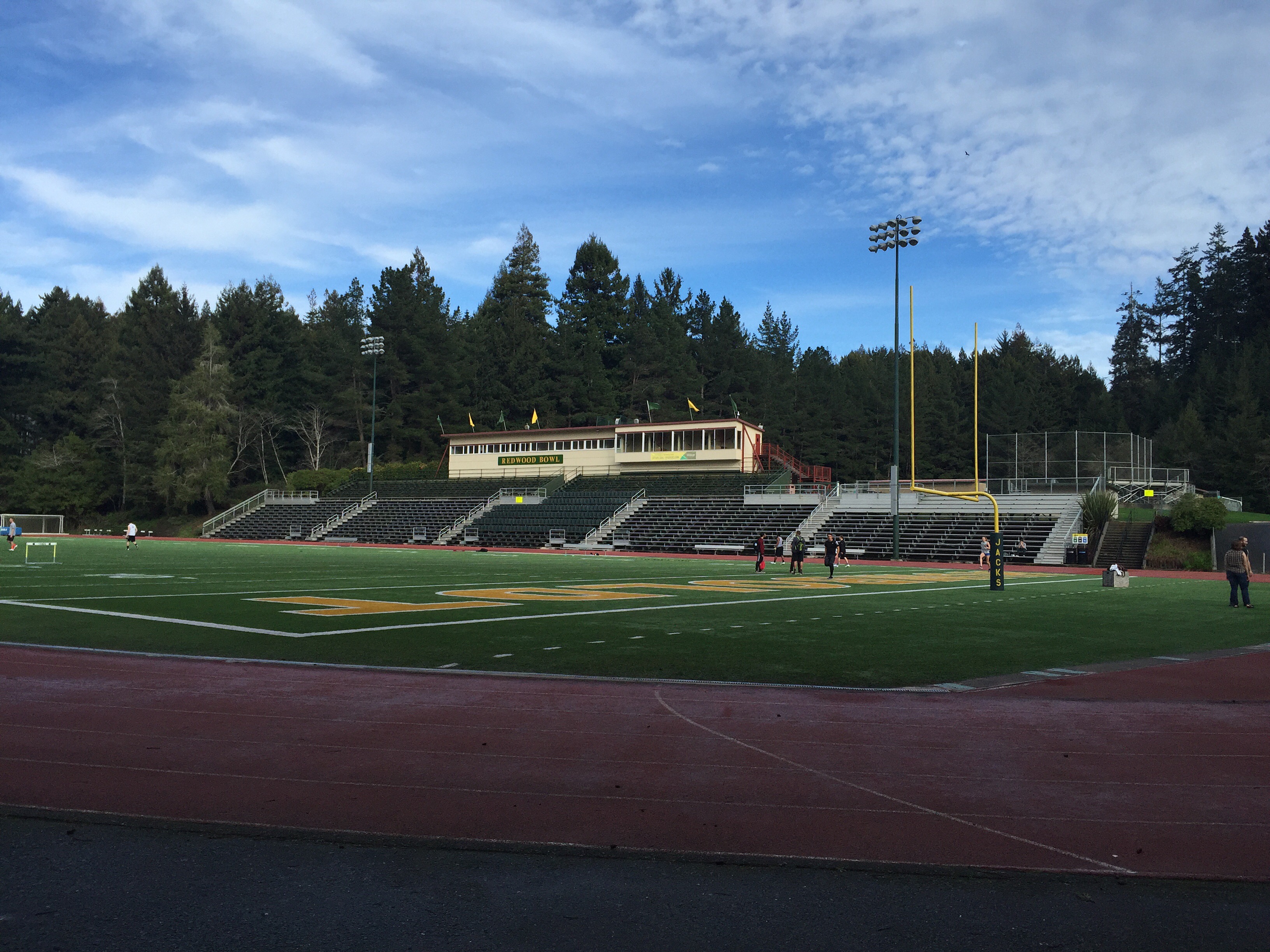
    HSU track and field. Photo by Iridian Casarez

    It’s important to note, in respect to athletics, that along with an abnormally high student fee, athletics also generates far above the median when it comes to advertisements and donations. Athletics raised $345,775 in royalties, licensing, advertising and sponsorships in 2015. The CCAA median was $34,775 and the Division II median was $15,045. HSU also raised in-kind donations, such as goods and services, of $246,280 compared to $13,189 for other CCAA schools.

    In November 2016, HSU President Lisa Rossbacher contracted Strategic Edge Consulting LLC to conduct a review of HSU’s various intercollegiate athletics programs and the athletic department as a whole. The 100-page report viewed the athletic deficit holisticly and highlighted areas HSU’s administration could improve.

    The report reads, “It also became clear that there appears to be a “divide” between athletics and other parts of campus…One of the things that became obvious through the sessions with the Advancement Foundation Board, Athletics Department staff, the Philanthropy staff and others on campus was that the Athletics Department and the Advancement Office do not communicate well and have not historically worked with each other.”

    Frank Whitlatch, associate vice president of Marketing and Communications at HSU, in partnership said that the athletic deficit issue isn’t due to an indifference to teamwork between departments. “HSU is essentially a very large organization,” Whitlatch said. “It’s easy for individuals in various departments to put their heads down and work at solving an issue to the point that communication suffers.”

    President Rossbacher responded indirectly, through a mediary, to a couple of questions from The Lumberjack that were related to the Strategic Edge report.

    “I requested that Athletics and Advancement meet regularly for the next six months, with very specific outcomes required.  The first meeting has taken place and work is ongoing to improve coordination in the areas of fundraising and communication.”

    When Rossbacher was asked if HSU athletics are “too big to fail,” she said, “General funds have already been used to offset the deficit in Athletics.  We have to consider every option to ensure that all HSU programs are financially sustainable.”

    The 2016-2017 year also saw a 3.5 percent reduction in enrollment at HSU. Additionally, HSU expects to see another dip in enrollment for the 2017-2018 year. On whether or not a public deficit issue might dissuade potential students from enrolling at HSU, Whitlatch said, “I don’t believe that a visible deficit will affect potential enrollment, the reality is most CSU’s have some level of a deficit issue.”

    Strategic Edge suggested a few options for HSU athletics. Among these were HSU remaining a member of the NCAA and changing divisional affiliation to NCAA Division III, remaining a member of NCAA Division II and moving to the Great Northwest Athletic Conference for all sports, or transferring to the National Association of Intercollegiate Athletics .

    In a memo sent in March to all administrators and coaches affiliated with Athletics, President Rossbacher indicated that HSU intends to remain within Division II and make no changes to its divisional affiliation.

    In the memo, Rossbacher left potential cuts to athletic programs on the table. Sports such as baseball, women’s swimming, and wrestling have been cut in the past. Former and current HSU athletes are making their voices known with the potential upheaval of HSU Athletics.

    “It makes me feel uncomfortable for the student athletes that are currently there and it saddens me every time I hear, ‘they might cut this,’ ‘the school is getting rid of this,’ ‘there isn’t enough money to do this,’” said former HSU soccer player Emily Huska. “It happened all throughout my four years of being a student athlete.”

    HSU soccer player McCalla Madriago is also concerned about potential cuts.

    “Honestly, it would hurt HSU and the community because HSU athletics are the closest thing to having live sporting events anywhere in Humboldt county,” said Madriago. “We’re isolated and sports bring the community together or makes it excited and a topic to be shared. Not only that, HSU athletes are a huge influence on the younger generations around here.”

    In November 2017, HSU will review the deficit issue both within athletics and HSU in general. Any potential cuts, revenue hikes, or other changes will be left to speculation until then.